
Reviewed · BERLIN THIRD REICH TOURS
Berlin and National Socialism: Berlin under Nazism
Berlin’s Nazi past is scattered across the city, often hidden beneath modern streets and restored buildings. This four-hour tour helps you connect those pieces, moving from the Bundestag and Soviet Memorial to Tempelhof, the Topography of Terror, and the former Führerbunker area.
I especially like the wide historical range and the Spanish-speaking guidance. Guides such as Julia, Helena, and Celia are praised for careful explanations, photographs, videos, warmth, and practical suggestions for seeing more of Berlin. The main drawback is pace: six stops in four hours leaves limited time at some memorials, and your public transport ticket is not included.
Key points to know before booking
- A four-hour route across central and southern Berlin: You see major Nazi-era sites that would be awkward to connect on your own.
- Spanish-speaking guidance: Julia, Helena, and Celia are among the guides named in feedback, though the assigned guide can vary.
- Serious history, handled with care: The route covers Nazi persecution, the Battle of Berlin, the Holocaust, and Hitler’s final days.
- Photographs and videos add context: The guide may use visual material to show how places looked during the Third Reich.
- Up to 25 people: The group is large enough to keep the price reasonable, but not a private tour.
- Budget for an AB transport ticket: Transportation is not included, so check Berlin’s fare system before setting out.
Why this Nazi-era tour helps make sense of Berlin
Berlin can be confusing for anyone trying to understand the Third Reich. Important sites are spread across different districts, and many original buildings disappeared during the war or were removed after 1945. A memorial may mark an event without explaining the political chain that led to it.
This tour gives you a framework. You begin with the modern German parliament, see memorials to people murdered by the Nazis, examine the final battles of the war, and finish near the former center of Nazi power. The result is not just a list of locations. It is a connected story about dictatorship, war, genocide, defeat, and how modern Germany remembers those events.
The subject is difficult, and the route does not turn it into light sightseeing. That is a strength. The guides are described as respectful, prepared, and able to explain painful events without losing the thread of the larger story.
You should expect interpretation rather than access to grand interiors. Several stops are outdoor sites, and the former Führerbunker is now an area marked by information rather than a preserved underground attraction. Bring curiosity, patience, and shoes suitable for several hours of city touring.
More Third Reich history tours in Berlin:
- Berlin: Third Reich and Cold War 2 Hour Walking Tour
★ 4.9 · 6,830 reviews - Berlin’s Best: 2 Hour Walking Tour Third Reich and the Cold War
★ 5.0 · 5,486 reviews - Third Reich Berlin: Hitler and WWII Walking Tour
★ 5.0 · 3,301 reviews
Starting at the Bundestag and modern German democracy
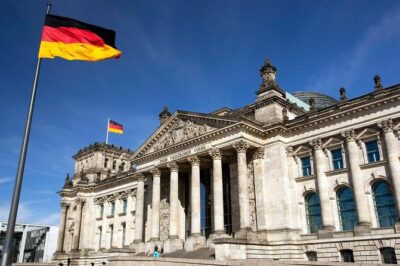
The meeting point is by the Berlin TV Tower, at Panoramastraße 1A, with a scheduled start at 10:00 a.m. From there, the route reaches the Bundestag, the German parliament.
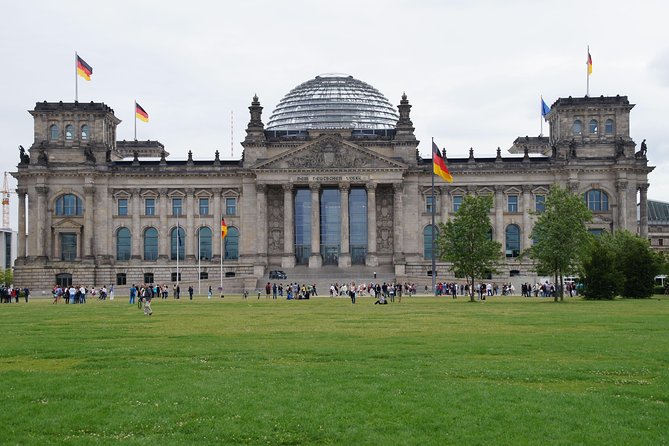
The building’s story is useful because it links imperial Germany, the Nazi era, the war, division, and reunification. The Reichstag was badly damaged and later protected from the elements. It received partial renovation in the 1960s, but a full restoration did not begin until after German reunification on October 3, 1990.
Architect Norman Foster led the reconstruction, completed in 1999. The building once again became the home of Germany’s parliament, now called the Bundestag. You have about 20 minutes here, enough for an exterior explanation and a clear discussion of what changed between the damaged building and the modern democratic institution.
This stop is less about seeing a Nazi building frozen in time and more about understanding what happened after the dictatorship. It gives the tour a useful modern endpoint: Germany rebuilt its political center, but did not simply pretend the past had vanished.
The time is brief, so do not expect an extended architectural visit or a full parliament tour. The value comes from the historical explanation and the setting.
Remembering the Sinti and Roma victims
The next stop is the Memorial to the Sinti and Roma Victims of National Socialism. The monument honors the estimated 220,000 to 500,000 Sinti and Roma people murdered in the Nazi genocide, known as the Porajmos, sometimes spelled Porraimos.
You have about five minutes here, which is short but meaningful. The site broadens the tour beyond the best-known story of Nazi persecution. The Nazi murder program targeted many groups, and this memorial makes sure the suffering of Sinti and Roma people is part of the central account.
Because the stop is so short, you will need to listen closely. This is not the place for a long independent visit. Still, its inclusion is important. A tour focused only on Hitler, military history, and famous buildings would leave out a major part of Nazi racial policy.
The memorial is also close to other important central Berlin sites, so its place on the route allows the guide to show how remembrance sites are woven into the city rather than hidden in a single museum district.
The Soviet Memorial in Tiergarten and the final battle
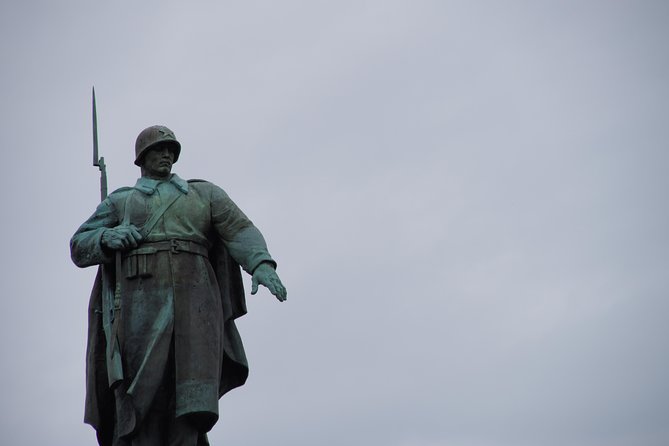
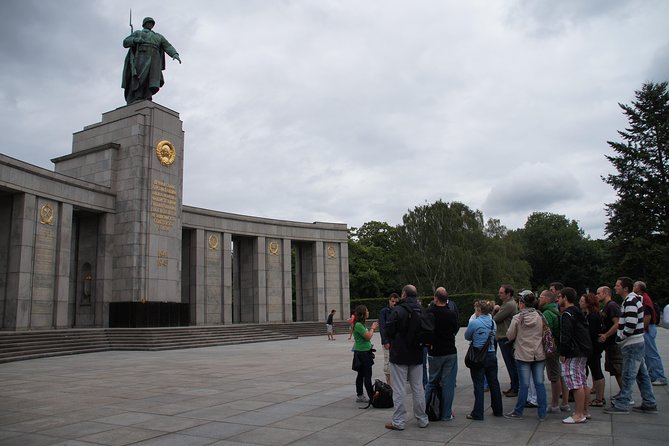
The Soviet Memorial in Tiergarten shifts the focus from persecution to military defeat. It honors Soviet soldiers who died during the Battle of Berlin in April and May 1945. About 80,000 Soviet armed forces personnel died in that battle.
You have around 15 minutes here. The memorial is a powerful reminder that the war in Europe ended in Berlin itself, not in some distant final campaign. By the time Soviet forces reached the capital, the Nazi regime was collapsing, but the fighting remained severe.
This stop also gives you a different perspective on the end of the war. Many visitors arrive in Berlin with a Western European view of World War II. The Soviet memorial helps explain the enormous role of the Red Army in defeating Nazi Germany and capturing Berlin.
The setting in Tiergarten provides some breathing room after the memorial to the Sinti and Roma victims. Still, this is an outdoor stop, so weather matters. Berlin can be cold, rainy, or windy, and the route includes several places where you will be standing while listening.
A different sort of day out in Berlin:
- Berlin: Reichstag, Dome and Government District Guided Tour
★ 4.7 · 18,288 reviews - Berlin: 1-Hour City Tour by Boat with Guaranteed Seating
★ 4.3 · 16,993 reviews - Berlin: Boat Tour Along the River Spree
★ 4.4 · 11,252 reviews - Discover Berlin Half-Day Walking Tour
★ 5.0 · 9,624 reviews
Tempelhof Airport and Berlin’s changing role
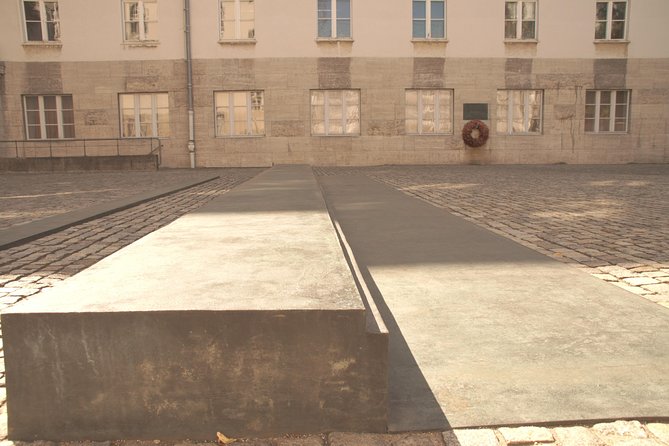
Tempelhof is one of the more unexpected stops. It was one of the most important airports in the early 20th century and, in 1926, handled ten flights daily, making it the largest airport in Europe at the time.
You spend roughly 25 minutes here. The airport helps place Nazi-era Berlin within the wider story of technology, transport, propaganda, war, and postwar division. It was not simply an airport. Its scale and importance reflected Berlin’s ambitions as a major European capital.
The stop also adds variety to the day. Instead of visiting only memorials and government buildings, you see a site tied to aviation and the city’s changing political role. The airport later became part of the story of divided Berlin, giving the location importance beyond the Third Reich.
Do not expect this part of the tour to function as a full airport museum visit. The allotted time is designed for historical context rather than an exhaustive examination of the site. If Tempelhof is a personal priority, you may want to plan a separate visit, depending on your schedule.
The Topography of Terror: the tour’s main museum stop
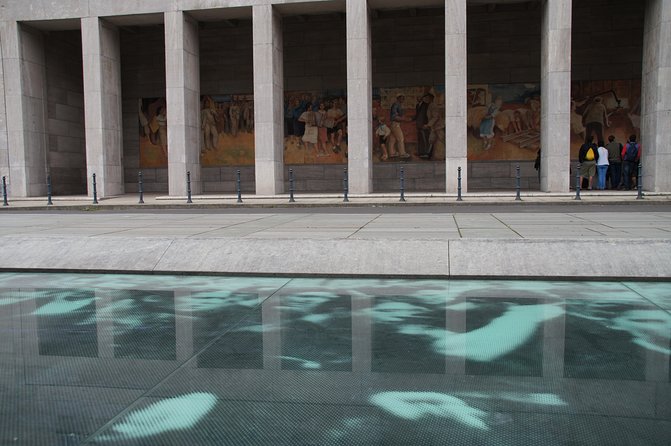
The Topography of Terror is an indoor and outdoor history museum built on the former site of major Nazi institutions. It is the clearest museum-focused part of this tour and one of the most useful places for understanding how the Nazi state operated.
The visit is listed at about 15 minutes, with admission included. That is enough for an introduction, but not enough for a slow reading of every panel. The museum contains more information than most people can absorb in a quarter hour, so listen to the guide’s explanation and note anything you want to revisit later.
This stop helps move the story beyond Hitler as a single figure. Nazi rule depended on offices, police agencies, administrators, prisons, and systems of control. The Topography of Terror connects political decisions with the institutions that carried them out.
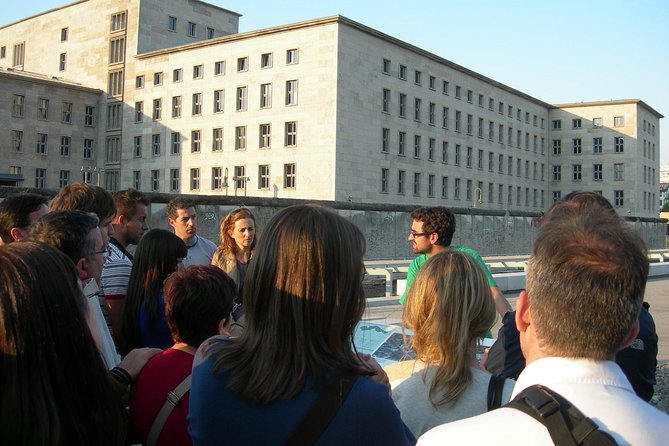
The guide may use photographs and videos to place you in the period. That can be especially helpful here, where the physical remains are limited and the written material carries much of the story. Julia is specifically praised for using visual material to help explain the historical setting.
The short time is the main limitation. If you enjoy museums and want to read carefully, you will probably wish for longer. Even so, the stop gives the tour a solid documentary base rather than relying only on outdoor commentary.
The Führerbunker area and Hitler’s final days
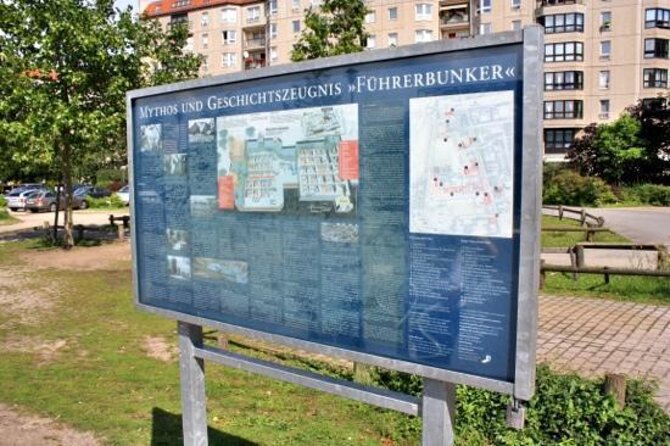
The route then reaches the area where Hitler spent his final days. The former Führerbunker is not presented as an intact historic attraction. The point is to identify the location and explain what happened there as the Nazi regime collapsed.
You have about 15 minutes. That may sound brief for such a famous site, but the absence of a dramatic surviving structure is part of the lesson. Modern Berlin does not turn the bunker into a shrine or spectacle. The location is approached through explanation and historical context.
This can be one of the most useful stops for separating fact from popular myth. Hitler’s final hours are often treated as a sensational story, yet the broader meaning lies in what the bunker represented: a dictatorship ending in isolation, while the city above it was being destroyed.
Keep your expectations realistic. You will not enter a preserved command center, and there is no grand ruin to explore. You will stand in an ordinary-looking part of the city and learn why that ordinary setting matters.
The tour ends at the Memorial to the Murdered Jews of Europe on Cora-Berliner-Straße. This is a fitting end point, even though the memorial is listed as the final location rather than a timed stop with a separate visit. You can continue exploring the memorial after the tour, subject to your own schedule.
How the guides shape the experience
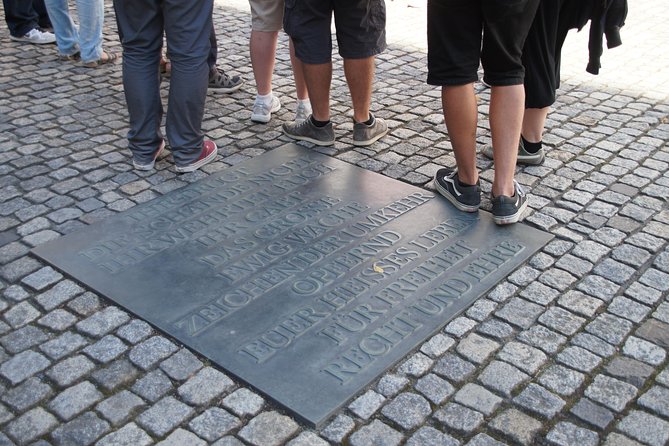
The guide is the heart of a history tour, and this experience is offered in Spanish. Julia, Helena, and Celia are names associated with especially strong guidance. You should not assume one particular person will lead your departure, but the available feedback points to a team that aims for careful, personal explanations.
Julia is described as using photographs and videos, answering questions, and offering suggestions for other places to visit in Berlin. Helena is praised for turning a cold, rainy day into a worthwhile historical morning through clear explanations and a friendly manner. Celia is noted for warmth, passion, detail, and respect when discussing tragic events.
Those details matter. A four-hour tour can become tiring if the guide simply recites dates. Here, the strongest feature appears to be interpretation: placing each location in its political and human context, then helping you see how the sites relate to one another.
The tour is not advertised as private. The maximum group size is 25 people. That keeps the price moderate, but you should expect some limits when asking questions or gathering around a memorial. If you want a highly personal pace, a private tour would be a different type of experience.
Price, transport, timing, and practical value
At $25.54 per person, this is a fairly economical way to cover a large part of Berlin’s Nazi-era geography. Admission is included where charges apply, and the Spanish-speaking guide is the main value. You are paying for structure and interpretation, not for expensive attractions.
The route covers several locations that are spread across Berlin. Your AB public transport ticket is not included, so factor that extra cost into the day. This is important because the tour’s convenience depends partly on moving efficiently between stops. Ask the guide about the best ticket choice if you are unsure.
The four-hour duration is long enough to establish a useful historical framework but short enough to fit into a larger Berlin itinerary. I would place it early in your stay if you want the guide’s advice about other sites and neighborhoods to shape the rest of your visit.
The tour is booked, on average, 36 days ahead, so reserve early if your dates are fixed. Confirmation is provided at booking, and the experience uses a mobile ticket. Most people can participate, and the route is near public transportation.
Berlin weather can change quickly. Wear comfortable shoes and bring protection from rain or cold, since several stops involve outdoor explanation. The operator allows free cancellation up to 24 hours before the start time. Changes or cancellations inside that window are not refunded.
Who should book this tour?
I would choose this tour if you want a serious introduction to Berlin under Nazism and prefer learning in Spanish. It suits first-time visitors, history enthusiasts, and anyone who finds Berlin’s memorials meaningful but difficult to connect without guidance.
It is also useful if you have only a few days in the city. You will see several important sites in one morning rather than spending time working out transport and historical connections on your own.
I would think twice if you want long museum visits, extensive time for photographs, or a slow look at each memorial. The schedule is full, and the Topography of Terror receives only a short visit. You should also be comfortable with a sober subject and a group of up to 25 people.
Should you book Berlin under Nazism?
Book it if you want a clear, respectful explanation of how Nazi power shaped Berlin and how the city remembers its victims. The combination of the Bundestag, Sinti and Roma memorial, Soviet Memorial, Tempelhof, Topography of Terror, and Führerbunker area gives you more range than a tour focused only on Hitler and wartime ruins.
The best reason to go is the guide’s role. Julia, Helena, and Celia are praised for making difficult history understandable, using visual material, answering questions, and offering useful city advice. Just budget for public transport and accept that some stops are introductions rather than full visits.
For a moderate price, this is a strong first step into Berlin’s 20th-century history. Afterward, you will know which memorials and museums deserve a longer return visit.
FAQ
How long does the tour last?
The tour lasts approximately four hours.
What language is the tour offered in?
The included guide is Spanish-speaking.
Where does the tour start?
It starts at the Berlin TV Tower, Panoramastraße 1A, 10178 Berlin, Germany.
Where does the tour end?
It ends at the Memorial to the Murdered Jews of Europe, Cora-Berliner-Straße 1, 10117 Berlin, Germany.
What time does the tour begin?
The scheduled start time is 10:00 a.m.
Is public transportation included?
No. An AB transport ticket is not included in the tour price.
Are admission tickets included?
Admission tickets are included where specified. The Bundestag, Soviet Memorial, Tempelhof, and Führerbunker area are listed with free admission, while admission is included for the Sinti and Roma memorial and Topography of Terror.
How many people can join the tour?
The activity has a maximum group size of 25 people.
Can I cancel for a full refund?
Yes. You can cancel at least 24 hours before the start time for a full refund. Cancellations or changes made less than 24 hours before the start time are not accepted for a refund.
Newest Berlin reviews
- Where It All Began: Berlin’s Queer & Trans History Tour★ 4.9 · 6 reviews
- Understanding Kreuzberg: The roots of local (sub)culture★ 4.9 · 11 reviews
- Berlin: guided canoe | kayaktour★ 4.1 · 7 reviews
- Private Potsdam City Tour in an authentic vintage van★ 5.0 · 14 reviews
- Warnemünde Shore Excursion: Private Sachsenhausen and Berlin Tour★ 5.0 · 12 reviews
- Ultimate E-Bike Tour of Berlin with Beer Garden Stop★ 5.0 · 4 reviews
- In the Forbidden City – Potsdam Walking Tour★ 5.0 · 17 reviews
- Private Walking Tour of Potsdam and Sanssouci★ 5.0 · 24 reviews
Berlin Third Reich Tours, compared.
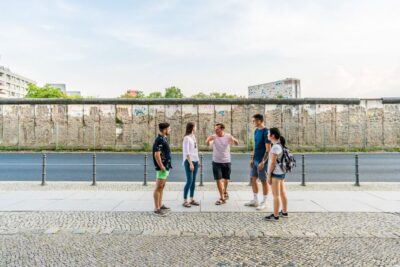
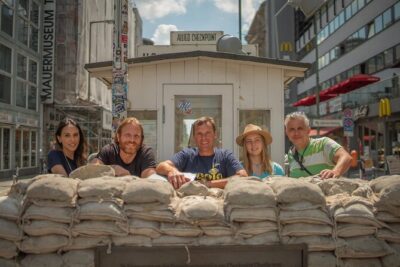
Berlin’s Best: 2 Hour Walking Tour Third Reich and the Cold War
Read our review →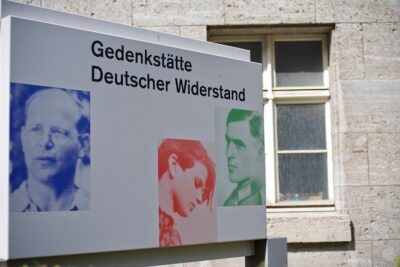
Third Reich Berlin: Hitler and WWII Walking Tour
Read our review →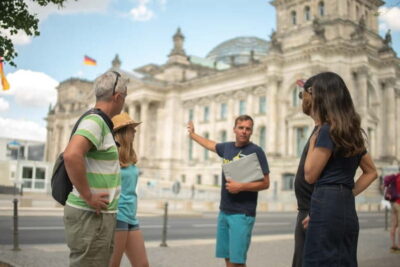
Berlin Third Reich Sites: Half-Day Walking Tour
Read our review →
Guided Bike Tour of the Berlin Wall and Third Reich
Read our review →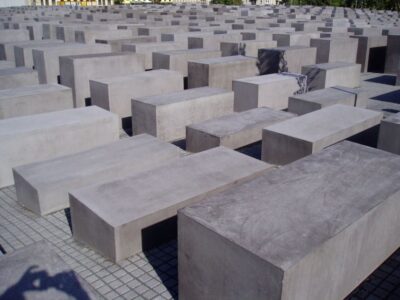
Hitler’s Germany: Berlin During the Third Reich & WWII
Read our review →
Private Walking Tour Berlin Third Reich Hitler and World War II
Read our review →Browse the lists this tour appears in