
Reviewed · MUSEUM ISLAND TOURS
Berlin: Museum Island Guided Walking Tour
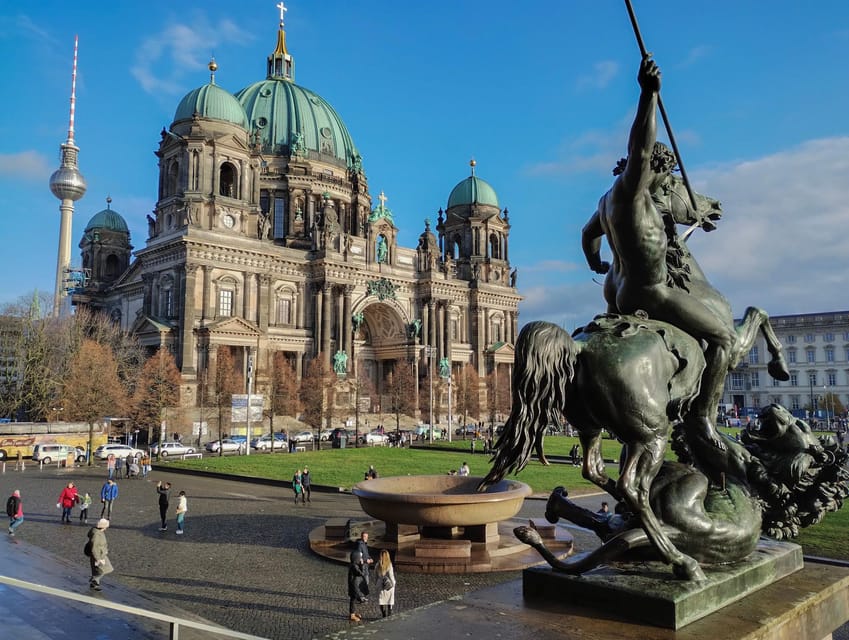
Berlin’s Museum Island is easy to admire and surprisingly hard to understand. Five major museums, a cathedral, royal buildings, archaeological collections, wartime scars, and a giant granite bowl all crowd into one compact area. This walking tour gives you the map in your head before you choose where to spend your museum time.
I like the short, focused route and the chance to step inside selected spaces rather than simply circle buildings outdoors. I also like the way the tour connects architecture with Berlin’s political past, from the Old Arsenal to the rebuilt Humboldt Forum. Guides such as Klaus Wehner bring plenty of energy and can adjust the pace for families.
The main limitation is simple: museum admission is not included. You see the buildings and a few interior areas, but you will need a separate ticket and extra time if you want to explore the collections themselves.
Key points to know
- Two hours across Museum Island: A compact introduction to Berlin’s most important museum district.
- Selected interior access: Enter the Bode Museum, Friedrichswerdersche Kirche, Humboldt Forum courtyard, and Altes Museum rotunda.
- Architecture before artworks: Learn how the buildings developed and what their styles say about Berlin.
- A useful first step: The tour helps you decide which museums deserve your remaining time.
- A memorable oddity: Hear the story of the Granitschale, Berlin’s enormous granite dish.
- English or German guidance: Private groups are available, and the route is wheelchair accessible.
Why Museum Island needs a two-hour introduction
Museum Island looks manageable on a map, but each building carries a different purpose and period. The Bode Museum curves along the tip of the island. The Pergamon Museum faces long restoration work and has been a major part of Berlin’s archaeological identity. The Neues Museum carries visible traces of war and reconstruction. The Altes Museum presents a more orderly, classical face.
Without context, you may simply see a handsome row of museums. With a good guide, you begin to understand the district as a carefully planned cultural project, shaped by monarchy, war, division, reunification, and changing ideas about how art should be displayed.
That makes this a useful first activity in Berlin. You are not spending two hours trying to see every collection. You are learning the basic story, then choosing where to return.
More Museum Island tours in Berlin:
- Berlin: Museum Island Multiple Museum Entry Ticket
★ 4.4 · 2,007 reviews - Berlin: “Pergamonmuseum. The Panorama” Exhibition Tickets
★ 4.6 · 1,245 reviews - DDR Museum Berlin Admission Ticket
★ 4.0 · 352 reviews
Meeting at the Bode Museum
The tour begins in front of the main entrance to the Bode Museum, at the bottom of the stairs. Your guide wears a name tag, which matters in a busy public area where several groups may gather.
The Bode Museum is a fitting starting point. Its grand entrance hall gives you an immediate taste of the scale and ambition behind Museum Island. You receive a guided look inside for about ten minutes, enough to appreciate the architecture and set up the wider story without using up the morning.
Klaus Wehner is the guide most often identified with this experience. His background as a freelance artist and guide helps explain the emphasis on buildings, sculpture, and visual details. You should expect interpretation rather than a rushed list of dates. His style has been described as warm, passionate, and easy to follow, with time for questions.
The opening stop also gives you a practical sense of the tour. You will spend much of the two hours walking between landmarks, pausing for explanations, and entering a few selected spaces. Comfortable shoes are sensible, though the activity is designed to be wheelchair accessible.
The Bode Museum and Pergamon Museum
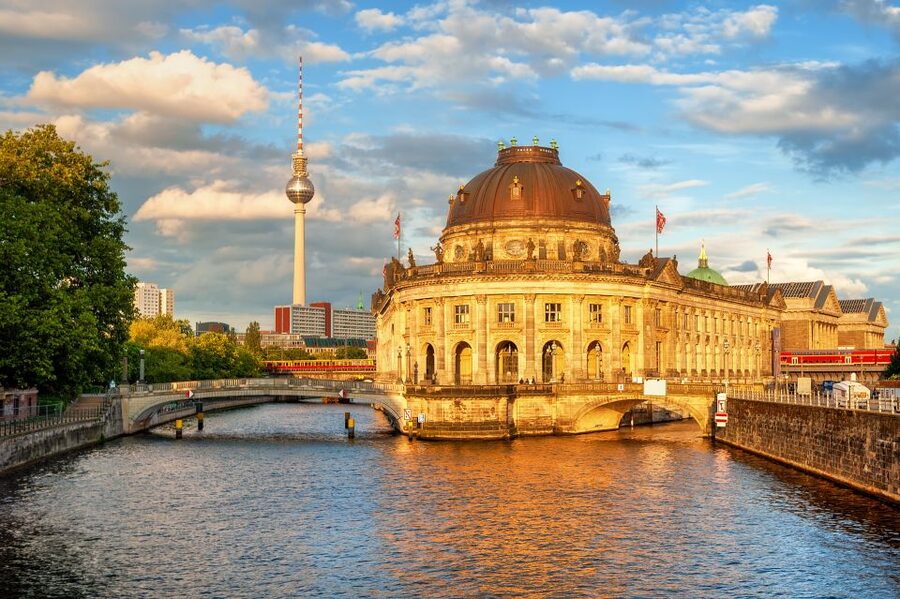
The Bode Museum is more than a starting point. Its curved form and prominent position beside the river make it one of the easiest buildings on Museum Island to recognize. Inside, the sculpture collection provides a chance to discuss how museums display religious art, sculpture, and decorative work.
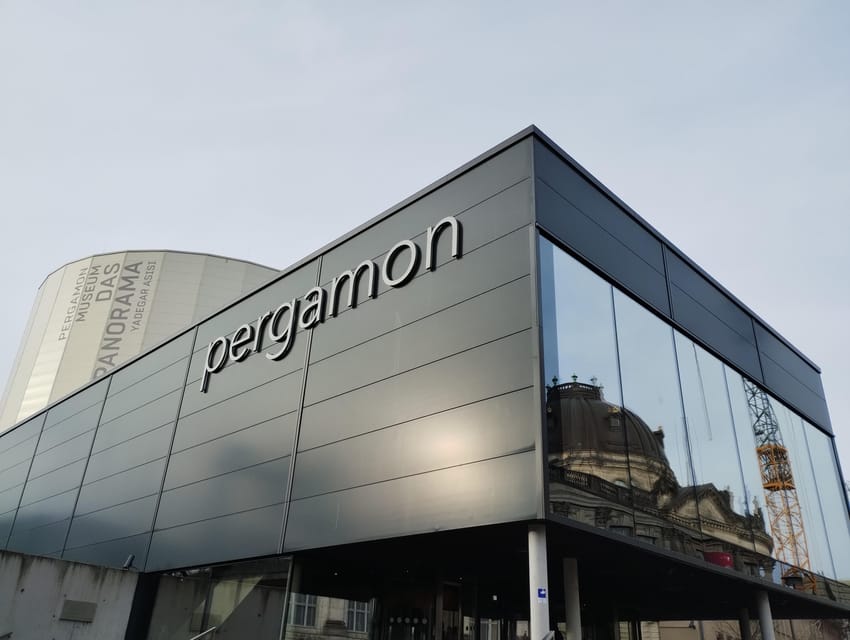
The stop at the Pergamon Museum lasts about ten minutes. Here, the focus is on the building’s role and the collections associated with it, rather than a full museum visit. You can learn why the museum became famous for monumental archaeological displays, but you will not enter the paid galleries as part of this tour.
That distinction is important. The Pergamon Museum has long been one of Berlin’s major cultural attractions, but access and opening arrangements can change during restoration. Treat this walk as an introduction, not a substitute for checking current museum conditions before planning a separate visit.
The guide’s explanations are most useful here because the building can seem like a sealed monument from the outside. You learn how its purpose shaped its architecture and how Berlin’s museums were designed to present objects from different civilizations.
The Old Arsenal and Berlin’s difficult past
The route continues to the German Historical Museum in the Old Arsenal, known in German as the Zeughaus. This building on Unter den Linden gives the tour a wider frame. Museum Island is not an isolated cultural bubble. It is tied to the military, royal, and political center of Berlin.
The Old Arsenal’s story mirrors the city’s changes. Its use and meaning shifted as Berlin moved through different periods, and the building now houses a museum devoted to German history. You will hear how architecture can preserve power even after the political system that created it has vanished.
This is one of the tour’s strongest features. Instead of treating the museums as beautiful objects alone, the guide connects them with Germany’s complicated past. The result is a more honest visit, especially for anyone interested in how Berlin’s monuments have been reused and reinterpreted.
More museums and galleries in Berlin:
- Berlin: Natural History Museum Entrance Ticket
★ 4.6 · 3,382 reviews - Skip-the-Line: Berlin Wall Museum at Checkpoint Charlie
★ 4.1 · 2,041 reviews - Berlin: Interactive DeJa Vu Museum Entrance Ticket
★ 4.1 · 1,338 reviews - Berlin: East Side Gallery Spree Cruise in a Solar Catamaran
★ 4.0 · 1,039 reviews
Neue Wache and Friedrichswerdersche Kirche
Neue Wache is a small but important stop on Unter den Linden. Its memorial role gives the walk a change of tone after the museum buildings. You hear about its place in Berlin’s public memory and how the city has used prominent buildings to express ideas about war, mourning, and national identity.
The visit to Friedrichswerdersche Kirche is one of the more unusual parts of the route. This historic church contains a sculpture collection, and the tour includes access to that collection. It is a quieter interior experience than the large museums, with architecture that helps show how Berlin’s cultural spaces developed beyond Museum Island itself.
I particularly like this stop for first-time visitors. It is not as obvious as the Altes Museum or Berlin Cathedral, so you may not find it on your own. The church adds a smaller, more intimate setting to a tour otherwise filled with grand façades and major institutions.
Humboldt Forum and the Schlüter Courtyard

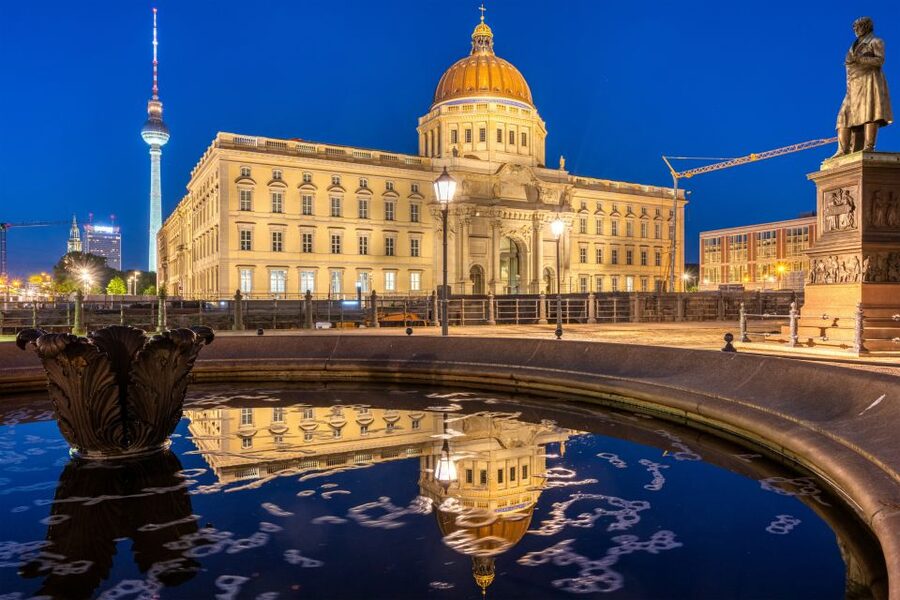
The Humboldt Forum is one of Berlin’s most debated modern cultural projects. Its exterior recalls the former Berlin Palace, while its present role is tied to museums, cultural exchange, and the city’s effort to deal with its imperial past.
The tour includes the Schlüter Courtyard. This is a valuable interior visit because it lets you compare the rebuilt palace-style elements with the modern institution housed inside. The guide can explain how the project relates to earlier buildings on the site and why reconstruction in Berlin is rarely just a question of putting old façades back in place.
You will not receive a full tour of every Humboldt Forum exhibition. Instead, you gain the background needed to decide if the building and its collections deserve a longer visit later.
This is also a place where a live guide adds real value. A quick photograph cannot explain why a recreated palace façade provokes discussion, or how Berlin’s present-day cultural institutions are linked to older ideas of royal power and collecting.
Lustgarten, Berlin Cathedral, and the Granitschale
Lustgarten opens the view across the heart of Museum Island. It gives you a useful pause between the buildings and helps you understand how the museums relate spatially. From here, the scale of the district becomes clearer, especially when you look toward the cathedral and the Altes Museum.
Berlin Cathedral is not included as a full interior visit, but its exterior is central to the area’s identity. The guide explains how it fits into the group of monumental buildings around the square. You gain a better sense of why this part of Berlin was designed to impress visitors with architecture, religion, culture, and state power all in one setting.
The Granitschale is a small but memorable part of the walk. This enormous granite dish is often described as the largest granite bowl in the world. Its size and unusual story make it a useful reminder that Berlin’s public spaces are filled with objects that can be easy to overlook when you are focused on the famous museums.
Details like this are where the tour earns its price. You are not only being directed toward the postcard views. You are being shown the odd objects, side stories, and visual clues that make the area easier to remember.
The Altes Museum rotunda and the first purpose-built museum
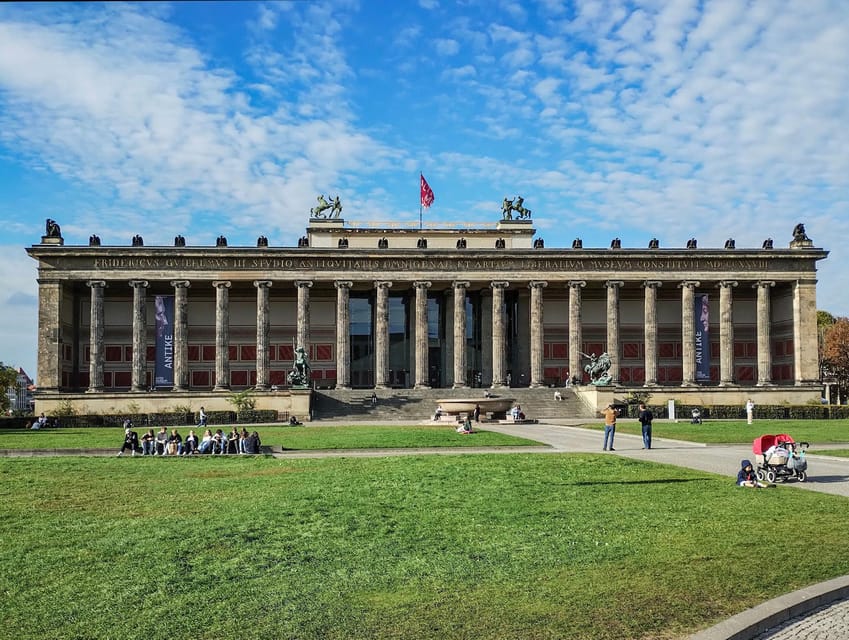
The Altes Museum is one of the key stops. It was Germany’s first purpose-built museum, and its design reflects an important change in public life: art and antiquities were being presented not only for rulers and private collectors, but for a wider public.
The tour includes entry to the rotunda. This is one of the strongest interior moments of the experience, since the circular space gives you a direct feel for the building’s classical ideals. Columns, symmetry, and ceremony are not random decoration here. They express a belief that a museum could educate citizens through contact with art and history.
You receive roughly ten minutes at this stop, so do not expect a detailed examination of every object. The value is in seeing the space and hearing how the museum fits into the larger plan for Museum Island.
If you later visit the Altes Museum independently, you will already understand why the building looks so different from the Bode Museum or Neues Museum. That basic comparison makes your second visit more rewarding.
Alte Nationalgalerie and the Neues Museum
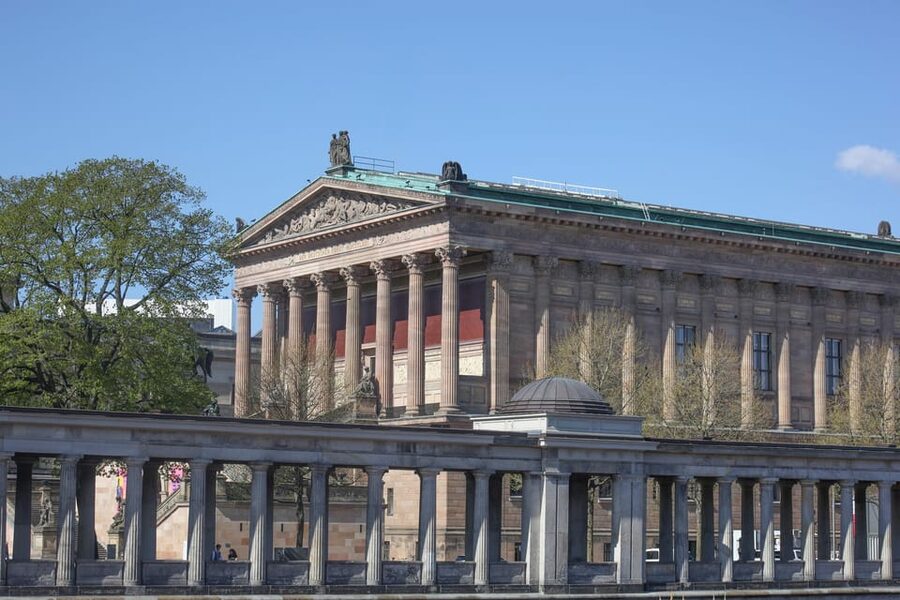
The Alte Nationalgalerie is discussed from the outside as part of the walk. Its elevated position and formal appearance make it one of the most recognizable buildings on the island. The guide explains its place in Berlin’s museum plan and the role of national art collections.
The stop is brief, so you will need a separate visit if you want to see the paintings and sculptures inside. Still, the exterior explanation helps you decide if the museum fits your interests. That is one of the practical benefits of this tour: you spend less time guessing which grand building deserves your limited hours.
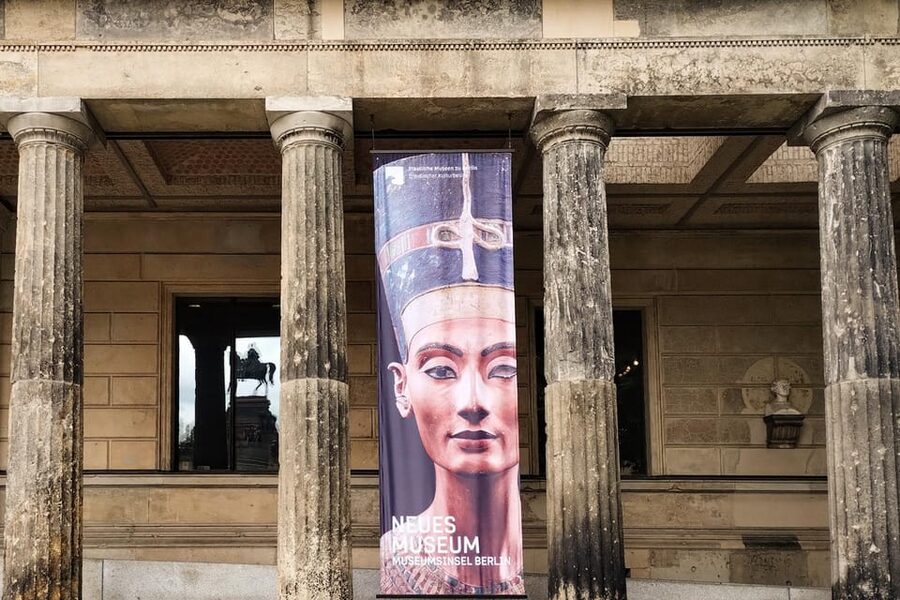
The Neues Museum closes the route. Its importance comes from both its collections and its physical history. The building was badly damaged during the Second World War and later restored, leaving a visible conversation between old fabric, wartime loss, and modern repair.
You hear about the building’s development and its place within Museum Island. The tour does not replace a visit to the Egyptian and prehistoric collections, but it gives you a better reason to enter. If you are interested in restoration, architecture, or the way museums handle damaged buildings, put the Neues Museum high on your follow-up list.
What you actually get for $34
At $34 per person, this is not a bargain-priced stroll in the usual sense. It is a specialist introduction to one of Berlin’s most important cultural areas. The price is easier to justify if you are short on time, unfamiliar with the museums, or likely to return for one or two full museum visits afterward.
You are paying for a live guide, a planned route, historical interpretation, and access to selected interiors. The tour also saves you from treating Museum Island as a string of unrelated buildings. That framing is the main value.
The price is less attractive if you already know Berlin’s museum district well, or if you mainly want hours inside the collections. Since no museum admission is included, budget separately for any galleries you plan to visit.
The strongest value comes from the guide’s ability to make the architecture readable. Klaus Wehner is repeatedly praised for his enthusiasm, clear explanations, and willingness to answer questions. He also receives credit for keeping a comfortable pace, including for a family with a seven-year-old child.
Who will enjoy this walk most
I would recommend this tour to first-time visitors who want a clear introduction before buying museum tickets. It also suits people with limited time, since two hours covers the main buildings without asking you to commit to a full day indoors.
Families may appreciate the manageable pace and the mix of outdoor sights and short interior visits. History fans will like the links between Berlin’s buildings and its political past. Art lovers will benefit from learning how the institutions are organized before choosing which collections to explore.
You should think twice if you want a full art tour. The route gives you context and architecture, not extended time with individual artworks. It is also worth checking the starting time carefully, since the activity lasts two hours and the available times can vary.
English and German tours are available. A private group option gives you more control over the experience, though the standard price listed is per person and a private booking may follow different pricing.
Cancellation is flexible up to 24 hours in advance for a full refund, and you can reserve now and pay later. Those policies are useful if your Berlin schedule is still taking shape, but the main decision remains your interest in interpretation rather than museum entry.
Should you book the Museum Island walking tour?
Book it if you want to understand Berlin’s museum district before exploring it on your own. The combination of the Altes Museum rotunda, Humboldt Forum courtyard, Friedrichswerdersche Kirche sculpture collection, and exterior explanations of the major museums gives you more than a standard photo walk.
I would especially choose it for a short Berlin stay. You get the essential layout, several memorable stories, and a sensible plan for your next museum visit in only two hours.
Skip it if your priority is spending those two hours inside a single museum. In that case, put the $34 toward admission and explore at your own pace. For everyone else, this is a useful and lively way to make sense of one of Berlin’s most confusing and rewarding districts.
FAQ
How long does the Museum Island tour last?
The walking tour lasts two hours.
Where does the tour begin?
Meet your guide in front of the main entrance to the Bode Museum, at the bottom of the stairs. The guide wears a name tag.
Is museum admission included?
No. Entry to the museums is not included, although the tour does include selected interior areas and the sculpture collection in Friedrichswerdersche Kirche.
Which languages are available?
The live tour guide is available in English and German.
Which interior areas can I enter during the tour?
The experience includes the sculpture collection in Friedrichswerdersche Kirche, the Schlüter Courtyard of the Humboldt Forum, and the rotunda of the Altes Museum. It also begins with a guided visit to the Bode Museum entrance hall.
Is the tour wheelchair accessible?
Yes, the activity is wheelchair accessible.
Can I cancel or pay later?
You can cancel up to 24 hours in advance for a full refund. Reserve now and pay later is also available.
More Walking Tours in Berlin
- Discover Berlin Half-Day Walking Tour
★ 5.0 · 9,624 reviews - Berlin: Third Reich and Cold War 2 Hour Walking Tour
★ 4.9 · 6,830 reviews - Berlin: Discover Berlin Walking Tour
★ 4.9 · 5,998 reviews - Berlin’s Best: 2 Hour Walking Tour Third Reich and the Cold War
★ 5.0 · 5,486 reviews
Newest Berlin reviews
- Where It All Began: Berlin’s Queer & Trans History Tour★ 4.9 · 6 reviews
- Understanding Kreuzberg: The roots of local (sub)culture★ 4.9 · 11 reviews
- Berlin: guided canoe | kayaktour★ 4.1 · 7 reviews
- Private Potsdam City Tour in an authentic vintage van★ 5.0 · 14 reviews
- Warnemünde Shore Excursion: Private Sachsenhausen and Berlin Tour★ 5.0 · 12 reviews
- Ultimate E-Bike Tour of Berlin with Beer Garden Stop★ 5.0 · 4 reviews
- Private Walking Tour of Potsdam and Sanssouci★ 5.0 · 24 reviews
- Potsdam Highlights – Private sightseeing tour by minibus★ 5.0 · 3 reviews
Museum Island Tours, compared.
“Pergamonmuseum. The Panorama” Exhibition Tickets
Read our review →


Decolonial Berlin Castle/ Humboldt Forum Guided Tour
Read our review →
Browse the lists this tour appears in