
Reviewed · JEWISH BERLIN TOURS
Berlin: Historic Jewish walking tour through the city center
Berlin’s former Jewish tailoring industry is the key to this compact walk. In just one hour, you connect Prussian Berlin, the Roaring Twenties, and today’s city with the people and businesses that once made this district a center of fashion and trade.
I like the clear route, which stays in central Berlin, and the focus on an economic story that is easy to miss among grand buildings and famous political sites. I also like that the guide gives you a map and an ordered list of activities, so the tour has a useful shape rather than becoming a loose stroll.
The main drawback is the short running time. The subject is serious and broad, so you should expect an introduction with selected stories, not a full study of Berlin’s Jewish life. The donation-based booking and advertised $1.70 price also deserve a quick check before you reserve.
Key points at a glance
- Hausvogteiplatz sets the scene: Begin by the fountain near the U2 station, where the former economic center comes into focus.
- The Konfektion industry is the main thread: Learn how Jewish tailoring, fashion, and trade helped drive Berlin’s economy before the Second World War.
- Three central locations keep the tour focused: Hausvogteiplatz, Werderscher Markt, and Jägerstraße fit into a one-hour route.
- History reaches beyond architecture: The guide links business, political extremism, survival, the fall of the Wall, and modern Berlin.
- The tour runs in English: A live guide leads the walk, and the route is wheelchair accessible.
- The price needs clarification: The activity is shown at $1.70 per person, while the provider describes booking on a donation basis.
Why this small story matters in central Berlin
I like tours that give familiar streets a new purpose. This walk does that by focusing on Berlin’s lost Jewish tailoring industry, known here as the Konfektion industry. Instead of treating history as a row of dates and buildings, the guide uses clothing, commerce, and urban change to show how a city worked.
That approach gives you a practical way to understand Berlin before the Second World War. The district was not simply a place where people lived. It was tied to fashion, business, and the money that moved through the capital. You hear how Jewish residents developed businesses, found success, and, in some cases, survived the brutal effects of political regimes.
The subject also shows how quickly an industry can be damaged when extremism takes hold. That is the tour’s most useful lesson. Political violence does not only change laws and borders. It can destroy companies, careers, neighborhoods, and the skilled networks that make an industry possible.
The guide also brings the story forward. You will hear how Berlin changed after the fall of the Wall and how this central area progressed into the present. That makes the walk more than a look backward. You are asked to compare several versions of the same city: Prussian Berlin, the glamour of the Roaring Twenties, the period before the Wall fell, and modern Berlin.
More Jewish history tours in Berlin:
- Nazi Berlin and the Jewish Community Tour
★ 4.8 · 55 reviews - Path of Resistance: Berlin’s Hidden Holocaust Stories
★ 5.0 · 33 reviews - Private Tour: Jewish Heritage Walking Tour of Berlin
★ 5.0 · 29 reviews
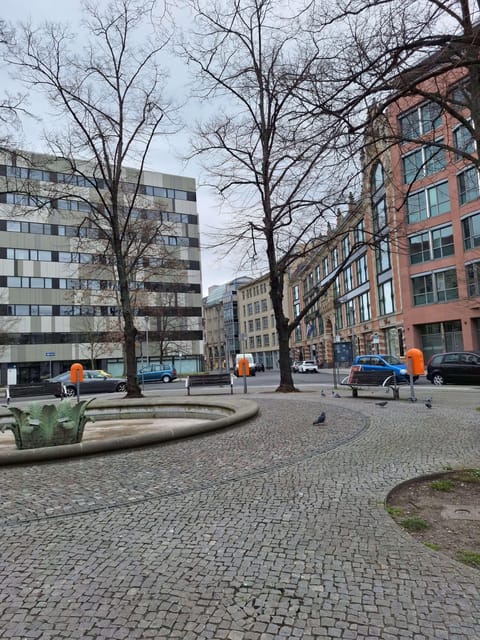
Starting at Hausvogteiplatz by the fountain
Your meeting point is the fountain at Hausvogteiplatz, close to the U2 station. This is a sensible place to begin because it is easy to reach by public transport and keeps the walk firmly in the city center.
Look for the guide carrying a white side bag. That small identifying detail matters in a busy square, particularly if several groups are gathering nearby. You should also confirm your arrival by email, phone, message, or WhatsApp before the tour. The provider specifically asks for this verification, so do not treat it as an optional courtesy.
Hausvogteiplatz is both the starting point and the end point. You do not need to plan a separate return journey, and the compact route makes it easy to continue sightseeing afterward. Since the walk lasts only one hour, I would place it early in a day when you want a historical orientation, or later when you prefer a short activity between larger Berlin sights.
The tour is guided in English. No individual guide name is provided, so you should not expect to request a particular guide. The format is personal and guide-led, with the history explained as you move through the district.
Thirty minutes at the main square
The first substantial portion takes place at Hausvogteiplatz itself, with about 30 minutes of guided explanation. This is the longest stop, so expect it to carry much of the tour’s historical argument.
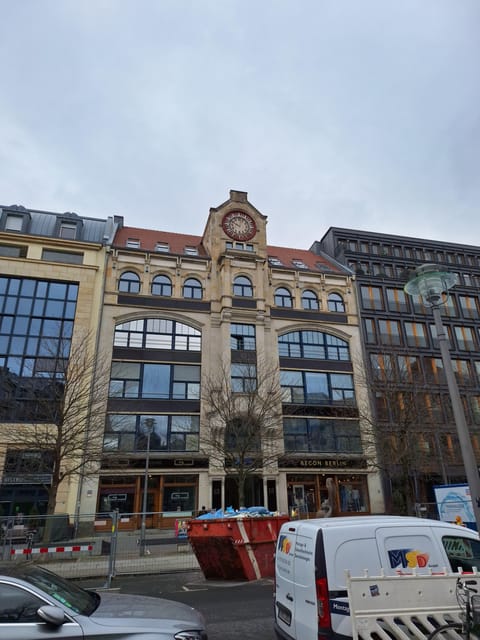
Here you begin with the former economic Jewish center and the industries that made the area important. The central idea is the Konfektion trade, the tailoring and ready-made clothing business that helped power Berlin before the Second World War. You are not just looking at architecture. You are learning how work, fashion, Jewish enterprise, and city life were connected.
I find this especially useful for anyone who wants social and economic context. Berlin’s grand political story can overshadow the people who made the city function day by day. A focus on tailoring lets you consider factories, shops, design, trade, and the people behind them, even within a short visit.
The guide also places the district in several periods. You hear about the Prussian Empire, the stylish energy of the Roaring Twenties, the effect of extremist regimes, and the lives of Jewish people who built businesses, thrived, or survived. The wording of the experience makes clear that survival was not guaranteed, and the human cost is central to the story.
This is also where the one-hour format can feel tight. Thirty minutes is enough to establish the subject and tell selected stories, but not enough to cover every part of Berlin’s Jewish history. I would arrive ready to listen closely and save broader questions for the end, rather than expecting a long stop at each building.
Werderscher Markt and the city’s changing center
The route continues to Werderscher Markt for about 15 minutes. This stop gives the walk a second point of reference and helps you see the district as a connected urban area rather than one isolated square.
The supplied details describe this as a visit, with the guide pointing out scenic and historic parts of central Berlin. The value here is the connection between place and change. You are encouraged to consider how the district developed after the fall of the Wall and how an area once tied to Jewish commerce progressed into the present city.
I like this part because it widens the tour’s focus. The story is not frozen in the period before the Second World War. Berlin has been reshaped by political regimes, division, reunification, and new patterns of economic life. Werderscher Markt helps the guide move from lost businesses and disrupted lives to the city you see around you now.
Do not expect a long independent exploration at this stop. Fifteen minutes passes quickly, and the activity is built around the guide’s explanation. If you want time to examine every building or take many photographs, you may need to return on your own after the tour.
More history tours in Berlin:
- Berlin: Natural History Museum Entrance Ticket
★ 4.6 · 3,382 reviews - Berlin: World Heritage Cruise to Potsdam
★ 4.5 · 1,435 reviews - Berlin Historical Highlights Walking Tour
★ 4.9 · 657 reviews - Berlin Private Complete History All Day Walking Tour
★ 5.0 · 474 reviews
Jägerstraße and the final fifteen minutes
The final listed stop is Jägerstraße, also planned for about 15 minutes. It completes the short circuit before you return to Hausvogteiplatz.
By this point, the main theme should be clear: Berlin’s Jewish tailoring industry was part of the city’s economic strength, and political extremism helped tear that world apart. Jägerstraße gives the guide another setting for the story, while the walk itself shows how close these locations are within the central city.
This stop is likely most useful if you pay attention to links between the locations. The tour is not selling one spectacular monument as its main attraction. Its interest comes from layering several ordinary-looking streets and squares into a larger account of business, identity, repression, and urban change.
The return to Hausvogteiplatz is convenient. You finish where you began, near the U2 station, with no need for a taxi or a complicated route back. The compact design also suits a first day in Berlin, when you want to learn how the center fits together without spending half a day on your feet.
What the one-hour format gives you
A one-hour walk is a useful choice for a short schedule. You can fit it between major museums, shopping, or other central Berlin sights. The route has only three named locations, and the timing is clear: about 30 minutes at Hausvogteiplatz, 15 minutes at Werderscher Markt, and 15 minutes at Jägerstraße.
That clarity is a strength. You know this is a focused introduction, not an open-ended march across the city. The supplied map and ordered activity list should also help you follow the progression and remember the places afterward.
The limit is depth. Berlin’s Jewish history, the Prussian Empire, the Roaring Twenties, the Nazi period, the fall of the Wall, and modern redevelopment are large subjects. This walk can connect them, but it cannot fully explain each one in an hour.
I would choose this tour if you value a strong theme and a manageable route. If you want a long visit to memorials, museums, or religious sites, you will need a separate activity. The walk’s purpose is to explain the lost tailoring industry and its setting, not to cover every Jewish site in Berlin.
Price, donation basis, and practical value
The listed price is $1.70 per person, which makes the experience unusually inexpensive for a live, English-language city-center tour. At that price, it can be a smart addition to your Berlin plans, especially if you want a brief historical introduction rather than a costly half-day outing.
There is an important qualification. The provider describes the tour as operating on a donation basis and invites people to get in touch to book that way. Because the displayed price and the donation wording do not say exactly the same thing, confirm the expected contribution before booking.
The value does not come from the number of sights. It comes from the guide’s interpretation of a subject you might otherwise pass without noticing. You are paying for the connection between places, economic history, and personal stories, along with the convenience of a central route and a short time commitment.
The experience includes the walking tour, access to a map, and an ordered list of activities. It does not list meals, transport, museum tickets, or entry to an indoor attraction. Plan on an outdoor walk around the city center.
Free cancellation is available up to 24 hours before the start for a full refund, and you can reserve now and pay later. The route is wheelchair accessible. Children under six are not permitted, so families should check the age rule before making plans.
Who will get the most from this walk
I would recommend this tour to anyone who wants Berlin explained through ordinary work and commerce, not only through government buildings and war memorials. It should suit first-time visitors who want a short orientation and repeat visitors looking for a different angle on the center.
It is also a good choice for people interested in Jewish history, fashion, urban change, and the effects of political extremism on daily life. The tailoring industry offers a direct way into those subjects without requiring a full day in a museum.
The tour may be less satisfying if you want a relaxed, photo-heavy stroll. The schedule gives each stop a fixed amount of time, and the subject requires attention. You will get more from it if you listen closely and allow the guide to build the story across the route.
Families with very young children should choose another activity because children under six are not suitable for this tour. Older children may follow the story, but the topic includes persecution, destruction, and survival, so parents should decide if that subject fits their group.
My verdict on the Hausvogteiplatz route
Book this walk if you want a low-cost, one-hour introduction to Berlin’s lost Jewish tailoring industry and the economic life of the central city. I especially like its tight route, English guidance, clear historical theme, and return to the same U2-accessible meeting point.
Before reserving, confirm how the $1.70 price relates to the donation-based arrangement. Go in with realistic expectations: this is a focused historical conversation, not a complete survey of Jewish Berlin. If that sounds right, the tour offers a useful way to see familiar central streets with much more meaning.
FAQ
Where does the tour start?
The tour starts at Hausvogteiplatz square, near the water fountain and close to the U2 train station.
How do I identify the guide?
The guide will carry a white side bag.
Where does the tour finish?
The activity finishes back at Hausvogteiplatz, the same place where it begins.
How long does the tour last?
The walking tour lasts one hour.
Which places are included?
The route includes Hausvogteiplatz, Werderscher Markt, and Jägerstraße.
What language is the tour in?
The live tour guide conducts the experience in English.
What is the tour about?
The tour explores Berlin’s former Jewish economic center and the lost Jewish tailoring industry, including its development, the effects of political extremism, and changes in Berlin after the fall of the Wall.
Is the route wheelchair accessible?
Yes, the activity is listed as wheelchair accessible.
Can I cancel the booking?
Yes. You can cancel up to 24 hours in advance for a full refund. You can also reserve now and pay later.
More Walking Tours in Berlin
- Discover Berlin Half-Day Walking Tour
★ 5.0 · 9,624 reviews - Berlin: Third Reich and Cold War 2 Hour Walking Tour
★ 4.9 · 6,830 reviews - Berlin: Discover Berlin Walking Tour
★ 4.9 · 5,998 reviews - Berlin’s Best: 2 Hour Walking Tour Third Reich and the Cold War
★ 5.0 · 5,486 reviews
Newest Berlin reviews
- Where It All Began: Berlin’s Queer & Trans History Tour★ 4.9 · 6 reviews
- Understanding Kreuzberg: The roots of local (sub)culture★ 4.9 · 11 reviews
- Berlin: guided canoe | kayaktour★ 4.1 · 7 reviews
- Private Potsdam City Tour in an authentic vintage van★ 5.0 · 14 reviews
- Warnemünde Shore Excursion: Private Sachsenhausen and Berlin Tour★ 5.0 · 12 reviews
- Ultimate E-Bike Tour of Berlin with Beer Garden Stop★ 5.0 · 4 reviews
- In the Forbidden City – Potsdam Walking Tour★ 5.0 · 17 reviews
- Private Walking Tour of Potsdam and Sanssouci★ 5.0 · 24 reviews
Jewish Berlin Tours, compared.
Path of Resistance: Berlin’s Hidden Holocaust Stories
Read our review →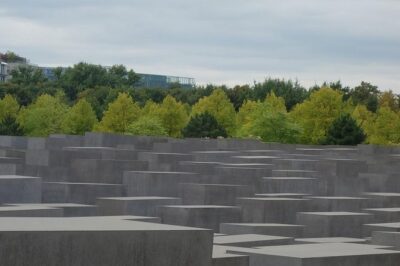
Private Tour: Jewish Heritage Walking Tour of Berlin
Read our review →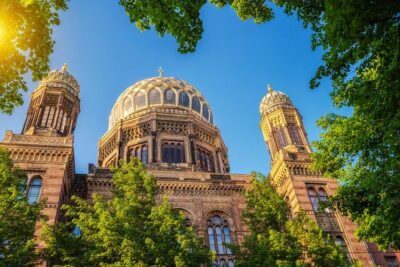
Jewish Berlin: Walking tour The Old Jewish Quarter (private 3 Hours tour)
Read our review →
Path of Resistance: Berlin’s Hidden Holocaust Stories
Read our review →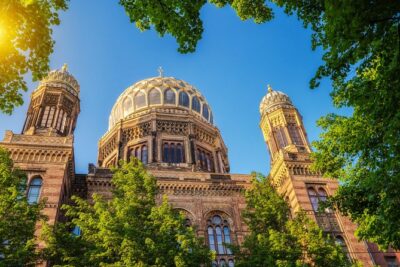

Browse the lists this tour appears in