
Reviewed · KREUZBERG TOURS
Small-Group 3-Hour Berlin Walking Tour of Kreuzberg ‘s Wild Side
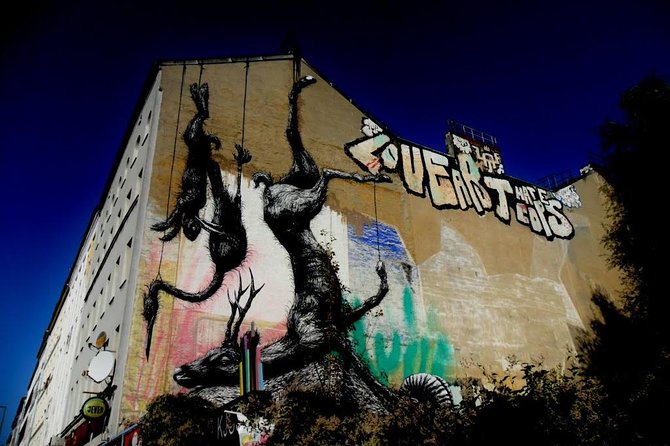
Kreuzberg’s story is written in its courtyards, former squats, Turkish cafés, music clubs, and old Berlin walls. I like this tour for its small maximum of 12 people, which should make it easier to ask questions, and for its route through places such as SO36, Görlitzer Park, Bethanien, and the famous treehouse beside the former Berlin Wall. The three-hour format gives you more than a quick photo stop.
The main drawback is that the tour depends on a guide arriving promptly and on the minimum group being met. One booking issue led to a 25-minute wait, while another scheduled walk was canceled during a BVG strike when the other participants did not show. Allow a little flexibility in your plans.
Key points at a glance
- Kottbusser Tor start: Begin in one of Kreuzberg’s most multicultural transport and street-life hubs.
- SO36 and Oranienstrasse: Learn how a poor quarter became a center for alternative music, art, fashion, cafés, and nightlife.
- Courtyards and former squats: Look beyond the street frontage to see the building patterns that shaped everyday Kreuzberg.
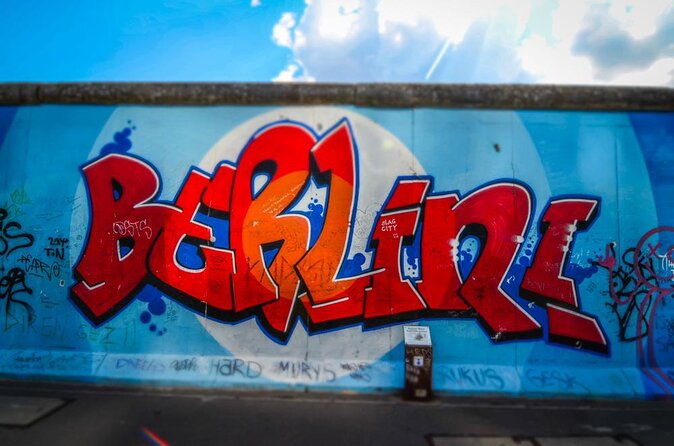
- Berlin Wall stories: Visit Mariannenplatz, Bethanien, St. Thomas Church, and the unusual treehouse built beside the former wall.
- Market Hall Nine break: Pause inside a well-known food market, though food and drinks are not included.
- A walk across changing Berlin: Finish at Oberbaumbrücke after passing Görlitzer Park and Wiener Strasse.
Why Kreuzberg makes such a good walking tour
Kreuzberg is one of Berlin’s most rewarding districts for a walking tour because its identity is not contained in one grand monument. It comes from layers of ordinary streets, immigrant life, political protest, music, housing, art, and urban change.
The tour begins at Kottbusser Tor, a natural place to see that mix right away. This part of Kreuzberg is known for its international cafés, bars, restaurants, and daily street activity. It is not a polished historic center, and that is the point. You start in a part of Berlin where the city’s modern character is easy to read.
From there, the walk connects 19th-century development with the district you see today. Kreuzberg once ranked among Berlin’s poorest areas. Over time, its low rents and central location helped attract artists, musicians, alternative businesses, and new residents from many countries.
I find that context useful because it keeps the tour from becoming a simple parade of colorful walls and trendy bars. You learn why Kreuzberg became fashionable, what came before that popularity, and how the district’s rougher edge helped create its appeal.
The tour provider identifies this as a small-group experience with a maximum of 12 participants. That size matters on a walking route through busy streets. You should have a better chance of hearing the guide in a crowded area and asking about a building or street that catches your eye.
More Kreuzberg tours in Berlin:
- Kreuzberg: Culinary Food Tour
★ 4.5 · 770 reviews - Berlin: Kreuzberg Guided Walking Evening Tour
★ 4.7 · 555 reviews - Berlin: Alternative Bike Tour of Kreuzberg & Friedrichshain
★ 4.7 · 548 reviews
Kottbusser Tor and the beginning of the walk
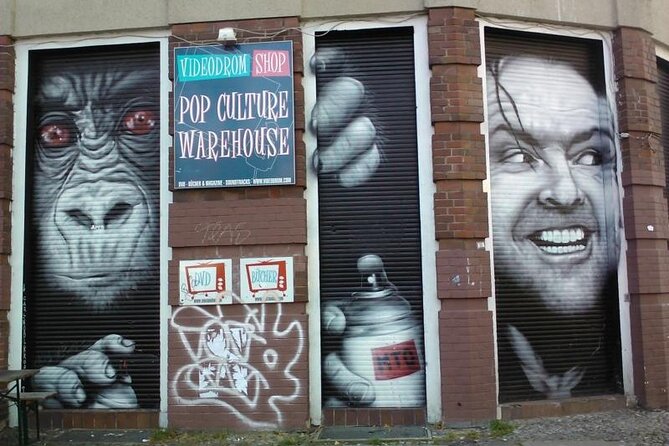
Your meeting point is Skalitzer Strasse 137, close to Kottbusser Tor. The area is near public transportation, so it is practical to reach from other parts of Berlin. Check the exact starting point carefully before you leave, since Kreuzberg has several busy streets and large intersections.
Kottbusser Tor introduces the district through food, shops, public transport, and street life rather than grand architecture. This is a useful opening because the tour is about how people have lived in Kreuzberg, not just about buildings that appear in guidebooks.
The route then moves toward SO36, the district’s best-known alternative quarter. The name refers to the old postal code, and it remains closely tied to Kreuzberg’s music and club culture. One itinerary stop is Club SO36, where you have about 10 minutes and no admission fee.
Do not expect a full club visit during the daytime walking tour. The value is in understanding the place as part of Kreuzberg’s cultural story. SO36 became linked with punk, underground music, and political activity, helping shape the image of Kreuzberg as Berlin’s wild side.
Oranienstrasse and the SO36 story
Oranienstrasse sits at the heart of the SO36 district. The street is associated with cafés, restaurants, bars, independent businesses, and the kind of street-level culture that makes Kreuzberg feel different from Berlin’s formal museum zones.
Your guide discusses how fashion, art, and music developed here. That subject works best when you pay attention to the contrast between the old buildings and the newer businesses occupying them. Kreuzberg’s popularity did not erase its past, but it did change who could afford to live and work in parts of the neighborhood.
The walk also includes typical Berlin courtyards. These spaces sit behind the main street façades and help explain the district’s 19th-century housing pattern. From the sidewalk, a building may look like one long block. Inside, several courtyards can reveal a denser world of homes, workshops, and shared space.
These courtyards are one of the strongest reasons to take the tour with a guide rather than simply wander Oranienstrasse alone. You may notice the architecture on your own, but the explanation helps connect building design with social history.
Rio-Reiser-Platz and Heinrichplatz
Another short stop is Rio-Reiser-Platz, near Heinrichplatz and the Frauenzentrum Schokoladenfabrik. The scheduled time is about 10 minutes, with no admission fee.
The place connects Kreuzberg to its political and cultural life. The route uses these public spaces to explain how neighborhood activism, women’s projects, music, and alternative culture became part of the district’s identity.
A brief stop means you should expect an overview rather than an extended visit inside a specific institution. That is not a serious flaw, but it helps set your expectations. This is a walking tour with several points of interest, not a series of long museum visits.
I would pay close attention here if you are interested in the way Berlin’s postwar neighborhoods changed through community action. The tour’s value comes from seeing how streets and squares became tied to wider movements in art, housing, gender politics, and local identity.
More three-hour experiences in Berlin:
- Berlin Highlights 3-Hour Bike Tour
★ 5.0 · 948 reviews - Berlin Highlights: 3-Hour Bike Tour
★ 4.9 · 809 reviews - Berlin: 3-Hour Street Art Tour
★ 4.7 · 778 reviews - Berlin: 3-Hour Secret Food Tour
★ 4.8 · 269 reviews
Former squats, Mariannenplatz, and Bethanien
Kreuzberg’s former squatted houses are another important part of the route. The guide points out these projects on the way to Mariannenplatz, explaining how occupied buildings became part of the district’s housing and political story.
The word squat can sound exotic if you only encounter it as a Berlin legend. In Kreuzberg, it also relates to practical issues: empty buildings, low rents, housing pressure, and disputes over who had the right to shape the neighborhood. The tour gives you a way to see the buildings as part of a longer urban argument.
At Mariannenplatz, the route reaches Arthouse Bethanien. The building began as a historic hospital and later became connected with art and cultural use. Its location beside the former Berlin Wall adds another layer to the visit.
This is a good example of how the tour links several periods without separating them into neat boxes. A former hospital, an art center, a public square, and the Berlin Wall all meet in one part of Kreuzberg. You get a stronger sense of the district when those connections are explained on foot.
The tour also includes St. Thomas Protestant Church. Along with Bethanien, it gives the route an architectural counterpoint to clubs, cafés, and former squats. Kreuzberg is not only an alternative-culture district. It also has older religious and civic buildings that show how the area developed before its modern reputation.
The Berlin Wall’s local traces
The Berlin Wall is often treated as a major sight around Checkpoint Charlie, the East Side Gallery, or the Berlin Wall Memorial. This tour approaches it through smaller local traces in Kreuzberg.
One unusual feature is the treehouse built next to the former wall. It is the sort of detail easy to miss if you are walking alone. The treehouse points to the personal and improvised ways residents responded to a border that cut through the city.
The route also places the wall in relation to homes, churches, parks, and neighborhood streets. That perspective can be more useful than a single large memorial because it shows how the division affected daily life.
The description does not promise entry to a museum or a preserved wall interior, so plan for an outdoor explanation and local landmarks. Bring comfortable shoes and clothing suited to three hours outside. The walk includes several stops, but you remain on foot for the experience.
Görlitzer Park and Wiener Strasse
Görlitzer Park receives a scheduled stop of about 15 minutes. The park occupies the former Görlitzer Bahnhof area and gives the route a change of pace after the denser streets around SO36.
Parks are valuable on a neighborhood tour because they show how residents use open space, not just how buildings look. Here, your guide continues the story of change in Kreuzberg while giving you a place to pause.
The park is not presented as a formal attraction with an admission ticket. It is part of the public fabric of the district. The short stop also means you will not spend most of the tour sitting or sightseeing in one location.
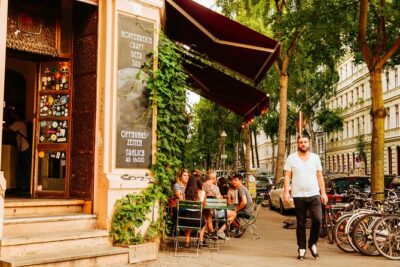
Wiener Strasse is another route highlight. Along with Oranienstrasse, it helps you see the district’s mix of restaurants, cafés, bars, and everyday services. You may find the street’s appeal comes less from one landmark than from the contrast between old façades, new businesses, and the people using the neighborhood.
The Market Hall Nine break
The tour includes a break at Market Hall Nine, also known as Markthalle Neun. This is a practical pause in the middle of a long walk and one of the best chances to see Kreuzberg’s food culture in one place.
Food and drinks are not included, so budget separately if you want to buy something. That arrangement gives you freedom to choose what suits you rather than paying for a fixed tasting.
The break can also help you decide if you want to return later on your own. A market visit during a guided walk is usually brief, so you should not expect enough time to explore every stall or make it a full meal stop.
If you have dietary needs, the supplied tour information does not specify food options. You can ask the guide during the break, but do not assume that refreshments are part of the $22.45 price.
What the $22.45 price delivers
At $22.45 per person, this is an inexpensive way to spend three hours in one of Berlin’s most distinctive districts. The price includes a local guide, the walking tour, and a break at Market Hall Nine. It does not include food, drinks, or hotel pickup and drop-off.
The value depends on how much context you want. If you only need directions between Kreuzberg’s main streets, you can walk the area independently. If you want the stories behind the courtyards, former squats, music clubs, wall remnants, and public spaces, the guide adds the most important part of the experience.
The maximum group size of 12 also improves the value. You are not paying for a giant group that moves from one landmark to another. The small format should make the walk feel more personal, although the quality still depends on the individual guide.
The average booking time is 12 days ahead. That suggests you should not wait until the last minute if your Berlin schedule is tight, especially because the tour requires a minimum number of participants.
Timing, meeting point, and practical concerns
The walk lasts about three hours. It starts at Skalitzer Strasse 137 near Kottbusser Tor and ends at Oberbaumbrücke, not at the original meeting point.
That ending is useful if you plan to continue sightseeing in eastern Kreuzberg or around the bridge. It also means you should not arrange a fixed appointment back near Kottbusser Tor immediately afterward. Allow extra time for the end of the walk and for public transportation.
The tour is near public transportation, and most people can participate. The information does not give a detailed accessibility assessment, so you should contact the provider if you have mobility concerns or need a route with fewer uneven surfaces and stairs.
A mobile ticket is provided. Keep the ticket available on your phone at the starting point, and confirm that the meeting address matches Skalitzer Strasse 137.
One practical warning comes from the tour’s operating rules. If the minimum number is not met, the experience may be canceled, with a different date or a full refund offered. A public transport strike also caused one scheduled tour to fail when the other participants did not arrive, leaving one person waiting at the meeting point. That is unusual, but it shows why you should check your confirmation and transport conditions on the day.
You can cancel for a full refund up to 24 hours before the start time. Changes or cancellations inside that window are not accepted for a refund.
Who should book this Kreuzberg walk?
I would choose this tour if you want to understand Berlin through a neighborhood rather than through a list of major sights. It suits first-time visitors who want a guided introduction to Kreuzberg, as well as repeat visitors who have seen central Berlin and want a more local area.
It is especially useful for you if you are interested in:
- Berlin’s divided past and local Berlin Wall traces
- Alternative music, art, fashion, and club culture
- Immigration and multicultural city life
- Old courtyards and urban housing
- Former squats and community projects
- Food markets and independent streets
It is less suitable if you want a museum-heavy tour, a long stop at one monument, or included food and drinks. You should also think twice if you dislike walking for three hours or need a tightly timed activity with no possibility of delays.
Should you book it?
Book this Kreuzberg walk if you want a compact, low-cost introduction to the district’s unusual mix of old housing, political history, nightlife, art, migration, and Berlin Wall stories. The route covers a lot, and the small group size is a real advantage for a neighborhood where the details are easy to miss.
I would treat the tour as a strong orientation rather than a final word on Kreuzberg. Use it to learn the area, mark the streets and market you want to revisit, and continue exploring after the group ends at Oberbaumbrücke.
The $22.45 price is fair for three hours with a local guide, provided the tour runs on schedule. Keep some flexibility around the start, check the meeting details, and budget separately for anything you buy at Market Hall Nine.
FAQ
How long is the Kreuzberg walking tour?
The tour lasts approximately three hours.
Where does the tour start?
It starts at Skalitzer Strasse 137, 10999 Berlin, near Kottbusser Tor.
Where does the tour end?
The tour ends at Oberbaumbrücke, 10243 Berlin.
What is the maximum group size?
The tour allows a maximum of 12 participants.
Is food included?
No. Food and drinks are not included, though the tour includes a break at Market Hall Nine.
Does the tour include hotel pickup and drop-off?
No. Hotel pickup and drop-off are not included.
Is the tour available by mobile ticket?
Yes. The experience provides a mobile ticket.
Can I cancel for a full refund?
Yes. You can cancel at least 24 hours before the start time for a full refund. Cancellations or changes made less than 24 hours before the start time are not accepted for a refund.
More Walking Tours in Berlin
- Discover Berlin Half-Day Walking Tour
★ 5.0 · 9,624 reviews - Berlin: Third Reich and Cold War 2 Hour Walking Tour
★ 4.9 · 6,830 reviews - Berlin: Discover Berlin Walking Tour
★ 4.9 · 5,998 reviews - Berlin’s Best: 2 Hour Walking Tour Third Reich and the Cold War
★ 5.0 · 5,486 reviews
Newest Berlin reviews
- Where It All Began: Berlin’s Queer & Trans History Tour★ 4.9 · 6 reviews
- Understanding Kreuzberg: The roots of local (sub)culture★ 4.9 · 11 reviews
- Berlin: guided canoe | kayaktour★ 4.1 · 7 reviews
- Private Potsdam City Tour in an authentic vintage van★ 5.0 · 14 reviews
- Warnemünde Shore Excursion: Private Sachsenhausen and Berlin Tour★ 5.0 · 12 reviews
- Ultimate E-Bike Tour of Berlin with Beer Garden Stop★ 5.0 · 4 reviews
- In the Forbidden City – Potsdam Walking Tour★ 5.0 · 17 reviews
- Private Walking Tour of Potsdam and Sanssouci★ 5.0 · 24 reviews
Kreuzberg Tours, compared.
Alternative Bike Tour of Kreuzberg & Friedrichshain
Read our review →
Berlin Off-the-Beaten-Path Walking Tour: Kreuzberg, Mitte and Friedrichshain
Read our review →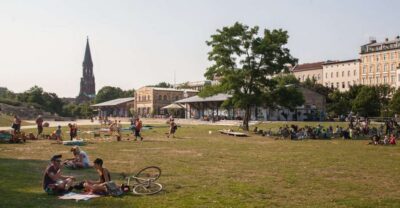
Kreuzberg Berlin: Off the Beaten Track PRIVATE Walking Tour
Read our review →
Experience the Alternative Kreuzberg on a Bike Tour
Read our review →Browse the lists this tour appears in