

Reviewed · HISTORICAL TOURS
Berlin Private Half-Day Walking Tour: Discover the German Capital’s History
Berlin’s past comes at you fast on this private four-hour tour. In one outing, you can move from medieval Berlin and Museum Island to the Nazi era, the Cold War, reunification, and today’s capital. Brandenburg Gate, the Reichstag, the Holocaust Memorial, and Checkpoint Charlie give the tour its headline sights, but the guide’s explanations are what connect them.
I like the private format, since you can ask questions without competing with a large group. I also like the hotel pickup and the included map, which lists museums and public transport information. The main drawback is the sheer number of stops: 23 listed points in about four hours means many visits are brief, and this is not the tour for long museum visits or leisurely time at every monument.
Key points to know before you book
- Four hours, 23 historic stops: Expect a fast-moving introduction rather than a close study of each site.
- Private English-speaking guide: You receive direct attention and can shape the conversation around your interests.
- Hotel pickup in central Berlin: If your hotel is central, pickup takes place in the lobby. Otherwise, meet at Starbucks at Hackescher Markt.
- A strong history focus: The route covers Berlin from its early development through Nazism, the Cold War, and modern Germany.
- Major sights plus difficult subjects: The Holocaust Memorial, Führerbunker site, Topography of Terror, and Berlin Wall memorial all require thoughtful explanation.
- Public transport is extra: A single Berlin ticket is listed at €2.70, a day pass at €7, and a five-person group ticket at €17.30, though prices can change.
A private introduction to Berlin’s complicated past
This is best understood as a private orientation tour, not a conventional museum tour. Your guide leads you through central Berlin and explains why each place matters. You get a broad timeline and a chance to ask about politics, art, war, architecture, and daily life.
That personal format matters in Berlin. The city’s sights often look simple at first glance. A gate, a square, a government building, or a stretch of empty pavement may carry several layers of meaning. A good guide can supply the missing connections and help you see how the city changed from royal capital to Nazi headquarters, divided Cold War city, and reunified German capital.
The guide names associated with this experience include Jimmy, Dylan, Reuben, Luisa, Glen, Mark, and Kai Janssen. You cannot choose one of them from the information provided, but their approach gives you a useful idea of the tour’s strengths: clear explanations, storytelling, patience with questions, and a wide reach across German history.
The tour is offered in English and is for your group alone. That makes it a good fit if you want to stop for photos, ask about a family connection to German history, or spend more time on one era instead of following a fixed group script.
More half-day trips in Berlin:
- Discover Berlin Half-Day Walking Tour
★ 5.0 · 9,624 reviews - Berlin Third Reich Sites: Half-Day Walking Tour
★ 5.0 · 835 reviews - Potsdam Half-Day Walking Tour from Berlin
★ 4.5 · 398 reviews
From Museum Island to the royal center
The route begins around Museum Island, one of Berlin’s most important cultural areas. Here, your guide explains the development of the site and places the museums within the story of the city. You will also see the Berliner Dom, the grand cathedral beside the River Spree, and Stadtschloss Berlin, the former royal palace site.
The Dom and palace area show how Berlin presented power and culture before the twentieth century. The guide’s commentary is especially useful here because the buildings and open spaces have changed over time. You are not simply looking at grand architecture. You are following the changing identity of the capital.
Rotes Rathaus, Berlin’s red town hall, adds a civic angle. Altes Museum, Neues Museum, and Pergamonmuseum are also included as brief exterior or orientation stops. The listed timing gives only two minutes at each museum, so you should not expect to enter, browse collections, or see major exhibits during this tour.
That short timing is a clear tradeoff. You get a useful map of central Berlin’s museum district, but you will need a separate visit if you want to see the Egyptian collection at the Neues Museum or spend time inside any of the other museums. The included map provides museum recommendations, which can help you decide where to return later.
Bebelplatz and the marks of dictatorship
From the royal and museum district, the tour moves toward Neue Wache, Bebelplatz, Staatsoper Unter den Linden, and the German Historical Museum. These stops bring Berlin’s political story into sharper focus.
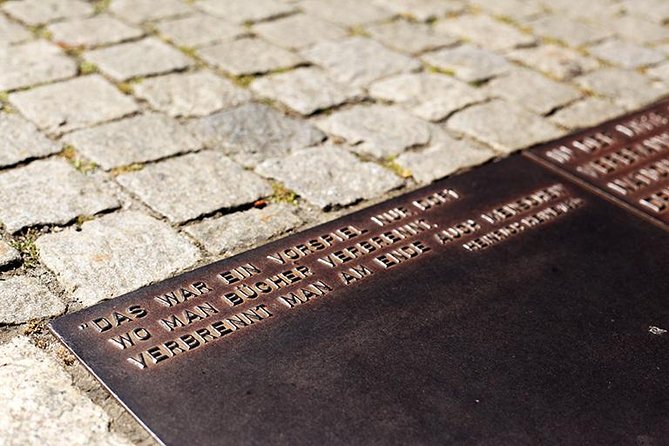
Neue Wache is a memorial site with a stark, quiet atmosphere. Bebelplatz is tied to the Nazi book burning of 1933, and it can be easy to miss the significance of the square if you pass through alone. Your guide’s explanation gives the place its proper context without requiring a long stop.
Staatsoper Unter den Linden adds another piece of Berlin’s cultural life. The route does not promise entry, so think of this as an architectural and historical viewing point. The German Historical Museum is similarly treated as a stop for explanation rather than an included museum visit.
I like this section because it shows how close Berlin’s political, cultural, and royal institutions sit to one another. In a short distance, you can see how a grand capital was shaped by rulers, artists, public institutions, and political movements.
Reichstag, Brandenburg Gate, and the heart of modern Berlin
The Reichstag Building is one of the tour’s essential stops. Your guide explains its place in Germany’s political story and its role in the modern capital. The building is best viewed as part of a larger story about government, war, division, and reunification.
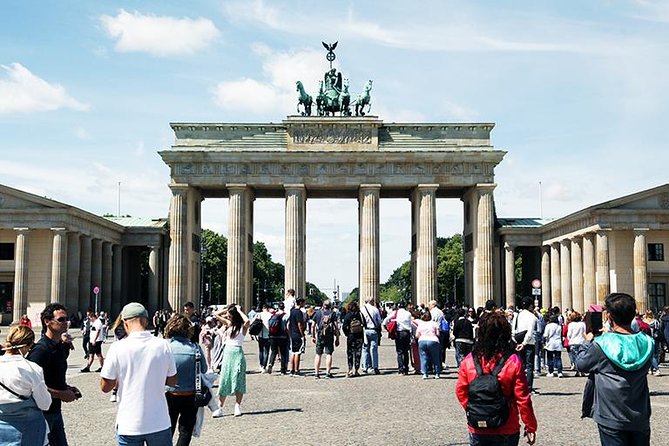
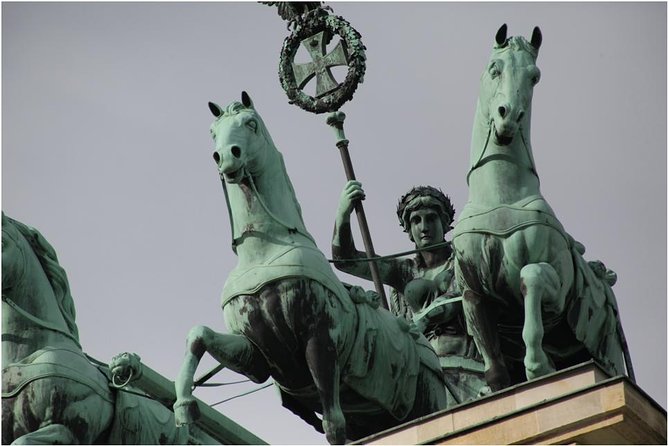
Nearby, Brandenburg Gate provides the familiar postcard image, but the private commentary keeps it from becoming just a photo stop. The gate has been used as a symbol by different governments and political movements, and its position near the former division of Berlin makes it especially important.
You also visit Platz des Volksaufstandes von 1953, the square connected with the East German uprising of June 17, 1953. This is one of the less familiar names on the route, and it gives the tour a useful Cold War focus. Instead of treating the division of Berlin as a simple wall story, the guide can explain the broader conflict between East Germany’s government and its people.
The listed stop times are generally around ten minutes, enough for a clear explanation and photos. They are not long enough for a detailed architectural study or a visit inside the Reichstag. If entering the building is a priority, you should confirm separately what access is available, since the tour information describes an outside visit and does not include admission.
More history tours in Berlin:
- Berlin: Natural History Museum Entrance Ticket
★ 4.6 · 3,382 reviews - Berlin: World Heritage Cruise to Potsdam
★ 4.5 · 1,435 reviews - Berlin Historical Highlights Walking Tour
★ 4.9 · 657 reviews - Berlin Private Complete History All Day Walking Tour
★ 5.0 · 474 reviews
The Holocaust Memorial and the Führerbunker site
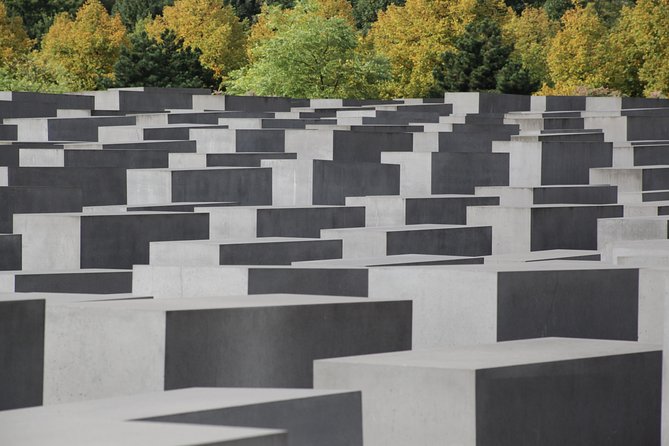
Berlin asks you to face the Nazi period directly. The Holocaust Memorial, officially the Memorial to the Murdered Jews of Europe, is one of the most important stops. You walk among its large concrete blocks and hear about the site and the murder of Europe’s Jews.
The memorial is not a conventional statue with a single message spelled out for you. Its open layout and uneven ground invite personal reflection, while the guide supplies the historical facts and context. Give this stop your attention. It is one of the places where a rushed group tour can feel unsatisfying, and a private guide gives you more room to ask careful questions.
The tour also goes to the Führerbunker site. There is no bunker interior to visit here, and the site is easy to overlook because it is marked in a restrained way. That makes the explanation particularly useful. The guide can point out where the bunker complex was located and explain the final days of the Nazi regime without turning the location into a spectacle.
The Topography of Terror adds another major Nazi-era stop. It documents the institutions of persecution and terror that operated in Berlin. Together, the memorial, bunker site, and Topography of Terror help you understand both the victims and the machinery of dictatorship.
Checkpoint Charlie and the Berlin Wall story
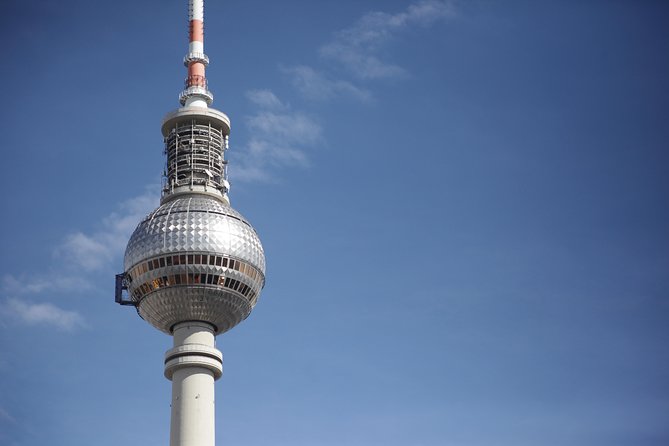
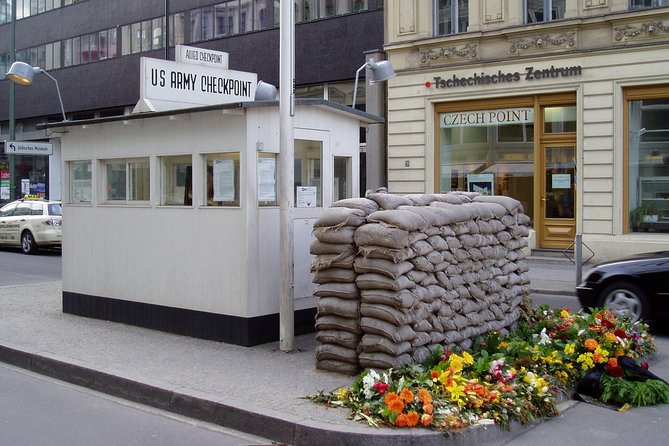
Checkpoint Charlie is one of Berlin’s most famous Cold War landmarks. It is also one of the city’s most commercialized sights, so context matters. Your guide explains the crossing point and its place in the divided city rather than leaving you with only the familiar guardhouse image.
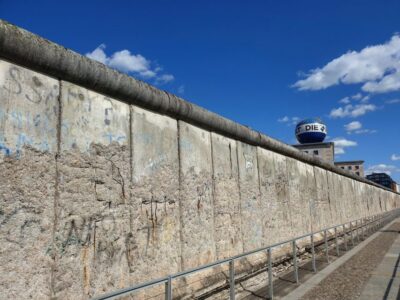
The Memorial of the Berlin Wall gives the Cold War section more depth. It helps you understand how the border affected homes, streets, families, and ordinary movement. The route also includes the broader story of Berlin’s division and reunification, so you can connect Checkpoint Charlie with the physical and political separation of the city.
A key strength here is the ability to ask direct questions. If you want to know how East and West Berlin differed, what crossing the border involved, or how reunification changed the city, this is the point to bring it up. The private setting is more useful than a fixed speech when your questions are specific.
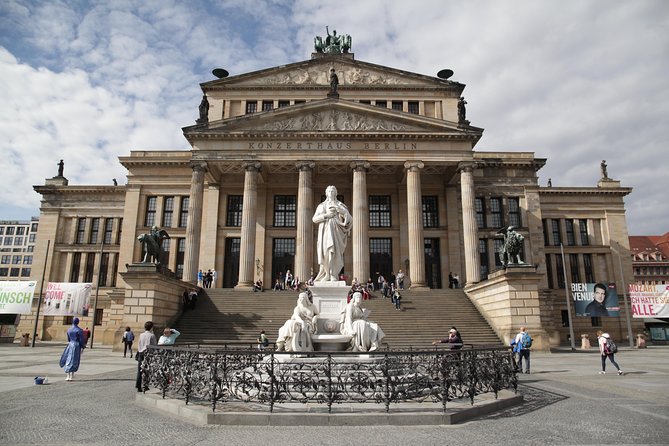
The tour also includes French Cathedral and Konzerthaus. These sites add architectural and cultural balance after the heavier material of war and dictatorship. They remind you that Berlin is not only a memorial city. It is also a place of music, public squares, civic life, and changing architectural styles.
How much can you really see in four hours?
The route is ambitious. The listed stops total 23 points, although several are close together and some receive only two to five minutes. You will cover a great deal of central Berlin, but you should expect a brisk pace and many exterior explanations.
The tour is called a walking tour, and a moderate level of physical fitness is recommended. Hotel pickup is offered, but the information does not promise transport between every stop. You should be ready for substantial time on your feet and wear comfortable shoes.
The repeated listing of Berliner Dom suggests that the route may return to an important area or include overlapping sections. That is not a major concern, but it reinforces the point that the experience is a broad city introduction rather than a perfectly linear museum circuit.
For a first day in Berlin, the range can be a real advantage. You can see enough to decide where to return on your own. For a second or third visit, you may prefer a tour focused on one period, such as the Cold War or Nazi Berlin.
Is $180.87 per person a fair price?
At $180.87 per person, this is not a budget walking tour. You are paying for a private guide, hotel pickup when available, an English-language experience, and the ability to ask questions and adjust the discussion to your interests. Group discounts are offered, though no discount amounts are provided.
The value depends heavily on the size of your party. For one or two people, the price is a serious splurge. For a larger private group, the per-person cost may feel more reasonable, especially compared with booking several separate activities or hiring a guide for a full day.
You will still need to pay for public transport if it is used. Food and drinks are not included. No museum admission is included either, and the very short museum stops make clear that this tour is designed to point you toward museums, not replace them.
I would view the included map as a practical bonus rather than a major part of the price. Its museum suggestions and public transport information can help you plan the rest of your stay. The real value is the guide’s ability to connect places that might otherwise feel scattered.
Who will get the most from this tour?
I would choose this experience if you have only a day in Berlin and want a broad first look at the city. It is also a good choice for families, couples, solo visitors, or small groups who dislike being tied to a large walking party.
History-minded visitors will get the most from it, especially if you want to move from medieval Berlin to modern Germany in one sitting. The guide’s role is central, so ask questions and tell the guide which subjects interest you.
You may want something else if you prefer long museum visits, a slow photographic walk, or a single theme explored in great detail. The number of stops makes the tour informative and efficient, but not leisurely.
The free cancellation policy gives you some flexibility: cancel at least 24 hours before the start time for a full refund. Changes or cancellations made within 24 hours are not accepted for a refund.
Should you book this private Berlin walk?
Book it if you want a fast, personal introduction to Berlin’s major historical sites and you value a guide who can answer questions in real time. The private format, central hotel pickup, city map, and wide range of stops make it especially useful at the beginning of a short stay.
Skip it if you want to enter museums, linger at monuments, or keep spending low. In that case, choose fewer sites and explore them independently.
For the best use of your four hours, arrive with two or three questions in mind. Ask the guide to help you choose which museums to visit afterward, and treat the tour as your framework for understanding Berlin rather than the final word on any one site.
FAQ
How long is the Berlin private walking tour?
The tour lasts approximately four hours.
Is the tour private?
Yes. Only your group participates in the activity.
Is the tour offered in English?
Yes. The experience is offered in English.
Is hotel pickup available?
Yes, pickup is available from the lobby if your hotel is centrally located. If it is not, the meeting point is in front of Starbucks at Hackescher Markt. You should provide your hotel information when booking.
Are museum entrance fees included?
No museum admissions are included. The listed museum stops are brief, and the guide explains the history of each site.
Are public transport costs included?
No. Public transport is extra. The listed prices are €2.70 for a single Berlin ticket, €7 for a day pass, and €17.30 for a group ticket for five people, subject to change.
Can I cancel for a full refund?
Yes, if you cancel at least 24 hours before the experience begins. Cancellations or changes made less than 24 hours before the start time are not refunded or accepted.
More Walking Tours in Berlin
- Berlin: Third Reich and Cold War 2 Hour Walking Tour
★ 4.9 · 6,830 reviews - Berlin: Discover Berlin Walking Tour
★ 4.9 · 5,998 reviews - Berlin’s Best: 2 Hour Walking Tour Third Reich and the Cold War
★ 5.0 · 5,486 reviews - Berlin: Hidden Backyards Guided Walking Tour
★ 4.8 · 5,360 reviews
Newest Berlin reviews
- Where It All Began: Berlin’s Queer & Trans History Tour★ 4.9 · 6 reviews
- Understanding Kreuzberg: The roots of local (sub)culture★ 4.9 · 11 reviews
- Berlin: guided canoe | kayaktour★ 4.1 · 7 reviews
- Private Potsdam City Tour in an authentic vintage van★ 5.0 · 14 reviews
- Warnemünde Shore Excursion: Private Sachsenhausen and Berlin Tour★ 5.0 · 12 reviews
- Ultimate E-Bike Tour of Berlin with Beer Garden Stop★ 5.0 · 4 reviews
- In the Forbidden City – Potsdam Walking Tour★ 5.0 · 17 reviews
- Private Walking Tour of Potsdam and Sanssouci★ 5.0 · 24 reviews
Historical Tours, compared.

Berlin Private Complete History All Day Walking Tour
Read our review →


Small group Potsdam: A Journey Through History and Palaces
Read our review →Browse the lists this tour appears in