
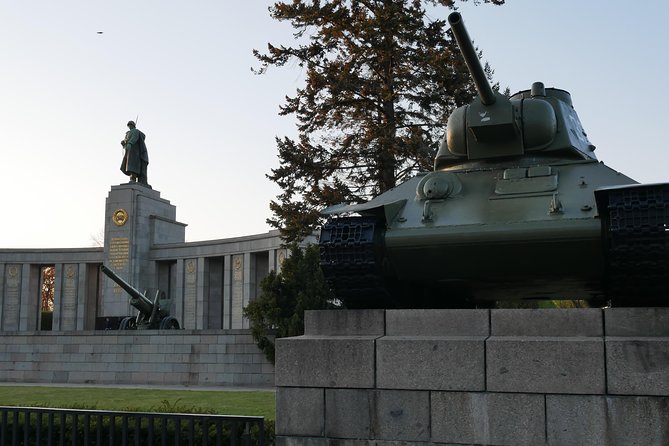
Reviewed · BERLIN THIRD REICH TOURS
Berlin & The Third Reich Private Guided Tour
Berlin’s most important Nazi-era sites are spread across the center, often hiding in plain sight among grand squares, modern offices, and busy streets. This private four-hour walk connects them into one clear story, from Hitler’s rise to power through the destruction of 1945.
I like the private format, which lets your guide adjust the pace and explain difficult subjects without a large group getting in the way. I also like the route’s mix of famous sights and stark places such as the Führerbunker site, now marked only by a simple sign. The main drawback is that this is a serious history walk, not a light sightseeing outing, and four hours on foot can feel long if you prefer short visits.
Key points to know before booking
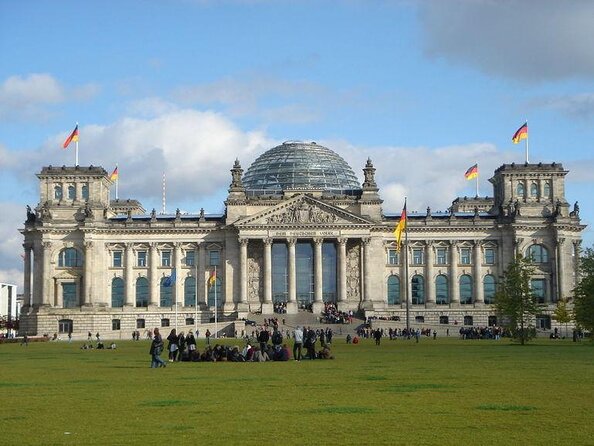
- The story runs from the Brandenburg Gate to Hitler’s final days, then continues through postwar Berlin and the Cold War.
- The Führerbunker site is deliberately plain, now a parking area with a simple sign rather than a dramatic memorial.
- You visit the Holocaust Memorial for about 20 minutes, with time to consider its stone stelae and meaning.
- The private group limit is 15 people, so you get a more personal guide than on a large city tour.
- Guides named in past tour experiences include Walid, Campbell, and Gregor, each praised for making modern Berlin history clear and engaging.
- The walk ends where it begins, at Pariser Platz beside the Brandenburg Gate.
Why this four-hour walk works in Berlin
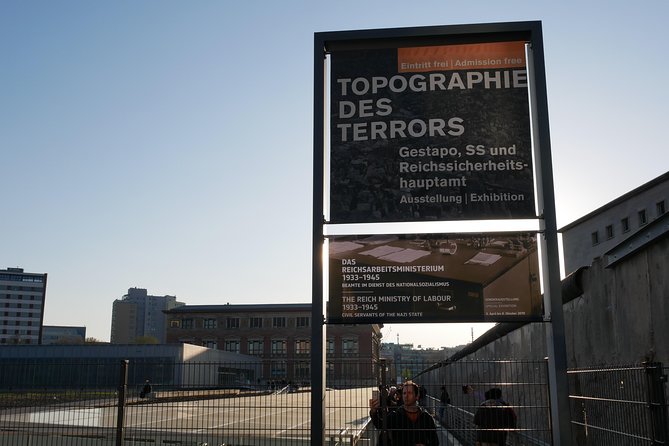
Berlin can feel like a city with missing pages. A grand square leads to a modern office block. A patch of pavement marks a place that once shaped Europe. A parking lot sits above one of the most infamous sites of the Second World War.
That is the strength of this tour. It gives you a route through the city center while explaining what happened at each stop. Instead of looking at isolated monuments, you follow a chain of events: the Nazi movement’s rise, Hitler’s control of Germany, the war, the Holocaust, the Battle of Berlin, and the later division of the city.
The tour is private for your group, with up to 15 people. That matters here. The subject is complicated, and you may want to pause, ask questions, or spend a little longer at one location. A private guide can also keep the walk focused on what interests you most, although the advertised route still covers a lot in four hours.
The experience is built as a walking tour. Pickup is offered, but the stated meeting point is at the Brandenburg Gate on Pariser Platz, and the tour returns there. You should plan around a central Berlin start and finish rather than expecting a hotel-to-hotel sightseeing service.
More Third Reich history tours in Berlin:
- Berlin: Third Reich and Cold War 2 Hour Walking Tour
★ 4.9 · 6,830 reviews - Berlin’s Best: 2 Hour Walking Tour Third Reich and the Cold War
★ 5.0 · 5,486 reviews - Third Reich Berlin: Hitler and WWII Walking Tour
★ 5.0 · 3,301 reviews
Pariser Platz and the Brandenburg Gate
The tour begins at Pariser Platz, one of Berlin’s grandest public squares. It sits at the end of Unter den Linden, the broad historic boulevard that leads through the city center.
The Brandenburg Gate is the obvious landmark here, but your guide uses it as a starting point for a much bigger story. The gate began as the royal entrance used by the Hohenzollern family and was one of 18 former city gates. It survived Napoleon, the Second World War, and nearly three decades of division during the Cold War.
You will hear how its meaning changed over time. It was once connected with royal power, later became trapped beside the Berlin Wall, and now represents German reunification. That shift is useful context for the rest of the tour. Berlin’s monuments rarely have just one meaning.
About 15 minutes is scheduled here. That is enough for an introduction and some orientation, but not enough for a detailed architectural visit. If you want photographs with fewer people around, your timing may not be ideal, since Pariser Platz is one of the city’s most prominent public spaces.
The Reichstag and the politics of power
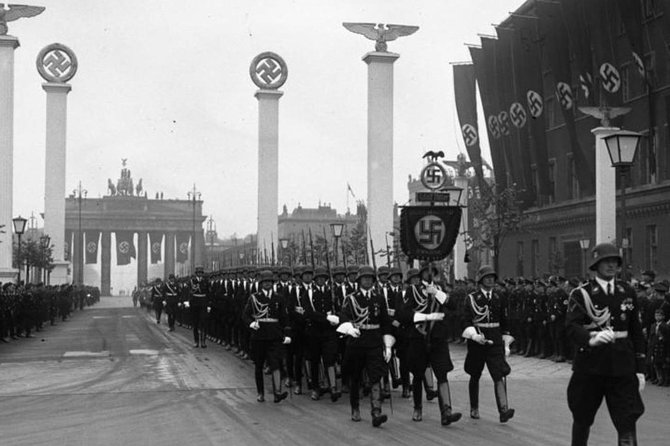
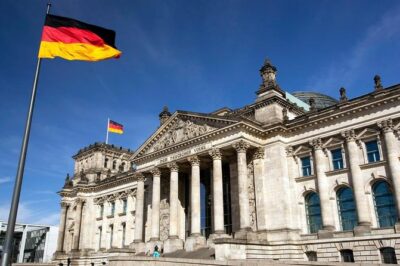
The Reichstag Building is next, with about 10 minutes scheduled. It is Germany’s parliamentary building, but its importance on this tour comes from the fire that helped Hitler take total control.
This stop links a familiar landmark with the political mechanics of the Nazi takeover. You are not simply looking at a government building. You are considering how a crisis was used to weaken democratic government and consolidate power.
The Reichstag was also fought over during the Battle of Berlin between German and Soviet forces. Today, its glass dome, designed by British architect Sir Norman Foster, gives the building a modern appearance that can obscure its turbulent past.
The short stop is enough for an outside explanation and a look at the building. It does not include a stated interior visit or dome admission. If you want to go inside the Reichstag separately, treat that as a different activity and allow extra time beyond this tour.
The Holocaust Memorial and a difficult pause
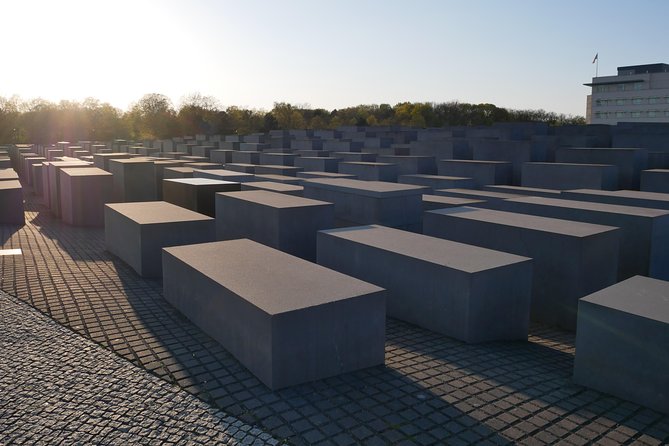
The Memorial to the Murdered Jews of Europe is scheduled for about 20 minutes. This is the longest stop on the route, and that makes sense. The site covers a large area with concrete or stone stelae arranged in a grid, creating a place that can feel disorienting and severe.
Your guide can give the memorial its basic context, but you will also need a quiet moment to take it in. This is not a stop to rush through for a quick photograph. The memorial is central to Germany’s public remembrance of Jewish victims of the Holocaust, and its location near major government and tourist sights makes the contrast especially direct.
Twenty minutes gives you time to walk among the stelae and hear the explanation. It may not be enough for a long personal visit, especially if you want to read more about the memorial’s design or spend time in its information center. The tour’s purpose is to connect this place with the wider story, not to provide a full museum visit.
This is one of the strongest parts of the route because it keeps the Holocaust from becoming an abstract chapter in a history lesson. You encounter a major memorial in the middle of the city and then continue on foot to the places tied to the Nazi leadership.
Other Berlin experiences to weigh up
- Berlin: Reichstag, Dome and Government District Guided Tour
★ 4.7 · 18,288 reviews - Berlin: Government District around the Reichstag Guided Tour
★ 4.7 · 8,447 reviews - Berlin: Hidden Backyards Guided Walking Tour
★ 4.8 · 5,360 reviews - Berlin: 1-Hour Boat Tour with Bilingual Live Guide
★ 4.7 · 3,629 reviews
The Führerbunker site, without sensationalism
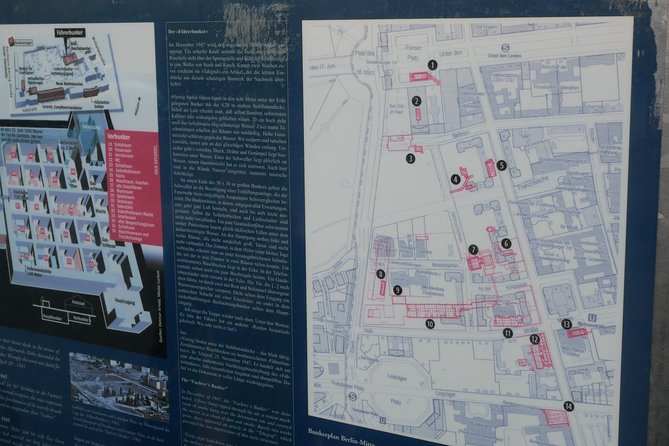
The stop at the Führerbunker lasts about 15 minutes. The location is now a parking lot with a simple sign. There is no preserved bunker interior to explore and no grand structure marking the spot.
That plainness is important. The site is where Hitler spent his final days, married, and then committed suicide during the last days of the war in Europe. The modest marker resists the temptation to turn the location into a shrine or spectacle.
You may find this stop visually underwhelming. That is part of the point, but it can surprise people who expect a dramatic ruin or museum display. Your guide supplies the context that the site itself does not provide.
This is also a good example of why a guided walk adds value in Berlin. Without an explanation, you could pass the parking lot without knowing what happened there. With a guide, the ordinary setting becomes a reminder of how much of Berlin’s Nazi past has disappeared beneath the modern city.
Potsdamer Platz and the city rebuilt
Potsdamer Platz receives about 10 minutes. Before the Second World War, it was one of Europe’s busiest traffic intersections. The war destroyed almost all of it, and the area was rebuilt in the 1990s and early 2000s as one of Berlin’s most modern precincts.
This stop changes the mood and gives the tour a useful pause from the Nazi leadership sites. You move from wartime destruction to postwar reconstruction and modern urban planning.
Potsdamer Platz also helps you picture how completely Berlin was altered. The present-day buildings can feel sleek and new, while the history beneath the area reaches back to the city’s prewar importance and wartime ruin.
Ten minutes is brief, so expect an overview rather than a detailed architecture tour. Still, the stop works well because it shows that Berlin’s story did not end in 1945. The city had to rebuild physically, politically, and socially.
Checkpoint Charlie and the Cold War afterlife
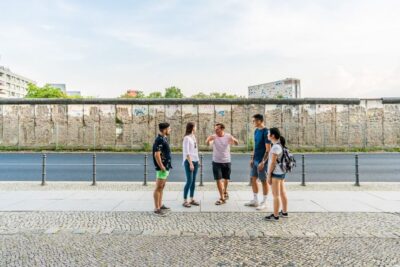
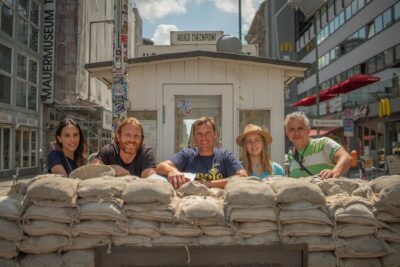
The tour ends at Checkpoint Charlie, the famous Allied checkpoint associated with the American and Soviet sides of divided Berlin. About 10 minutes is scheduled here.
This is not strictly a Nazi-era site, but it completes the story. The collapse of Hitler’s Germany did not produce a simple return to normal life. Berlin became a frontline of the Cold War, divided between competing political systems.
Checkpoint Charlie is also one of the city’s most commercialized historic locations. You may find the surrounding area busy and tourist-focused. That does not erase its importance, but it does mean the setting can feel less solemn than the Holocaust Memorial or the Führerbunker site.
Your guide’s explanation helps place the checkpoint in the larger sequence of Berlin’s modern history. The route begins with the rise of authoritarian power and ends with the physical and political division that followed the war.
How the guide shapes the experience
The guide matters greatly on a tour like this. Berlin’s landmarks rarely explain themselves, and many of the most meaningful sites have little to see beyond a building, pavement, or sign.
Guides named Walid, Campbell, and Gregor have led this experience. Walid is associated with a four-hour stroll that links the city’s major historical locations through short talks at key stops. Campbell led a private outing described as essential for understanding places that are easy to walk past. Gregor is noted for making Berlin’s modern history fascinating and easy to follow.
You should still think of these as individual guide experiences rather than a promise that one particular guide will lead your departure. The useful point is that the tour depends on a guide who can explain connections, not merely point out buildings.
The private setup gives you room to ask about subjects that interest you, such as Nazi propaganda, wartime destruction, memorial design, or the Cold War. It also lets your group move at a shared pace. With a maximum of 15 people, it remains more personal than a large public walk, though the experience may feel different for a couple than for a full family or friend group.
Price, timing, and practical value
The cost is $329.92 per group of up to 15 people. For one person, that is expensive. For a full group, the calculation changes considerably. A group of 10 would pay roughly $33 per person, while 15 people would bring the cost to about $22 per person.
That makes the tour most attractive to families, friend groups, or several couples traveling together. A private guide also means you are paying for a focused route rather than joining a general city walk that may cover a broader mix of topics.
The four-hour duration is a good fit if you want serious historical context in half a day. It is long enough to connect the major sites but short enough to leave time for a museum, meal, or another Berlin neighborhood afterward.
The tour is booked, on average, 12 days ahead. That is a useful planning signal. If your dates are fixed, do not leave this until the last minute, especially if you need a particular time or guide.
All listed stops have free admission. The value here comes from the private guiding and the structure of the walk, not from paid entry to a museum or monument. A mobile ticket is provided, and the meeting point is near public transportation. Service animals are allowed, and most people can participate, though you should remember that the route is a four-hour stroll.
The cancellation terms are strict. The experience is non-refundable and cannot be changed for any reason, so book only after your Berlin dates are settled.
Who should choose this tour
I would choose this walk if you want Berlin’s Nazi and wartime story explained in the places where it unfolded. It suits first-time visitors who want a strong historical framework, as well as people who have already seen the main sights but want to understand what they are looking at.
It is especially useful for you if you prefer direct explanations over museum labels and guidebooks. The route covers major landmarks, but the real benefit is the link between them.
You may want another option if you dislike walking for four hours, want extensive interior visits, or prefer a lighter sightseeing experience. The Reichstag, Holocaust Memorial, Führerbunker site, and Checkpoint Charlie each need different emotional treatment, and the subject matter remains heavy throughout.
Should you book the Berlin and Third Reich Private Guided Tour?
Book it if you are traveling with a group and want a focused, serious walk through Berlin’s Nazi, wartime, and Cold War past. The combination of a private guide, central route, and up to 15 participants gives it solid value for groups, especially when shared across several people.
For a solo visitor or couple, the price is harder to justify unless this subject is a top priority. The tour does not offer dramatic ruins or many interior admissions. Instead, it gives you the missing context that turns ordinary streets, buildings, and a parking lot into a readable map of Berlin’s darkest decades.
FAQ
Where does the tour begin?
It begins at the Brandenburg Gate on Pariser Platz, 10117 Berlin, Germany.
Where does the tour end?
The tour ends back at the meeting point at the Brandenburg Gate.
How long does the experience last?
The tour lasts approximately four hours.
How many people can join the private tour?
The private tour accommodates groups of up to 15 people.
What places are included?
The route includes Pariser Platz, the Reichstag Building, the Brandenburg Gate, the Memorial to the Murdered Jews of Europe, the Führerbunker site, Potsdamer Platz, and Checkpoint Charlie.
Is hotel pickup available?
Pickup is offered, although the stated meeting point is the Brandenburg Gate.
Are admission tickets included?
The listed stops show free admission. The experience also provides a mobile ticket.
Is the tour accessible to most people?
Most people can participate, and service animals are allowed. The experience is a four-hour walking tour.
How far in advance is the tour usually booked?
It is booked an average of 12 days in advance.
Can I cancel or change the booking?
No. The experience is non-refundable and cannot be changed for any reason.
Newest Berlin reviews
- Where It All Began: Berlin’s Queer & Trans History Tour★ 4.9 · 6 reviews
- Understanding Kreuzberg: The roots of local (sub)culture★ 4.9 · 11 reviews
- Berlin: guided canoe | kayaktour★ 4.1 · 7 reviews
- Private Potsdam City Tour in an authentic vintage van★ 5.0 · 14 reviews
- Warnemünde Shore Excursion: Private Sachsenhausen and Berlin Tour★ 5.0 · 12 reviews
- Ultimate E-Bike Tour of Berlin with Beer Garden Stop★ 5.0 · 4 reviews
- In the Forbidden City – Potsdam Walking Tour★ 5.0 · 17 reviews
- Private Walking Tour of Potsdam and Sanssouci★ 5.0 · 24 reviews
Berlin Third Reich Tours, compared.
Berlin’s Best: 2 Hour Walking Tour Third Reich and the Cold War
Read our review →
Third Reich Berlin: Hitler and WWII Walking Tour
Read our review →
Berlin Third Reich Sites: Half-Day Walking Tour
Read our review →
Guided Bike Tour of the Berlin Wall and Third Reich
Read our review →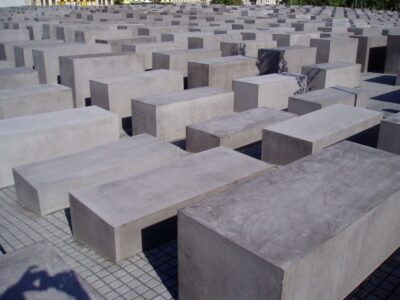
Hitler’s Germany: Berlin During the Third Reich & WWII
Read our review →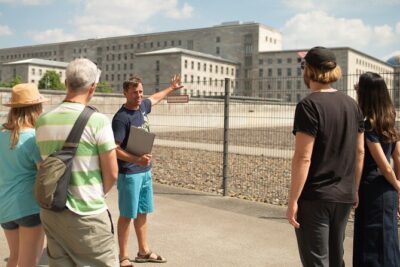
Private Walking Tour Berlin Third Reich Hitler and World War II
Read our review →Browse the lists this tour appears in