
Reviewed · BERLIN WALL TOURS
Berlin: Historical Sights & Berlin Wall Tour with a Berliner
Berlin’s Cold War story makes the most sense when you walk the old border yourself. This two-hour tour connects Brandenburg Gate, the Berlin Wall, and Checkpoint Charlie, while a local guide explains how a city became an island of freedom behind the Iron Curtain. I especially like the small group of no more than 10 and the chance to hear personal memories from guides such as Carlo or Carlos, who grew up in Berlin.
I also like the efficient route. You see several major sights without spending a full day on a history lesson, and the stories of escape tunnels, border crossings, and the 1961 confrontation at Checkpoint Charlie give the landmarks real weight. The main consideration is that this is a German-language walking tour, and two hours is enough for an overview, not a full treatment of Berlin’s complicated past.
Key points to know before you book
- Personal Berlin perspective: Guides such as Carlo and Carlos bring memories of growing up in West Berlin into the Cold War story.
- Compact central route: Walk from Brandenburg Gate through the former border zone to Checkpoint Charlie in two hours.
- Major landmarks included: See the Berlin Wall, Reichstag, Hotel Adlon, Brandenburg Gate, and Checkpoint Charlie.
- Small group format: With up to 10 people, you have a better chance to ask questions and hear the guide clearly.
- German-language guiding: The listed live tour language is German, so check this carefully before booking.
- All-weather departure: Wear practical clothing and shoes because the walk goes ahead in rain or on public holidays.
Why this short Berlin history walk works
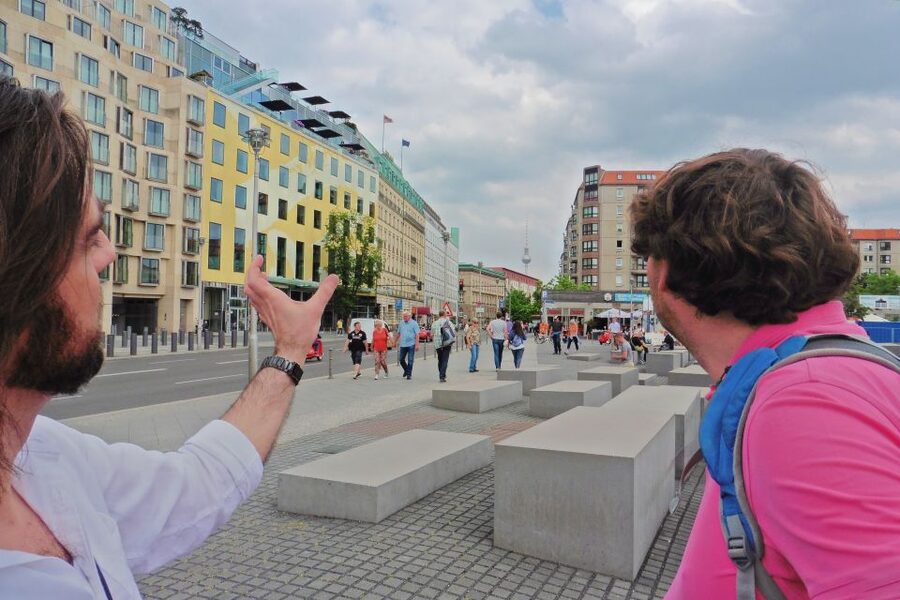
Berlin can feel like a history book with the pages scattered. A grand boulevard leads to a Holocaust memorial, a modern government building sits beside Cold War scars, and a busy intersection once divided families and military powers. This tour gives you a simple thread to follow: the city’s division, the Berlin Wall, and the slow return to unity.
The route is useful for a first visit because it covers several names you already know. Brandenburg Gate gives you the grand symbol, the Berlin Wall gives you the physical remains, and Checkpoint Charlie brings the Cold War face to face with the present city. You are not left trying to piece the story together from isolated monuments.
The best part is the local voice. The guides are described as Berliners, and Carlo is specifically noted for sharing memories of growing up in West Berlin. That sort of detail can explain what history felt like at street level. A date or political decision matters more when you can connect it to the daily reality of living in a divided city.
The tour has earned a top rating from 62 published evaluations, with repeated praise for clear explanations, personal stories, and the amount covered in two hours. I would treat that as a strong sign that the guides do their job well, but remember that your experience depends on the particular guide and your comfort with German.
More Berlin Wall tours in Berlin:
- Skip-the-Line: Berlin Wall Museum at Checkpoint Charlie
★ 4.1 · 2,041 reviews - Cold War, Berlin Wall, Spies and the East Side Gallery
★ 5.0 · 1,024 reviews - THE WALL: asisi Panorama Berlin Ticket
★ 4.5 · 580 reviews
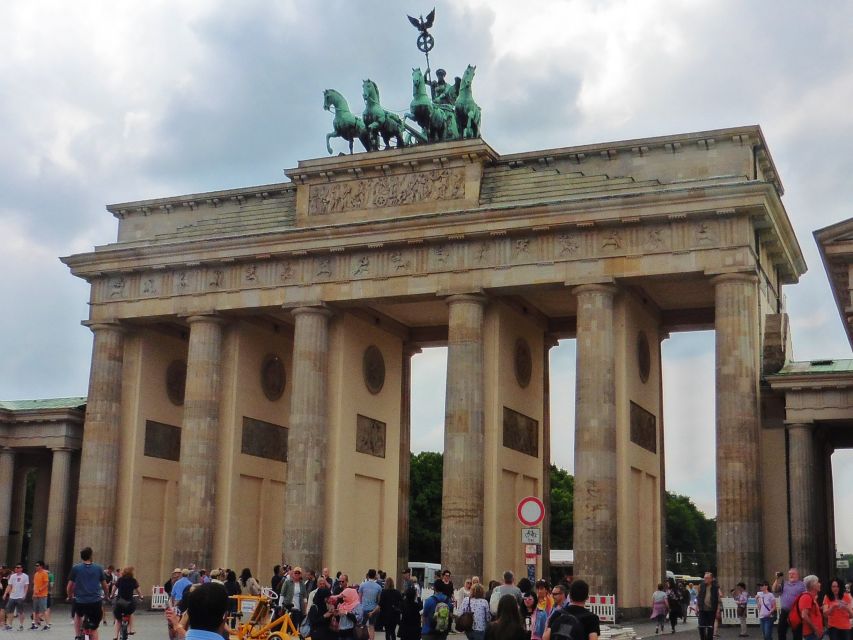
Starting beneath Brandenburg Gate
Meet directly at the exit of S+U Brandenburger Tor station, exit B, in the direction of Pariser Platz and Straße des 17. Juni. Look for the guide carrying the Get Your Guide, You in Berlin flag. This is a sensible meeting point because Brandenburg Gate is both easy to recognize and central to the story.
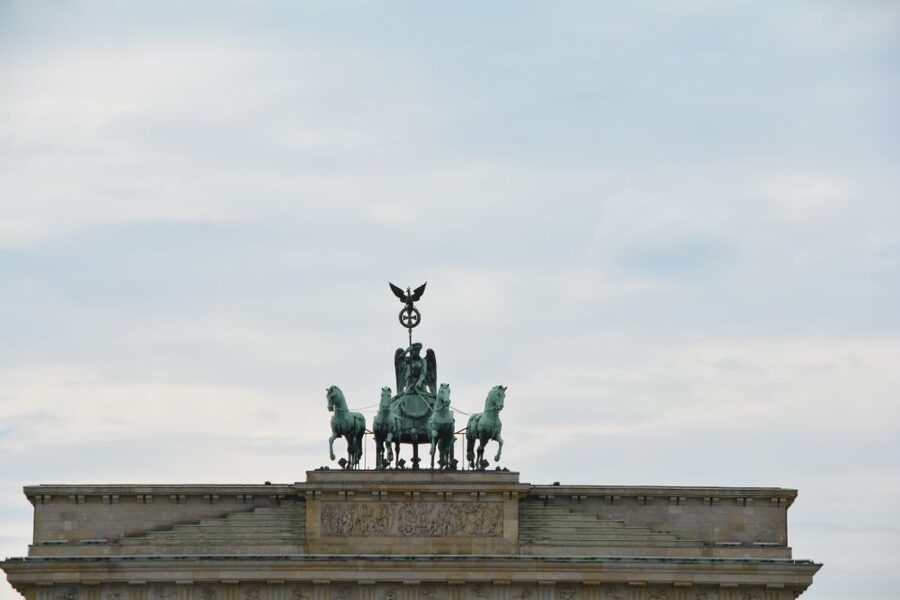
The gate is more than a handsome neoclassical entrance. It became a powerful symbol of Berlin’s division because it sat in the restricted area near the Wall, cut off from ordinary movement for 28 years. After German reunification, it came to represent the country coming back together.
Your guide begins here with that shift in meaning. You can expect an explanation of why the gate was isolated, how its location affected its public role, and why it became such a potent image after the border opened. It is a good opening because the building looks calm and ceremonial, while its recent past was anything but calm.
You will have time to look at the gate and walk around the area, but this is not a monument-entry tour. The focus is on the outdoor setting and the historical explanation. If you want an interior visit to another Berlin attraction, you will need to arrange that separately.
Walking the former border by the Berlin Wall
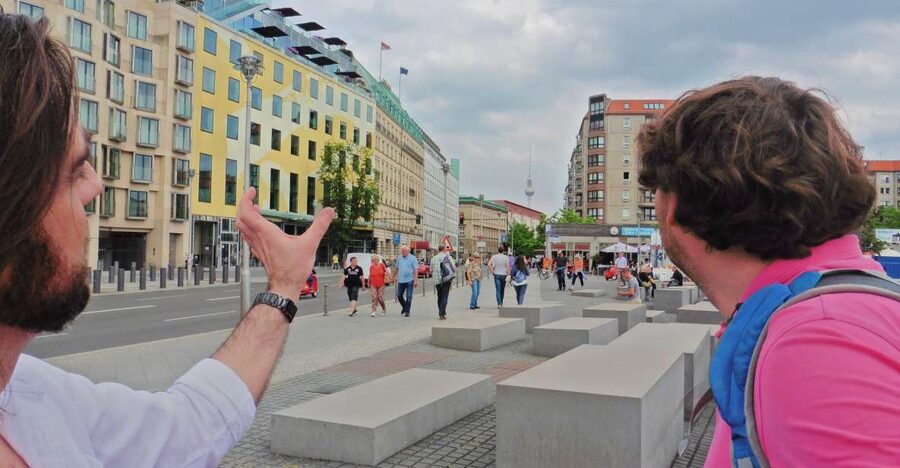
From Brandenburg Gate, the group follows the former line between East and West Berlin. This is where the tour changes from grand symbolism to the practical facts of partition. You begin to understand that the Wall was not simply one concrete barrier. It was part of a controlled border system that cut through streets, neighborhoods, and ordinary routines.
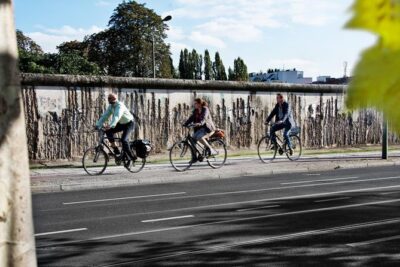
The remaining sections of the Berlin Wall provide the physical anchor. Even a fragment can be hard to interpret without help, since much of the original structure has disappeared or been altered. A guide can explain what the border meant at this point and help you picture the divided city around it.
The escape stories are likely to be the emotional center of the walk. You will hear about attempts by East Berlin residents to reach the West, along with the risks and planning involved. These accounts make the Wall more than a political object. They show you why people tried to cross despite the danger.
Personal memories add another layer. Carlo is noted for explaining what it was like to grow up in West Berlin, and another guide, Carlos, is praised for answering questions and offering additional suggestions for museums and cafes. If your guide has a similar background, ask how ordinary life felt in the western part of the city. That is where the broad Cold War story can become more understandable.
This portion requires steady walking outdoors. The tour runs in all weather, so bring a coat or rain layer when needed. Comfortable shoes matter more here than anything stylish. The route is wheelchair accessible, but anyone with mobility concerns should still be prepared for a two-hour city walk and changing street conditions.
Reichstag and the city’s divided center
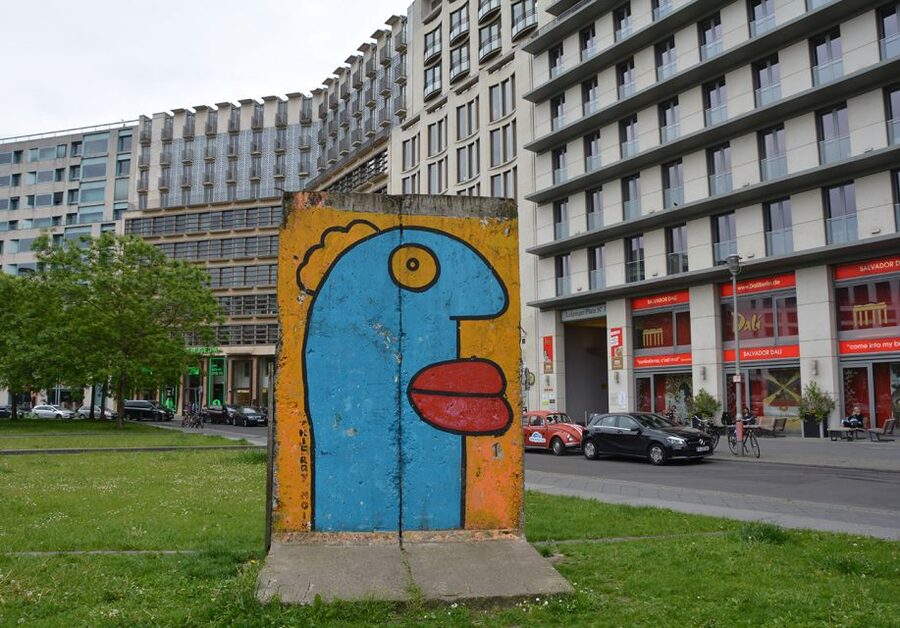
The route includes the Reichstag, Germany’s federal parliament building. You see it from outside during the walk, rather than taking a scheduled visit inside. Its location helps explain why the center of Berlin became such a charged place during the city’s division.
The Reichstag is also useful as a contrast. Today it represents a united German government, while the nearby border once reflected political separation and military tension. Your guide can connect the building to the larger story of Berlin as a front city, a place where the rivalry between East and West was unusually visible.
You should not expect a full political history of postwar Germany in this short stop. Instead, the Reichstag acts as one piece of the route, linking the older imperial city with the divided capital and the government center you see today. I like that approach because it keeps the walk moving while still showing how different periods overlap in central Berlin.
More history tours in Berlin:
- Berlin: Natural History Museum Entrance Ticket
★ 4.6 · 3,382 reviews - Berlin: World Heritage Cruise to Potsdam
★ 4.5 · 1,435 reviews - Berlin Historical Highlights Walking Tour
★ 4.9 · 657 reviews - Berlin Private Complete History All Day Walking Tour
★ 5.0 · 474 reviews
Hotel Adlon and the changing face of Pariser Platz
The Hotel Adlon Kempinski appears as another sight along the route. It sits near Brandenburg Gate and gives the walk a chance to shift from military and political history to Berlin’s public image and grand urban setting.
You will see the hotel from outside as the group walks through this central area. The stop is not a hotel visit, but its presence helps set the scene around Pariser Platz, where formal buildings, major avenues, and the memory of the Wall meet.
This is a short stop, so do not book the tour expecting detailed architectural commentary on every building. Its value is in the way it fills out the setting. Berlin’s history did not happen only at checkpoints and barricades. It also played out along elegant streets and around places that represented status, visitors, and the city’s public face.
Checkpoint Charlie and the moment the Cold War nearly turned hot
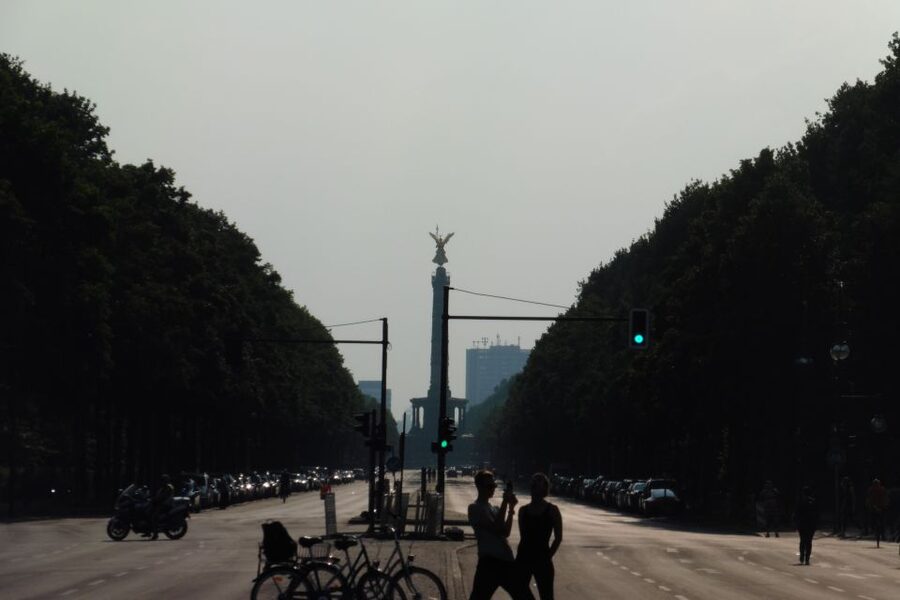
The walk finishes at Checkpoint Charlie, the best-known former crossing between East and West Berlin. It was an Allied border point, and its name has become shorthand for the divided city.
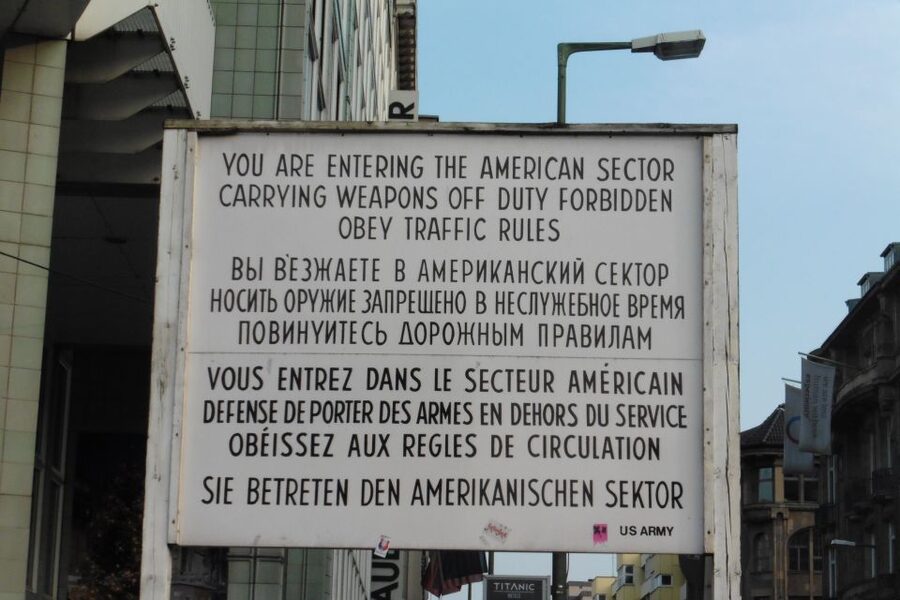
The photo opportunity is straightforward, but the real value comes from the story attached to the crossing. Your guide explains the confrontation there in 1961, when American and Soviet forces faced one another and the situation came close to triggering a much larger war. The point is not simply to photograph a guardhouse replica or a famous sign. It is to understand why this intersection mattered far beyond Berlin.
Checkpoint Charlie can feel busy and commercial today. That is worth knowing before you arrive. The modern surroundings do not always convey the danger of the former border, which is why the guide’s explanation matters so much. You need context to see the difference between the present-day photo stop and the tense military frontier it once was.
Because the tour ends here, the location is useful for continuing your day. The activity does not include a return transfer, so plan your next stop from Checkpoint Charlie. The provided information does not specify a particular museum or cafe recommendation, though Carlo has offered those kinds of tips during tours.
What two hours gives you, and what it leaves out
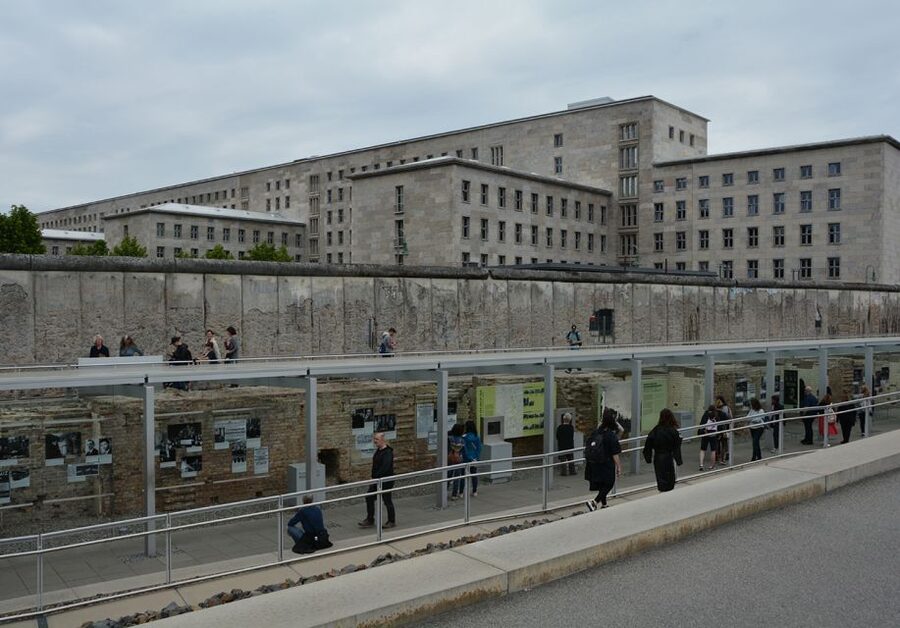
Two hours is a good length for a first orientation. You get a connected walk, several major landmarks, and a clear explanation of the city’s division without giving up an entire morning or afternoon.
The limit is depth. Berlin’s twentieth-century story includes National Socialism, wartime destruction, occupation, the formation of East and West Germany, the Wall, reunification, and the city’s later changes. This walk focuses mainly on the division between East and West, so it cannot cover every period in equal detail.
That focus is an advantage if the Berlin Wall and Cold War are your priorities. It is less suitable if you want a detailed look at the Nazi period, Jewish Berlin, or the city’s art and architecture. You can use the walk to decide which museum or memorial deserves more of your time afterward.
The small group helps make the short format work. A maximum of 10 people is intimate enough for questions, and the guide can respond to the group rather than deliver a speech to a crowd. The published feedback repeatedly praises the explanations, the speed of the two hours, and the guides’ ability to answer questions. Those are useful signs for a history walk, where a poor guide can turn important places into a string of names and dates.
The German-language question
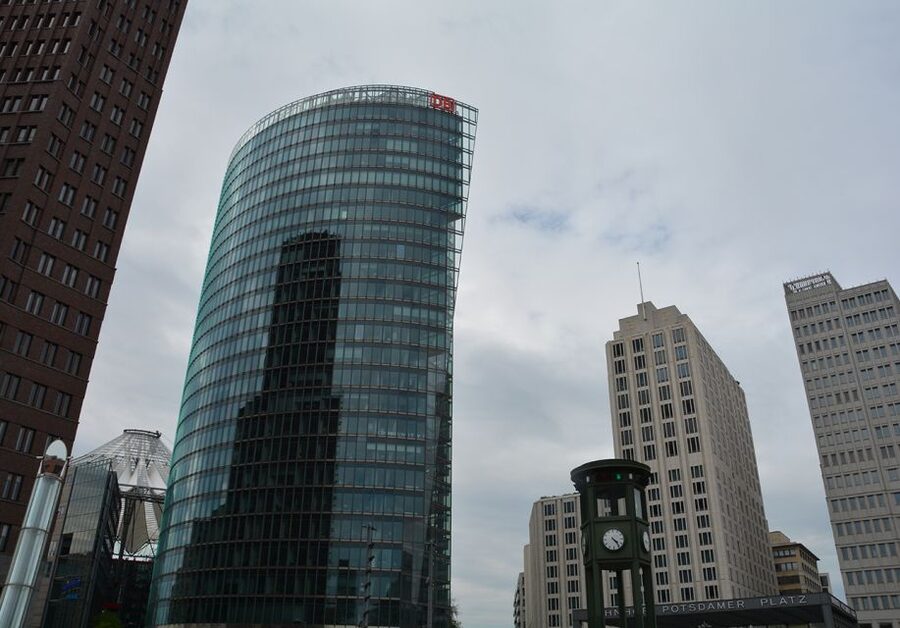
The live guide language is listed as German. This is the most important booking detail for many people. The description also refers to a multilingual, certified guide, but the specific activity information identifies German as the available language, so confirm the language before you pay.
If you understand German well, the local setting and personal stories may be a major strength. If you do not, you should not assume that the tour will be conducted in English simply because the booking page is available in English. A history walk depends on detail, and missing key explanations would reduce its value.
The guides named in the feedback include Carlo and Carlos. Their personal connection to Berlin is a real selling point, but guide assignments can vary. Think of those names as examples of the local perspective you may receive, not a guaranteed request unless the provider confirms it.
Price, group size, and practical value
At $43 per person, the cost is reasonable for a two-hour, small-group city tour if history is high on your Berlin list. You are paying for a professional guide, a focused route, and the chance to ask questions in a group capped at 10. There are no listed entrance fees because the main experience takes place outdoors.
I see the value in the context, not in the number of sights alone. You can walk past Brandenburg Gate and Checkpoint Charlie on your own, but the meaning of those places is easy to miss. The guide turns a route through central Berlin into a connected story about borders, freedom, and political pressure.
You should also count the time saved. The tour puts several important locations into one route, which can help you get your bearings early in a visit. It may prevent you from spending half a day moving between places without understanding how they relate.
The booking terms are flexible. You can cancel up to 24 hours before the start for a full refund, and you can reserve now while paying later. Availability and starting times should be checked for your chosen date.
Who should book this Berlin Wall tour?
I would recommend it to a first-time Berlin visitor who wants a clear introduction to the city’s Cold War story. It also suits anyone who prefers a local guide to a self-guided walk and wants room for questions.
History students, families with older children, and visitors who have just arrived in Berlin may get the most from it. The route is compact, the major landmarks are familiar, and the escape stories provide a human entry into a difficult subject.
It is also a good fit if you value personal memory. A Berliner who grew up in West Berlin can describe the period from a position that is different from a textbook or audio guide. That does not replace a museum visit, but it can make later exhibits easier to understand.
I would hesitate if you need English guiding, dislike outdoor walking, or want detailed access to buildings. The tour is wheelchair accessible, but it remains a two-hour walk in all weather. Wear suitable clothing, and do not count on Berlin’s changeable weather to make an exception for your plans.
Should you book it?
Book this tour if you want a short, focused introduction to Berlin’s divided past, especially the Berlin Wall, Brandenburg Gate, and Checkpoint Charlie. The small group, local perspective, and stories of escape give the route more substance than a simple photo walk.
Skip it if your main interest is another period of Berlin’s past or if German is not comfortable for you. For the right audience, $43 buys a useful orientation and a human explanation of places that can otherwise seem surprisingly ordinary. Arrive ready to walk, listen, and ask questions.
FAQ
How long does the Berlin Historical Sights and Berlin Wall Tour last?
The tour lasts two hours.
What language is the live tour conducted in?
The listed live tour language is German.
Where does the tour begin?
Meet at the exit of S+U Brandenburger Tor station, exit B, in the direction of Pariser Platz and Straße des 17. Juni.
How do I identify the guide?
Look for the guide holding the Get Your Guide, You in Berlin flag.
Where does the tour finish?
The tour finishes at Checkpoint Charlie.
Which major sights are included?
The walk includes Brandenburg Gate, sections of the former Berlin Wall, the Reichstag, Hotel Adlon Kempinski Berlin, and Checkpoint Charlie.
Is the tour wheelchair accessible?
Yes, the activity is listed as wheelchair accessible.
How many people can join the small group?
The group is limited to 10 participants.
Does the tour run in bad weather or on public holidays?
Yes. The tour takes place in all weather conditions and on all public holidays.
Newest Berlin reviews
- Where It All Began: Berlin’s Queer & Trans History Tour★ 4.9 · 6 reviews
- Berlin: guided canoe | kayaktour★ 4.1 · 7 reviews
- Understanding Kreuzberg: The roots of local (sub)culture★ 4.9 · 11 reviews
- Private Potsdam City Tour in an authentic vintage van★ 5.0 · 14 reviews
- Warnemünde Shore Excursion: Private Sachsenhausen and Berlin Tour★ 5.0 · 12 reviews
- Ultimate E-Bike Tour of Berlin with Beer Garden Stop★ 5.0 · 4 reviews
- In the Forbidden City – Potsdam Walking Tour★ 5.0 · 17 reviews
- Private Walking Tour of Potsdam and Sanssouci★ 5.0 · 24 reviews
Berlin Wall Tours, compared.
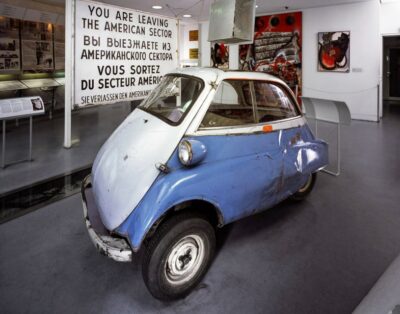
Skip-the-Line: Berlin Wall Museum at Checkpoint Charlie
Read our review →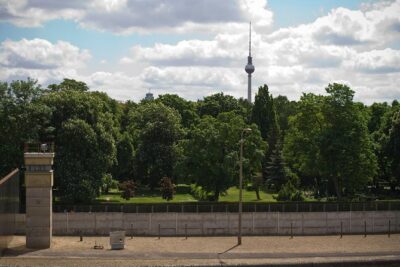
Cold War, Berlin Wall, Spies and the East Side Gallery
Read our review →
Guided Bike Tour of the Berlin Wall and Third Reich
Read our review →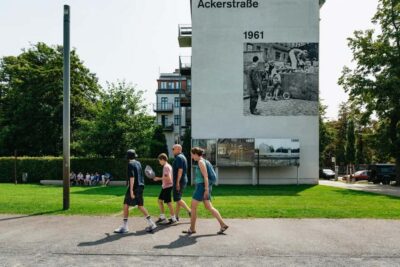
Browse the lists this tour appears in