
Reviewed · BERLIN THIRD REICH TOURS
Third Reich and the Holocaust in Berlin Private Guided Tour
Berlin keeps its darkest history in plain sight. On this private tour, you move from the former Gestapo and SS headquarters at the Topography of Terror to memorials, government buildings, and streets tied to the Nazi era. The subject is grim, but the route gives you a clear way to understand how dictatorship, propaganda, war, and mass murder took hold.
I like two things right away: the private format, which lets you set the pace and ask direct questions, and the range of places covered in five hours. Guide Silvia, a historian with a specialty in World War II, received especially warm praise for bringing the period to life with detail and feeling. The main drawback is the price, $219 per person, which is a serious outlay unless you value personal attention and a guide in your own language.
Key points at a glance
- Topography of Terror: See the former Gestapo and SS headquarters and follow the Nazi rise to power through a serious historical exhibition.
- A route through central Berlin: Visit Potsdamer Platz, the Memorial to the Murdered Jews of Europe, Brandenburg Gate, the Reichstag, and a Soviet war memorial.
- The five-hour advantage: Add Friedrichstrasse, the Jewish Quarter, the New Synagogue, and Otto Weidt’s Blindenwerkstatt Museum.
- Private guide service: The tour is for your own group, with the pace and focus adjusted to your interests.
- Strong guide reports: Silvia, Gunnar, and Manfred are named in the feedback, with praise for clear explanations, warmth, punctuality, and historical depth.
Why this Berlin history tour works
Berlin is unusually well suited to a walking tour about the Third Reich. The places are not tucked away in one museum district. They are spread through the center, often beside modern offices, busy squares, and government buildings. That contrast matters. You are not studying the Nazi period as a sealed-off chapter. You are seeing how it remains part of the city’s streets and public memory.
The private setting also changes the tone. A large group can make a serious history tour feel rushed or impersonal. Here, you can ask why a building mattered, pause when a memorial needs time, or ask your guide to explain a point that is unclear. The available languages are English, French, Russian, Spanish, Italian, German, and Polish.
The tour is sold in a three-hour version and a five-hour version. The shorter route covers the main war sites and memorials in Berlin’s Old Town. The longer route adds the Jewish Quarter and Blindenwerkstatt Museum. If this is your main Berlin history outing, I would choose five hours. The extra time changes the tour from a broad introduction into a more focused look at Jewish life and individual resistance.
More Jewish history tours in Berlin:
- Nazi Berlin and the Jewish Community Tour
★ 4.8 · 55 reviews - Path of Resistance: Berlin’s Hidden Holocaust Stories
★ 5.0 · 33 reviews - Private Tour: Jewish Heritage Walking Tour of Berlin
★ 5.0 · 29 reviews
Starting at the Topography of Terror
The tour begins at the Topography of Terror, one of the most important stops in the program. The museum occupies the former headquarters area of the Gestapo and SS, the institutions that helped enforce Nazi rule and carry out persecution.
This is not a place for quick sightseeing. The exhibition deals with the Nazi Party’s rise, the machinery of terror, and crimes committed during the Holocaust. Your guide gives the material a human and political frame, helping you connect dates, institutions, and decisions instead of treating the period as a list of battles.
I especially like beginning here because it sets the right tone. The tour does not start with grand Nazi architecture or famous names alone. It starts with how power was organized and how ordinary systems of police control and propaganda helped make wider crimes possible.
Allow yourself time to read and listen. The museum can be emotionally heavy, and five hours of difficult subject matter takes concentration. The private guide is useful here because you can ask for clarification without interrupting a larger group.
Potsdamer Platz and a divided capital

From the museum, the route continues toward Potsdamer Platz. This area is known today for modern buildings and city life, but the tour uses it to explain Berlin’s postwar division.
The square marked a point where the American, British, and Soviet zones met after the city was liberated. That detail helps you connect the end of Nazi Germany with the next chapter of Berlin’s history. The tour is mainly about the Third Reich and World War II, but the aftermath cannot be separated from the wartime destruction and the rival political systems that followed.
You may find this stop most useful if you want a wider view of Berlin’s changing identity. It is not only a site of Nazi-era history. It also helps explain why Berlin later became such a strong symbol of the Cold War.
The Memorial to the Murdered Jews of Europe
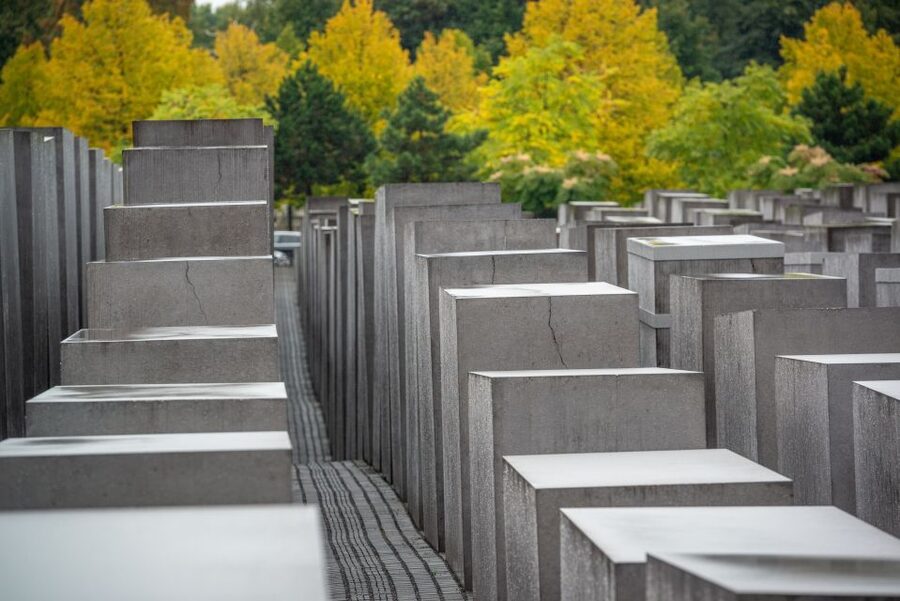
The route then reaches the Memorial to the Murdered Jews of Europe, a field of concrete blocks near Brandenburg Gate and the Reichstag. The memorial honors the six million Jewish victims of the Holocaust.
The design is deliberately spare. It does not offer a simple statue or a single scene to look at. As you walk among the blocks, the feeling changes with the ground and the narrow paths. Your guide can help place the memorial within the larger story of persecution, deportation, and murder, while also explaining why memorial design matters in modern Berlin.
This is a stop where I would resist rushing for photographs. The memorial is public and open, but its purpose calls for quiet attention. If you are traveling with children, the private format may help you explain what you are seeing at an age-appropriate level.
The memorial is also a useful reminder that the Holocaust was not an abstract event. It affected families, neighborhoods, workplaces, and communities across Europe. The longer itinerary continues that human story in the Jewish Quarter.
More Third Reich history tours in Berlin:
- Berlin: Third Reich and Cold War 2 Hour Walking Tour
★ 4.9 · 6,830 reviews - Berlin’s Best: 2 Hour Walking Tour Third Reich and the Cold War
★ 5.0 · 5,486 reviews - Third Reich Berlin: Hitler and WWII Walking Tour
★ 5.0 · 3,301 reviews - Berlin: Third Reich, Hitler, and WWII Walking Tour
★ 4.9 · 1,133 reviews
Brandenburg Gate and the Reichstag
Brandenburg Gate is one of Berlin’s best-known symbols. During the Nazi period, it was used as a backdrop for propaganda displays and rallies. Seeing it in that context gives the monument a more complicated meaning than its familiar postcard image suggests.
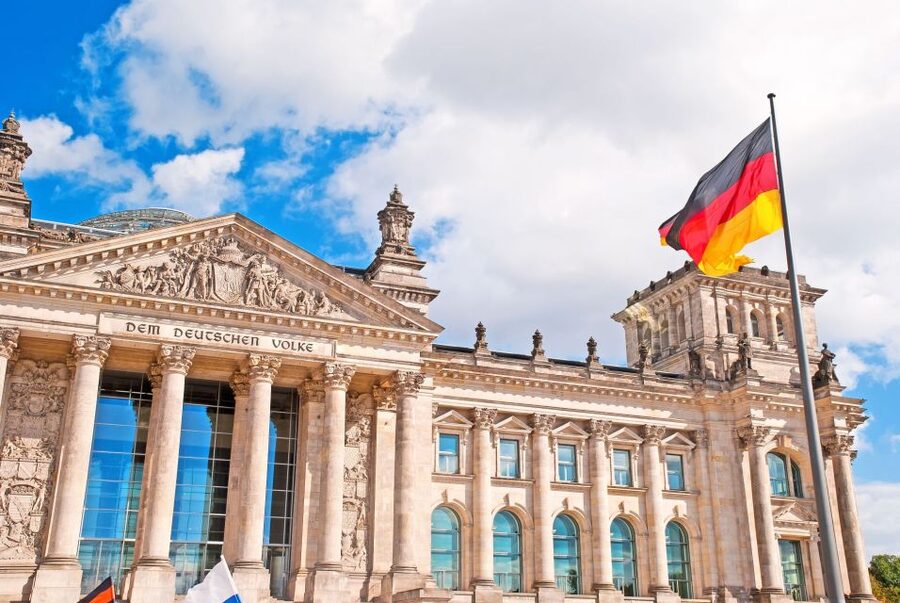
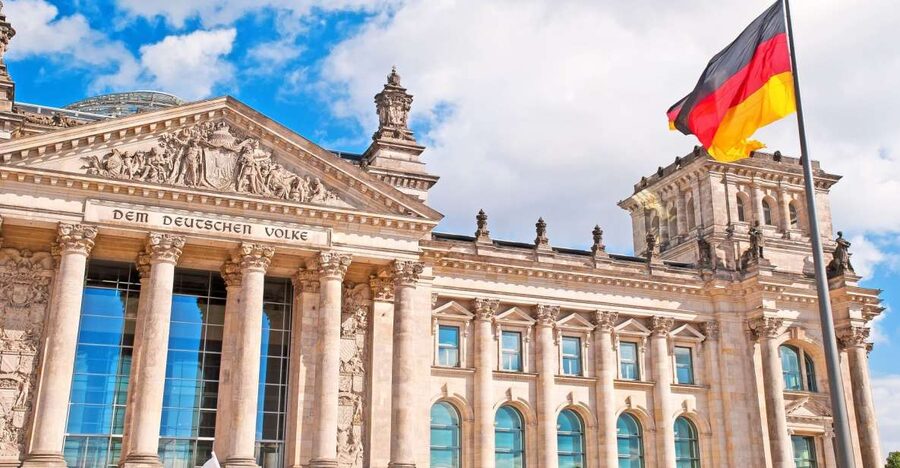
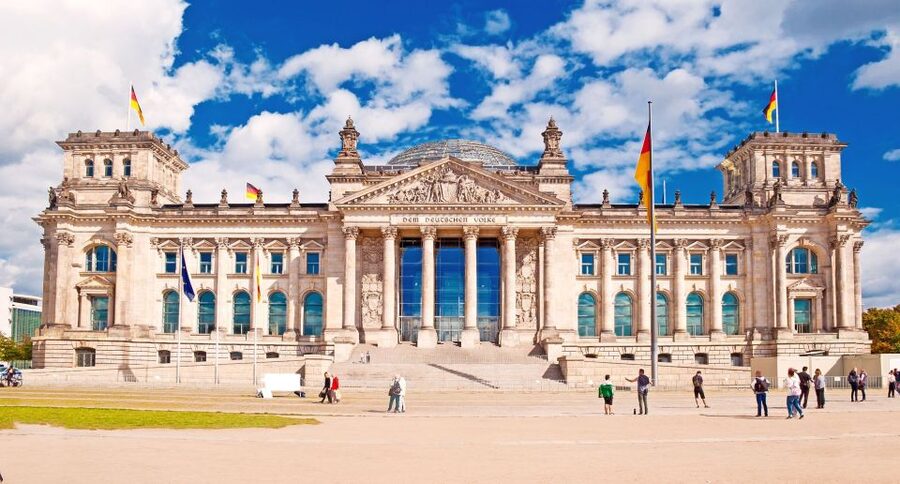
The tour also passes the Reichstag Building, Germany’s former parliament. The building was burned in 1933, an event that became part of the Nazi consolidation of power. Your guide can connect the fire with the political changes that followed and explain why this building matters in the story of German democracy.
These stops are short on walking distance but large in meaning. You see how the Nazis used familiar national symbols to project authority, while the Reichstag points to the collapse of parliamentary government. The guide’s explanation is important because neither building alone tells the full story.
Ending at the Soviet War Memorial
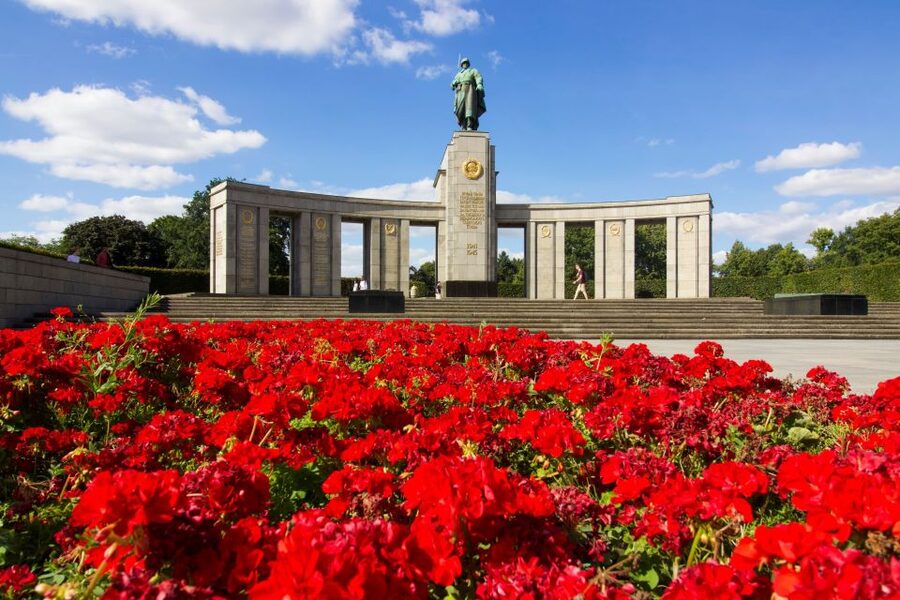
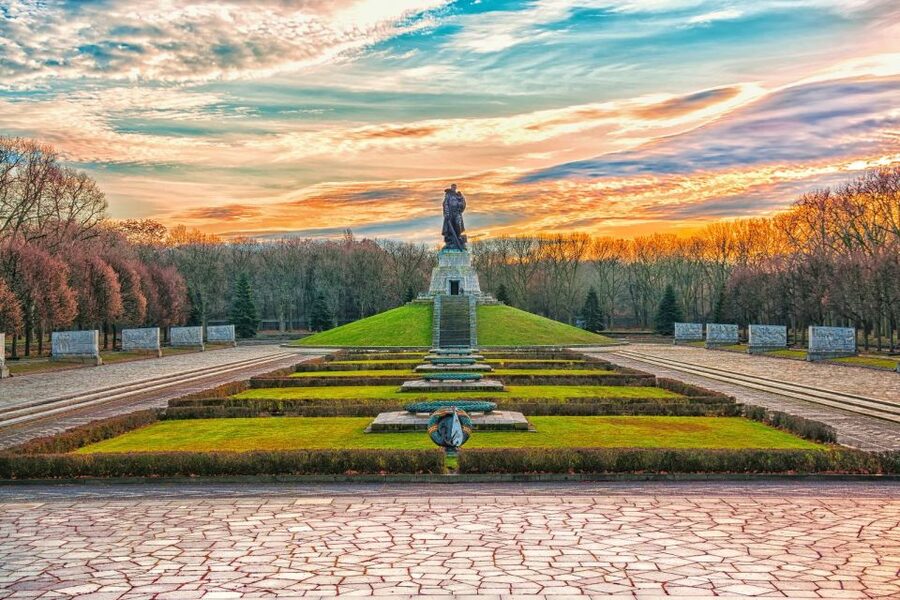
The standard route ends at a Soviet War Memorial. Berlin has several memorials erected by the Soviet Union for its war dead, and this stop adds another viewpoint to the story of the city’s defeat and liberation.
The memorial helps balance the earlier focus on Nazi institutions and Holocaust remembrance. World War II was not only a German domestic catastrophe. It was also a vast conflict that affected soldiers and civilians across Europe. The Soviet memorial brings the eastern front and the Soviet role into the walking route.
You should expect this part of the tour to be interpretive rather than decorative. The value comes from the guide’s explanation of what the memorial commemorates and how it fits into Berlin’s public memory.
What the five-hour route adds
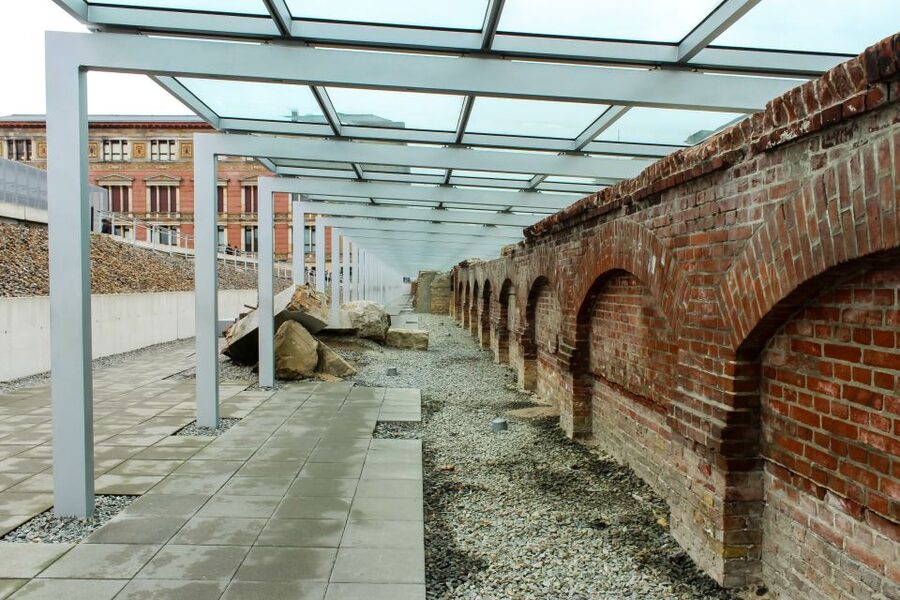
The five-hour option adds Friedrichstrasse, the Jewish Quarter, the New Synagogue, and Otto Weidt’s Blindenwerkstatt Museum. For me, this is where the tour becomes more personal.
Friedrichstrasse is one of Berlin’s best-known streets. Including it helps place Jewish life and wartime events within the ordinary city rather than treating them as something separate from daily life. You then move into Spandauer Vorstadt and the Jewish Quarter, where the surviving New Synagogue provides an important link to Berlin’s Jewish community and its long history.
The New Synagogue is not simply another impressive building on a sightseeing route. It gives the tour a chance to discuss Jewish presence in Berlin before, during, and after the Nazi period. The setting also helps correct a common mistake: thinking of Jewish history only in terms of persecution. The community existed before Nazi rule, and its history continued after the Holocaust.
The added stops take time, so the five-hour tour is best for people who want a fuller history lesson rather than a quick introduction. You will be walking and concentrating for much of the day. That is a benefit if you enjoy serious city tours, but it may feel long if you prefer short museum visits and plenty of free time.
Otto Weidt’s Blindenwerkstatt Museum

The most distinctive addition is Otto Weidt’s Blindenwerkstatt Museum. It tells the story of Otto Weidt, who employed mostly blind and deaf Jewish workers in his workshop during World War II.
This stop gives the tour a different scale. The Topography of Terror explains systems and institutions. The Blindenwerkstatt focuses on one workshop, one employer, and the people he tried to protect. That personal angle can make the period easier to grasp without softening its cruelty.
I would choose the longer route partly for this museum. The story of Otto Weidt offers a look at courage and protection within a society shaped by fear and persecution. It also shows why individual stories matter. Large numbers are necessary to understand the size of the Holocaust, but a single workplace can help you picture the choices people faced.
The museum is particularly valuable after the Memorial to the Murdered Jews of Europe. The memorial honors millions. The Blindenwerkstatt brings the subject back to individual lives and working relationships.
The guide makes the difference
A private history tour rises or falls with its guide. The available feedback points to several strong guides, including Silvia, Gunnar, and Manfred.
Silvia was described as a historian who specialized in World War II, with a gift for explaining events in a vivid and personal way. Gunnar was praised for making the history of Berlin easy to follow through relaxed conversation. Manfred was also singled out for an informal approach that kept the subject accessible.
One report specifically praised punctuality, communication, kindness, and the ability to answer many questions. Those are practical strengths, not minor extras. On a tour about a complex period, you need someone who can explain without turning every stop into a lecture.
You cannot book a particular guide with certainty unless the operator confirms it directly. Still, the named guides give you a useful sense of the service style: historical training, clear communication, and a warm manner rather than a dry recitation of dates.
Is $219 per person good value?
At $219 per person, this is not a budget walking tour. The price makes the most sense for a small private group that wants a guide in a chosen language and the freedom to set its own pace.
You are paying for five hours, a private group, a licensed guide, and a route that combines outdoor sites with museums. A larger group tour may cost less, but it will not offer the same chance to stop, ask questions, or shift the focus toward Jewish history, Nazi propaganda, or Berlin’s wartime politics.
The value is strongest when two or more people share the experience and care about the subject. It is also useful if you have limited time in Berlin and want a structured route through several major sites. If your interest is casual, you may find the price hard to justify.
The tour includes the Topography of Terror and the Blindenwerkstatt Museum on the relevant options, along with the listed memorials and sites. Check the selected version carefully, since the Jewish Quarter and Blindenwerkstatt Museum are not included in the three-hour tour.
Meeting point, timing, and practical advice
You meet the guide in front of Typisch Berlin cafe at Wilhelmstraße 42, 10963 Berlin. Do not enter the cafe. It is only the meeting point, and the cafe staff are not informed about the tour.
The five-hour duration is fixed, but starting times depend on availability. Check your email the day before because important tour information is sent then. You can cancel up to 24 hours in advance for a full refund, and the reserve-now, pay-later option keeps payment from being due at booking.
Wear comfortable shoes. The route covers several central areas on foot, and the subject requires attention as well as physical stamina. I would avoid scheduling another major museum or demanding activity immediately afterward.
Who should book this tour?
This is a good match for you if you want serious historical context, prefer private guiding, and would rather ask questions than follow a fixed lecture. It suits first-time visitors who want the major central sites explained in one route, as well as returning visitors who want a more focused look at Jewish Berlin and Nazi-era institutions.
The five-hour version is best for history-minded visitors, families who want a guide to handle difficult questions, and anyone especially interested in Jewish life and individual acts of help during the Holocaust.
I would skip it if you want a light sightseeing walk, dislike museums, or have only a short attention span for grim material. The subject is painful, and the tour does not turn away from that. Its strength is also its demand: you need to give it time and thought.
Should you book it?
Book the five-hour tour if this is your main opportunity to study Berlin’s Third Reich and Holocaust history. The Jewish Quarter and Blindenwerkstatt Museum add the human scale that the shorter route cannot provide.
Choose the three-hour version if you want the essential central sites, including the Topography of Terror, Holocaust memorial, Brandenburg Gate, Reichstag, Potsdamer Platz, and Soviet War Memorial. At $219 per person, the experience is costly, but the private format, language choice, flexible pace, and strong guide record make it a sensible splurge for people who want careful historical explanation rather than a quick checklist of monuments.
FAQ
How long is the tour?
The experience is available as a three-hour tour or an extended five-hour tour. The five-hour option includes the Jewish Quarter and Otto Weidt’s Blindenwerkstatt Museum.
What places are included in the main route?
The route includes the Topography of Terror, Reichstag Building, Potsdamer Platz, Memorial to the Murdered Jews of Europe, and a Soviet War Memorial. The exact number of attractions depends on the option you select.
Is this a private tour?
Yes. The tour is for a private group, and the guide can adjust the pace and focus to your interests.
Which languages are available?
Live guiding is available in English, French, Russian, Spanish, Italian, German, and Polish.
Where does the tour meet?
Meet your guide in front of Typisch Berlin cafe at Wilhelmstraße 42, 10963 Berlin. Do not enter the cafe, since it is only the meeting point.
What is the cancellation policy?
You can cancel up to 24 hours before the tour for a full refund. A reserve-now, pay-later option is also available.
Newest Berlin reviews
- Where It All Began: Berlin’s Queer & Trans History Tour★ 4.9 · 6 reviews
- Understanding Kreuzberg: The roots of local (sub)culture★ 4.9 · 11 reviews
- Berlin: guided canoe | kayaktour★ 4.1 · 7 reviews
- Private Potsdam City Tour in an authentic vintage van★ 5.0 · 14 reviews
- Warnemünde Shore Excursion: Private Sachsenhausen and Berlin Tour★ 5.0 · 12 reviews
- Ultimate E-Bike Tour of Berlin with Beer Garden Stop★ 5.0 · 4 reviews
- In the Forbidden City – Potsdam Walking Tour★ 5.0 · 17 reviews
- Private Walking Tour of Potsdam and Sanssouci★ 5.0 · 24 reviews
Berlin Third Reich Tours, compared.
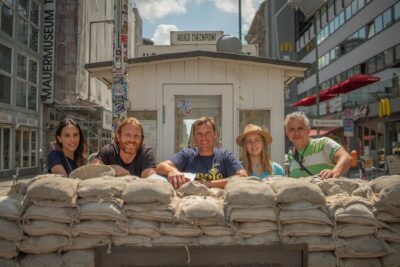
Berlin’s Best: 2 Hour Walking Tour Third Reich and the Cold War
Read our review →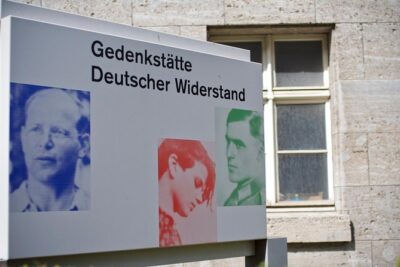
Third Reich Berlin: Hitler and WWII Walking Tour
Read our review →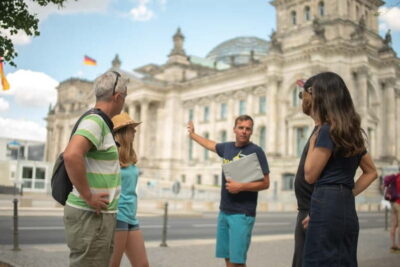
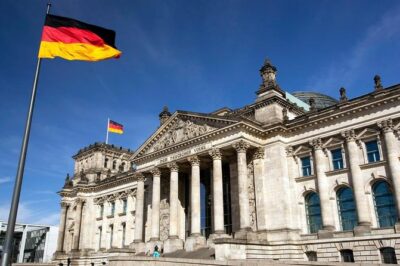
Berlin Third Reich Sites: Half-Day Walking Tour
Read our review →
Guided Bike Tour of the Berlin Wall and Third Reich
Read our review →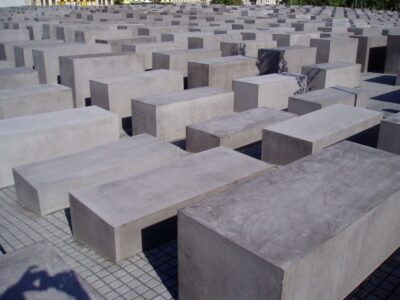
Hitler’s Germany: Berlin During the Third Reich & WWII
Read our review →
Private Walking Tour Berlin Third Reich Hitler and World War II
Read our review →Browse the lists this tour appears in