
Reviewed · HISTORICAL TOURS
Berlin: Historic Center Walking Tour with a Real Berliner
Berlin’s story comes at you in layers on this two-hour walk through Mitte. You begin where Berlin began, near the Spree, then follow the city’s royal boulevard past grand buildings, museums, and the Brandenburg Gate. It is a brisk introduction to a city that has repeatedly rebuilt itself.
I like the broad sweep of the route, which covers far more than the usual World War II talking points. I also like the personal touch from guides such as Carlo, who has been praised for clear explanations, thoughtful answers, and even helping a solo participant find the right bus afterward. The drawback is simple: two hours is enough for orientation, not for entering museums or studying each landmark at length.
Key points to know before you book
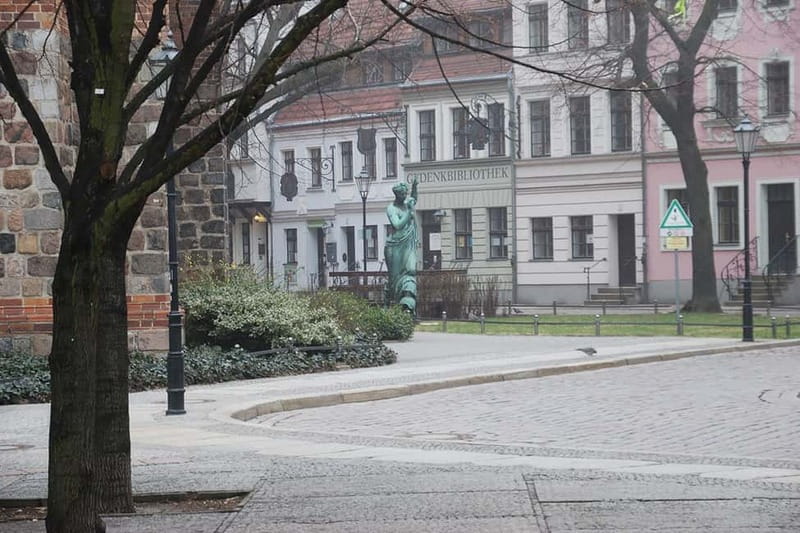
- Berlin’s story begins in Nikolaiviertel: Start beside St. Nicholas’ Church Museum and learn about the small trading settlement that grew into a capital.
- Museum Island comes early: See Berlin Cathedral, the Old Museum, and the Humboldt Forum from outside, with the city’s royal past explained along the way.
- The route links kings to reunification: Unter den Linden and Brandenburg Gate connect Prussian power, German division, and the events of 1990.
- Carlo receives especially warm praise: His clear storytelling, friendly manner, and willingness to answer questions are major strengths.
- It is a value-focused orientation walk: At $44, the price is reasonable if you want context and direction rather than museum admission or a long specialist tour.
- Prepare for Berlin weather: The walk runs in all weather and on public holidays, so wear comfortable shoes and suitable clothing.
Why this two-hour Berlin walk works well
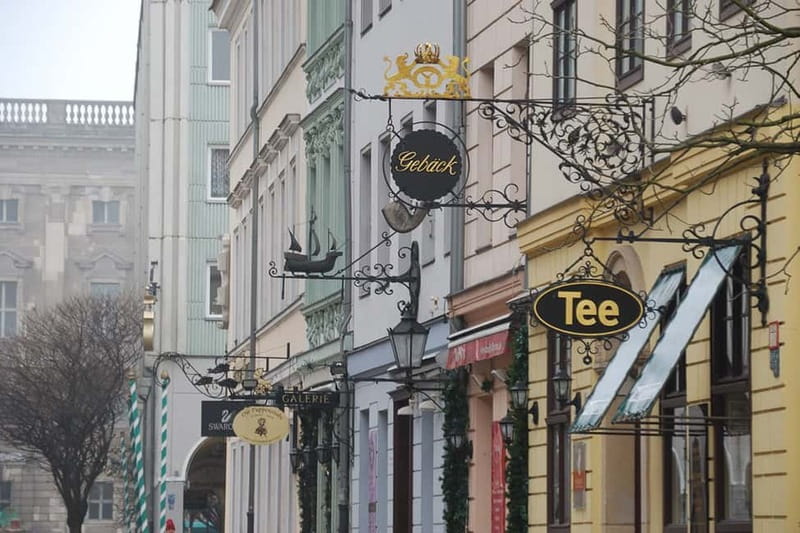
This tour is built for your first look at central Berlin. It does not try to cover every district or every painful chapter of the city’s past. Instead, it gives you a useful route through Mitte, the historic core, while showing how Berlin changed from a riverside settlement into the capital of Prussia, the German Empire, divided Germany, and reunified Germany.
That wide time span is the tour’s best feature. Many short Berlin walks concentrate almost entirely on the Nazi period and the Berlin Wall. Those subjects matter, but they are only part of the story. Here, you also hear about royal Berlin, the city’s early development, its cultural institutions, and the political meaning of its grand central buildings.
You walk rather than ride, so the city’s scale becomes clearer. The Spree, Palace Bridge, Unter den Linden, Museum Island, and Brandenburg Gate fit together in a way that can be hard to grasp from a map. I would take this tour early in a Berlin visit, especially if you want a mental map before choosing which museums and memorials deserve more of your time.
The tour costs $44 per person for two hours. That is not the cheapest way to see Berlin’s center, but the price can make sense if your guide gives you the historical framework you need. You are paying for a live guide, not for entry to attractions, food, drinks, or hotel transport. The value depends on how much you want explanation rather than simply a list of sights.
More history tours in Berlin:
- Berlin: Natural History Museum Entrance Ticket
★ 4.6 · 3,382 reviews - Berlin: World Heritage Cruise to Potsdam
★ 4.5 · 1,435 reviews - Berlin Historical Highlights Walking Tour
★ 4.9 · 657 reviews
Starting at St. Nicholas’ Church and Nikolaiviertel
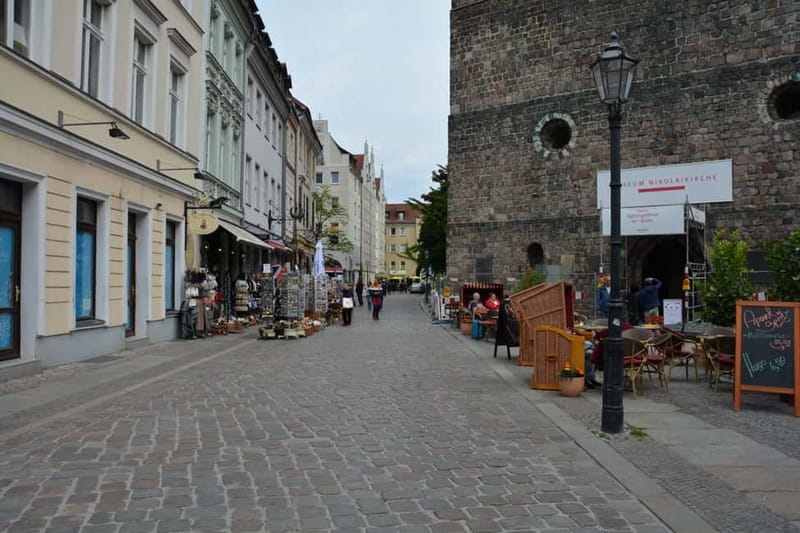
Meet your guide in front of the main entrance to the Nikolaikirche Museum, or St. Nicholas’ Church Museum. Look for the Get Your Guide, You in Berlin flag. This starting point places you in Nikolaiviertel, a district tied to Berlin’s earliest beginnings.
The guide introduces Berlin as a small trading village on the River Spree before it became a royal residence and later a European capital. That opening matters because Berlin can otherwise feel like a collection of monumental buildings with little connection between them. Nikolaiviertel gives the story a starting point.
Expect a guided walk and outdoor sightseeing here, not a museum visit included in the ticket. If you want to explore the St. Nicholas’ Church Museum itself, plan separate time and admission. The tour keeps moving, so comfortable shoes are important.
Carlo is one of the guides associated with this experience, and his style appears to suit people who want both facts and conversation. He is described as friendly, warm, and easygoing, with the ability to explain complicated subjects without making the walk feel like a lecture.
Following the Spree to Museum Island
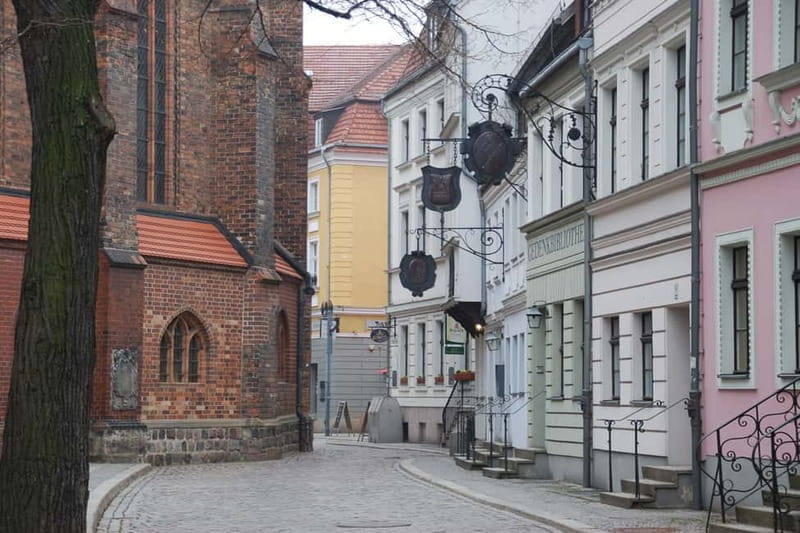
From Nikolaiviertel, the route follows the Spree toward Museum Island. This is one of Berlin’s strongest stretches for first-time orientation because several major sights appear close together.
You see the Television Tower, Berlin’s highest building, rising over the center. Its height gives you a useful reference point as you walk. You also reach Berlin Cathedral, the Old Museum, and the Humboldt Forum, all important pieces of the city’s cultural and architectural story.
The guide explains how Berlin’s center developed around royal power, museums, and public institutions. The aim is not to take you inside each building. Instead, you learn why these structures were placed here and how they fit into Berlin’s changing identity.
Museum Island deserves more time than this tour can provide. If you care about art, archaeology, or architecture, return later for an interior visit. The walk gives you the basic map and context, but it cannot replace a museum visit in two hours.
The Humboldt Forum and the rebuilt City Palace
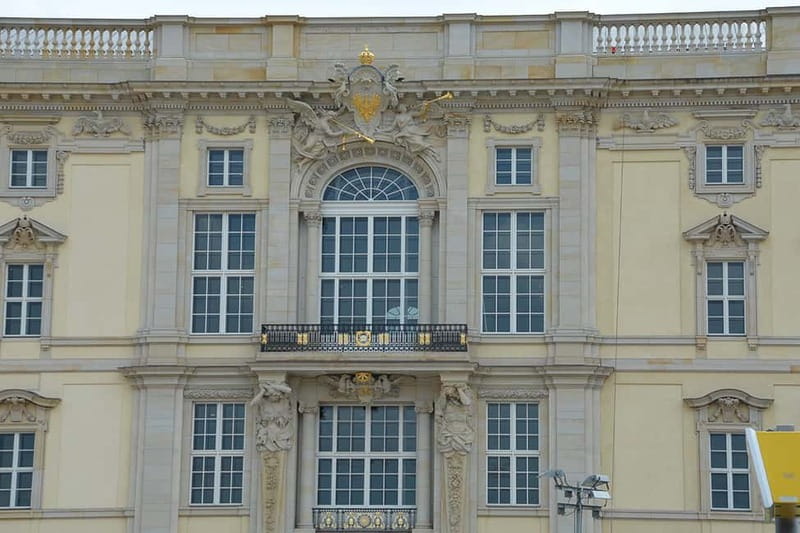
The Humboldt Forum is one of the most useful stops for understanding modern Berlin’s approach to its past. The building includes the reconstructed exterior of the Berlin City Palace, once connected with Prussian royal power.
That reconstruction is not a minor detail. It shows how Berlin often places old forms beside new uses, and it raises questions about what a city chooses to rebuild after war and political change. Your guide can provide the historical setting as you look across the building and the surrounding central district.
The tour is especially helpful here because the area can seem visually confusing. Royal architecture, modern restoration, museum spaces, and open public areas all meet in a compact zone. A live explanation helps you read what you are seeing instead of treating it as a series of attractive façades.
The tradeoff is that the Humboldt Forum is seen as part of the walk, not explored in depth. Do not book this experience expecting museum entry or an indoor program.
Other Berlin experiences to weigh up
- Discover Berlin Half-Day Walking Tour
★ 5.0 · 9,624 reviews - Berlin: Third Reich and Cold War 2 Hour Walking Tour
★ 4.9 · 6,830 reviews - Berlin: Discover Berlin Walking Tour
★ 4.9 · 5,998 reviews - Berlin’s Best: 2 Hour Walking Tour Third Reich and the Cold War
★ 5.0 · 5,486 reviews
Crossing Palace Bridge into royal Berlin
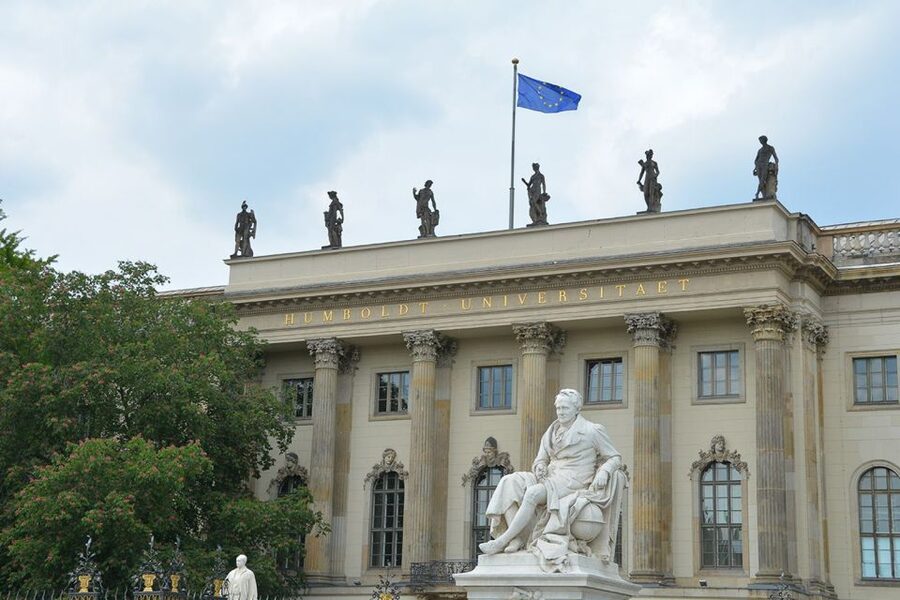
Across the Palace Bridge, you enter the historic center shaped by kings and emperors. The bridge itself provides a natural change in the route, moving you from the riverside and museum quarter toward Unter den Linden.
This section is where Berlin’s Prussian and imperial past becomes most visible. The buildings are grand, but the guide’s job is to explain the political purpose behind that grandeur. You hear how Berlin developed as a residence city for the Kingdom of Prussia and how its public spaces reflected royal authority.
I like this part because it gives meaning to the architecture without asking you to memorize dates. You can focus on the setting, listen for the major transitions, and return later if a particular building catches your interest.
The walk is wheelchair accessible, but central Berlin’s outdoor route still means you should consider your own comfort with two hours on foot. The organizers advise comfortable clothes and shoes, and that is good advice for everyone.
Unter den Linden, Berlin’s oldest boulevard
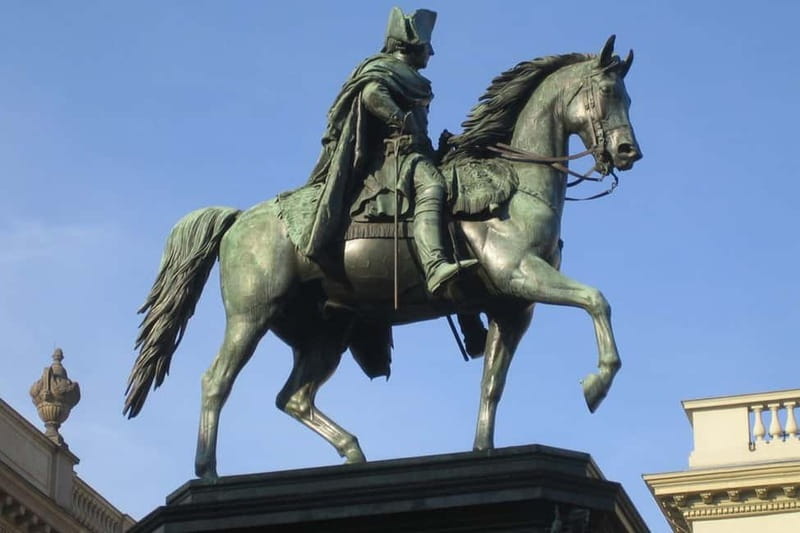
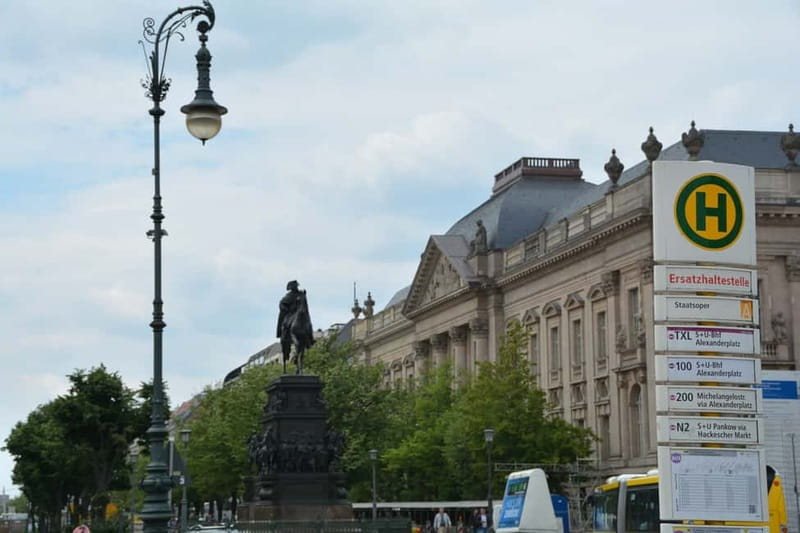
Unter den Linden is the tour’s grand central spine. This is Berlin’s oldest boulevard, lined with institutions that reflect education, religion, music, monarchy, and government.
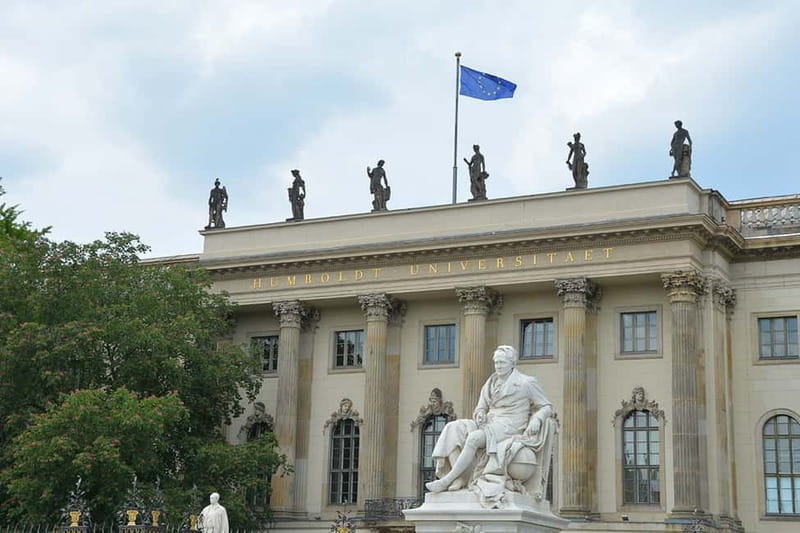
You see the Equestrian Statue of Frederick the Great, the State Opera, Humboldt University, and St. Hedwig’s Cathedral. Each stop adds a different piece to the story. Frederick the Great points to Prussian rule. The opera reflects court culture and public music. Humboldt University connects Berlin with scholarship. St. Hedwig’s Cathedral adds a major religious landmark to the route.
The guide’s broad approach works well here. Instead of treating each building as an isolated photo stop, the walk shows how the boulevard became a statement of power and culture. You also get a sense of how close Berlin’s major institutions are to one another.
This is not a photography tour with long pauses at every building. The group keeps moving, and the guide has to balance detail with distance. If you need frequent rest stops, tell the guide. One particularly positive account describes Carlo making room for people to sit during the walk, which suggests a considerate approach, though the exact pace can vary by group.
Arriving at Brandenburg Gate
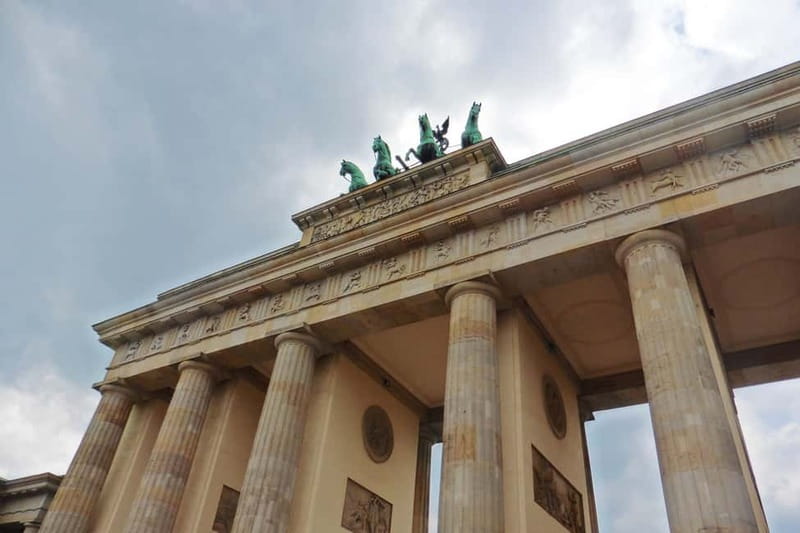
The walk ends at Brandenburg Gate, Berlin’s best-known symbol and one of the most important political landmarks in Europe. The guide explains its meaning before, during, and after the city’s division.
That context is essential. The gate is not simply a neoclassical monument at the end of a boulevard. Its meaning changed as Berlin became divided, and it later became a focal point for German reunification in 1990. Standing there after following the route from the city’s early settlement gives the landmark more weight.
The tour data lists Brandenburg Gate as the finish. The meeting information also says the activity ends back at the meeting point, so confirm the exact ending arrangement when you book. Either way, the route is designed to finish with this major Berlin sight rather than leave it as a passing view.
From Brandenburg Gate, you can continue your own sightseeing, but no onward transport or hotel drop-off is included. The tour is a walking experience from start to finish.
What the guides add to the experience
The strongest praise centers on the guides, especially Carlo, whose name also appears as Karlo or Carlos in some comments. The consistent themes are clear explanations, warmth, patience, and a willingness to handle questions rather than recite a fixed script.
One useful detail is that the tour can still run when only one person books. A solo participant described receiving the full walk rather than having it canceled. That cannot guarantee the group size for every date, but it suggests the experience may be dependable for solo visitors.
Another person took the walk on arrival day and found it useful for learning the city’s layout and improving their sense of direction. That is a good reason to schedule it near the start of your stay. You will recognize the main sights afterward and have a better idea of how the center fits together.
The guide language is English. The general description refers to multilingual guiding, but the activity details specify a live English-speaking guide. If you need another language, confirm availability before booking.
Who will get the most from this tour
I would recommend this walk to first-time visitors who want a clear introduction to central Berlin without committing half a day to a specialist subject. It also suits people who prefer human explanation to an audio guide and those who want to ask questions as they go.
It is a good match for:
- First-time visitors building a Berlin plan
- Solo visitors who want a guided introduction
- History-minded people who want more than World War II coverage
- Travelers who enjoy architecture and public spaces
- Anyone staying near central Berlin and able to walk for two hours
It is less suitable if you want museum interiors, a meal, hotel pickup, or a detailed study of the Berlin Wall. The tour passes through the historic center, but it is not a dedicated Cold War or memorial tour.
Practical details that affect your choice
The walk lasts two hours, with starting times shown when you check availability. It runs in all weather and on public holidays, so bring shoes that can handle wet streets and clothing suited to the forecast.
Hotel pickup and drop-off are not included. Food and drinks are also not included, so eat beforehand or plan a stop afterward. Since the route includes several outdoor sights, you will have more fun if you arrive ready to keep walking rather than treating it as a series of stationary talks.
Wheelchair access is listed for the experience. If you need specific assistance, confirm the route details before booking, especially because outdoor conditions and crowd levels can affect comfort.
Cancellation is free up to 24 hours before the start, and you can reserve now and pay later. Those terms are useful if your Berlin schedule is still shifting.
Should you book the Berlin historic center walk?
Book it if you want a friendly, efficient introduction to Berlin’s central story. At $44, the experience offers solid value when the guide is as effective as Carlo has been described: clear, flexible, and able to connect early Berlin, Prussian power, museum culture, division, and reunification.
Skip it if you mainly want to enter museums or focus tightly on Nazi history, the Berlin Wall, or contemporary art. For most first-time visitors, though, this is a sensible first-day or first-evening choice. You get the major central sights, a useful sense of direction, and enough historical context to make the rest of Berlin easier to understand.
FAQ
Where does the Berlin historic center walking tour start?
It starts in front of the main entrance to the Nikolaikirche Museum, also called St. Nicholas’ Church Museum. Look for the guide holding the Get Your Guide, You in Berlin flag.
Where does the tour end?
The listed route ends at Brandenburg Gate. The meeting information also says the activity ends back at the meeting point, so confirm the exact ending arrangement when booking.
How long does the walking tour last?
The tour lasts two hours. Starting times are available when you check the selected date.
What language is the tour offered in?
The activity details specify a live English-speaking guide.
Is the tour wheelchair accessible?
Yes, the activity is listed as wheelchair accessible.
Does the tour run in bad weather?
Yes. The walk takes place in all weather conditions and on public holidays.
Are museum admissions included?
No. The experience includes the professional guide and walking tour only. Food, drinks, hotel pickup, hotel drop-off, and attraction admissions are not included.
Can I cancel the tour for a full refund?
Yes. You can cancel up to 24 hours in advance for a full refund. You can also reserve now and pay later.
Newest Berlin reviews
- Where It All Began: Berlin’s Queer & Trans History Tour★ 4.9 · 6 reviews
- Understanding Kreuzberg: The roots of local (sub)culture★ 4.9 · 11 reviews
- Berlin: guided canoe | kayaktour★ 4.1 · 7 reviews
- Private Potsdam City Tour in an authentic vintage van★ 5.0 · 14 reviews
- Warnemünde Shore Excursion: Private Sachsenhausen and Berlin Tour★ 5.0 · 12 reviews
- Ultimate E-Bike Tour of Berlin with Beer Garden Stop★ 5.0 · 4 reviews
- In the Forbidden City – Potsdam Walking Tour★ 5.0 · 17 reviews
- Private Walking Tour of Potsdam and Sanssouci★ 5.0 · 24 reviews
Historical Tours, compared.
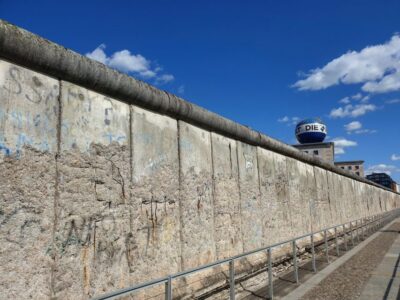

Berlin Private Complete History All Day Walking Tour
Read our review →


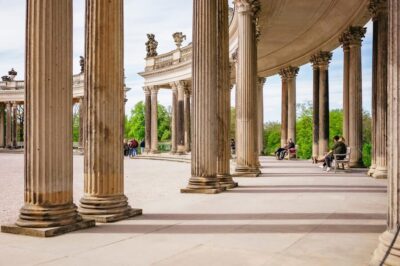
Small group Potsdam: A Journey Through History and Palaces
Read our review →Browse the lists this tour appears in