

Reviewed · HISTORICAL TOURS
Berlin: Charité Hospital History Walking Tour
Berlin’s Charité began in 1710 as a simple plague house, built to protect the city from an approaching epidemic. From bloodletting and mercury treatments to the discoveries of Robert Koch and Rudolf Virchow, its story follows medicine from guesswork toward modern science. The visit to the Veterinary Anatomy Theatre, Berlin’s oldest surviving academic building, adds a rare look at how doctors studied sick animals and cavalry horses.
I especially like the way this tour links medical history with Berlin’s political past. You hear about Rachel Hirsch, the first woman to hold a medical professorship in Prussia, then confront the hospital’s role under the Nazis and its uneasy life in socialist East Germany. I also like the clear, human storytelling praised in connection with guides such as Martina. The main drawback is practical: most of the two hours are outside, and some Charité buildings remain off-limits because they are still used for hospital or university work.
Key points to know before you book
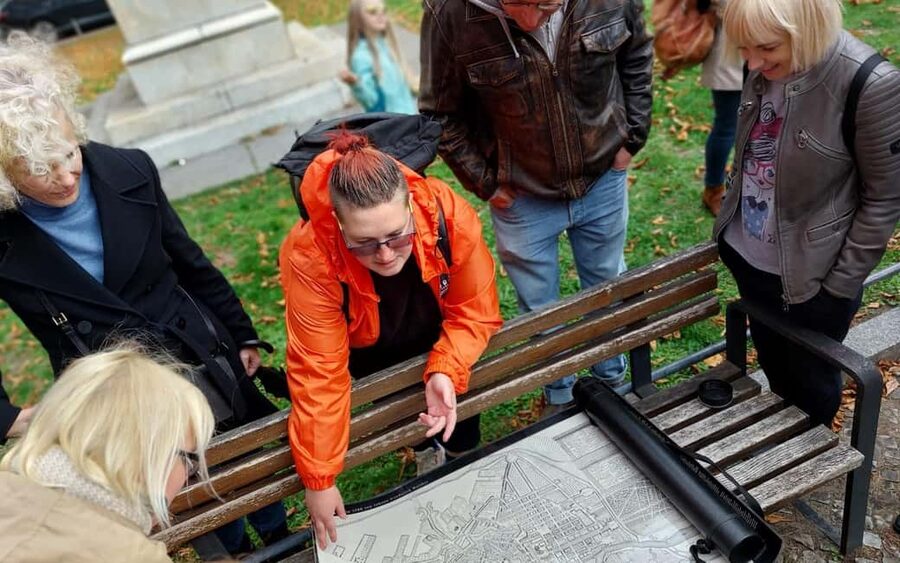
- A plague-house beginning: Charité was founded in 1710 as an emergency response to disease.
- The Veterinary Anatomy Theatre: Spend about 15 minutes inside Berlin’s oldest academic building still in existence.
- Medicine and politics together: The tour covers scientific progress, women in medicine, Nazi crimes, and East German censorship.
- A mostly outdoor route: Wear warm clothing in cold weather and comfortable shoes for two hours of walking and standing.
- A strong guide-led experience: Martina has been praised for lively, well-organized explanations and useful visual material.
- Good value at $28: The fee includes the guide and admission to the Veterinary Anatomy Theatre.
Starting at Robert-Koch-Platz with medicine’s oldest problems
Meet your guide by the Robert Koch statue at Robert-Koch-Platz. Look for the orange umbrella, a useful marker in a busy city. The tour begins with Charité’s foundation in 1710, when Berlin needed a place to isolate people during a feared plague outbreak.
The early hospital was not a place of polished laboratories and reliable cures. Bloodletting, mercury, and amputations were common tools. Some treatments caused serious harm, but they also show why medical progress matters. The guide uses these early methods to set up a simple question: how did European medicine move from tradition and speculation toward observation and testing?
That opening gives the tour a firm shape. You are not simply looking at old buildings. You are following changing ideas about illness, evidence, the body, and the role of a hospital in society.
The Robert Koch statue also points toward one of Charité’s greatest strengths. This was a place where major medical figures worked, argued, tested theories, and changed the way doctors understood disease. The tour introduces those people without treating science as a list of dates.
More history tours in Berlin:
- Berlin: Natural History Museum Entrance Ticket
★ 4.6 · 3,382 reviews - Berlin: World Heritage Cruise to Potsdam
★ 4.5 · 1,435 reviews - Berlin Historical Highlights Walking Tour
★ 4.9 · 657 reviews
Inside the Veterinary Anatomy Theatre
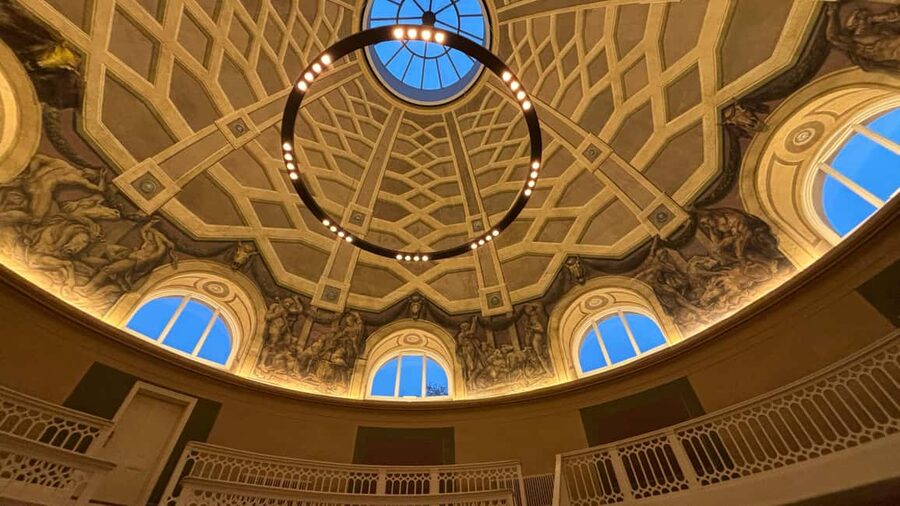
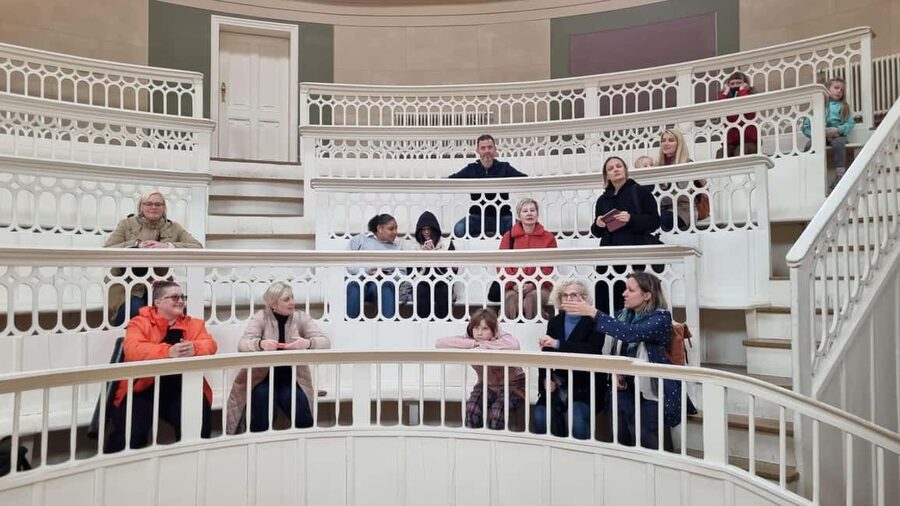
The most unusual stop is the Veterinary Anatomy Theatre, reached early in the walk. Admission is included, and the visit lasts about 15 minutes. This is the oldest academic building still in existence in Berlin, giving the tour one of its clearest links to the 18th century.
The building was created for the study of animal disease. In particular, doctors and veterinary specialists examined the ailments of livestock and cavalry horses. That subject mattered greatly in a city that depended on animals for food, farming, transport, and military power.
The theatre also broadens the story beyond human medicine. A sick horse could affect an army. Diseased livestock could threaten a city’s food supply. Medical research was tied to daily survival, public health, and state power long before modern hospitals used the language of public health.
You should expect this to be a short visit rather than a long museum session. The building is an important part of the route, but the guide’s explanation gives the stop much of its value. If the theatre is closed for an internal event or public holiday, this portion may not be available, so keep that possibility in mind when booking.
Walking around Charité’s neo-Gothic campus

After the theatre, the route circles the historic Charité campus. The neo-Gothic architecture gives the walk a distinctive setting, but the buildings are not just decoration. Their hospital and university functions help you understand how medical teaching, research, and patient care developed together.
The tour includes several guided stops of about 15 minutes each. The exact focus depends on the guide and the conditions of the day, but the supplied route centers on Charité’s important people, buildings, and political chapters.
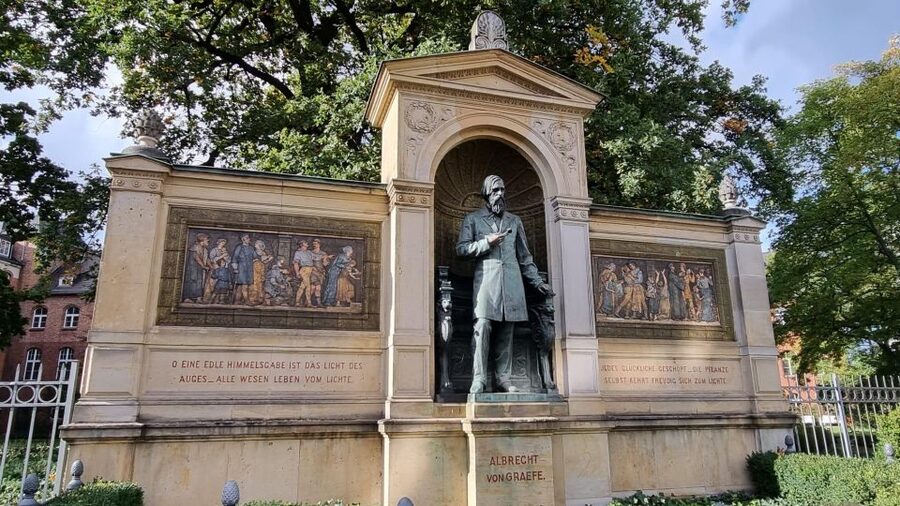
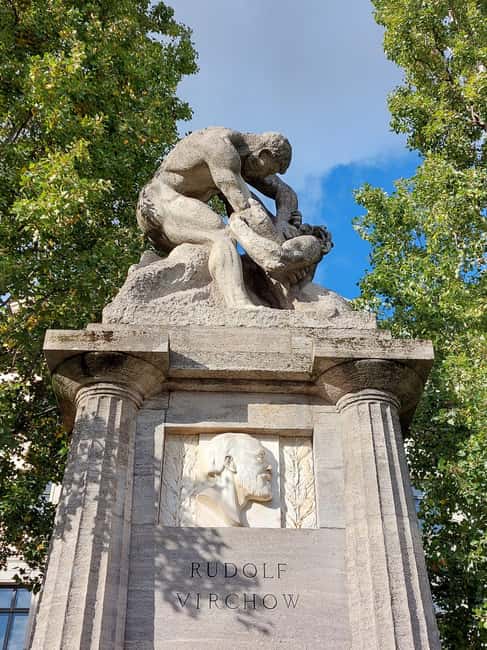
Robert Koch is one of the major names connected with the hospital. Rudolf Virchow is another. Both represent the scientific energy associated with Charité, and both help explain why the institution became so important in medical history.
A good guide makes these figures feel less like names carved into stone. Martina, who has led this tour, has been praised for keeping the two hours lively while offering detailed explanations and extra material to clarify parts of the story. That matters here because the subject could easily become a lecture. Instead, the route works best when the guide connects people, places, and consequences.
You will not enter every notable hospital or university building. Some are still active, and access is restricted during guided visits. You may be able to explore certain areas independently after the tour, but you should not book this experience expecting a full interior tour of the working hospital.
Rachel Hirsch and the slow progress of women in medicine
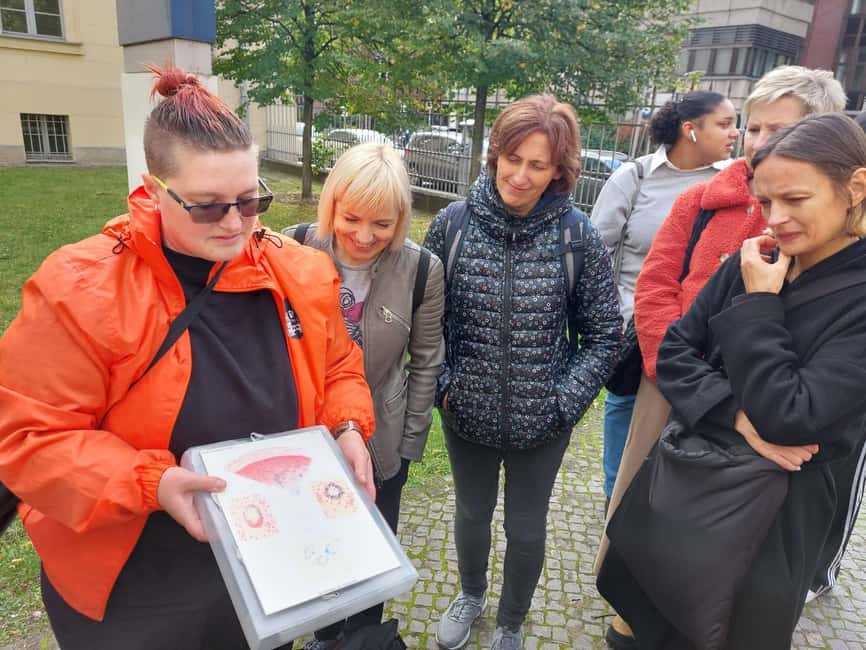
One of the tour’s most valuable stories concerns Rachel Hirsch. In 1913, she became the first woman to hold a medical professorship in Prussia.
Her appointment marked a major step for women in medicine, but the story is not presented as a neat victory. She faced resistance within the institution, reminding you that formal progress and daily acceptance rarely arrived at the same speed.
This is an important part of the experience because it adds social history to the scientific story. Charité was a place of medical achievement, but it was also an institution shaped by old hierarchies. The same hospital that produced breakthroughs could resist women who wanted equal professional standing.
If you have an interest in women’s history, education, or social change, this section may be one of the tour’s strongest moments. It gives a face and a date to a wider transformation in medicine.
Other Berlin experiences to weigh up
- Discover Berlin Half-Day Walking Tour
★ 5.0 · 9,624 reviews - Berlin: Third Reich and Cold War 2 Hour Walking Tour
★ 4.9 · 6,830 reviews - Berlin: Discover Berlin Walking Tour
★ 4.9 · 5,998 reviews - Berlin’s Best: 2 Hour Walking Tour Third Reich and the Cold War
★ 5.0 · 5,486 reviews
The Nazi era and the collapse of medical ethics
The tour does not avoid Charité’s darkest chapter. Under the Nazi regime, medical ethics were pushed aside and racial hygiene was imposed with brutal force.
Some doctors stayed silent. Others actively organized the extermination of psychiatric patients. This is not a minor footnote in the tour. It shows how doctors and medical institutions can become instruments of state violence when professional authority is separated from basic human rights.
The subject is difficult, and you should expect a serious tone. The tour’s value here comes from placing these crimes within the hospital’s own story rather than treating them as distant events that happened somewhere else.
For me, this section is essential because it changes the way you look at medical progress. Scientific achievement does not automatically produce moral judgment. The Charité story includes both lifesaving discoveries and the catastrophic misuse of medicine.
The tour is recommended for people aged 14 and older because of this historical depth. Children are not barred by a strict rule, but minors must be accompanied by an adult, and the content may be too heavy for younger children.
East Germany, public pride, and bricked-up windows
After the Nazi period, Charité entered another political system. East Germany took pride in the hospital’s achievements, presenting it as proof of socialist medical success.
At the same time, windows facing the capitalist West were bricked up. That small but striking detail turns architecture into political evidence. A hospital could be a place of healing and research, yet its physical surroundings were shaped by division, ideology, and fear.
This part makes the tour especially useful for anyone studying Berlin’s 20th-century history. You do not need to know the political background in advance. The guide connects the hospital to the broader split between East and West, showing how a medical campus could reflect the tensions of the city around it.
The Charité television series also draws from real events and people connected with the institution. The tour helps separate drama from historical fact by explaining the setting and the figures behind the stories. If you watched the series, you will get extra context. If you did not, the tour still works on its own.
What two hours on foot really feels like
The tour lasts two hours and includes walking and standing for most of that time. Wear comfortable shoes, bring water, and dress for the weather. In cold months, take the warning seriously: much of the route is outdoors, and a warm coat will make a real difference.
The route begins at Robert-Koch-Platz and finishes at Alexanderufer, 10117 Berlin, near Berlin Central Station. The activity information also describes the end as back at the meeting point, so check the precise finish instructions when you book. Either way, the location is useful for continuing your day in central Berlin.
The pace is suited to people who can walk and stand for approximately two hours. It is wheelchair accessible, but because the experience is mainly outdoors and includes access to a historic building, you may want to confirm current conditions if you need specific assistance.
English and German tours are available. If Martina is guiding your departure, you can expect a lively, carefully planned presentation based on the strong response to her approach. Guides can vary, so the exact style may differ from one departure to another.
What the $28 price includes
At $28 per person, this is a reasonable price for a specialist walking tour. You are paying for an expert local guide, a focused two-hour route, and admission to the Veterinary Anatomy Theatre.
The value is strongest if you enjoy history told through a real place. You are not just paying to see hospital buildings from the outside. The tour connects those buildings to plague control, medical research, women’s education, Nazi crimes, and East German politics.
The price is less attractive if you want extensive interior access. Entry to buildings where hospital or university activities take place is not included, and restricted areas cannot be visited with the group. This experience is best understood as a historical walking tour with one important interior stop, not as a complete hospital museum visit.
The tour offers free cancellation up to 24 hours before departure, and you can reserve now and pay later. Those terms are useful if your Berlin schedule is still changing.
Who will get the most from this tour

I would choose this tour if you enjoy:
- Medical and scientific history
- Berlin’s Nazi and East German past
- Architecture with a clear human story
- Tours led by explanation rather than spectacle
- Small historical details, such as bricked-up windows and early treatments
- The real events behind historical television dramas
It is also a good choice for anyone who has already seen Berlin’s major landmarks and wants a more focused subject. Charité offers a different way to understand the city. Its story brings together public health, war, education, social change, and politics.
I would hesitate if you dislike outdoor walking, need frequent seating, or want to spend most of the time inside. The historic buildings are important, but you will not enter every campus building. Also think twice about bringing young children, since the recommended minimum age is 14 and the Nazi-era material is serious.
Should you book the Charité Hospital History Walking Tour?
Book it if you want a thoughtful, well-organized look at Berlin through medicine. The Veterinary Anatomy Theatre is a distinctive stop, and the wider route gives you more than architecture. You will hear about Koch and Virchow, Rachel Hirsch’s breakthrough, the crimes committed under the Nazis, and the political pressures of East Germany.
The strongest reason to go is the range of the story. In two hours, Charité changes from a plague house into a center of scientific discovery, social progress, moral failure, and political symbolism.
Skip it if you need a fully indoor activity or expect broad access to hospital interiors. For everyone else, $28 buys a focused introduction to one of Berlin’s most revealing institutions. Bring warm clothes, wear good shoes, and arrive at the Robert Koch statue ready to follow the orange umbrella.
FAQ
Where does the Charité Hospital History Walking Tour begin?
The tour begins at Robert-Koch-Platz, by the Robert Koch statue. Your guide will be holding an orange umbrella.
Where does the tour finish?
The route finishes at Alexanderufer, 10117 Berlin, Germany, close to Berlin Central Station. The activity information also describes the finish as back at the meeting point, so check the exact departure details when booking.
How long does the tour last?
The tour lasts two hours.
Is admission to the Veterinary Anatomy Theatre included?
Yes. Admission to the Veterinary Anatomy Theatre is included in the tour price.
Can I enter the Charité hospital and university buildings?
No. Entry to buildings where hospital or university activities take place is not included. Some campus areas are restricted for guided tours, though certain areas may be explored independently afterward.
Is the Veterinary Anatomy Theatre always open during the tour?
No. The theatre can occasionally be closed because of internal events or public holidays.
What languages are available?
The tour is offered in English and German.
Is the tour suitable for children?
There is no strict age restriction, but the tour is recommended for people aged 14 and older because of its historical content. All minors must be accompanied by an adult.
What should I bring and wear?
Bring comfortable shoes and water. Since most of the tour takes place outside, dress warmly in cold weather.
Newest Berlin reviews
- Where It All Began: Berlin’s Queer & Trans History Tour★ 4.9 · 6 reviews
- Berlin: guided canoe | kayaktour★ 4.1 · 7 reviews
- Understanding Kreuzberg: The roots of local (sub)culture★ 4.9 · 11 reviews
- Private Potsdam City Tour in an authentic vintage van★ 5.0 · 14 reviews
- Warnemünde Shore Excursion: Private Sachsenhausen and Berlin Tour★ 5.0 · 12 reviews
- Ultimate E-Bike Tour of Berlin with Beer Garden Stop★ 5.0 · 4 reviews
- In the Forbidden City – Potsdam Walking Tour★ 5.0 · 17 reviews
- Private Walking Tour of Potsdam and Sanssouci★ 5.0 · 24 reviews
Historical Tours, compared.




Berlin Private Complete History All Day Walking Tour
Read our review →



Small group Potsdam: A Journey Through History and Palaces
Read our review →Browse the lists this tour appears in