
Reviewed · BERLIN THIRD REICH TOURS
Private Day Tour to Germany and Poland – Traces of World War 2
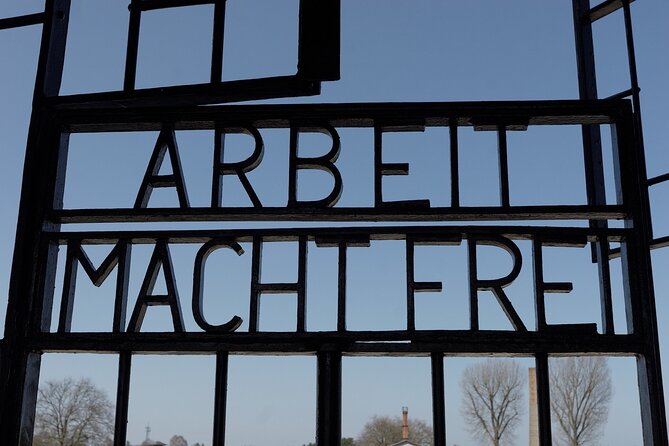
Sachsenhausen is the heart of this day, and it is not easy sightseeing. You spend three hours with an audio guide at the former Nazi concentration camp, then cross into Poland to see how war, air raids, communism, and the road to freedom shaped Szczecin. The day connects the machinery of Nazi terror with the difficult decades that followed.
I like the private format, which gives you room to ask questions and pause when the subject demands it. I also like the practical care from guide Maciej Krupski: hotel pickup, drinks and snacks in the car, clear explanations, and a Polish dinner at the end. The main drawback is the pace. Twelve hours, two countries, several museums, and a long return drive make this a serious day out.
Key points at a glance
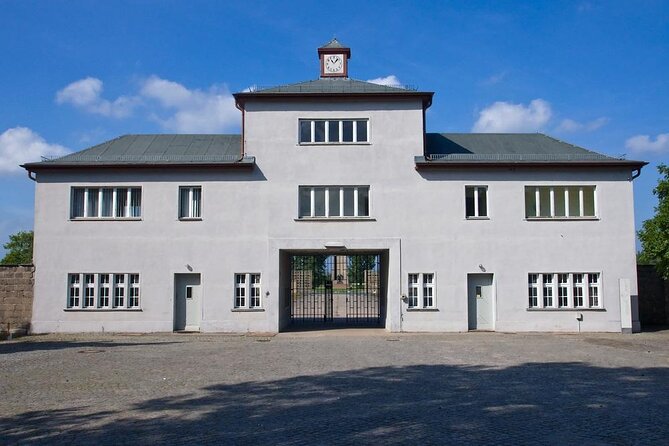
- Three hours at Sachsenhausen: An audio-guided visit gives you time to confront the former camp without being rushed through it.
- A private day with Maciej Krupski: Your group travels alone, with a driver-guide who can explain the history and adjust the conversation to your questions.
- Szczecin after the war: The route moves beyond Nazi history to air-raid shelters, the Iron Curtain, and Poland’s path to freedom.
- Useful comforts on a long road day: Private transport, drinks, snacks, museum admission, and dinner are included.
- Careful calendar planning matters: The Underground Routes close Tuesdays and Wednesdays, while the Dialogue Centre Upheavals closes Mondays.
- A full 12 hours: You leave Berlin at 8 a.m. and usually return around 8 p.m., so this suits you only if you are ready for a long, focused day.
Why this Berlin to Poland day is different
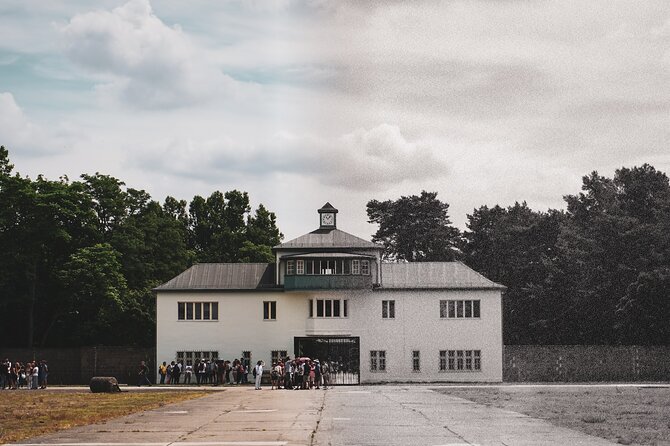
Many history tours from Berlin stop at one memorial and return to the city. This one asks you to follow a wider chain of events. You begin at Sachsenhausen, a Nazi concentration camp memorial outside Berlin, then continue to Szczecin, where museums and underground shelters explain civilian life after the war and Poland’s years behind the Iron Curtain.
That change in focus is valuable. The morning deals with imprisonment, forced labor, and the murder of innocent people. The afternoon looks at air raids, atomic fears, communist rule, public protest, and the eventual road to freedom. You are not getting a single narrow story. You are seeing how the war continued to shape daily life long after 1945.
The day is also unusually personal. Since this is a private activity, only your group joins the trip. Maciej drives you from your Berlin accommodation, talks through the route, and has time to answer questions in detail. You do not have to save every question for a scheduled stop or worry about a large group moving on without you.
More Third Reich history tours in Berlin:
- Berlin: Third Reich and Cold War 2 Hour Walking Tour
★ 4.9 · 6,830 reviews - Berlin’s Best: 2 Hour Walking Tour Third Reich and the Cold War
★ 5.0 · 5,486 reviews - Third Reich Berlin: Hitler and WWII Walking Tour
★ 5.0 · 3,301 reviews
The 8 a.m. pickup and the road to Sachsenhausen
Your driver picks you up from your hotel or other accommodation in the Berlin area at 8 a.m. The first drive takes about an hour. That early start is sensible because Sachsenhausen needs real time, and the afternoon in Szczecin is also tightly planned.
Snacks, water, and other drinks are provided during the drive. This is a small feature, but it matters on a day with hours in the car and no leisurely breakfast stop built into the schedule. You can settle into the day instead of starting with a search for food.
Maciej’s manner is part of the experience. He is described as talkative, friendly, and attentive, but also careful about giving you time to reflect. That balance matters here. A guide who talks without pause would be tiring at the camp, while a guide who says too little would leave you without context. The useful middle ground is conversation when you want it and quiet when the place calls for it.
Three hours at Sachsenhausen Memorial and Museum
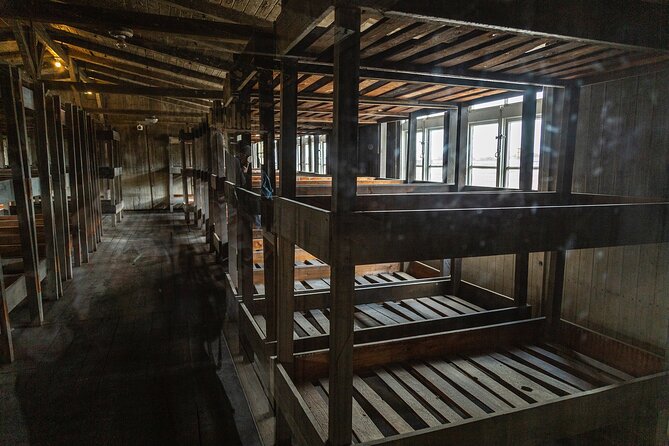
The visit to Sachsenhausen lasts about three hours and includes admission plus an audio guide in your language. This is the most emotionally demanding stop, so the generous timing is a real strength. You are not being asked to absorb the camp’s story in a quick hour between other attractions.
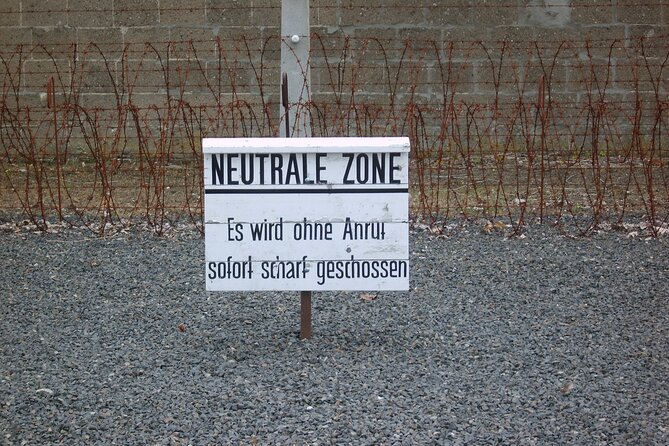
The memorial and museum focus on the lives and deaths of people held there under the Nazi regime. Expect a disturbing visit. The point is not entertainment or easy sightseeing. It is a direct encounter with a place built to control, punish, and destroy human beings.
An audio guide gives you a structured way to move through the site. It also lets you set the pace of the information more privately than a large group lecture would. You can stop, listen, and take time to think. Maciej can add wider context before or after the visit, but the audio guide forms the main tour inside the memorial.
Wear comfortable shoes and come prepared for a serious mood. The tour description does not promise a café break or a long lunch at Sachsenhausen, so use the supplied snacks and drinks as practical support rather than expecting a relaxed meal. The three-hour visit, followed by about two hours on the road to Poland, makes this morning mentally and physically heavy.
Crossing into Szczecin for a different chapter
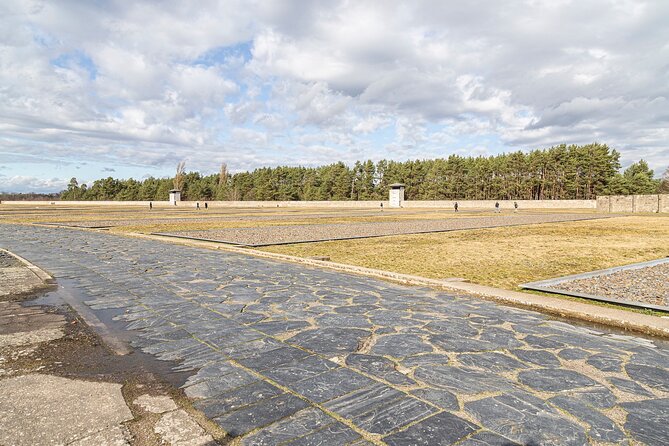
After Sachsenhausen, you drive for roughly two hours to Szczecin, Poland. The border crossing changes the tone of the day. You move from a memorial tied directly to Nazi persecution to a Polish city shaped by wartime destruction, postwar politics, Soviet influence, and the country’s eventual movement toward freedom.
The city walk lasts about three hours and includes several of Szczecin’s best-known sights. You see the National Philharmonic, Solidarity Square, the Chrobry Embankment, and the Pomeranian Dukes Castle with its clock tower. This is not a long architectural walking tour, but it gives you a useful introduction to the city before the museums take you indoors.
Maciej’s role is especially helpful here. Rather than pointing out buildings with only their names, he explains the city’s story and small details you might otherwise miss. The walk is also more relaxed than the morning at Sachsenhausen, giving your mind a little breathing room before the next historical exhibits.
Do not expect to see every corner of Szczecin. You are combining a city introduction with two specialized museums and a return to Berlin on the same day. The benefit is range. The compromise is that each city sight receives an overview rather than a long visit.
Other Berlin experiences to weigh up
- Berlin: Private Reichstag and Glass Dome Tour
★ 4.8 · 2,226 reviews - Berlin Private Complete History All Day Walking Tour
★ 5.0 · 474 reviews - Private Walking Tour Berlin Third Reich Hitler and World War II
★ 5.0 · 360 reviews - Private Berlin: Iconic Sights and Hidden Gems Walking Tour
★ 5.0 · 292 reviews
Inside the Szczecin Underground Routes
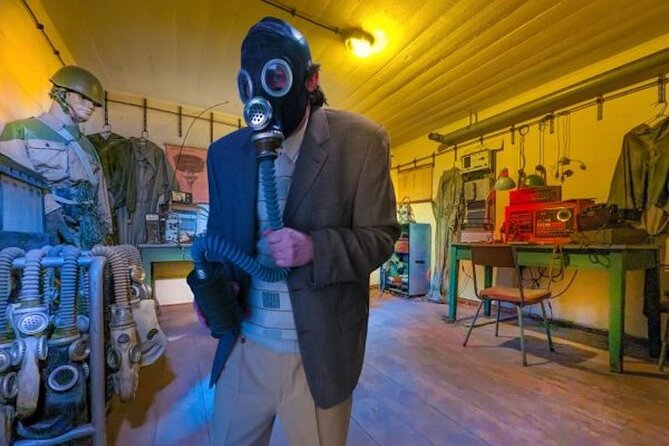
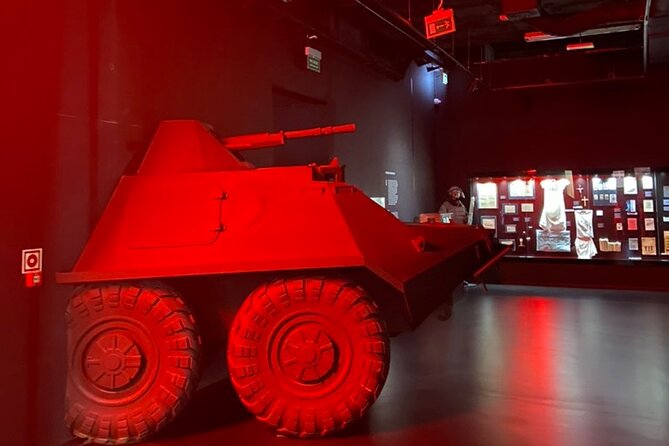
The Szczecin Underground Routes take you below street level into tunnels and shelters. The visit explains how civilians organized their lives during air raids and how fears of an atomic threat continued after World War II.
This stop adds something the camp memorial cannot. Sachsenhausen shows organized Nazi persecution. The underground route shows how ordinary people faced danger during wartime attacks and then lived with a new kind of fear in the nuclear age. The setting helps make that story physical. You are not simply reading about shelters in a display case.
The museum visit lasts about an hour and admission is included. There is one important scheduling point: the Underground Routes are closed on Tuesdays and Wednesdays. If you are choosing a date, check this before paying. The provider says that, depending on the day, the program will include at least one of the two major museums devoted to recent Polish history, but you should not assume every museum stop operates every day.
The Dialogue Centre Upheavals and Poland behind the Iron Curtain
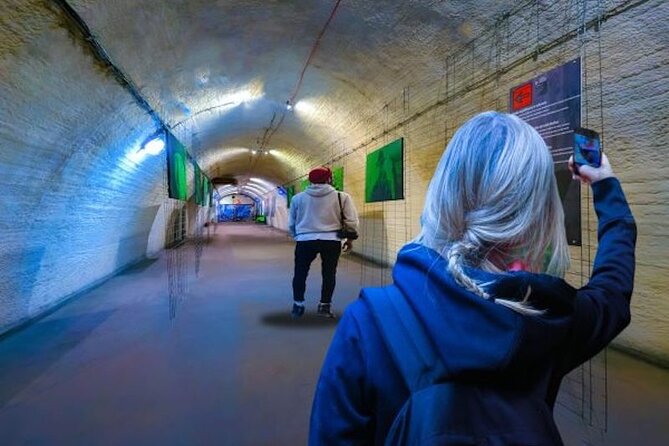
The National Museum in Szczecin, known here as the Dialogue Centre Upheavals, covers the period after the war. Its modern exhibition looks at life behind the Iron Curtain and Poland’s road to freedom.
This is an important counterweight to a tour focused only on 1939 to 1945. The war did not bring an easy return to normal life. Political control, restricted freedom, and public opposition shaped Poland for decades. A visit here gives you a clearer sense of that postwar reality and helps explain why the word freedom carried such force in modern Polish history.
Plan for about an hour. The museum closes on Mondays, so Monday bookings require particular care. The route is more useful if you allow the morning at Sachsenhausen to settle before adding another large block of political history. Maciej’s explanations can help connect the museum to the sights you saw on the city walk.
Dinner in Rynek Sienny
After a long day, you have dinner at a local restaurant in the Rynek Sienny area. A traditional Polish meal is included, ordered from the menu rather than treated as a quick boxed stop.
This is one of the tour’s most human touches. You have spent the day with difficult subjects, and sitting down to local food gives you a chance to rest and talk through what you have seen. It also lets you try Polish cuisine without having to research a restaurant while watching the clock.
The information does not specify a fixed menu, so your exact dishes may vary. That is useful if you prefer some choice, but you should not book expecting one particular specialty. Dinner is scheduled for about an hour, with departure for Germany around 6 p.m.
The return to Berlin and the real cost of the day
After dinner, the drive back to Berlin takes about two hours. You usually reach your accommodation in the Berlin region around 8 p.m. Pickup and drop-off at your accommodation remove the need to arrange separate regional transport, and the private vehicle is especially useful because this route covers two countries in one day.
The listed price is $744.06 per person. That is a substantial amount, but the right comparison is not simply the cost of a museum ticket. The fee covers a private vehicle, a private driver-guide, transport across the Germany-Poland border, snacks and drinks, admission to the listed museums, and dinner. Group discounts are also offered, so the value improves when several people share the experience, depending on the final booking price.
I would not choose this tour for a relaxed day or a budget-minded visit. I would consider it if you have limited time in Berlin and want to reach both Sachsenhausen and Szczecin without managing train connections, border logistics, museum hours, and a restaurant reservation yourself. The private format also gives you something a standard group excursion cannot: direct conversation with Maciej and flexibility in how much explanation you want.
The cost becomes harder to justify if you only care about Berlin or if you already plan to visit Szczecin independently. In that case, a shorter local excursion may give you more time in each place. This tour earns its price through convenience, range, and personal guiding, not through a slow pace.
Who will get the most from this tour
You are a good match for this experience if you:
- Want a serious World War II memorial visit rather than a quick photo stop.
- Have a strong interest in Germany and Poland’s twentieth-century history.
- Prefer a private vehicle and personal guide to public transport.
- Want to visit Szczecin but do not want to arrange the cross-border day yourself.
- Can manage a full 12-hour schedule with substantial driving.
- Appreciate having food, drinks, admissions, and hotel pickup arranged.
Think twice if you dislike long drives, find concentration camp memorials too difficult, or want several hours of unplanned time in Szczecin. The schedule is efficient but full. You will see a lot, yet you will not have much room to wander.
The tour is suitable for most participants, and service animals are allowed. It operates in English, with the Sachsenhausen audio guide available in your language. Confirmation is sent within 48 hours of booking, subject to availability.
Practical booking advice before you choose a date
Check the museum calendar first. The Underground Routes close Tuesdays and Wednesdays, and the Dialogue Centre Upheavals closes Mondays. Since the afternoon museum plan depends on the day, asking for the exact schedule before booking is a sensible step.
Also note the cancellation terms. You can cancel up to 24 hours before the start time for a full refund. Changes or cancellations made inside that 24-hour window are not accepted for a refund. The activity requires good weather and a minimum number of participants, and if the provider cancels for either reason, you are offered another date or experience, or a full refund.
The tour starts at 8 a.m., so make sure your accommodation is within the Berlin pickup area. Since the return is around 8 p.m., do not plan an evening concert, train, or dinner reservation that depends on a precise arrival time.
Should you book this private Germany and Poland tour?
Book it if you want one carefully organized day that links Sachsenhausen with the difficult decades after the war in Poland. The strongest features are the private arrangement, Maciej’s attentive guiding, the three-hour camp visit, and the chance to see Szczecin beyond its postcard sights.
Skip it if you want a slow city break or a cheaper way to visit one attraction. This is a demanding history day, not a casual outing. For the right person, though, it offers a clear, thoughtful route through places that are hard to connect on your own.
FAQ
How long does the tour last?
The experience lasts approximately 12 hours. Pickup is at 8 a.m., and return to your accommodation in the Berlin area is expected around 8 p.m.
Where does pickup take place?
Your private driver picks you up from your hotel or accommodation in the Berlin area.
Is this a private tour?
Yes. Only your group participates, and private transportation is included.
What is included in the price?
The price includes private transportation, snacks and beverages during transportation, museum admissions listed for the tour, and dinner in Szczecin.
Which languages are available?
The tour is offered in English. At Sachsenhausen, the audio guide is available in your language.
Can I cancel for a full refund?
Yes. You can cancel at least 24 hours before the experience start time for a full refund. Cancellations or changes made less than 24 hours before the start time are not accepted for a refund.
Newest Berlin reviews
- Where It All Began: Berlin’s Queer & Trans History Tour★ 4.9 · 6 reviews
- Understanding Kreuzberg: The roots of local (sub)culture★ 4.9 · 11 reviews
- Berlin: guided canoe | kayaktour★ 4.1 · 7 reviews
- Private Potsdam City Tour in an authentic vintage van★ 5.0 · 14 reviews
- Warnemünde Shore Excursion: Private Sachsenhausen and Berlin Tour★ 5.0 · 12 reviews
- Ultimate E-Bike Tour of Berlin with Beer Garden Stop★ 5.0 · 4 reviews
- Potsdam Highlights – Private sightseeing tour by minibus★ 5.0 · 3 reviews
- In the Forbidden City – Potsdam Walking Tour★ 5.0 · 17 reviews
Berlin Third Reich Tours, compared.
Berlin’s Best: 2 Hour Walking Tour Third Reich and the Cold War
Read our review →
Third Reich Berlin: Hitler and WWII Walking Tour
Read our review →
Berlin Third Reich Sites: Half-Day Walking Tour
Read our review →
Guided Bike Tour of the Berlin Wall and Third Reich
Read our review →
Hitler’s Germany: Berlin During the Third Reich & WWII
Read our review →
Private Walking Tour Berlin Third Reich Hitler and World War II
Read our review →Browse the lists this tour appears in