
Reviewed · BERLIN SIGHTSEEING TOURS
Berlin Highlights in 2 Hours: Express Walking Tour
Berlin’s past is packed into this two-hour walk through central Berlin, where grand government buildings sit beside sites tied to dictatorship, genocide, and the Cold War. You move from Brandenburg Gate and the Reichstag to the Holocaust Memorial, Hitler’s bunker site, the Berlin Wall, and Checkpoint Charlie.
I like the efficient route and the fact that every stop is free to enter. I also like the small-group limit of 25, since guides such as Ryan, Gregor, Dylan, and Giles have been praised for clear explanations, friendly conversation, and a walking pace that works for mixed-age groups. The tradeoff is simple: ten minutes at each stop gives you a strong overview, but not much time for museums or quiet reflection.
Key points to know before you book
- Nine major Berlin sites in two hours: The route covers the city’s main political, Nazi-era, Holocaust, and Cold War landmarks.
- A useful first-day orientation: You finish at Checkpoint Charlie with a clearer sense of how central Berlin fits together.
- Free sights keep the price down: At $21.77 per person, you are paying mainly for the guide and route, not admission fees.
- Strong guide-led experience: Ryan, Gregor, Dylan, and Giles are specifically praised for clear storytelling and answering questions.
- Maximum group size of 25: It is still a group tour, but the cap should keep it more manageable than a large city walk.
- A brisk route with free time afterward: You can see the essentials, then return to the places that interest you most.
Why this two-hour Berlin route works
Berlin can feel confusing at first. Its major sights are spread across a city shaped by Prussian power, Nazi rule, wartime destruction, division, and reunification. This route helps you connect those chapters in a short stretch of central Berlin.
The walk begins at Pariser Platz and ends at Checkpoint Charlie. That direction matters. You start with a symbol of unity and move through sites that expose the damage caused by dictatorship and war. The final stop brings you to the Cold War border, where the story shifts from Nazi Germany to divided Berlin.
I see this as a history-focused orientation walk, not a full museum tour. You get an explanation at each stop, but the schedule allows about ten minutes per location. That is enough for a guide to set the scene, point out key details, and take a few questions. It is not enough for a long discussion at every memorial.
At $21.77, the value is good if you want structure and context. All nine stops list free admission, so the cost is for the guide’s time, storytelling, and planning. You could walk between these places alone, but the route would be less useful without an explanation of what happened there and why each site matters.
More sightseeing tours in Berlin:
- Berlin: 1-Hour City Tour by Boat with Guaranteed Seating
★ 4.3 · 16,993 reviews - Explore Berlin: See All The Iconic Sights & Some Hidden Gems
★ 5.0 · 4,429 reviews - Berlin: City Sightseeing Hop-On Hop-Off Bus Tour
★ 4.1 · 4,233 reviews
Brandenburg Gate and the Reichstag: Berlin’s grand opening
The tour starts at Brandenburger Tor, one of Berlin’s most recognizable sights. You meet at Pariser Platz 1, where the gate is framed by neoclassical buildings and a broad public square.
This is a sensible meeting point because it gives you an immediate picture of official Berlin. The gate has become a symbol of unity and peace, but your guide can also place it within the city’s long political story. You get about ten minutes here, which is enough to take in the architecture and hear the basic background before moving on.
The next stop is the Reichstag, Germany’s parliamentary building. You do not need an admission ticket for this part of the walk, and the visit is focused on the building’s exterior and its political role. Your guide covers its connection to the Weimar Republic and its place in present-day Germany.
I like this pairing because the two sites show Berlin’s public face before the tour turns toward darker subjects. You begin with ceremonial architecture and national government, then gradually move toward the crimes and conflicts that shaped modern Germany.
Do not expect a full Reichstag visit during this tour. The schedule keeps you outside and moving. If you want to see the parliamentary interior, you will need to arrange that separately.
Two memorials, two different forms of remembrance
The route then reaches the Memorial to the Sinti and Roma Victims of National Socialism. This stop recognizes the Sinti and Roma people persecuted and murdered under National Socialism.
It is an important inclusion. Many short Berlin walks focus only on the best-known sites, so this memorial adds a broader view of Nazi persecution. Your guide explains the group’s suffering and why public remembrance matters. The ten-minute stop should give you a clear introduction, though you may want to return later if the subject calls for more time.
Next comes the Memorial to the Murdered Jews of Europe, often called the Holocaust Memorial. Its field of concrete slabs creates an unsettling, uneven passage through the center of Berlin. You can walk among the blocks and think about the scale of the Holocaust without being handed a simple or tidy message.
The two memorials work well together, but the pace can feel quick. You are dealing with painful history, and ten minutes can seem short for both explanation and personal reflection. I suggest listening closely, then making a note to come back on your own if you want more time.
The memorial is free to enter, and the outdoor setting makes it easy to visit later. This is one of the places where the tour’s greatest strength and main limit meet: the guide gives you context fast, but you control the deeper visit afterward.
Hitler’s bunker site and the problem of an invisible landmark
The next stop is the site of the Führerbunker. Today, you stand above the location rather than entering a preserved bunker complex. The guide explains the final days of World War II, including Hitler’s suicide on April 30, 1945, and the way modern Germany deals with this difficult part of its past.
This stop requires imagination. There is no grand building to photograph and no dramatic ruin to explore. The point is the story and the contrast between the ordinary-looking location and the events that took place beneath it.
I find that useful because Berlin often asks you to look past appearances. Some of its most important sites have been removed, rebuilt, or left deliberately understated. A guide can prevent you from walking past without realizing what happened there.
The subject can attract the wrong kind of attention, so a thoughtful explanation matters. The experience is strongest when it focuses on historical consequences and Germany’s effort to confront its past, not on sensational details.
More two-hour experiences in Berlin:
- Berlin: Third Reich and Cold War 2 Hour Walking Tour
★ 4.9 · 6,830 reviews - Berlin’s Best: 2 Hour Walking Tour Third Reich and the Cold War
★ 5.0 · 5,486 reviews - Berlin: 2-Hour Lake Oberhavel Cruise from Tegel
★ 4.4 · 577 reviews - Berlin 2-Hour Segway Tour
★ 4.6 · 238 reviews
The Aviation Ministry and Berlin’s political layers
At the former Reich Air Ministry, you see a large example of Nazi-era architecture. The building once housed the Luftwaffe headquarters and later served the government of East Germany. It now houses the Federal Ministry of Finance.
This is one of the route’s most useful architectural stops. A single building carries several political chapters: Nazi rule, East German government, and the federal republic that followed reunification. You can read the changing purpose of Berlin through the building’s continued use.
The stop also breaks up the memorial-heavy section of the walk. Instead of looking only at monuments, you see how ordinary government structures can survive major political changes. Your guide explains the building’s role while you take in its imposing design.
Again, the ten-minute format means you will not get a detailed architectural tour. But you do gain a clear reason to notice the building. That is often the value of a walking guide in Berlin: not just taking you somewhere, but showing you what you might otherwise miss.
Niederkirchnerstraße and a preserved section of the Berlin Wall
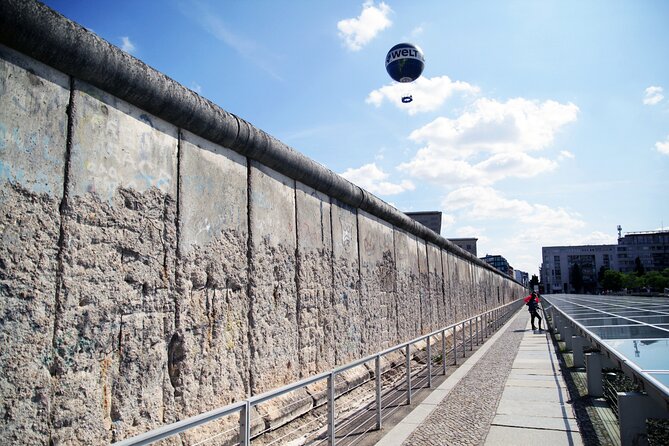
The route continues to Niederkirchnerstraße, where you see a large preserved section of the Berlin Wall. This is the point where the tour shifts more fully into the Cold War.
Your guide describes escape attempts, including both successful efforts and tragic failures. You also hear about daily life on the East and West sides of divided Berlin. That personal angle helps turn the Wall from a political object into a barrier that affected families, work, travel, and ordinary routines.
I like this stop because the surviving section gives you something concrete to look at while the guide explains the human cost of division. You are not only hearing dates and political terms. You are learning how the border shaped daily life.
The Wall segment is also a good reminder that Berlin’s history did not end in 1945. The city’s postwar division lasted for decades, and the route connects that period to the later border crossing at Checkpoint Charlie.
Topography of Terror and the machinery of Nazi rule
The Topography of Terror occupies the former site of the SS, Gestapo, and SD headquarters. The present-day exhibition examines the crimes carried out by these Nazi organizations.
The site adds structure to the earlier memorial stops. At the Holocaust Memorial, you encounter a powerful place of remembrance. Here, the focus turns more directly to the institutions and officials who organized persecution and terror during World War II.
The tour introduces the historical importance of the site, but it does not provide a full exhibition visit within the ten-minute schedule. If you want documents, photographs, and a longer examination of the subject, plan a separate visit after the walk.
This is a good example of how to use the tour well. Let the guide give you the framework, then return to the museums and memorials that speak to you most. The short format gives you a map of Berlin’s difficult history without requiring you to spend the entire day indoors.
Checkpoint Charlie: a fitting end to the walk
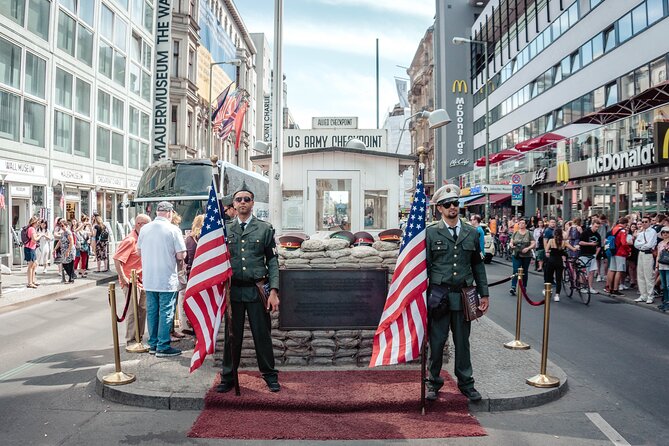
The final stop is Checkpoint Charlie on Friedrichstraße, between Friedrichstraße 43 and 45. This famous border crossing became one of the best-known symbols of the Cold War.
Your guide covers espionage, escape attempts, and the role of the crossing in divided Berlin. After the earlier stops, the location gives the tour a clear endpoint. You have moved from Nazi dictatorship and wartime destruction to the tense division between East and West.
Checkpoint Charlie is also a practical place to finish. You can continue exploring central Berlin from here, return to a site that interested you, or use public transport to reach another part of the city. The experience does not trap you in a distant suburb or leave you far from the main sights.
The setting can feel more commercial and busy than the memorial sites, so you may need to focus on the guide’s explanation rather than expect a quiet final moment. Still, it is an effective closing stop because it links Berlin’s political past to the city’s later reunification.
Guides, pace, and group size
The strongest part of this experience is the guide-led storytelling. Ryan is praised for being pleasant and well informed. Gregor is noted for bringing meaning to each location, even within the express schedule. Dylan is described as informative, interesting, and willing to answer questions. Giles is praised for clear communication, thoughtful answers, and a walking pace that worked for a group ranging from people in their twenties to people in their seventies.
Those details matter. Berlin walking tours can fail when the guide races ahead or delivers a string of dates without a clear thread. Here, the available feedback points to guides who adjust to questions and different walking speeds.
The group can include up to 25 people. That is not a private tour, and you should not expect every question to receive a long answer. But the cap is more comfortable than a very large group, especially at memorials where you need to stay close enough to hear.
The tour is offered in English and includes a mobile ticket. Service animals are allowed, and the route is near public transportation. Most people can participate, but remember that this is a two-hour city walk with several outdoor stops.
Who will get the most from this tour?
I would choose this walk if you are visiting Berlin for the first time and want a quick historical framework. It suits history buffs, short-break visitors, cruise or rail stopovers, and anyone who wants to save most of the day for museums, food, or another neighborhood.
It also works well for mixed-age groups. The feedback about Giles’s pace with people in their twenties through seventies suggests that the walk can suit a broad range of ages, provided everyone is comfortable walking for about two hours.
You may want something longer if you already know central Berlin or prefer detailed museum visits. The tour gives you ten minutes at each stop, so you will not get extended time at the Holocaust Memorial, Topography of Terror, Reichstag, or Berlin Wall.
I would also avoid treating it as a complete study of Nazi Germany or the Cold War. It is a carefully chosen introduction. Its value comes from linking many sites in one route, then letting you decide where to spend more time.
Price, booking, and cancellation details
At $21.77 per person, the tour offers solid value for a guided route covering nine central sites. Since admission is free at each listed stop, you are paying for the guide, the historical explanation, and the convenience of a planned walk.
It is usually booked about 12 days ahead, so booking early is sensible if your Berlin dates are fixed. Confirmation arrives at booking, and the tour has a 98 percent recommendation rate with a 4.9 rating from 120 reviews.
Free cancellation is available if you cancel at least 24 hours before the start time. Cancellations within 24 hours are not refunded, and changes within that window are not accepted. The cut-off follows local Berlin time, so keep that in mind when arranging a busy itinerary.
Should you book this Berlin history walk?
Book it if you want a fast, affordable introduction to Berlin’s central historical sites and prefer a guide to connect the locations for you. The route is especially useful on your first day, when you need orientation and want to decide which memorials or museums deserve a longer return visit.
Skip it if you want to enter several museums, linger at the memorials, or explore the Reichstag in depth. In that case, a self-guided plan with more time at fewer sites may suit you better.
For most first-time visitors with only a few days in Berlin, I would book it. The walk covers a remarkable amount of ground, the price is modest, and the short schedule leaves the rest of your day open.
FAQ
How long is the Berlin Highlights walking tour?
The tour lasts approximately two hours.
What language is the tour offered in?
The tour is offered in English.
Where does the tour start?
The meeting point is Pariser Platz 1, 10117 Berlin, Germany, near Brandenburg Gate.
Where does the tour end?
The tour ends at Checkpoint Charlie, Friedrichstraße 43-45, 10117 Berlin, Germany.
Which places are included?
The route includes Brandenburg Gate, the Reichstag Building, the Memorial to the Sinti and Roma Victims of National Socialism, the Memorial to the Murdered Jews of Europe, the Führerbunker site, the former Aviation Ministry, Niederkirchnerstraße, Topography of Terror, and Checkpoint Charlie.
Are admission tickets included?
Each listed stop has free admission. The tour itself includes a mobile ticket.
How large is the group?
The tour has a maximum of 25 participants.
Can I cancel for a full refund?
Yes. You can receive a full refund if you cancel at least 24 hours before the experience starts. Cancellations or changes made within 24 hours are not accepted and are not refunded.
More Walking Tours in Berlin
- Discover Berlin Half-Day Walking Tour
★ 5.0 · 9,624 reviews - Berlin: Discover Berlin Walking Tour
★ 4.9 · 5,998 reviews - Berlin: Hidden Backyards Guided Walking Tour
★ 4.8 · 5,360 reviews - Third Reich Berlin: Hitler and WWII Walking Tour
★ 5.0 · 3,301 reviews
Newest Berlin reviews
- Where It All Began: Berlin’s Queer & Trans History Tour★ 4.9 · 6 reviews
- Understanding Kreuzberg: The roots of local (sub)culture★ 4.9 · 11 reviews
- Berlin: guided canoe | kayaktour★ 4.1 · 7 reviews
- Private Potsdam City Tour in an authentic vintage van★ 5.0 · 14 reviews
- Warnemünde Shore Excursion: Private Sachsenhausen and Berlin Tour★ 5.0 · 12 reviews
- Ultimate E-Bike Tour of Berlin with Beer Garden Stop★ 5.0 · 4 reviews
- In the Forbidden City – Potsdam Walking Tour★ 5.0 · 17 reviews
- Private Walking Tour of Potsdam and Sanssouci★ 5.0 · 24 reviews
Berlin Sightseeing Tours, compared.

1-Hour City Tour by Boat with Guaranteed Seating
Read our review →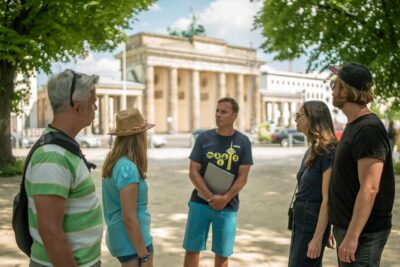
Explore Berlin: See All The Iconic Sights & Some Hidden Gems
Read our review →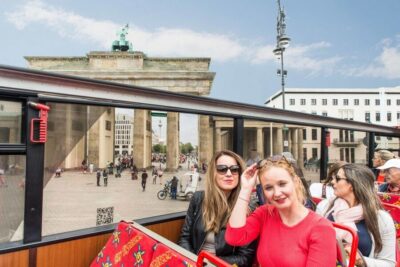
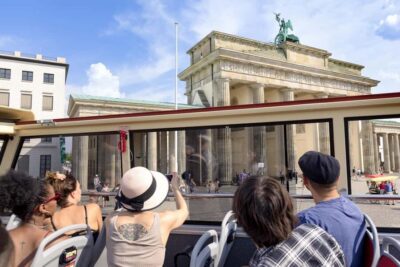
Hop-On Hop-Off Sightseeing Bus with Boat Options
Read our review →
Sights and Highlights Bike Tour with a Local Guide
Read our review →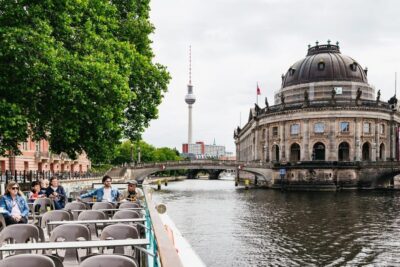

Sightseeing Tour in Classic Volkswagen T1 Samba Bus
Read our review →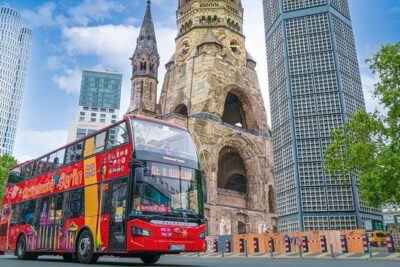
Browse the lists this tour appears in