

Reviewed · BERLIN SELF-GUIDED AUDIO TOURS
Berlin Walking Tour with Audioguide on Your Smartphone
Berlin’s most famous sights fit into one long city walk here, from the Brandenburg Gate and Holocaust Memorial to Checkpoint Charlie and Alexanderplatz. The $6.61 price is hard to beat if you want basic historical context without joining a group.
I like two things especially: you can pause for coffee or lunch, and the offline map lets you keep moving without a human guide. The main caution is time. Two hours is only an estimate. One couple needed about four hours, not counting lunch, and the app has occasionally frozen or placed the GPS inaccurately.
Key points to know before you go
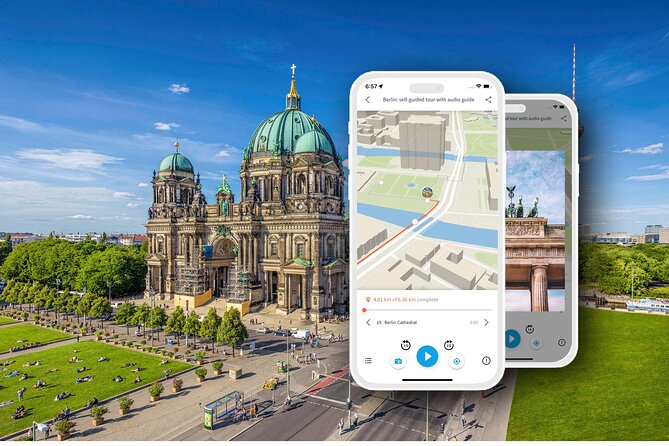
- A landmark-heavy route: See the Brandenburg Gate, Reichstag, Holocaust Memorial, Führerbunker site, Checkpoint Charlie, Gendarmenmarkt, Bebelplatz, Museum Island, and Alexanderplatz.
- You control the pace: Pause the narration for photos, food, museum visits, or a rest, then restart when ready.
- A very low-cost introduction: At $6.61 per person, this costs far less than most guided walks, though entrance fees are extra.
- Your phone does the work: Download the iPhone or Android app, activate the purchase, bring headphones, and follow the route on the map.
- Allow more than two hours: The route has many stops and can take around four hours if you walk carefully and stop for lunch.
- Technology matters: GPS is useful but not perfect, and the app has frozen for some users. Restarting it solved the problem in at least one case.
A smart way to meet Berlin’s big sights
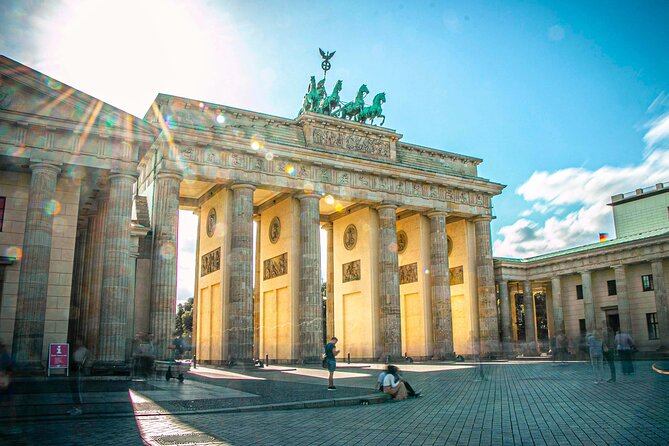
This self-guided walk gives you a useful first look at central Berlin. It is not a deep museum visit and it does not replace a specialist guide, but it connects major places that can otherwise feel scattered across the city.
You begin at Pariser Platz, beside the Brandenburg Gate, and follow a broad route through Berlin’s political, memorial, Cold War, royal, and East German landmarks. The 24 recordings are designed to give you context while you walk, with illustrations to help identify each place.
I like this format for Berlin because the city rewards pauses. You may want extra time at the Holocaust Memorial, a coffee near Gendarmenmarkt, or a longer look at the glass memorial beneath Bebelplatz. A fixed group tour may move on before you are ready. Here, you press pause.
The tradeoff is that you are responsible for the experience. There is no guide to answer questions, manage crossings, clarify a confusing street, or adjust the route. You need a charged smartphone, headphones, and enough attention to follow the app.
More self-guided audio tours in Berlin:
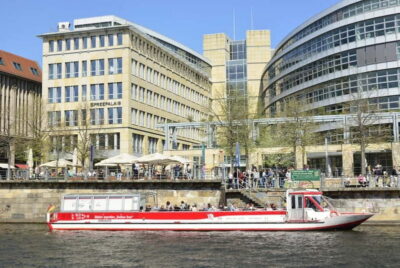
- Berlin: Solar Powered Sunset Catamaran Cruise & Audio Guide
★ 4.6 · 1,043 reviews - Berlin: Boat Sightseeing Cruise with Audioguide
★ 4.6 · 947 reviews - Berlin: Panoramic Boat Tour with Bilingual Audio Guide
★ 4.1 · 136 reviews
Pariser Platz and the Brandenburg Gate
Pariser Platz is a fitting starting point. The square frames the Brandenburg Gate and gives you an immediate sense of Berlin as a capital rebuilt and reshaped by major political events.
The Brandenburg Gate itself is the visual anchor. Its neoclassical columns and Quadriga statue make it one of the city’s essential photo stops, but the audio commentary helps place it in the story of Berlin’s division and reunification. Once tied to a divided city, it now serves as a symbol of unity.
The two stops are listed as about ten minutes each, but you can easily spend longer here. Look around the square before starting the narration. The surrounding buildings help show how carefully this central space has been restored and presented.
Reichstag and the cost of entering
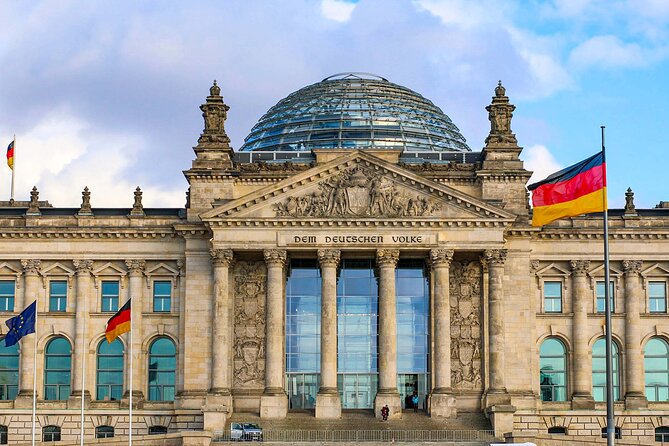
The route then points you toward the Reichstag, Germany’s parliamentary building. Its historic shell and modern glass dome make an important architectural contrast, with the dome associated with openness and democracy.
The tour can explain the building from outside, but the dome is not included. Entrance tickets and all other admission fees are excluded, so do not assume that the audio guide gives you access to the interior.
This is a good example of how to use the walk wisely. Listen to the recording, take in the exterior, and decide if you want to return for a separate visit. The audio tour keeps moving, while a dome visit requires its own planning.
The Holocaust Memorial and the Führerbunker site
The Memorial to the Murdered Jews of Europe is one of the route’s most serious stops. Its field of concrete slabs creates a changing sense of height, space, and disorientation as you walk through it.
You should give this stop more than the suggested ten minutes if you want time to reflect. The underground Information Centre adds further context, but admission is not included. The memorial is not simply another monument to photograph, so allow the audio commentary to set the tone before moving on.
Nearby, the route visits the former Führerbunker site. Today, the location is a parking area with an information display. That plain setting can be jarring. The point is not to expect visible ruins, but to understand the place as a marker of the final days of Hitler’s regime and the end of an era.
I appreciate that the route includes both the grand symbols of state power and the quieter, more difficult places where Berlin’s past cannot be prettied up. Still, the short suggested timing may feel too brief for the memorial.
A different sort of day out in Berlin:
- Berlin: Reichstag, Dome and Government District Guided Tour
★ 4.7 · 18,288 reviews - Berlin: 1-Hour City Tour by Boat with Guaranteed Seating
★ 4.3 · 16,993 reviews - Berlin: Boat Tour Along the River Spree
★ 4.4 · 11,252 reviews - Discover Berlin Half-Day Walking Tour
★ 5.0 · 9,624 reviews
East German touches: Ampelmännchen and the Trabant
The Ampelmännchen stop changes the mood. These cheerful pedestrian figures from East Germany have become one of Berlin’s most recognizable bits of street design. The audio guide points out their place in the city’s East German story and their continued presence after reunification.
This is a small detail, but it helps you notice Berlin at street level. Look at pedestrian crossings as you continue. The city’s political past is not confined to museums and plaques.
The route also discusses the Trabant, or Trabi, the small East German car that became a symbol of everyday life behind the former Iron Curtain. The tour refers to colorful Trabi city rides, though this experience does not include a ride or transportation.
That distinction matters. You are learning about the car as part of the walk, not booking a separate driving activity.
Checkpoint Charlie and the Cold War story

Checkpoint Charlie is one of Berlin’s best-known Cold War sites. The crossing once marked a tense boundary between East and West Berlin. Today, the guardhouse is a replica, and the surrounding area is more commercial than many people expect.
The audio guide gives the location historical meaning, while the nearby museum covers escape attempts and the risks people took to cross the border. Museum entry is not included, so you can choose between a quick exterior stop and a longer visit with a separate ticket.
I find this stop useful because it reminds you that Berlin’s division was not an abstract political idea. It affected where people could work, live, visit family, and build a future. At the same time, the present-day setting can feel crowded and staged. Keep your expectations realistic: you are seeing a memorialized version of the crossing, not an untouched Cold War checkpoint.
Gendarmenmarkt and Bebelplatz
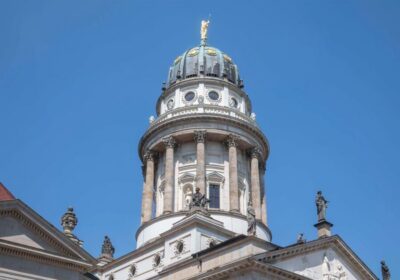
Gendarmenmarkt offers one of the route’s most attractive architectural pauses. The German Cathedral and French Cathedral face one another across the square, with the Konzerthaus and Schiller Monument completing the composition.
This is a good place to pause the app. Sit at a cafe, look across the square, and restart when you are ready. The route’s flexibility works particularly well here because the setting invites lingering rather than a quick stop.
Bebelplatz shifts the focus from architecture to intellectual freedom. The square is surrounded by the State Opera, St. Hedwig’s Cathedral, and Humboldt University. Beneath the paving is a memorial to the Nazi book burning, visible through a glass panel.
The glass window is easy to miss if you are simply walking past. This is exactly the sort of detail an audio route can add. You learn where to look, then decide how long to stand there.
The criticism here is fair: some listeners may want more architectural and historical explanation at certain monuments. The content is interesting, but it is not intended as a full scholarly treatment of every building.
Unter den Linden, Museum Island, and the city center
The equestrian monument to Frederick the Great brings you onto Unter den Linden, Berlin’s grand boulevard. The statue celebrates the Prussian king and gives the route a look at Berlin before the twentieth-century crises that dominate many visitors’ attention.
The State Opera is another nearby cultural landmark. The recording introduces its long connection with opera and ballet, but a performance is not part of the tour. You see the building as part of the walk, with tickets to any event handled separately.
The route then reaches Berlin Cathedral and Museum Island. The cathedral’s large dome and ornate interior make it one of the city’s most noticeable buildings. You may enter for a separate fee and, according to the tour information, climb for city views from the terrace.
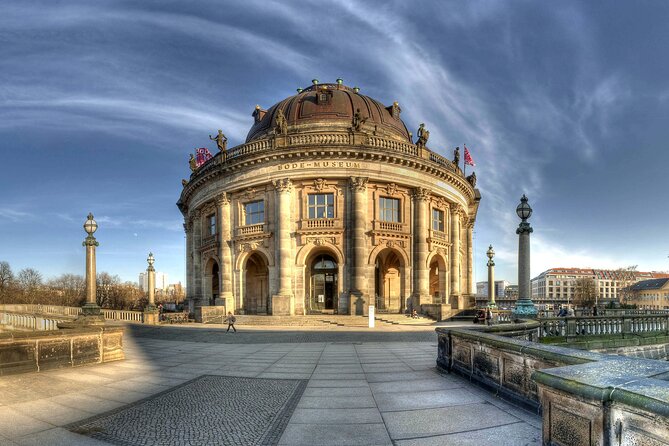
Museum Island is a major cultural district on the Spree, home to five museums, including the Pergamon Museum and Neues Museum. This audio tour can orient you to the area, but it cannot substitute for museum time. If ancient objects and archaeological collections are a priority, plan a separate half-day or longer visit.
The walk also covers the Marx and Engels Forum, a park with statues, reliefs, and reminders of Berlin’s communist past. It offers a different view of the former East German city, and it breaks up the formal museum and monument sequence with open space.
Red Town Hall and Alexanderplatz
The Red Town Hall, with its distinctive red brick exterior, is Berlin’s seat of city government. The nearby Neptune Fountain adds another recognizable landmark, and the stop gives you a chance to connect architecture with the city’s political life.
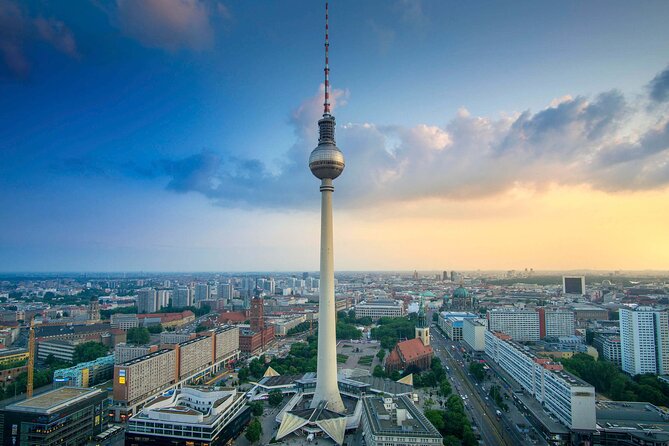
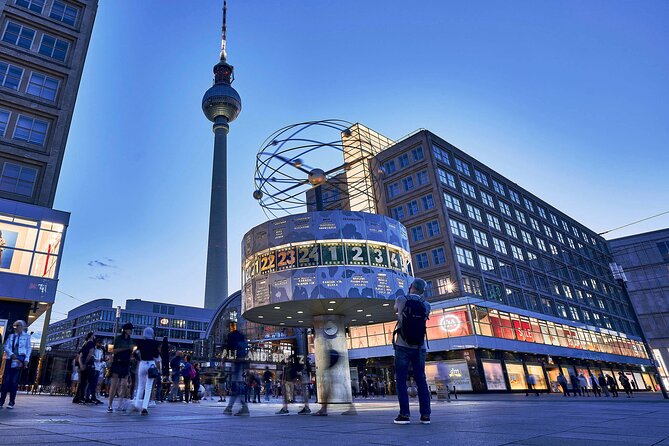
The route finishes at Alexanderplatz, one of central Berlin’s major transport and shopping areas. The Television Tower dominates the view, while the Weltzeituhr, or world clock, provides another familiar East German-era symbol.
You can visit the Television Tower’s observation deck separately for broad city views. The audio guide introduces its design and political setting, but the tower ticket is not included.
Alexanderplatz is a practical ending area because it connects to public transportation, shops, and cafes. The published meeting information says the activity ends back at the meeting point, while the listed sequence finishes at Alexanderplatz. Since those details do not fully match, check the app’s current route before setting out and do not plan a tight onward connection.
How long the route really takes
The stated duration is about two hours, with roughly ten minutes assigned to many stops. That timing is possible only if you keep moving and give each place a quick look.
I would allow at least three to four hours if you want photographs, coffee, a meal, or time to absorb the memorials. One couple completed the route in about four hours without counting a lunch stop. That is a more useful planning figure for most people.
The ability to pause is one of the tour’s strongest features. You can stop the recording when a restaurant catches your eye, then continue without holding up a group. You can also replay sections, which helps if traffic noise or a crowded square makes part of the narration hard to hear.
App performance, navigation, and setup
Before leaving, download the app, activate your purchase, and test the audio. Bring your own headphones because they are not supplied. The tour works on iPhone and Android and includes an offline map, which is helpful if your connection becomes unreliable.
GPS navigation makes the route easier to follow, but it is not perfect. The app has frozen for some users, and the directional map has sometimes been less accurate than expected. Closing and reopening the app restored the tour in one case.
I would also take a quick screenshot of the route and keep the main street names in mind. The app does not appear to offer every written walking direction you might want, and some users would prefer a fixed north-facing map rather than one that rotates with movement.
The narration can sound theatrical at times. That will depend on your taste. The content is generally the more important part, but you may prefer a natural human voice and the ability to ask questions.
One comment refers to a guide named Francesca, but this product is explicitly self-guided and includes no human guide. Do not book it expecting Francesca or anyone else to meet you in person.
What the $6.61 price really buys
At $6.61 per person, this is a strong value for a first orientation to central Berlin. You receive the app, offline route map, 24 recordings, landmark illustrations, and one year of access in your chosen language.
The low price also tells you what not to expect. There is no transportation, food, drink, headphone rental, admission ticket, or personal guide. Museum Island, the Reichstag dome, the Holocaust Memorial Information Centre, and the Television Tower all require separate planning if you want to go inside.
The tour has a maximum of 20 users listed, but because it is self-guided, you are not walking as one organized group. That makes it a good fit if you dislike fixed departures or crowded commentary.
Free cancellation is available if you cancel at least 24 hours before the experience start time. Within 24 hours, the payment is not refunded.
Who should choose this Berlin walk?
I would choose this tour if you want a cheap, flexible introduction to Berlin and you are comfortable managing your own phone. It suits independent visitors, couples who want to set their own rhythm, and anyone who prefers replayable audio to a live guide.
It is also useful on a first day in the city. The route connects many major places and helps you decide which ones deserve a return visit.
I would choose something else if you want detailed architectural analysis, lively discussion, or help navigating every turn. The route covers a lot, but some stops receive only a short explanation, and the app’s GPS can misbehave.
Should you book it?
Book it if $6.61, flexible timing, and broad coverage matter more to you than personal attention. Bring headphones, charge your phone, allow four hours rather than two, and keep a little room in your schedule for food and unexpected stops.
Skip it if you want entry to the sights, a human guide, or a polished technology experience with no glitches. For a low-cost orientation to Berlin’s central landmarks, though, this is a practical choice, provided you treat the app as a helpful companion rather than a perfect navigation system.
FAQ
Is this a guided walking tour with a person?
No. This is a self-guided mobile audio tour with no human guide. You download the app, activate the purchase, and follow the route yourself.
Where does the tour start?
The tour starts at Pariser Platz, 10117 Berlin, Germany, near the Brandenburg Gate.
Where does the tour end?
The activity information says it ends back at the meeting point, while the listed route finishes at Alexanderplatz. Check the app route before you begin because these details are not fully consistent.
How long does the tour take?
The estimated duration is about two hours. You should allow longer if you stop for photos, food, museum visits, or extra time at the memorials. One reported completion time was about four hours without lunch.
What sights are included?
The route covers Pariser Platz, Brandenburg Gate, the Reichstag, the Holocaust Memorial, the Führerbunker site, Ampelmännchen, the Trabant, Checkpoint Charlie, Gendarmenmarkt, Bebelplatz, Frederick the Great’s monument, the State Opera, Berlin Cathedral, Museum Island, Marx and Engels Forum, Red Town Hall, the Television Tower, and Alexanderplatz.
Do I need to bring headphones?
Yes. Headphones are not included, so bring your own.
Does the price include entrance tickets?
No. Admission fees are not included. This applies to places such as museums, the Reichstag dome, the Television Tower, and the Holocaust Memorial Information Centre.
Does the tour include transportation?
No. You walk the route yourself, and transportation is not included.
Can I pause the audio tour?
Yes. You can pause for coffee, lunch, photographs, or other breaks and restart when ready. The tour provides access for one year after purchase.
Is the audio guide available in English?
Yes. The experience is offered in English, and the app is available for iPhone and Android devices.
More Walking Tours in Berlin
- Berlin: Third Reich and Cold War 2 Hour Walking Tour
★ 4.9 · 6,830 reviews - Berlin: Discover Berlin Walking Tour
★ 4.9 · 5,998 reviews - Berlin’s Best: 2 Hour Walking Tour Third Reich and the Cold War
★ 5.0 · 5,486 reviews - Berlin: Hidden Backyards Guided Walking Tour
★ 4.8 · 5,360 reviews
Newest Berlin reviews
- Where It All Began: Berlin’s Queer & Trans History Tour★ 4.9 · 6 reviews
- Understanding Kreuzberg: The roots of local (sub)culture★ 4.9 · 11 reviews
- Berlin: guided canoe | kayaktour★ 4.1 · 7 reviews
- Private Potsdam City Tour in an authentic vintage van★ 5.0 · 14 reviews
- Warnemünde Shore Excursion: Private Sachsenhausen and Berlin Tour★ 5.0 · 12 reviews
- Ultimate E-Bike Tour of Berlin with Beer Garden Stop★ 5.0 · 4 reviews
- In the Forbidden City – Potsdam Walking Tour★ 5.0 · 17 reviews
- Private Walking Tour of Potsdam and Sanssouci★ 5.0 · 24 reviews
Berlin Self-Guided Audio Tours, compared.
Solar Powered Sunset Catamaran Cruise & Audio Guide
Read our review →

Französischer Dom Viewing Platform with Audio Guide
Read our review →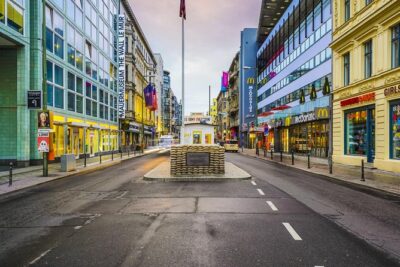
Berlin Wall: Greatest Escapes Self-Guided Walking Adventure
Read our review →
Browse the lists this tour appears in