
Reviewed · BERLIN SIGHTSEEING TOURS
Berlin: Sightseeing Walking Tour of the Top 20 Attractions
Berlin’s past comes at you quickly on this three-hour walk through its political center. You move from the Paul-Löbe-Haus and Federal Chancellery to the Reichstag, then across the city’s former dividing line toward Checkpoint Charlie, the Topography of Terror, Bebelplatz, and Museum Island. It is a brisk way to understand how Berlin’s Nazi, Cold War, Prussian, and modern German stories fit together.
I like the wide range of sights and the way the guide connects them instead of treating each as a separate photo stop. I also like the personal touch: guides such as Carlos, Carlo, Antonella, and Max have been praised for warm conversation, strong local insight, and the ability to adjust the pace. The main drawback is simple: 6 km in three hours is a lot of walking, and some stops receive only a quick look.
Key points to know before booking
- Six kilometers of Berlin in one sweep: The route covers the government district, former Wall sites, Nazi-era memorials, grand squares, and Museum Island.
- Personal guides add the value: Carlos and Carlo are noted for personal stories, while Antonella and Max are praised for a friendly approach.
- History comes in layers: You move from the Reichstag and Holocaust Memorial to Checkpoint Charlie, Bebelplatz, and Berlin Cathedral.
- Small groups keep it flexible: Private and small-group options make it easier to ask questions and shape the walk around your interests.
- The pace is brisk but purposeful: You get a strong first look at Berlin, not long museum visits or leisurely café stops.
- Good practical terms: Tours run daily at 10:00 AM and 2:00 PM, with English, Spanish, and German guides.
Why this route works for a first Berlin day
Berlin can feel scattered at first. Its major sights sit across a broad area, and the city’s story does not unfold in a neat old-town center. This tour helps solve that problem by linking the government quarter, former Nazi sites, Cold War landmarks, and Museum Island in one route.
I like the order of the walk because it gives you a useful sense of Berlin’s political geography. You begin beside today’s federal government buildings, pass the Reichstag and Brandenburg Gate, then head south toward the former Wall zone. From there, the route turns back toward the grand avenues and museums near the Spree.
The guide’s job matters here. A quick look at the Reichstag or Bebelplatz tells you little without context. The tour is designed around storytelling, including dry Berlin humor, personal observations, and facts that are easy to miss in a guidebook. You can also ask about food, nightlife, and neighborhoods for the rest of your stay.
This is not a substitute for entering Berlin’s museums. It is an orientation walk, with outdoor explanations and short sightseeing stops. If you want to cover a lot before choosing which places deserve a longer visit, the format makes sense.
More sightseeing tours in Berlin:
- Berlin: 1-Hour City Tour by Boat with Guaranteed Seating
★ 4.3 · 16,993 reviews - Explore Berlin: See All The Iconic Sights & Some Hidden Gems
★ 5.0 · 4,429 reviews - Berlin: City Sightseeing Hop-On Hop-Off Bus Tour
★ 4.1 · 4,233 reviews
Starting at the Paul-Löbe-Haus and Federal Chancellery
The meeting point is in front of the main entrance to the Paul-Löbe-Haus on Konrad-Adenauer-Straße, opposite the Federal Chancellery. This is a practical start because you are immediately in the heart of present-day German government.
The Paul-Löbe-Haus is part of the modern parliamentary district, and the nearby Chancellery gives the opening section a clear focus: how reunified Germany presents its government today. You then walk toward the Reichstag, where the guide can connect the building’s role in German politics with the city’s dramatic twentieth-century changes.
This first section is not an old Berlin postcard. The architecture is modern and official. That contrast is useful, since the tour quickly shows how the capital shifted from Prussian power to dictatorship, division, reunification, and democratic government.
Reichstag, Brandenburg Gate, and the weight of the Holocaust Memorial
The Reichstag and Brandenburg Gate are among Berlin’s essential stops. They are close enough to combine, but their meanings are different. The Reichstag represents the German parliament and the changing political life of the country. Brandenburg Gate began as a royal city gate and later became one of the clearest symbols of division and reunification.
The guide gives you the facts needed to read both sites rather than simply photograph them. This is one of the places where a live guide is more useful than a self-guided walk, since the same building can carry several different meanings depending on the period being discussed.
The Holocaust Memorial brings a more serious tone. You have some free time here, which is welcome. The field of concrete blocks is meant to be experienced at ground level, where the changing height and narrow paths can feel disorienting. The tour does not treat it as just another photo stop, and you should give yourself a quiet moment before moving on.
Because the route covers so much ground, this is not a long memorial visit. If you want to read every panel or visit the underground information center, plan to return separately.
Potsdamer Platz and the divided city
Potsdamer Platz shows another side of Berlin. Once cut through by the Wall, it became a major redevelopment area after reunification. Today, its modern buildings and open public spaces make more sense when you understand what stood here during the divided years.
This stop helps explain why Berlin sometimes feels unfinished or unusually open. War damage, the Wall, and post-1990 rebuilding left large gaps in the urban fabric. The guide can point out how the city changed from a controlled border zone into a commercial and cultural district.
You should expect a walking explanation rather than time inside the buildings. The value is in seeing the location within the larger story of the Wall and reunification.
Other Berlin experiences to weigh up
- Discover Berlin Half-Day Walking Tour
★ 5.0 · 9,624 reviews - Berlin: Third Reich and Cold War 2 Hour Walking Tour
★ 4.9 · 6,830 reviews - Berlin: Discover Berlin Walking Tour
★ 4.9 · 5,998 reviews - Berlin’s Best: 2 Hour Walking Tour Third Reich and the Cold War
★ 5.0 · 5,486 reviews
Checkpoint Charlie and the Topography of Terror
Checkpoint Charlie is one of Berlin’s most famous Cold War locations. The modern checkpoint booth is a reconstruction and the area around it is busy, commercial, and heavily photographed. That can make the site feel less solemn than you might expect.
The guide helps separate the real historical importance from the tourist presentation. You learn how Berlin was divided, why this crossing mattered, and how the border shaped daily life. This is a good place to ask questions about the Wall, escape attempts, and the uneasy contact between East and West, though the exact depth will depend on your guide and the group’s interests.
Nearby, the Topography of Terror sits on the former grounds of the Gestapo and SS headquarters. This is one of the most important stops on the route because it deals directly with the machinery of Nazi persecution. The outdoor sections and memorial setting offer a useful introduction, but three hours does not allow for a full examination of the documentation center.
I would treat this part of the tour as a preview. If the Nazi period is a main reason for your visit, return later with more time for the exhibits.
Martin-Gropius-Bau is also included in this stretch. Its ornate exterior provides an architectural contrast to the stark historical sites around it. The building is associated with exhibitions, but this walking tour focuses on what you can see and understand from outside.
Gendarmenmarkt and Bebelplatz
Gendarmenmarkt is one of central Berlin’s most polished squares, framed by the French Cathedral, German Cathedral, and Konzerthaus. It gives the tour a change of mood after the difficult subjects at the Topography of Terror.
The square is a useful lesson in Berlin’s changing architectural identity. Grand planning, religious buildings, concert culture, war damage, and restoration all meet here. You get a quick look rather than a formal architectural tour, but the guide can make the details easier to notice.
Bebelplatz carries a darker memory. It is the site associated with the Nazi book burning of 1933, and a memorial beneath the square recalls the destruction of books and ideas. This is a small but powerful stop. The open space can look calm, yet the event connected with it gives the place a heavy meaning.
I like having Bebelplatz on the route because it keeps the tour from presenting Berlin as only palaces, museums, and grand boulevards. The city’s beauty and its difficult past are often found within a few steps of one another.
Unter den Linden, Lustgarten, and Berlin Cathedral
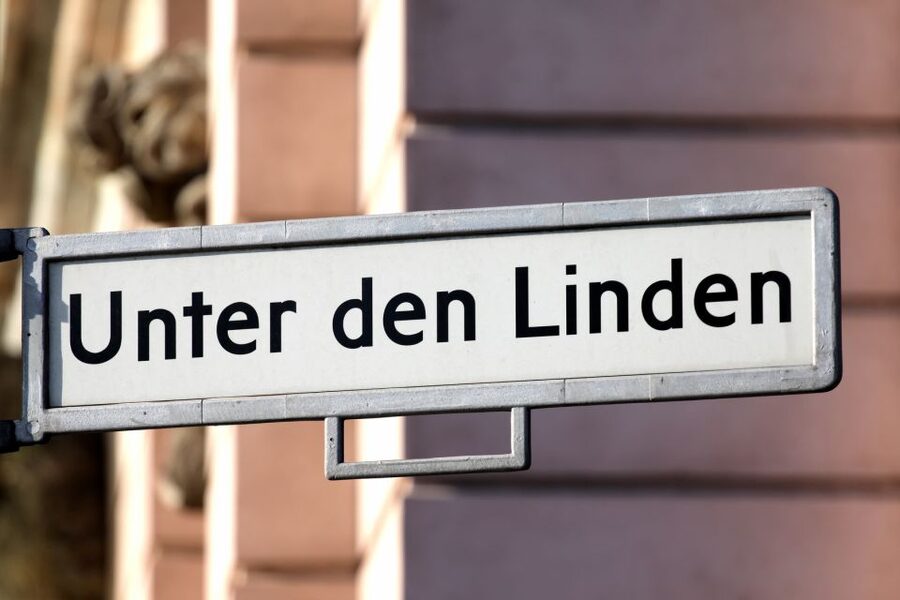
The route continues along Unter den Linden, Berlin’s historic boulevard. You see how the avenue connects the former royal center with Museum Island and the eastern part of the city.
The New City Palace is included among the major sights. Its reconstruction raises useful questions about memory, restoration, and how modern Berlin chooses to present its Prussian past. From the outside, the building is a striking part of the city center. The guide’s explanation is especially helpful here because the building’s story is tied to monarchy, war, East Germany, and post-reunification decisions.
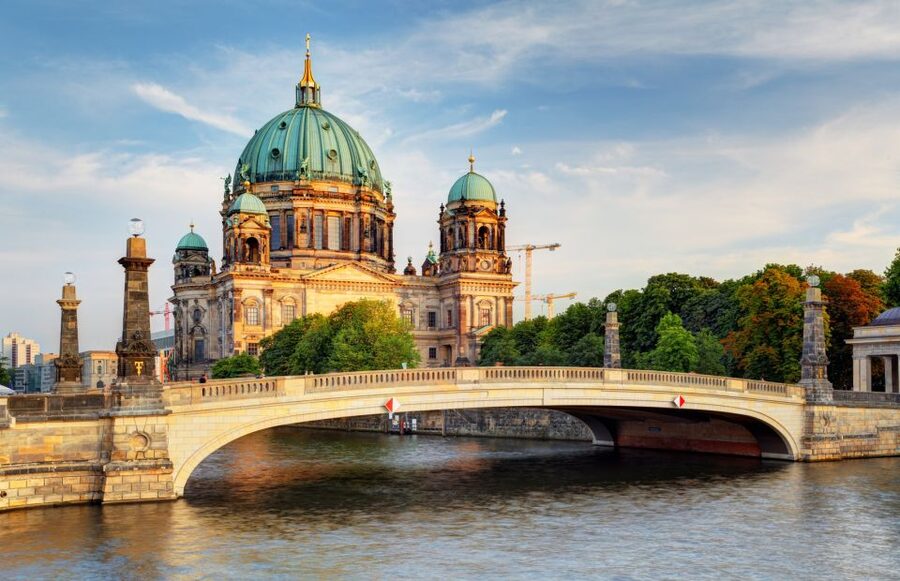
At Lustgarten, the setting opens toward the cathedral and Museum Island. Berlin Cathedral is one of the route’s most recognizable buildings, with its large dome and elaborate exterior. You will likely have time for photographs and an outside explanation, but this is not an interior cathedral visit.
That distinction matters. If you want to climb the dome or see the interior, set aside another visit. On this tour, the cathedral works as part of a broader view of Berlin’s former royal and museum quarter.
Museum Island and the final walk to Friedrichsbrücke
Museum Island brings together several of Berlin’s major cultural buildings. The route includes the Alte Nationalgalerie and other sights in the island area, giving you a strong outside overview of the museum district.
The Alte Nationalgalerie is especially easy to recognize, with its temple-like exterior and prominent position among the museums. The guide can help you decide which museum fits your interests later. Since the walk does not include a full museum visit, think of this as useful planning time rather than a replacement for admission.
The tour finishes at Friedrichsbrücke. Ending beside the river gives you a natural place to continue exploring, take photos, or walk toward another museum or central neighborhood. It also means you do not finish back at the starting point, so note the route before booking and plan your next stop from the bridge.
How the three-hour pace feels
Three hours sounds manageable, but the 6 km distance makes this a proper city walk. You are on your feet for most of the time, with short pauses for explanations, photos, and questions.
The pace can be adapted to the group, especially with a private booking. Still, the route has a lot to cover. One earlier participant described being tired afterward despite enjoying the experience, and that is a fair warning. Wear comfortable shoes and bring water. The tour runs in all weather, so a rain layer is sensible even on a mild day.
The walk is described as suitable for all ages and fitness levels, and it is wheelchair accessible. Even so, anyone with limited stamina should ask about pacing before booking, since distance and outdoor time remain central to the experience.
The 10:00 AM start is useful if you want the rest of the day for museums. The 2:00 PM departure works well if you prefer a slower morning, though you will have less daylight for independent sightseeing afterward, especially in winter.
Guide style and group size
The strongest part of this experience is the guide. Carlos and Carlo are associated with warm, personal storytelling, and Carlo has been praised for sharing what it was like to live through the Wall’s fall. Antonella and Max are also noted for friendly, attentive guiding.
Those personal connections can make a major difference in Berlin. Dates and names matter, but daily life under division and the sudden changes after reunification are easier to grasp through human stories. A native Berliner can also point out how the city has changed beyond the standard monument facts.
English, Spanish, and German tours are available. Private and small-group formats are offered, which is useful if you want to stop for more questions or adjust the focus toward Nazi history, the Cold War, architecture, or present-day Berlin.
The tour uses humor, but the subject matter is often serious. Good humor can keep a long walk lively, yet the tone should not turn difficult history into a joke. The guide’s balance is important, and the available feedback points to guides who bring warmth without losing the seriousness of the places.
Is $94 a fair price?
At $94 per person, this is not Berlin’s cheapest introduction. You are paying for a certified local guide, a three-hour route, a small-group or private setting, and the ability to ask questions as you walk.
The value is strongest if you have limited time, want a clear overview, or prefer personal explanation to reading plaques on your own. It also makes sense for couples, families, friends, and small teams who want one shared orientation before exploring separately.
The value is weaker if you are comfortable navigating Berlin independently or plan to spend most of your time inside museums. You can see many of these landmarks without paying for a tour, although you will not get the same connected explanation or local recommendations.
The route is also a better deal for a first visit than for someone who already knows central Berlin well. Returning visitors may prefer a narrower tour focused only on the Wall, Nazi history, architecture, or museums.
Who should book this walking tour?
Book it if you want to cover many major sights in one morning or afternoon and understand how they connect. It is particularly useful at the start of a Berlin stay, when you need help getting your bearings and choosing where to return.
Families may like the mixture of big landmarks, stories, and outdoor movement. Couples and friends can use the local food and nightlife tips to plan the next part of the trip. It also suits history-focused visitors who want a first look at several major sites before choosing which memorials or museums deserve more time.
I would think twice if you dislike brisk walks, need frequent indoor breaks, or want lengthy visits at each stop. This is a broad city overview, not a slow museum tour.
Should you book it?
I would book this tour for a first Berlin visit when time is short and the city’s twentieth-century story feels hard to organize. The combination of the Reichstag, Brandenburg Gate, Holocaust Memorial, Checkpoint Charlie, Topography of Terror, Bebelplatz, and Museum Island gives you a strong framework for the rest of your stay.
The best reason to choose it is the guide-led connection between places. The main caution is the pace. If you can comfortably walk 6 km and accept that most stops are outdoor introductions, $94 buys a useful, personal start to Berlin. If you want deep time inside memorials or museums, book a shorter area-focused visit instead.
FAQ
How long is the Berlin sightseeing walking tour?
The tour lasts three hours, or 180 minutes, and covers approximately 6 km on foot.
Where does the tour start?
It begins in front of the main entrance to the Paul-Löbe-Haus, opposite the Federal Chancellery, at Konrad-Adenauer-Straße 1, 10557 Berlin.
Where does the tour finish?
The walk finishes at Friedrichsbrücke.
What languages are available?
Guides are available in English, Spanish, and German.
What sights are included?
The route includes the government district, German Chancellery, Reichstag, Brandenburg Gate, Holocaust Memorial, Potsdamer Platz, Checkpoint Charlie, Martin-Gropius-Bau, Topography of Terror, Gendarmenmarkt, Bebelplatz, Unter den Linden, the New City Palace, Lustgarten, Berlin Cathedral, Museum Island, and Alte Nationalgalerie.
Does the tour operate in bad weather?
Yes. Tours run in all weather conditions, so bring suitable clothing, comfortable walking shoes, and a water bottle.
Newest Berlin reviews
- Where It All Began: Berlin’s Queer & Trans History Tour★ 4.9 · 6 reviews
- Understanding Kreuzberg: The roots of local (sub)culture★ 4.9 · 11 reviews
- Berlin: guided canoe | kayaktour★ 4.1 · 7 reviews
- Private Potsdam City Tour in an authentic vintage van★ 5.0 · 14 reviews
- Warnemünde Shore Excursion: Private Sachsenhausen and Berlin Tour★ 5.0 · 12 reviews
- Ultimate E-Bike Tour of Berlin with Beer Garden Stop★ 5.0 · 4 reviews
- In the Forbidden City – Potsdam Walking Tour★ 5.0 · 17 reviews
- Private Walking Tour of Potsdam and Sanssouci★ 5.0 · 24 reviews
Berlin Sightseeing Tours, compared.

1-Hour City Tour by Boat with Guaranteed Seating
Read our review →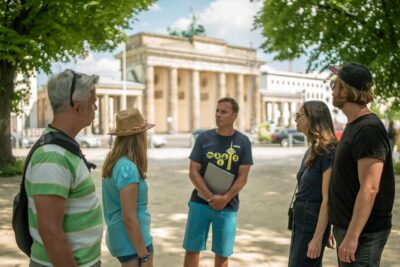
Explore Berlin: See All The Iconic Sights & Some Hidden Gems
Read our review →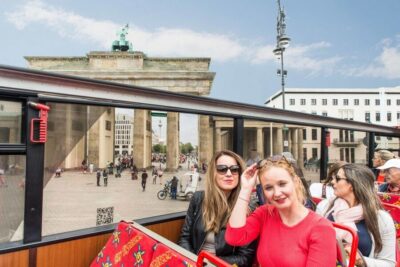
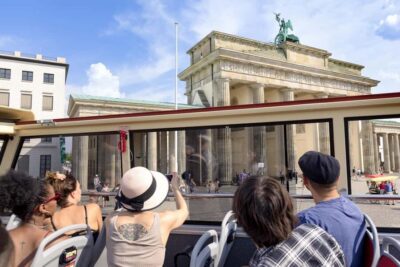
Hop-On Hop-Off Sightseeing Bus with Boat Options
Read our review →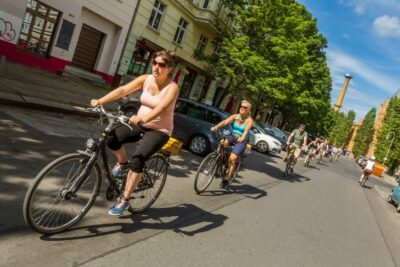
Sights and Highlights Bike Tour with a Local Guide
Read our review →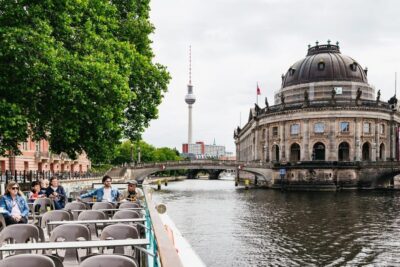
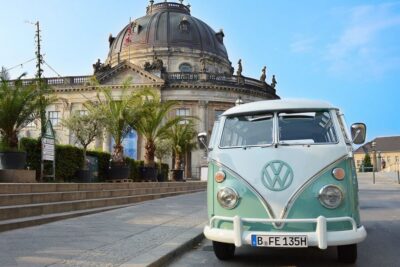
Sightseeing Tour in Classic Volkswagen T1 Samba Bus
Read our review →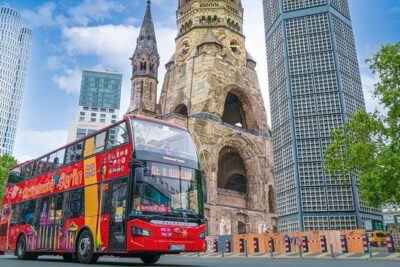
Browse the lists this tour appears in