
Reviewed · MUSEUMS
Berlin: Samurai Museum Entry Ticket
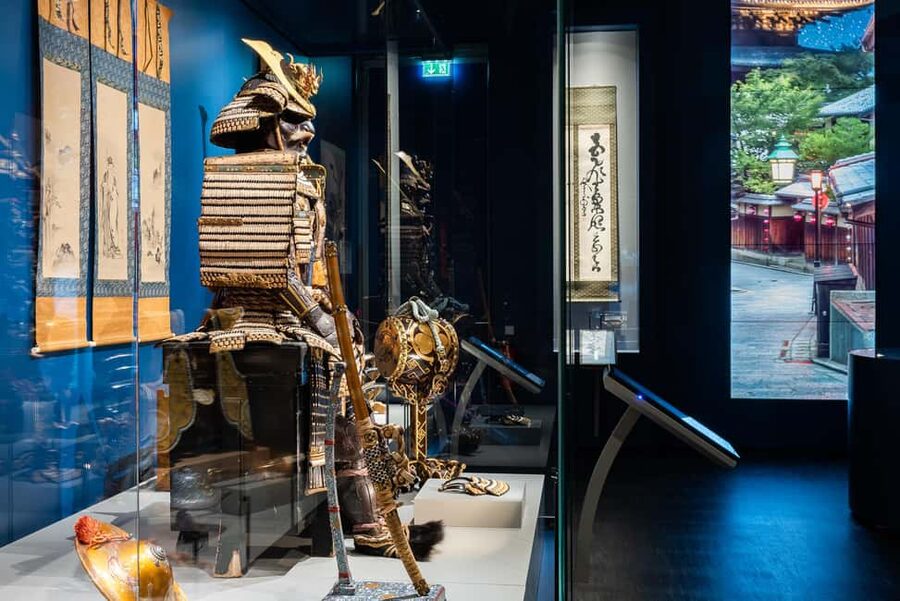
Berlin’s Samurai Museum brings 900 historical objects into a lively conversation with projections, touchscreens, holograms, and sound. You’ll see armor, weapons, sword-making displays, a traditional Noh theater, and a tea house built in Japan, all in the heart of Mitte.
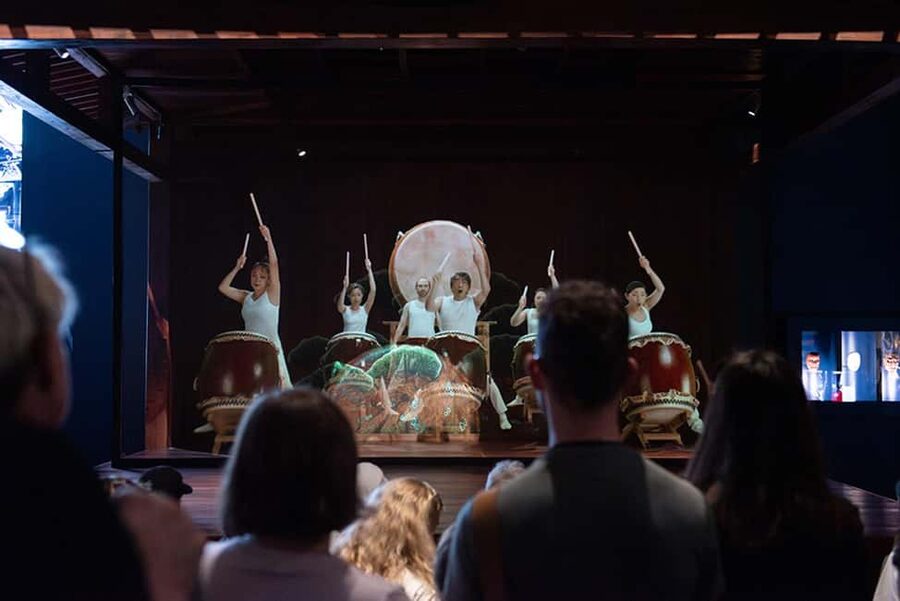
I like the mix of serious craftsmanship and hands-on technology, especially the sword collection and the holographic drum performance. I also like the flexible ticket, which lets you choose your visit day and time within a 1 to 14-day validity window.
The main consideration is that this is a self-guided museum visit, not a traditional tour with a historian leading you room by room. If you prefer quiet cases and long labels, the interactive approach may feel busy, though the displays offer German and English support.
Key points to know before you go
- See rare Japanese objects: The Peter Janssen Collection includes more than 4,000 samurai-culture objects, with about 900 placed in the exhibition.
- Explore a real Japanese tea house: Built in Japan with traditional materials and techniques, it explains the steps of the centuries-old tea ceremony.
- Watch the Noh theater come alive: Projections and performances show how samurai culture shaped Japanese traditions.
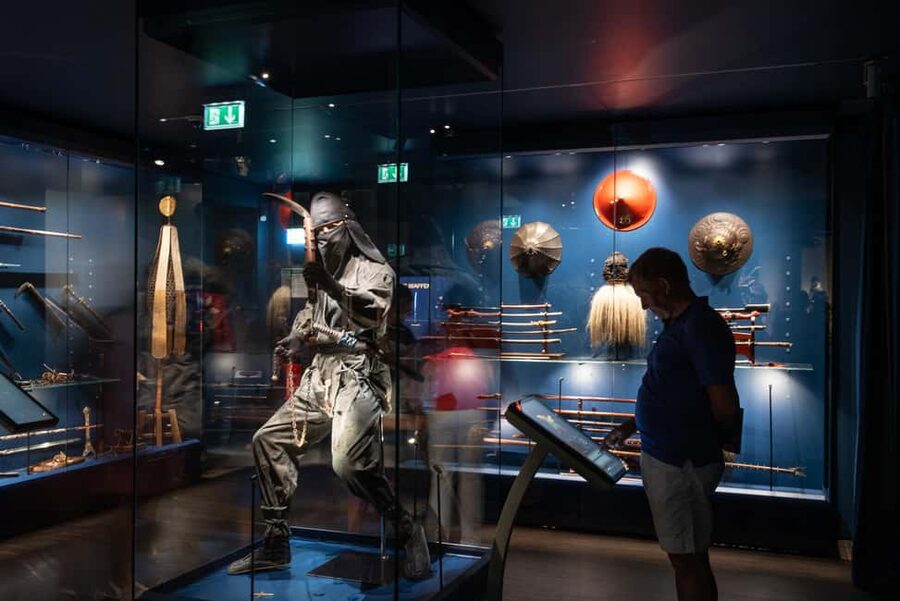
- Use the interactive displays: Learn about swordsmithing, ninja techniques, yōkai, armor, and weapons through touchscreens and projections.
- Follow the fox Kitsune: The museum’s AI fox guide asks questions and adds a playful layer for children and curious adults.
- Reach it easily from Mitte: The museum is on Auguststraße, close to Alexanderplatz, Museum Island, cafés, restaurants, and shopping.
Why the Berlin Samurai Museum works best as a cultural stop
The Samurai Museum is not simply a room of swords behind glass. Its purpose is to connect objects with the skills, rituals, stories, and beliefs surrounding them.
That makes a difference. A suit of armor can be striking on its own, but the museum also gives you ways to understand how it was made, why certain details mattered, and how samurai culture influenced theater, tea, music, and visual art.
The museum presents itself as Europe’s only institution of this kind. Its collection belongs to Peter Janssen and grew from a flea-market find in Berlin into a private group of more than 4,000 objects. The pieces date from the late Kofun period through the early Meiji period, covering roughly the sixth to the nineteenth century.
You do not need to be an expert in Japanese history to get something from the visit. The technology helps explain objects that might otherwise seem remote. At the same time, the historical pieces keep the experience grounded in real materials and workmanship.
More museums and galleries in Berlin:
- Berlin: Natural History Museum Entrance Ticket
★ 4.6 · 3,382 reviews - Skip-the-Line: Berlin Wall Museum at Checkpoint Charlie
★ 4.1 · 2,041 reviews - Berlin: Museum Island Multiple Museum Entry Ticket
★ 4.4 · 2,007 reviews
Entering the collection: armor, weapons, and craftsmanship
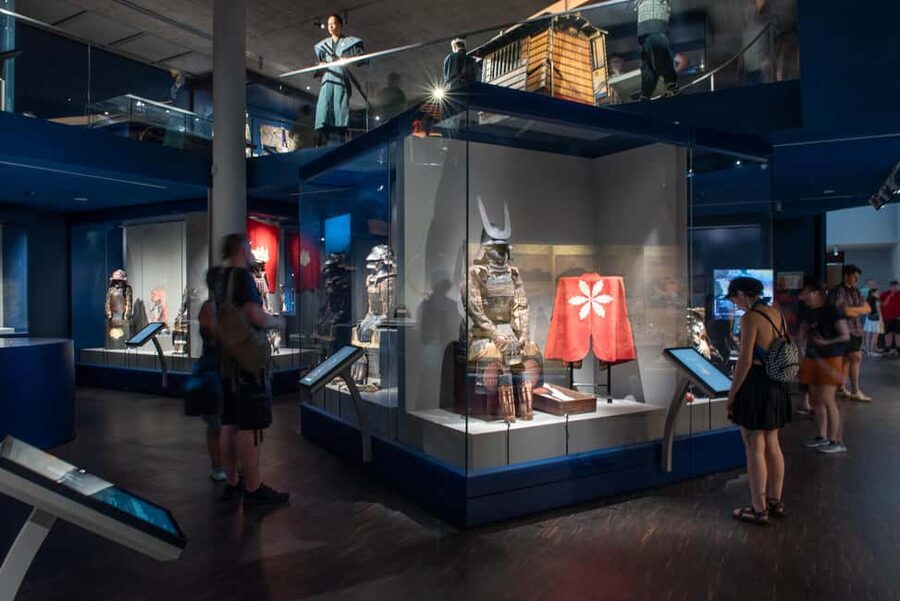
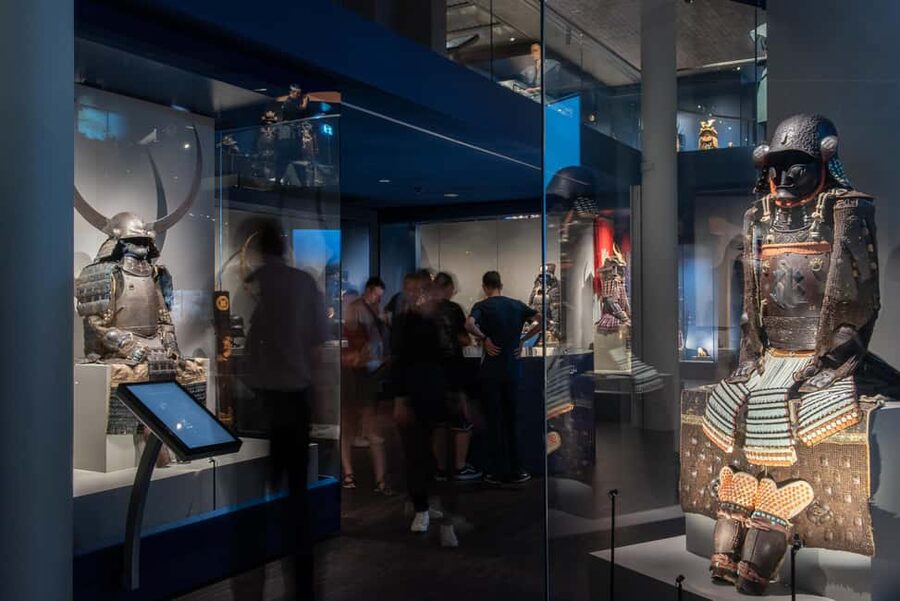
The strongest part of the museum is its collection of authentic samurai armor, weapons, and art. You see these objects close up rather than as distant symbols of a film or video game.
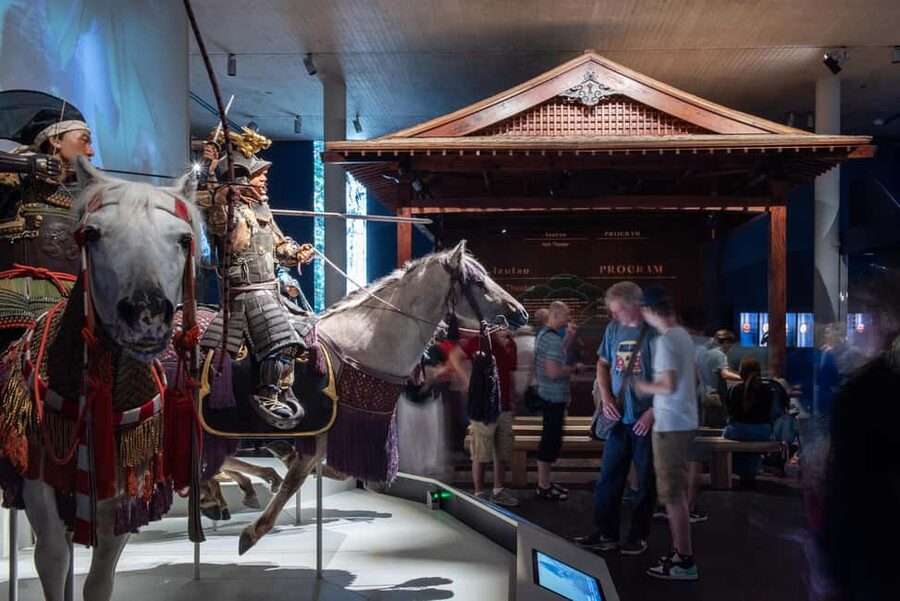
A major highlight is the eighteenth-century palanquin, a reminder that samurai culture involved ceremony, status, travel, and public display, not only warfare. Another important object is a seventeenth-century suit of armor connected with the Matsudaira clan.
The collection also includes tea utensils associated with the period of Sen no Rikyū, who lived from 1522 to 1591. These pieces help broaden the picture. Samurai culture was linked to formal behavior, aesthetics, and ritual as much as to weapons.
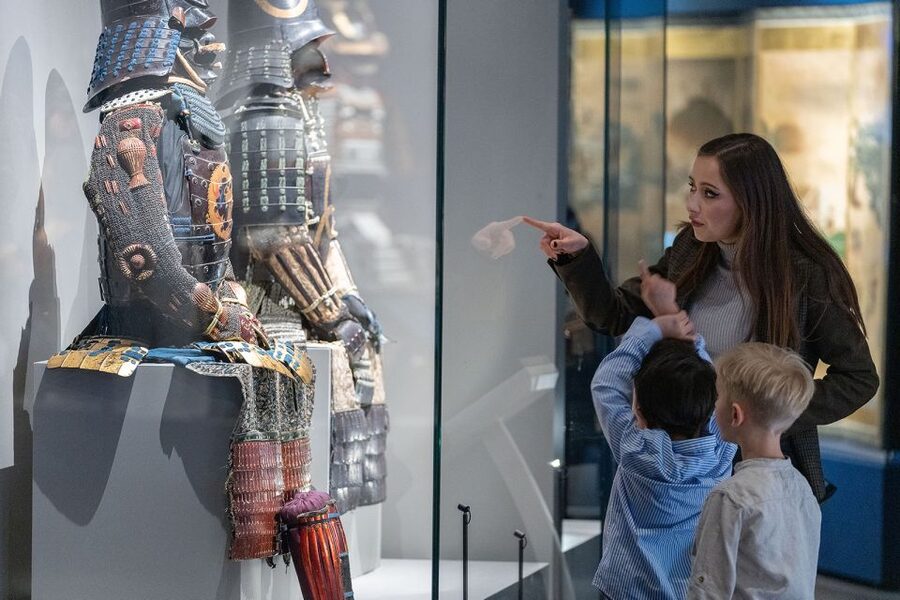
I would take time with the construction details. Armor is not just protective equipment. Its materials, shape, decoration, and presentation communicate rank and identity. The museum’s close-up format is useful here because you can study surfaces and workmanship without relying only on a large overview panel.
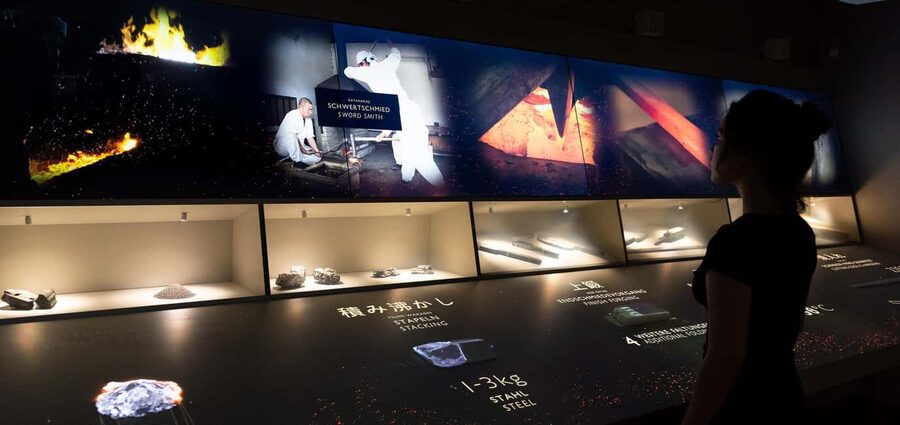
The sword section is another natural focal point. It explains the art of swordsmithing and the production of legendary blades. The interactive format is particularly helpful if you have never considered how much technical work goes into a sword before it becomes a finished object.
You should not expect to handle the historical weapons. Hands-on here means using interactive displays and learning systems, not touching the collection itself.
Interactive technology for samurai, ninja, and yōkai
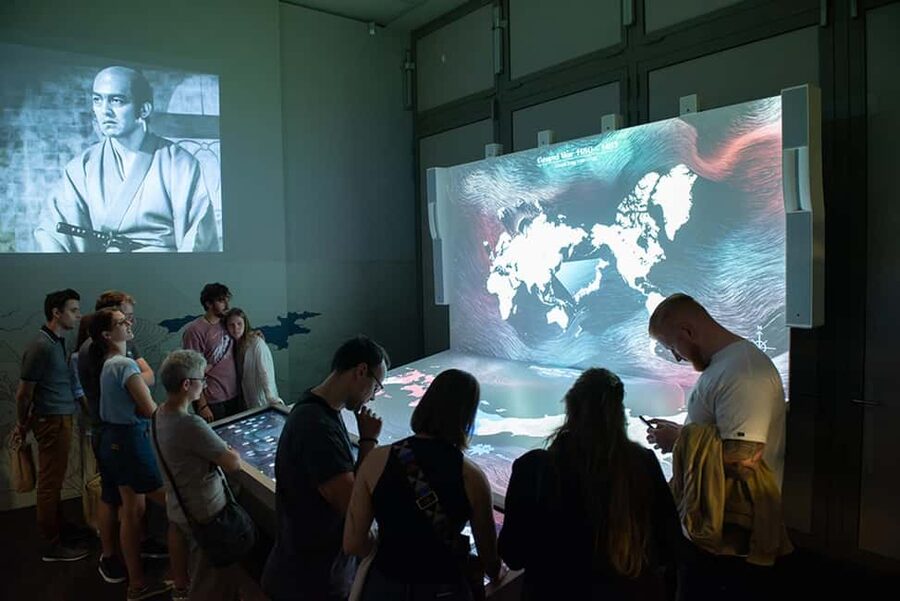
The museum’s technology gives it a different feel from a conventional historical collection. Projections and touchscreens guide you through subjects linked to the samurai, mysterious ninja, and yōkai, the supernatural beings of Japanese folklore.
The experience is designed to work across ages. Children can follow the questions from Kitsune, the museum’s fox guide, while adults can use the displays to find more context around the objects. One visitor particularly liked the fox because of its resemblance to the nine-tailed fox character Kurama from the anime Naruto.
That detail tells you something useful about the tone. The museum does not treat Japanese culture as a solemn display that children must quietly endure. It uses familiar visual language and playful prompts to hold attention, while the collection supplies the serious historical content.
You can explore ninja techniques through interactive elements, then move into subjects that are less familiar to many Western visitors, such as yōkai and traditional performance. A holographic drum presentation adds sound and motion without turning the whole museum into a theme park.
I like this approach for a first introduction. You can move at your own speed, follow the topics that catch your eye, and return to a display if you want more information. The tradeoff is that the technology becomes part of the experience, so visitors looking for a quiet, object-focused museum may prefer to spend extra time in the collection areas.
The Noh theater and tea house
Two of the most memorable features are architectural rather than collectible: a Noh theater and a tea house.
The Noh theater was built in Japan with traditional materials and methods, then reconstructed in Berlin. Projections and performances use the space to explain the long cultural influence of samurai society on Japanese theater and tradition.
Noh can seem difficult to understand if you encounter it without context. The theater gives the subject a physical setting, while the projections add movement and explanation. You are not only looking at a model or reading about a performance space. You are seeing how the setting itself shapes the art.
The tea house offers a similar benefit. Tea ceremony is easy to reduce to the simple act of preparing and drinking tea, but the museum uses the space to introduce the process and its formal details. The setting helps you understand why the ceremony has lasted for centuries.
These areas also slow the visit down. After the armor, weapons, screens, and sound, the theater and tea house provide a more reflective change of pace. If you are visiting with children, they may prefer the fox and ninja displays, but the architectural features are worth seeing even if you move through them quickly.
Other Berlin experiences to weigh up
- Berlin: Berlin Story Bunker Entry Ticket
★ 4.6 · 6,759 reviews - Berlin: Illuseum Berlin Entrance Ticket
★ 4.1 · 3,970 reviews - Berlin: Madame Tussauds Admission Ticket
★ 4.6 · 3,941 reviews - Potsdam: Sanssouci Palace and Prussian Palaces Entry Ticket
★ 4.5 · 2,101 reviews
How long to allow and how the flexible ticket works
The ticket is valid for a period of 1 to 14 days, depending on the option and availability shown when booking. That does not mean the museum visit lasts fourteen days. It means you have flexibility about when to enter during the stated validity period.
This is useful in Berlin because Mitte is already part of a full sightseeing day. You can pair the museum with Museum Island, Alexanderplatz, or a walk through nearby streets rather than building your entire schedule around a fixed tour departure.
No starting time or visit length is specified in the information provided, so check the available time slots when you book. The ticket lets you skip the ticket line by going directly to the entrance barrier with the ticket on your smartphone.
I would allow enough time to use the interactive displays rather than rushing through the cases. The exact duration depends on how much you read and how many installations you try. A quick visit can cover the main objects, while a slower visit gives you more time with the sword-making section, tea ceremony, theater, and fox guide.
Because there is no named guide attached to this ticket, you should think of it as an independent museum visit. Guided tours may be available separately, but they are not part of the standard entry ticket described here.
Location in Berlin-Mitte and getting there
The museum is on Auguststraße in Mitte, a convenient central area near Alexanderplatz and Museum Island. You can make it part of a broader day of central Berlin sightseeing, with cafés, restaurants, and shops close by.
Public transport options include:
- U-Bahn U6 to Oranienburger Tor
- U-Bahn U8 to Rosenthaler Platz
- S-Bahn S1, S2, S25, or S26 to Oranienburger Straße
- Tram M1 or M5 to Oranienburger Straße
- Tram M8 to Rosenthaler Platz
- Bus 142 to Tucholskystraße
- Bus M41 to Abgeordnetenhaus
The location is one of the ticket’s practical strengths. You do not have to make a special trip to an outlying district, and the visit ends where it begins. I would check your route before setting out because several stations and lines serve the area, but you have plenty of public transport choices.
The central setting also makes the museum a good rainy-day option. You can fit it between other indoor stops, though you should not expect the museum itself to function as a replacement for Berlin’s larger historical museums. Its focus is narrower and more specialized.
Is the $15 ticket good value?

At about $15 per person, the ticket is reasonably priced for a central Berlin museum with a large private collection and several purpose-built cultural spaces.
The value comes from the combination. You are not paying only to see armor and swords. Your admission also covers the interactive technology, the swordsmithing section, Noh theater, tea house, holographic performance, and educational material about ninja and yōkai.
That mix makes the ticket especially good for families and mixed-interest groups. One person can focus on craftsmanship, another on Japanese performance, and children can follow Kitsune and use the interactive displays.
The value is less clear if your only goal is a scholarly study of samurai warfare. The technology and playful tone may not provide the same depth as a specialist lecture or guided academic visit. For a general cultural outing, though, the price is fair.
The ticket includes entry only. An exhibition catalog is not included, so budget separately if you want a printed reference to take home.
Practical rules and access
The museum is wheelchair accessible, which makes the visit easier for people who need step-free access. The standard ticket includes entry, and the ticket can be shown on your smartphone at the entrance.
Pets, food, drinks, luggage, and large bags are not allowed. Plan around that rule, especially if you are carrying shopping bags or traveling with a suitcase. The museum’s central location means you may be able to leave larger items at your accommodation before visiting.
Staff assistance is another practical plus. The museum provides information in both German and English, and the interactive systems are designed to support those languages. If you do not speak German, you can still use the main displays and follow the exhibition.
Free cancellation is available up to 24 hours before the visit, and you can reserve now and pay later. Those policies are useful if your Berlin plans are still shifting, though you should confirm the exact terms attached to your selected ticket before paying.
Who will enjoy this museum most?
I would recommend the Samurai Museum to families, first-time visitors interested in Japanese culture, fans of armor and swords, and anyone who likes museums that ask you to participate.
It is also a good choice if you want a central indoor stop with a clear theme. The fox guide, ninja displays, and holographic performances give children a reason to stay engaged, while the historic collection and architectural features give adults more than a simple entertainment visit.
The museum may be less suitable if you want a silent, traditional gallery with minimal screens. It may also disappoint you if you expect a live guide to explain every object. In that case, look into a separate guided tour or plan to spend time reading and using the displays independently.
The strongest visit comes when you give the museum room to do both jobs: show beautiful objects and explain the culture around them. If you race through only the armor cases, you will miss much of what makes this place different.
Should you book the Berlin Samurai Museum?
Book it if you want a focused, interactive look at Japanese samurai culture in a convenient central location. The real armor, weapons, tea utensils, Noh theater, and tea house provide substance, while the fox guide and digital installations keep the visit accessible.
At $15, it offers solid value for a flexible museum stop, particularly for families or groups with different interests. Skip it only if you strongly prefer traditional galleries without interactive technology or if you need a fully guided historical tour.
FAQ
Where is the Samurai Museum Berlin located?
The museum is on Auguststraße in Berlin-Mitte, near Alexanderplatz and Museum Island.
How can I reach the museum by public transport?
You can use U6 to Oranienburger Tor, U8 to Rosenthaler Platz, S1, S2, S25, or S26 to Oranienburger Straße, or trams M1, M5, and M8. Bus options include 142 to Tucholskystraße and M41 to Abgeordnetenhaus.
How much does entry cost?
The listed price is $15 per person.
How long is the ticket valid?
The ticket is valid for 1 to 14 days. Check availability and the selected ticket details for the applicable visit timing.
Is the museum wheelchair accessible?
Yes. The museum is wheelchair accessible.
Can I bring food, drinks, pets, or large bags?
No. Pets, food, drinks, luggage, and large bags are not allowed.
Is a guided tour included?
No. The listed activity includes an entry ticket only. Guided tours may be available separately, but no guide is included with this ticket.
Newest Berlin reviews
- Where It All Began: Berlin’s Queer & Trans History Tour★ 4.9 · 6 reviews
- Understanding Kreuzberg: The roots of local (sub)culture★ 4.9 · 11 reviews
- Berlin: guided canoe | kayaktour★ 4.1 · 7 reviews
- Private Potsdam City Tour in an authentic vintage van★ 5.0 · 14 reviews
- Warnemünde Shore Excursion: Private Sachsenhausen and Berlin Tour★ 5.0 · 12 reviews
- Ultimate E-Bike Tour of Berlin with Beer Garden Stop★ 5.0 · 4 reviews
- Potsdam Highlights – Private sightseeing tour by minibus★ 5.0 · 3 reviews
- In the Forbidden City – Potsdam Walking Tour★ 5.0 · 17 reviews
Museums, compared.

Skip-the-Line: Berlin Wall Museum at Checkpoint Charlie
Read our review →

“Pergamonmuseum. The Panorama” Exhibition Tickets
Read our review →
East Side Gallery Spree Cruise in a Solar Catamaran
Read our review →
Cold War, Berlin Wall, Spies and the East Side Gallery
Read our review →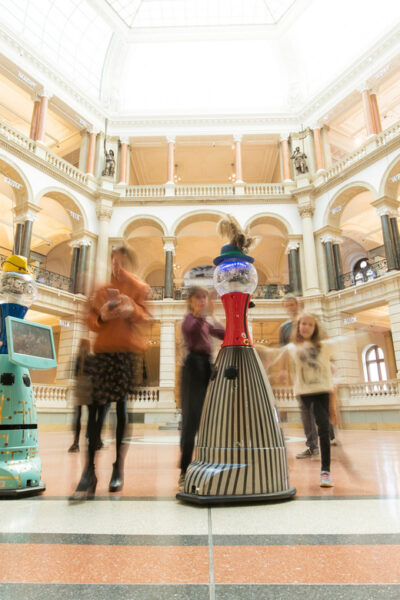
Browse the lists this tour appears in