Reviewed · PRIVATE
Berlin Private Custom 5-Hour Tour by Car
Berlin makes you work for its story. The sights are spread across a huge city, and its past is divided among royal avenues, Nazi ruins, Cold War checkpoints, immigrant neighborhoods, and new buildings. This private five-hour car tour gives you a fast, flexible way to connect those pieces, with hotel pickup and stops whenever you want a closer look.
I like the custom route and the chance to see both former East and West Berlin without spending the day figuring out trains and walking directions. I also like the guide-led context. Thomas, Winfried, Jan, Sven, and others have been praised for making the city’s difficult history clear, personal, and sometimes surprisingly funny. The main drawback is price: at $504.59 per person, it makes the most sense for a small group that values private transport and a tailored introduction.
Key points to know before booking
- Berlin’s major sights fit into one broad loop: Expect the Brandenburg Gate, Reichstag, Holocaust Memorial, Berlin Wall sites, Checkpoint Charlie, Museum Island, Alexanderplatz, Charlottenburg, Kreuzberg, and more.
- Your guide can adjust the pace: The driver can stop for photographs and adapt the route to your interests rather than follow a fixed group schedule.
- The history is the real strength: Guides such as Thomas and Winfried explain how Berlin changed through Nazism, division, reunification, and today’s political debates.
- You see more than central Berlin: The route reaches Tiergarten, Kurfürstendamm, Charlottenburg, Kreuzberg, Hackescher Markt, and the East Side Gallery.
- It works well in poor weather: An air-conditioned minivan gives you shelter on cold or rainy days, though outdoor stops are still weather dependent.
- Plan a second visit for museums: This is mainly an orientation and sightseeing tour. Admission tickets, food, and drinks are not included.
Why a private car helps in a sprawling city
Berlin is not a compact old town where you can stroll from one landmark to the next. The main sights are scattered over a wide area, and the old East and West centers have different characters. A private car lets you cover ground quickly while your guide explains what you are passing.
The five-hour format is long enough to build a story rather than simply collect photographs. You move from Prussian power to Nazi terror, from the Berlin Wall to reunification, and then into neighborhoods shaped by immigration and modern Berlin culture.
You can request pickup at a Berlin hotel or residence. Airport pickup may be possible, but special conditions apply, so you need to ask before booking. The tour is private, meaning only your group participates, and transport is by air-conditioned minivan with a driver-guide.
This setup is especially useful on a first day in Berlin. You get a citywide orientation, then you can return on later days to the museums or memorials that caught your attention. One family used the tour that way, following up afterward on several places the guide had pointed out.
Other Berlin experiences to weigh up
- Berlin: Private Reichstag and Glass Dome Tour
★ 4.8 · 2,226 reviews - Berlin Private Complete History All Day Walking Tour
★ 5.0 · 474 reviews - Private Walking Tour Berlin Third Reich Hitler and World War II
★ 5.0 · 360 reviews
Brandenburg Gate, Reichstag, and the government quarter
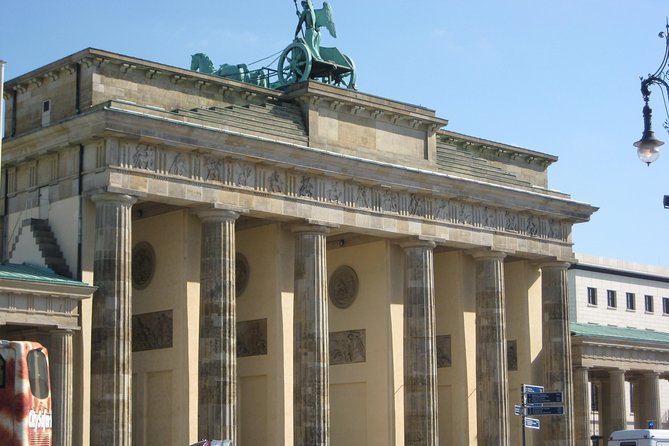
The tour begins its historical work in central Berlin, where the Brandenburg Gate has changed meaning many times. Built in the late eighteenth century, it saw Napoleon pass through, became part of Hitler’s Berlin, and then sat beside the Berlin Wall. In 1989, it became a symbol of celebration and German reunification.
The gate is a fine example of why a guide adds value here. Without context, it is an impressive neoclassical arch. With context, you see how the same monument can represent peace, military victory, dictatorship, division, and unity.
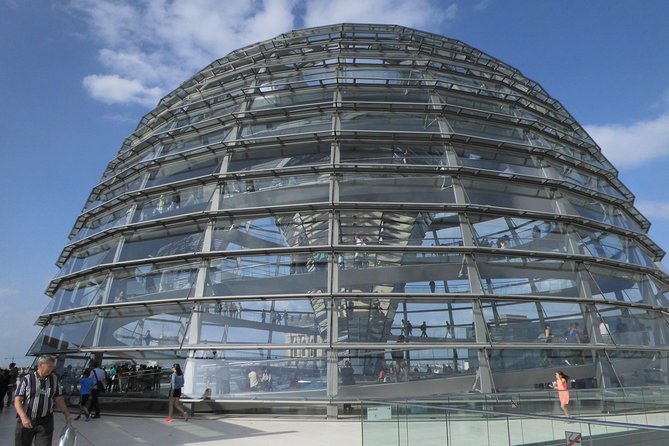
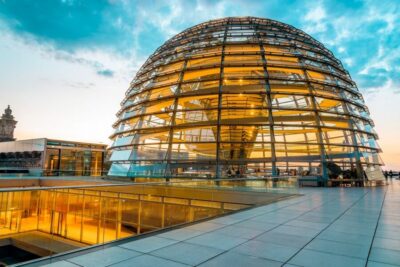
Nearby, the Reichstag and government section show modern Germany trying to make democracy visible. The glass dome designed by Norman Foster is now one of Berlin’s best-known features. The tour explains how the building’s past and new design fit into the country’s effort to create a different political image.
You will also pass the Holocaust Memorial. Its field of concrete blocks is meant to create disorientation and discomfort rather than offer a simple statue to photograph. A good guide can help you read the design without turning the stop into a lecture, and the strongest guiding here connects the memorial to the way Berlin chooses to remember mass murder in the middle of daily city life.
Potsdamer Platz and the Topography of Terror
Potsdamer Platz offers a sharp change of mood. Once cut apart by the Wall, it became a major symbol of Berlin’s post-reunification rebuilding. Modern architecture fills the area, including the terracotta forms associated with Renzo Piano and the glass Sony Center linked with Helmut Jahn.
The stop is useful because it shows that Berlin’s new architecture is not only about appearance. It also raises questions about safety, public space, commercial development, and what happens when a divided city tries to reinvent itself. Your guide may point out the tension between bold modern construction and the fragile materials used in some of it.
At the Topography of Terror, the subject turns darker. The site deals with the Nazi institutions that operated there, placing the crimes of the regime into the physical center of present-day Berlin. You will not get an admission-ticket experience as part of this driving tour, so allow separate time if you want to study the exhibits in detail.
Berlin Wall sites and Checkpoint Charlie
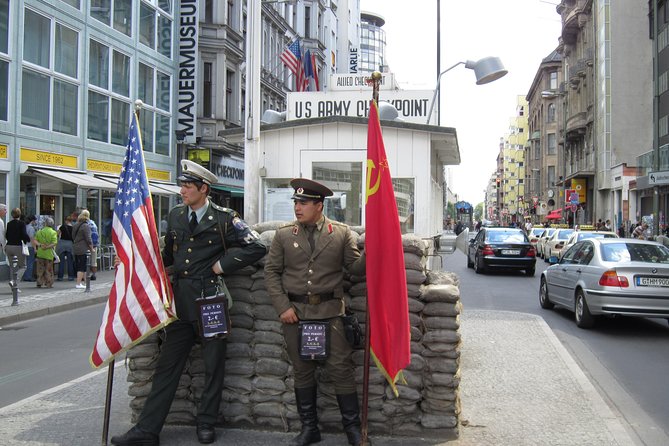
Checkpoint Charlie is one of Berlin’s most famous Cold War stops. American and Soviet tanks once faced each other here, and the crossing became a symbol of the conflict between East and West. You can stop for photographs, but keep your expectations sensible. The modern checkpoint area is heavily tied to tourism, so its value comes mainly from understanding the setting and the larger history.
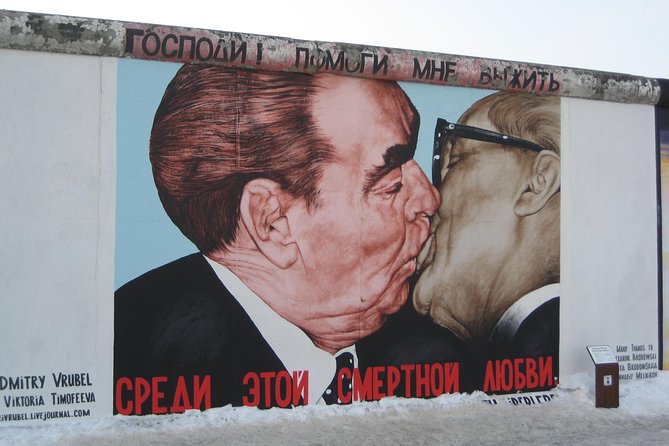
The tour also includes Berlin Wall locations and the East Side Gallery, a 1.5-kilometer stretch of surviving Wall covered by works from more than 100 artists. It is both an outdoor art site and a physical reminder of the barrier that cut through the city.
A guide can connect the Wall to ordinary life, not just Cold War headlines. You may hear about the White Crosses marking people who died trying to cross, as well as the candy bombers who dropped sweets during the Berlin Airlift. Those details help turn a huge political story into something human and easier to remember.
The itinerary lists Checkpoint Charlie twice, once as part of the central Berlin sightseeing and again as a separate fifteen-minute stop. Treat that as a sign that the route is flexible rather than as two entirely different attractions. Your guide may spend more or less time there depending on your interests and the day’s traffic.
A different sort of day out in Berlin:
- Berlin: Reichstag, Dome and Government District Guided Tour
★ 4.7 · 18,288 reviews - Berlin: 1-Hour City Tour by Boat with Guaranteed Seating
★ 4.3 · 16,993 reviews - Berlin: Boat Tour Along the River Spree
★ 4.4 · 11,252 reviews - Discover Berlin Half-Day Walking Tour
★ 5.0 · 9,624 reviews
Museum Island, Alexanderplatz, and Unter den Linden
The drive along Unter den Linden brings you through Berlin’s grand historic core. You see Museum Island, home to major museums, and Alexanderplatz, the broad East Berlin square dominated by the television tower.
The contrast between these places is useful. Unter den Linden carries the old royal and Prussian character of the city, while Alexanderplatz reflects the planning and architecture of the former East Berlin. The route can also include the reconstructed royal palace and discussion of the former Palace of the Republic, which was removed after reunification.
That debate is part of modern Berlin’s ongoing argument with itself. The city has rebuilt older symbols, preserved wartime damage, and created new memorials, often within a short walk of one another. A guide such as Jan can help you see that Berlin’s history is not presented in one tidy version. It appears in buildings, empty spaces, reconstructions, and disputes over what should remain.
The tour does not include museum admission, and a ten-minute or fifteen-minute stop is not enough to visit an interior collection. I would use this part to choose which museum deserves your return visit. If you want a full museum day, book this tour for orientation rather than expecting it to replace one.
Hackescher Markt and Berlin’s Jewish history
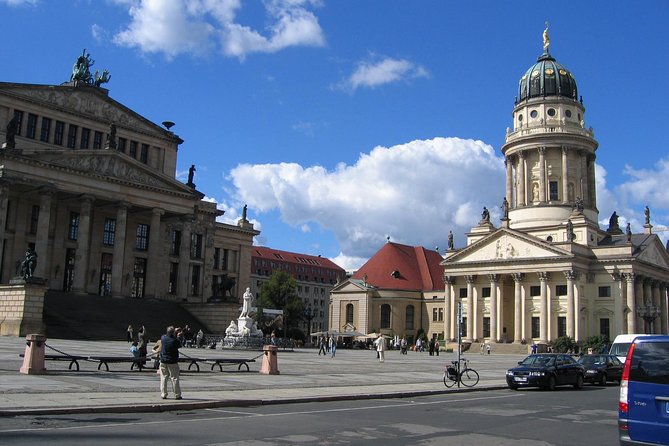
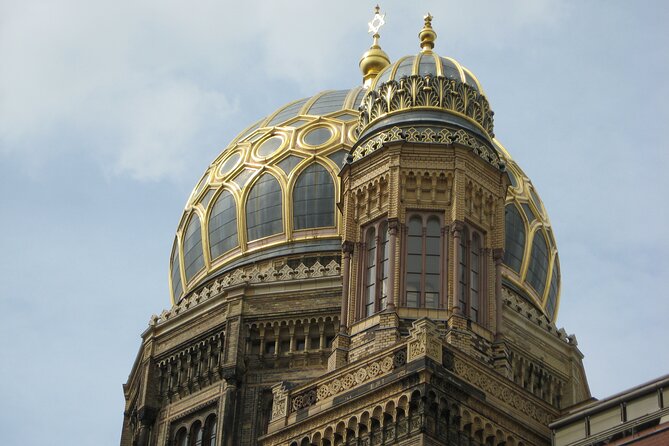
Hackescher Markt takes you into another part of Mitte, where nineteenth-century immigration shaped the city. The area includes the New Synagogue, the Old Jewish Cemetery, and the Hackesche Höfe courtyards.
This is a good place to ask questions. The buildings and courtyards can look attractive and fashionable today, but the guide can place them within the lives of Jewish communities from Eastern Europe and the later destruction of Jewish life under Nazism.
The strongest version of this tour does not treat history as something finished. It can include the Queer Memorial and other less familiar reminders of groups persecuted under the Nazi regime. It can also explain how Berlin’s memorial culture reaches beyond the most famous sites.
You should expect a brief exterior visit, not a full guided museum program. The listed time is about twenty minutes, so ask your guide what can be seen and which places deserve a longer return visit.
Tiergarten, Victory Column, and the Memorial Church
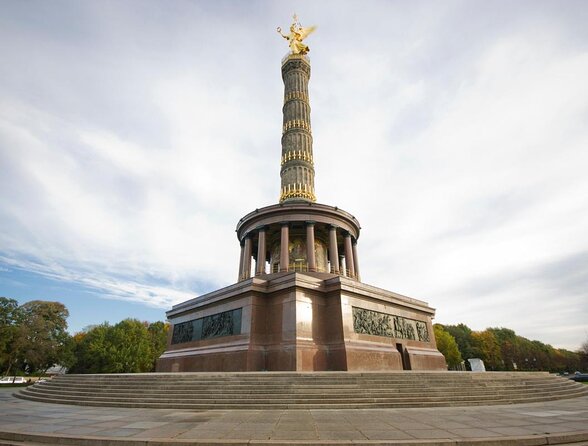
The drive through Tiergarten gives you a break from dense central streets. You will see the Victory Column, built in the 1870s and moved to its present location in the 1930s by Albert Speer. Its changing setting reflects Berlin’s use of monuments for political display.
The Kaiser-Friedrich-Gedächtniskirche, better known as the Memorial Church, is a war ruin preserved as a reminder of destruction. The damaged church is not polished into a perfect restoration, and that choice fits Berlin’s habit of leaving selected scars visible.
You have about twenty minutes here. That is enough for a look and photographs, though not a slow architectural study. If you care especially about wartime memory, tell your guide early so the stop receives the attention you want.
Kurfürstendamm and Charlottenburg Palace
Kurfürstendamm shows the old West Berlin at its most commercial. This broad boulevard has upscale shops, cafés, restaurants, and theaters. The ten-minute stop is short, so you are mainly getting a sense of the district rather than a shopping afternoon.
The nearby Memorial Church adds a serious counterpoint to the boulevard’s polished side. Together, the two stops show how West Berlin combined consumer culture, wartime memory, and a strong identity during the years of division.
Charlottenburg Palace brings the story back to the Hohenzollerns, the ruling family that shaped Prussia and Berlin for roughly five centuries. It is described as the only surviving historic palace of its kind in Berlin. The ten-minute visit is an exterior glimpse, not a palace tour, since no admission is included.
If you want to explore the rooms and gardens, plan a separate visit. Still, seeing the palace helps explain the royal power behind the city’s grand avenues and public buildings.
Kreuzberg and Oberbaumbrücke
Crossing Oberbaumbrücke into Kreuzberg gives you one of the clearest changes in atmosphere during the tour. The district became home to many Turkish immigrants in the twentieth century and is now known for its mix of restaurants, cafés, bars, and nightclubs.
Kreuzberg also lets the guide discuss Berlin as a living city rather than a museum of past events. Subjects can include housing costs, community gardens, immigrant communities, and the way former industrial spaces became linked with Berlin’s club culture.
The fifteen-minute stop is brief, but it introduces a district you may want to revisit on foot. The drive also helps connect the East Side Gallery with the neighborhoods beside it, rather than treating the Wall as an isolated monument.
What the guides add to the five hours
The guide makes or breaks a private history tour. The people associated with this experience include Thomas, Winfried, Jan, Sven, and others. Thomas is repeatedly described as energetic, careful with facts, and able to explain Berlin from the viewpoint of someone who knows the city closely. Winfried has spoken about growing up in Berlin and living through its changes, including the experience of East Berlin.
Jan’s approach links major landmarks with less obvious subjects, such as the Queer Memorial, the design of the Holocaust Memorial, the politics of rebuilding the royal palace, and modern housing debates. That sort of connection is what turns a parade of sights into a coherent understanding of Berlin.
The tour may be operated by a multilingual guide, and English is offered. French and Spanish language experiences have also been described, but you should confirm the language you need when booking. Do not assume the same guide will be available every day.
The guiding style is generally serious but not stiff. Expect difficult subjects, clear explanations, personal stories, and some lighter observations about Ampelmann souvenirs, chocolate shops, graffiti, and Berlin’s famous nightlife.
Price, pace, and who gets the best value
At $504.59 per person, this is expensive compared with a shared bus tour or a day using Berlin’s public transport. The price is easier to justify if your group wants a private vehicle, hotel pickup, flexible timing, and a guide who can answer questions throughout the day.
It also offers value for people with limited time. Berlin’s size makes a self-guided first day less efficient, especially if you want both former East and West Berlin. The tour covers a great deal without making you change trains or repeatedly check directions.
The tradeoff is depth. With so many stops, some visits are brief. You see Charlottenburg Palace, the East Side Gallery, Checkpoint Charlie, and Hackescher Markt, but you cannot fully explore every site in five hours. You are paying for range, transport, and interpretation.
Food and drinks are not included. One group chose to keep going rather than stop for lunch, while another had lunch during a longer outing. If you need a meal break, say so at the start and accept that it may reduce sightseeing time.
The tour operates in all weather. Wear suitable clothing, especially if you want to get out for photographs on a cold or rainy day. The minivan helps, but the best memorials and Wall sites still require some time outdoors.
Should you book this Berlin private tour?
Book it if you want a high-level but thoughtful introduction to Berlin, especially on your first day. It suits families, older visitors, small groups, and anyone who values a private schedule over the lower cost of public transport or a large group tour.
It is also a strong choice if Berlin’s twentieth-century history is your main interest. The route brings together Nazi persecution, wartime destruction, the Berlin Wall, reunification, Jewish life, migration, and present-day debates about memory and housing.
Skip it if your priority is spending hours inside museums, shopping along Kurfürstendamm, or exploring one neighborhood on foot. The tour gives you a map of Berlin and the stories behind it, but you will need separate visits for the interiors.
For most people who book it, the best plan is to use the five hours as a city orientation. Ask for the sights that matter most to you, leave room for photo stops, and note the places you want to revisit. That is where the private format earns its price.
FAQ
Where can I be picked up?
Pickup is available anywhere in Berlin, including a hotel or residence. Airport pickup may be possible, but special conditions apply and you should ask in advance.
How long does the tour last?
The tour lasts approximately five hours.
Is this a private tour?
Yes. Only your group participates in the private activity.
What type of vehicle is used?
Transport is provided in an air-conditioned minivan.
Are admission tickets included?
The listed sightseeing stops do not include admission tickets. Food and drinks are also not included.
Is the tour available in English?
Yes, English is offered. The tour may be operated by a multilingual guide.
Can I cancel for a full refund?
Yes, if you cancel at least 24 hours before the experience starts. Cancellations made less than 24 hours in advance are not refunded, and changes within that period are not accepted.
Newest Berlin reviews
- Where It All Began: Berlin’s Queer & Trans History Tour★ 4.9 · 6 reviews
- Understanding Kreuzberg: The roots of local (sub)culture★ 4.9 · 11 reviews
- Berlin: guided canoe | kayaktour★ 4.1 · 7 reviews
- Private Potsdam City Tour in an authentic vintage van★ 5.0 · 14 reviews
- Warnemünde Shore Excursion: Private Sachsenhausen and Berlin Tour★ 5.0 · 12 reviews
- Ultimate E-Bike Tour of Berlin with Beer Garden Stop★ 5.0 · 4 reviews
- In the Forbidden City – Potsdam Walking Tour★ 5.0 · 17 reviews
- Private Walking Tour of Potsdam and Sanssouci★ 5.0 · 24 reviews
Private, compared.
Berlin Private Complete History All Day Walking Tour
Read our review →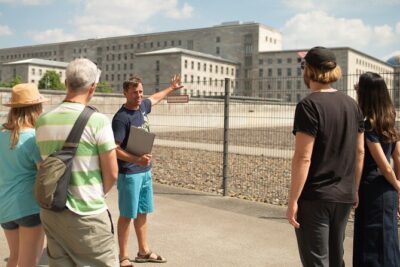
Private Walking Tour Berlin Third Reich Hitler and World War II
Read our review →
Private Berlin: Iconic Sights and Hidden Gems Walking Tour
Read our review →
Berlin Private Half-Day Walking Tour: Discover the German Capital’s History
Read our review →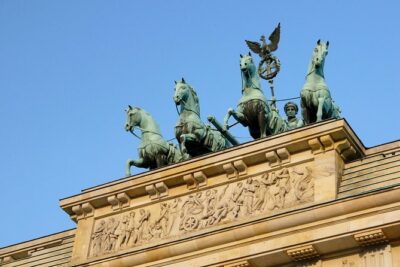
Private Walking Tour: World War 2 and Cold War Sites in Berlin
Read our review →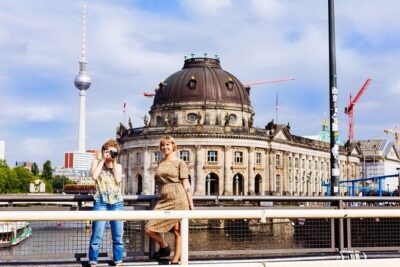
The History of Berlin: WWII PRIVATE Walking Tour With Locals
Read our review →