
Reviewed · SACHSENHAUSEN CONCENTRATION CAMP TOURS
Private Sachsenhausen Concentration Camp tour with train
Sachsenhausen is not a sightseeing stop in the usual sense. It is a place of remembrance, and the best guides treat it with the gravity it demands while still making the history understandable. This private outing takes you from your Berlin hotel by public transport to Oranienburg, then through the former camp and its memorial exhibits.
I like the one-on-one attention and the way the tour begins before you reach the gates. Guides such as Martin, Ioana, Maria, Klaus, and Nickolai have been praised for explaining the camp during the train ride and walk from the station. I also like the flexible pace: a private guide can answer family questions, pause when the subject becomes heavy, and adjust the route when needed.
The main drawback is simple: this is a long day on foot, not a private car excursion. You may walk 11,000 to 16,000 steps, sometimes over uneven ground, and the train fare may not be included in the advertised price. Bring water, wear good shoes, and check the transport details before you pay.
Key points to know before booking
- The train ride is part of the experience: You travel from Berlin to Oranienburg by public transport, usually followed by a walk or local transfer to the memorial.
- The private format changes the tone: Your guide can tailor explanations, answer difficult questions, and give your group room to reflect.
- Oranienburg adds important context: The town was tied to the camp economy and the forced labor system that supported Nazi war production.
- The site requires stamina: Expect a full day, extensive walking, uneven pavement, and few places to buy food or drinks.
- Guides are the main value: The strongest praise goes to guides including Martin, Ioana, Maria, Paul, Nickolai, Hannah, and Klaus for their historical skill and respectful manner.
- This is a serious memorial visit: You are going to learn about imprisonment, forced labor, systematic cruelty, and mass killing, not to collect pleasant holiday memories.
The journey from Berlin to Oranienburg
The tour starts with hotel pickup, but do not picture a chauffeur-driven van. The guide meets you at your hotel, walks with you to the station, and travels by train toward Oranienburg. That arrangement is made clear in the experience name, though the wording about pickup and drop-off can still confuse people who expect a vehicle.
The train ride has one real benefit: it places the visit in the ordinary setting of modern Berlin. You see the same public transport system used by local residents, while your guide begins explaining how Sachsenhausen fit into Nazi Germany’s political and military system. Guides such as Nickolai and Ioana have used this time to explain the camp before you arrive, giving the site a frame of reference rather than leaving you to face it cold.
Allow extra time for the route. The train ride takes roughly 30 minutes according to one account, followed by about a 20 to 25 minute walk from Oranienburg station. Some guides arrange a bus or taxi when useful. A taxi from Oranienburg station has been reported at about 6 euros, but that cost is not part of the listed tour price.
This is one point I would clarify before booking: ask exactly which train, bus, or taxi fares are covered. The experience includes hotel pickup and drop-off with a guide, but public transport costs are not clearly spelled out. A private tour at $338.15 per person can still be worthwhile, but surprise transport costs make the value harder to judge.
More Sachsenhausen memorial visits from Berlin:
- Berlin: Sachsenhausen Concentration Camp Tour in English
★ 5.0 · 5,711 reviews - Berlin: Sachsenhausen Concentration Camp Memorial Tour
★ 4.7 · 3,716 reviews - Sachsenhausen Concentration Camp Bus Tour in English from Berlin
★ 5.0 · 1,962 reviews
Oranienburg and the town beside the camp
The first planned stop is a short walk through Oranienburg, lasting about 25 minutes. It is easy to treat this as a transfer, but it serves a serious purpose. Sachsenhausen was not isolated from ordinary German life. The town and the camp were linked by work, administration, commerce, and forced labor.
Local factories, including plants making war supplies, used prisoners from Sachsenhausen. That means the camp was part of the local economy, not some distant secret hidden beyond the town limits. Some residents took part in the Nazi system. Others knew enough to benefit from it or chose not to confront what was happening nearby.
A good guide helps you consider this uncomfortable connection without turning the town into a simple story of guilt or innocence. You learn how a community can live beside cruelty, accept its economic benefits, and allow official violence to become part of the background.
The stop is brief, so it does not replace the memorial visit. Think of it as a short introduction to the setting. It also gives you a chance to walk off the train before the more demanding portion of the day.
Entering Sachsenhausen through the memorial grounds
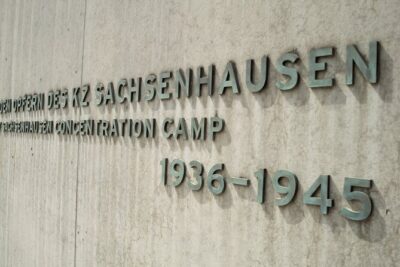
Sachsenhausen was built in 1936, during the period when Nazi Germany was preparing Berlin to host the Olympics. Prisoners were forced to build the new camp north of Berlin. It was designed to hold political enemies of the Nazi regime and became a model for the camp system in more ways than one.
Around 200,000 people were imprisoned here over the camp’s years under Nazi control. In 1945, the Soviets evacuated the Nazi camp and later used the site for another purpose. From 1945 to 1950, the Soviet special camp held about 60,000 people, including Nazis and Nazi collaborators.
That second chapter matters. Sachsenhausen is not only a site connected to Nazi persecution. Its postwar history also shows how a place of imprisonment can be reused by a new power, with suffering continuing under a different political system. A strong guide keeps both periods in view without confusing them.
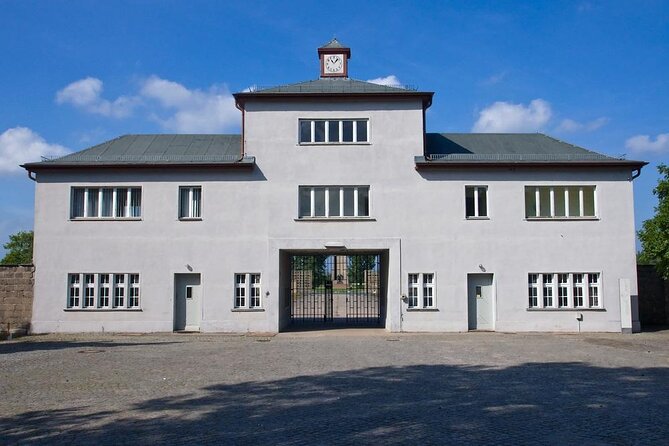
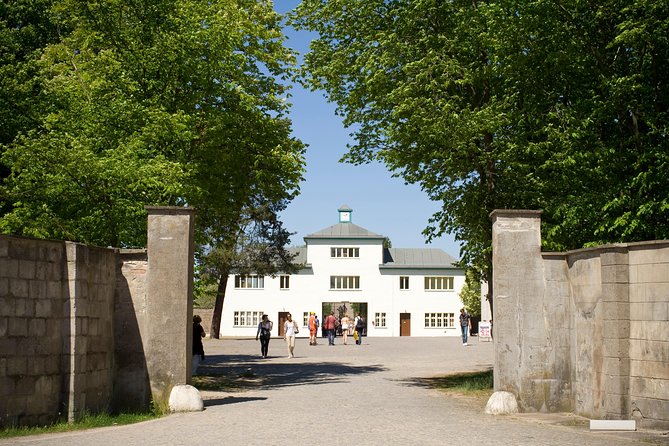
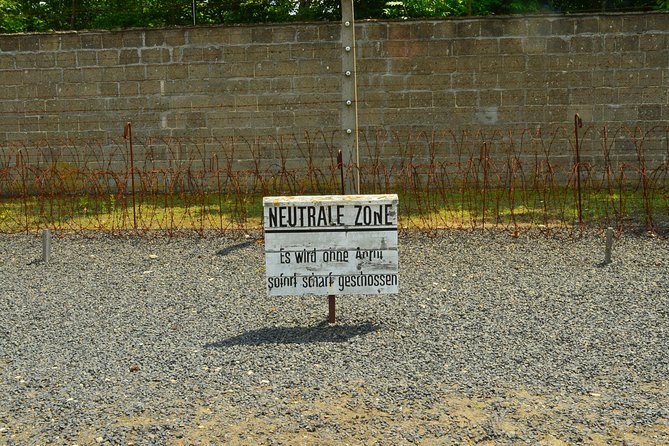
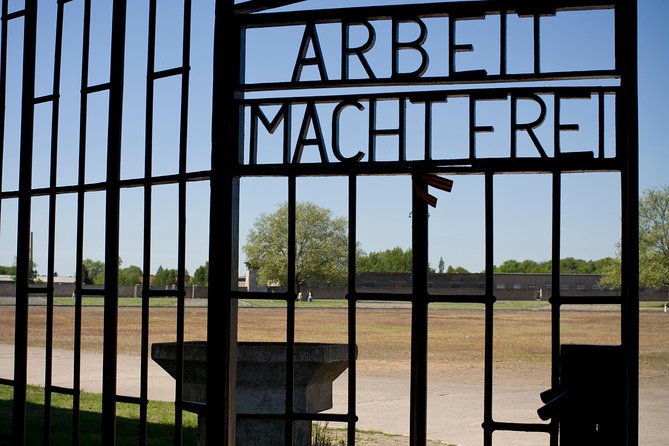
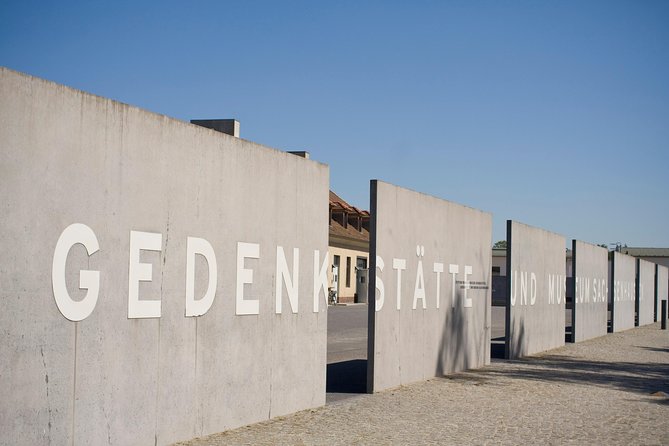
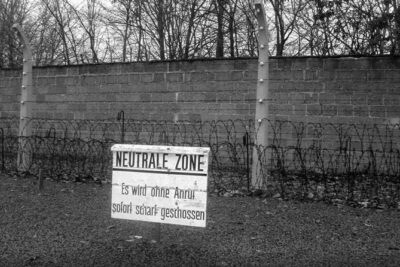
The memorial area itself is large and exposed. You pass through the former camp grounds, where the layout, buildings, empty spaces, and remaining structures help explain how the institution operated. The physical arrangement is part of the lesson. The triangular plan, Tower A entrance, roll call square, barracks, and Station Z all carry meaning that is difficult to grasp from a museum panel alone.
The listed itinerary gives about 90 minutes for the memorial and museum, followed by another 90 minutes exploring the former camp grounds. In practice, the exact rhythm depends on your guide and your questions. Some groups spend more time in exhibits, while others need quiet pauses outside.
What the memorial teaches about daily life
The guide’s job here is not simply to recite dates. You learn how prisoners were registered, controlled, housed, worked, punished, and reduced to categories within the Nazi system. The camp’s structure shows how the SS turned imprisonment into a controlled routine of humiliation and exhaustion.
One especially sobering detail concerns the barracks. Buildings designed for far fewer people could hold several times their intended number, with some accounts describing 700 prisoners in a barrack built for 150. Overcrowding, hunger, disease, forced labor, and arbitrary violence worked together to strip people of privacy and dignity.
The forced labor system was not only about producing useful goods. Some work was designed to exhaust prisoners or break their will. Your guide may explain how the Nazi system reduced a human being to labor capacity, then discarded people who could no longer work.
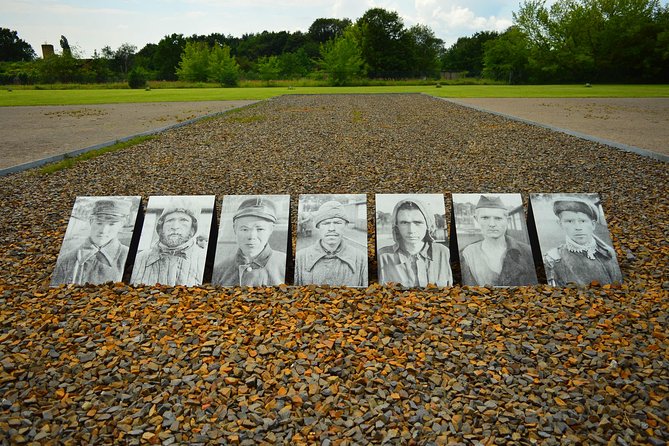
Survivor testimony gives the statistics a human scale. The guides use personal accounts to show how prisoners tried to preserve hope, friendship, and a sense of self under conditions designed to destroy all three. This is where a private tour can be more useful than walking alone. You can ask about a passage, request more context, or simply pause without worrying about a large group’s schedule.
The subject is distressing. That is not a flaw in the tour, but it does affect who should book it. Families with older children may find it educational, but adults should decide in advance how much detail is appropriate. You are not being offered a polished, easy version of the past.
Other Berlin experiences to weigh up
- Berlin: Private Reichstag and Glass Dome Tour
★ 4.8 · 2,226 reviews - Berlin Private Complete History All Day Walking Tour
★ 5.0 · 474 reviews - Private Walking Tour Berlin Third Reich Hitler and World War II
★ 5.0 · 360 reviews - Private Berlin: Iconic Sights and Hidden Gems Walking Tour
★ 5.0 · 292 reviews
The roll call square and Station Z
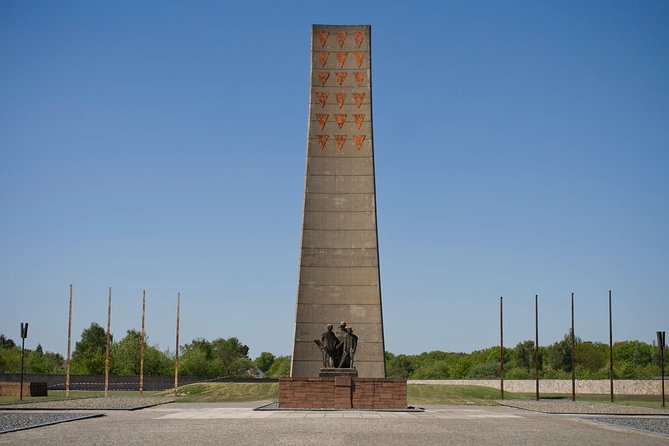
The roll call square is one of the places where the camp’s system becomes easier to picture. Prisoners could be forced to stand for long periods in cold or bad weather while guards counted them. The point was not just administration. Roll call also imposed control and physical suffering.
Station Z is another particularly difficult part of the visit. It was the killing facility at the camp, and its name carries a grim logic: if Tower A was the entrance, Station Z represented the end. The remaining site and explanations make clear that murder was organized as part of the camp’s machinery.
You should expect a quiet, serious tone here. Experienced guides know when to explain and when to stop talking. Klaus, for example, has been singled out for giving detailed answers while also allowing silence when it was needed. That restraint matters at a place where too much narration can feel intrusive.
The tour also addresses the preservation of memory. The memorial is not just a collection of ruins. It is an active effort to document crimes, honor the dead, explain the system, and challenge indifference in the present. Your guide may connect the history to the persistence of extremist ideas today, but the visit remains focused on Sachsenhausen and the people imprisoned there.
Why a private guide can be worth the price
At $338.15 per person, this is an expensive outing if you compare it only with the cost of reaching Sachsenhausen independently. You are paying for a private guide, hotel pickup and drop-off, tailored explanations, and help with a difficult site. The value is strongest for a family or small group that wants a serious conversation rather than a fixed script.
Guides have received high praise for different strengths. Martin is noted for his command of the camp, the Third Reich, Berlin, and communist East Germany. Ioana has been described as particularly strong at adapting the amount of background to the visitor’s existing knowledge. Maria has been praised for a measured pace, while Paul is known for linking the camp to Hitler’s rise and other Berlin sites.
Other guides bring a more personal style. Hannah provides background during the journey and keeps the route moving without making the group feel hurried. Natalie has worked to find a more accessible route for a visitor using a wheelchair. Walid has arranged taxis for people who struggled with the walk. Taylor has allowed time to explore exhibits while remaining available for questions.
The private format also gives you control over the emotional pace. You can ask for more explanation, spend longer in one area, or keep moving when a section becomes too much. A large group may offer a lower price, but it cannot provide the same level of adjustment.
Still, private does not mean luxury. You are still taking trains and walking. One dissatisfied booking came from an expectation of private vehicle transport and a shorter visit. Read the transport description closely and treat the $338.15 price as the cost of expert accompaniment, not car service.
Food, weather, walking, and practical comfort
Plan this as a six-hour outing, and prepare for it like a day outdoors. Food and drinks are not included, and amenities around the memorial are limited. Pack water and lunch unless your guide gives you different instructions.
Comfortable shoes are essential. The walk from the station, the size of the site, and uneven pavement can add up quickly. Reports of 11,000 steps and even 16,000 steps are useful warnings, especially if you have knee, hip, or balance problems.
The tour is not recommended for people with limited mobility or walking impairments. That is the general guidance, not an absolute statement that no adaptation is possible. Natalie helped create a route for a wheelchair user, and other guides have arranged taxis. If mobility is a concern, contact the operator before booking and describe exactly what support you need.
Weather can change the feel of the day. Much of the visit takes place outdoors, and rain or cold can make the open grounds harder to manage. Bring suitable clothing. The subject matter is heavy enough without being physically uncomfortable.
The experience is offered in English and has a range of departure times from Berlin. Confirmation is normally immediate, though bookings made within two days of departure may take up to 48 hours and remain subject to availability. Free cancellation is available until 24 hours before the start time. Changes or cancellations inside that window are not accepted for a refund.
Who should book this Sachsenhausen tour
I would choose this tour if you want a guide who can connect the camp to Nazi policy, local German society, forced labor, and the Soviet detention period. It suits families, couples, and small groups who value privacy and want time for serious questions.
It is also a good fit if navigating public transport in Berlin feels awkward. Your guide meets you at the hotel, handles the route, and brings you back afterward. You still use trains and may walk a long way, but you are not left to find the memorial alone.
I would look elsewhere if your priority is the lowest possible price, a private vehicle, or a short three-hour outing. You can visit the memorial independently, and a group tour may cost less. You should also reconsider if six hours of walking and emotionally difficult material will make the day too demanding.
Should you book it?
Book this private Sachsenhausen tour if you want context, patience, and a guide who can adjust the day to your group. The strongest part is not the train ride or the hotel pickup. It is the chance to stand in a place of immense historical weight with someone prepared to explain what happened and when to let the silence do its work.
Before booking, confirm transport fares, the amount of walking, and any mobility needs. If those details suit you, the private format offers real value for a serious visit that deserves more than a quick stop and a few photographs.
FAQ
How long does the Sachsenhausen tour last?
The experience lasts approximately six hours, including travel from Berlin, the Oranienburg stop, and the memorial visit.
Is hotel pickup included?
Yes. Hotel pickup and drop-off are included, with the guide accompanying you by public transport.
Do I travel to Sachsenhausen by car?
No. The tour uses the train from Berlin to Oranienburg. The route from the station may involve walking, a bus, or a taxi.
Is the tour private?
Yes. Only your group participates in the private activity.
What language is the tour offered in?
The tour is offered in English.
Is food included?
No. Food and drinks are not included, so you should bring water and consider packing lunch.
How much walking is involved?
A substantial amount of walking is involved. The route from Oranienburg station can take about 20 to 25 minutes on foot, and the full visit may total 11,000 to 16,000 steps.
Is the tour suitable for people with limited mobility?
The experience is not recommended for people with limited mobility or walking impairments. Some guides have arranged alternative routes or taxis, so contact the operator before booking if you need assistance.
What is included in the price?
The price includes a licensed guide trained by the memorial authority, hotel pickup, and hotel drop-off. Food and drinks are not included.
Can I cancel for a full refund?
Yes. You can cancel at least 24 hours before the local start time for a full refund. Cancellations or changes made less than 24 hours before departure are not refunded.
Newest Berlin reviews
- Where It All Began: Berlin’s Queer & Trans History Tour★ 4.9 · 6 reviews
- Understanding Kreuzberg: The roots of local (sub)culture★ 4.9 · 11 reviews
- Berlin: guided canoe | kayaktour★ 4.1 · 7 reviews
- Private Potsdam City Tour in an authentic vintage van★ 5.0 · 14 reviews
- Warnemünde Shore Excursion: Private Sachsenhausen and Berlin Tour★ 5.0 · 12 reviews
- Ultimate E-Bike Tour of Berlin with Beer Garden Stop★ 5.0 · 4 reviews
- In the Forbidden City – Potsdam Walking Tour★ 5.0 · 17 reviews
- Private Walking Tour of Potsdam and Sanssouci★ 5.0 · 24 reviews
Sachsenhausen Concentration Camp Tours, compared.
Sachsenhausen Concentration Camp Tour in English
Read our review →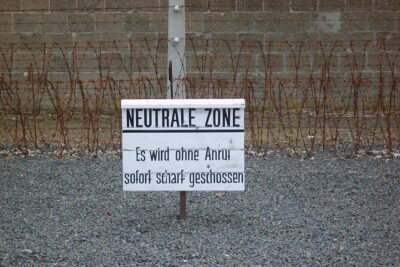
Sachsenhausen Concentration Camp Memorial Tour
Read our review →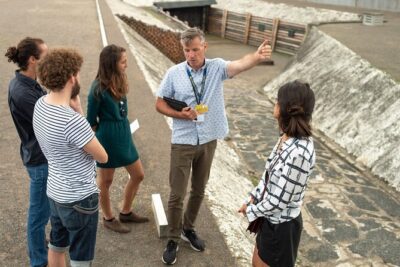
Sachsenhausen Concentration Camp Bus Tour in English from Berlin
Read our review →Sachsenhausen Concentration Camp Tour in English
Read our review →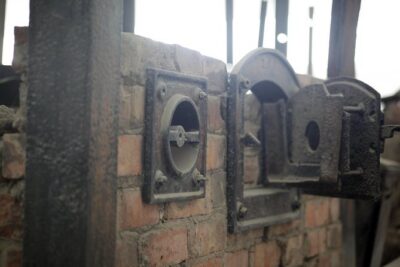
Sachsenhausen Concentration Camp Memorial Tour (Max. 15 Guests)
Read our review →
Sachsenhausen Concentration Camp and Potsdam Tour
Read our review →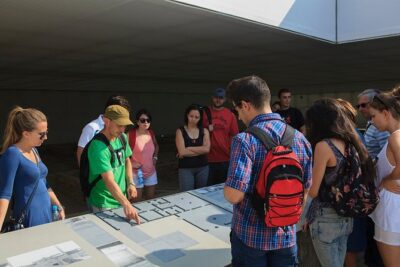
Visita en español al campo de concentración Sachsenhausen
Read our review →Browse the lists this tour appears in