
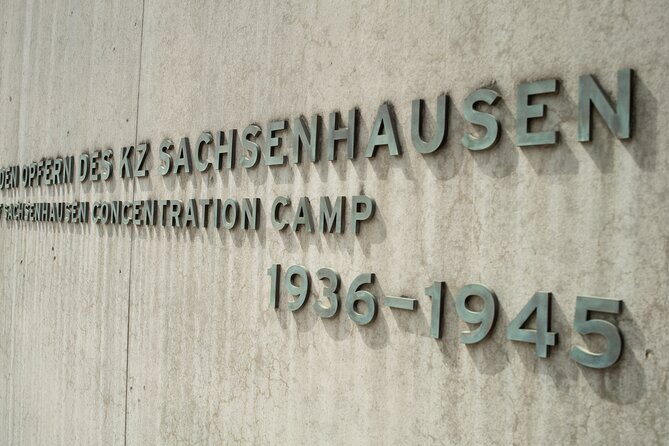
Reviewed · SACHSENHAUSEN CONCENTRATION CAMP TOURS
Berlin: Sachsenhausen Concentration Camp Tour in English
Sachsenhausen is not a sightseeing stop. It is a place of imprisonment, forced labor, murder, and remembrance, and the best way to approach it is with a guide who can explain what you are seeing and why it mattered. This tour takes you from central Berlin to the memorial by train, then leads you through the camp’s remaining buildings and open grounds.
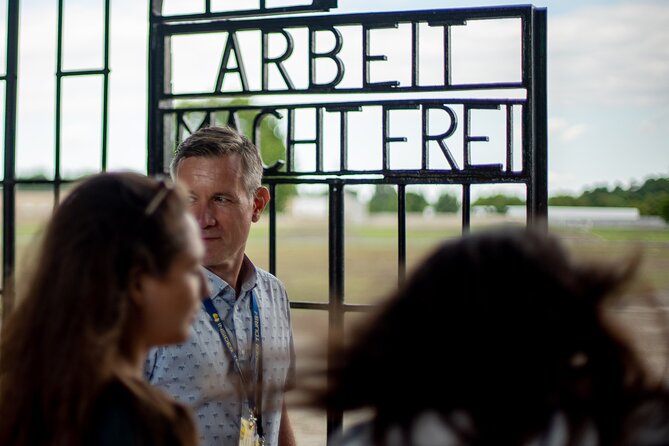
I like the careful historical context, which connects Sachsenhausen to the rise of the Third Reich, Nazi racial policy, and the camp system across occupied Europe. I also like the guides’ practical help. Georgia, Daniel, Tina, Will, Gregor, and others have been praised for answering questions, repeating meeting instructions, and helping with the train ride home.
The main drawback is the length and exposure to the weather. You will be on your feet for much of a five-and-a-half-hour day, with little chance to buy food and limited shelter at the memorial. Bring water, a packed snack, an umbrella, and proper shoes.
Key points to know before booking
- Sachsenhausen is outside Berlin: The tour begins near Friedrichstrasse and continues by train to Oranienburg.
- The memorial visit lasts about two and a half hours: You see barracks, punishment cells, Station Z, the crematorium, infirmaries, and Tower A.
- The guide adds essential context: English-speaking guides explain prisoner life, Nazi policy, the town’s role, and the camp’s place in the Third Reich.
- The day involves substantial walking: One report counted about 10,000 steps, and the site offers little shelter from cold or rain.
- The price is reasonable but not all-inclusive: The $36.16 tour price includes the guide and memorial entry, but you need an ABC transport ticket costing about $9 to $10.
- The tone is serious and respectful: This is a memorial visit focused on suffering, survival, responsibility, and remembrance.
Why Sachsenhausen deserves a full day from Berlin
Sachsenhausen was built in 1936, originally for political opponents of the Nazi regime. Later, the SS imprisoned people whom the Nazi state classified as racially or biologically inferior, along with large numbers of people from occupied European countries.
More than 200,000 people were imprisoned here between 1936 and 1945. Many died from starvation, illness, forced labor, mistreatment, and systematic murder. Others were killed during death marches after the camp was evacuated in April 1945.
That scale can be hard to grasp from a book or a museum display in Berlin. At Sachsenhausen, the broad open layout, remaining structures, guard tower, prison buildings, and stark memorial spaces give the history a physical setting. You are not simply collecting dates. You are trying to understand how a camp operated, how people were controlled, and how an entire system turned human beings into prisoners, laborers, and targets.
I find the guided format especially useful here because the site can feel confusing on your own. Some buildings survive, some are reconstructed, and some spaces are marked mainly by memorials. A good guide helps you understand what belongs to the original camp, what happened in each area, and how the place changed during the Nazi period and after liberation.
More Sachsenhausen memorial visits from Berlin:
- Berlin: Sachsenhausen Concentration Camp Memorial Tour
★ 4.7 · 3,716 reviews - Sachsenhausen Concentration Camp Bus Tour in English from Berlin
★ 5.0 · 1,962 reviews - Berlin: Sachsenhausen Concentration Camp Tour in English
★ 4.8 · 1,889 reviews
Meeting at Friedrichstrasse and riding to Oranienburg
The tour starts at 10:00 am near Friedrichstrasse train station, at Reichstagufer 17. You should arrive at least 15 minutes early. The group meets the guide, gets organized, and takes the train toward Oranienburg.
The transport is part of the experience, not just a way to reach the site. Your guide can explain the route, help with the ABC ticket, and provide background on Berlin and the camp while you travel. Several guides have been praised for helping people find the right train and for making sure everyone understood where to meet later.
You need an ABC transport ticket for the round trip. The information provided gives the cost as approximately 9 to 10 euros per person, so allow for that extra expense. The tour price itself includes memorial admission and an English-language licensed guide trained by the memorial authority, but it does not include hotel pickup, food, drinks, or transport.
The group size is listed as up to 29 people, although one account described a group of 36. That difference suggests the size may vary by departure. A larger group can make it harder to hear, especially outdoors or in windy weather, so stay close to the guide and ask for repetition if needed.
Oranienburg, the town beside the camp
Before reaching the memorial, you spend about 15 minutes in Oranienburg. The town was not an isolated wilderness. The camp was built near an inhabited community, and the guide uses this short walk to discuss the town’s connection to the camp and the work prisoners were forced to perform.
This stop is brief, but it matters. It helps you see Sachsenhausen as part of a functioning society rather than a place cut off from everyday life. The discussion of local complicity adds an uncomfortable but important question: how much did people know, and how did ordinary communities exist alongside a system of imprisonment and abuse?
You will not get a long walking tour of Oranienburg. Think of it as a short orientation before the main memorial visit. The real focus remains Sachsenhausen, but this introduction helps set the moral and historical frame.
Entering the Sachsenhausen Memorial grounds
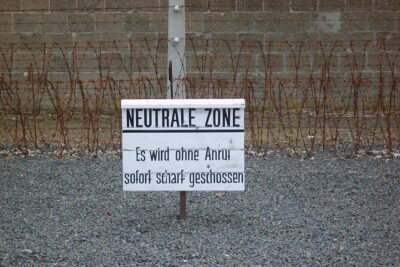
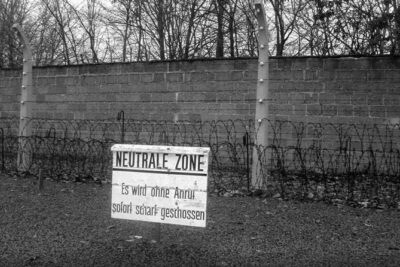
The former camp was the first concentration camp built specifically as a concentration camp rather than adapted from existing buildings. Its layout was designed to serve the SS system, with controlled movement, guard positions, prisoner barracks, work areas, and places for punishment and murder.
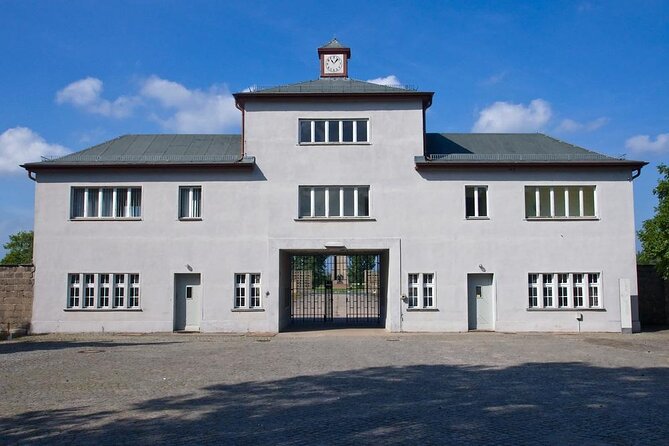
One of the first important points is Tower A, the main guard tower. It was a visible symbol of control, watching the prisoners’ area and the camp entrance. From here, your guide can explain how the camp was arranged and how the SS maintained authority over the people held inside.
The grounds are broad and exposed. Much of the visit takes place outside, and the atmosphere changes sharply with the weather. On a cold day, the open space can feel punishing. On a wet day, there may not be enough shelter for everyone. Wear warm layers, use waterproof clothing when needed, and bring an umbrella.
You should also expect an emotional visit. The subject is not softened, and the tour discusses starvation, disease, forced labor, torture, executions, and systematic extermination. The guides praised in this experience are described as respectful, patient, and willing to answer difficult questions without rushing people through the subject.
A different sort of day out in Berlin:
- Berlin: Reichstag, Dome and Government District Guided Tour
★ 4.7 · 18,288 reviews - Berlin: 1-Hour City Tour by Boat with Guaranteed Seating
★ 4.3 · 16,993 reviews - Berlin: Boat Tour Along the River Spree
★ 4.4 · 11,252 reviews - Discover Berlin Half-Day Walking Tour
★ 5.0 · 9,624 reviews
Barracks, prison cells, and punishment areas
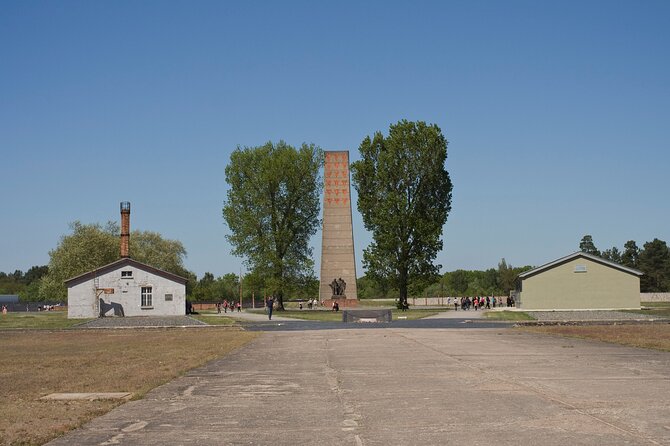
The remaining barracks and camp structures help explain daily life inside Sachsenhausen. You learn how prisoners were housed, controlled, and worked. The tour also visits the prison cells and punishment cells, where the system used isolation and abuse to break resistance.
These spaces are among the most difficult parts of the visit because they bring the camp’s control system down to a human scale. Instead of only hearing about large numbers, you see where individuals were confined and punished.
The guide also shares stories of prisoner bravery and resistance. That balance is important. Sachsenhausen was built around cruelty, but the prisoners were not only passive victims. Their choices, acts of courage, and efforts to survive are part of the history.
Good guides make room for questions here. Georgia has been praised for providing additional explanation and repeating important instructions. Gregor was described as offering a balanced account that combined historical facts, survivor testimony, and moral reflection. The quality of the guide matters because this is not a place where a fast list of dates is enough.
Camp kitchen, infirmaries, and the pathology center
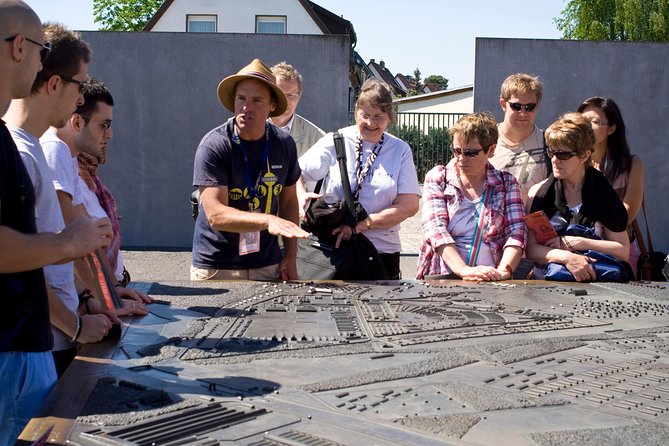
The former camp kitchen gives you another view of how the prisoner population was managed. Food, hunger, illness, and forced labor were not separate issues. They were part of the camp’s system of control.
The tour also includes the infirmaries and pathology center. These spaces show how the camp dealt with sickness, injury, medical observation, and the bodies of those who died. Your guide explains the conditions prisoners faced and how disease and neglect contributed to the death toll.
This part of the visit can be particularly hard because it links ordinary institutional spaces with the results of deliberate mistreatment. A room used for medical work could also reflect a system that denied prisoners basic care and treated their bodies as objects.
You should not expect a light or casual atmosphere at any point. The guides’ role is to provide clear information while allowing the seriousness of the site to remain intact. Tina has been praised for telling stories about real people with compassion and care, while Hannah was noted for explaining difficult material clearly and respectfully.
Station Z, the gas chamber, and burial pits
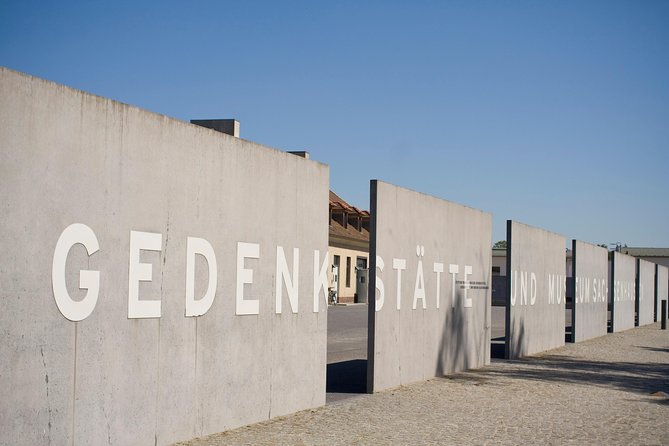
The tour proceeds to Station Z, the area where mass executions took place. It also includes the gas chamber and crematorium, as well as burial pits. These are among the most disturbing places on the route, and they require a quiet, respectful approach.
The name Station Z reflected the camp’s cruel logic. If Tower A marked the beginning of the prisoner’s controlled movement into the camp, Station Z represented the end. The guide explains how this area functioned and how it formed part of the SS system of mass murder.
The visit does not turn these places into sensational attractions. That is one reason the guide is so important. The best approach is factual, restrained, and centered on the people who were imprisoned and killed there.
Expect the guide to discuss systematic extermination, but also the broader history of Nazi persecution. Political opponents were imprisoned first, followed by people targeted under Nazi racial and biological theories, and later by people from across occupied Europe. The site makes clear that mass murder grew from policies, institutions, paperwork, propaganda, policing, and public compliance.
Liberation, death marches, and the memorial today
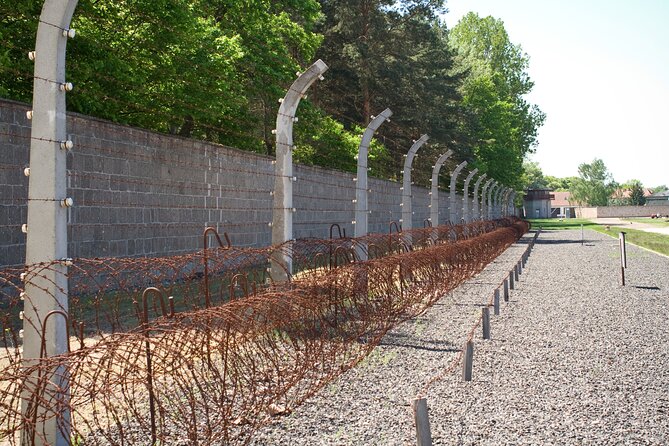
In April 1945, the camp was evacuated. Thousands of prisoners were forced onto death marches, and many died along the way. Around 3,000 sick prisoners, along with doctors and nurses who remained behind, were liberated by Soviet and Polish soldiers.
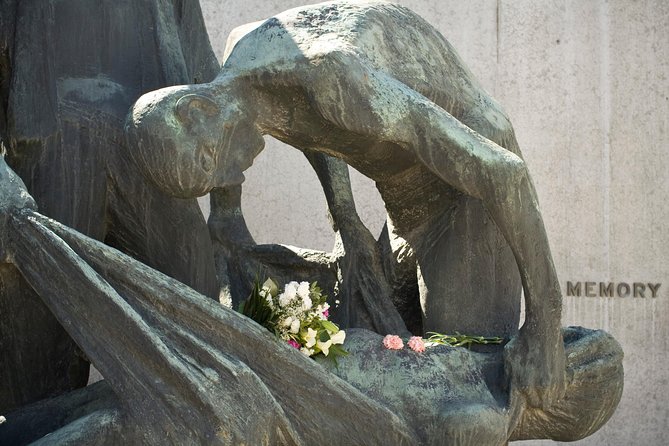
This final phase helps you understand that liberation did not instantly erase the camp’s damage. Many people were dead, sick, displaced, or carrying severe physical and emotional wounds. The memorial preserves the site so that the story does not end with a simple date marking liberation.
Your guide may also connect Sachsenhausen to modern Berlin and Germany’s continuing work of remembrance. Several guides offer additional suggestions for Berlin at the end of the tour, which can help you place the memorial within a wider visit to the city.
The return train is a useful quiet period. After several hours at the camp, you may want to sit, think, and let the information settle. The trip back also gives you a practical chance to ask final questions or confirm how to reach your hotel or next destination.
How much walking and preparation should you expect?
Plan on a physically active day. The tour lasts about five and a half hours, and one detailed account estimated roughly 10,000 steps. The walking is not described as fast, but the site is large and much of the route is outdoors.
This tour is not recommended for people with limited mobility or walking impairments. A moderate level of physical fitness is advised. Comfortable walking shoes are essential, especially if the ground is wet or uneven.
Pack:
- Water
- A sandwich or other food
- An umbrella
- Warm layers in cold weather
- Comfortable walking shoes
There is no dependable chance to buy food during the memorial visit, so do not assume you can eat at the site. Several accounts specifically warn that the long day offers no real food stop. Planning this small detail can make the difference between staying focused and simply feeling worn out.
The tour requires good weather and may be rescheduled or refunded if poor weather causes cancellation. Even when the tour runs, conditions can be cold, wet, or windy. Check the forecast and dress for the memorial grounds, not just for central Berlin.
Is $36.16 a fair price?
At $36.16 per person, the tour is reasonably priced for a five-and-a-half-hour guided day trip, especially because the memorial entry and licensed English-speaking guide are included. You still need to add about 9 to 10 euros for the ABC train ticket, plus your own food and drinks.
The real value is the interpretation. You can travel to Sachsenhausen independently, but the site has many layers, and the remaining buildings do not explain themselves. A guide who understands the memorial’s history can connect the physical spaces to Nazi policy, prisoner life, forced labor, and the camp’s place in the wider system.
The provider also donates 3 euros per guest to the Sachsenhausen Memorial. That does not replace your own judgment about the tour’s value, but it is a useful detail for people who want part of their booking cost to support the memorial.
Who will get the most from this tour?
I would choose this tour if you want a serious introduction to Nazi Germany and prefer having the history explained in clear English. It suits adults and older teenagers who can handle difficult material and several hours of walking.
You will likely get the most from it if you prepare a little first. You do not need to become an expert, but knowing that Sachsenhausen began as a camp for political opponents and later expanded under Nazi racial policy will help you follow the guide’s explanations.
I would not choose it for a relaxed half-day outing, a family activity built around entertainment, or anyone who cannot manage extended outdoor walking. The tour is emotionally demanding, and the weather can make it harder.
Guide quality appears to be a major strength. Georgia, Daniel, Tina, Will, Gregor, Hannah, Ariel, Mikhail, Scott, Pete, Emma, and others have been praised for clear explanations, personal attention, patience, and help with transport. Individual guides vary, of course, but the repeated emphasis on guide preparation and historical insight is encouraging.
Should you book the Sachsenhausen tour?
Book it if you want to understand Sachsenhausen rather than simply locate it on a map. The train ride, Oranienburg orientation, memorial grounds, prison areas, execution site, and guide’s historical explanation create a much fuller experience than a quick independent visit.
Go prepared for a long, serious day. Bring food, water, weatherproof clothing, and good shoes. Allow time afterward to think, since the return train may feel less like ordinary sightseeing transport and more like a quiet transition back to modern Berlin.
For a modest tour price plus the train ticket, you receive structure, context, and help navigating a complicated memorial site. I consider that a fair exchange, especially for first-time visitors who want an informed and respectful introduction to Sachsenhausen.
FAQ
Where does the Sachsenhausen tour begin?
The tour begins at 10:00 am near Friedrichstrasse train station, at Reichstagufer 17 in Berlin. You should arrive 15 minutes before departure.
How do you reach Sachsenhausen from Berlin?
You take a train from the Friedrichstrasse meeting area to Oranienburg with the guide. From there, the group continues to the Sachsenhausen Memorial and Museum.
Is the train ticket included in the tour price?
No. You need an ABC transport ticket for the round trip. The stated cost is approximately 9 to 10 euros per person.
How long does the tour last?
The full experience lasts about five hours and 30 minutes. The memorial visit itself lasts about two hours and 30 minutes, with additional time for train travel and the short Oranienburg stop.
What does the tour include?
The tour includes a licensed guide trained by the memorial authority, an English-language guide, and entry to the Sachsenhausen Memorial and Museum.
What places do you see at Sachsenhausen?
You see the former barracks, prison and punishment cells, camp kitchen, Station Z, the gas chamber, crematorium, burial pits, infirmaries, pathology center, and Tower A, the main guard tower.
Is the tour suitable for people with limited mobility?
No. The experience requires substantial walking and is not recommended for people with limited mobility or walking impairments. A moderate level of physical fitness is advised.
Can you cancel for a full refund?
Yes, if you cancel at least 24 hours before the experience begins. Cancellations or changes made less than 24 hours before the start time are not refunded. If poor weather causes the tour to be canceled, you are offered another date or a full refund.
Newest Berlin reviews
- Where It All Began: Berlin’s Queer & Trans History Tour★ 4.9 · 6 reviews
- Understanding Kreuzberg: The roots of local (sub)culture★ 4.9 · 11 reviews
- Berlin: guided canoe | kayaktour★ 4.1 · 7 reviews
- Private Potsdam City Tour in an authentic vintage van★ 5.0 · 14 reviews
- Warnemünde Shore Excursion: Private Sachsenhausen and Berlin Tour★ 5.0 · 12 reviews
- Ultimate E-Bike Tour of Berlin with Beer Garden Stop★ 5.0 · 4 reviews
- In the Forbidden City – Potsdam Walking Tour★ 5.0 · 17 reviews
- Private Walking Tour of Potsdam and Sanssouci★ 5.0 · 24 reviews
Sachsenhausen Concentration Camp Tours, compared.
Sachsenhausen Concentration Camp Memorial Tour
Read our review →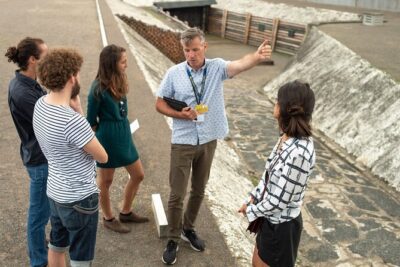
Sachsenhausen Concentration Camp Bus Tour in English from Berlin
Read our review →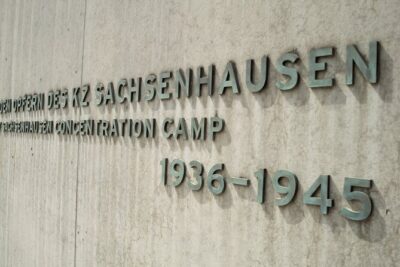
Sachsenhausen Concentration Camp Tour in English
Read our review →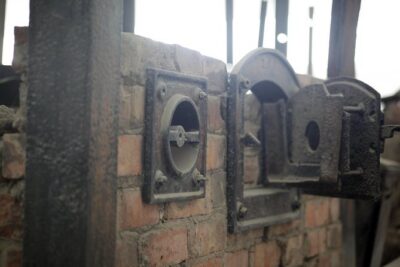
Sachsenhausen Concentration Camp Memorial Tour (Max. 15 Guests)
Read our review →
Sachsenhausen Concentration Camp and Potsdam Tour
Read our review →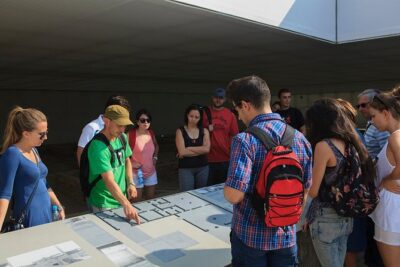
Visita en español al campo de concentración Sachsenhausen
Read our review →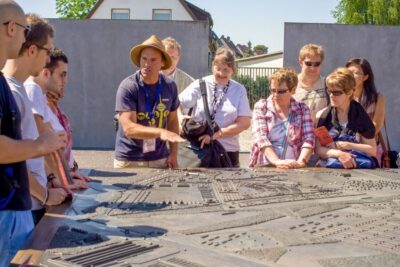
Sachsenhausen Concentration Camp Bus Tour in English
Read our review →Browse the lists this tour appears in