
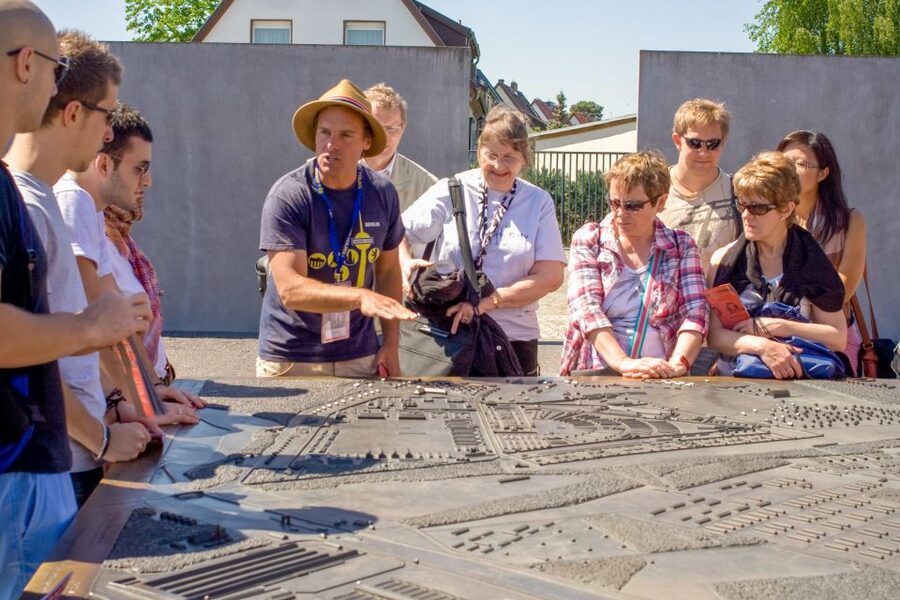
Reviewed · SACHSENHAUSEN CONCENTRATION CAMP TOURS
Berlin: Sachsenhausen Concentration Camp Bus Tour in English
Sachsenhausen is not a sightseeing stop in the usual sense. It is a former concentration camp and memorial where the barracks, punishment cells, crematoria, execution trench, and camp entrance force you to face the machinery of Nazi persecution at close range. The bus tour gives you clear historical guidance before you arrive and keeps the day manageable.
I especially like two things here: the direct bus service, which avoids the train ride and long walk from Oranienburg, and the guide commentary during both transfers. Guides such as Ariel, Jamie, Paul, Lewis, and Nickolai have been praised for making a difficult subject understandable, respectful, and open to questions.
The main drawback is time. The tour gives you about two hours inside the memorial, which is enough for a strong introduction but not enough to see every part at a slow pace. Expect a serious, outdoor visit in all weather, not a quick museum stop.
Key points to know before booking
- The bus saves time and energy: You travel about 50 minutes each way from central Berlin instead of arranging the regional train and finding your way from Oranienburg.
- The memorial visit covers the hardest sites: Expect the barracks, infirmaries, crematoria, gas chamber area, execution trench, isolation cells, punishment cells, and Tower A.
- The guides are the heart of the experience: Past guide names include Ariel, Jamie, Paul, Lewis, Nickolai, Maria, Rebecca, and Gregory, with praise focused on calm delivery and strong historical context.
- Two hours inside is useful but limited: You will see the main areas with a guide, yet independent visitors wanting more time may prefer a longer visit.
- The $49 price buys convenience as well as entry: Transport, a licensed guide, memorial admission, a map, driver, and a €3 donation are included.
- Come prepared for a solemn outdoor day: Wear comfortable shoes, dress for the weather, and bring a drink and light snack.
Why Sachsenhausen matters in Berlin
Sachsenhausen was designed and built from the ground up as a model concentration camp. Its layout was planned for control, surveillance, and later expansion. That design helps you understand that this was not simply a collection of prison buildings. It was part of an organized camp system managed with administrative precision.
The memorial also raises a difficult question: what did people living nearby know? The tour addresses the relationship between the camp and Oranienburg, including the places where inmates were forced to work. This gives the visit a wider frame. You are not only looking at what happened behind barbed wire. You are also considering how a camp fitted into the daily life and economy of the surrounding area.
The site records the deaths of about 35,000 people from murder, disease, starvation, exhaustion, and other forms of abuse. That figure is hard to grasp on its own. Walking through the actual camp structure, seeing the narrow spaces and punishment areas, gives the number a more human scale.
This is a place for reflection, not entertainment. You should allow yourself some quiet time after the tour rather than planning a packed activity immediately afterward.
More Sachsenhausen memorial visits from Berlin:
- Berlin: Sachsenhausen Concentration Camp Tour in English
★ 5.0 · 5,711 reviews - Berlin: Sachsenhausen Concentration Camp Memorial Tour
★ 4.7 · 3,716 reviews - Sachsenhausen Concentration Camp Bus Tour in English from Berlin
★ 5.0 · 1,962 reviews
Meeting at Friedrichstrasse and riding to Oranienburg
The regular meeting point is outside Friedrichstrasse train station, on the square between the station and the Tränenpalast, also called the Palace of Tears. Look for the guide with a yellow umbrella, blue lanyard, and yellow name tag. The stated address is Reichstagufer 17, 10117 Berlin.
That identification system is useful in a busy central area. Still, arrive with enough time to locate the square rather than waiting inside the station. Standard hotel pickup is not included. Private options offer pickup five minutes before departure, according to the booking conditions.
The bus ride takes roughly 50 minutes. You travel in a private air-conditioned vehicle with a driver, and the guide uses the journey to explain Berlin, the Nazi camp system, and the history you are about to encounter. This is one of the strongest parts of the format. The drive is not dead time, and the background helps you arrive with a basic framework.
The bus also matters for practical reasons. Sachsenhausen is outside Berlin, and reaching the memorial independently means handling the regional train, the route from Oranienburg, and the timing for your return. The bus removes those decisions. One guide even received praise for sharing useful suggestions about what else to see and where to eat afterward, though that depends on the person leading your departure.
Entering through Tower A
The guided walk begins at the memorial and lasts about two hours. One of the first important points is Tower A, the former main entrance. The words Arbeit Macht Frei remain above the gate, a phrase used by the Nazis to disguise forced labor as a path to freedom.
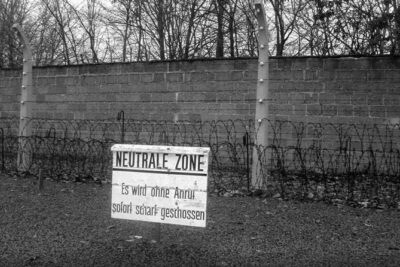
Your guide explains how the entrance controlled movement into the camp and how the site was organized around surveillance. The shape of the camp is important. It was built to make prisoners visible and vulnerable, while giving guards control over the central area and surrounding buildings.
You will receive a map of the former camp. Keep it with you. The site is large enough that the map helps you connect the remaining structures to the original plan, including areas that no longer survive in their former shape.
The visit may include stories of prisoners, camp routines, punishment, forced labor, and the administrative system behind the violence. Guides are expected to explain rather than dramatize. That distinction matters here. The strongest comments about guides focus on respectful storytelling, clear English, thoughtful answers, and sensitivity to the subject.
Barracks, daily abuse, and forced labor
The barracks show the prison camp as a place of daily control, not only a site of mass murder. You learn about overcrowding, harsh routines, poor sanitation, hunger, forced labor, and brutal discipline. The physical remains make these conditions easier to picture than a lecture in a city museum would.
You may also hear about the work carried out by prisoners in and around Oranienburg. That detail connects the camp to the town beyond the fence. Prisoners were not separated from the wider economy. They were used as forced labor, while the camp’s presence affected the surrounding community.
The tour also addresses the broader concentration camp network. Sachsenhausen played an important role in the Nazi camp system, and its administration helped shape methods used elsewhere. This is useful context if you plan to visit another camp memorial, such as Auschwitz. One guide helped prepare a visitor for that later visit by explaining the structure and history clearly in advance.
The barracks can be emotionally difficult. You may find that the guide’s explanation gives the space meaning, but you should not expect a comfortable pace or a light mood. If you need a pause, the outdoor setting gives you room to step back from the group briefly.
A different sort of day out in Berlin:
- Berlin: Reichstag, Dome and Government District Guided Tour
★ 4.7 · 18,288 reviews - Berlin: 1-Hour City Tour by Boat with Guaranteed Seating
★ 4.3 · 16,993 reviews - Berlin: Boat Tour Along the River Spree
★ 4.4 · 11,252 reviews - Discover Berlin Half-Day Walking Tour
★ 5.0 · 9,624 reviews
Infirmaries and medical experiments
The infirmary barracks are among the most disturbing areas included in the visit. They were intended to treat prisoners, but they also became places where medical experiments took place during the war.
Your guide explains how medicine was twisted into another tool of control and abuse. The value of visiting these buildings lies in seeing that the camp’s violence operated through many systems: labor, punishment, starvation, murder, disease, and medical experimentation.
The buildings and remains vary in condition, so the guide’s explanation matters. Some parts are best understood through the map and the history of what happened there rather than through a large collection of objects. Do not expect a conventional museum display at every stop.
Crematoria, gas chamber area, and execution trench
The crematoria and gas chamber area form the most sobering part of the route. The execution trench is another stark reminder of the organized killing carried out at the camp. The tour presents these locations within the wider history of the camp, rather than treating them as isolated points on a checklist.
The memorial’s power comes partly from its restraint. You are walking through a place where the evidence is often architectural: foundations, walls, rooms, paths, and surviving structures. The guide fills in what the bare remains cannot show.
This section can be especially hard for younger visitors or anyone who finds descriptions of murder and experimentation overwhelming. The tour is educational and respectful, but it does not soften the subject. I would choose it only if you feel ready to spend several hours with very serious material.
Commandant’s house and the people behind the system
The commandant’s house offers a different view of the camp. It points attention toward the officials who planned, managed, and maintained the system. The camp did not function through one person’s actions alone. It required orders, records, guards, routines, buildings, transport, and people willing to carry out the work.
The tour places the house within the story of Heinrich Himmler and the development of the concentration camp system. That administrative angle is important. It shows how bureaucratic planning could support extreme violence.
You also learn how Germany deals with this past today. The memorial is part of a national effort to preserve evidence, teach the history, and remember those who suffered. For many people, that present-day purpose is as important as the physical remains themselves.
What the $49 price really covers
At $49 per person, this is not the cheapest possible way to reach Sachsenhausen. The value comes from combining transport, guidance, and entry in one four-hour outing.
Included are:
- Round-trip transport by private air-conditioned vehicle
- A professional licensed guide
- Driver
- Sachsenhausen Memorial entry
- A €3 donation per person to the memorial
- A map of the former camp
For you, the main saving is effort rather than only money. The bus takes you close to the memorial, keeps the group on schedule, and avoids the uncertainty of arranging the trip yourself. It also gives you historical commentary on the road, which independent travel cannot provide unless you arrange a separate guide.
The price is strongest for visitors with limited time in Berlin, or for anyone who wants a structured first visit. It is less appealing if you prefer to spend a full day reading every panel, taking long pauses, and exploring at your own speed.
Private and small-group choices are available. Those options may suit you if you want more room for questions or a quieter pace, but the exact group size and price depend on the option you select.
Timing, weather, and what to bring
The full activity lasts about four hours: around 50 minutes by bus to the memorial, two hours with the guide, and around 50 minutes back. The usual return is to the original meeting point at Friedrichstrasse, with the stated drop-off location at Berlin, Reichstagufer 17.
You will spend much of the memorial visit outdoors. Comfortable walking shoes are essential, and weather-appropriate clothing is more than a polite suggestion. Bring a light snack and drink because the tour does not list food or drinks as included.
A camera is allowed as an item to bring, but use good judgment. This is a memorial site, not a casual photo stop. Quiet attention is more fitting than posed pictures.
The tour runs in English and Spanish. The guide may be one of several people, including names praised for this route such as Campbell, Ariel, JR, Lewis, Mikey, Paul, Gregory, Joseph, Maria, Rebecca, Scott, Thomas, Nickolai, Jamie, Shawn, Martin, or James. You cannot request a particular guide based on the information provided, so treat those names as examples of the available team, not a guarantee.
The repeated strengths of the guiding style are clear English, strong preparation, respectful delivery, and willingness to answer questions. Drivers Christian and Robert have also been praised for making the transfer smooth and punctual.
Who should book this Sachsenhausen tour?
I would choose this tour if you have one half-day available and want the main history explained in a clear order. It suits first-time visitors to Sachsenhausen, people who do not want to manage regional transport, and anyone who prefers learning through a live guide rather than reading every display alone.
It is also a practical choice if you plan to visit another memorial later. The guide can help you understand the camp system, the difference between forced labor and mass killing, and the role of administration before you encounter another site.
I would look elsewhere if you want a slow, private study visit. Two hours is a firm limitation, and the group must keep moving to cover the key areas. You may leave with questions and a desire to return independently, which is not a flaw, but it is worth knowing before you book.
Should you book it?
Book this tour if convenient transport and a thoughtful guide matter more to you than complete freedom inside the memorial. The $49 fee is reasonable for a four-hour trip that includes transport, entry, a map, a memorial donation, and live commentary from central Berlin.
Skip it if you want to spend most of the day at Sachsenhausen on your own. For everyone else, this is a well-structured and serious introduction to one of Germany’s most important memorial sites. Bring comfortable shoes, expect difficult material, and give yourself quiet time afterward.
FAQ
How long does the Sachsenhausen bus tour last?
The activity lasts about four hours. The bus ride takes around 50 minutes each way, and the guided visit at Sachsenhausen lasts about two hours.
Where does the tour meet in Berlin?
Meet outside Friedrichstrasse train station, on the square between the station and the Tränenpalast, also called the Palace of Tears. The address provided is Reichstagufer 17, 10117 Berlin.
How will I identify the guide?
Look for a guide wearing a blue lanyard and yellow name tag while holding a yellow umbrella.
Is the tour available in English?
Yes. Live tours are offered in English and Spanish.
Is hotel pickup included?
Hotel pickup and drop-off are not included in the standard tour. Pickup is available for private options, with the guide collecting you five minutes before the tour begins.
What is included in the price?
The price includes a licensed guide, private air-conditioned vehicle transport, driver, Sachsenhausen Memorial entry, a €3 donation per person to the memorial, and a map of the former camp.
What should I bring?
Bring comfortable walking shoes, weather-appropriate clothing, a light snack, and a drink. A camera is also listed as an allowed item to bring.
Can I cancel or pay later?
You can cancel up to 24 hours before the activity for a full refund. Reserve now and pay later is available for this experience.
Newest Berlin reviews
- Where It All Began: Berlin’s Queer & Trans History Tour★ 4.9 · 6 reviews
- Berlin: guided canoe | kayaktour★ 4.1 · 7 reviews
- Understanding Kreuzberg: The roots of local (sub)culture★ 4.9 · 11 reviews
- Private Potsdam City Tour in an authentic vintage van★ 5.0 · 14 reviews
- Warnemünde Shore Excursion: Private Sachsenhausen and Berlin Tour★ 5.0 · 12 reviews
- Ultimate E-Bike Tour of Berlin with Beer Garden Stop★ 5.0 · 4 reviews
- In the Forbidden City – Potsdam Walking Tour★ 5.0 · 17 reviews
- Private Walking Tour of Potsdam and Sanssouci★ 5.0 · 24 reviews
Sachsenhausen Concentration Camp Tours, compared.
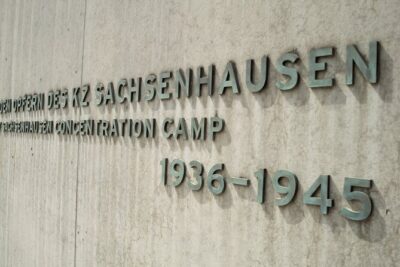
Sachsenhausen Concentration Camp Tour in English
Read our review →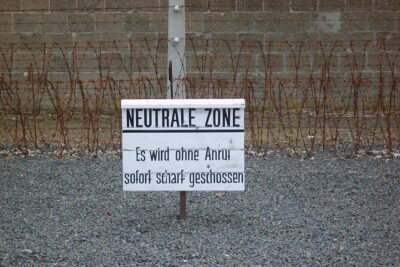
Sachsenhausen Concentration Camp Memorial Tour
Read our review →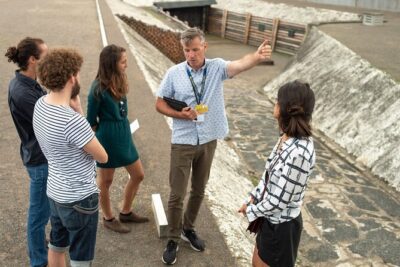
Sachsenhausen Concentration Camp Bus Tour in English from Berlin
Read our review →Sachsenhausen Concentration Camp Tour in English
Read our review →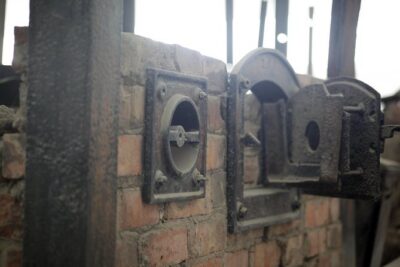
Sachsenhausen Concentration Camp Memorial Tour (Max. 15 Guests)
Read our review →
Sachsenhausen Concentration Camp and Potsdam Tour
Read our review →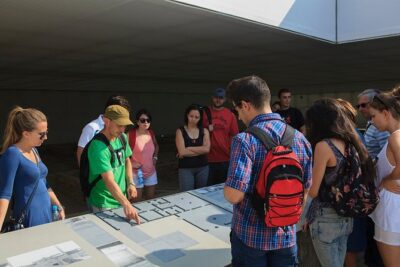
Visita en español al campo de concentración Sachsenhausen
Read our review →Browse the lists this tour appears in