Reviewed · PRIVATE
Architectural Berlin: Private Tour with a Local Expert
Berlin’s architecture makes the city feel like a living scrapbook. A grand domed church, a parliament building topped with glass, and a tent-like concert hall all tell different parts of the story. This private walk links those pieces in about two hours.
I like the one-to-one format for a subject that rewards questions. I also like the flexible route, which can shift toward modern design, historic buildings, or Berlin’s skyline. Guide Georg earned especially warm praise for being personable and well prepared, while Rüdiger arranged a pleasant, varied walk around each guest’s interests.
The main caution is the guide-to-guide variation. One past guest found the assigned guide pleasant but poorly prepared for an architecture tour and unsure about site openings. At $639.96 for up to two people, that matters.
Key points at a glance
- Museum Island beginning: Start near Bodestraße 1, beside one of Berlin’s most concentrated groups of historic buildings and museums.
- Six architectural themes: Expect a gallery, domed church, eco-friendly office building, parliament, modern contextual design, and the Berlin Philharmonie.
- Private pace: Only your group participates, and the route adjusts to your interests and walking speed.
- Historic and modern Berlin: The walk connects older neoclassical, Renaissance, Baroque, and parliamentary architecture with newer urban design.
- No admission included: Museum, monument, and public transport tickets are extra, so confirm the plan before setting out.
- A premium short tour: The price makes the most sense for two people who want personal attention rather than a low-cost group walk.
Why this walk works for architecture fans
This is not a museum tour with a string of indoor visits. It is a guided look at Berlin’s built environment, using streets and major landmarks to explain how the city changed over time.
You begin near Museum Island and finish at Herbert-von-Karajan-Straße 1, near the Berlin Philharmonie. That route gives the experience a useful shape: historic central Berlin first, then the modern cultural quarter. In between, you see how war, politics, design, and city planning have altered Berlin’s appearance.
The private format is the strongest feature. With only your group participating, you can ask why one building uses glass, why another copies older styles, or how Berlin’s skyline changed after reunification. You are not tied to a large group’s pace or to a fixed lecture.
Two hours is enough for a focused introduction, but not enough for long interior visits at every stop. Think of this as a well-guided architectural walk, not a full survey of Berlin’s buildings.
Other Berlin experiences to weigh up
- Berlin: Private Reichstag and Glass Dome Tour
★ 4.8 · 2,226 reviews - Berlin Private Complete History All Day Walking Tour
★ 5.0 · 474 reviews - Private Walking Tour Berlin Third Reich Hitler and World War II
★ 5.0 · 360 reviews
Starting at Museum Island
The meeting point is Bodestraße 1, 10178 Berlin, near the heart of Museum Island. Your first stop is a gallery with neoclassical design and a collection of 19th-century art.
The building matters as much as the art inside. Neoclassical architecture uses order, balance, and references to ancient Greek and Roman forms. Here, your guide can help you look beyond the grand exterior and connect the building’s style with Berlin’s wish to present itself as a major European cultural center.
If the route includes only an exterior explanation, you can still get a useful lesson in façade design and urban placement. If you hope to enter, remember that admission is not part of the tour. Museum access can also affect the route, so ask your guide at the start what is open and what you will see from outside.
This is a good opening for anyone who wants context before reaching the more famous political and modern buildings later in the walk.
The domed church near Lustgarten
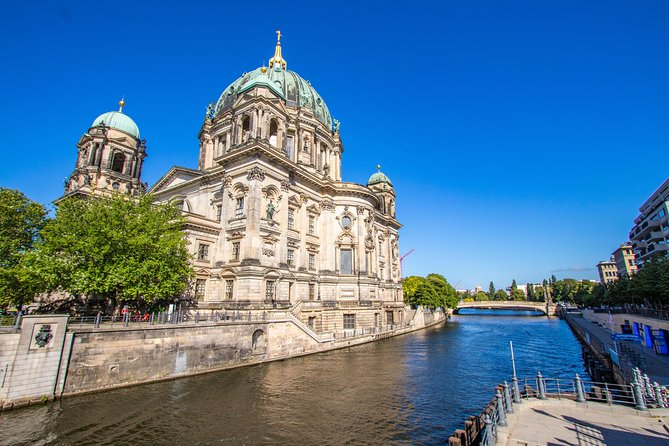
The next major sight is a large historic church near Lustgarten. Its Renaissance and Baroque influences, along with its great dome, make it one of the easiest buildings in Berlin to recognize.
The church gives the tour a strong contrast with the gallery. Instead of a museum designed around ordered classical lines, you get a religious building that uses scale, ornament, and a dramatic central dome to create presence. Your guide can point out how the church relates to the open space around it and to the other institutions on Museum Island.
The information supplied for the tour does not promise entry inside. That is important because the interior is likely to require its own ticket and time. You should treat this stop primarily as an architectural and historical explanation unless your guide confirms access.
I like this part because it shows how Berlin’s old center was built around more than government. Museums, public parks, and religious buildings share a compact area, making the city’s past easy to read at street level.
Modern design and eco-friendly construction
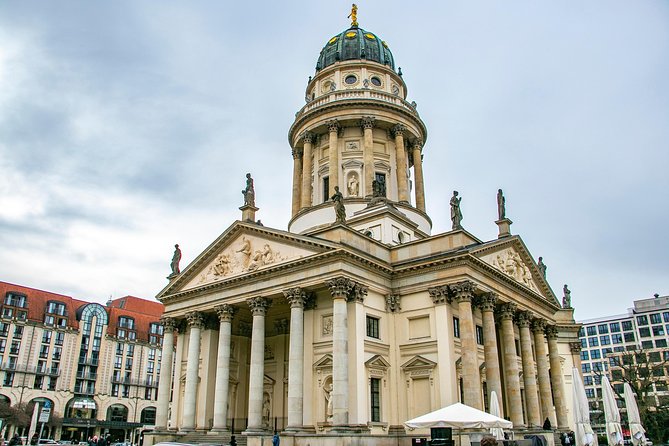
The itinerary then shifts toward a contemporary office building known for innovative, eco-friendly architecture. The exact building name is not provided, so you should ask your guide to identify it clearly when you arrive.
This stop adds needed balance. Berlin architecture is not only about ornate churches and old government buildings. Modern offices reveal how the city now handles energy use, materials, public space, and the demands of a growing capital.
For you, the value is in the comparison. A historic building may express power through stone, columns, and a dome. A newer office building may make its point through glass, structure, efficient systems, or a lighter visual profile. A good local guide turns those differences into something you can notice rather than leaving you with a list of dates and styles.
This is also one place where guide preparation matters. Because the building is described in broad terms rather than by name, the quality of the explanation will depend heavily on the person leading your walk. If contemporary architecture is your main reason for booking, state that clearly before the tour begins.
A different sort of day out in Berlin:
- Berlin: Reichstag, Dome and Government District Guided Tour
★ 4.7 · 18,288 reviews - Berlin: 1-Hour City Tour by Boat with Guaranteed Seating
★ 4.3 · 16,993 reviews - Berlin: Boat Tour Along the River Spree
★ 4.4 · 11,252 reviews - Discover Berlin Half-Day Walking Tour
★ 5.0 · 9,624 reviews
The Reichstag and its glass dome
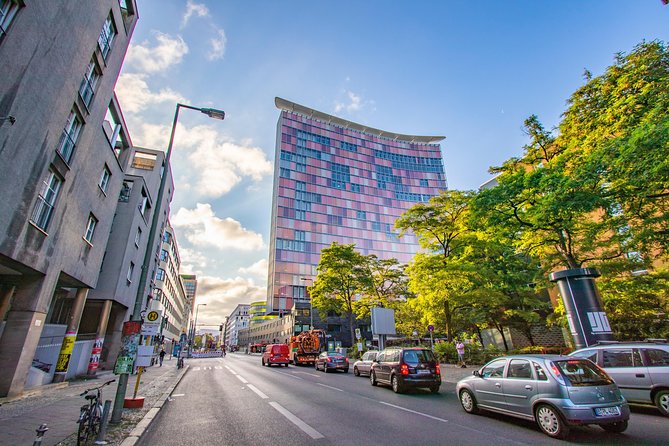
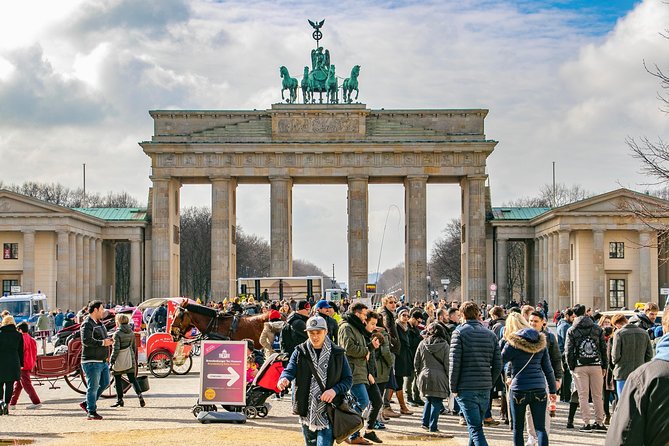
The historic German parliament building is one of the walk’s central sights. Its defining feature is the glass dome designed by Norman Foster, which places a modern structure above a historic political building.
The pairing is powerful. The older shell represents Germany’s parliamentary past, while the glass dome signals a more open style of government. The dome’s transparency is not merely a design trick. It carries a clear political message about public access and visibility.
The tour does not include entry tickets for monuments, so do not assume you will go inside the Reichstag. You may receive an exterior explanation, and your guide can tell you how the building fits into Berlin’s political center. If entering the dome is important to you, arrange that separately and allow extra time beyond this two-hour walk.
This stop is especially useful if you like architecture with a civic purpose. The building is not just attractive. Its old and new parts were brought together to express an idea about modern Germany.
A building that respects its surroundings
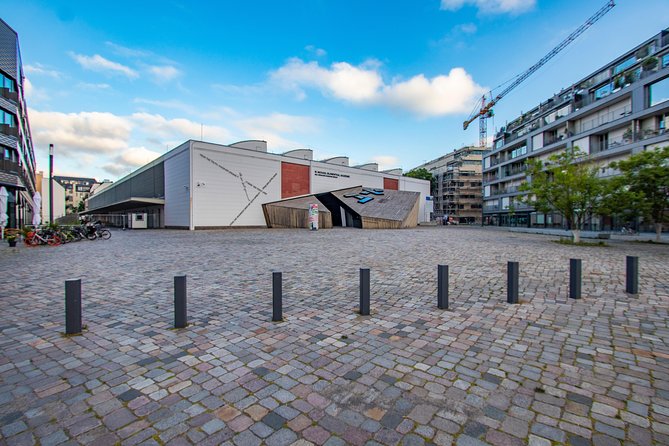
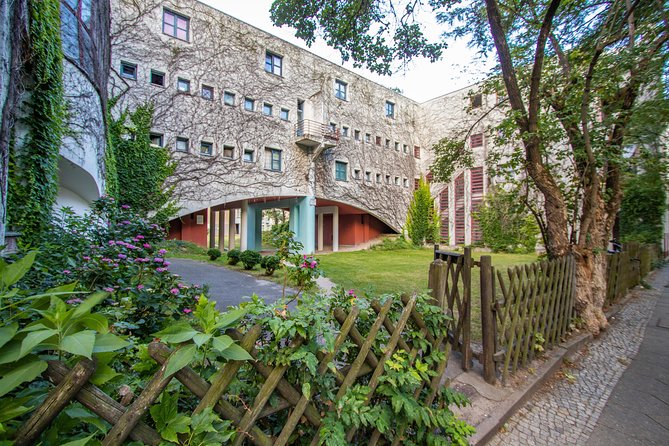
Another stop focuses on a building that blends modern architecture with the older setting around it. The description does not identify the structure by name, but the architectural point is clear: new design does not always need to reject its surroundings.
Berlin has many places where recent construction had to respond to historic streets, surviving monuments, or politically sensitive spaces. A modern building can use height, materials, alignment, and scale to fit into an established district without copying the past.
This is the sort of stop that benefits from a private guide. In a large group, you might hear only a quick label and move on. With your own guide, you can ask why the building works, or does not work, beside older neighbors. You can also tell the guide if you prefer bold new design over careful visual restraint.
Because the itinerary can change with weather and walking pace, this stop may be adjusted. The tour promises a tailored route, not a rigid checklist.
Ending at the Berlin Philharmonie
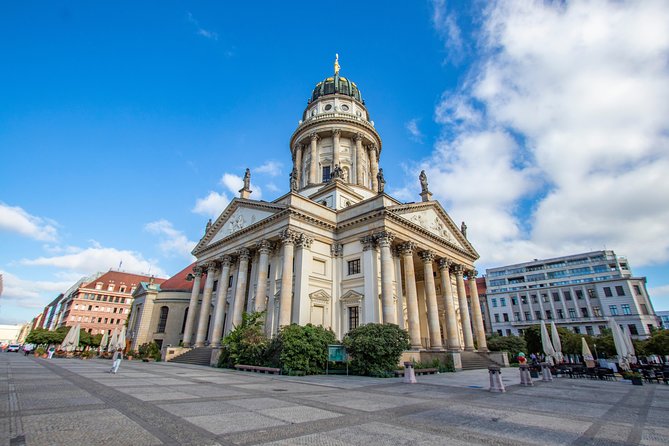
The walk ends at the Berlin Philharmonie on Herbert-von-Karajan-Straße 1. The building is famous for its tent-like form and strong acoustics, and it is home to the Berlin Philharmonic orchestra.
The Philharmonie is a fine final stop because it is both sculptural and practical. Its unusual shape is not simply decoration. The design supports the concert experience and gives the building a strong identity within Berlin’s modern cultural district.
You may find this the most visually surprising stop of the tour. The earlier buildings rely on domes, formal façades, or political symbolism. The Philharmonie feels freer and more experimental. Its form reflects the city’s postwar interest in new ways to organize public culture.
Again, the tour does not include a concert or admission ticket. You should not book this walk expecting an interior performance visit. Its purpose is to explain the building and its place in Berlin’s musical and architectural life.
Ending here also leaves you in a useful area for further exploration. Your guide provides recommendations for discovering more of Berlin after the walk, which can help you turn a short tour into a larger day of architecture.
The TV Tower and Berlin’s changing skyline
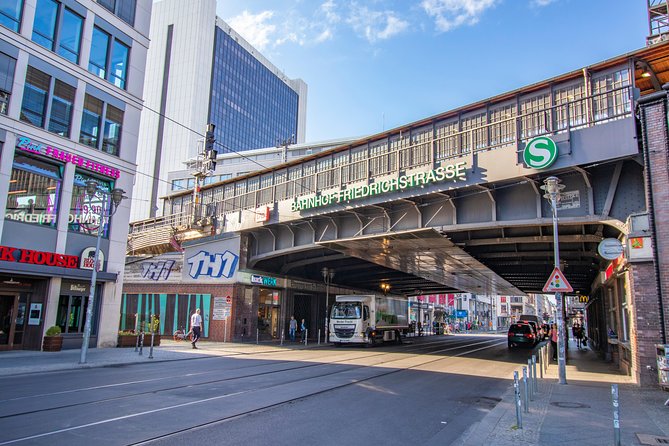
The tour overview also highlights the Berliner Fernsehturm, or TV Tower, as an important part of Berlin’s skyline story. It is not listed as a separate itinerary stop, so ask your guide how it fits into your particular route.
The tower is a useful reference point even when seen from a distance. It helps you understand the scale and direction of Berlin’s central area, and it raises the larger question behind this tour: how has the city’s horizon changed?
From Museum Island to the parliamentary district and the Philharmonie, the walk shows a city made from different periods rather than one neat architectural style. Historic buildings survive beside modern offices, bold cultural structures, and political symbols. The TV Tower adds another layer, linking the skyline to Berlin’s former eastern sector and its changing public image.
If skyline views are your priority, say so when you meet your guide. The itinerary is meant to adapt to your interests, and a local expert may be able to adjust the emphasis within the available time.
What the private format is worth
The price is $639.96 per group of up to two people. That is a very high cost for a two-hour walk, especially since transport, museum admissions, and monument tickets are not included.
The price becomes easier to defend if you value privacy and personal attention. You are paying for an exclusive guide, a route shaped around your interests, and the chance to ask questions without a group of strangers waiting. For a couple with a serious interest in architecture, this can be more useful than a general sightseeing walk.
For one person, the value is harder to justify. The same group price applies even if you travel alone, and the tour does not include admission or transportation. If you mainly want to see Berlin’s headline buildings from outside, a less expensive group tour or self-guided walk may suit you better.
I would also ask about the guide’s architectural background before booking if that subject is central to your trip. Georg was praised for being interesting, personable, and well prepared. Rüdiger was praised for organizing a varied route after discussing the plan directly with the group. At the same time, one past experience involved a guide who lacked architecture knowledge and had not checked whether sites were open. The company’s own response indicates that quality can vary, so a little advance communication is sensible.
Pace, access, and practical details
The walk lasts about two hours and is designed for most people who can participate in a city walk. It is near public transportation, and service animals are allowed.
The route adapts to walking pace, but mobility needs should be discussed before the start. The information specifically notes guests with impaired mobility, yet it does not provide a detailed accessibility assessment for every pavement, entrance, or stop. Ask for a route suited to your needs rather than assuming every building will be easy to enter.
Weather can change the stops. That makes sense for a walking tour centered on exteriors, open spaces, and skyline views. Bring suitable clothing and be ready for the guide to alter the route if conditions make one area unpleasant.
The tour uses a mobile ticket, and confirmation is provided at booking. Personal expenses are not included. Museum, monument, and public transport tickets are also extra, so budget for those only if you and your guide decide to add them.
Free cancellation is available up to 24 hours before the local start time. Changes or cancellations made inside that period are not accepted for a refund.
Who will enjoy this Berlin walk
I would recommend it most strongly to two people who want a private introduction to Berlin’s architecture and are happy to pay for a tailored experience. It suits you if you like comparing styles, asking questions, and seeing how old and new buildings share the same city.
It is also useful at the start of a Berlin visit. The route covers several central districts and gives you ideas for what to explore next. The guide’s recommendations can help you plan later museum visits, political sights, or modern design stops.
You may want another option if you need long interior visits, a guaranteed specialist architecture historian, or a low-cost introduction. Two hours passes quickly, and several stops are described without confirmed entry. You should also be ready for the route to change with weather and site access.
Should you book Architectural Berlin?
Book this tour if privacy, flexibility, and direct conversation matter more to you than price. The combination of Museum Island, the domed church, the Reichstag, contemporary construction, and the Berlin Philharmonie gives you a thoughtful look at Berlin’s changing identity in a short time.
Before paying, contact the operator with three clear requests: ask who will guide you, confirm which buildings will be viewed from outside, and explain your main interest. Mention if you care most about historic styles, eco-friendly design, political architecture, or the skyline.
That step is especially important because the guide makes or breaks this experience. A strong guide such as Georg or Rüdiger can turn a short walk into a personal lesson in Berlin. A poorly prepared guide will leave the high price hard to defend.
FAQ
How long does the Architectural Berlin tour last?
The tour lasts approximately two hours.
How many people can join the private tour?
The price covers one private group of up to two people. Only your group participates.
Where does the tour start and end?
It starts at Bodestraße 1, 10178 Berlin, near Museum Island. It ends at Herbert-von-Karajan-Straße 1, 10785 Berlin, near the Berlin Philharmonie.
Are museum, monument, and public transportation tickets included?
No. Entry tickets for transportation, museums, and monuments are not included. Personal expenses are also excluded.
Can the itinerary change?
Yes. The route can adapt to your interests and walking pace, and stops may vary because of weather conditions.
What is the cancellation policy?
You can cancel up to 24 hours before the local start time for a full refund. Cancellations or changes made less than 24 hours before the start are not accepted for a refund.
Newest Berlin reviews
- Where It All Began: Berlin’s Queer & Trans History Tour★ 4.9 · 6 reviews
- Understanding Kreuzberg: The roots of local (sub)culture★ 4.9 · 11 reviews
- Berlin: guided canoe | kayaktour★ 4.1 · 7 reviews
- Warnemünde Shore Excursion: Private Sachsenhausen and Berlin Tour★ 5.0 · 12 reviews
- Ultimate E-Bike Tour of Berlin with Beer Garden Stop★ 5.0 · 4 reviews
- Private Potsdam City Tour in an authentic vintage van★ 5.0 · 14 reviews
- In the Forbidden City – Potsdam Walking Tour★ 5.0 · 17 reviews
- Private Walking Tour of Potsdam and Sanssouci★ 5.0 · 24 reviews
Private, compared.
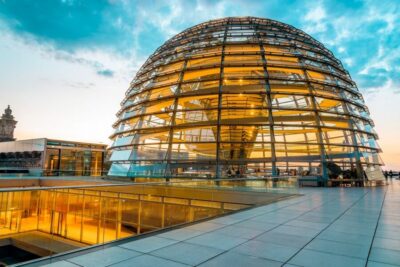

Berlin Private Complete History All Day Walking Tour
Read our review →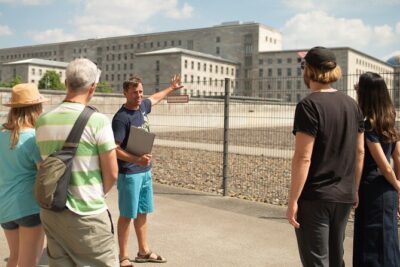
Private Walking Tour Berlin Third Reich Hitler and World War II
Read our review →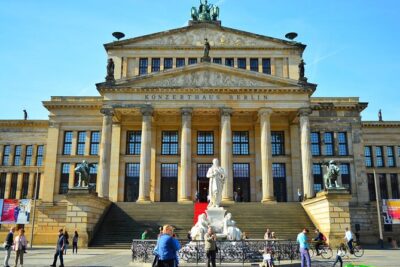
Private Berlin: Iconic Sights and Hidden Gems Walking Tour
Read our review →
Berlin Private Half-Day Walking Tour: Discover the German Capital’s History
Read our review →
Private Walking Tour: World War 2 and Cold War Sites in Berlin
Read our review →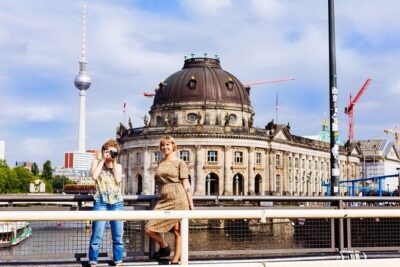
The History of Berlin: WWII PRIVATE Walking Tour With Locals
Read our review →