
Reviewed · BERLIN SIGHTSEEING TOURS
Explore Berlin: Walking Tour of All The Iconic Sites
Berlin’s past is unusually visible on its streets. On this three-hour walk, you move from Museum Island and Bebelplatz to Checkpoint Charlie, the Berlin Wall, Hitler’s bunker site, and the Brandenburg Gate. The route links Nazi Germany, the Cold War, and today’s united capital in one clear story.
I like the way the tour mixes famous sights with less obvious places, especially the former SS and Gestapo headquarters area and the memorial at the site of the Nazi book burning. I also like the guide-led format: guides such as Hannah, Daniel, Tina, Ru, and Xavier are praised for making difficult history clear, warm, and engaging. The main drawback is simple: three hours means a lot of walking, with most stops outdoors and limited time at each one.
Key points to know before you book
- A history-packed central route: See Museum Island, Bebelplatz, Gendarmenmarkt, Checkpoint Charlie, the Berlin Wall, Hitler’s bunker site, the Holocaust Memorial, the Reichstag, and Brandenburg Gate.
- A useful first-day orientation: The walk brings Berlin’s central sights into one map, then gives you ideas for places to revisit on your own.
- Guides make the difference: Hannah, Daniel, Maria, Tina, Ru, Giles, Rohan, and others are praised for clear explanations, humor, and thoughtful handling of serious subjects.
- Mostly outdoor and on foot: Wear comfortable shoes, carry water, and bring an umbrella or rain jacket. The tour runs in all weather.
- Good value at $17: For a three-hour guided introduction to Berlin’s core sights, the price is modest, though admission to museums is not included.
- Flexible booking choices: You can select English, German, or Spanish, and private or small-group options are available.
Why this Berlin walk works so well
Berlin can be hard to read at first. A grand boulevard may hide a former border crossing. An ordinary patch of pavement may mark the site of Hitler’s bunker. A quiet square may carry the memory of book burning and state terror.
This tour gives those places a connecting thread. Instead of seeing the Brandenburg Gate as a photo stop, you learn how it shifted from a royal entrance to a symbol of division and then to a sign of German reunification. Instead of treating the Berlin Wall as a single preserved slab, you begin to understand the border system, escape attempts, and the years when East and West Berlin were separate worlds.
I especially like this kind of tour at the start of a Berlin stay. It helps you get your bearings without requiring public transport between each major sight. Several guides also offer practical local suggestions during the walk. Hannah, for example, is praised for sharing ideas about restaurants, bars, transport, and things to do later in the trip.
The guide is central to the experience. The tour depends less on entering buildings and more on explanation, timing, and storytelling. Daniel is praised for adding humor without losing the seriousness of the subject. Hannah is singled out for making the past clear for families, including children aged 10 and 12. Tina is praised for her passion and for giving useful recommendations. Those details matter because Berlin’s history can become a blur of dates and names unless the guide keeps it focused.
More sightseeing tours in Berlin:
- Berlin: 1-Hour City Tour by Boat with Guaranteed Seating
★ 4.3 · 16,993 reviews - Explore Berlin: See All The Iconic Sights & Some Hidden Gems
★ 5.0 · 4,429 reviews - Berlin: City Sightseeing Hop-On Hop-Off Bus Tour
★ 4.1 · 4,233 reviews
Starting at Friedrichstrasse and the Palace of Tears
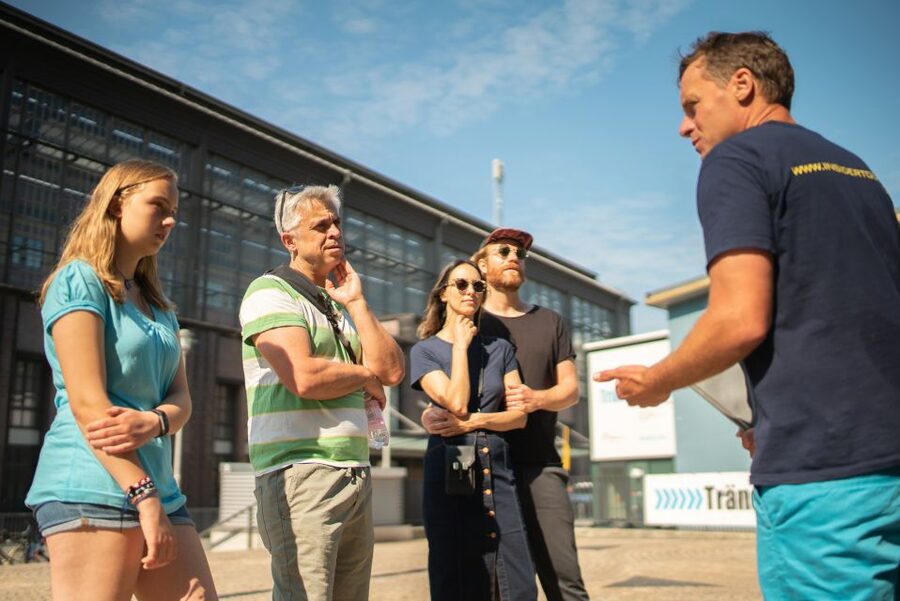
The regular meeting point is outside Friedrichstrasse train station, on the square beside the Tränenpalast, or Palace of Tears, at Reichstagufer 17. Look for guides with yellow umbrellas, an easy marker in a busy central area.
The location is fitting. The Palace of Tears was a border crossing used by people leaving East Berlin, and its name reflects the tearful farewells that took place there. The tour information lists the Palace of Tears as the meeting landmark, but the building itself is not listed as a full interior visit, so expect to begin with an outdoor orientation.
The walk operates every day, rain or shine. That makes a weather check part of your planning. Comfortable shoes are essential, and an umbrella is sensible. One guide specifically advised bringing water and an umbrella, a good reminder that three hours on Berlin pavement can feel longer than the distance suggests.
Private options include pickup from your accommodation in Berlin. For that choice, wait in the hotel lobby five minutes before the scheduled time and look for a guide wearing a yellow name tag.
Museum Island: Berlin’s cultural center
The route includes a guided stop of about 15 minutes around Museum Island. This is one of Berlin’s most important central areas, with major museums gathered on an island in the River Spree.
You will not be spending the day inside the museums. The value here is context. The guide can explain how this part of Berlin fits into the city’s royal, cultural, and political story, while showing you where to return if you want a museum visit later.
That short stop also sets up a useful contrast. Berlin is not only a city of war memorials and Cold War checkpoints. It is also a major center for art, architecture, and public culture. If you plan to visit the museums, ask your guide for practical suggestions, but do not expect entry tickets to be included.
Bebelplatz and the Nazi book-burning site
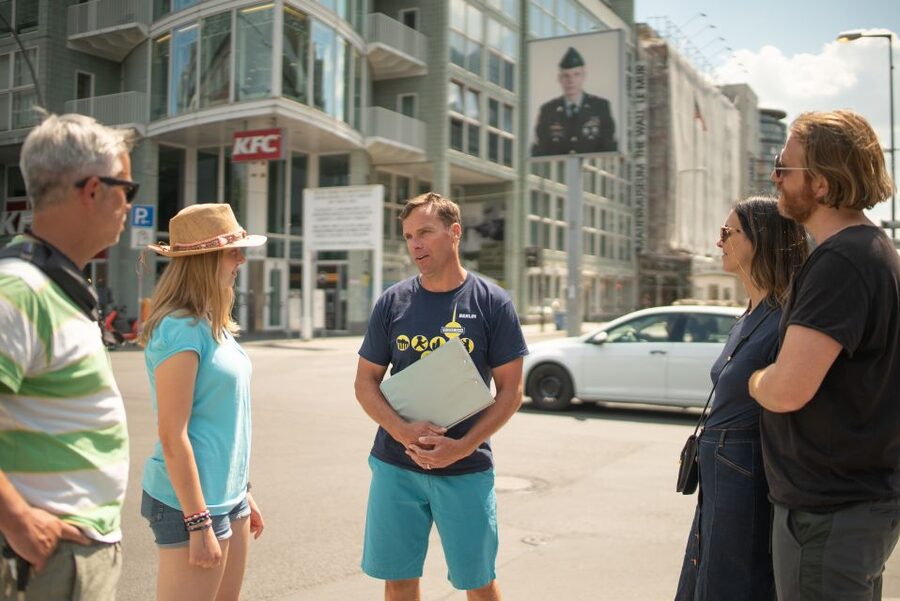
At Bebelplatz, the tour pauses for about 10 minutes. This square is associated with the Nazi book burning of 1933, when books judged politically or culturally unacceptable were destroyed.
It is an important stop because the place looks calm and formal. Without explanation, you could easily walk across it without realizing what happened there. The tour brings attention to the memorial at ground level and places the event within the wider story of Nazi control, censorship, and persecution.
This is one of the moments when the guide’s tone matters. The subject is serious, but a clear explanation helps you understand the event without turning it into a list of grim facts. Allow yourself time to look around rather than treating Bebelplatz as just another quick photograph.
Other Berlin experiences to weigh up
- Discover Berlin Half-Day Walking Tour
★ 5.0 · 9,624 reviews - Berlin: Third Reich and Cold War 2 Hour Walking Tour
★ 4.9 · 6,830 reviews - Berlin: Discover Berlin Walking Tour
★ 4.9 · 5,998 reviews - Berlin’s Best: 2 Hour Walking Tour Third Reich and the Cold War
★ 5.0 · 5,486 reviews
Gendarmenmarkt and Berlin’s changing center
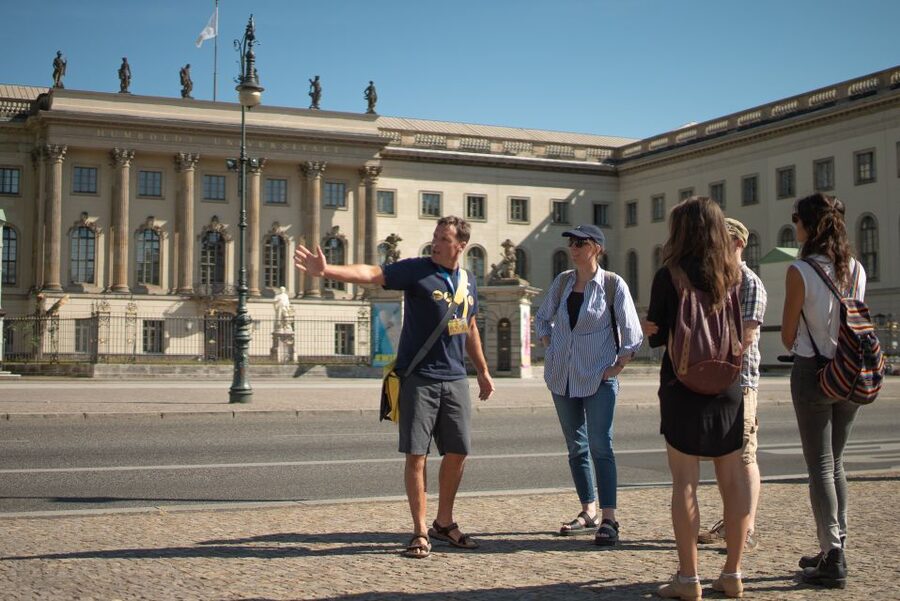
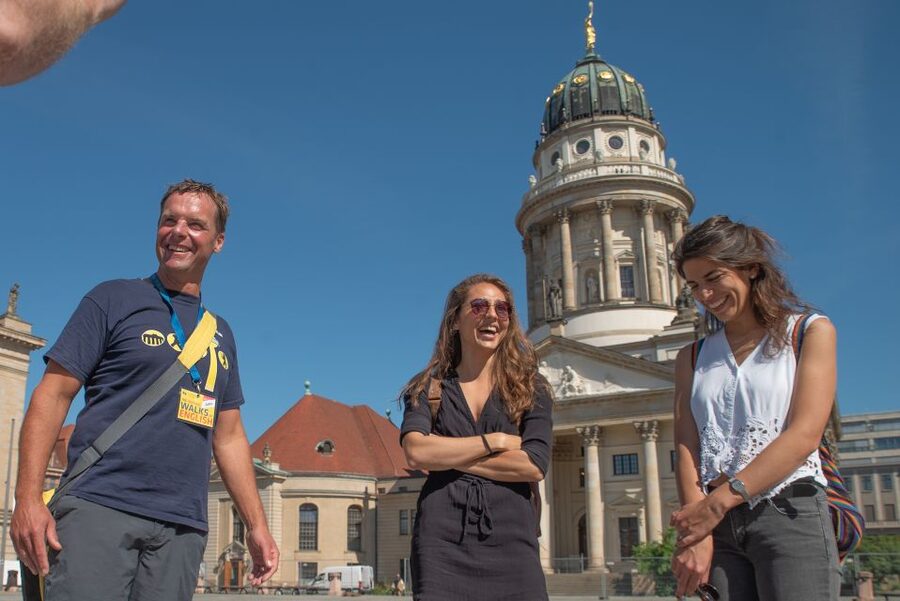
Gendarmenmarkt receives another roughly 10-minute guided stop. The square is one of central Berlin’s best-known architectural settings, and it gives the tour a pause from the more concentrated political sites.
Here, the guide helps you see how Berlin’s central districts changed across different eras. The square also breaks up the heavier material from Bebelplatz and the later Cold War stops. You get a sense of the city as a place of public buildings, grand civic spaces, and everyday movement, not only as a memorial to catastrophe.
Because the tour covers so much ground, this is a viewing stop rather than a long architectural visit. If the square captures your interest, note it for a later return.
Checkpoint Charlie and the border between East and West
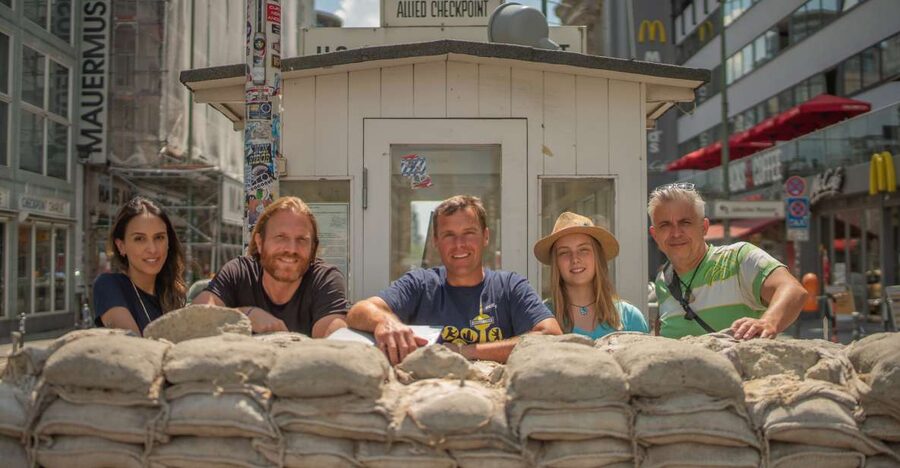
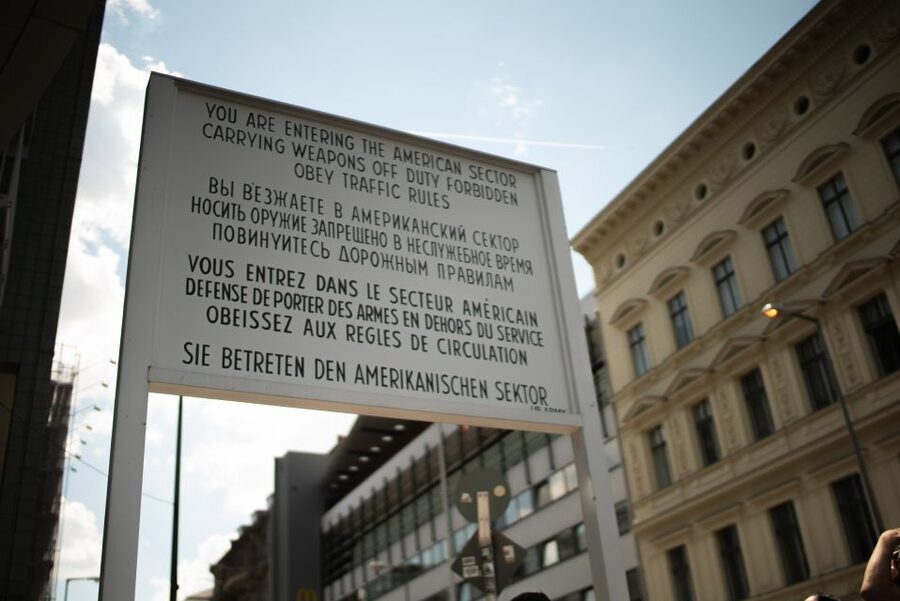
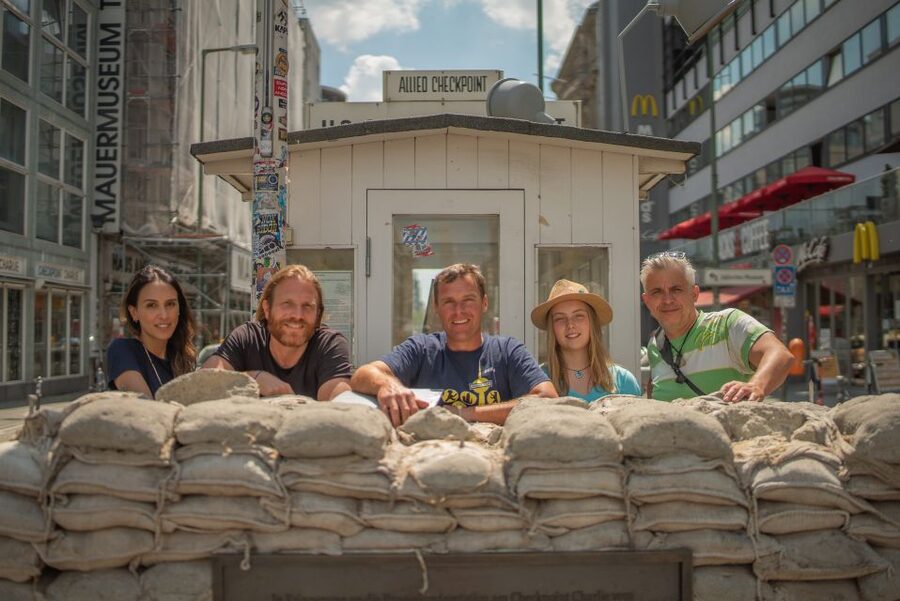
Checkpoint Charlie is both a major Berlin landmark and one of the route’s more complicated stops. The tour allows about 10 minutes for a photo stop and explanation.
This was the best-known crossing point between East and West Berlin for foreign visitors and allied personnel. Today, the name is famous worldwide, but the modern setting can feel commercial and busy. The guide’s job is to separate the real history of the border from the souvenir displays and photo opportunities.
The useful part of this stop is the Cold War explanation. You learn how Berlin became a divided city, how the border affected daily life, and why escape attempts were so dangerous. The tour then connects Checkpoint Charlie to the wider story of the Wall’s rise and fall.
Do not expect a museum visit here. The stop works as a concise outdoor introduction, and you may want to return later if you want a longer look at Cold War exhibitions in the area.
The Berlin Wall and the former death strip
The Berlin Wall stop is another 10-minute photo and guide stop. The route is described as crossing the former death strip, giving you a direct sense of the space that once separated East and West.
Only fragments of the Wall remain in central Berlin, so a good explanation is vital. The guide helps you picture the barriers, surveillance, and restricted zone that once divided neighborhoods and families. You also hear about daring escapes and Cold War espionage, subjects that make the border feel personal rather than abstract.
This is one of the tour’s strongest links between past and present. Berlin is now an open, connected capital, but the route lets you see how recent the division was. The physical remains are limited, so bring your imagination and pay close attention to the guide’s account of what occupied the wider area.
Hitler’s bunker site and the problem of invisible history
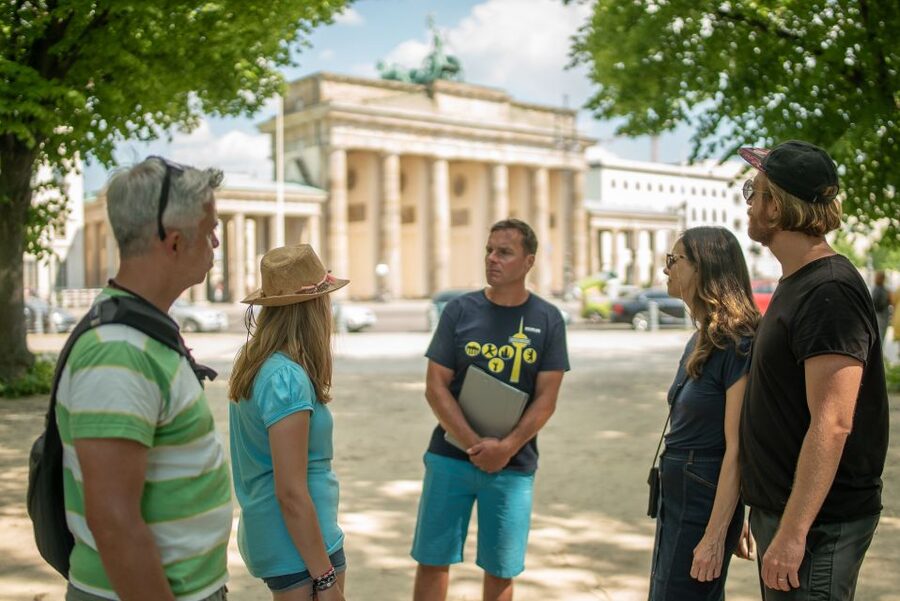
The tour pauses at Hitler’s bunker site for about 10 minutes. There is no grand monument rising above the ground. The site is deliberately understated, and that can surprise you.
The absence of a dramatic structure creates a useful lesson about Berlin’s approach to difficult places. The guide explains what happened beneath the ordinary-looking surroundings and why the location is handled with restraint. It is a stop where the spoken account matters more than the view.
This part of the walk is not meant to glorify Hitler or turn the bunker into a spectacle. It places the final days of the Nazi regime within the city itself, then moves the story toward the consequences of dictatorship and war.
The Memorial to the Murdered Jews of Europe
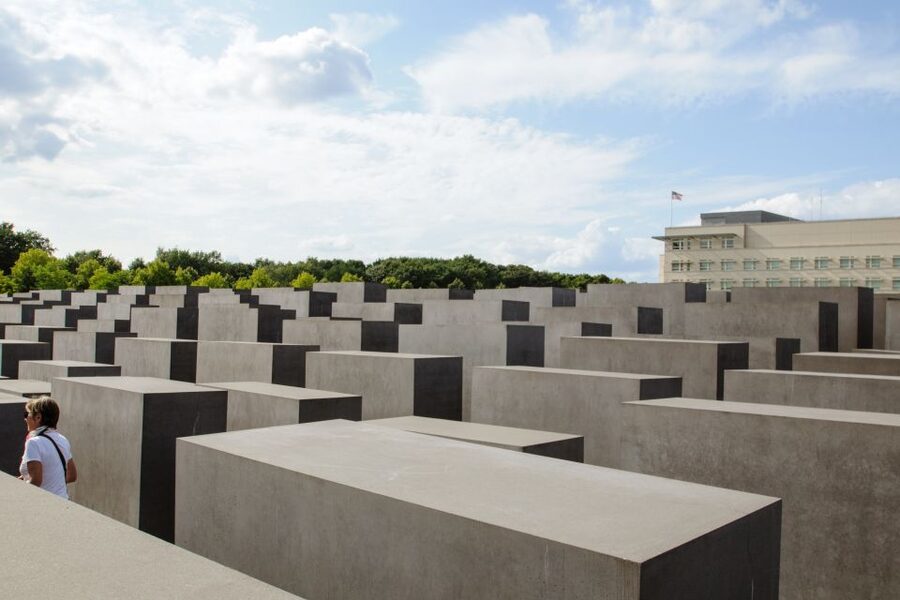
The Holocaust Memorial is one of the tour’s most important stops, with about 15 minutes for explanation and reflection. Its field of concrete blocks creates a powerful public space, but the design is open to personal interpretation.
The guide gives you the historical frame needed to understand the memorial as a national place of remembrance. You have time to walk among the blocks and notice how the ground shifts as you move through them. The experience changes from the outer edges to the interior, where the blocks feel more enclosing.
This is a place to slow down. The tour schedule is full, and the memorial can feel crowded, but the guide’s explanation helps you use the short stop well. If the memorial affects you strongly, you can return later for more time and visit the underground information center, though admission is not included in this walking tour.
The Reichstag and the story of reunification
The Reichstag, home of Germany’s parliament, is listed as a photo stop with about 10 minutes of guided explanation. Its glass dome and restored exterior are now familiar symbols of modern Germany.
The building also helps the guide explain Berlin’s transformation from divided city to united capital. Its history reaches back before the Cold War, but its present role makes it especially useful for understanding the Germany you see today.
The tour does not include a visit inside the Reichstag. If you want to see the dome, you will need to arrange that separately. Still, the exterior stop is worthwhile because it places the political center of today’s Germany close to the old border zones and wartime sites.
Brandenburg Gate and the end at Pariser Platz
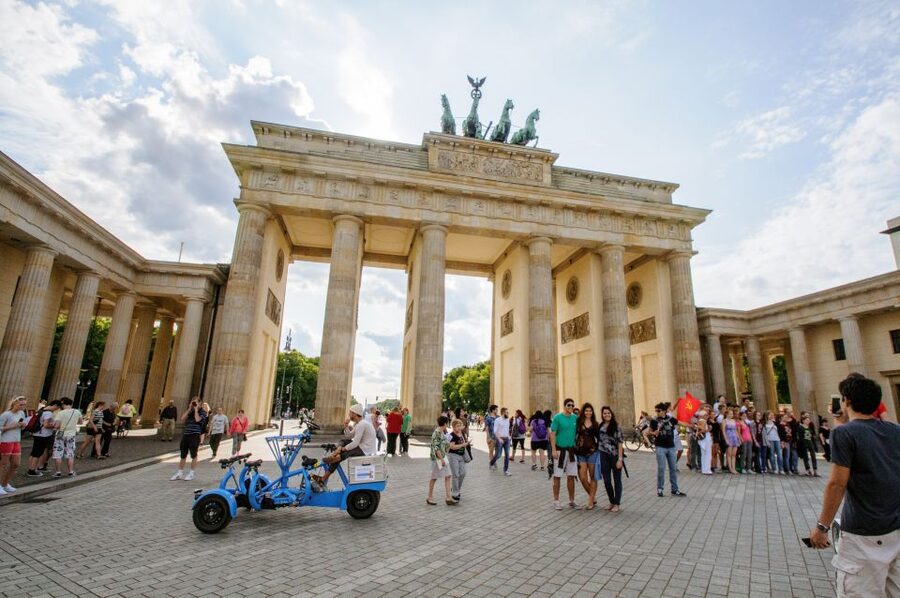
The walk reaches the Brandenburg Gate, usually allowing about 10 minutes for photos and explanation. You pass through the gate and stand in Pariser Platz, one of Berlin’s most recognizable public spaces.
The gate has served many political purposes over time, which is why it works as the tour’s natural final image. It began as a royal entrance, later became associated with Nazi spectacle and Cold War division, and then turned into a symbol of reunification.
The listed end information names Pariser Platz as a drop-off location and also says the activity ends back at the meeting point. Since options can differ, check the exact end point when booking. Either way, you finish in a central area with easy access to nearby sights.
What $17 gets you
At $17 per person, this is strong value if you want a guided introduction to central Berlin. You cover a remarkable number of major sites in three hours, and the route saves you the planning work of connecting them yourself.
The price covers the guided walk, not museum admissions or interior visits. That is important. You are paying for the guide’s route, historical interpretation, and local perspective rather than a package of attractions.
A private option may cost more than the basic rate, but the tour information confirms that private and small-group formats are available. A smaller format can be useful if you want more questions, a quieter pace, or a guide focused on your group. The standard experience is likely the better deal for budget-minded visitors who mainly want orientation.
Free cancellation up to 24 hours before the start and reserve-now, pay-later booking add useful flexibility. Wheelchair access is available, though you should still consider that the experience lasts three hours and takes place across city streets and public squares.
Who should book this walking tour?
I would choose this for a first visit to Berlin, especially if you want the city’s main historical themes explained in one sitting. It suits adults, families, and anyone who prefers a human guide to an audio app.
It is also a good fit for people with limited time. You will not explore each place in depth, but you will see where the major sites are and learn which ones deserve a second visit.
Families can do well here. Hannah’s approach is praised for keeping children aged 10 and 12 engaged, and several guides are described as funny, approachable, and patient with questions. The serious subjects still require maturity, but the format avoids turning the walk into a dry lecture.
I would be more cautious if you dislike long walks, need frequent indoor breaks, or want extensive time inside museums. The pace includes frequent stops, but the route remains physically active and weather-dependent. Bring water, wear comfortable shoes, and dress for rain or sun.
My booking advice
Book this tour if you want a clear map of Berlin’s 20th-century story and a guide who can connect separate sights into one narrative. The strongest feature is not any single monument. It is the sequence: royal Berlin, Nazi terror, the Wall, division, reunification, and the capital today.
At $17, it is an easy choice for most first-time visitors. Choose a private or small-group option if personal questions and a slower exchange matter more than the lowest price. If you book the standard walk, look for the yellow umbrella at Friedrichstrasse and arrive ready for three hours outside.
FAQ
Where does the Berlin walking tour start?
The regular meeting point is outside Friedrichstrasse train station, on the square beside the Palace of Tears at Reichstagufer 17, 10117 Berlin. Look for guides holding yellow umbrellas.
How long does the tour last?
The walking tour lasts three hours. Check the selected date and option for the available starting times.
Which languages are available?
Live tours are available in English, German, and Spanish.
Which major sights are included?
The route includes Museum Island, Bebelplatz, Gendarmenmarkt, Checkpoint Charlie, the Berlin Wall, Hitler’s bunker site, the Holocaust Memorial, the Reichstag, and Brandenburg Gate.
Does the tour include museum or building admission?
The listed inclusion is a guided tour. Museum and interior admission are not listed as included.
Is the tour wheelchair accessible?
Yes, the activity is listed as wheelchair accessible.
Can I cancel or pay later?
You can cancel up to 24 hours in advance for a full refund. Reserve-now, pay-later booking is also available.
Newest Berlin reviews
- Where It All Began: Berlin’s Queer & Trans History Tour★ 4.9 · 6 reviews
- Understanding Kreuzberg: The roots of local (sub)culture★ 4.9 · 11 reviews
- Berlin: guided canoe | kayaktour★ 4.1 · 7 reviews
- Private Potsdam City Tour in an authentic vintage van★ 5.0 · 14 reviews
- Warnemünde Shore Excursion: Private Sachsenhausen and Berlin Tour★ 5.0 · 12 reviews
- Ultimate E-Bike Tour of Berlin with Beer Garden Stop★ 5.0 · 4 reviews
- In the Forbidden City – Potsdam Walking Tour★ 5.0 · 17 reviews
- Private Walking Tour of Potsdam and Sanssouci★ 5.0 · 24 reviews
Berlin Sightseeing Tours, compared.

1-Hour City Tour by Boat with Guaranteed Seating
Read our review →
Explore Berlin: See All The Iconic Sights & Some Hidden Gems
Read our review →
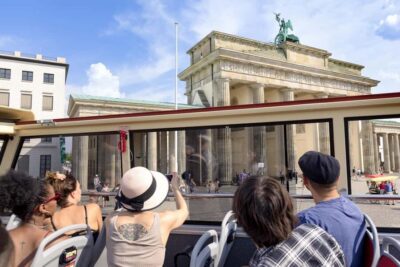
Hop-On Hop-Off Sightseeing Bus with Boat Options
Read our review →
Sights and Highlights Bike Tour with a Local Guide
Read our review →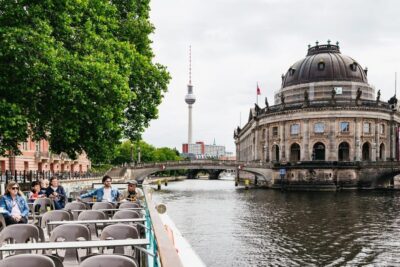

Sightseeing Tour in Classic Volkswagen T1 Samba Bus
Read our review →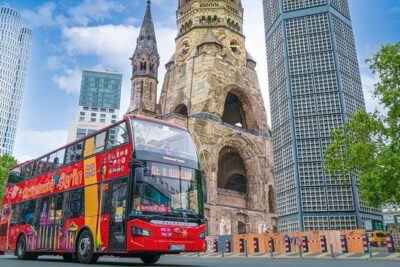
Browse the lists this tour appears in