

Reviewed · BERLIN SIGHTSEEING TOURS
Berlin: Walking Tour of the Top 10 Sightseeing Attractions
Berlin’s past is packed into this brisk two-hour walk, beginning opposite the Federal Chancellery and ending near Friedrichsbrücke. You move from modern government buildings to the Reichstag, Brandenburg Gate, the Holocaust Memorial, Bebelplatz, and Museum Island, with a guide adding stories and Berlin humor along the way. I especially like the route’s clear sense of change: imperial Berlin, Nazi Germany, the divided city, and reunification all appear within a few kilometers.
I also like the useful overview it gives you on a first visit, plus the chance to ask questions as you go. Max, one of the named guides, is praised for answering questions and allowing time for photos, while other guides are described as friendly, well informed, and willing to spend extra time when needed. The main consideration is pace: $82 for two hours is fair for a small or private tour, but less compelling if you prefer long museum visits or a slow look at each monument.
Six things to know before you book
- The route covers about 4 kilometers: Wear comfortable shoes and expect a steady walk between major sights.
- You begin at the Paul-Löbe-Haus: This puts you in Berlin’s government quarter, opposite the Federal Chancellery.
- The Brandenburg Gate is only one part of the story: The walk also reaches Gendarmenmarkt, Bebelplatz, Lustgarten, Berlin Cathedral, and Museum Island.
- The guide supplies the context: Expect stories about Prussian rulers, Nazi Germany, the Cold War, and the fall of the Berlin Wall.
- You can book a private or small-group format: That matters if you want more room for questions or a more personal pace.
- The tour runs in all weather: Bring water, dress for conditions, and do not count on shelter during the full route.
Starting beside Germany’s government quarter
The meeting point is in front of the main entrance to the Paul-Löbe-Haus at Konrad-Adenauer-Straße 1. It is directly opposite the Federal Chancellery, so you begin in the middle of Germany’s modern political district rather than in the old town.
This is a smart starting point. Berlin is not a city where history sits in one neat medieval center. Its story is scattered across old royal avenues, memorials, government buildings, Cold War landmarks, and rebuilt spaces. Starting here lets you see the modern capital before walking into its older layers.
From the Paul-Löbe-Haus, you look toward the Federal Chancellery, Berlin Central Station, and the Bell Tower in Tiergarten. The guide then leads you toward the Reichstag. You are not taking a tour inside the parliament building, but you do get an outside explanation of its role and place in modern Germany.
The first section is also a useful orientation. You learn where the government works, how the area connects with Tiergarten, and why Berlin’s political center was rebuilt after reunification. If this is your first morning in the city, the setting helps you understand Berlin’s scale quickly.
More sightseeing tours in Berlin:
- Berlin: 1-Hour City Tour by Boat with Guaranteed Seating
★ 4.3 · 16,993 reviews - Explore Berlin: See All The Iconic Sights & Some Hidden Gems
★ 5.0 · 4,429 reviews - Berlin: City Sightseeing Hop-On Hop-Off Bus Tour
★ 4.1 · 4,233 reviews
The Reichstag and Brandenburg Gate
The Reichstag is one of Berlin’s essential stops because its appearance tells a complicated story. The building is associated with the German Parliament, but its past reaches back through imperial Germany, the Nazi period, wartime destruction, division, and the return of the national government to Berlin.
Your guide explains the building from outside and places it within that wider story. This is where a live guide helps more than a quick photograph. The Reichstag can look like a grand old shell beside modern glass buildings, but the contrast reflects Berlin’s effort to connect its difficult past with its present political life.
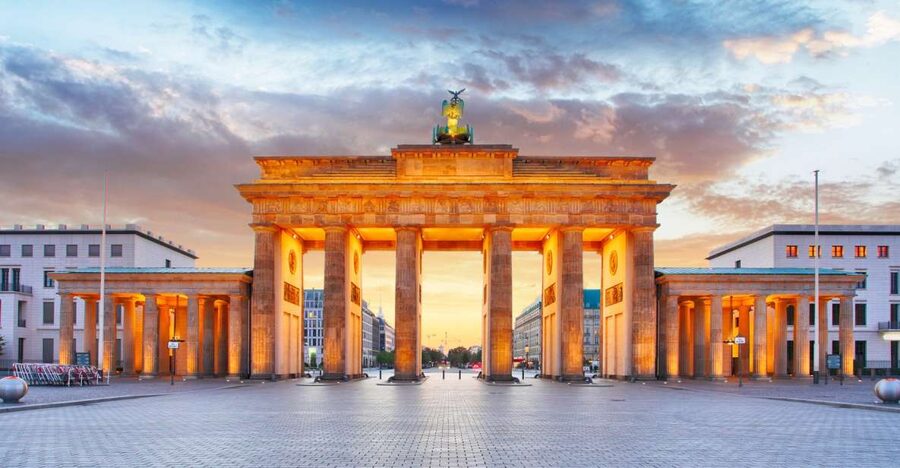
The walk continues to the Brandenburg Gate, the city’s most famous landmark. You have time for photographs and a closer look at the gate’s setting, including the American and French embassies, Hotel Adlon, and the distant Victory Column and Soviet War Memorial.
The Brandenburg Gate has served as a royal entrance, a symbol used by Nazi propaganda, and a powerful image during the Cold War and reunification. The guide’s job here is to explain those changes without turning the stop into a dry list of dates. The tour promises a touch of Berliner humor, which can make heavy subjects easier to absorb, though the style will depend on the individual guide.
This is one of the tour’s best photo stops, but it can also be crowded and exposed to the weather. You should enjoy the view and listen closely, but do not expect a quiet, private encounter with the monument.
A serious pause at the Holocaust Memorial
From the Brandenburg Gate, the route reaches the Memorial to the Murdered Jews of Europe, commonly called the Holocaust Memorial. The field of concrete stelae creates a very different mood from the grand ceremonial space around the gate.
This is an important point in the walk because the guide addresses Nazi Germany directly rather than treating Berlin as a parade of pretty buildings. You will hear historical context and see how the memorial sits in the center of the capital, close to the old power centers of the German state.
The tour does not present this as a long museum visit. It is a guided outdoor stop, so you should expect explanation and reflection rather than an extended examination of the memorial’s interpretation center. Some visitors may want more time here. If that is you, make a note to return on your own.
Potsdamer Platz and Berlin’s divided past
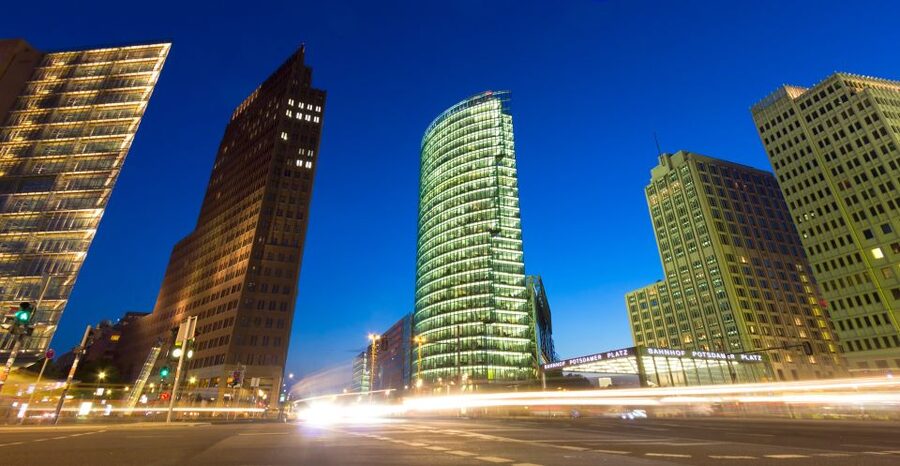
Potsdamer Platz adds a modern chapter to the route. Today it is associated with contemporary architecture and a busy central location, but its importance comes from the way Berlin changed after the Wall divided the city.
The guide links this area to the Cold War and the fall of the Berlin Wall. That connection is useful because Berlin’s recent past is easy to miss beneath the modern streets and office buildings. The walk shows you that the city’s new center was shaped by a major political break, not simply by ordinary redevelopment.
This stop also helps pace the tour. After the solemn Holocaust Memorial, Potsdamer Platz shifts the focus toward postwar division, reunification, and the modern city. You are still walking, so the information comes in compact pieces rather than a long lecture.
Other Berlin experiences to weigh up
- Discover Berlin Half-Day Walking Tour
★ 5.0 · 9,624 reviews - Berlin: Third Reich and Cold War 2 Hour Walking Tour
★ 4.9 · 6,830 reviews - Berlin: Discover Berlin Walking Tour
★ 4.9 · 5,998 reviews - Berlin’s Best: 2 Hour Walking Tour Third Reich and the Cold War
★ 5.0 · 5,486 reviews
Unter den Linden and Gendarmenmarkt
The route then turns toward the historic center and the grand boulevard Unter den Linden. This avenue connects the Brandenburg Gate with the old royal district and gives the tour a clear sense of direction.
Your guide uses the boulevard to explain Berlin’s Prussian past and the rulers, soldiers, students, and revolutionaries who shaped the city. You will see how the avenue links political power, culture, and ceremonial architecture. It is also one of the more pleasant parts of the walk because you can take in the buildings while continuing at a steady pace.
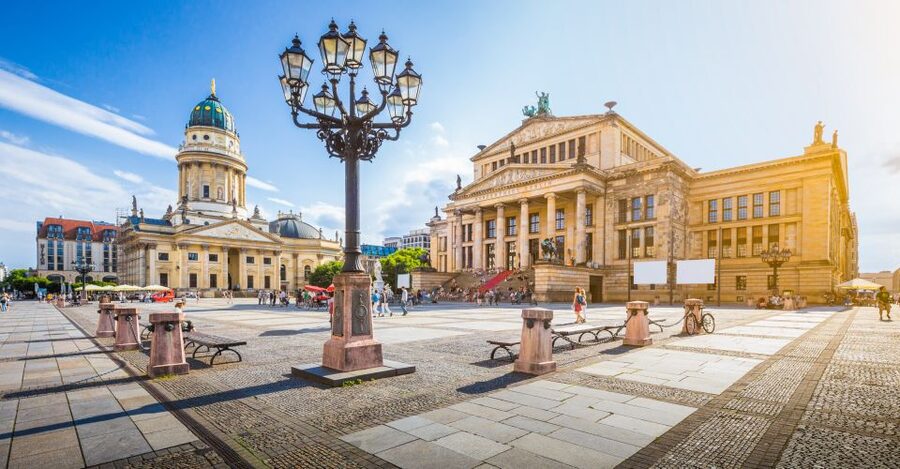
Gendarmenmarkt is one of the strongest architectural stops. The square is framed by the German Cathedral, the French Cathedral, and the Konzerthaus. The three buildings create a balanced composition that makes this a natural place to stop, listen, and take photographs.
The guide explains the square’s role in Berlin’s development and points out the differences between its buildings. You get a sense of how religious, royal, and cultural institutions once shared this central part of the city.
One practical note: major public squares can be affected by restoration work or events, and the tour description does not promise entry into the cathedrals or the Konzerthaus. Think of this as an exterior architecture and history stop.
Bebelplatz, where the past feels close
Bebelplatz is a smaller space, but it carries heavy meaning. It is connected with the Nazi book burning of 1933, when works by Jewish, socialist, liberal, and other targeted writers were destroyed.
The guide brings attention to this event and to the memorial beneath the square. You may have free time here, which gives you a chance to look more carefully and let the subject settle. This is a good example of why a walking tour can be useful: the guide connects an ordinary-looking city square with an event that changed the cultural life of Germany.
Bebelplatz is close to several major historic buildings, so the stop also reinforces the contrast running through the whole route. Imperial ceremony, academic life, dictatorship, war, and remembrance all occupy the same central district.
Because the tour covers so much ground, the stop is necessarily brief. If this subject matters especially to you, ask your guide a question and consider returning later for more time.
Lustgarten, Berlin Cathedral, and Museum Island
The final major section reaches Lustgarten, Berlin Cathedral, and Museum Island. Lustgarten is an open public space beside the cathedral and the old royal complex. It offers one of the clearest views of Berlin’s monumental center.
Berlin Cathedral is hard to miss, with its large dome and formal exterior. The tour focuses on the building from outside rather than taking you through its interior. You will hear about its place in Berlin’s religious and royal story, while the guide also points out the surrounding architecture.
Museum Island gives the final stretch a cultural focus. The island contains several major museums, and its location beside the cathedral and Lustgarten shows how closely Berlin placed art, religion, royal power, and public space together.
The route also includes the rebuilt Berlin City Palace, now home to the Humboldt Forum, and a view toward the TV Tower. From here, you are close to Nikolaiviertel, the area associated with Berlin’s origins in 1237. The tour finishes at Friedrichsbrücke, which is a convenient point for continuing around Museum Island or heading toward the historic center.
This ending is visually rewarding, but it is also where the two-hour limit becomes most obvious. You see several important places in a short time, yet you will not have time to enter museums or explore the cathedral at length.
What the two-hour format really gives you
The tour is designed as a city overview, not a series of full visits. You see the exteriors of major landmarks, hear the key stories, and gain a map of central Berlin that you can use for the rest of your stay.
That format works well if you have only a short time in Berlin, if you have just arrived, or if you want a guide to help sort out the city’s complicated past. It is also useful for families and mixed-age groups because the route offers variety: modern government buildings, royal avenues, memorials, grand squares, and museum architecture.
The pace may be demanding for anyone who wants to stop often. The distance is about 4 kilometers, and the tour runs in all weather. It is described as suitable for all ages and fitness levels and is wheelchair accessible, but you should still think about the length of the walk and the need to keep moving between stops.
The guides speak English, Spanish, or German. The small-group and private options should make it easier to ask questions. Max, specifically, is noted for making space for photos and questions, while another guide extended the tour beyond the scheduled time. Those details suggest that the guide can shape the experience, so do not hesitate to ask for clarification when a subject catches your interest.
Is $82 a fair price?
At $82 per person, this is not Berlin’s cheapest introduction to the city. The value depends largely on the group format and what you want from a guide.
For a private tour or a genuinely small group, the price can make sense. You are paying for a live guide, a carefully connected route, local stories, and the convenience of seeing many major landmarks without planning the order yourself. The route covers the government quarter, the Brandenburg Gate, the Holocaust Memorial, Potsdamer Platz, Gendarmenmarkt, Bebelplatz, Museum Island, and Berlin Cathedral in a single session.
For a larger group, the calculation is less favorable. The tour remains useful, but two hours leaves little time for long questions or personal attention. You also do not get museum admission or interior visits included, so budget separately if you want to go inside the cathedral or museums afterward.
I would treat this as an orientation tour. Its best value comes when you use the final stops to decide where you want to return for a longer visit.
Practical advice for a better walk
Book the 10:00 AM start if you want to use the tour as your first serious look at central Berlin. The 2:00 PM departure is better if you prefer a slower morning or already have plans near the government quarter.
Wear shoes suited to several kilometers of city walking. Bring water and a camera, and dress for rain, wind, or cold because the tour runs in all weather. The route has outdoor stops throughout, and some of the most important explanations happen in open public spaces.
Arrive at the Paul-Löbe-Haus entrance and look for a TourguideMe guide. The starting point is opposite the Federal Chancellery, not at the Brandenburg Gate, so allow enough time to reach the government district.
Cancellation is free up to 24 hours before the tour, and you can reserve now and pay later. The activity is offered daily at 10:00 AM and 2:00 PM, though you should check the date you want for current availability.
Who should book this Berlin walk?
You should book it if you want a fast, guided introduction to Berlin’s central landmarks and enjoy learning how the city’s political and cultural history connects. It is especially useful for first-time visitors, families, short-stay visitors, and anyone who prefers stories and conversation to reading guidebook panels alone.
You may want another option if you dislike brisk walking, want extensive museum time, or prefer to explore only one neighborhood. The $82 price also deserves thought if you are booking for a large family or group.
For most first visits, I see this as a practical way to get your bearings fast. You will not see every interior or absorb every monument in two hours, but you will leave knowing which parts of Berlin deserve a second look and why they matter.
FAQ
How long is the Berlin walking tour?
The tour lasts two hours, or 120 minutes.
How far do you walk?
The route covers approximately 4 kilometers.
Where does the tour begin?
It begins in front of the main entrance to the Paul-Löbe-Haus at Konrad-Adenauer-Straße 1, opposite the Federal Chancellery.
Where does the tour finish?
The walk finishes at Friedrichsbrücke.
What sights are included?
The route includes the German Chancellery, Reichstag, Brandenburg Gate, Holocaust Memorial, Potsdamer Platz, Gendarmenmarkt, Bebelplatz, Lustgarten, Berlin Cathedral, Museum Island, and the New City Palace area.
What languages are available?
The tour is offered in English, Spanish, and German.
Is the tour wheelchair accessible?
Yes, the activity is described as wheelchair accessible.
Does the tour run in bad weather?
Yes, tours run in all weather conditions. Bring suitable clothing and comfortable shoes.
Can I cancel or pay later?
You can cancel up to 24 hours in advance for a full refund. Reserve now and pay later is also available.
Newest Berlin reviews
- Where It All Began: Berlin’s Queer & Trans History Tour★ 4.9 · 6 reviews
- Understanding Kreuzberg: The roots of local (sub)culture★ 4.9 · 11 reviews
- Berlin: guided canoe | kayaktour★ 4.1 · 7 reviews
- Private Potsdam City Tour in an authentic vintage van★ 5.0 · 14 reviews
- Warnemünde Shore Excursion: Private Sachsenhausen and Berlin Tour★ 5.0 · 12 reviews
- Ultimate E-Bike Tour of Berlin with Beer Garden Stop★ 5.0 · 4 reviews
- Potsdam Highlights – Private sightseeing tour by minibus★ 5.0 · 3 reviews
- In the Forbidden City – Potsdam Walking Tour★ 5.0 · 17 reviews
Berlin Sightseeing Tours, compared.
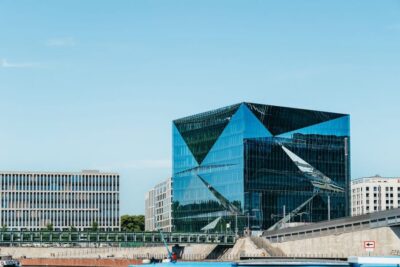
1-Hour City Tour by Boat with Guaranteed Seating
Read our review →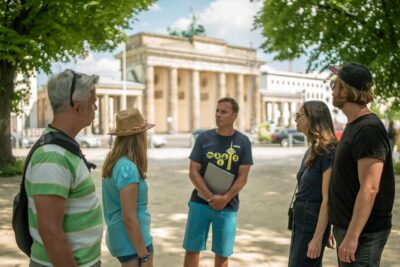
Explore Berlin: See All The Iconic Sights & Some Hidden Gems
Read our review →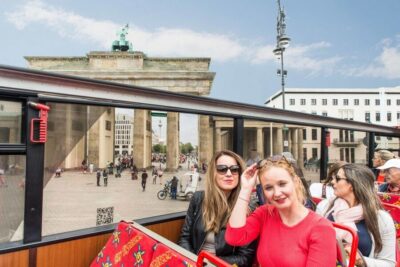
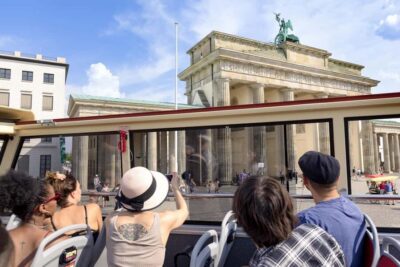
Hop-On Hop-Off Sightseeing Bus with Boat Options
Read our review →
Sights and Highlights Bike Tour with a Local Guide
Read our review →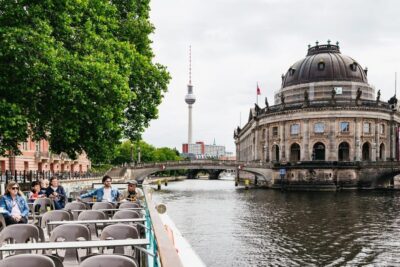
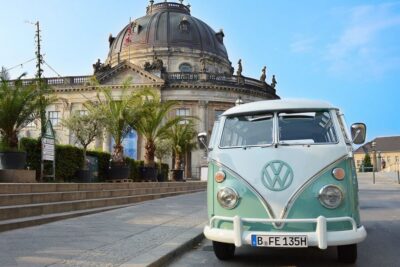
Sightseeing Tour in Classic Volkswagen T1 Samba Bus
Read our review →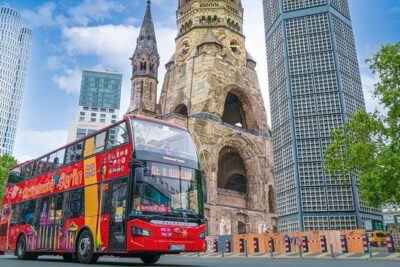
Browse the lists this tour appears in