
Reviewed · BERLIN TRABI SAFARI TOURS
Berlin Trabi Museum: Day Ticket
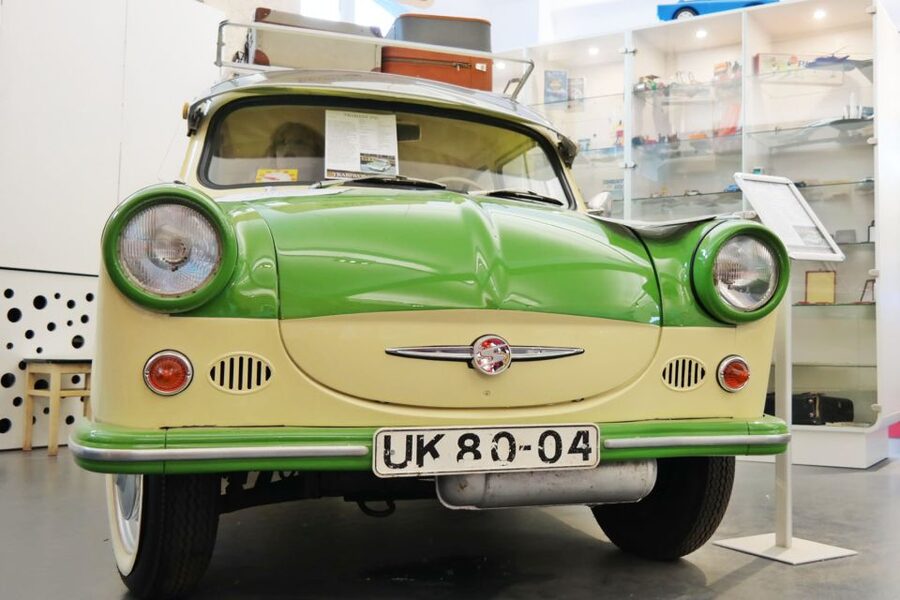
The Trabi Museum at Checkpoint Charlie gives you a close look at East Germany’s most famous car, from early models to camping and military versions. You can see 14 vehicles, watch short films in the lightshow theater, and inspect a miniature GDR world. I like the unusual range of cars, especially the wooden-underframe Trabant P70, and I like that the museum ties the vehicles to daily life rather than displaying them as mere curiosities. The main drawback is size: at about $10, it is fairly priced, but you should expect a compact museum, not a half-day motor collection.
I also like the easy central location and the chance to sit behind the wheel of a Trabi if you add a separate Trabi Safari. The museum entry itself is simple, valid for one day, and wheelchair accessible. If you are short on time or only mildly interested in cars, the visit may feel brief.
Key points at a glance
- Fourteen distinct Trabants: See standard cars alongside camping, military, racing, and other special-use models.
- A wooden-framed P70: One of the more unusual exhibits shows an early stage in the development of the famous East German car.
- Lightshow theater films: Sit down for short films that explain the Trabant and its place in GDR life.
- Miniature GDR world: A small-scale display adds social and historical context to the vehicles.
- Checkpoint Charlie setting: The museum is at Zimmerstraße 14-15, close to one of Berlin’s best-known Cold War sites.
- Safari option: You can drive a Trabi on a separate safari route, but the listed museum ticket covers entry only.
Why the Trabant still matters in Berlin
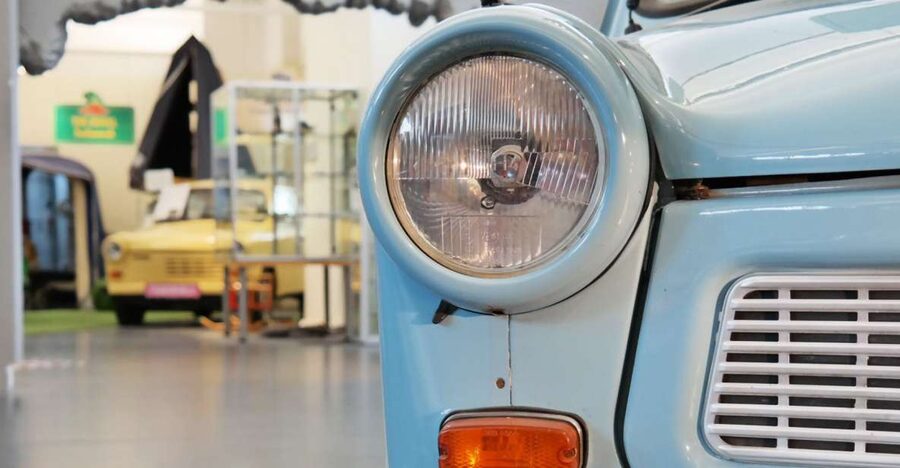
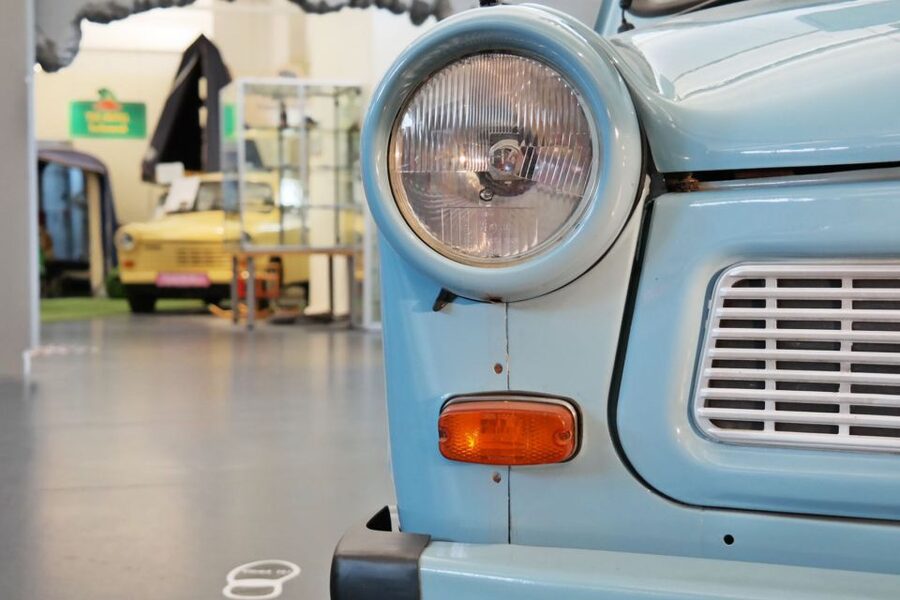
The Trabant, often called a Trabi, was produced from 1958 at the VEB Automobilwerk Zwickau. It became the best-known car of the former German Democratic Republic, or GDR, and it still carries a strong visual link to East Germany.
That connection is what makes this museum more interesting than a basic car display. You are not only looking at old vehicles. You are seeing how one small car served as family transport, a camping vehicle, a military machine, and a symbol of an entire political system.
The nickname Rennpappe, which translates roughly as racing cardboard, points to the car’s unusual reputation. The body used materials associated with lightweight construction, and the two-stroke engine gave the Trabi its distinctive character. You do not need to be a motor expert to enjoy the museum. The shapes, colors, and different uses are easy to grasp within minutes.
I find the Trabi especially useful for understanding ordinary life in the GDR. Grand political events can feel abstract. A small family car is more personal. It raises practical questions: how did people travel, camp, carry belongings, or serve in the military? The exhibits help answer those questions through the vehicles themselves.
More Trabi safari drives in Berlin:
- Berlin: 75-minute Trabi Safari
★ 4.8 · 2,854 reviews - Berlin Self-Drive Trabi Tour with Guide
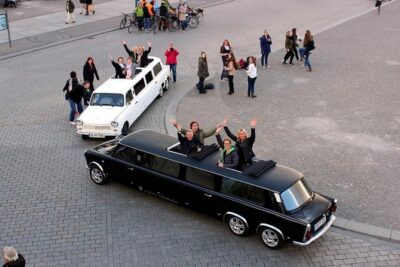
★ 4.5 · 410 reviews - Private Tour: Berlin by Trabant Stretch-Limousine
★ 5.0 · 186 reviews
Finding the museum at Checkpoint Charlie
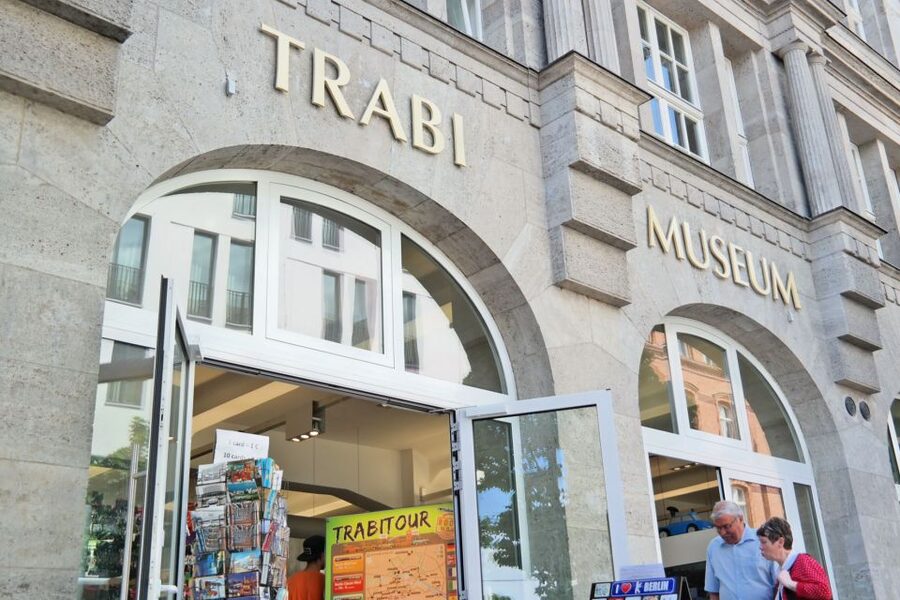
The address is Zimmerstraße 14-15, 10969 Berlin. This puts the museum near Checkpoint Charlie, one of the city’s most visited Cold War landmarks. You can combine both stops without making a special trip across Berlin.
The meeting point can be slightly confusing if the door is closed. In that case, cross the street and look for TrabiWorld at Zimmerstraße 97-100. That practical detail is worth remembering, especially if you arrive expecting a large museum entrance.
Because the museum sits in a busy historic area, I would plan it as one stop in a wider walk through former divided Berlin. The ticket is valid for one day, so you do not need to rush through the exhibits immediately after arrival. Still, the attraction is compact, and most people will likely pair it with nearby sights rather than build an entire day around it.
The central setting is useful, but it also means the museum works best as a focused visit. You are paying for access to the collection, not for a long guided tour through multiple halls.
Fourteen cars showing the Trabi’s many lives
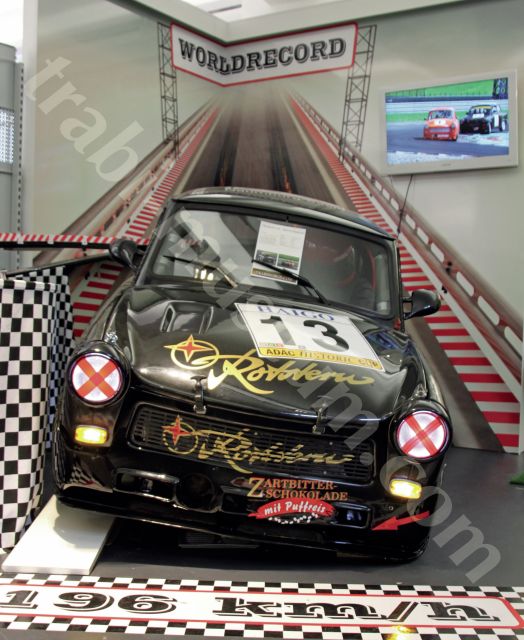
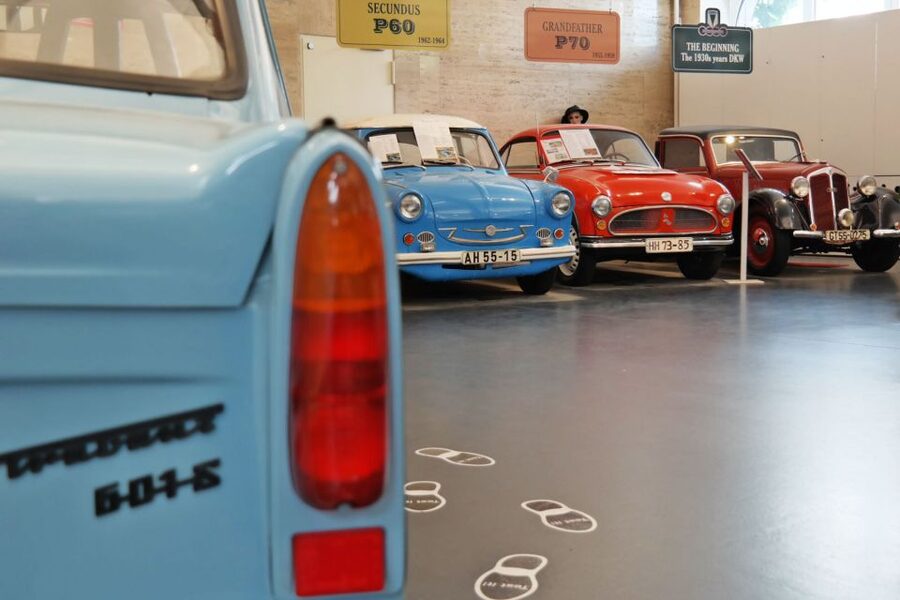
The main display includes 14 vehicles. That number is modest, but the variety matters more than the total. You see different stages of development and several practical uses of the car.
The ordinary Trabant is important because it establishes the baseline. Once you have seen the familiar shape, the unusual versions make more sense. Camping models show how owners adapted the car for leisure and travel. Military vehicles reveal a more functional role, far removed from the family car image.
One of the standout objects is the Trabant P70 with a wooden undercarriage. It gives you a look at an earlier phase of the car’s development and helps explain that the Trabant design did not appear fully formed in 1958. This is the kind of exhibit that gives the museum its character. It is strange, specific, and easy to remember.
The display also includes what is described as the fastest Trabi. The information provided does not give its exact speed or technical details, so you should treat it as a special exhibit rather than arrive expecting a full engineering breakdown. Its value is mostly visual and cultural: this was a car known for modest performance, making a faster version an amusing contrast.
You will not find a huge number of cars here. The collection asks you to look at the differences between each vehicle instead of counting rows of similar models. That can work well for families, casual visitors, and anyone interested in everyday objects. Dedicated car collectors may want a larger museum with more technical information.
The theater and miniature GDR display
After looking at the vehicles, you can sit in the lightshow theater for short films about the Trabant. This is a welcome change of pace. Cars can be hard to understand when they are isolated from their time and place, while a film can show how the Trabi fitted into life in the GDR.
The theater also gives your feet a break, which is helpful if you are visiting several sights around Checkpoint Charlie. Do not expect a full-length documentary program. The description calls them short films, so think of this as a concise introduction rather than a major cinema experience.
The miniature GDR world adds another layer. A small-scale scene can show how the cars related to streets, buildings, and ordinary routines. It is not a replacement for a full museum about East German society, but it helps connect the vehicles to the country that produced them.
I especially like this combination of real cars, film, and model display. Each format does a different job. The cars show what people drove. The films provide explanation. The miniature world gives you a quick sense of setting. Together, they make a small collection feel more complete.
Still, keep your expectations measured. The museum is described by one German-language review as very small, and the overall rating is 4.1 out of 5 from 63 reviews. That score suggests a generally positive experience, but it also fits the practical reality: this is a compact attraction with a clear theme, not a large national museum.
More museums and galleries in Berlin:
- Berlin: Natural History Museum Entrance Ticket
★ 4.6 · 3,382 reviews - Skip-the-Line: Berlin Wall Museum at Checkpoint Charlie
★ 4.1 · 2,041 reviews - Berlin: Museum Island Multiple Museum Entry Ticket
★ 4.4 · 2,007 reviews - Berlin: Interactive DeJa Vu Museum Entrance Ticket
★ 4.1 · 1,338 reviews
The separate Trabi Safari option
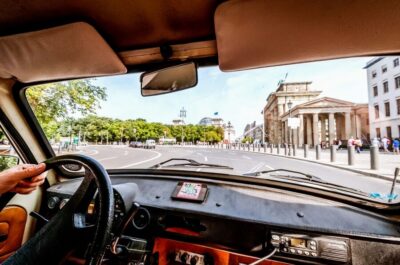
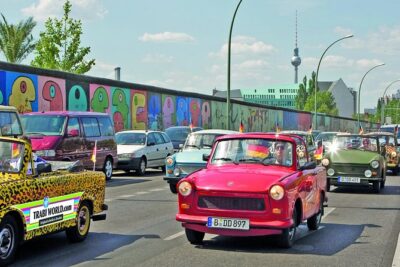
The museum visit can also lead to a more hands-on Trabi experience. You can get behind the wheel on a Trabi Safari, with routes through East or West Berlin, along the former Wall, or on another route you choose.
That option changes the experience from looking at history to moving through it. Driving a Trabi along former Wall sites would give the car a direct connection to Berlin’s divided past. It also explains why the museum is operated by Trabiworld Trabi-Safari.
There is an important price point here: the included service is entry to the Trabi Museum. The safari is described as something you can do, but it is not listed as part of the $10 museum ticket. If driving is your main goal, check the separate safari details and price before booking.
For the museum alone, you stay an observer. For the safari, you become part of the display. That makes the two activities complementary, but you should not assume that buying the museum ticket reserves a car or includes a driving route.
Is the $10 ticket good value?
At $10 per person, the museum is reasonably priced if you are already visiting Checkpoint Charlie and have a genuine interest in Berlin’s Cold War past, unusual cars, or East German culture. The central location adds value because you can fit the stop into an existing walking route.
The price is less attractive if you expect hours of entertainment. The museum has 14 vehicles, short films, a lightshow theater, and a miniature display, but it is still a small attraction. A short visit can be a good thing in Berlin, where your schedule may already include museums, memorials, and historic sites. It can also feel limited if you came specifically for a major automobile collection.
I would call the ticket good value for the right visitor. The Spanish review describing the cars as very entertaining matches the museum’s appeal: the Trabis are quirky, colorful, and easy to enjoy. You get a focused look at a distinctive vehicle rather than a dry technical exhibit.
The ticket also offers flexibility. It is valid for one day, cancellation is available up to 24 hours before the visit for a full refund, and you can reserve now while paying later. Those terms are useful when your Berlin plans are still moving around.
Who will enjoy this compact museum?
I would recommend the Trabi Museum to:
- Anyone already walking around Checkpoint Charlie
- Visitors interested in the GDR and Berlin’s divided past
- Families looking for a short, visual attraction
- Car fans who enjoy unusual models and practical vehicle history
- People considering a separate Trabi Safari
- Visitors who appreciate quirky local symbols
I would be more cautious if you want a large, detailed car museum or a long guided program. The collection is small, and there is no named guide or detailed guided itinerary provided. Hosts or greeters are available in English and German, but the experience is primarily a self-directed visit with films and displays.
The museum can also work for mixed groups. A serious car fan may focus on the development stages and special versions. Someone less interested in engines can enjoy the shapes, the miniature scene, and the Cold War setting. That broad appeal is one of the ticket’s strengths.
Practical details before you go
Entry is listed at $10 per person, with museum admission included. The ticket is valid for one day, and you can skip the ticket line.
The museum is wheelchair accessible. English and German are available, and hosts or greeters speak those languages. No individual guide names are provided, so you should not book this expecting a personal tour led by a particular person.
Use Zimmerstraße 14-15 as the main meeting point. If the door is closed, cross the street to TrabiWorld at Zimmerstraße 97-100. That is the most useful arrival tip in the available information.
If you want to drive, ask about the separate Trabi Safari. Possible routes include East or West Berlin, the former Wall, or a route of your choice. Again, the museum ticket includes entry only, so handle the safari as a separate activity.
Should you book the Trabi Museum?
Book it if you want a short, affordable stop with a strong Berlin identity. The 14 vehicles, the unusual P70, the camping and military examples, the films, and the miniature GDR world give you more than a row of old cars. The Checkpoint Charlie location makes it easy to add to a day of Cold War sights.
Skip it if you want a large museum, extensive technical displays, or a full-day attraction. The collection is small, and the ticket is best understood as a focused visit. If the idea of driving a Trabi appeals to you, book or investigate the safari separately.
For most visitors, I would treat this as a well-priced add-on rather than a main Berlin event. It offers a memorable look at a funny, flawed, and deeply recognizable car, with just enough history to explain why the Trabi still matters.
FAQ
Where is the Berlin Trabi Museum?
The museum is at Zimmerstraße 14-15, 10969 Berlin, near Checkpoint Charlie.
What should I do if the museum door is closed?
Cross the street and look for TrabiWorld at Zimmerstraße 97-100.
How much does the museum ticket cost?
The listed price is $10 per person.
How long is the ticket valid?
The ticket is valid for one day.
What does the museum ticket include?
It includes entry to the Trabi Museum.
How many vehicles are on display?
The museum displays 14 different vehicles.
Are the films included with admission?
Yes. The museum includes access to short films shown in the lightshow theater.
Is the museum wheelchair accessible?
Yes, the museum is wheelchair accessible.
Is a Trabi Safari included with the museum ticket?
No. The listed inclusion is museum entry only. A Trabi Safari is described as a separate option.
Newest Berlin reviews
- Where It All Began: Berlin’s Queer & Trans History Tour★ 4.9 · 6 reviews
- Understanding Kreuzberg: The roots of local (sub)culture★ 4.9 · 11 reviews
- Berlin: guided canoe | kayaktour★ 4.1 · 7 reviews
- Private Potsdam City Tour in an authentic vintage van★ 5.0 · 14 reviews
- Warnemünde Shore Excursion: Private Sachsenhausen and Berlin Tour★ 5.0 · 12 reviews
- Ultimate E-Bike Tour of Berlin with Beer Garden Stop★ 5.0 · 4 reviews
- In the Forbidden City – Potsdam Walking Tour★ 5.0 · 17 reviews
- Private Walking Tour of Potsdam and Sanssouci★ 5.0 · 24 reviews
Berlin Trabi Safari Tours, compared.
Browse the lists this tour appears in