
Reviewed · BERLIN TRABI SAFARI TOURS
Berlin: 75-minute Trabi Safari
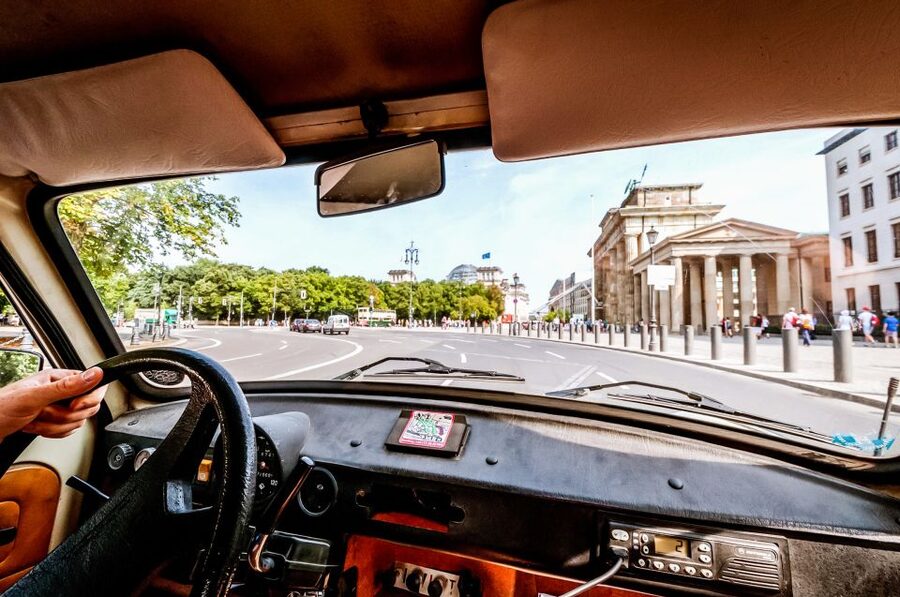
A Trabant Safari turns Berlin sightseeing into a small traffic adventure. You sit behind the wheel of the former GDR’s famous two-stroke car, follow a guide through the city, and listen to commentary over the radio as your little convoy rattles past the Brandenburg Gate, Checkpoint Charlie, and the Berlin Wall. The car is part museum piece, part practical joke, and part genuine historical lesson.
I like the hands-on history here. You do not just look at East Berlin’s symbols from a coach window. You wrestle with a column-mounted gear lever, hear the engine putter, and get a feel for the kind of car many East Germans waited years to receive. I also like the friendly convoy system and the chance to switch drivers halfway through.
The catch is comfort and cost. At $93 per person, you are paying a premium for the novelty, and the Trabant is cramped, noisy, and not always easy to drive. Tall passengers may struggle in the back, and anyone rusty with a manual gearbox should expect a few tense moments.
What makes the Trabi Safari special
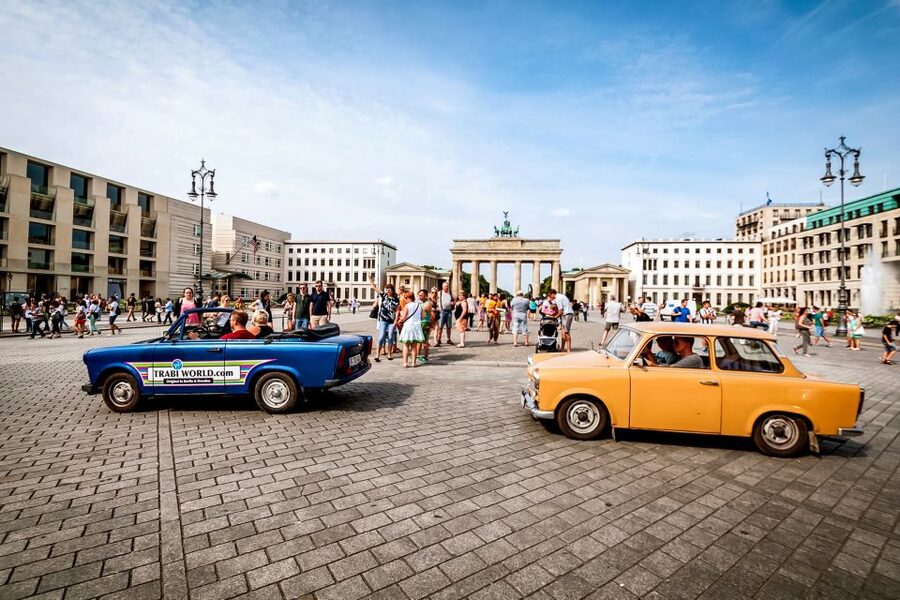
- Drive a real Trabant: You take the wheel instead of simply posing beside a historic car.
- Follow a radio-led convoy: The guide keeps the cars together and provides live commentary in English or German.
- See Berlin’s divided past: The route passes Checkpoint Charlie, the Brandenburg Gate, East Side Gallery, and the former East Berlin center.
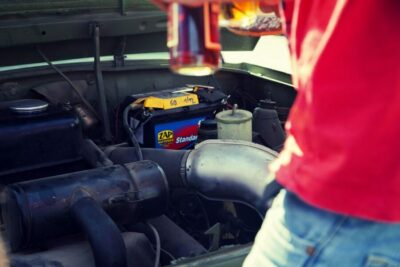
- Learn the odd mechanics: Expect a short lesson on the two-stroke engine and column-mounted manual gearshift.
- Swap drivers midway: Two drivers can both get time at the wheel during the 75-minute outing.
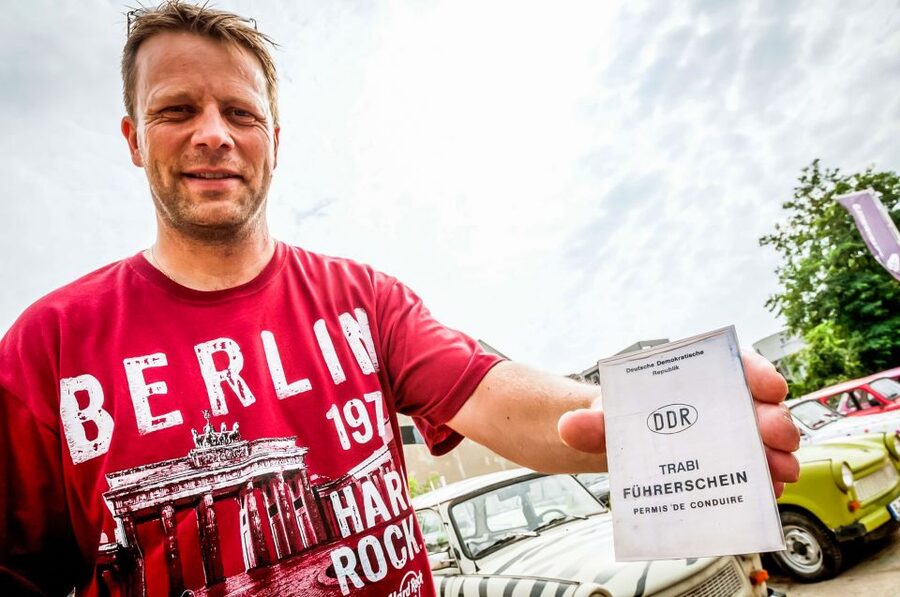
- Take home a souvenir: Every new driver receives a Trabant driving license.
Why driving a Trabant changes Berlin sightseeing
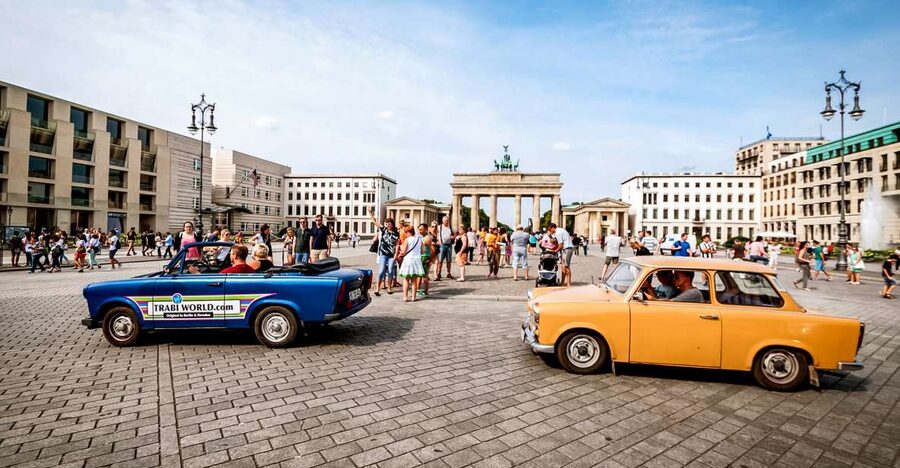
A normal bus tour gives you a broad view of Berlin. This gives you a task. You must watch the road, manage the gears, follow the car ahead, and listen for the next instruction. That means you may not absorb every building or historical detail, but you will remember the experience of crossing the city in a bright, rattling Trabant.
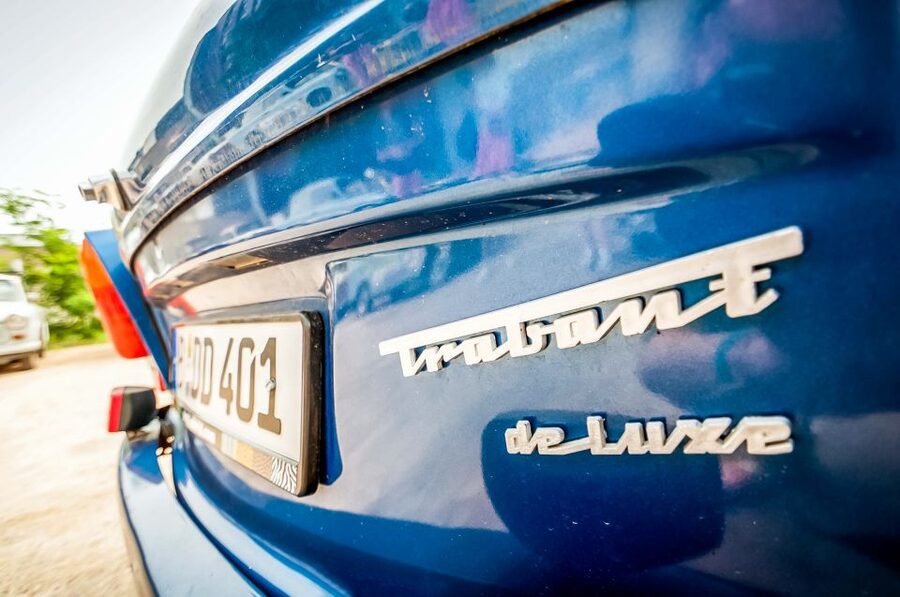
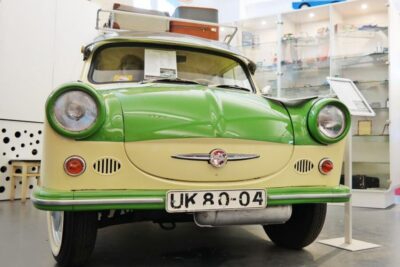
The Trabant was the everyday car of East Germany, officially known as the German Democratic Republic. Its lightweight body, small engine, and simple construction made it affordable by Western standards, but supply was limited. One explanation given during the experience is that buyers could wait around ten years after ordering one. That detail helps explain why the car became such a powerful symbol of life behind the Iron Curtain.
Today, the car attracts attention for a different reason. People point, wave, and take pictures as the convoy passes. You may find yourself appearing in family photos all over Berlin without ever knowing it. That public reaction is part of the fun, but it can also make you feel briefly conspicuous if you prefer quiet sightseeing.
More Trabi safari drives in Berlin:
- Berlin Self-Drive Trabi Tour with Guide
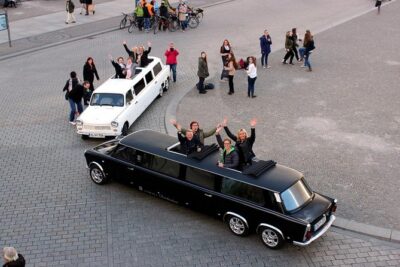
★ 4.5 · 410 reviews - Private Tour: Berlin by Trabant Stretch-Limousine
★ 5.0 · 186 reviews - Berlin: The Wall Ride Guided Trabi Tour
★ 4.7 · 157 reviews
Starting at TrabiWorld on Zimmerstrasse
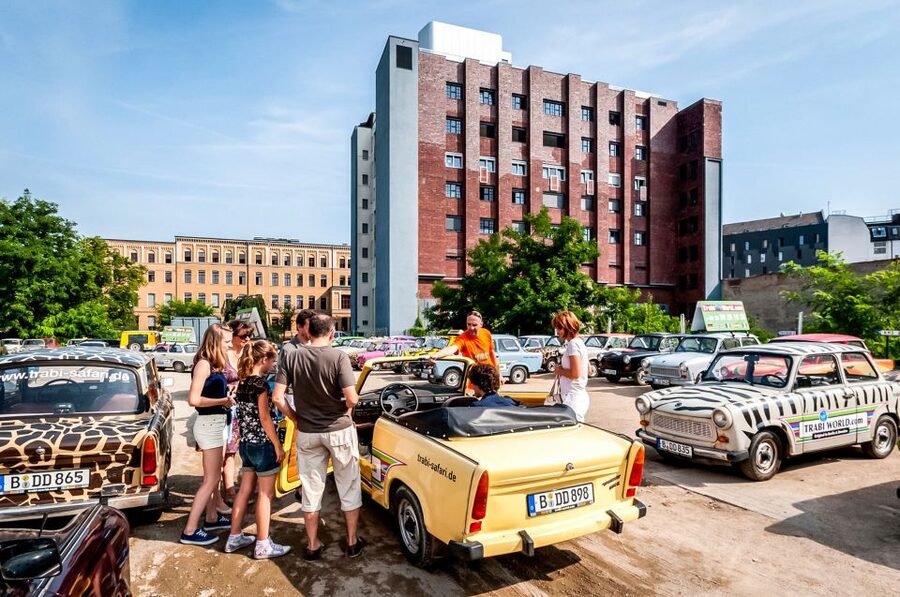
The meeting point is TrabiWorld, at Zimmerstraße 97 to 100, on the corner of Wilhelmstraße. This location places you close to several important sites connected with Berlin’s Cold War past, including Checkpoint Charlie.
At the start, staff explain how the cars work and what to do if you get separated from the convoy. The guide also explains how to contact the lead car from inside your Trabant. That preparation matters because traffic lights can split the group, especially when several cars are involved. The convoy waits around the next corner, so you are not simply abandoned in an unfamiliar car.
The instruction covers the basics of the two-stroke engine and the manual gearbox. The gear lever is mounted on the steering column, which feels strange if you are used to a floor shifter. The car is also left-hand drive, so drivers from countries that drive on the left may need extra time to judge the road position and controls.
Guides including Thomas, Axel, Harold, Simon, Charlie, and others have been singled out for humor, patience, and clear explanations. The exact guide depends on the departure, but the format is consistent: a lead driver guides the convoy while live radio commentary plays in each car.
Getting used to the column shift and small engine
The first few minutes are likely to be the most demanding. You are handling a car that is at least several decades old, with a modest engine and controls unlike those in a modern rental car. Some drivers get comfortable quickly. Others find the clutch, brakes, and gear change surprisingly nerve-racking.
That awkwardness is not a flaw hidden from you. It is the central point of the experience. You are meant to feel the difference between a Trabant and a modern vehicle. The small engine gives the drive a leisurely pace, and city traffic may leave little chance to reach the upper gears. One driver described fourth gear as an occasional event, which gives you a fair idea of the car’s character.
The official rules require each driver to be at least 18, hold a Class B driving license, and be fully fit to drive. Bring your license. Each participant needs a ticket, including the driver, co-driver, passengers, and children, although children can receive a free ticket. One car can carry up to four people or a total of 330 kilograms, or 727 pounds.
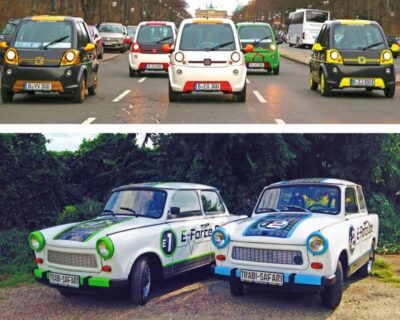
Cars can be manual, and at least one booking included an electric Trabant for a driver who could not use a stick shift. Do not assume that option is available at every departure. If you cannot drive a manual car, check directly before booking.
Potsdamer Platz and the route into central Berlin
Once the convoy leaves, the tour gives you a moving introduction to central Berlin. Potsdamer Platz is one of the first major areas you may pass. Before the Second World War, it was a busy city crossroads. After the war and the division of Berlin, it became a broad, empty zone near the Wall. Since reunification, it has been rebuilt with large modern buildings.
The contrast works well from a Trabant. You move through a part of Berlin shaped by destruction, division, and rapid rebuilding while sitting in a car from the former East. The tour does not replace a full historical walking tour, but it gives you useful bearings and shows how close the city’s different eras sit beside one another.
The driving itself remains the main event. You are not getting out at every sight, so take this as a panoramic introduction rather than a stop-by-stop museum visit. If you want time inside the sites, plan separate visits before or after the safari.
A different sort of day out in Berlin:
- Berlin: Reichstag, Dome and Government District Guided Tour
★ 4.7 · 18,288 reviews - Berlin: 1-Hour City Tour by Boat with Guaranteed Seating
★ 4.3 · 16,993 reviews - Berlin: Boat Tour Along the River Spree
★ 4.4 · 11,252 reviews - Discover Berlin Half-Day Walking Tour
★ 5.0 · 9,624 reviews
Brandenburg Gate and Unter den Linden
The convoy continues toward the Brandenburg Gate, Berlin’s most famous landmark. The gate once sat beside the divided city and later became a symbol of reunification. Driving past it in a Trabant creates a neat collision of old East German transport and modern united Berlin.
Unter den Linden, the grand boulevard leading toward the gate, gives you a sense of central Berlin’s scale. You may have to concentrate on traffic and the car ahead, but the radio commentary helps explain what you are seeing. The guide may also take photographs during the experience, including pictures near the Brandenburg Gate and Wall art.
This is one reason the safari works best early in your Berlin stay. The route gives you a quick sense of how the center fits together. After 75 minutes, you may recognize the relationship between the gate, the river area, Checkpoint Charlie, and the former East Berlin center more easily.
Cathedral, Red City Hall, and the TV Tower
The route also passes Berlin Cathedral, the Rotes Rathaus, and the TV Tower. These sights help shift the tour from Cold War landmarks to the historic and civic center of Berlin.
Berlin Cathedral is easy to recognize by its large dome and formal riverside setting. The Red City Hall serves as a reminder that this part of the city was the administrative center of East Berlin. Nearby, the TV Tower rises above Alexanderplatz and remains one of the clearest visual markers of the former East German capital.
From a normal sightseeing vehicle, these buildings might blend into a long list of names. From a Trabant, you are moving slowly enough to notice the city, but actively enough to keep the route lively. The drawback is that a noisy car and city traffic can make commentary harder to catch at times. The radio is generally clear, yet you should not expect the silence of a walking tour.
Checkpoint Charlie and the Berlin Wall
Checkpoint Charlie is one of Berlin’s most visited Cold War locations. The former crossing point separated the American and Soviet sectors, and today the recreated guardhouse and surrounding displays mark a major chapter in the city’s divided past.
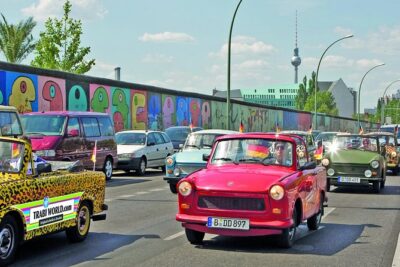
The safari also passes sections of the Berlin Wall and the East Side Gallery. The Wall remains one of the strongest reasons to choose this tour. You see the physical remains and painted sections while driving a car closely tied to the East German era. That pairing gives the route a direct, slightly playful connection to the history.
Do not expect a long stop to study every mural. The route is designed to keep the convoy moving. If the East Side Gallery matters greatly to you, return later on foot so you can examine the art properly. The safari is best for orientation, atmosphere, and the unusual feeling of driving through these places in a former GDR car.
Oberbaum Bridge and the convoy rhythm
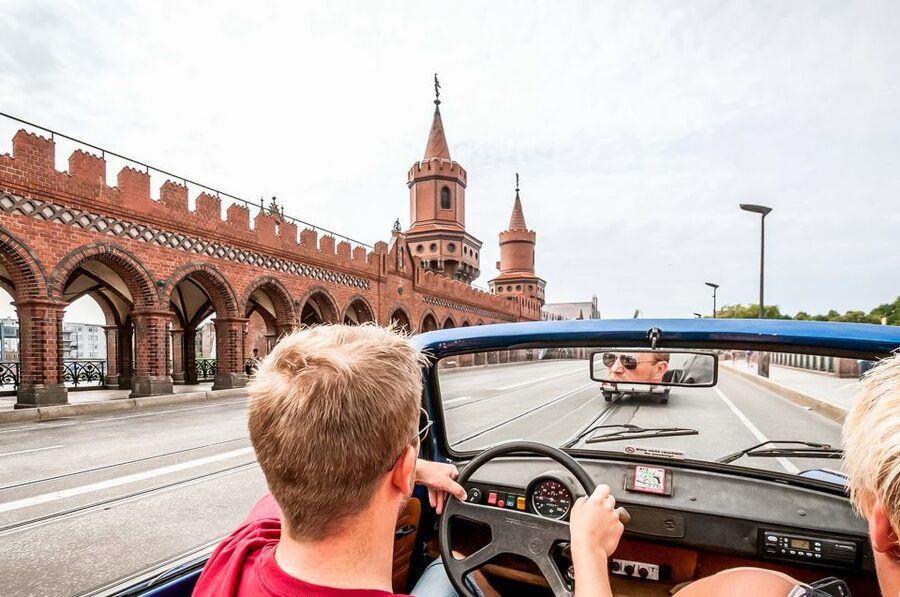
The Oberbaum Bridge is another memorable point on the route. Its brick towers and arches connect districts on either side of the Spree and make it one of Berlin’s most recognizable bridges.
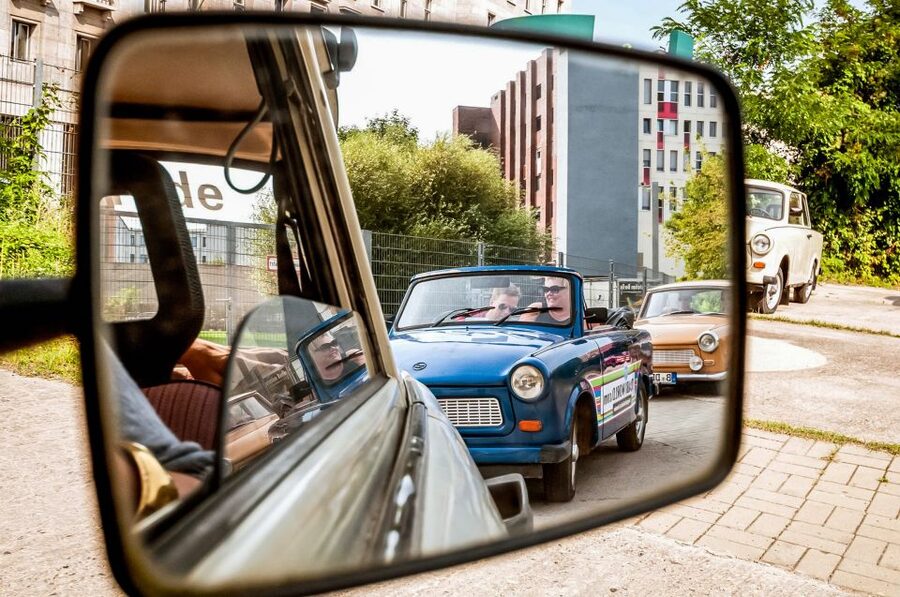
By this stage, you should have a better feel for the Trabant. The group may still separate at traffic lights, but the guide waits and gathers everyone back together. That system is important for nervous drivers. You do not need to maintain perfect convoy discipline every second, though you do need to drive safely and pay attention.
The convoy can include several cars. You get the pleasure of seeing a line of colorful Trabants ahead and behind, but the group size also means traffic can affect the pace. A Sunday departure may be calmer, with less traffic and an easier drive. The exact conditions vary, so consider quieter times if you are worried about driving in central Berlin.
Comfort, space, and switching drivers
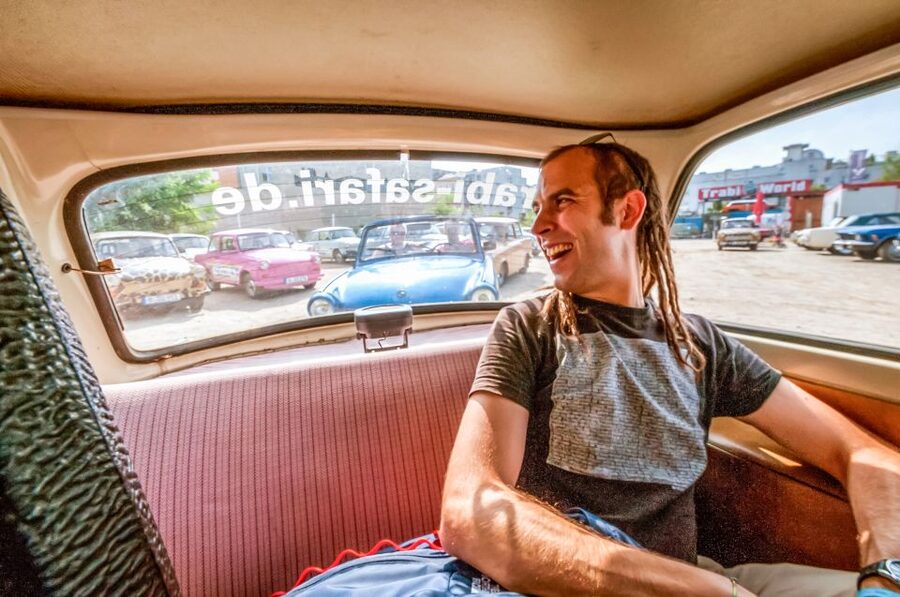
The car’s limits are part of the bargain. Four people can fit, but the interior may feel tight, especially with adults in the back. Passengers around 1.8 to 1.9 meters tall have found the space difficult, and very tall teenagers may need to sit awkwardly behind the front seats.
If two people want to drive, the tour includes a chance to swap halfway through. That makes the price easier to justify for a couple or pair of friends, since both can take part in the central activity. Decide before departure who will drive first, then use the stop to change seats.
The experience can suit someone with mobility limits better than a walking tour because you remain in the vehicle for most of the route. Still, the official requirement is that every driver be fully fit to drive, and the car is not presented as an accessible vehicle. Ask the operator about your specific needs before booking.
Is $93 a fair price?
At $93 per person, the Trabant Safari is not a cheap way to see Berlin’s landmarks. You can view many of the same sights on foot, by public transport, or from a regular sightseeing bus for less.
The value comes from the combination of driving, history, and entertainment. The fee includes the technical instruction, guide, live radio commentary, fuel, unlimited miles for the tour, and a Trabant license. Third-party vehicle damage insurance is included, but it carries an 850 euro deductible. Read that condition carefully and drive conservatively.
I would call it good value for someone who specifically wants to drive a Trabant. It is weaker value if you mainly want detailed information at each monument or a comfortable ride. The 4.8 rating from 2,854 bookings and the 85 percent perfect-score rate point to a consistently strong experience, but the high marks do not change the basic tradeoff: you pay for the novelty.
Who should book the Trabi Safari?
I would choose this for drivers, car fans, families with older children, and anyone interested in East Germany’s everyday history. It is also a smart first-day activity because the route helps you get your bearings around central Berlin.
You should think twice if you dislike manual gearboxes, cramped cars, noisy engines, or attention from pedestrians. This is not a polished luxury tour. The car may feel rough, the controls may test your patience, and traffic can bring a few anxious moments.
Afterward, you can visit the Trabi Museum at TrabiWorld to add more context. That pairing makes sense: first try to drive the car, then learn more about its place in GDR life.
Should you book it?
Book the Trabi Safari if you want Berlin sightseeing with a steering wheel in your hands. The route covers major sights, but the real attraction is the comic challenge of handling a slow, historic car while a guide such as Thomas or Axel keeps the convoy moving and the mood light.
Skip it if you want a quiet, detailed history tour or need generous legroom. For everyone else, especially two people who plan to swap drivers, the 75 minutes offer a memorable and genuinely local-feeling way to connect Berlin’s modern streets with its divided past.
FAQ
Where does the Trabi Safari start?
It starts at TrabiWorld, Zimmerstraße 97 to 100, at the corner of Wilhelmstraße in Berlin.
How long does the tour last?
The tour lasts 75 minutes.
What sights does the route pass?
The route passes Potsdamer Platz, the Brandenburg Gate, Unter den Linden, Berlin Cathedral, the Rotes Rathaus, the TV Tower, East Side Gallery, Oberbaum Bridge, and Checkpoint Charlie.
Do I drive my own Trabant?
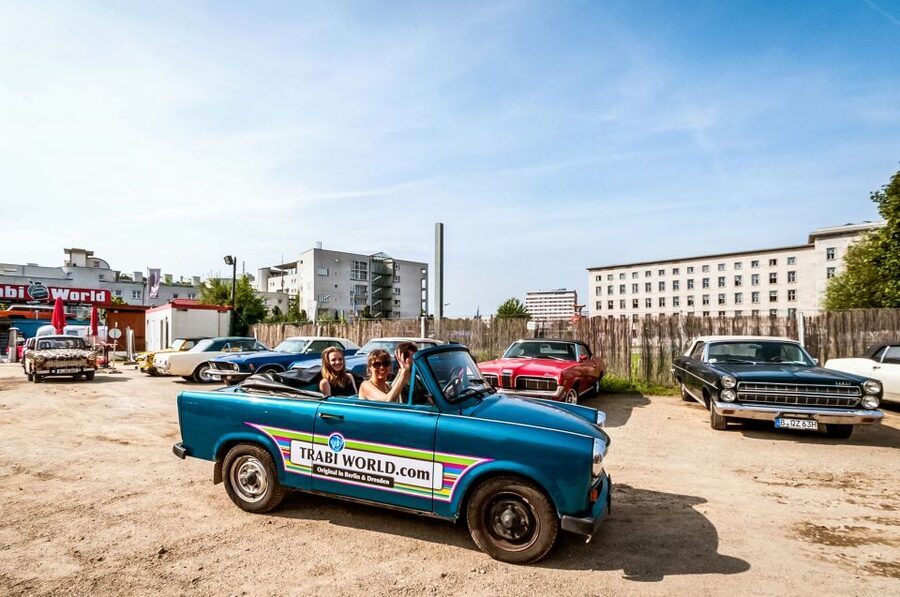
Yes. Each booking receives its own personal Trabant, and the car is not shared with people from other bookings. Other participants drive separate cars in the same convoy.
Can two people drive during the tour?
Yes. Drivers can switch during the experience, and the changeover allows two people to take a turn behind the wheel.
What driving license do I need?
You must be at least 18 years old and hold a Class B driving license. You also need to be fully fit to drive and must bring your license.
How many people fit in one Trabant?
A Trabant can carry up to four people, with a total maximum weight of 330 kilograms or 727 pounds. Every participant needs a ticket, although children can receive a free ticket.
Is commentary available in English?
Yes. The tour offers English and German, with a live guide at the front of the convoy and audio commentary in each car.
Newest Berlin reviews
- Where It All Began: Berlin’s Queer & Trans History Tour★ 4.9 · 6 reviews
- Understanding Kreuzberg: The roots of local (sub)culture★ 4.9 · 11 reviews
- Berlin: guided canoe | kayaktour★ 4.1 · 7 reviews
- Private Potsdam City Tour in an authentic vintage van★ 5.0 · 14 reviews
- Warnemünde Shore Excursion: Private Sachsenhausen and Berlin Tour★ 5.0 · 12 reviews
- Ultimate E-Bike Tour of Berlin with Beer Garden Stop★ 5.0 · 4 reviews
- In the Forbidden City – Potsdam Walking Tour★ 5.0 · 17 reviews
- Private Walking Tour of Potsdam and Sanssouci★ 5.0 · 24 reviews
Berlin Trabi Safari Tours, compared.
Browse the lists this tour appears in