
Reviewed · SACHSENHAUSEN CONCENTRATION CAMP TOURS
Berlin: Sachsenhausen Concentration Camp Tour in English
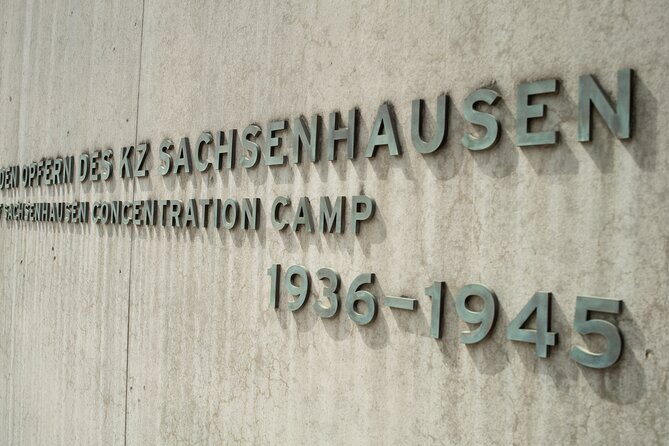
Sachsenhausen is not a sightseeing stop in the usual sense. It is a place for facing difficult evidence, asking hard questions, and remembering people who were imprisoned and killed by a system built on terror. This six-hour outing connects Berlin to the memorial by public transport, then uses the site itself to explain what happened before, during, and after the Nazi period.
I like the clear historical structure, which covers the camp’s creation in 1936, its wartime use, the 1945 Death March, and the Soviet period that followed. I also like the human stories, including prisoner resistance, British POW defiance, sabotage by Soviet and Polish prisoners, and the imprisonment of Stalin’s son. The main drawback is the amount of walking and outdoor standing, especially in cold, wet, or windy weather.
Key points to know before you book
- A six-hour history lesson: Allow 5.5 to 6 hours from central Berlin and expect about three hours at the memorial.
- Public transport is part of the experience: You take a train to Oranienburg, walk about 20 minutes to the site, and return by train.
- The tour covers more than the Nazi camp: You also learn how Sachsenhausen was used by the Soviets after World War II.
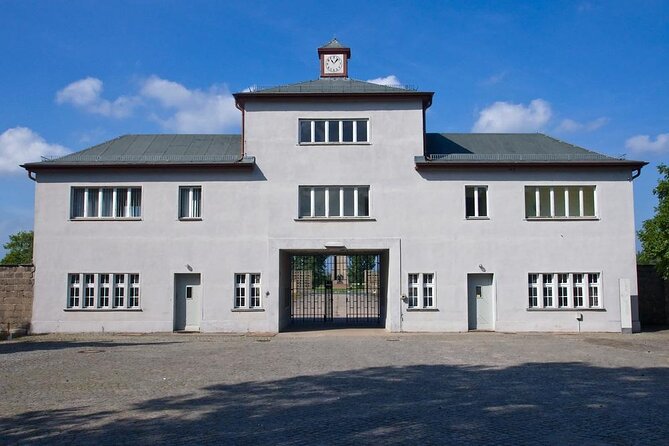
- Important locations are included: Station Z, the Jewish Barracks, punishment cells, the infirmary, gallows, watchtower, and Special Camp 1/7.
- Guides shape the day: Daniel, Paul, Xavier, Georgia, Rebecca, Gregor, and others have been praised for clear explanations and sensitive handling of the subject.
- Plan for the basics: An ABC public transport ticket, water, snacks, sturdy shoes, and weatherproof clothing are all useful.
Why Sachsenhausen belongs on a Berlin itinerary
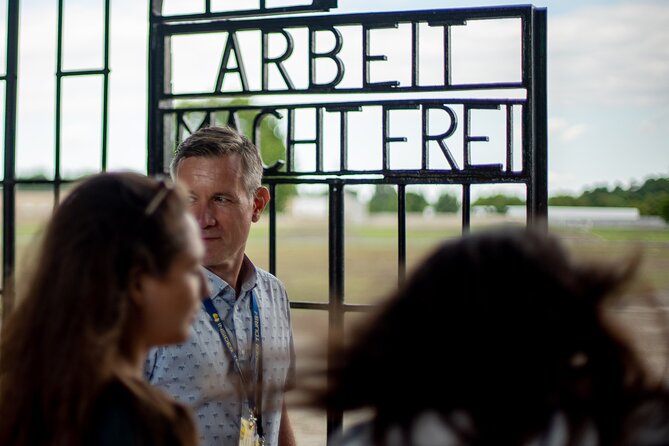
Berlin has many museums about the Nazi era, but Sachsenhausen gives you something a city museum cannot: the physical setting of a concentration camp. The remaining buildings, foundations, open spaces, and memorial markers help you understand the scale and organization of the place.
The SS began building Sachsenhausen in 1936. It was first intended for people considered political opponents of the Nazi regime, then expanded to include many groups the NSDAP labeled dangerous or undesirable. The camp also became an administrative center for the concentration-camp system, making its history important beyond the prisoners held inside its fences.
This is a serious visit, and the subject matter is upsetting. The point is not entertainment. A good guide helps you understand the machinery of persecution while keeping attention on the people caught inside it. That balance matters here, because a list of dates and buildings can easily become cold and abstract.
The tour has earned a 4.8 rating from 1,889 reviews, and the strongest praise centers on the guides’ care, organization, and ability to explain a painful subject without turning it into a performance. Daniel is often singled out for his energy and use of photographs. Irish Paul has been praised for detailed explanations and for looking after the group in freezing weather. Georgia, Xavier, Rebecca, Gregor, and Tina are also noted for patience, empathy, and clear answers.
Guide assignments can change, so you should not book on the assumption that you will receive a particular person. Still, these comments point to the main strength of the tour: the guide is not simply leading you from one building to the next. The guide provides the framework that makes the site intelligible.
More Sachsenhausen memorial visits from Berlin:
- Berlin: Sachsenhausen Concentration Camp Tour in English
★ 5.0 · 5,711 reviews - Berlin: Sachsenhausen Concentration Camp Memorial Tour
★ 4.7 · 3,716 reviews - Sachsenhausen Concentration Camp Bus Tour in English from Berlin
★ 5.0 · 1,962 reviews
Meeting at Friedrichstraße and taking the train
The standard meeting point is outside Friedrichstraße train station, on the square beside the Tränenpalast, also called the Palace of Tears. Look for guides carrying yellow umbrellas. The exact starting place can depend on the option you choose, so check your booking details before leaving your hotel.
The train trip to Oranienburg takes roughly 25 to 35 minutes, depending on the service and timing. Your guide accompanies you from Berlin, which removes much of the stress of finding the right train and keeping a group together.
You need an ABC-zone public transport ticket for the trip to Sachsenhausen and back. It is not included in the tour price, but on-site staff can help you buy one at the meeting point. Keep this cost in mind when comparing the $22 tour price with a self-guided visit.
The return train is listed as taking about 45 minutes. Public transport makes the outing less private and more flexible than a dedicated coach, but it also means you are dealing with regular stations, platforms, and possible delays. One positive result is that the route feels connected to ordinary life in Berlin. You leave the city center, pass into Oranienburg, and then walk the same general route toward the memorial that prisoners once had to take.
The 20-minute walk from Oranienburg
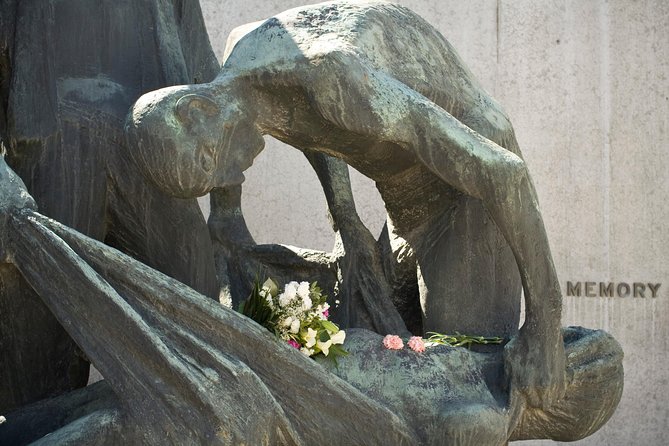
From the station, you walk about 20 minutes to Sachsenhausen. This is one of the few practical drawbacks that comes up repeatedly in the tour information and visitor comments. The distance is manageable for most people who are comfortable walking, but it can feel long in winter, in rain, or for anyone with knee, hip, or foot problems.
Wear comfortable shoes. You will be walking at the memorial as well, often on open ground and around widely spaced sections of the former camp. Bring water and a small snack, since food and drinks are not included and the full outing runs into lunchtime or later.
This approach also helps establish the setting before you enter the site. You are not being dropped at a museum entrance and rushed indoors. You gradually move from a normal town into a place marked by memory and loss.
The Camp Administration Center sets the context
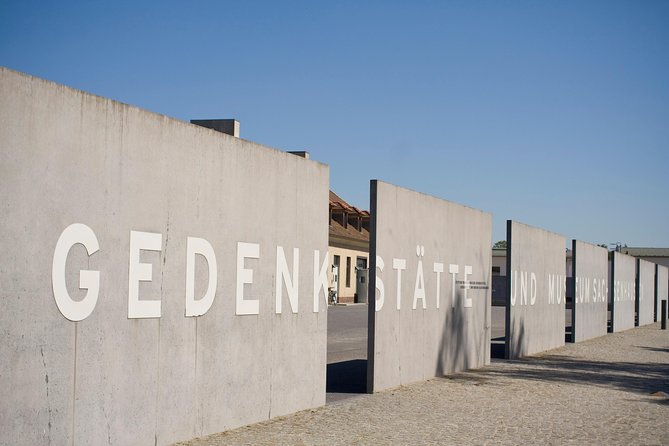
The guided visit begins at the former Concentration Camps Inspectorate, now the Camp Administration Center museum. This building once served as the headquarters responsible for overseeing the Third Reich’s 32 main camps and more than 1,000 satellite camps.
That detail changes how you read Sachsenhausen. It was not an isolated prison operating on its own. It was connected to a large administrative system, and decisions made here affected camps and prisoners elsewhere.
Your guide explains the camp’s construction, its changing prisoner population, and the harsh conditions imposed on those held there. This opening section is especially useful if your prior knowledge is limited. Several visitors have praised guides for making the material accessible to people with different levels of familiarity.
A different sort of day out in Berlin:
- Berlin: Reichstag, Dome and Government District Guided Tour
★ 4.7 · 18,288 reviews - Berlin: 1-Hour City Tour by Boat with Guaranteed Seating
★ 4.3 · 16,993 reviews - Berlin: Boat Tour Along the River Spree
★ 4.4 · 11,252 reviews - Discover Berlin Half-Day Walking Tour
★ 5.0 · 9,624 reviews
Barracks, prisoner life, and the Jewish Barracks
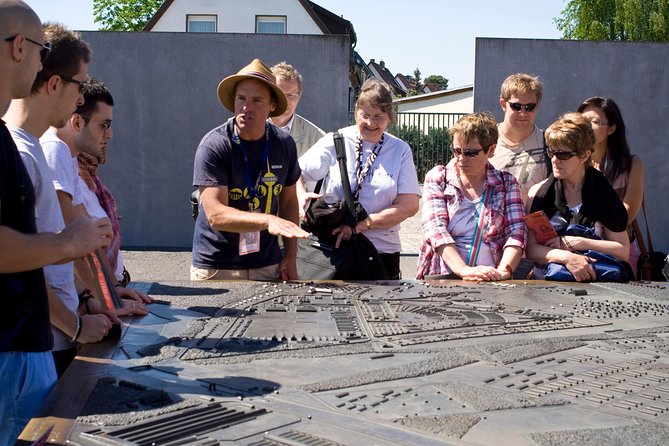
The barracks show the camp as a place of daily control as well as mass violence. You learn about prisoner routines, treatment, deprivation, and the way different prisoner groups were classified by the Nazi system.
The Jewish Barracks are among the most important places on the route. They help focus the story on individual lives rather than only on camp structures. You also hear about the 1942 revolt by Jewish prisoners, along with acts of resistance by British prisoners of war and sabotage carried out by Soviet and Polish prisoners.
The tour also discusses notable prisoners, including Stalin’s son. These individual stories are useful because they show that prisoners did not experience the camp in one identical way. Nationality, political status, religion, military background, and the label assigned by the Nazis all affected treatment, though nobody held there was safe from the system’s brutality.
Station Z and the mechanics of mass murder
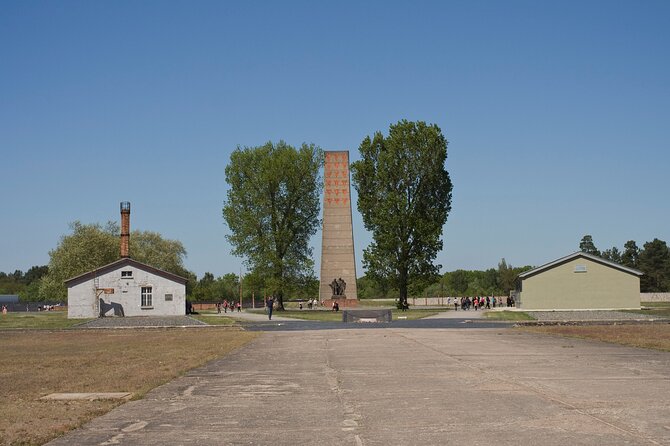
Station Z is the site associated with mass murder at Sachsenhausen. The tour also points out the location of the gas chamber, gallows, and other killing sites.
These are difficult places to visit. A guide’s tone matters greatly here. The strongest guides named in the feedback, including Chris, Xavier, Gregor, and Paul, are praised for handling the material with care rather than sensationalism.
You should expect graphic and distressing historical information. If you have recently visited several war museums or memorials, the emotional weight may build across the day. Take a quiet moment when needed. The group schedule allows the guide to explain the site, but you do not need to treat every stop as a test of endurance.
Station Z is particularly important because the physical remains and memorial presentation make clear that killing was organized, planned, and carried out through a system of staff, buildings, procedures, and records. The location is not presented as a single terrible incident, but as part of the wider operation of the camp.
Watchtower, Commandant’s House, and the view of control
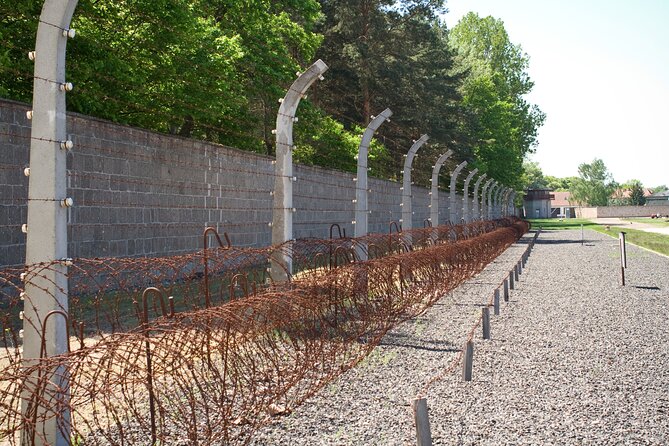
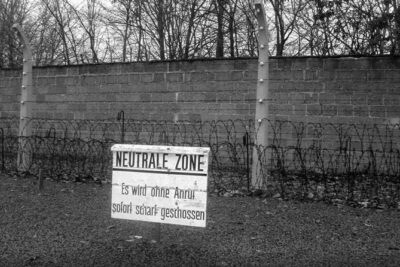
The watchtower and Commandant’s House show the contrast between those who controlled Sachsenhausen and those imprisoned inside it. The site layout was designed for surveillance and authority, with the SS presence built into the camp’s organization.
Your guide explains the role of the SS and the way the camp operated. The nearby SS Training Camp also helps show that Sachsenhausen was part of a wider training and administrative structure, not merely a collection of prisoner barracks.
These sections are less emotionally direct than Station Z, but they are valuable. They explain how violence depended on routine, hierarchy, and physical control. You see how a place can be made to function as an institution of punishment and murder.
Punishment cells and the infirmary
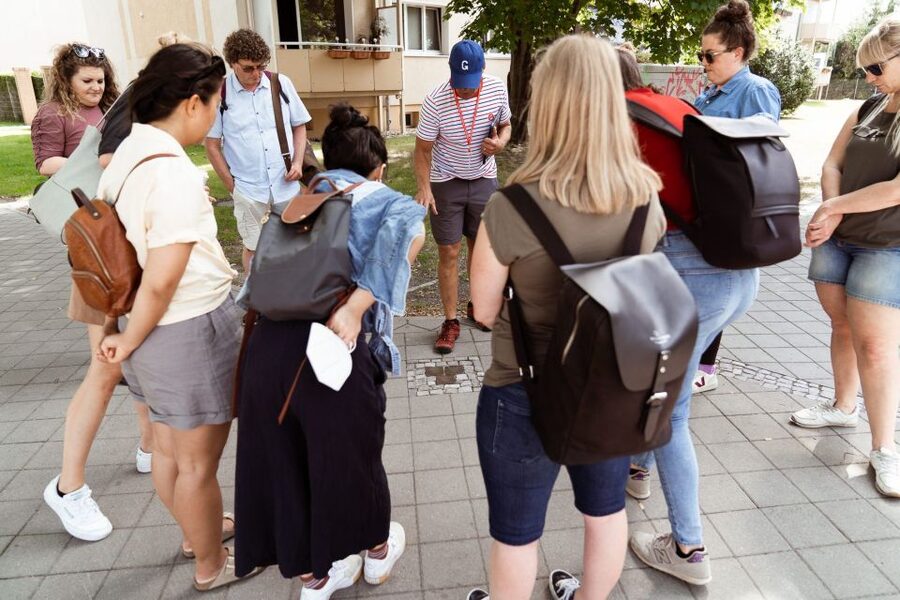
The Punishment Cells are included on the route. This section focuses on discipline and the ways prisoners could be isolated or abused inside the camp system.
The Infirmary and Pathology Laboratory add another layer. You learn about medical experimentation and the treatment of prisoners’ bodies after death. The subject can be especially hard to hear, so this is a point where you may want to stay close to your group and ask questions when the guide pauses.
The value of having a live guide becomes clear here. A self-guided visit can show you a room and a label, but a good explanation connects the room to the camp’s larger system and to the people who suffered there. Guides such as Mikhail, Ariel, and Jamie have been praised for making difficult information understandable while maintaining respect.
The Death March and Sachsenhausen after 1945
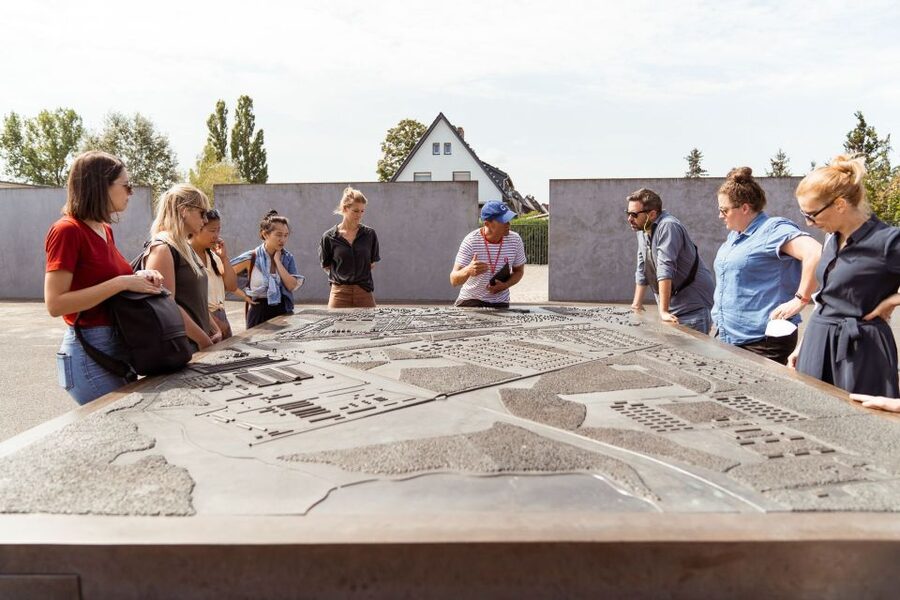
The tour does not stop with liberation. As the war ended in 1945, prisoners were forced onto the Death March before the camp was liberated. Your guide explains what happened during this final phase and how the camp’s story continued afterward.
Sachsenhausen was later used by the Soviets. Special Camp 1/7 is the key place for learning about this second period. The site therefore asks you to hold two connected but distinct histories in mind: Nazi imprisonment and murder, followed by Soviet imprisonment after the war.
This broader time frame is one of the tour’s best features. It prevents the memorial from becoming a single-period display and shows how the same buildings and grounds were reused under a different political system. You leave with a fuller understanding of why the site remains complicated and important.
Pace, group size, and the role of the guide
The tour is available as a private or small-group experience, depending on the option you choose. At busy times, a large overall booking may be divided into smaller groups. One visitor described a very large day being split into smaller groups at the memorial, which made the explanations easier to follow.
The walking pace is moderate, but the day is long. You should be ready to stand outside while the guide explains buildings and events. In December, one self-guided visitor found the outdoor conditions unpleasant, while other visitors praised guides for positioning groups out of the wind and adapting to cold weather.
The guide also manages the return journey. That practical support is useful after an emotionally demanding visit, especially if you are unfamiliar with Berlin’s public transport system. Some guides offer suggestions for other things to do in Berlin, but that is an extra kindness rather than a guaranteed part of the tour.
Is $22 good value?
At $22 per person, the tour is inexpensive for a half-day outing led by a licensed English-speaking guide. The price includes the guided visit and a €3 donation to the memorial, but not your ABC public transport ticket, food, or drinks.
The value comes from the interpretation and logistics. You receive help with the route from Berlin, an organized visit to a large and complicated memorial, and explanations that cover the Nazi period, prisoner resistance, the Death March, and Soviet use of the site.
A self-guided visit may cost less if you already know the public transport system and prefer to read at your own pace. But you would need to plan the route, understand the site layout, and build your own historical framework. For a first visit, the guide-led format offers a strong return for the money.
Who should book this Sachsenhausen tour?
I would choose this tour if you want historical context and prefer not to manage the train journey alone. It suits adults, older children who can handle the subject, students, and anyone interested in the Holocaust, Nazi Germany, prisoner resistance, or postwar Berlin.
It is not a good fit if you dislike group schedules, need frequent seating, or have limited mobility. The tour is not wheelchair accessible and is not recommended for people with walking impairments. You should also avoid booking it as a light afternoon activity. The material is upsetting, and the long outdoor visit can be tiring.
Book comfortable shoes, water, snacks, and clothing for rain or cold. The tour runs in all weather. Cancel up to 24 hours before departure for a full refund, and reserve-now-pay-later availability can help if your Berlin schedule is still changing.
Should you book it?
Book this Sachsenhausen tour if you want a well-organized, serious visit with an English-speaking guide who can connect the buildings to the people and systems behind them. The $22 price is especially good if you value help with public transport and a clear explanation of a complicated site.
Skip it if you want a short museum visit, dislike walking, or are not ready for accounts of mass murder, punishment, medical abuse, and forced marches. For everyone else, this is one of the most worthwhile history outings from Berlin, provided you give it the time and attention it deserves.
FAQ
Where does the Sachsenhausen tour meet in Berlin?
The standard meeting point is outside Friedrichstraße train station, on the square beside the Tränenpalast, also called the Palace of Tears. Look for guides holding yellow umbrellas.
How long does the tour last?
The full experience lasts about 5.5 to 6 hours. This includes the train journeys, the walk from Oranienburg station, and about three hours at the Sachsenhausen Memorial.
How do I get to Sachsenhausen from Berlin?
You travel by public train from central Berlin to Oranienburg, then walk about 20 minutes to the memorial site. Your guide accompanies you on the journey.
Is public transport included in the price?
No. You need an ABC-zone public transport ticket for the trip to Sachsenhausen and back to Berlin. It can be purchased on the day with help from on-site staff.
What does the tour price include?
The price includes a licensed English-speaking guide, the guided camp visit, and a €3 donation to the memorial. Food, drinks, and public transport tickets are not included.
Is the tour available in English?
Yes. The tour is offered with a live English-speaking guide. German-language tours are also available.
Is the memorial wheelchair accessible?
No. The activity is not wheelchair accessible and is not recommended for people with limited mobility or walking impairments.
What should I bring?
Bring comfortable shoes, water, snacks, comfortable clothing, weather protection, and your public transport ticket. The tour runs in all weather and includes a moderate amount of walking.
Newest Berlin reviews
- Where It All Began: Berlin’s Queer & Trans History Tour★ 4.9 · 6 reviews
- Understanding Kreuzberg: The roots of local (sub)culture★ 4.9 · 11 reviews
- Berlin: guided canoe | kayaktour★ 4.1 · 7 reviews
- Private Potsdam City Tour in an authentic vintage van★ 5.0 · 14 reviews
- Warnemünde Shore Excursion: Private Sachsenhausen and Berlin Tour★ 5.0 · 12 reviews
- Ultimate E-Bike Tour of Berlin with Beer Garden Stop★ 5.0 · 4 reviews
- Potsdam Highlights – Private sightseeing tour by minibus★ 5.0 · 3 reviews
- In the Forbidden City – Potsdam Walking Tour★ 5.0 · 17 reviews
Sachsenhausen Concentration Camp Tours, compared.
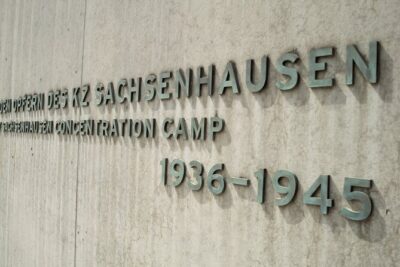
Sachsenhausen Concentration Camp Tour in English
Read our review →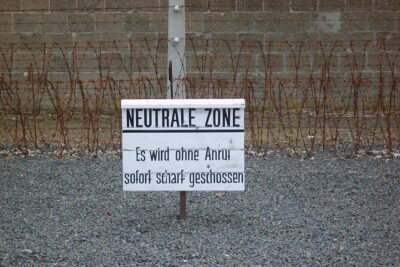
Sachsenhausen Concentration Camp Memorial Tour
Read our review →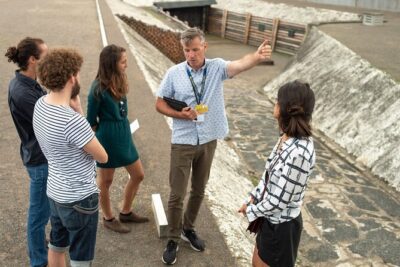
Sachsenhausen Concentration Camp Bus Tour in English from Berlin
Read our review →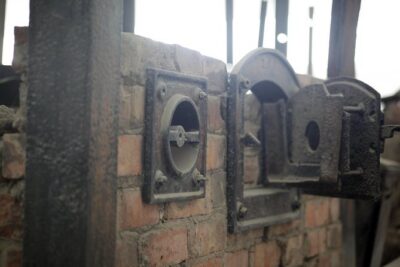
Sachsenhausen Concentration Camp Memorial Tour (Max. 15 Guests)
Read our review →
Sachsenhausen Concentration Camp and Potsdam Tour
Read our review →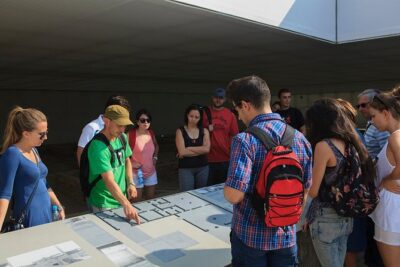
Visita en español al campo de concentración Sachsenhausen
Read our review →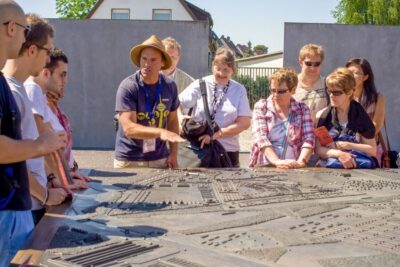
Sachsenhausen Concentration Camp Bus Tour in English
Read our review →Browse the lists this tour appears in