
Reviewed · MUSEUMS
Berlin: Museum of Communication Entrance Ticket
Berlin’s Museum of Communication takes you from a hand axe to a smartphone, showing how people have shared news, ideas, warnings, and affection across 40,000 years. The museum is housed in the world’s oldest postal museum, but this is not just a display of old letters and stamps. You can send signals, test digital terminals, and take part in small communication experiments.
I like the Blue Mauritius stamp, a famous rarity that gives the collection a clear star attraction. I also like the hands-on communication gallery, where you can try smoke, light, and acoustic signals instead of simply reading about them. The main consideration is pace: the ticket is valid for one day, but the planned visit lasts about 1.5 hours, so you will need to choose how closely you examine each display.
Key points
- See the Blue Mauritius: One of the world’s most famous and rarest stamps is part of the museum’s postal story.
- Try communication systems yourself: Interactive terminals let you experiment with smoke, light, and acoustic signals.
- Cover 40,000 years in one museum: The collection moves from early tools to smartphones and current communication debates.
- Use the audio-visual app: The app helps you explore independently rather than follow a fixed guided route.
- A good family stop: Hands-on postal and communication displays give children something to do, not just something to read.
- Plan around opening days: The museum is closed on Mondays and on December 24, 25, and 31.
From Hand Axes to Smartphones in 1.5 Hours
The museum’s basic idea is simple and useful: communication changes when people find a faster, clearer, or more widely shared way to send information. You begin with very early forms of human expression and move through postal systems, signaling methods, media, and digital communication.
That broad time span gives the visit a helpful rhythm. You are not looking at one narrow corner of technology. Instead, each section asks how people solved the same basic problem: how do I get a message to someone who is far away, hard to reach, or unable to hear me directly?
The displays cover around 2,000 objects, so you should not expect to study every item in detail during a short visit. I would treat 1.5 hours as a solid first pass. You can see the main themes, try the interactive stations, and stop for the objects that catch your attention.
The museum also connects older communication methods to current debates. That makes the visit more than a timeline of inventions. It invites you to think about how communication affects daily life now, especially when smartphones and digital displays have made messages almost instant.
More museums and galleries in Berlin:
- Berlin: Natural History Museum Entrance Ticket
★ 4.6 · 3,382 reviews - Skip-the-Line: Berlin Wall Museum at Checkpoint Charlie
★ 4.1 · 2,041 reviews - Berlin: Museum Island Multiple Museum Entry Ticket
★ 4.4 · 2,007 reviews
The Blue Mauritius and the Postal Story
The Blue Mauritius is the museum’s headline object for many people. It is among the world’s best-known and rarest stamps, so it gives the postal collection a memorable focal point.
You do not need to be a stamp collector to appreciate why it matters. A stamp looks tiny, but it represents a major change in how people maintained relationships, handled business, and sent information across distance. The Blue Mauritius also shows how a small object can carry a large financial and cultural value.
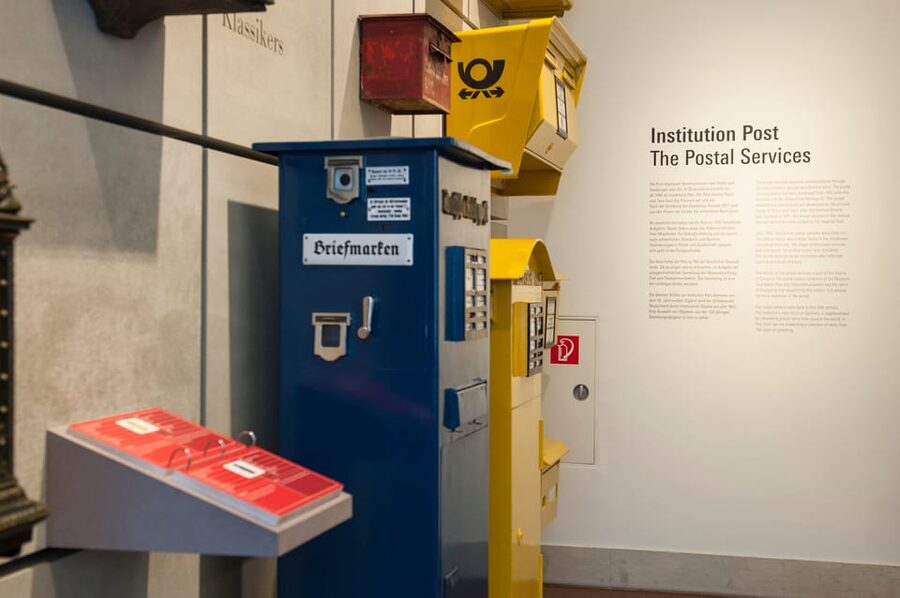
The postal material works best when you look at it as part of a larger communication system. A letter needed a message, an address, a delivery network, and a way to mark payment. The stamp is only one piece of that chain.
If you have children with you, the postal displays may need some help from the interactive areas to hold their attention. The rare stamp is worth seeing, but younger visitors often connect faster with objects they can touch or operate.
The Communication Gallery Around the Atrium
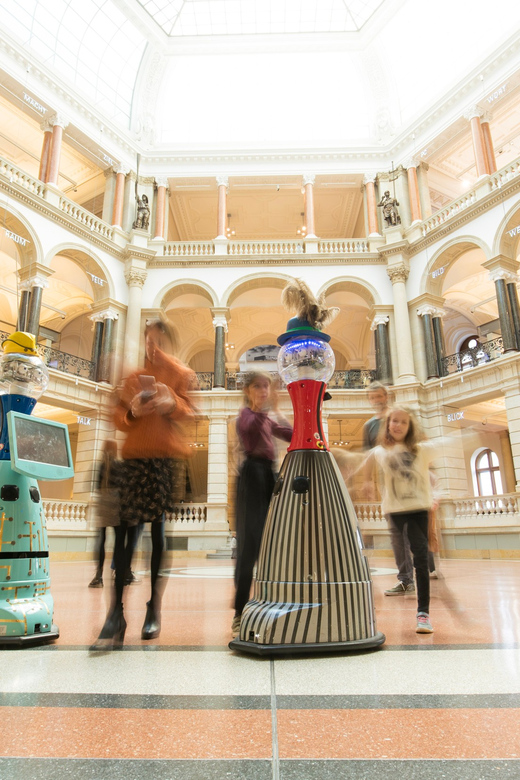
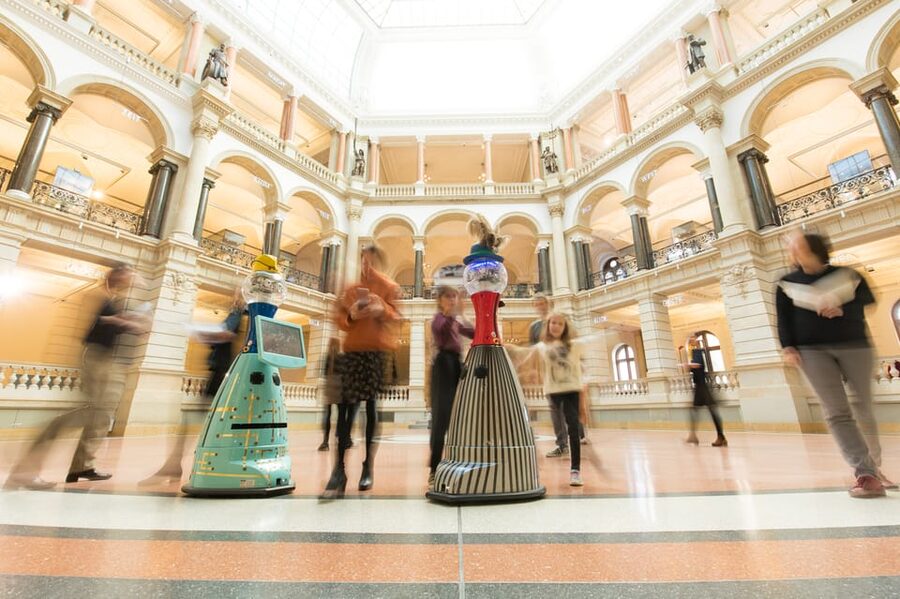
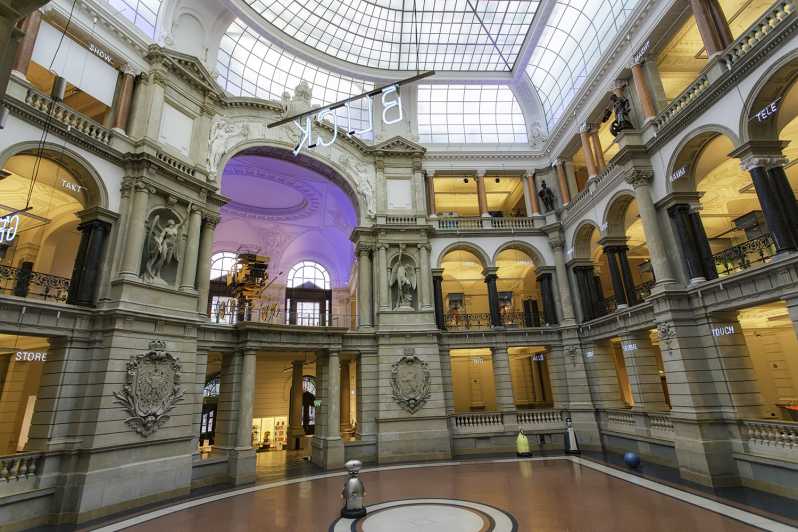
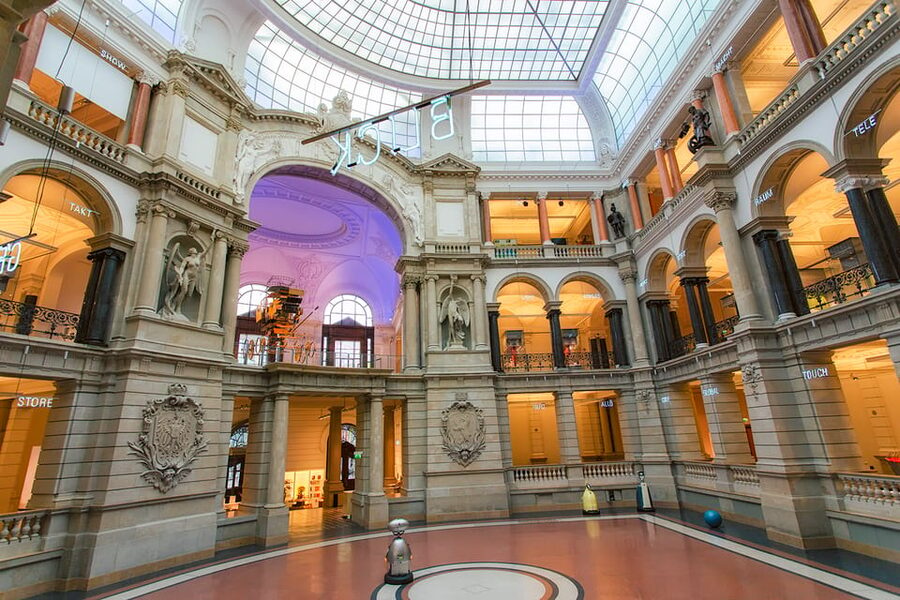
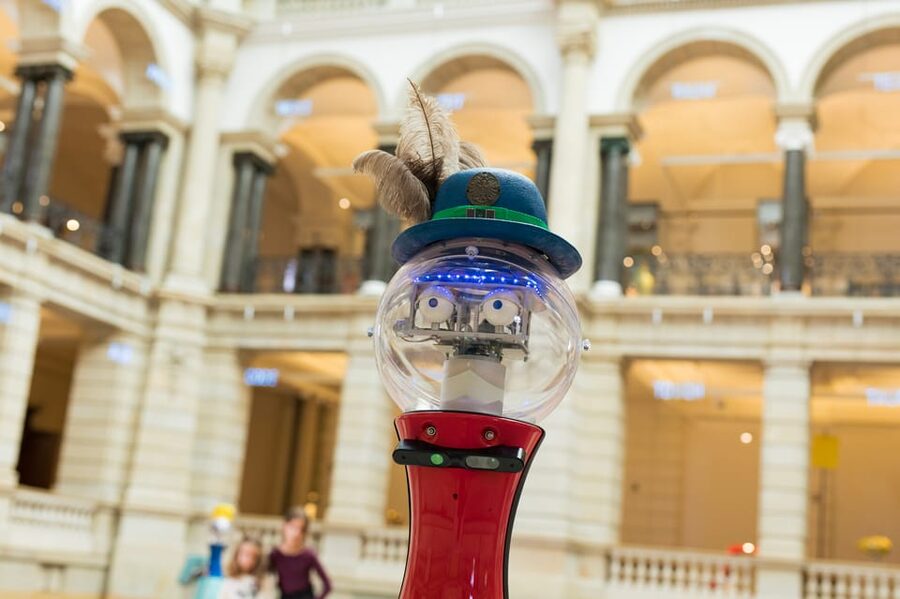
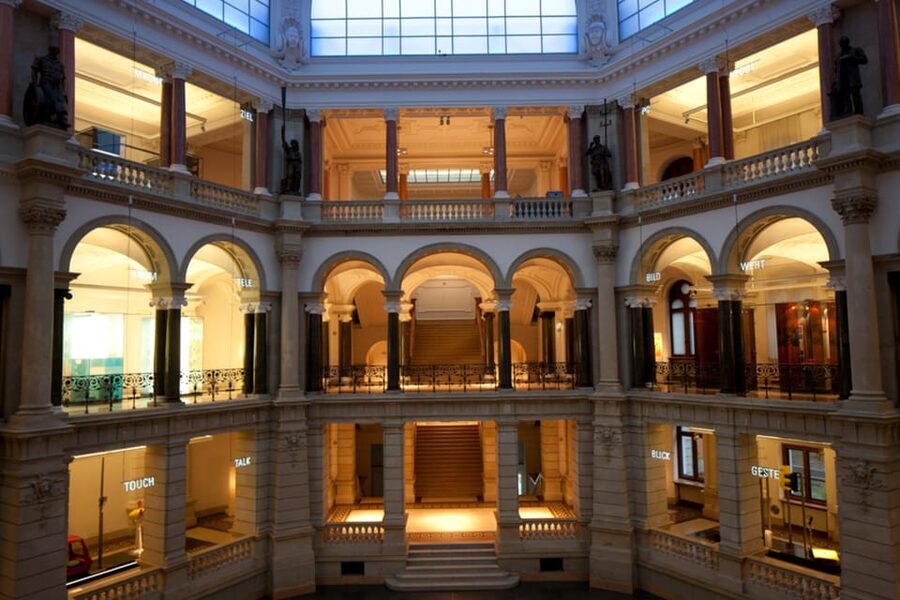
The communication gallery is the museum’s liveliest area. Around the atrium, interactive terminals let you explore basic ideas in a direct way.
You can exchange news by smoke, light, or acoustic signals, then try digital displays that show how communication works across different channels. These activities turn an abstract subject into a physical one. Instead of reading that people once used visual or sound-based signals, you get a chance to test the idea yourself.
This is also where the museum works best for families. A child who has lost interest in labels may still want to send a signal or try a terminal. The hands-on design gives the visit a more active pace, though not every station will appeal equally to every age group.
The gallery is useful for adults, too. It reminds you that modern communication is still built around old questions: speed, distance, clarity, attention, and trust. The tools change, but the basic challenge remains familiar.
An Audio-Visual App Instead of a Fixed Tour

Your ticket includes an audio-visual app, so you can explore without following a guide or joining a set group. That suits people who prefer to stop when something interests them and move on when a display does not.
The app is especially useful in a museum with such a wide subject range. You can use it to give structure to the visit, find context for selected objects, and avoid feeling lost among the 2,000 items.
This format also keeps the experience flexible. You can spend more time with postal history, focus on communication technology, or follow the interactive displays. The tradeoff is that a self-guided visit depends on you setting your own pace. If you want a person to lead you from one object to the next, this ticket does not promise that kind of tour.
I would use the app as a guide rather than trying to absorb every piece of information. Pick a few areas that interest you, then allow time for the terminals and signal experiments.
Other Berlin experiences to weigh up
- Berlin: Berlin Story Bunker Entry Ticket
★ 4.6 · 6,759 reviews - Berlin: Illuseum Berlin Entrance Ticket
★ 4.1 · 3,970 reviews - Berlin: Madame Tussauds Admission Ticket
★ 4.6 · 3,941 reviews - Potsdam: Sanssouci Palace and Prussian Palaces Entry Ticket
★ 4.5 · 2,101 reviews
A Visit Built for Participation

The museum’s exhibitions are designed as an invitation to take part. You are encouraged to discover different points of view, become active, and consider how communication works in society.
That approach gives the museum a more current feel than a traditional postal collection. The subject is not limited to envelopes, telephones, and old machines. The exhibitions also refer to present-day communication debates and ask you to think about how people interact with technology and with one another.
One particularly useful detail is the focus on greeting people from around the world. This makes communication feel personal rather than purely technical. A greeting can carry language, custom, identity, and social meaning, all in just a few words or gestures.
The museum also includes a Berliner Salon area. Based on the available information, it can be a memorable part of the visit, especially for visitors interested in cultural communication and social exchange. As with any museum section, the time you spend there will depend on your pace and on which themes appeal to you.
Why the $9 Ticket Can Be Good Value
At $9 per person, the ticket is reasonably priced for a museum visit that combines collections, interactive displays, and an audio-visual app. The value is strongest if you enjoy learning by doing, or if you want a compact indoor activity that works for several age groups.
You are paying for access across the day, not just a short presentation. The ticket is valid for one day, and the app is included. That gives you room to move through the museum without rushing from a timed entry slot.
Still, the value depends on how you visit. If you spend only a few minutes looking at the Blue Mauritius and leave, the price may feel less attractive. If you use the terminals, explore the galleries, and follow the communication story from early tools to smartphones, the ticket makes more sense.
The museum is also a practical choice in poor weather. It offers a focused indoor stop without requiring a full-day commitment. The stated visit length is about 1.5 hours, which fits neatly before or after another Berlin activity.
Timing, Payment, and Access
You do not need to reserve a time slot for the museum visit. That makes the ticket easier to fit into a day when your plans are not fixed.
The ticket can be purchased without cash, and the museum counter accepts cash. Keep the opening calendar in mind: the museum is closed on Mondays and on December 24, 25, and 31. On public holidays, it is open from 10:00 in the morning until 6:00 in the evening.
The experience is wheelchair accessible. Hotel pickup and drop-off are not included, so you arrange your own way to the Museum for Communication Berlin.
You can cancel up to 24 hours in advance for a full refund, and the reserve now, pay later option lets you hold a place without paying immediately. These details matter if your Berlin schedule is still moving around.
Who Will Enjoy This Museum Most
I would recommend this experience to families, technology fans, postal-history enthusiasts, and anyone who likes museums with interactive elements. It also suits a solo visitor who wants to explore quietly with an app rather than join a group.
The museum is a good match if you want context, not just objects. You can see a rare stamp, but you can also think about why stamps mattered. You can try a smoke signal, then connect it to modern methods of sending information.
Children are likely to respond best when adults keep the visit active. Use the interactive gallery as an anchor, then add the postal exhibits and historical displays around it. The hands-on elements and communication activities make this more suitable for families than a collection made up only of glass cases.
You may want something else if you prefer a large art collection, a dramatic historic building, or a guided tour with a named expert. The information provided does not identify individual guides, and the ticket is for a self-guided visit.
My Practical Plan for the Visit
I would allow about 1.5 hours, with a little flexibility if you enjoy the subject. Start with the broad story so you understand how the museum links early communication to modern technology.
Next, spend real time in the communication gallery. The smoke, light, and acoustic signal activities are not just side attractions. They explain the central theme better than a long label can.
Then look for the Blue Mauritius and the postal displays. The stamp gives the visit a clear object to remember, while the wider postal collection explains the system behind it.
Finish with the digital displays and any current communication themes that catch your attention. This order keeps the visit moving from basic ideas to more modern questions.
Should You Book the Museum for Communication?
Book it if you want an affordable, flexible museum stop with a rare stamp, hands-on experiments, and a broad story that reaches from early human tools to smartphones. The $9 price is strongest when you use the app and interact with the displays rather than treating the museum as a quick photo stop.
Skip it if you want a formal guided tour or a museum devoted only to art or postal collectibles. For most families and curious adults, though, the mix of objects and activities makes this a useful 1.5-hour addition to a Berlin day.
FAQ
How long does the Museum of Communication visit last?
The planned visit lasts about 1.5 hours, though your ticket is valid for one day.
Do I need to reserve a time slot?
No. You do not need to reserve a time slot for the museum visit.
What is included with admission?
Admission to the Museum of Communication Berlin and an audio-visual app are included.
Can I see the Blue Mauritius stamp?
Yes. The museum includes the Blue Mauritius, one of the world’s most famous and rarest stamps.
Is the museum suitable for children?
Yes. Interactive displays let children try communication activities, including smoke, light, and acoustic signals. The museum also includes hands-on postal and digital displays.
Is the museum wheelchair accessible?
Yes. The experience is wheelchair accessible.
When is the museum closed?
The museum is closed on Mondays and on December 24, 25, and 31.
What are the public holiday opening hours?
On public holidays, the museum is open from 10:00 AM to 6:00 PM.
Newest Berlin reviews
- Where It All Began: Berlin’s Queer & Trans History Tour★ 4.9 · 6 reviews
- Understanding Kreuzberg: The roots of local (sub)culture★ 4.9 · 11 reviews
- Berlin: guided canoe | kayaktour★ 4.1 · 7 reviews
- Private Potsdam City Tour in an authentic vintage van★ 5.0 · 14 reviews
- Warnemünde Shore Excursion: Private Sachsenhausen and Berlin Tour★ 5.0 · 12 reviews
- Ultimate E-Bike Tour of Berlin with Beer Garden Stop★ 5.0 · 4 reviews
- In the Forbidden City – Potsdam Walking Tour★ 5.0 · 17 reviews
- Private Walking Tour of Potsdam and Sanssouci★ 5.0 · 24 reviews
Museums, compared.

Skip-the-Line: Berlin Wall Museum at Checkpoint Charlie
Read our review →

“Pergamonmuseum. The Panorama” Exhibition Tickets
Read our review →
East Side Gallery Spree Cruise in a Solar Catamaran
Read our review →
Cold War, Berlin Wall, Spies and the East Side Gallery
Read our review →
Browse the lists this tour appears in