
Reviewed · KREUZBERG TOURS
Small Group Tour: “Wild Kreuzberg”
Kreuzberg is at its most revealing when you leave the postcard Berlin behind. This three-hour walk runs from Kottbusser Tor through SO36, the old punk district, past former squats, odd little museums, cafes, markets, and the old railway grounds of Görlitzer Park.
I like the way this tour connects daily life with Berlin’s alternative past, rather than treating Kreuzberg as a collection of photo stops. I also like the small group size, capped at 12, which should make it easier to ask questions and keep up on busy streets. The main drawback is that the tour is conducted in German, so it is not a good pick if you need English commentary.
Key points to know before you book
- Kottbusser Tor sets the tone: Expect Turkish markets, Arabic restaurants, cafes, bars, and the U1 tracks overhead.
- The tour focuses on Kreuzberg’s squatter era: Bethanien and Rauchhaus offer some of the clearest links to the district’s radical past.
- You get a useful mix of places: The route includes the Museum of Objects, a pharmacy, art spaces, markets, and public parks.
- Ferenz has earned warm praise: One review singles out Ferenz for making the walk personal and full of unusual Kreuzberg details, though you cannot assume he will lead every departure.
- Bring sturdy walking shoes: The tour runs in all weather and includes several hours on foot.
- Check the language and minimum group rules: The guide speaks German, and the supplied details give slightly different minimum numbers, so confirm before booking.
Starting beneath the U1 at Kottbusser Tor
The tour begins at 137 Skalitzer Straße, in front of Gold Exchange and beside REWE. The nearest station is Kottbusser Tor on the U1 and U8 lines. Use the Skalitzer Straße exit and look for a guide holding a sign with the tour operator’s logo.
Kottbusser Tor, often shortened to Kotti, is the right place to begin a tour called Wild Kreuzberg. The square is cut by the elevated U1 tracks, with traffic, trains, food shops, and street life packed into one busy junction. You will see Turkish market stalls, Arabic restaurants and bistros, polished cafes, alternative bars, and clubs close together.
I would arrive a few minutes early. The meeting point is specific, but Kottbusser Tor can feel confusing when you come up from the U-Bahn. The elevated railway is also part of the experience, so do not expect a quiet opening stroll. This is Kreuzberg as an active neighborhood, not a museum exhibit.
The tour uses Kottbusser Tor to explain the contrast that defines much of the district. Older immigrant businesses sit beside newer cafes. Nightlife venues share the area with people shopping for dinner or heading home. You get a useful first lesson here: Kreuzberg’s alternative image grew out of ordinary city life, housing struggles, migration, political protest, and nightlife all happening in the same few streets.
More Kreuzberg tours in Berlin:
- Kreuzberg: Culinary Food Tour
★ 4.5 · 770 reviews - Berlin: Kreuzberg Guided Walking Evening Tour
★ 4.7 · 555 reviews - Berlin: Alternative Bike Tour of Kreuzberg & Friedrichshain
★ 4.7 · 548 reviews
From old apartment blocks to SO36
From Kottbusser Tor, the route passes imposing buildings from the early 20th century and the Sozialpalast. These structures help shift the focus from the square’s noise to Kreuzberg’s built environment. You are not only looking at colorful storefronts. You are also seeing the dense apartment blocks and urban pressure that shaped the district.
The walk continues toward Oranienstraße, the heart of the former SO36 postal district. SO36 is still used as a name for Kreuzberg’s punk and alternative quarter. Here, restaurants, bars, shops, comic stores, boutiques, and cafes line the street.
This part of the route should suit you if you enjoy neighborhoods that feel lived in. You might find a polished cafe beside a long-running local business, or a small shop that would be easy to miss without a guide. The point is not to claim that the whole area remains unchanged. Kreuzberg has seen plenty of new investment, and the tour is valuable partly because it helps you notice what remains of the older counterculture.
The German-only format matters most here. A guide can explain the local meaning of a street, building, or business in ways that are hard to pick up from a casual walk. If your German is limited, you may still recognize the places, but you will lose much of the social and political context that gives this tour its purpose.
Oranienstraße and the Berlin Home for the Blind
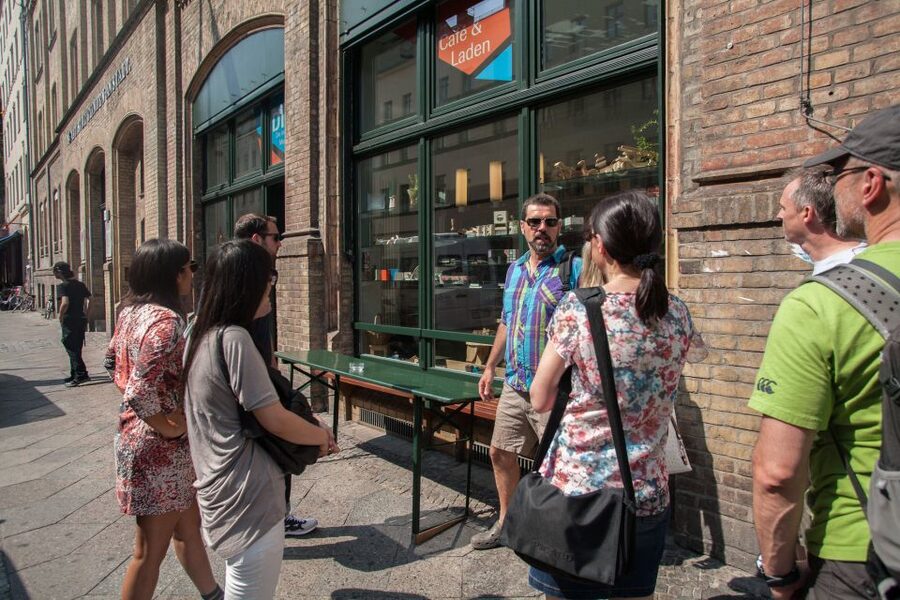
Oranienstraße is one of the route’s most varied stretches. Along with food and nightlife, you will encounter the Berlin Home for the Blind, comic shops, boutiques, and the Museum of Objects. The tour does not treat Kreuzberg as just a nightlife quarter. It includes places that seem unusual at first glance, then uses them to show the district’s mix of social projects, independent culture, and small-scale commerce.
A stop at the Home for the Blind is paired with time for a coffee in the Oranienhöfen. That pause is welcome. Three hours on foot can pass quickly, but a short break gives you time to take in the neighborhood rather than race from one landmark to the next.
Food and drinks are not included, so budget separately for the coffee. This is not a food tour, and you should not expect tastings or a provided meal. Still, the cafe stop adds a practical touch. It gives you a chance to rest and, if your German allows, ask the guide about the places you have just seen.
The Museum of Objects offers a different kind of stop. It is dedicated to the history of mass production, which gives the walk a wider frame. Kreuzberg is not only about squats and clubs. Everyday objects, manufacturing, design, and consumption also tell part of the story of modern urban life.
The museum may be especially appealing if you prefer small, specific collections to major institutions. At the same time, anyone expecting a large museum visit should keep expectations modest. The tour includes it as one element in a neighborhood walk, not as a long museum session.
Mariannenplatz and the Bethanien art squat
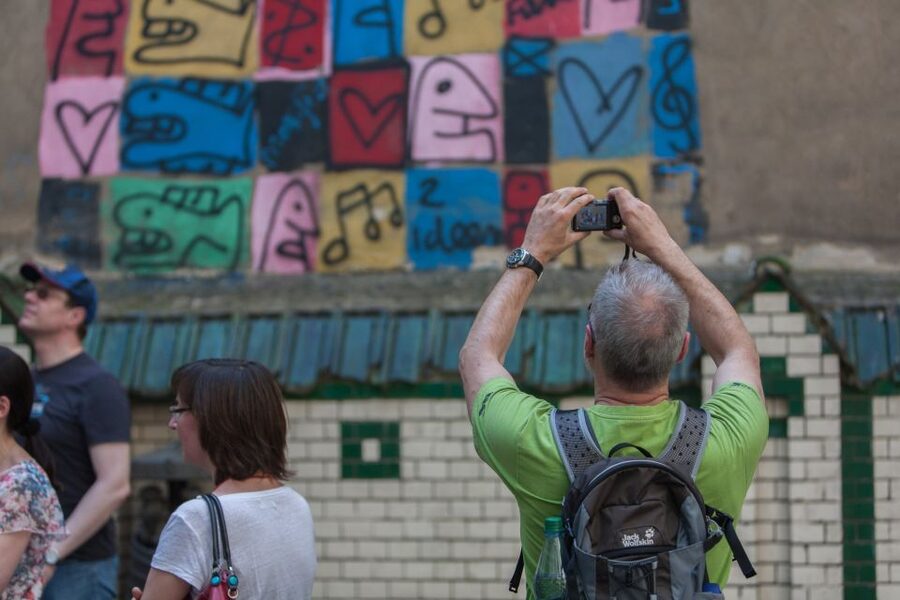
After Heinrich-Platz, the route reaches Mariannenplatz. Here you will see Bethanien, a former hospital that became an art squat. This is one of the strongest stops for understanding Kreuzberg’s squatter scene.
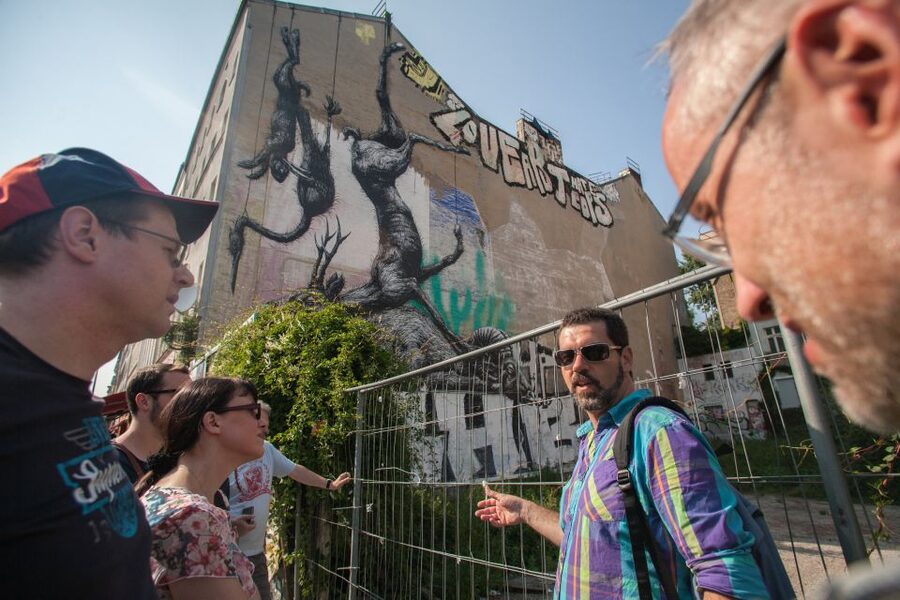
The history of squatting in Berlin was tied to vacant buildings, high housing pressure, political activism, and a desire to create communities outside normal property rules. Bethanien represents how an old institutional building could be claimed for art and social use. The tour gives you a chance to see the physical setting rather than hear about the movement in the abstract.
Next door, Rauchhaus adds another layer. It preserves more traces of the old squatter life. You should not expect a staged theme park or a perfectly preserved counterculture museum. The value is in seeing places that still carry the marks of those struggles while the surrounding district continues to change.
I would pay close attention here to the guide’s explanations. Bethanien and Rauchhaus are not just colorful backdrops. They help explain why Kreuzberg became known far beyond Berlin, and why the neighborhood still attracts people interested in alternative housing, art, protest, and independent culture.
The route also includes the Kreuzberg Museum, listed among the key sights. The supplied details do not specify the length of the visit or whether every departure enters the museum, so treat it as part of the area’s cultural focus rather than a guaranteed extended museum tour. If the museum is important to you, ask the guide at the start how it fits into that day’s route.
A different sort of day out in Berlin:
- Berlin: Reichstag, Dome and Government District Guided Tour
★ 4.7 · 18,288 reviews - Berlin: 1-Hour City Tour by Boat with Guaranteed Seating
★ 4.3 · 16,993 reviews - Berlin: Boat Tour Along the River Spree
★ 4.4 · 11,252 reviews - Discover Berlin Half-Day Walking Tour
★ 5.0 · 9,624 reviews
A pharmacy, a former station, and a walk toward East Berlin
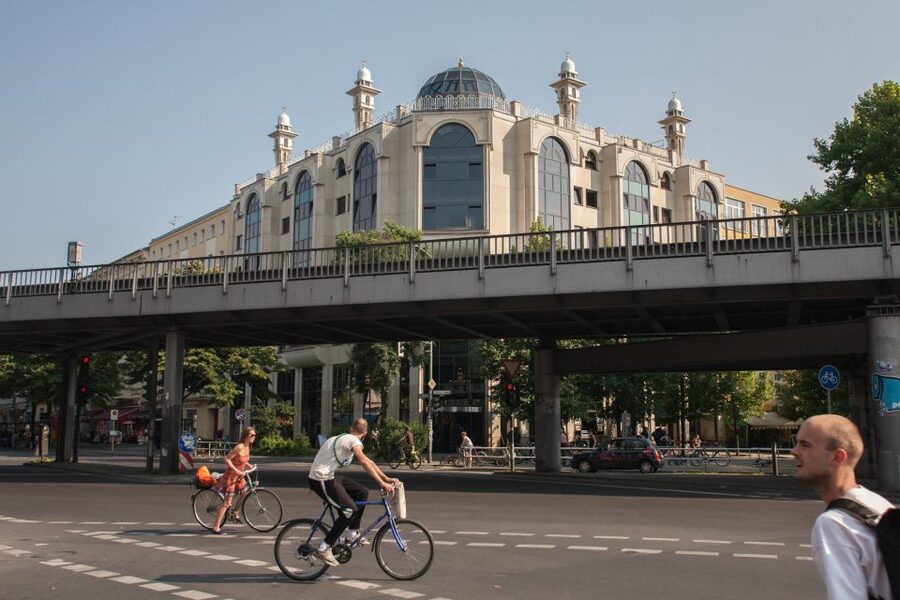
The Fontane-Apotheke is another unusual stop. A pharmacy may not sound like a major sightseeing point, but that is exactly why it fits this tour. Kreuzberg’s character is found in working places as much as in famous monuments. A local pharmacy can tell you more about neighborhood life than another grand facade.
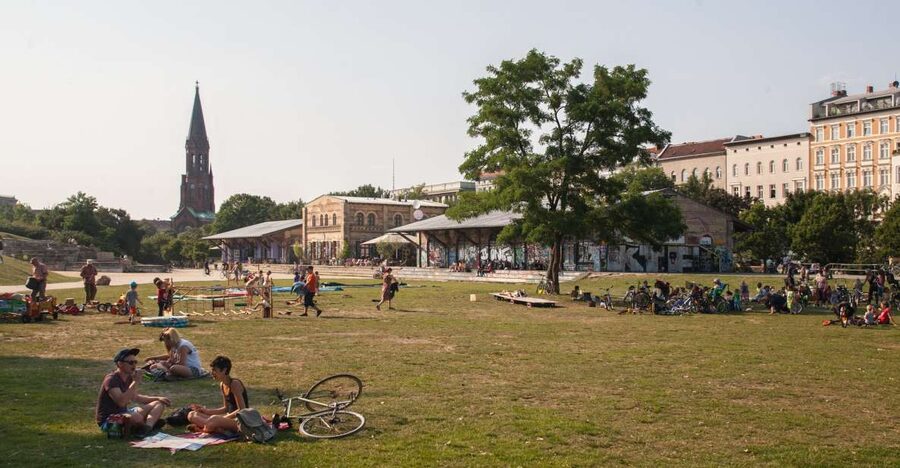
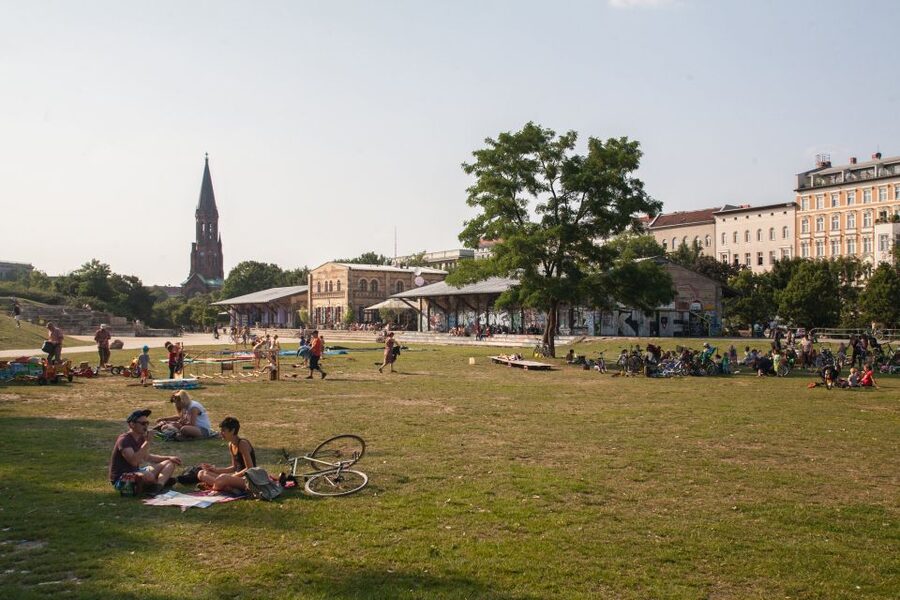
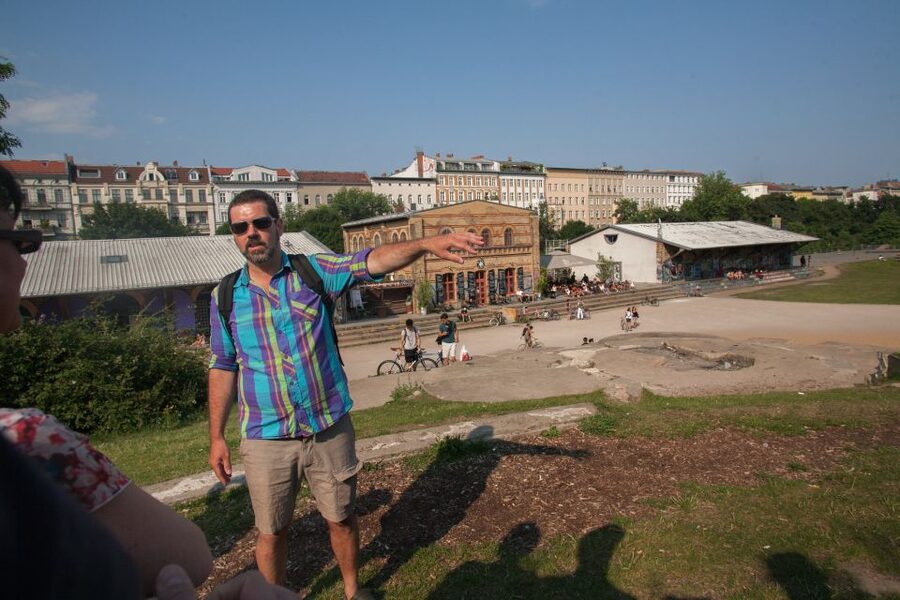
The walk then continues through Görlitzer Park, a large public space created on the former site of a railway station. Knowing the earlier use of the land changes how you see the park. It is not simply open green space. It is part of the district’s transport and industrial story.
The tour ends by the Oberbaumbrücke, the bridge that symbolically links former East and West Berlin. The supplied meeting details say the activity ends back at the starting point, so confirm the precise return arrangement with the guide on the day. The route description also places the Oberbaumbrücke near the end, which suggests that the bridge is an important final sight even if the group returns to Kottbusser Tor afterward.
The bridge gives the tour a fitting closing idea. Kreuzberg sits between old divisions and new connections. The walk begins with an immigrant and nightlife crossroads, passes through counterculture sites, and finishes near a major symbol of Berlin’s former separation.
Why the small group and price matter
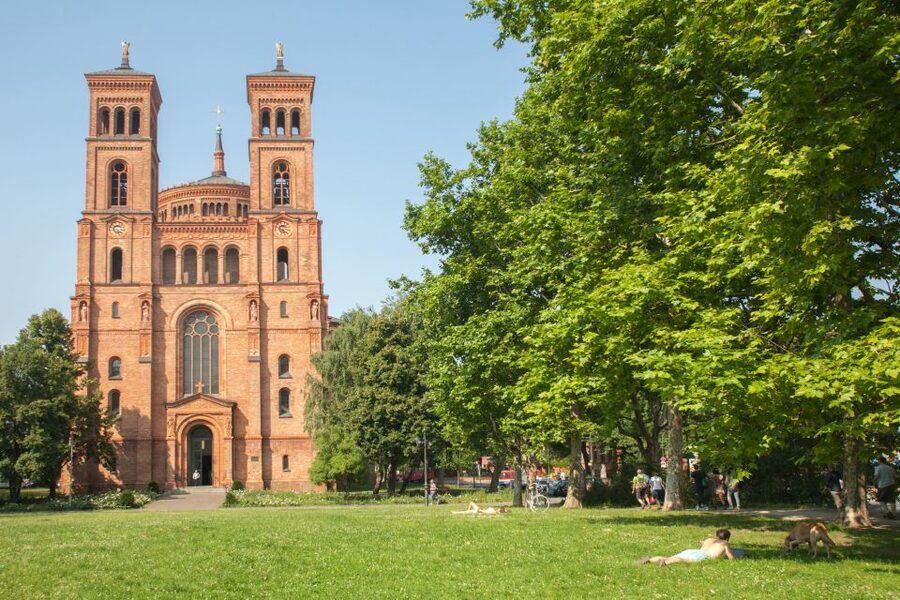
At $24 per person, this is a modestly priced city walk. You are paying mainly for a live guide, local interpretation, and a focused route through a neighborhood that can be difficult to understand from a map. That is good value if you want context rather than a list of addresses.
The price does not include coffee, food, or drinks. You should also plan for three hours of walking in all weather. The operator provides a rain poncho when needed, but you still need comfortable shoes and sensible clothing.
The group size is advertised as a minimum of three and a maximum of 12. The practical information also says a minimum of two people is required, so there is a small inconsistency in the stated rules. If you are booking for one or two people, check that the departure is confirmed before building your day around it.
The cancellation terms also deserve attention. Individual cancellation is allowed up to 24 hours before the tour for a full refund, while groups of three or more have a cancellation deadline of three days before the scheduled departure. The operator can cancel at short notice if the minimum number is not reached.
One very poor experience in the supplied feedback describes a cancellation and confusion over the German-language requirement and group numbers. That does not erase the strong overall rating of 4.8 from 189 reviews, but it is a useful warning. Confirm that you understand the language and that the departure is running, especially if you have a tight schedule.
The German guide makes the difference
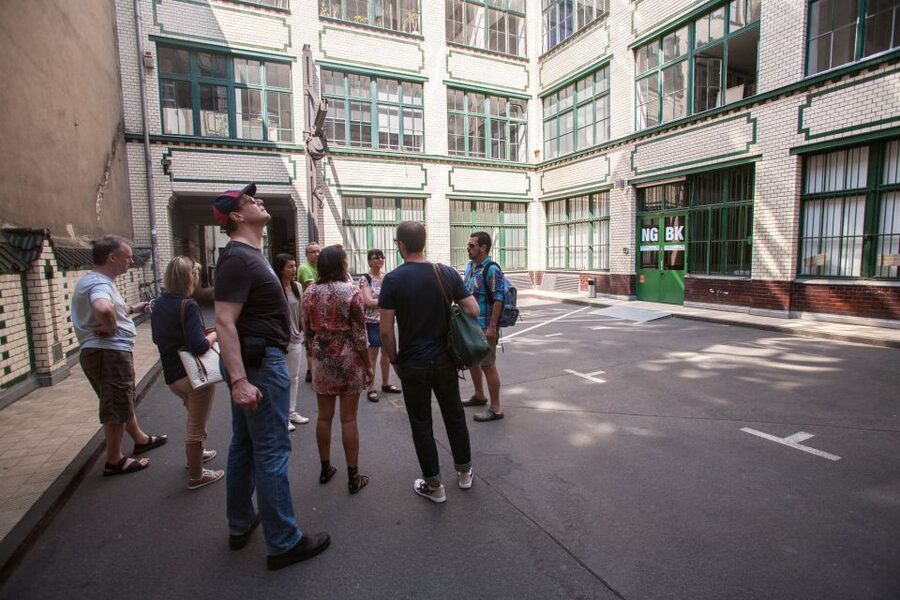
This is a German-language tour. That is not a minor detail. Much of the route’s value lies in explaining why certain buildings, clubs, squats, and streets matter. If you understand German well enough to follow a walking lecture, you should get much more from the experience.
One especially positive review thanks a guide named Ferenz for offering an individual tour filled with interesting and unusual Kreuzberg details. That is a good sign for the tone of the experience, but guide assignments can vary. Do not book assuming Ferenz will lead your departure unless the operator confirms it.
The small group format can help. With no more than 12 people, you may have a better chance to hear the guide in noisy streets and ask questions at stops. It also keeps the walk from feeling like a large city procession.
There is no promise of an English-language option in the supplied details. If you need English, choose another tour or contact the provider before paying. A German-speaking friend could make this a much stronger experience for you.
Who should take this Kreuzberg walk
I would recommend it to you if you want to understand Kreuzberg through its social history and present-day street life. It fits visitors who have already seen central Berlin’s major monuments and now want a neighborhood walk with more local texture.
It is also a good choice for people interested in:
- Berlin’s squatter and punk history
- Independent art spaces and former institutional buildings
- Turkish and Arabic food culture in Kreuzberg
- Public housing and older apartment districts
- The former division between East and West Berlin
- Small museums and unusual local stops
You may not enjoy it as much if you want a polished sightseeing route, a large number of major monuments, or a tour in English. It also may not suit anyone who dislikes three hours of walking, busy city streets, or unpredictable weather.
Families can consider it, but the content focuses on social change, squats, nightlife, and urban politics rather than child-centered attractions. Comfortable shoes are essential, and a rain poncho is only a backup, not a substitute for proper clothing.
Should you book Wild Kreuzberg?
Book it if you can follow German and want more than a quick look at Kreuzberg’s cafes and clubs. The route offers a useful mix of Kottbusser Tor, Oranienstraße, the Museum of Objects, Mariannenplatz, Bethanien, Rauchhaus, Fontane-Apotheke, Görlitzer Park, and the Oberbaumbrücke.
The strongest reason to go is the way the walk links ordinary streets to the district’s squatter and punk past. At $24, that context is a fair deal, especially with a small group and a guide who can explain the details.
Before booking, confirm the language, the departure, and the minimum group requirement. If those points work for you, this is a smart way to meet Kreuzberg as a real neighborhood, with its old struggles, new businesses, art spaces, and everyday city life all sharing the same streets.
FAQ
Where does the tour start?
Meet at 137 Skalitzer Straße, in front of Gold Exchange and next to REWE. The nearest U-Bahn station is Kottbusser Tor on the U1 and U8 lines. Use the Skalitzer Straße exit.
How long does the tour last?
The walking tour lasts three hours. Starting times vary, so check availability for the date you want.
What language is the tour in?
The live tour guide speaks German. No English-language guide is listed in the supplied information.
How large is the group?
The advertised group size is a minimum of three and a maximum of 12 people. Another notice says that at least two people are required, so confirm the current minimum when booking.
What sights are included?
The route includes Kottbusser Tor, Adalbertstraße’s skyscrapers, the Kreuzberg Museum, the Home for the Blind, Oranienhöfen, the Museum of Objects, Mariannenplatz, Bethanien, Rauchhaus, Fontane-Apotheke, Görlitzer Park, and the Oberbaumbrücke.
Is food or coffee included?
No. Food and drinks are not included. The route includes an opportunity to relax over coffee in the Oranienhöfen, but you pay for your own refreshments.
What should I bring?
Bring comfortable shoes. The tour takes place in all weather, and a rain poncho is distributed on rainy days.
Can I cancel for a full refund?
You can cancel up to 24 hours in advance for a full refund. Groups of three or more have a cancellation deadline of three days before the scheduled tour.
Newest Berlin reviews
- Where It All Began: Berlin’s Queer & Trans History Tour★ 4.9 · 6 reviews
- Understanding Kreuzberg: The roots of local (sub)culture★ 4.9 · 11 reviews
- Berlin: guided canoe | kayaktour★ 4.1 · 7 reviews
- Private Potsdam City Tour in an authentic vintage van★ 5.0 · 14 reviews
- Warnemünde Shore Excursion: Private Sachsenhausen and Berlin Tour★ 5.0 · 12 reviews
- Ultimate E-Bike Tour of Berlin with Beer Garden Stop★ 5.0 · 4 reviews
- Potsdam Highlights – Private sightseeing tour by minibus★ 5.0 · 3 reviews
- In the Forbidden City – Potsdam Walking Tour★ 5.0 · 17 reviews
Kreuzberg Tours, compared.
Alternative Bike Tour of Kreuzberg & Friedrichshain
Read our review →
Berlin Off-the-Beaten-Path Walking Tour: Kreuzberg, Mitte and Friedrichshain
Read our review →
Kreuzberg Berlin: Off the Beaten Track PRIVATE Walking Tour
Read our review →
Experience the Alternative Kreuzberg on a Bike Tour
Read our review →
Browse the lists this tour appears in