
Reviewed · BERLIN SIGHTSEEING TOURS
All-in-One Berlin Highlights on Foot: Private Walking Tour
Berlin packs Prussian grandeur, Nazi terror, Cold War tension, and modern democracy into a surprisingly compact central district. This private walk connects those chapters in about three hours, taking you from Museum Island and Bebelplatz to Brandenburg Gate, Checkpoint Charlie, and the Berlin Wall.
I like the private format, since you can ask questions and set the pace with your own group. I also like the guide-led route: you save time finding the sights and get the historical links between them, rather than seeing a string of impressive buildings with no context. The main consideration is speed. Eleven stops in three hours means short visits and mostly exterior viewing.
Key points at a glance
- Eleven central sights in three hours: A brisk route covers Brandenburg Gate, the Reichstag, Checkpoint Charlie, Museum Island, Gendarmenmarkt, and more.
- A private English-speaking guide: Only your group participates, with a chance to ask questions and shape the conversation.
- A strong history route: The walk moves from Prussian Berlin through Nazi rule, the Holocaust, the Cold War, and present-day democracy.
- Mostly free outdoor stops: No admission fees are required during the tour, though the Reichstag interior is not included.
- A useful first-day orientation: The route helps you understand where Berlin’s main historic districts sit in relation to one another.
- A brisk pace with possible transit: Public transportation may be used if needed, and that cost is not included.
Berlin’s history in one compact walk
This is not a gentle stroll built around cafés and pretty streets. It is a concentrated history lesson on foot, with each stop tied to a major turning point in Germany’s past.
You begin around Lustgarten on Museum Island and finish at Brandenburg Gate. Along the way, the route takes in imperial Berlin, the Nazi period, the Holocaust, the Berlin Wall, the Cold War, and today’s German republic. That sequence gives the tour a clear shape, even though the subjects are often heavy.
I see the private setup as especially useful here. Berlin’s monuments can look disconnected if you visit them alone. A guide can explain why a memorial sits where it does, how a border crossing shaped the city, and how modern Berlin uses public spaces to confront its past.
The tour is offered in English and includes a professional local guide. The feedback attached to the experience gives particular praise to Joanna, also spelled Joana in one place, for making complicated regional history easy to follow. If she is available, you may want to request her when arranging the start.
More sightseeing tours in Berlin:
- Berlin: 1-Hour City Tour by Boat with Guaranteed Seating
★ 4.3 · 16,993 reviews - Explore Berlin: See All The Iconic Sights & Some Hidden Gems
★ 5.0 · 4,429 reviews - Berlin: City Sightseeing Hop-On Hop-Off Bus Tour
★ 4.1 · 4,233 reviews
Brandenburg Gate and the Reichstag
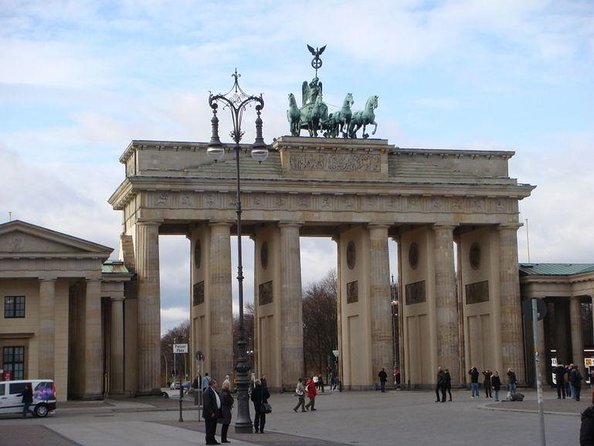
Brandenburg Gate is one of the best opening points for Berlin’s story. You spend about 15 minutes walking through and around the monument while learning why this former city gate became such an important national symbol.
The gate has served many political chapters, so it is more than a handsome neoclassical photo stop. Its location also helps you understand central Berlin. From here, the Reichstag is nearby, as are the Holocaust Memorial and the former bunker site.
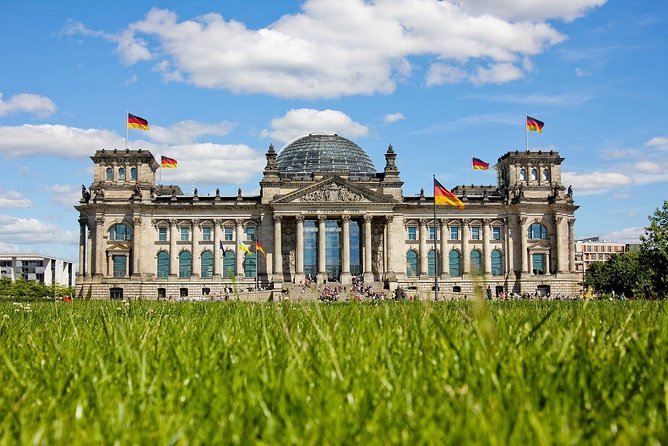
The Reichstag stop lasts about 10 minutes and is an exterior visit. You stand beneath the German parliament building and hear about its destruction by fire after Hitler’s rise to power, followed by its later role as a symbol of modern democracy.
The tour does not include admission to the Reichstag. That matters if you hoped to visit the dome or parliamentary interior. No entrance is required for the outdoor stop, but anyone wanting to go inside would need a separate arrangement.
The Holocaust Memorial and the former Führerbunker
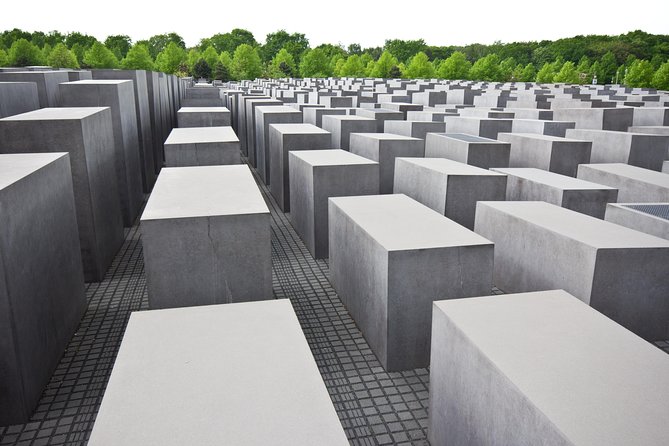
The Memorial to the Murdered Jews of Europe is one of Berlin’s most powerful modern sites. You walk through its field of concrete stelae for about 15 minutes while the guide explains the murder of Europe’s Jews under National Socialism and the acts of courage shown by some of those persecuted.
The memorial is intentionally spare. It does not give you a simple statue or one tidy message. The changing height and arrangement of the blocks create a place that feels different as you move through it. Your guide’s explanation is important because the site itself offers limited narrative detail during this short visit.
Nearby, the route stops at the former Führerbunker site for about 10 minutes. There is no dramatic bunker entrance to explore. Instead, you stand at the location where Adolf Hitler died by suicide at the end of the Second World War.
This can be a strange stop for anyone expecting a preserved underground room. The value is in understanding the location and the final chapter of the Nazi regime, not in seeing an intact building. The site has been kept deliberately low-key, and the guide supplies the needed context.
Checkpoint Charlie and the Berlin Wall
Checkpoint Charlie is the tour’s main Cold War stop. You spend about 10 minutes at the former crossing between East and West Berlin, hearing about the spies, border controls, and the tense 1961 standoff between American and Soviet tanks.
The crossing is a useful reminder that Berlin was not only divided by an abstract political idea. The boundary cut through daily life, separating streets, families, workplaces, and neighborhoods. At this point, you can connect the postwar map with the wider struggle between the United States and the Soviet Union.
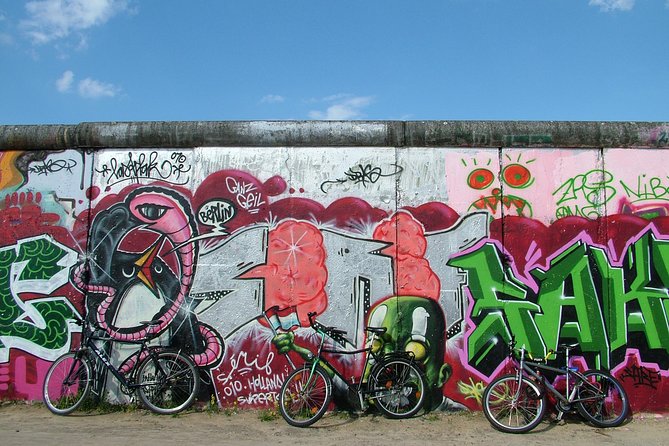
The tour also stops at the Topography of Terror for about 15 minutes. This former headquarters area of the SS and Gestapo offers a darker look at Nazi power. The stop includes the excavated torture-cell remains and a section of the Berlin Wall, linking Nazi persecution with the later division of the city.
That pairing is one of the stronger parts of the route. You see how the same central area carried the marks of two dictatorships, first under the Nazis and later through the East German border system. The stop is brief, so you should treat it as an introduction rather than a full museum visit.
Other Berlin experiences to weigh up
- Discover Berlin Half-Day Walking Tour
★ 5.0 · 9,624 reviews - Berlin: Third Reich and Cold War 2 Hour Walking Tour
★ 4.9 · 6,830 reviews - Berlin: Discover Berlin Walking Tour
★ 4.9 · 5,998 reviews - Berlin’s Best: 2 Hour Walking Tour Third Reich and the Cold War
★ 5.0 · 5,486 reviews
Museum Island and Berlin’s imperial center
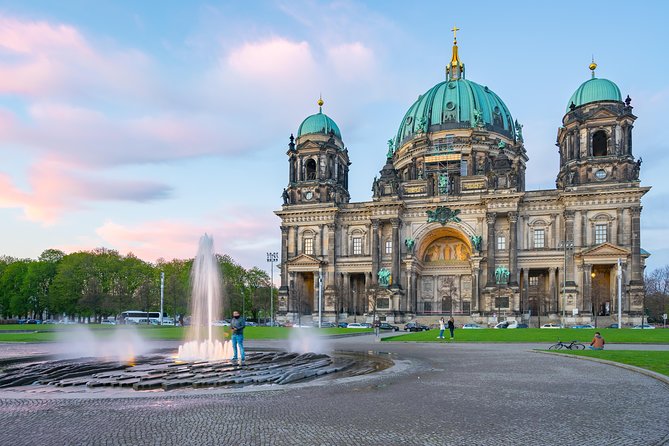
The starting area around Museum Island gives you a different side of Berlin. In about 10 minutes, you see the Old Museum, Berlin City Palace, Berlin Cathedral, and other major structures around this UNESCO-listed site.
This is where Berlin’s royal and imperial ambitions become clear. The architecture is grand, formal, and designed to project state power. Even if you do not enter any museum, the buildings help explain how the city developed around the Spree River and its royal institutions.
Because the route begins at Am Lustgarten 1, you can use this stop to get your bearings before heading through the historic center. The tour’s end at Brandenburg Gate gives the walk a logical westward direction, though the exact starting time and location should be confirmed after booking.
The tour does not include museum admissions. That is not a major problem for a three-hour overview, but you should not book this experience expecting a museum day. If you want to see the collections inside, plan a separate visit.
Bebelplatz and Neue Wache
Bebelplatz offers a compact lesson in both Frederick the Great’s Berlin and the Nazi book burning held there on May 10, 1933. The stop lasts about 10 minutes and includes views of the buildings associated with 18th-century Prussian power.
This is a good example of how the tour places political history directly beside architecture. You see the polished ceremonial side of the city, then hear how the same public space became linked to Nazi censorship and propaganda.
The next stop, Neue Wache, takes about 10 minutes. It functions as Germany’s central national war memorial, honoring victims of two world wars and people murdered by authoritarian rulers.
I find this part of the route valuable because it broadens the story beyond famous leaders and battles. The memorial asks you to think about ordinary people caught in wars and political violence. Your guide can help explain the changing meaning of the building across different German governments.
Unter den Linden and Gendarmenmarkt
The walk along Unter den Linden is short, about five minutes, but the boulevard ties several of the earlier stops together. Known as Berlin’s royal mile, it runs through the historic core and gives you a sense of the city’s former ceremonial axis.
You may find this stretch more useful as a connector than as a major stop in its own right. Still, it helps you read the city plan. Grand institutions, memorials, and squares sit close together here, which is why a walking route can cover so much in a limited time.
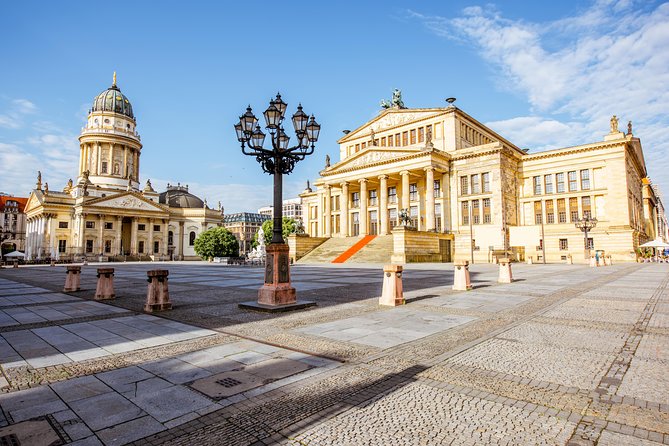
Gendarmenmarkt receives about 10 minutes. It is one of Berlin’s most impressive squares, framed by the French Cathedral, the German Cathedral, and the Concert House.
This is the tour’s most architectural pause. After the stark Holocaust Memorial and the heavy political subjects at the bunker and Topography of Terror, Gendarmenmarkt provides a look at Berlin’s 18th-century elegance. The contrast is useful. Berlin is not only a city of ruins and memorials, and the square shows the cultural ambitions of the Prussian capital.
What the three-hour pace means
The listed stops add up to roughly two hours and 20 minutes of scheduled viewing time. The remaining time allows for walking between locations, explanations, questions, and any small changes to the route.
That still makes this a brisk experience. You will not have long to sit, browse museum displays, or linger at each monument. Bring comfortable shoes and expect to spend most of the time outdoors.
The route includes 11 sights, but not all are equal in size or depth. Brandenburg Gate, the Holocaust Memorial, Checkpoint Charlie, and Museum Island are the main anchors. Unter den Linden and the Führerbunker site are shorter context stops.
I would use this tour as a first look at central Berlin, then return on your own to the places that catch your attention. The guide helps you decide where to spend more time later, which is one of the best practical reasons to take a private orientation walk.
Is the private price good value?
The listed price is $223.24 per person. That is a substantial cost for a three-hour walk, especially since food, drinks, admissions, and possible public transportation are not included.
The value depends heavily on the size of your group. Since this is a private activity, you are paying for a guide devoted only to your party. For a couple, the per-person cost may feel high. For a larger group using the available group discount, the price can make more sense because the guide cost is shared.
You also pay for time saved. Berlin’s central sights are close enough to connect on foot, but their historical links are not always obvious. A good guide prevents you from spending your limited holiday time working out the route or searching for basic background at every stop.
There are no admission fees required during the tour, which keeps the extra costs down. Still, I would compare the price with a group walking tour if budget matters more than privacy. Choose this option when personal attention, flexible questions, and a private pace matter to you.
Who should book this Berlin walk?
I would recommend it most strongly for first-time visitors with only a short stay. It gives you a map of central Berlin and introduces the major events that shaped the city.
It also suits families or mixed-age groups that want to stay together. A private guide can adjust explanations and pause for questions more easily than a large public group.
History-focused visitors will get the most from the route, especially if you want a connected account of Prussian rule, Nazi Germany, the Holocaust, the Cold War, and reunified Berlin. The tour does not treat these as isolated attractions.
You should think twice if you dislike fast walking or want extended time inside museums. This is an overview, not a slow architectural walk or a full memorial visit. Since public transportation might be used, ask about the route and any expected transit costs when confirming your pickup details.
The starting point is listed as Am Lustgarten 1, with the end at Brandenburg Gate on Pariser Platz. Pickup is offered, but you need to contact the provider after booking to discuss the starting location and time. Most people can participate, and the activity is close to public transportation.
Should you book it?
Book this tour if you want a private, efficient introduction to Berlin’s central history and are willing to pay for one-on-one guiding. Its strongest feature is the range: in one morning or afternoon, you move from Museum Island and Prussian architecture to Nazi crimes, Cold War division, and German democracy.
Skip it if you want indoor visits, long pauses, or the lowest possible price. For everyone else, the route is a useful first step, especially if Joanna or Joana is available to guide it. Cancel at least 24 hours before the start time for a full refund. Changes or cancellations within 24 hours are not refunded.
FAQ
How long does the Berlin walking tour last?
The tour lasts approximately three hours.
Is this a private tour?
Yes. Only your group participates in the activity.
What language is the tour offered in?
The tour is offered in English.
Where does the tour start?
The listed starting point is Am Lustgarten 1, 10178 Berlin, Germany. After booking, contact the provider to discuss the exact starting location and time.
Where does the tour end?
The listed end point is Brandenburg Gate at Pariser Platz, 10117 Berlin, Germany.
Is pickup available?
Yes, pickup is offered. You should contact the provider after confirming the tour to discuss the starting location and time.
Are entrance fees included?
No entrance fees are included, but no entry fees are required for the scheduled tour stops. The Reichstag visit is an exterior stop, and admission is not included.
Are food and drinks included?
No. Food and drinks are not included in the tour price.
Can public transportation be used during the tour?
Public transportation may be used if needed, but those costs are not included.
Newest Berlin reviews
- Where It All Began: Berlin’s Queer & Trans History Tour★ 4.9 · 6 reviews
- Understanding Kreuzberg: The roots of local (sub)culture★ 4.9 · 11 reviews
- Berlin: guided canoe | kayaktour★ 4.1 · 7 reviews
- Private Potsdam City Tour in an authentic vintage van★ 5.0 · 14 reviews
- Warnemünde Shore Excursion: Private Sachsenhausen and Berlin Tour★ 5.0 · 12 reviews
- Ultimate E-Bike Tour of Berlin with Beer Garden Stop★ 5.0 · 4 reviews
- In the Forbidden City – Potsdam Walking Tour★ 5.0 · 17 reviews
- Private Walking Tour of Potsdam and Sanssouci★ 5.0 · 24 reviews
Berlin Sightseeing Tours, compared.
1-Hour City Tour by Boat with Guaranteed Seating
Read our review →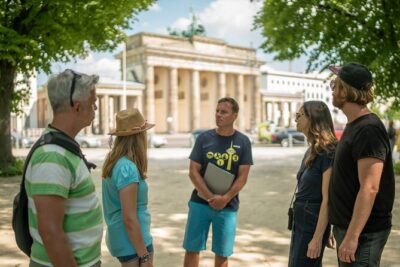
Explore Berlin: See All The Iconic Sights & Some Hidden Gems
Read our review →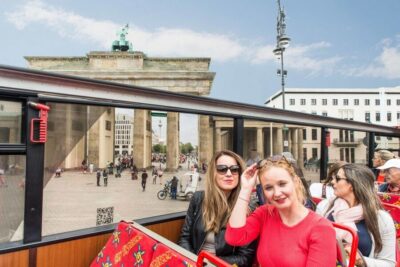
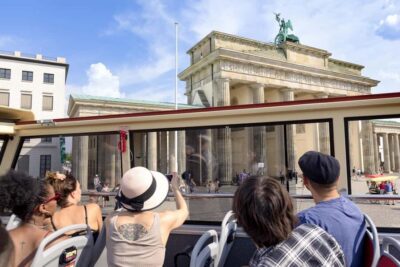
Hop-On Hop-Off Sightseeing Bus with Boat Options
Read our review →
Sights and Highlights Bike Tour with a Local Guide
Read our review →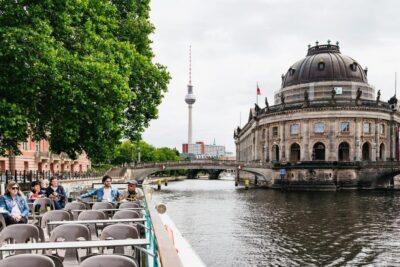
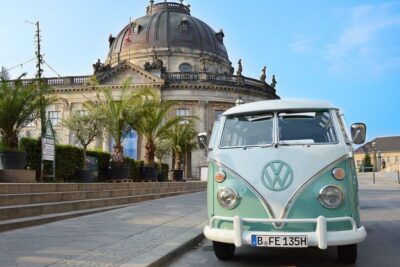
Sightseeing Tour in Classic Volkswagen T1 Samba Bus
Read our review →
Browse the lists this tour appears in