Reviewed · GUIDED
The Best of Berlin Private Guided Tour
Berlin’s story is written across a surprisingly compact part of the city. On this private walking tour, you move from royal boulevards and grand squares to Nazi-era sites, Cold War checkpoints, and the modern capital of Germany, while one guide connects the pieces.
I like the private format, which lets your guide adjust the pace and focus to your group. I also like the clear historical arc, from Frederick the Great and the Hohenzollerns through Hitler, the Berlin Wall, and reunification. The main drawback is time: 3.5 hours is a lot of ground for a walking tour, so some stops will be explained from outside rather than explored at length.
Key points
- A full sweep of Berlin’s past: Follow the city from Prussian royalty and Bismarck to the Weimar Republic, Nazi rule, the Cold War, and modern Germany.
- A private group for up to 15: You can ask questions and request a pace that suits your party.
- Hotel or chosen meeting-point pickup: The guide meets you where you arrange, saving time at the start.
- Major sights in one route: See Museum Island, Unter den Linden, Gendarmenmarkt, Checkpoint Charlie, the Berlin Wall, Potsdamer Platz, the Reichstag, and the Brandenburg Gate.
- Strong guide feedback: Natalie is specifically praised for being easy to chat with and for teaching her group a great deal about Berlin.
- Flexible, but fast-moving: The guide can adapt on the day, though the number of locations means you should expect an overview rather than long visits inside museums.
Why this tour works as a first look at Berlin
Berlin can feel like several cities laid on top of one another. Prussian kings built grand avenues and squares. The German Empire took shape here in 1871. The Weimar Republic brought political confusion and cultural freedom. Hitler’s dictatorship turned the capital into the command centre of a criminal war. Then came destruction, division, the Berlin Wall, and reunification.
This tour gives you that structure. Instead of seeing a palace, a Cold War checkpoint, and a Nazi memorial as unrelated sights, you hear how each belongs to a different chapter of the same city.
That is the value of a live guide. A plaque may tell you that a building survived the war or that a square hosted a political event. A good guide explains what changed around it and why the location still matters.
The tour is described as lasting 3.5 hours, although the description also refers to it as a four-hour Berlin tour. Check the available start time and the exact duration when booking. Either way, plan for a brisk half-day walk with many stops and plenty of historical explanation.
Other Berlin experiences to weigh up
- Berlin: Reichstag, Dome and Government District Guided Tour
★ 4.7 · 18,288 reviews - Berlin: Government District around the Reichstag Guided Tour
★ 4.7 · 8,447 reviews - Berlin: Hidden Backyards Guided Walking Tour
★ 4.8 · 5,360 reviews
Meeting your guide and setting the pace
The guide meets you at your accommodation or another agreed meeting point. That is useful in Berlin, particularly if you are still learning the city’s layout or do not want to spend part of your morning finding a starting plaza.
The group is private, with up to 15 people. That size is large enough for a family or a group of friends, but still more personal than a standard public walking tour. You can ask questions without competing with a large crowd, and the guide can adjust the discussion to your interests.
The guides speak English or German. Natalie is one guide who receives especially warm praise for her clear teaching and relaxed conversation. You should not assume she will lead every departure, but her feedback gives you a useful idea of the style to expect: informed, approachable, and open to questions.
The guide remains flexible on the tour day. That does not mean every stop can be added or removed, since the route covers a great deal, but it does give the experience a more personal feel than a fixed script.
Museum Island and the royal heart of Berlin
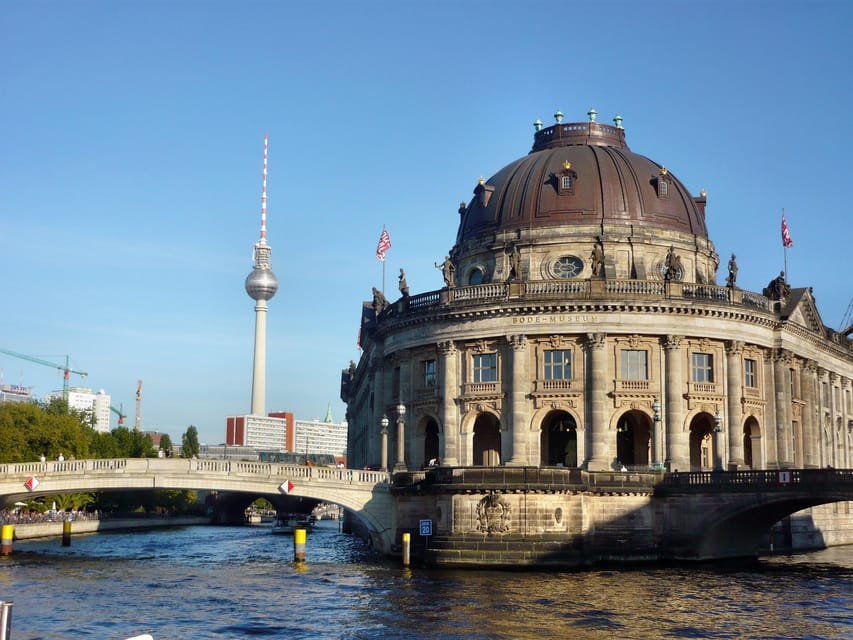
The route begins in Berlin’s historic centre, where Museum Island gathers six major museums beside the Spree. Even if you do not enter any of them during this tour, the island provides an essential introduction to Berlin as a royal capital and later a national capital.
You also see Berlin Cathedral and the rebuilt Hohenzollern city palace. These buildings help explain the power of the Prussian monarchy and the importance of the Hohenzollern dynasty before modern Germany existed.
The rebuilt palace is an especially useful talking point because it links old Berlin with present-day reconstruction. You can look at the buildings while your guide explains how royal power, war damage, political change, and modern restoration altered the centre.
Do not expect time to tour all six museums. The stop is mainly an outdoor orientation point, so anyone wanting museum interiors should plan a separate visit.
Unter den Linden and the age of Frederick the Great
From Museum Island, the route follows Unter den Linden, Berlin’s famous boulevard lined with linden trees. It links the former royal centre with the Brandenburg Gate and has long served as one of the city’s main ceremonial routes.
Here the story turns to Frederick the Great and Prussia. You learn how the Hohenzollerns shaped Berlin and how the city developed into an important European centre before German unification.
I find this part useful because it gives the later political events a starting point. Without some sense of Prussian ambition and royal power, Bismarck’s creation of the German nation in 1871 can seem to appear from nowhere.
The boulevard is also a good reminder that Berlin’s history is not only about the 20th century. The war, dictatorship, and Wall dominate many visits, but the royal city came first.
A different sort of day out in Berlin:
- Berlin: 1-Hour City Tour by Boat with Guaranteed Seating
★ 4.3 · 16,993 reviews - Berlin: Boat Tour Along the River Spree
★ 4.4 · 11,252 reviews - Discover Berlin Half-Day Walking Tour
★ 5.0 · 9,624 reviews - Berlin: Hop-on Hop-off Bus Tour with Live Commentary
★ 4.3 · 8,579 reviews
Bebelplatz and the warning written into a square
Bebelplatz was first known as Frederick’s Forum. Today it brings together Humboldt University, the Opera House, the former Royal Library, and Hedwig’s Cathedral.
The square is also tied to one of the clearest symbols of Nazi repression: the book burning of May 10, 1933. Books by Jewish, socialist, liberal, and other writers were burned here in a public attack on free thought.
Your guide can help you read the square on two levels. The grand buildings speak of monarchy, scholarship, music, and religion. The book burning shows how quickly a public centre of learning could be used to silence ideas.
This is a stop where a short explanation matters more than a long visit. The physical setting is open and easy to see, but the meaning is heavy.
Gendarmenmarkt and Berlin’s elegant public face
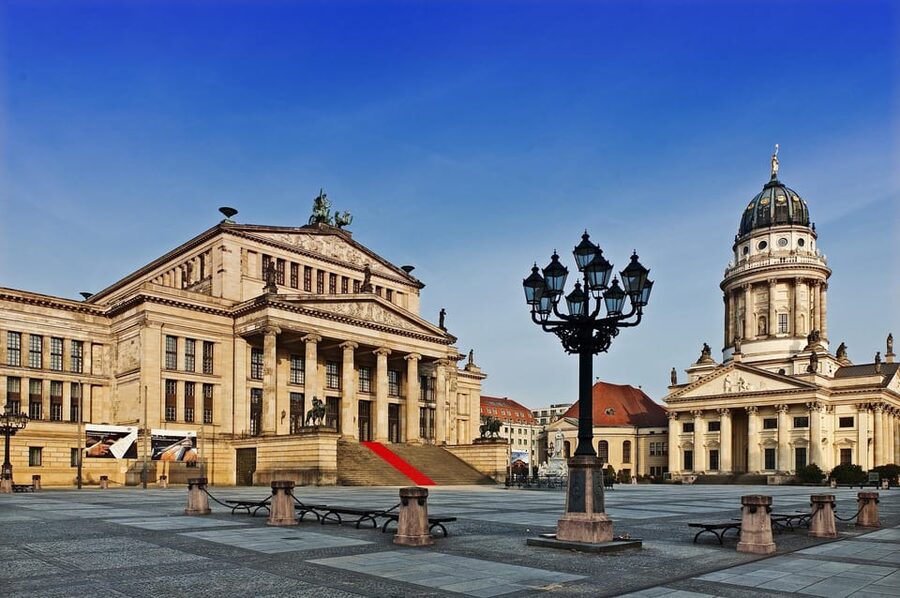
Gendarmenmarkt is widely regarded as one of Berlin’s most beautiful squares. The French Cathedral and German Cathedral face the Konzerthaus, creating a carefully balanced architectural scene.
The square offers a pause from the darker parts of the itinerary. It also gives you a chance to see how Berlin used architecture to project order, taste, and authority.
Your guide may connect the buildings with the city’s Prussian and European influences. That context helps you see Gendarmenmarkt as more than a photogenic stop. It reflects a Berlin that wanted to present itself as a serious cultural and political capital.
Because the tour keeps moving, you will likely have time to admire the arrangement and hear the explanation rather than enter each building. If architecture interests you most, note the square for a later return.
Checkpoint Charlie and the divided city
Checkpoint Charlie brings you into the Cold War. The crossing became the best-known Allied checkpoint in Berlin, where American and Soviet forces faced one another during the city’s division.
The name is famous, but the guide’s explanation is what gives the location value. You learn how Berlin became a frontline between two political systems and why a city street could carry international tension.
This is also one of the places where modern Berlin can feel disconnected from its past. The checkpoint is now surrounded by a city that has reunited, rebuilt, and moved forward. A guide helps you picture the barriers, armed forces, and restrictions that once shaped daily life.
Expect the stop to be more about interpretation than preserved Cold War atmosphere. The location is important, but the present-day setting can feel busy and commercial.
The Berlin Wall and the crimes of the Nazi regime
The route includes one of the three remaining stretches of the Berlin Wall. This section sits near the former SS and Gestapo headquarters, directly across from the former Nazi Luftwaffe headquarters.
That pairing makes the stop unusually powerful. You are not looking at the Wall in isolation. You are seeing a later symbol of division beside buildings connected to the machinery of Nazi terror.
The tour links World War II, the Nazi dictatorship, and the postwar split of Germany. You get a chance to consider how Berlin’s political violence did not end in 1945. The city remained divided, occupied, and caught between rival powers.
This is one of the places where the guide’s storytelling matters most. A remaining section of concrete is easy to photograph, but the surrounding history explains why it remains significant.
Potsdamer Platz and the city rebuilt from ruins
Before World War II, Potsdamer Platz was one of Europe’s busiest traffic intersections. More than 20,000 cars crossed it each day in the 1920s.
The war destroyed the area almost completely. During the 1990s and early 2000s, it was rebuilt as one of Berlin’s most modern districts.
You can read the city’s recent story here in a single stop: prewar energy, wartime destruction, decades of division, and post-reunification construction. The contrast with Museum Island and Unter den Linden is sharp.
Potsdamer Platz is also a useful reminder that Berlin is not a preserved museum city. Parts of it were erased, and much of what you see is new. Some people love the modern architecture. Others may find the district less atmospheric than Berlin’s older quarters.
Hitler’s bunker and the final days of the Nazi regime
The former site of Hitler’s bunker is marked by a plain outdoor explanation rather than a grand memorial building. The air raid shelter became the centre of the Nazi regime during the last week of World War II in Europe, and Hitler died there by suicide.
The tour uses the site to discuss the final days of the dictatorship, the collapse of Nazi Germany, and the Battle of Berlin. It is an important stop precisely because there is no dramatic bunker interior to visit.
You should approach this part with care. The subject is not a curiosity about Hitler. It is an opportunity to understand how the regime ended, how much destruction it caused, and why the site is handled without glorifying its leader.
The location can be difficult to recognize without guidance. Your tour leader’s explanation gives the ordinary-looking setting its historical meaning.
The Reichstag and the making of modern Germany
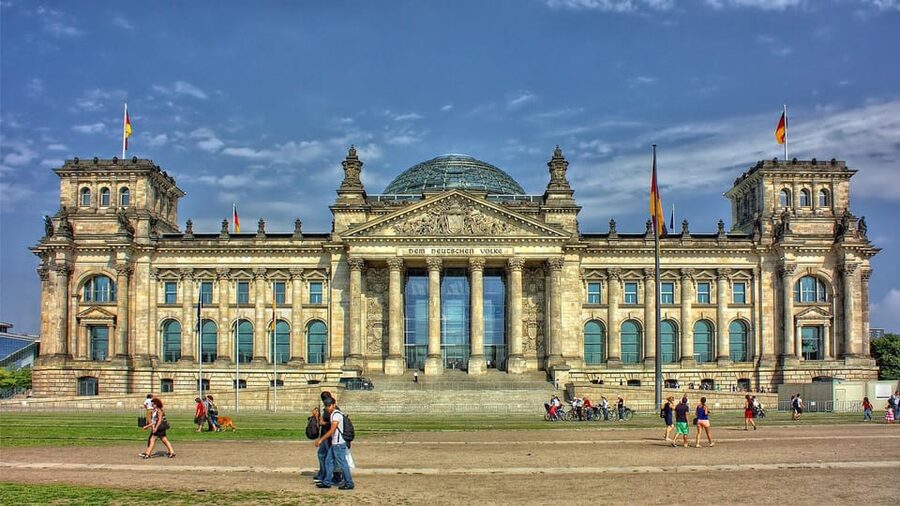
The Reichstag is Germany’s parliament. Its history includes the fire that helped Hitler take total control, the fighting between German and Soviet forces during the Battle of Berlin, and its later role in the reunified republic.
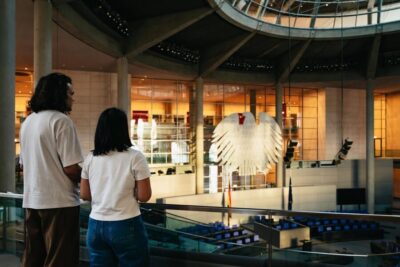
The building is now topped by a glass dome designed by British architect Sir Norman Foster. That glass structure gives the Reichstag a modern identity and reflects the open, democratic image of present-day Germany.
The tour does not state that you will enter the Reichstag or visit the dome. Treat this as an exterior stop and a chance to hear the building’s political story. If you want to go inside, arrange that separately and check the required access details.
For me, the Reichstag is one of the route’s best examples of Berlin’s changes. A building tied to dictatorship and war now serves a democratic government.
The Memorial to the Murdered Jews of Europe
Near the Brandenburg Gate, the Memorial to the Murdered Jews of Europe covers a large area with rows of concrete slabs. It is Germany’s central memorial to the six million Jews murdered by the Nazis in concentration and death camps across Europe.
The memorial does not tell the full story through long explanatory panels. Its open layout and changing sense of scale encourage personal reflection, while the historical facts give the site its purpose.
Your guide can provide the essential context, but you should allow yourself a quiet moment here. This is not simply another photo stop. It asks you to think about mass murder, state power, and the duty to remember.
The memorial is close to other major sights, which makes it easy to visit separately if you want more time. On the guided route, expect an introduction rather than a long, private period of reflection.
Brandenburg Gate and the return of unity
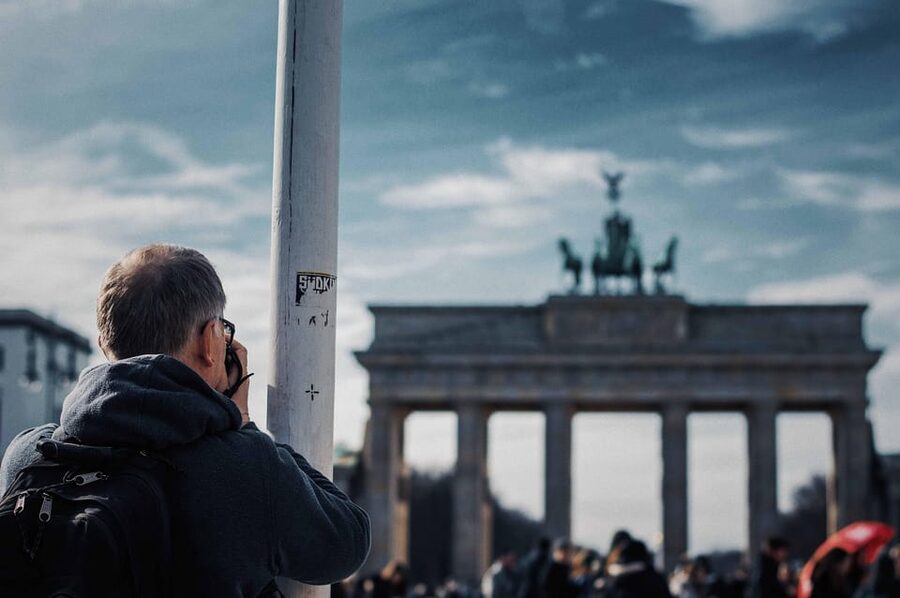
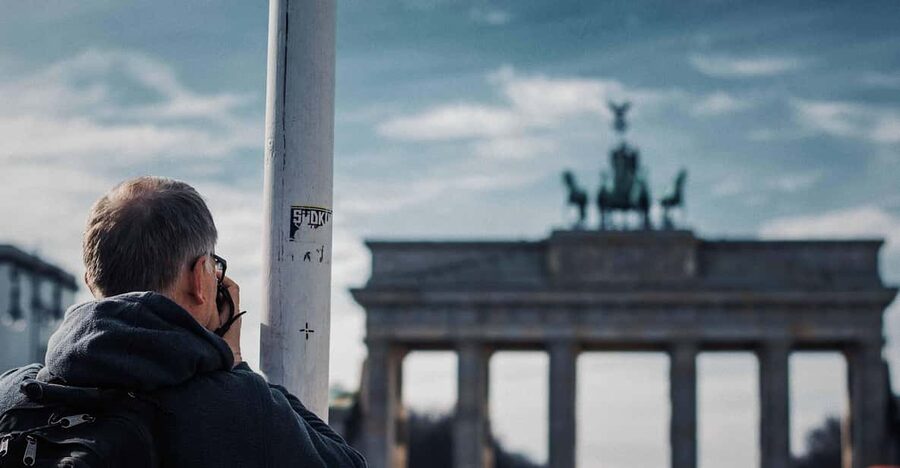
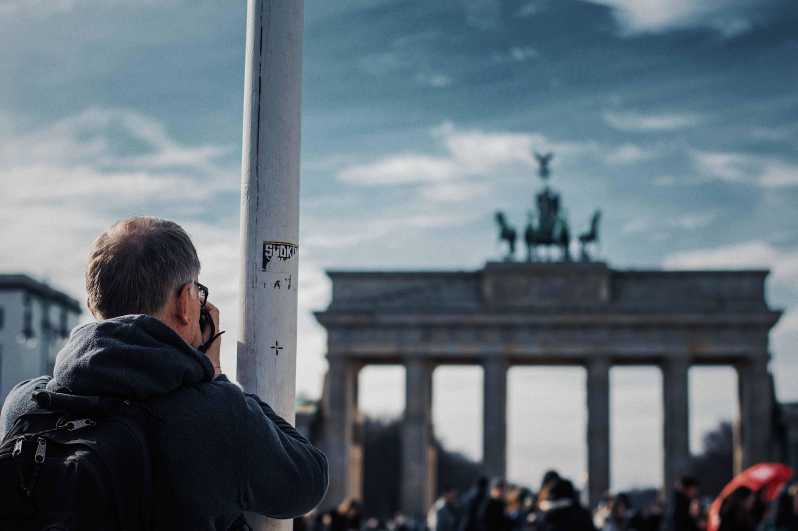
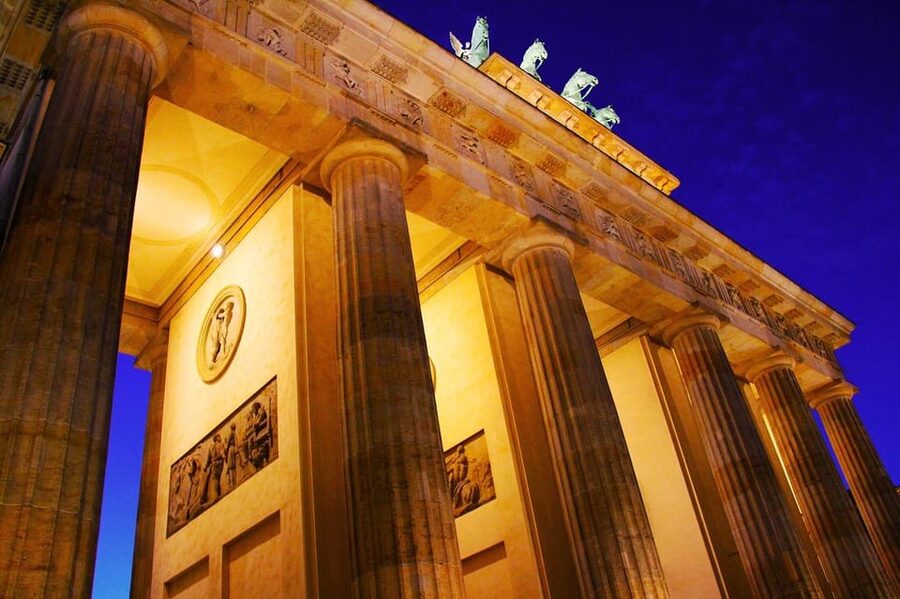
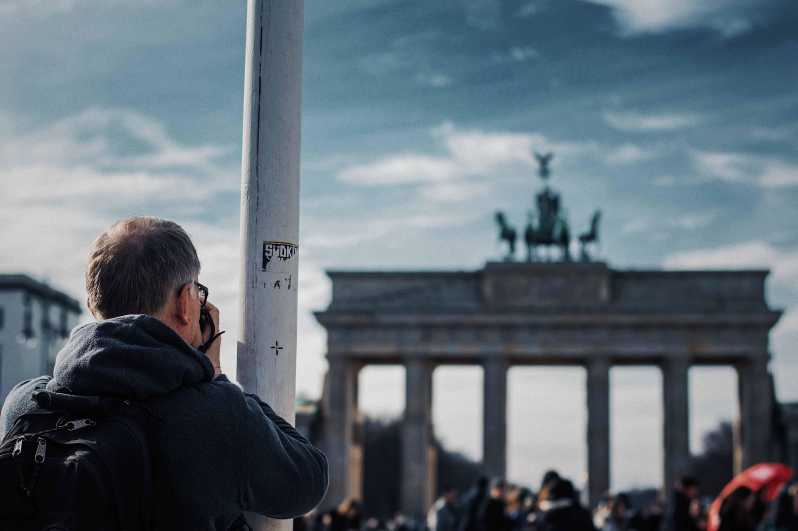
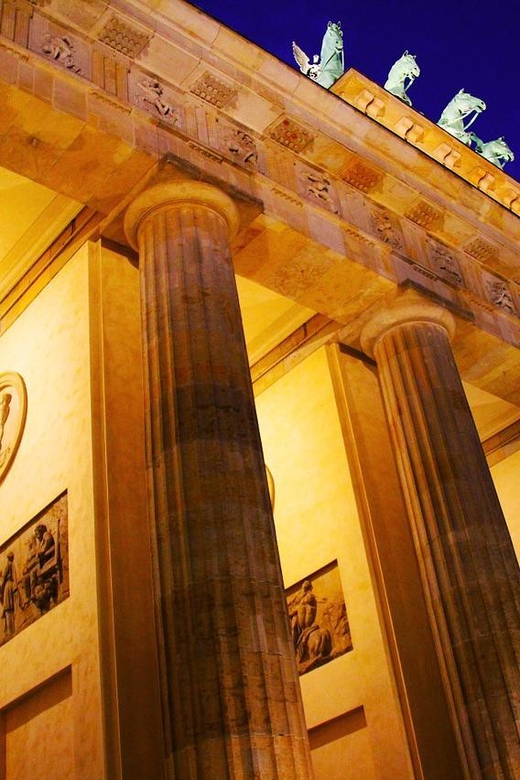
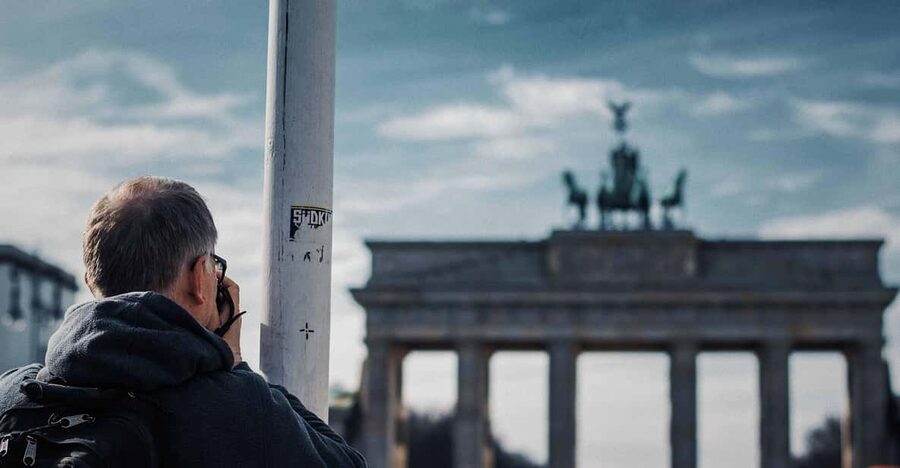
The Brandenburg Gate is one of Berlin’s best-known sights. It began as a royal entrance for the Prussian family, survived Napoleon and World War II, and later stood beside the Berlin Wall.
For almost 30 years, the gate was trapped in the middle of the divided city. Today it is a symbol of German unity, which makes it a fitting final stop for a tour that begins with monarchy and ends with reunification.
The gate brings the main story together. The royal boulevard, the Nazi dictatorship, the war, the Cold War, and the modern republic all meet here.
It is also a practical ending point. From here, you are near several central attractions and can continue on your own, though the tour information does not specify the exact end location.
What the $295 private price really gives you
The price is $295 per group of up to 15 people. That is not a low-cost walking tour for one or two people, but it can be good value for a family or larger party because the price is shared across the group.
For example, a group of 10 pays about $29.50 per person before any booking adjustments. A full group of 15 pays about $19.67 per person. A couple pays the full group price between them, so the value depends heavily on your party size.
You are paying for a private guide, hotel or chosen meeting-point pickup, and a route that covers a great deal of Berlin’s political history. You are not paying for museum admission, and the description does not promise entry to the Reichstag, the museums, or other interiors.
I would consider it strongest for families, groups of friends, and visitors with limited time who want a clear introduction without arranging several separate visits. Solo visitors and couples may find a public walking tour cheaper unless the private format matters greatly to them.
The tour includes free cancellation up to 24 hours in advance and allows you to reserve now and pay later. It is also listed as wheelchair accessible. Confirm the route details when booking if accessibility is a major concern, since the tour covers many city locations on foot.
Who should book this Berlin tour?
I would choose this experience if you want the city’s major historical chapters explained in one sitting. It suits first-time visitors, families with different interests, and private groups that want the guide to adjust the pace.
It is especially useful if you want to connect places that are often visited separately: the royal centre, the Nazi sites, Checkpoint Charlie, the Wall, the Reichstag, and the Brandenburg Gate.
I would hesitate if you want long museum visits, detailed architectural study, or a slow walk with extended time at each memorial. The number of stops is the tradeoff. You see a lot, but you will need separate visits for the places that capture your attention most.
For a large group, the $295 cost can make good sense. For two people, compare it with other walking options. If the guide’s historical storytelling and the convenience of hotel pickup are worth paying for, this tour gives you a strong framework for the rest of your Berlin stay.
FAQ
How long does the tour last?
The activity is listed as lasting 3.5 hours. Its description also refers to a four-hour tour, so check the exact duration and available starting time when booking.
How much does the tour cost?
The price is $295 per private group of up to 15 people. The per-person cost becomes lower as more members of your group join.
Where does the tour begin?
Your guide meets you at your accommodation or at another chosen meeting point arranged before the tour.
Which languages are available?
Live guiding is available in English and German.
Is the tour private?
Yes. It is a private group experience for up to 15 people.
Is hotel pickup included?
Yes. Pickup from your hotel or accommodation is included, as well as meeting at a chosen meeting point.
Can I cancel the booking?
You can cancel up to 24 hours in advance for a full refund. A reserve-now-and-pay-later option is also available.
Should you book The Best of Berlin Private Guided Tour?
Book it if you want a private, fast-moving introduction to Berlin’s royal, Nazi, Cold War, and reunification stories, especially with a group large enough to share the $295 price. Skip it if you need museum interiors or long, quiet visits at each memorial. The route is broad by design, and its greatest strength is the guide who ties the city’s scattered landmarks into one understandable story.
Newest Berlin reviews
- Where It All Began: Berlin’s Queer & Trans History Tour★ 4.9 · 6 reviews
- Understanding Kreuzberg: The roots of local (sub)culture★ 4.9 · 11 reviews
- Berlin: guided canoe | kayaktour★ 4.1 · 7 reviews
- Private Potsdam City Tour in an authentic vintage van★ 5.0 · 14 reviews
- Warnemünde Shore Excursion: Private Sachsenhausen and Berlin Tour★ 5.0 · 12 reviews
- Ultimate E-Bike Tour of Berlin with Beer Garden Stop★ 5.0 · 4 reviews
- Potsdam Highlights – Private sightseeing tour by minibus★ 5.0 · 3 reviews
- In the Forbidden City – Potsdam Walking Tour★ 5.0 · 17 reviews
Guided, compared.
Reichstag, Dome and Government District Guided Tour
Read our review →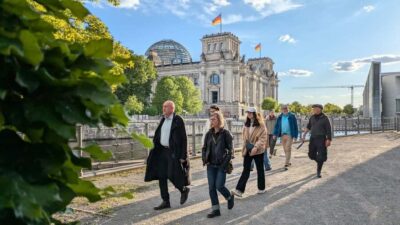

Sights and Highlights Bike Tour with a Local Guide
Read our review →
Solar Powered Sunset Catamaran Cruise & Audio Guide
Read our review →