
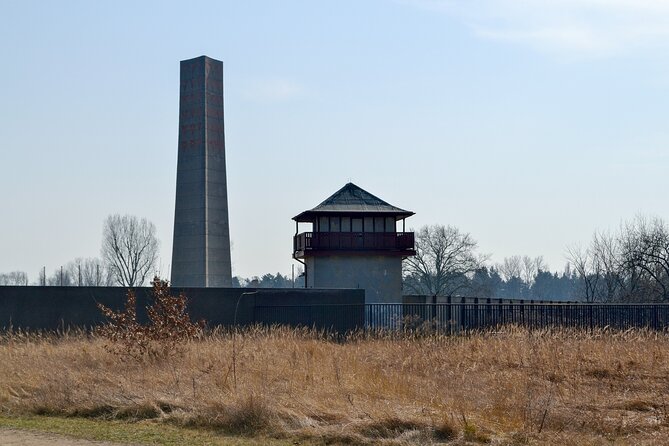
Reviewed · SACHSENHAUSEN CONCENTRATION CAMP TOURS
Sachsenhausen Concentration Camp Bus Tour
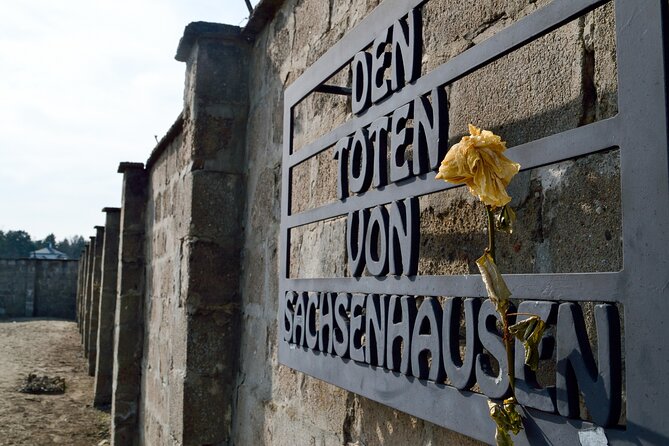
Sachsenhausen is not a casual sightseeing stop. It is a former Nazi concentration camp turned memorial, and this tour gives you a direct way to reach it from central Berlin without working out the train connection. The two-hour guided visit covers the main memorial buildings, including Tower A, barracks 38 and 39, the prison, kitchen, and gas chamber.
I like the bus transfer from Alexanderplatz, which saves about an hour of total travel time and avoids the €8.80 train fare. I also like having a guide to explain how the camp was organized and why each surviving structure matters. The main concern is timing: one visitor felt too much of the tour was spent outside the entrance in freezing weather, leaving too little time for the rest of the site.
Key points
- Direct departure from Alexanderplatz: Meet at Dircksenstraße 2 for transport straight to Sachsenhausen and return to the same point.
- Two-hour guided visit: See Tower A, the central courtyard, barracks 38 and 39, the kitchen, Tower E, the prison, and the gas chamber.
- English or Spanish guidance: The tour is led face to face in one of those two languages.
- Less transport hassle: The bus saves roughly one hour compared with going by train and avoids the €8.80 rail ticket.
- A serious, moving memorial: Sachsenhausen has been presented as a memorial to Nazi dictatorship since 1993.
- Small enough to stay manageable: The maximum group size is 30 people, though the bus is not necessarily a private vehicle for only your party.
Why Sachsenhausen belongs on a Berlin history day
Berlin has no shortage of museums about the Nazi period, but Sachsenhausen gives you a different kind of understanding. You are not only looking at photographs or reading displays. You are walking through the grounds of a former concentration camp, where the layout itself explains how control and punishment worked.
The site lies outside Berlin, so it takes planning. You can reach it by public transport, but the bus option keeps the day simple. You meet at Alexanderplatz, ride to the memorial, spend about two hours with the guide, and return to the same central meeting point. The full experience lasts around four and a half hours.
That makes this a useful choice if you want a serious historical visit without giving half a day to route planning. It also gives you a guide at the place where context matters most. The buildings are stark, and some areas are partly ruined or reconstructed. A good explanation helps you understand what you are seeing rather than simply moving from one stop to the next.
More Sachsenhausen memorial visits from Berlin:
- Berlin: Sachsenhausen Concentration Camp Tour in English
★ 5.0 · 5,711 reviews - Berlin: Sachsenhausen Concentration Camp Memorial Tour
★ 4.7 · 3,716 reviews - Sachsenhausen Concentration Camp Bus Tour in English from Berlin
★ 5.0 · 1,962 reviews
The Alexanderplatz bus transfer
Your day begins at Dircksenstraße 2, near Alexanderplatz. This is a practical meeting point with public transport nearby, and it is easier for many people than finding a regional train, changing connections, and then walking from the station to the memorial.
The advertised transport saving is about one hour in total, or roughly 30 minutes each way. You also avoid the €8.80 train ticket. At a price of $40, the tour is not just a transport bargain, since the cost also includes the guide and the visit itself. Still, the comparison is useful: the bus price includes convenience that you would otherwise have to arrange separately.
The vehicle is described as private transportation, but the activity can include up to 30 people. I would read that as a dedicated tour transfer rather than a fully private trip for one booking party. If you want a quiet, one-family outing, check the exact group arrangement before paying.
The ride also gives you a chance to prepare for the memorial. This is not a cheerful outing, and it helps to arrive knowing that the visit will focus on Nazi persecution, imprisonment, forced labor, and killing. Keep the day open and avoid placing a rushed attraction immediately afterward.
The first view of the Sachsenhausen memorial
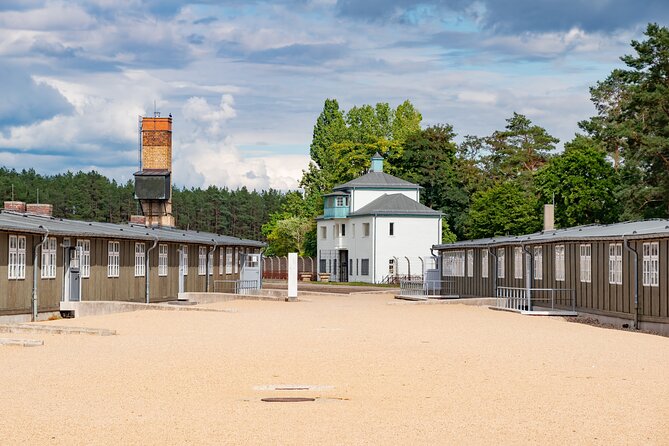
The guided visit lasts about two hours. That sounds generous until you consider the size and weight of the subject. Sachsenhausen includes a central courtyard, several important buildings, memorial spaces, and outdoor areas. You will not have time to read every panel or inspect every corner.
The camp has been presented as a memorial since 1993. The purpose is remembrance and education, not entertainment. The grounds make the system of the camp easier to grasp because you can see how entrances, barracks, towers, and controlled spaces related to one another.
Your guide should help you build that picture before moving into the individual buildings. This is where the tour can be especially useful. One excellent guide, Richard, was praised for his clear and well-informed explanations. Daniel was also singled out for connecting the camp’s background to the reasons it exists as a memorial today.
At the same time, the opening talk needs to be handled well. One poor experience involved a long introduction at the entrance, outdoors, in temperatures around zero degrees. The visitor felt that nearly half the outing passed before the main site visit began. That is a fair warning for winter bookings. Dress for a long period outside, and do not assume every minute of the two-hour visit will be spent inside a building.
Tower A and the central courtyard
Tower A is the main entrance area and one of the most recognizable parts of Sachsenhausen. It is an important place to stop because it frames the camp as a controlled institution rather than a loose collection of barracks.
The central courtyard gives you a sense of scale and order. From here, the arrangement of the site becomes easier to read. Your guide can explain how the camp was watched and managed, and why the entrance, towers, and open spaces mattered.
This is also likely to be the point where the tour feels most exposed to the weather. The memorial is largely an outdoor visit, and winter conditions can make a long explanation uncomfortable. If the guide spends too long at the gate, you may feel that the schedule is slipping before you reach the interiors.
I would treat the entrance talk as important, but I would also expect the guide to keep it focused. The best use of a paid guided visit is a clear explanation at each location, followed by enough time to see the site itself.
A different sort of day out in Berlin:
- Berlin: Reichstag, Dome and Government District Guided Tour
★ 4.7 · 18,288 reviews - Berlin: 1-Hour City Tour by Boat with Guaranteed Seating
★ 4.3 · 16,993 reviews - Berlin: Boat Tour Along the River Spree
★ 4.4 · 11,252 reviews - Discover Berlin Half-Day Walking Tour
★ 5.0 · 9,624 reviews
Barracks 38 and 39
Barracks 38 and 39 are among the key interior stops. They help you move from the general layout of Sachsenhausen to the daily conditions of people held there.
The barracks are not simply old rooms to walk through. Their value comes from seeing how the camp’s living areas were arranged and how cramped, controlled surroundings formed part of the wider system. Allow your guide’s explanation to do the work here, then take a moment to look at the structure and displays at your own pace.
You should expect the mood to change as you move through the buildings. Some parts of the memorial are quiet and stripped back, while others use exhibits or preserved spaces to give more detail. The tour does not turn the visit into a long museum session, so if you like reading every panel, you may want to return independently at another time.
That is the tradeoff of a guided schedule. You gain a route and an explanation, but you give up some freedom to linger.
The kitchen and Tower E
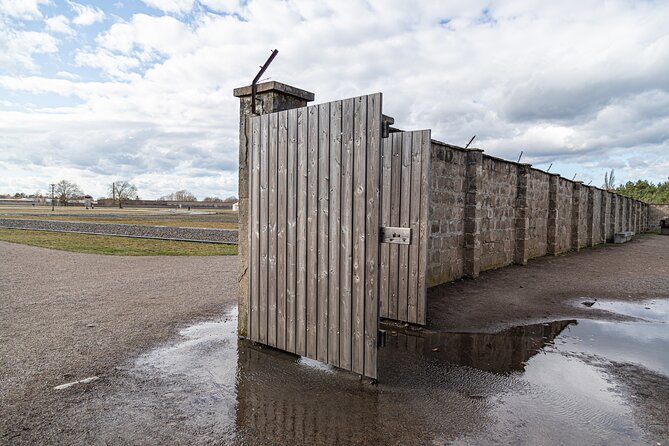
The former kitchen is another named stop on the route. It gives the guide a place to discuss the practical machinery of camp life, including the way basic needs were controlled within the wider system.
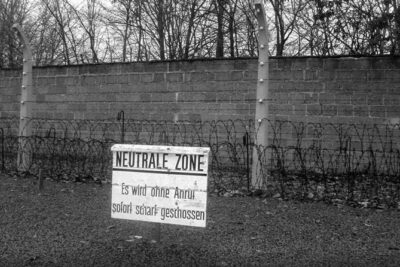
Tower E adds another part of the camp’s physical structure. Visiting several towers, rather than seeing only the main entrance, helps you understand that surveillance shaped the whole site. The towers were not decorative landmarks. They were part of the system that restricted movement and enforced authority.
These stops are valuable because they prevent the visit from focusing only on the most familiar image of Sachsenhausen. The memorial is made up of many connected spaces, and the kitchen, towers, barracks, and courtyard each explain a different part of the camp.
Because the scheduled visit is limited, listen for the guide’s main points instead of trying to record every detail. You will get more from the site by following the explanation and taking in the setting than by rushing through notes.
The prison and gas chamber area
The prison is one of the most difficult stops. It brings the camp’s system of punishment and detention into sharper focus. This is not a place to hurry through, and you may find that the guide’s context matters more here than at any other point.
The route also includes the gas chamber. Its presence makes clear that Sachsenhausen was not only a place of detention and forced labor. It was part of the Nazi system of persecution and murder.
The description of the tour lists these areas among several stops, but it does not promise the same amount of time at each one. That matters. A two-hour visit can introduce the main areas, yet it cannot offer a full study of every building and exhibit.
You should also know that the memorial can be emotionally hard. The tour is suitable for people interested in World War II and the Nazi dictatorship, but it is not a light activity for filling spare time. Give yourself room to think afterward.
How the guides shape the visit
A guide is the main reason to choose this tour instead of going alone. The grounds do not explain themselves in a simple, linear way, and the meaning of each building depends on the history attached to it.
The strongest guide experiences here appear to come from clear background explanation. Richard was praised for his education and command of the subject, while Daniel was praised for making the camp’s purpose and history easier to understand. Those comments point to the real value of the tour: the guide can connect separate buildings into one coherent account.
The tour offers English and Spanish guidance. If you need one of those languages, confirm your preferred option when booking. The experience is face to face, not simply an audio recording.
Still, guiding quality and time control both matter. A long introduction at the entrance can weaken the whole visit, especially in cold weather. I would arrive ready to listen, but I would also keep an eye on the schedule. If you feel the opening talk is taking too long, a polite request to continue inside may help protect time for the buildings.
Is $40 good value?
At $40, this is best judged as a transport and guide package rather than an admission-only visit. You receive transportation from central Berlin, the return trip, facility and landing fees, and a guided memorial visit. Snacks are not included.
The transport comparison favors the tour if you value time and simplicity. You avoid the €8.80 train ticket and save about an hour of travel. That leaves the guide as the main extra cost, and for a place as serious and complex as Sachsenhausen, that can be money well spent.
The value is weaker if you prefer to move at your own speed. One visitor felt that the schedule gave too much time to the introduction and too little to the actual buildings, and suggested going independently with an audio guide instead. That approach may suit someone who wants to read, pause, and return to sections without a group timetable.
For most people, I would see the $40 price as reasonable if the guide keeps the tour moving and gives clear explanations at the main stops. It is less convincing if you mainly want transport and plan to explore alone.
Who should book this Sachsenhausen tour?
I would recommend it to a first-time Berlin visitor who wants a structured visit and does not want to arrange the trip by train. It also suits people who prefer historical sites explained in English or Spanish rather than studied alone.
The tour may work well for:
- Anyone with only half a day available
- Visitors staying near central Berlin
- People interested in World War II and Nazi Germany
- Those who value a guide’s context at difficult memorial sites
- Visitors who do not want to manage regional transport
I would think twice if you dislike group schedules, need long periods to read exhibits, or are visiting in very cold weather and may struggle with outdoor explanations. A self-guided visit could give you more control, but it would not include the same built-in transport or face-to-face explanation.
The maximum group size is 30. That is not a tiny walking group, so do not expect a private conversation with the guide at every stop. Even so, it is more organized than arriving alone without a plan.
Booking, cancellation, and practical details
Confirmation is provided when you book, and the experience ends back at Alexanderplatz. Most people can take part, and the meeting point is near public transport.
You can cancel for a full refund up to 24 hours before the local start time. Cancellations or changes inside that window are not refunded or accepted. The tour also needs a minimum number of bookings, so if the provider cancels for that reason, you will be offered another date or experience, or a full refund.
Bring water and a snack because food is not included. Wear shoes suited to walking and clothing for outdoor conditions. In winter, add a warm layer and gloves, since part of the visit may take place outside.
Should you book it?
Book this tour if you want a simple ride from central Berlin plus a guide who can explain the memorial’s major sites. Richard and Daniel received strong praise for making the camp’s background easier to understand, and the bus saves both time and the €8.80 train fare.
Do not book it expecting a private, leisurely study visit. The group can reach 30 people, the schedule is fixed, and one poor experience lost too much time at the entrance in freezing weather. If you want maximum freedom, go independently with an audio guide. If you want help making sense of Sachsenhausen without spending extra time on transport, the $40 tour is a sensible choice.
FAQ
Where does the Sachsenhausen bus tour start?
It starts at Alexanderplatz, at Dircksenstraße 2, 10179 Berlin, Germany.
Where does the tour end?
The activity ends back at the Alexanderplatz meeting point.
How long does the full experience take?
The full visit takes about four and a half hours, including the bus journey to Sachsenhausen and the return to Berlin.
How long is the guided visit at Sachsenhausen?
The guided visit lasts about two hours.
Which languages are available?
The face-to-face guide is available in English or Spanish.
Is transportation included in the price?
Yes. Private transportation, landing and facility fees, and the guided visit are included. Snacks are not included.
Newest Berlin reviews
- Where It All Began: Berlin’s Queer & Trans History Tour★ 4.9 · 6 reviews
- Understanding Kreuzberg: The roots of local (sub)culture★ 4.9 · 11 reviews
- Berlin: guided canoe | kayaktour★ 4.1 · 7 reviews
- Private Potsdam City Tour in an authentic vintage van★ 5.0 · 14 reviews
- Warnemünde Shore Excursion: Private Sachsenhausen and Berlin Tour★ 5.0 · 12 reviews
- Ultimate E-Bike Tour of Berlin with Beer Garden Stop★ 5.0 · 4 reviews
- In the Forbidden City – Potsdam Walking Tour★ 5.0 · 17 reviews
- Private Walking Tour of Potsdam and Sanssouci★ 5.0 · 24 reviews
Sachsenhausen Concentration Camp Tours, compared.
Sachsenhausen Concentration Camp Tour in English
Read our review →
Sachsenhausen Concentration Camp Memorial Tour
Read our review →
Sachsenhausen Concentration Camp Bus Tour in English from Berlin
Read our review →Sachsenhausen Concentration Camp Tour in English
Read our review →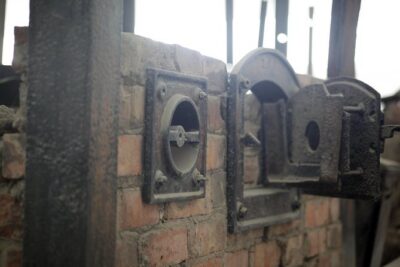
Sachsenhausen Concentration Camp Memorial Tour (Max. 15 Guests)
Read our review →
Sachsenhausen Concentration Camp and Potsdam Tour
Read our review →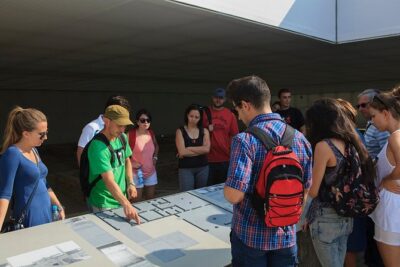
Visita en español al campo de concentración Sachsenhausen
Read our review →Browse the lists this tour appears in