
Reviewed · HISTORICAL TOURS
Historic Berlin: Exclusive Private Tour with a Local
Berlin’s past is packed into this two-hour private walk, moving from the Reichstag and the Holocaust memorial to Checkpoint Charlie, Bebelplatz, and the medieval quarter of Nikolaiviertel. You get a useful overview without being tied to a large group or a fixed lecture.
I like the one-to-one flexibility and the route’s range. A guide such as Abie can shape the visit around your interests while still covering the main sights, and the walk links Nazi, Cold War, democratic, religious, and medieval Berlin in one compact outing. The drawback is time: with roughly ten stops in two hours, you should expect exterior explanations and brisk walking rather than museum visits or long pauses.
Key points to know before booking
- Private route with a local host: Only your group takes part, and the pace can be adjusted to suit your interests.
- Ten major Berlin sights: The walk covers the Reichstag, Holocaust memorial, Checkpoint Charlie, Bebelplatz, Berlin Cathedral, and more.
- Strong historical range: You move from Prussian and medieval Berlin to Nazi crimes, the East German uprising, the Berlin Wall, and reunification.
- Two hours means a brisk overview: This is best for orientation and context, not for detailed museum visits.
- Entry costs are extra: Museum, monument, and public transport tickets are not included.
- Easy cancellation window: You can receive a full refund if you cancel at least 24 hours before the start time.
A compact walk through Berlin’s hardest stories
This tour works because Berlin’s major chapters sit surprisingly close together. In a short distance, you can look at the seat of modern German democracy, confront the Holocaust, trace the Cold War division, and finish near the city’s medieval center.
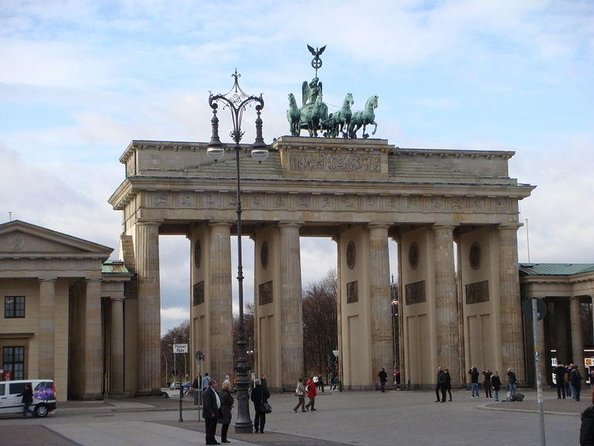
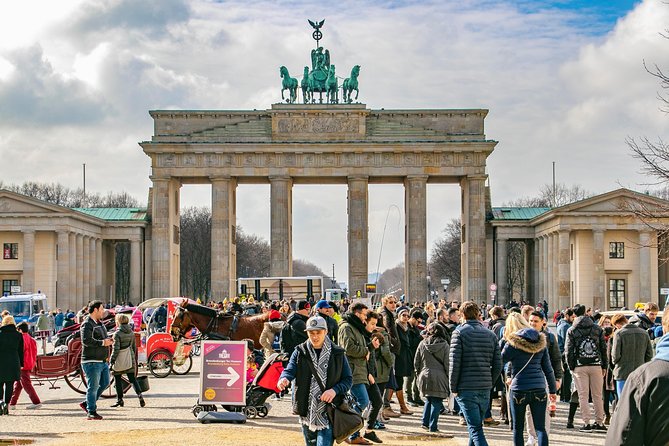
The route begins at the Academy of Arts on Pariser Platz, beside the Brandenburg Gate area. The building and square form a fitting launch point for a tour about Berlin’s cultural and political life. The Academy of Arts represents the city’s long connection with artistic and intellectual work, while nearby landmarks place you at the heart of present-day Germany.
From here, the walk heads toward the Reichstag Building in Platz der Republik. The building is a powerful visual introduction to modern Germany, with its historic stone exterior and famous glass dome. The dome itself is associated with openness and public access, while the building’s past reflects the country’s political upheavals.
You should check your expectations before booking. The tour does not include entry tickets, and the supplied details do not promise dome access. Treat the Reichstag stop as a chance to hear the building’s political story and see it from outside unless your host confirms another arrangement.
More history tours in Berlin:
- Berlin: Natural History Museum Entrance Ticket
★ 4.6 · 3,382 reviews - Berlin: World Heritage Cruise to Potsdam
★ 4.5 · 1,435 reviews - Berlin Historical Highlights Walking Tour
★ 4.9 · 657 reviews
The Holocaust memorial and Berlin’s duty to remember
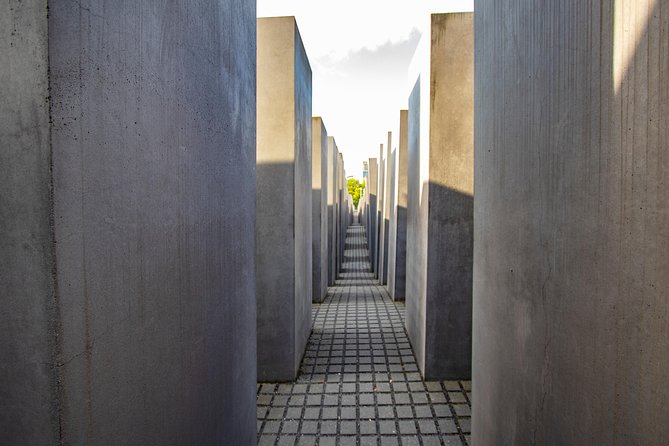
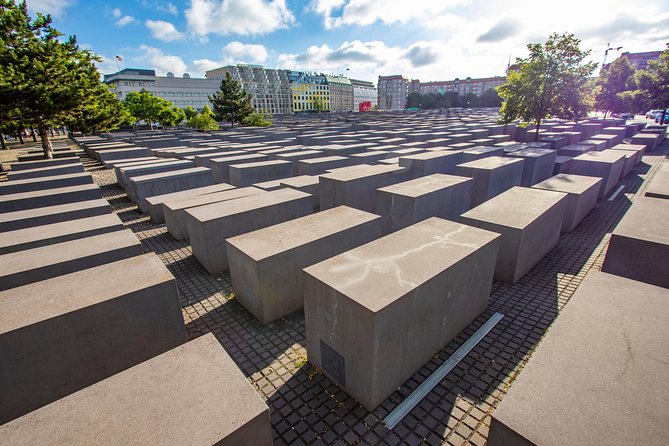
The Memorial to the Murdered Jews of Europe is one of the tour’s most important stops. Its field of concrete slabs creates an unsettled, serious space near Cora-Berliner-Straße. The memorial does not offer a simple monument with one neat message. Its form asks you to move through it and think about the scale and uncertainty of the Holocaust.
A local host can help place the memorial in the wider story of Berlin without turning the stop into a rushed photo opportunity. I would give this part of the walk your full attention. It is not a sight to skim past, and the setting calls for quiet respect.
The nearby Topography of Terror adds another layer. This museum and memorial occupies the former grounds of the Gestapo and SS headquarters. Its purpose is direct: to document the machinery and crimes of the Nazi regime.
Because museum entry is not included, you may only discuss the site from outside unless you pay separately and have enough time. In a two-hour route, that distinction matters. If the Nazi period is your main reason for visiting Berlin, you may want to return to the museum on your own for a longer visit.
The 1953 uprising and the divided city
The stop at Platz des Volksaufstandes von 1953 focuses on the East German uprising. The site recalls workers who protested against the East German government, making it a useful bridge between the Nazi years and the later division of Germany.
This is one of the less instantly familiar stops, which is exactly why a local guide adds value. A quick photograph will not tell you much. The explanation helps connect the square to life under East German rule and to the wider Cold War story.
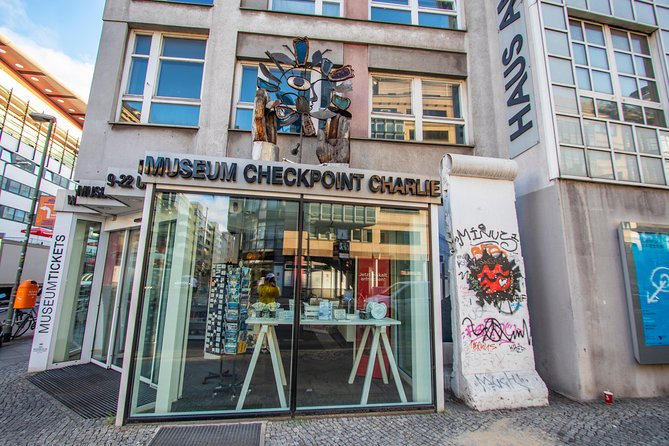
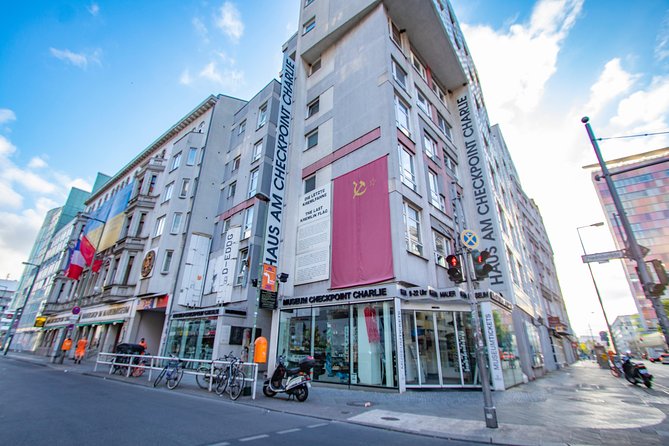
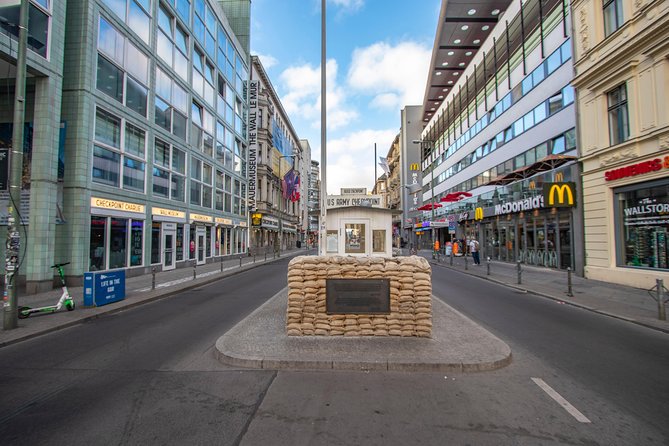
The route then reaches the landmark associated with the division and reunification of Berlin, once a crossing point between East and West Berlin. This is Checkpoint Charlie. Its name is famous, but the current setting can feel more like a busy city stop than a preserved border crossing.
That is where context matters. The value lies less in the present-day checkpoint display and more in understanding what this crossing meant when Berlin was split by the Wall. Your guide can explain how movement between the two sides was controlled and why the site became such a visible symbol of Cold War tension.
I would not choose this tour expecting a complete Wall experience. The walk visits one well-known crossing point, not every major Wall memorial. It gives you a starting point for understanding the city’s division, then leaves room for you to explore other Wall sites later.
Gendarmenmarkt and Bebelplatz on Unter den Linden
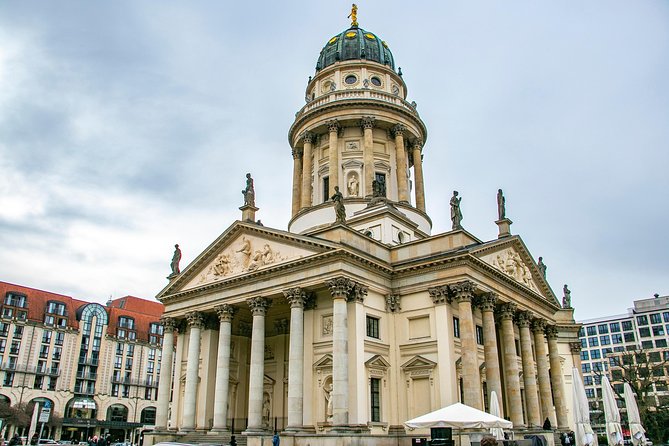
Gendarmenmarkt offers a change of mood. This handsome square is framed by major architectural works and shows Berlin’s classical side. After the difficult subjects at the Holocaust memorial, the Nazi headquarters site, and the 1953 uprising, the square provides visual relief without leaving the city’s political story behind.
Your guide can help you read the space as more than a pretty photo stop. Its buildings reflect Berlin’s ambition to present itself as a European capital of culture and power. Since the itinerary is tailored, you can ask for more detail on architecture or keep moving if your main interest is modern German history.
Bebelplatz brings the tone back to darker ground. The square is remembered for the Nazi book burning, when books were publicly destroyed in 1933. Its location on Unter den Linden also places it among important historic buildings, making the contrast between formal architecture and political repression especially sharp.
This stop rewards a slower explanation, but the two-hour schedule may not allow one. If your guide asks what you want to focus on, tell them early whether you prefer political history, architecture, or personal stories. The private format is most useful when you make your priorities clear.
Other Berlin experiences to weigh up
- Berlin: Private Reichstag and Glass Dome Tour
★ 4.8 · 2,226 reviews - Berlin Private Complete History All Day Walking Tour
★ 5.0 · 474 reviews - Private Walking Tour Berlin Third Reich Hitler and World War II
★ 5.0 · 360 reviews - Private Berlin: Iconic Sights and Hidden Gems Walking Tour
★ 5.0 · 292 reviews
Berlin Cathedral and the route toward old Berlin
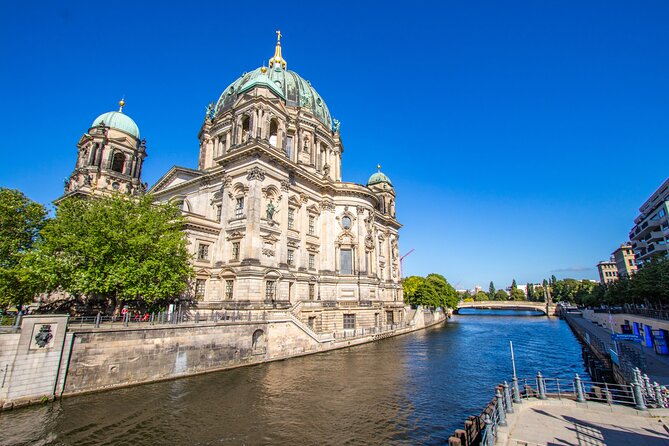
Berlin Cathedral at Am Lustgarten is one of the city’s most recognizable religious buildings. Its scale and ornament give you a strong sense of the monumental Berlin created by rulers, churches, and state institutions.
The cathedral also helps balance the tour. You have seen buildings linked to democracy and dictatorship, but this stop shows Berlin as a religious and cultural center. The route does not include a cathedral ticket, so plan on an exterior visit unless separate admission is arranged.
The end point is Nikolaiviertel on Rathausstraße, the historic heart of Berlin. Its traditional buildings and smaller streets offer a sharp contrast with the grand avenues and government buildings earlier in the walk. This is a pleasant place to finish because it gives you a glimpse of the city’s medieval origins rather than ending at another modern political landmark.
The route’s final move from monumental Berlin to Nikolaiviertel is one of its better choices. You finish with a sense that Berlin is not only a capital rebuilt after war and division. It also has an older core, even if much of what you see today reflects reconstruction and later preservation.
What a private guide changes
A private tour is not automatically better than a group tour, but here it solves a real problem. Berlin’s major sights do not all tell their own stories clearly. The Reichstag looks impressive, Checkpoint Charlie is heavily branded for tourists, and a square such as Bebelplatz can seem ordinary until you know what happened there.
A private host can adjust the balance. You might ask for more time on the Nazi period, a clearer explanation of the Berlin Wall, or a lighter focus on architecture. The itinerary can also respond to your walking pace and interests, with stops changing if weather makes part of the route uncomfortable.
One particularly useful detail is the reported work of Abie, a guide who tailored the route to the group while still covering the essential sights. That is the standard to hope for here: not a memorized list, but a guide who listens and keeps the larger story intact.
The walk is offered in English. Confirmation arrives at booking, and the activity is private, so only your own party joins. Service animals are allowed, and the route is near public transportation.
There is a mobility warning worth taking seriously. This is a walking experience with many stops and no promise of a fully accessible route. It is not recommended for people with impaired mobility, and the guide may adjust the pace but cannot remove the distances between sites.
Is $151.41 per person good value?
At $151.41 per person, this is not a budget introduction to Berlin. The value depends heavily on the size of your group and what you want from the visit.
For one or two people, the price is a premium for privacy, flexibility, and a local host’s attention. For a larger private group, the cost may feel easier to justify because everyone receives the same explanation and no one is waiting for strangers to catch up.
You are paying for a tailored orientation rather than admission to attractions. Museum, monument, and public transport tickets are extra, so add those costs if you want to enter places along the way. The supplied details do not promise entry to the Reichstag dome, Topography of Terror, Berlin Cathedral, or any other interior.
I see the best value for someone arriving in Berlin who wants a clear framework for the city. After this walk, you can decide which sites deserve a longer return visit. If you already know Berlin well, or want extended museum time, the price may be harder to defend.
The two-hour length also keeps the total commitment manageable. You can fit it into a first day without losing half a day to a formal tour. The trade-off is a fast rhythm. Ten listed stops in roughly two hours leaves little room for lingering, shopping, or long interior visits.
How to make the most of the two hours
Arrive ready to walk and begin at the Academy of Arts, Pariser Platz 4. The end point is Nikolaiviertel at Rathausstraße 21, so you do not return to the starting point. That is useful if you plan to continue exploring central Berlin after the tour.
Tell your guide your priorities at the start. A group interested in twentieth-century politics should ask for more time at the Holocaust memorial, Topography of Terror, the 1953 uprising site, and Checkpoint Charlie. Someone more interested in architecture may prefer extra explanation at Gendarmenmarkt, Bebelplatz, Berlin Cathedral, and Nikolaiviertel.
Allow for weather changes. Stops can vary with conditions, and the tour’s private format makes that adjustment possible. Since tickets are not included, do not assume an interior visit is part of the plan.
I would also avoid scheduling a major timed attraction immediately after the walk. The tour lasts about two hours, but walking pace, weather, and conversation can affect the finish. A flexible plan works better.
Who should book this Berlin walk?
This experience suits first-time visitors who want the city’s main historical threads tied together. It is also a good match for couples, families, or small groups who dislike fixed group pacing and want to ask direct questions.
It works especially well if you value explanation over attraction collecting. You will see many important sites, but the main reward is understanding how they relate to one another.
It is less suitable if you need step-free access, want a relaxed stroll, or hope to spend significant time inside museums. It is also not the best choice for someone seeking a dedicated Berlin Wall tour, a Nazi-era museum visit, or a full architecture walk. The route touches all these subjects, but it cannot develop each one fully in two hours.
Should you book it?
Book this private Berlin tour if you want an efficient, serious introduction with a guide who can adjust the story to your interests. The combination of the Reichstag, Holocaust memorial, Nazi headquarters site, 1953 uprising memorial, Checkpoint Charlie, Bebelplatz, Cathedral, and Nikolaiviertel gives you a useful map of the city’s past.
Skip it if the $151.41 price feels high for a walking overview or if you want included museum admissions. For the right group, the private format and flexible pacing make the cost easier to defend. For a visitor who prefers to explore independently, the same route can be followed with a guidebook and more time at each stop.
FAQ
How long is the Historic Berlin private tour?
The tour lasts approximately two hours.
Where does the tour begin?
It begins at the Academy of Arts, Pariser Platz 4, 10117 Berlin, Germany.
Where does the tour end?
It ends in Nikolaiviertel at Rathausstraße 21, 10178 Berlin, Germany.
Is the tour private?
Yes. Only your group participates, and the experience includes an exclusive private tour with a local host.
Is the itinerary fixed?
No. The itinerary can adapt to your interests and walking pace. Stops may also change depending on weather conditions.
Are museum, monument, and public transportation tickets included?
No. Entry tickets for transportation, museums, and monuments are excluded, as are personal expenses.
Can I cancel for a full refund?
Yes, if you cancel at least 24 hours before the experience start time. Cancellations or changes made less than 24 hours before the start are not refunded or accepted.
Newest Berlin reviews
- Where It All Began: Berlin’s Queer & Trans History Tour★ 4.9 · 6 reviews
- Understanding Kreuzberg: The roots of local (sub)culture★ 4.9 · 11 reviews
- Berlin: guided canoe | kayaktour★ 4.1 · 7 reviews
- Private Potsdam City Tour in an authentic vintage van★ 5.0 · 14 reviews
- Warnemünde Shore Excursion: Private Sachsenhausen and Berlin Tour★ 5.0 · 12 reviews
- Ultimate E-Bike Tour of Berlin with Beer Garden Stop★ 5.0 · 4 reviews
- In the Forbidden City – Potsdam Walking Tour★ 5.0 · 17 reviews
- Private Walking Tour of Potsdam and Sanssouci★ 5.0 · 24 reviews
Historical Tours, compared.

Berlin Private Complete History All Day Walking Tour
Read our review →


Small group Potsdam: A Journey Through History and Palaces
Read our review →Browse the lists this tour appears in