Reviewed · TOURS
Berlín y el Nacionalsocialismo. Group Tour in Spanish
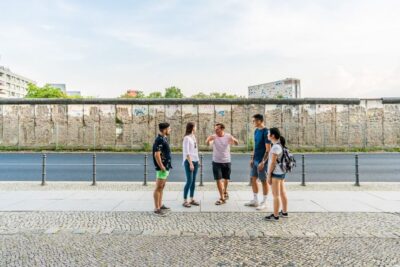
Berlin’s Nazi past is easiest to grasp when you connect the political story to the streets where it unfolded. This four-hour Spanish walking tour traces Hitler’s rise, Nazi propaganda, the Rome-Tokyo Axis, and the final days in the bunker, using central Berlin as the classroom.
I like the clear historical arc, from the Treaty of Versailles and the Weimar Republic to the Third Reich’s collapse. I also like the chance to see less obvious sites, including the Luftwaffe Ministry and the former Propaganda Ministry. The main consideration is pace: four hours on foot can feel long, especially since you must bring your own AB public transport ticket.
Key points to know before booking
- A full four-hour history walk: Follow the story from postwar Germany to Hitler’s final days.
- Spanish-speaking guides: Guides named Sam, Martín, and Celia have received especially strong praise for their information and patience.
- More than memorials: The route includes embassies, government buildings, Wilhelmstrasse, and the former bunker area.
- A useful starting point: Meet beside the only entrance to the Fernsehturm at Alexanderplatz, near Espresso House.
- Transport is extra: You need a Berlin public transport ticket for zones AB.
- A serious, site-based lesson: The focus is on National Socialism, propaganda, war planning, and remembrance.
Starting at Alexanderplatz and setting the historical frame
The meeting point is easy to identify if you know what to look for. Meet beside a green flag marked tours en español, next to the only entrance to the Fernsehturm, between the television tower and Alexanderplatz train station, near Espresso House.
Alexanderplatz is a practical place to begin. It has a major train station, clear landmarks, and plenty of foot traffic, so you can get there by public transport. Still, give yourself time to find the flag. The square is open and busy, and a few extra minutes will save you from beginning the tour in a mild panic beneath Berlin’s famous TV tower.
The guide starts with the background that made Hitler’s rise possible. You’ll hear about the Treaty of Versailles, the political and economic strain that followed the First World War, and the Weimar Republic. This opening matters because the tour is not simply a list of Nazi buildings. It explains how democratic government weakened and how Hitler gained power.
I appreciate this structure. If you only visit monuments without the political context, Berlin’s Nazi sites can feel scattered. The early part of the walk gives you the framework to understand why propaganda, fear, nationalism, and political violence mattered so much.
Other Berlin tours worth putting on the same trip:
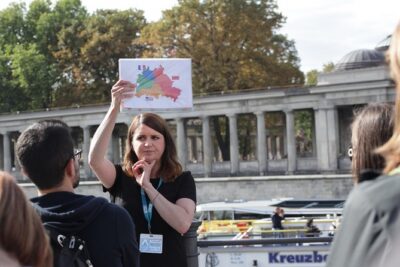
- Berlin: Reichstag, Dome and Government District Guided Tour
★ 4.7 · 18,288 reviews - Berlin: 1-Hour City Tour by Boat with Guaranteed Seating
★ 4.3 · 16,993 reviews - Berlin: Boat Tour Along the River Spree
★ 4.4 · 11,252 reviews
Hitler’s rise and the machinery of Nazi power
The tour examines Hitler’s path to power and the role of major Nazi figures, including Joseph Goebbels. His propaganda work is an important part of the route’s story. The Nazi government did not rely on speeches alone. It used organized messaging and propaganda programs to shape public opinion and control how Germany understood events.
This section should appeal to you if you want more than military history. The tour looks at how a dictatorship presented itself, built support, and maintained control. That makes the experience relevant even if your main interest is modern European politics rather than battlefield history.
The guide’s job is especially important here. You need clear explanations, not a flood of dates. Sam received particularly strong praise for attentive guiding and solid information. Martín was also singled out as an excellent guide, while Celia was praised for her patience, knowledge, and willingness to help. Those comments suggest that the quality of the presentation can add a great deal to the walk.
The subject is grim, so the tone matters. A good guide should explain the system without turning Nazi symbols or leaders into curiosities. This experience is designed as a serious historical tour, and you should expect a sober discussion rather than entertainment.
The Sinti and Roma memorial and the plan for Germania
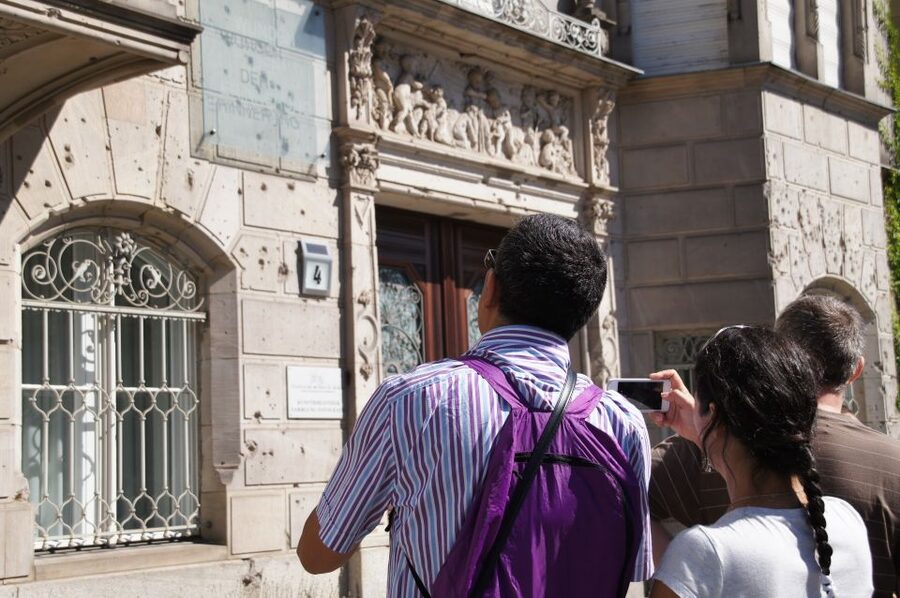
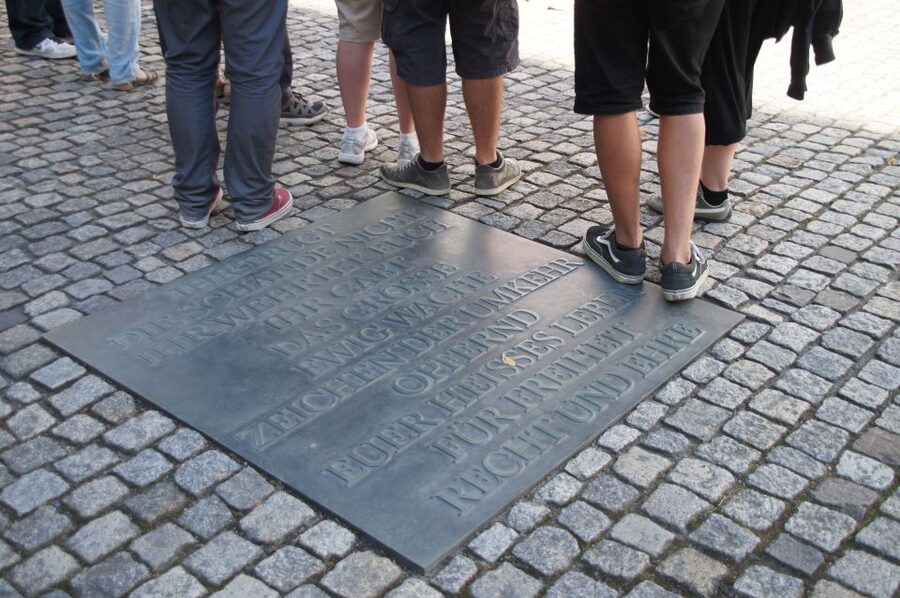
One important stop is the Memorial to the Sinti and Roma Victims of National Socialism. This brings the persecution of minority communities into the center of the story. It also helps prevent the tour from becoming too focused on Hitler and his inner circle.
You’ll also learn about Nazi plans for Germania, the proposed redesign of Berlin as a grand capital of the world. The plan reveals the scale of the regime’s ambition. Berlin was not meant to remain an ordinary capital. Nazi planners wanted to reshape it into a monumental political showcase.
The value of discussing Germania is that you can compare the imagined city with the Berlin you see today. The plan shows how architecture was used to communicate power. It also exposes the gap between grand political fantasies and the devastation caused by the war.
The memorial and Germania discussion add balance to the route. One focuses on victims and remembrance. The other examines the regime’s megalomania and its plans for the city. Together, they show both the human cost of National Socialism and the physical ambitions of its leaders.
The Rome-Berlin-Tokyo Axis at the embassies
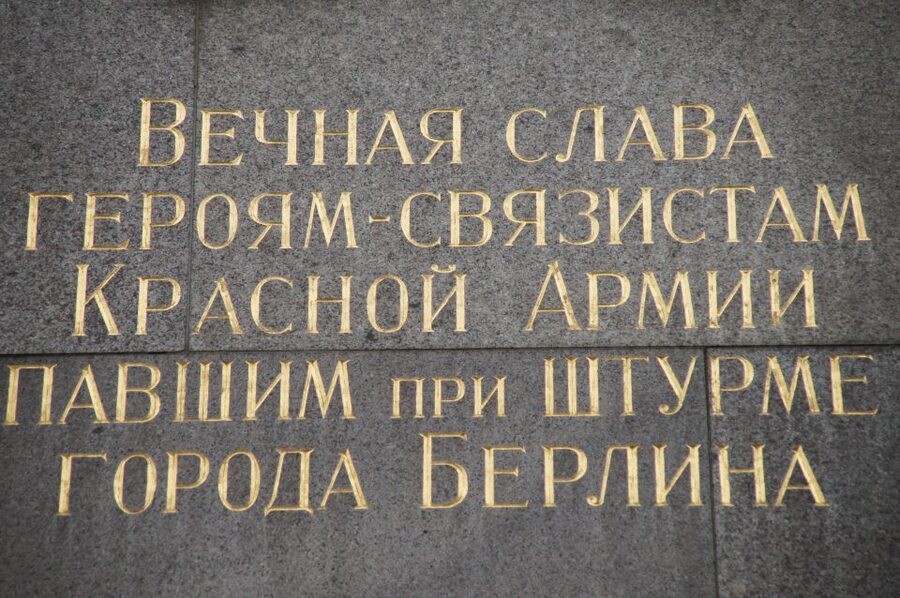
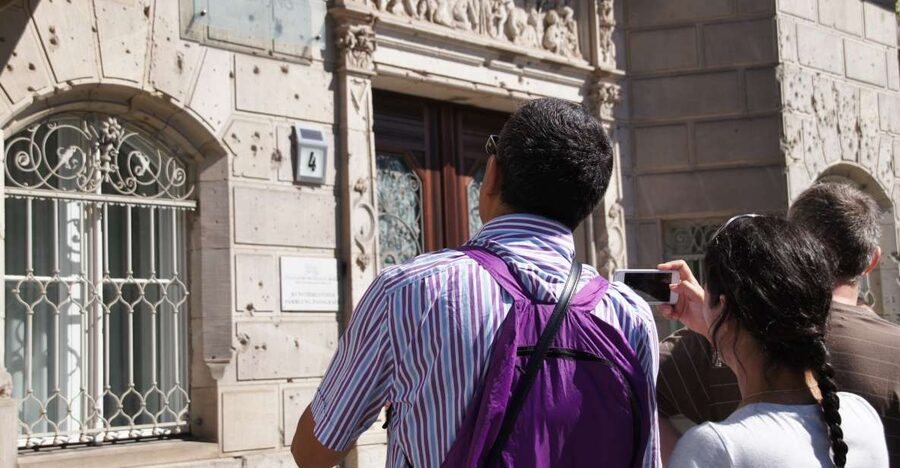
The tour continues to the Italian and Japanese embassies, where the guide explains the Berlin-Rome-Tokyo Axis. This is one of the more unusual parts of the walk because the subject is tied to diplomatic geography rather than a conventional monument.
Seeing the embassies helps you connect international alliances to the actual city. Italy, Germany, and Japan were not just names in a textbook. Their relationship had a visible place in Berlin’s political center.
This stop may be brief, and that is sensible. The embassies are part of the historical setting, but they are not presented as museums or indoor attractions. Your experience depends on the guide’s explanation and on viewing the buildings from the street.
I like this kind of stop because it broadens the tour beyond Germany alone. The Third Reich was part of a wider international conflict. The Axis discussion gives you a clearer sense of how Berlin fit into the diplomatic and military structure of the Second World War.
A different sort of day out in Berlin:
- Discover Berlin Half-Day Walking Tour
★ 5.0 · 9,624 reviews - Berlin: Hop-on Hop-off Bus Tour with Live Commentary
★ 4.3 · 8,579 reviews - Berlin: Government District around the Reichstag Guided Tour
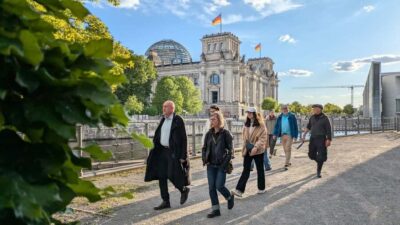
★ 4.7 · 8,447 reviews - Berlin: Reichstag, Plenary Chamber, Cupola & Government Tour
★ 4.6 · 8,422 reviews
Walking Wilhelmstrasse to the Luftwaffe Ministry
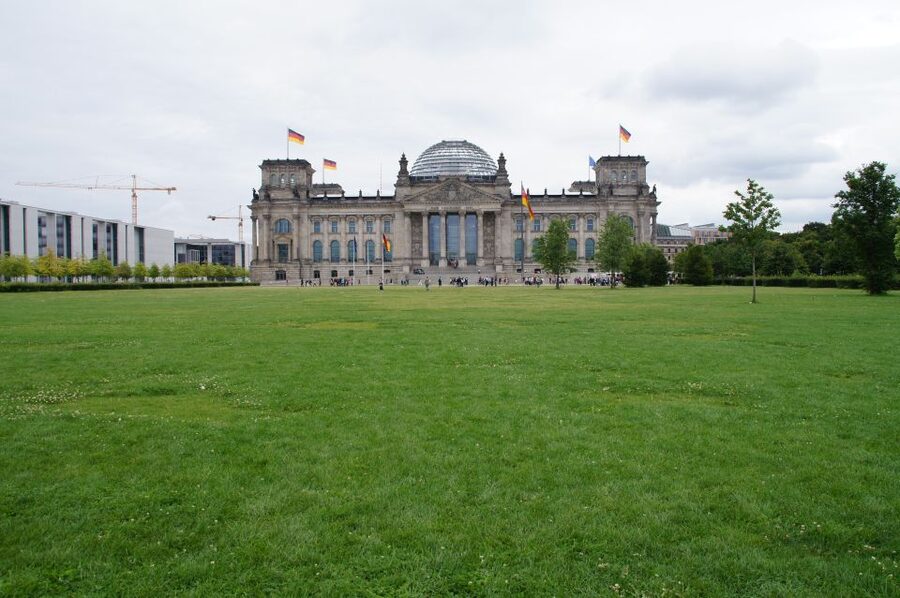
Wilhelmstrasse is one of the route’s strongest sections. Once a major center of government, it lets you follow the Nazi state through the streets where officials planned and administered policy.
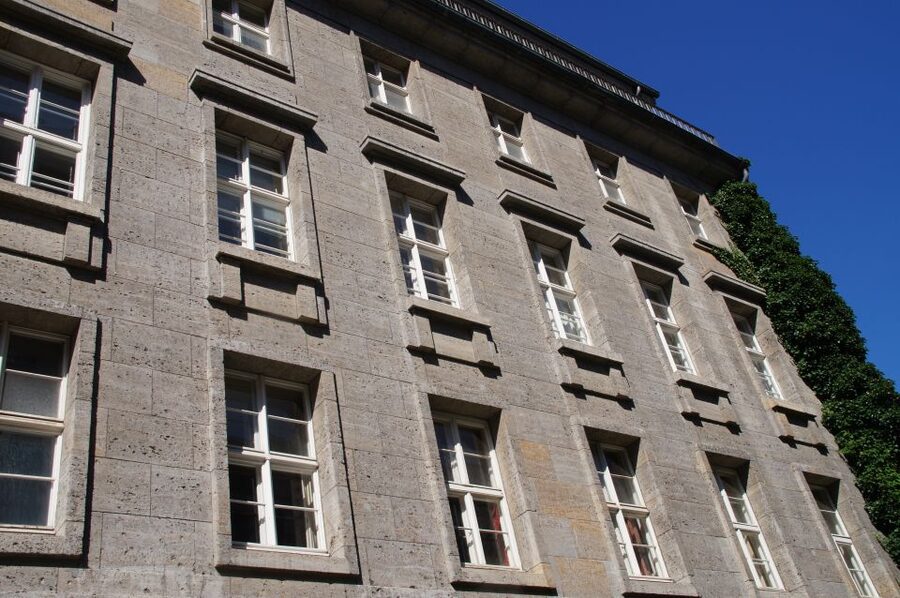
The walk leads to the Luftwaffe Ministry, also known as the Air Defense Ministry. This building connects the tour to Germany’s military organization and the role of air power in the Nazi state. The guide also discusses the former Nazi Propaganda Ministry in this part of the route.
You should not expect every stop to look exactly as it did during the Third Reich. Berlin changed dramatically during and after the war, and some buildings have different uses today. That is part of the lesson. The guide helps you read the present city while explaining what occupied these sites in the past.
This section rewards close attention. You may pass official buildings without realizing their importance if you explore alone. With a guide, Wilhelmstrasse becomes a line through the Nazi government, linking military administration, propaganda, diplomacy, and political control.
The walk also gives you a sense of scale. Hitler’s government was not confined to one headquarters. It operated through ministries, offices, propaganda structures, and diplomatic channels spread across central Berlin.
Ending at the former Führer Chancellery and bunker site
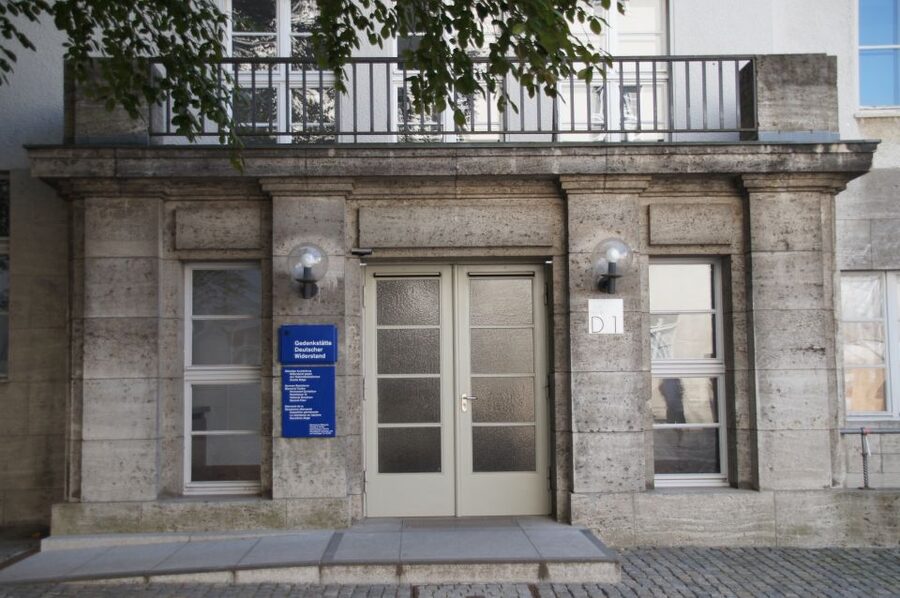
The tour ends at the place where the Führer Chancellery once stood, near the location associated with Hitler’s bunker. Here, the guide explains Hitler’s final days and the collapse of the Nazi regime.
This is not a preserved bunker interior experience. The historical importance lies in understanding what happened at the site and what remains visible today. The ending is deliberately grounded in the present city rather than built around a dramatic reconstruction.
That approach is useful. It keeps attention on the consequences of dictatorship and war, not on turning Hitler’s last headquarters into a spectacle. You’ll hear how the regime ended while standing at the location connected to its final chapter.
The exact location can be difficult to understand without guidance because little remains in the form of an obvious tourist attraction. That is one reason the tour is more useful than a self-guided walk. The guide connects the current street scene with the events that took place below and around it.
By finishing here, the route gives you a clear narrative shape. You begin with the political conditions that allowed Hitler to rise and end with the physical and political collapse of his regime.
Is four hours the right length?
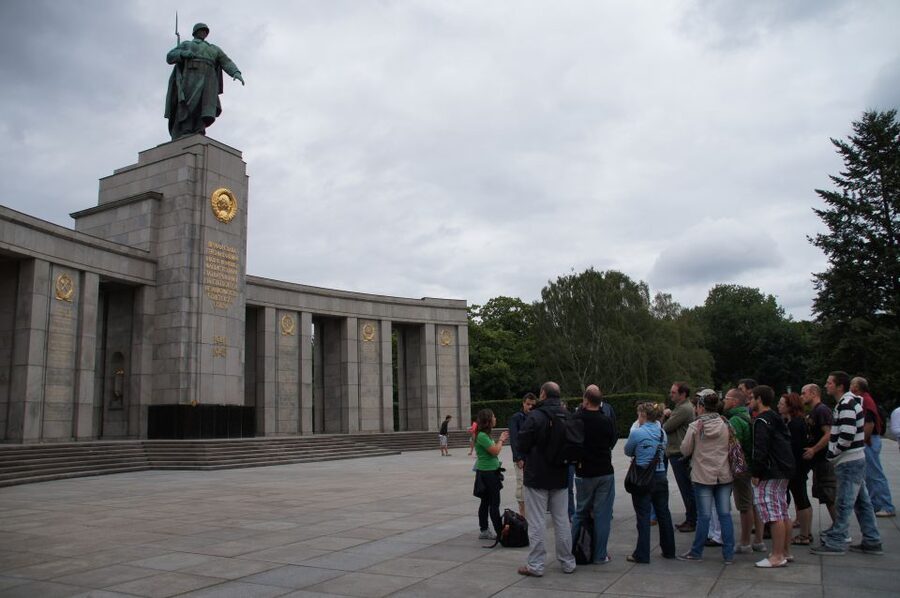
Four hours is enough time to cover a serious amount of ground without turning the experience into a full-day commitment. You’ll move through several central areas, so the duration allows the guide to explain both major events and smaller details.
The tradeoff is physical. This is a walking tour, and the route includes several outdoor stops. Wear comfortable shoes and dress for Berlin weather. A short pause may help, but one review specifically found some pauses unnecessary, so the timing may not suit everyone.
If you prefer a fast, tightly packed tour, four hours could feel slow. If you want time for explanation and questions, the length is more useful. The best fit is someone who wants a guided history lesson rather than a quick photo walk.
The tour is listed as wheelchair accessible. You should still consider the practical demands of a long urban route and confirm current conditions when booking if you have specific mobility needs.
The AB transport ticket is not included
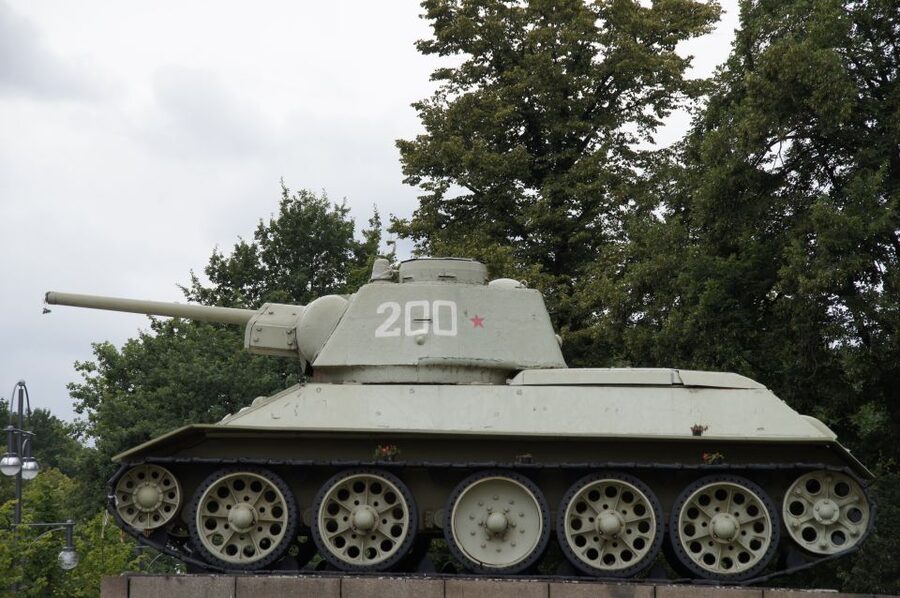
You must bring a public transport ticket for Berlin’s AB zones. It is not included in the $29 price.
This is a small but important detail. The meeting point is at Alexanderplatz, and the tour information specifically requires an AB transport card. Buy or arrange the correct ticket before the walk begins so you do not have to solve transport details while looking for the green flag.
The extra ticket does not greatly change the value of the experience, but you should include it in your budget. At $29 per person, the tour remains reasonably priced for four hours with a live Spanish-speaking guide, especially if you want context at each site rather than a route map alone.
Its value depends on your interests. If you already know Berlin’s Nazi history well and are comfortable researching sites yourself, you may prefer independent sightseeing. If you want a connected explanation in Spanish, the price is easier to justify.
How the guide affects the experience
This tour relies heavily on the guide. Many of the sites are viewed from public streets, and some have changed considerably since the 1930s and 1940s. The explanation gives them meaning.
Sam, Martín, and Celia are names connected with especially positive feedback. Sam was praised for exceptional attention and strong information. Martín was described as an excellent guide. Celia was noted for patience, knowledge, and a helpful attitude.
You should still expect some variation in delivery. A history tour can feel very different depending on the guide’s pace, storytelling, and handling of questions. The subject requires accuracy and restraint, so a calm and organized presentation matters more here than theatrical performance.
The tour is offered in Spanish only. That makes it a useful choice if you prefer to discuss difficult historical material in Spanish or want a more natural experience than translating a German or English tour in your head.
Who should book this Berlin history walk?
I would recommend it to you if you want a focused introduction to Hitler’s Berlin, especially if you have limited time. It covers the political background, propaganda, military administration, diplomatic alliances, urban planning, persecution, and the regime’s final days in one route.
It also suits you if you prefer seeing historical places in context. The tour does not depend on a single museum collection. Instead, you move through the city and learn how government, propaganda, diplomacy, and war were arranged in central Berlin.
You may want a different option if you dislike long walks, want extensive time inside museums, or prefer a lighter sightseeing experience. The topic is serious from beginning to end, and the route is built around National Socialism rather than general Berlin highlights.
Families should consider the age and interest of younger members. The subject includes dictatorship, persecution, war, and Hitler’s final days. The available information does not specify a minimum age, so use your own judgment about what will be suitable.
Should you book Berlín y el Nacionalsocialismo?
Book this tour if you want a reasonably priced, four-hour Spanish introduction to Berlin’s Nazi past, with a clear route from Hitler’s rise to the bunker site. The strongest reasons are the historical structure, the mix of famous and less obvious locations, and the chance to hear the story in Spanish from guides such as Sam, Martín, or Celia.
Skip it if you want a short sightseeing stroll or a museum-heavy visit. You must also budget for an AB public transport ticket and be ready for several hours on foot.
For the right audience, $29 is a fair price for a serious, well-organized look at one of Berlin’s most difficult chapters. It gives you the background needed to understand the city’s memorials, government buildings, and empty spaces long after the walk ends.
FAQ
How long is the Berlín y el Nacionalsocialismo tour?
The tour lasts four hours.
What language is the tour offered in?
The tour is conducted in Spanish with a live Spanish-speaking guide.
How much does the tour cost?
The listed price is $29 per person.
Where does the tour meet?
Meet beside a green flag marked tours en español, next to the only entrance to the Fernsehturm at Alexanderplatz. The meeting point is between the television tower and Alexanderplatz train station, near Espresso House.
Do I need a public transport ticket?
Yes. You need a public transport ticket for Berlin zones AB, and it is not included in the tour price.
What sites are included?
The route includes the Memorial to the Sinti and Roma Victims of National Socialism, the Italian and Japanese embassies, Wilhelmstrasse, the Luftwaffe Ministry, the former Nazi Propaganda Ministry, and the location of the former Führer Chancellery and bunker.
Does the tour discuss Hitler’s rise to power?
Yes. The guide covers the Treaty of Versailles, the Weimar Republic, Hitler’s rise, Nazi leaders, propaganda programs, and the development of the Third Reich.
Is the tour wheelchair accessible?
Yes, the activity is listed as wheelchair accessible.
Can I cancel the tour for a full refund?
Yes. You can cancel up to 24 hours in advance for a full refund.
Newest Berlin reviews
- Where It All Began: Berlin’s Queer & Trans History Tour★ 4.9 · 6 reviews
- Understanding Kreuzberg: The roots of local (sub)culture★ 4.9 · 11 reviews
- Berlin: guided canoe | kayaktour★ 4.1 · 7 reviews
- Private Potsdam City Tour in an authentic vintage van★ 5.0 · 14 reviews
- Warnemünde Shore Excursion: Private Sachsenhausen and Berlin Tour★ 5.0 · 12 reviews
- Ultimate E-Bike Tour of Berlin with Beer Garden Stop★ 5.0 · 4 reviews
- Potsdam Highlights – Private sightseeing tour by minibus★ 5.0 · 3 reviews
- In the Forbidden City – Potsdam Walking Tour★ 5.0 · 17 reviews
Tours, compared.
Reichstag, Dome and Government District Guided Tour
Read our review →
1-Hour City Tour by Boat with Guaranteed Seating
Read our review →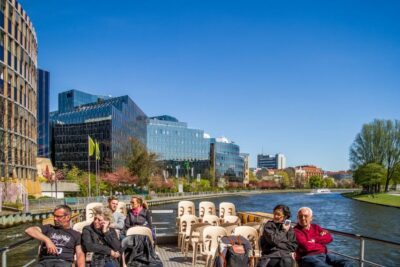
Reichstag, Plenary Chamber, Cupola & Government Tour
Read our review →