
Reviewed · HISTORICAL TOURS
Berlin: Urbex Abandoned Places & History Tour
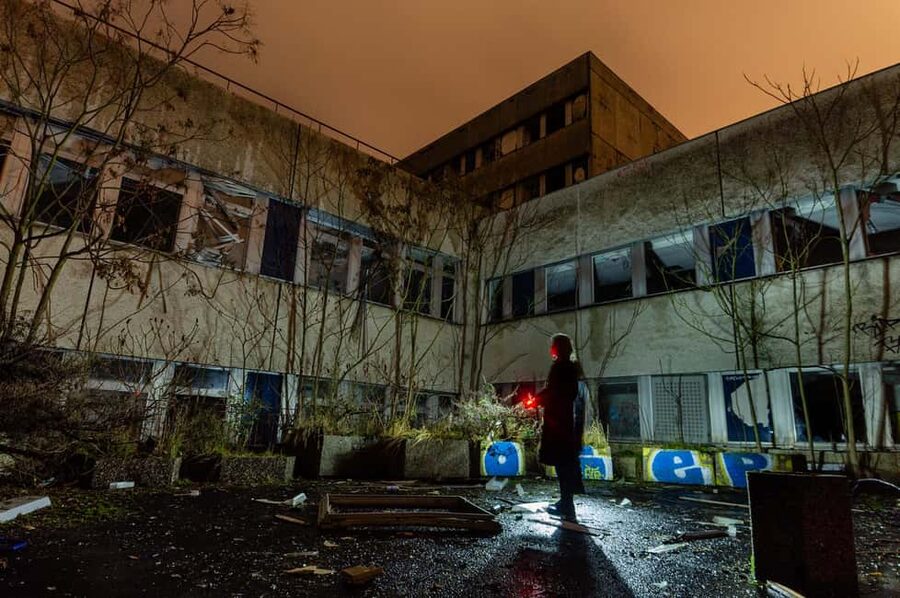
Berlin’s abandoned Stasi hospitals offer a rare look at the places where East Germany’s secret police cared for its own officers. You’ll move through empty rooms, old tunnels, graffiti-covered spaces, and rooftops while learning how these once-secret medical facilities fit into the city’s divided past.
I like the small group of no more than six, which makes it easier to move safely and ask questions. I also like the hands-on feel: torches are supplied, and the tour encourages you to think like an urbex photographer rather than simply walk past a line of dusty rooms.
The main caution is the site’s condition. Parts have been damaged, burned, or stripped, and broken glass can be underfoot. One recent visit found the bunker closed, so the exact route and the amount of surviving material may change.
Key things to know before you go
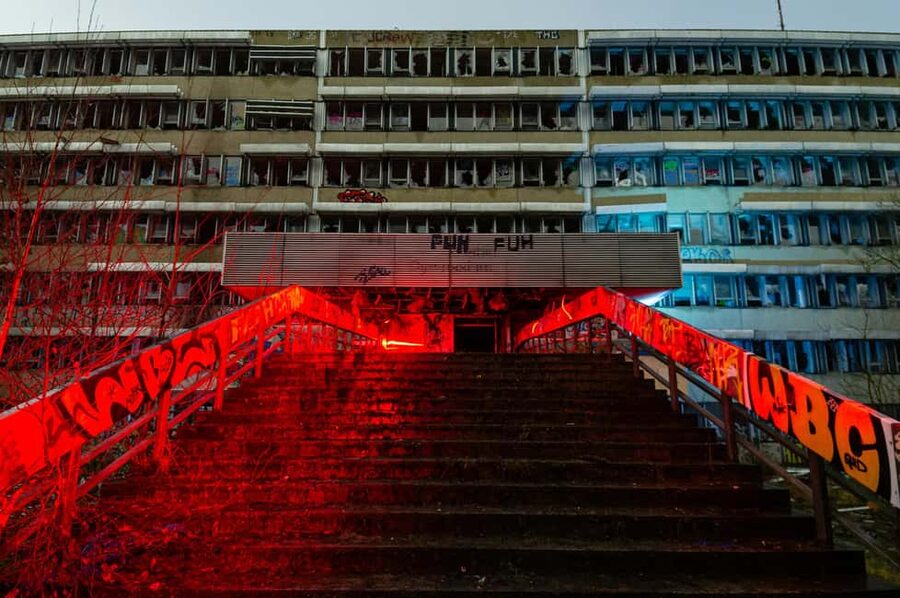
- The former Stasi hospital is the main event: Expect abandoned medical buildings, old flooring, documents, tunnels, graffiti, and views from above.
- Yoorii leads the tour with energy and humor: His approach combines site history, practical safety, and encouragement for first-time urban explorers.
- The group is capped at six people: That matters in narrow corridors and dark underground areas, where a large group would feel clumsy.
- Torches are included: You’ll need them in the tunnels, but bring a tripod if photography matters to you.
- Dress for dust and rough ground: Wear comfortable clothes, a cap or other head covering, and shoes you trust on uneven surfaces.
- The tour is not for everyone: Children under 10, pregnant women, wheelchair users, people over 130 kilograms, people with high blood pressure, and people over 70 are excluded.
Why the old Stasi hospital matters
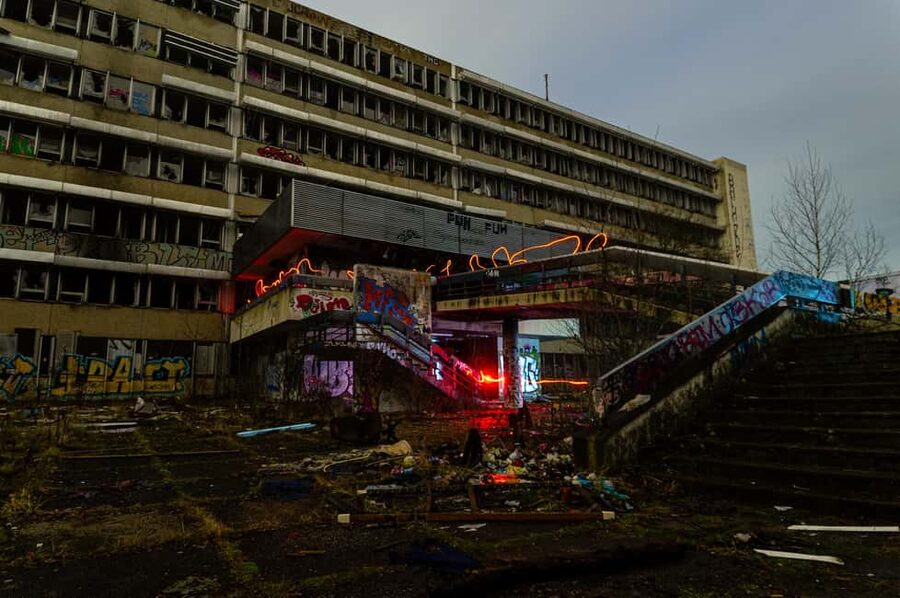
Berlin is full of visible Cold War history: the Wall, border crossings, watchtowers, and government buildings. This tour takes you to a less polished kind of place. The abandoned Stasi hospitals show how East Germany built a closed medical system for its secret police and senior officials.
The Stasi, or East Germany’s secret police, operated hospitals mainly for its own people. These facilities had modern equipment for their time and staff who were bound to secrecy. The point was privacy. Stasi operatives could be treated without ordinary public contact and without drawing attention from Western intelligence services.
That setting gives the tour more weight than a simple walk through an empty building. The peeling walls and ruined corridors are not just spooky scenery. They belonged to an institution built around secrecy, control, and fear. After the Berlin Wall fell in 1989 and East Germany collapsed, the hospitals lost their function and were left behind.
You should not expect a polished museum. There are no neat displays, glass cases, or carefully labeled rooms. Instead, the place offers fragments: original flooring, old documents, empty medical spaces, damaged rooms, graffiti, and the physical shape of a former secret institution. The guide’s explanation helps you connect those fragments.
More history tours in Berlin:
- Berlin: Natural History Museum Entrance Ticket
★ 4.6 · 3,382 reviews - Berlin: World Heritage Cruise to Potsdam
★ 4.5 · 1,435 reviews - Berlin Historical Highlights Walking Tour
★ 4.9 · 657 reviews
Meeting Yoorii at S-Bahn Buch
The meeting point is outside the S-Bahn Buch station, at the exit on the side of the Netto supermarket. After coming downstairs, turn left. This is a useful detail because the station has more than one direction of travel, and you do not want to begin the tour by wandering around the neighborhood.
The location is in Berlin State, but it is not a quick central-city attraction. Allow enough time to reach Buch and find the correct exit. The tour itself lasts three hours, so a late arrival could cut into a large part of the visit.
Yoorii is the guide most closely associated with this experience. He brings a mix of seriousness, humor, and enthusiasm to the site. That balance matters here. The abandoned buildings can feel gloomy, but a guide who treats the place only as a horror set would miss the history. Yoorii’s role is to explain the location while helping you move through it safely.
The group limit of six is a real advantage. In a place with dark corridors, stairways, and narrow underground sections, a small group allows the guide to keep an eye on everyone. You can also stop for questions or photographs without holding up a long line.
From empty hospital rooms to old documents
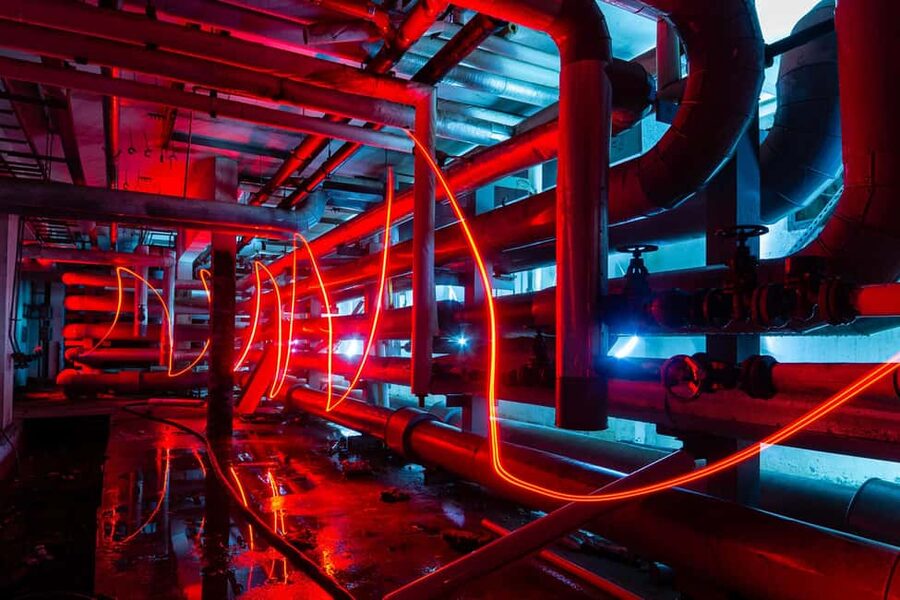
The tour takes you through the former hospital complex, where the condition of the buildings is part of the experience. Some areas retain traces of their former use. Old flooring and documents can help you picture the institution before decay took over.
You might find rooms that look almost plain at first. Give them time. In an ordinary abandoned building, an empty corridor is simply an empty corridor. Here, the guide provides the missing context: who used the facility, why it was kept private, and how its purpose ended after the fall of East Germany.
The site is large, and many sections can look similar. This is where a guide saves time. Instead of wandering through every empty space, you can focus on the parts with more visual or historical interest. The tour is not simply about getting inside. It is about understanding which rooms and details are worth your attention.
Still, keep your expectations realistic. The buildings have suffered damage from trespassing, vandalism, fires, and general decay. Some original features have disappeared. If you are hoping for a perfectly preserved hospital, this tour will disappoint you. If you enjoy incomplete stories and physical traces of the past, the rough condition adds a strong sense of place.
Tunnels, headlamps, and graffiti in the dark
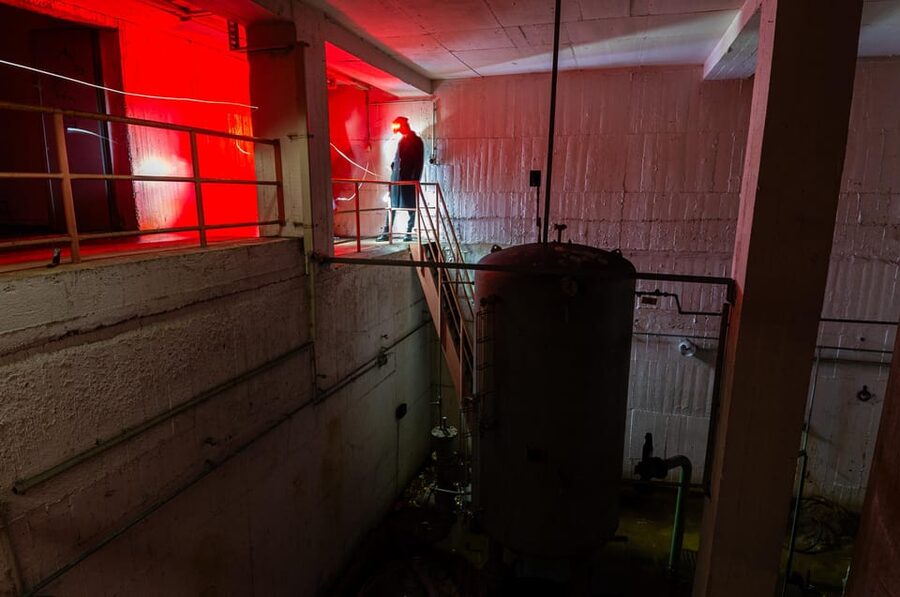
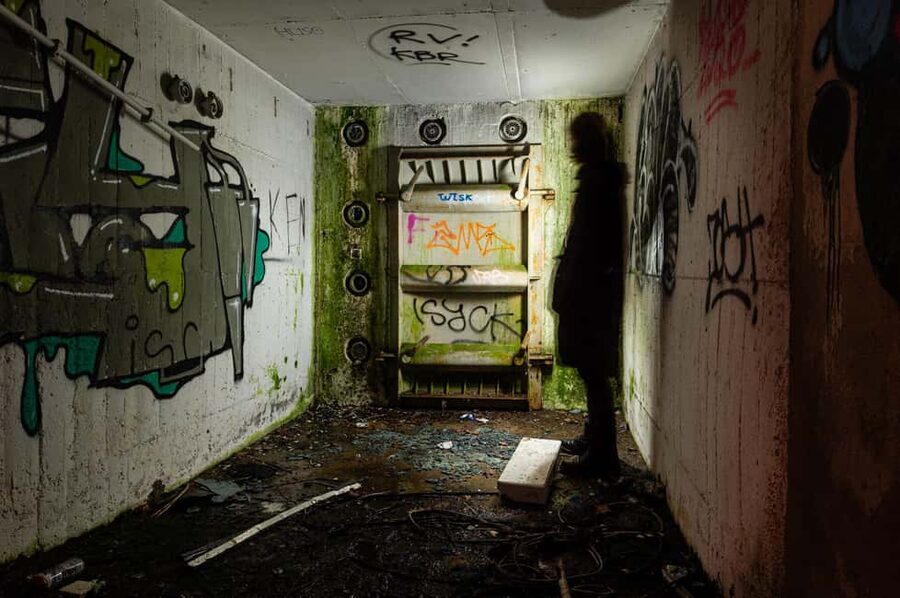
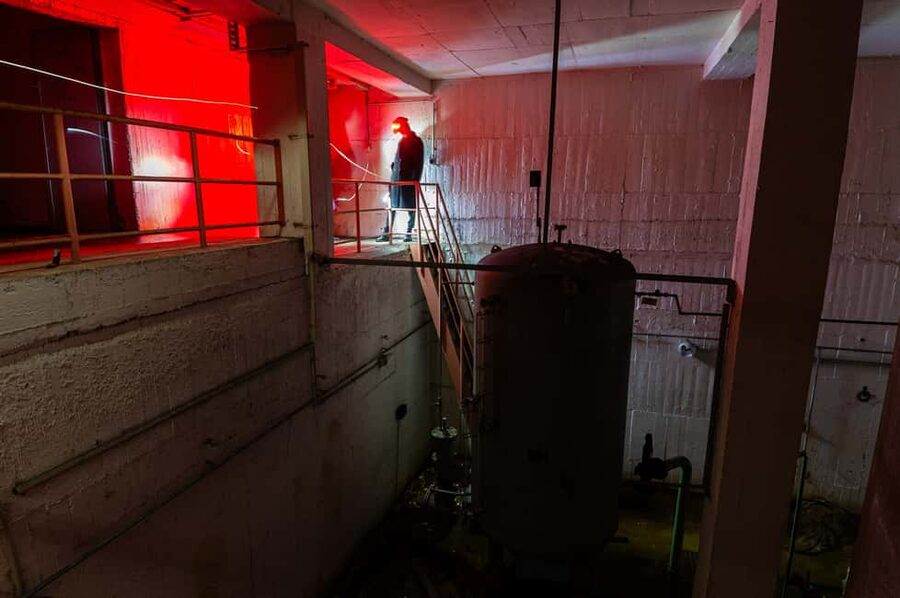
The underground sections are likely to be the most memorable part for many people. You’ll use a torch to move through tunnels and darker spaces, where graffiti appears in the beam of your light. The contrast between an old secret facility and fresh street art gives the site a strange second life.
This is also where the tour moves beyond sightseeing. You are asked to pay attention to your footing, your light, and the space around you. That makes the activity feel closer to real urban exploration, but in a guided and legal setting.
The included torches are practical, though you should still bring a tripod if you want sharp photographs. Low light makes handheld shots difficult, especially when you are trying to record graffiti, wall texture, or old architectural details.
The underground sections are not ideal for every visitor. A cap or other head covering is recommended, and comfortable clothes are essential. You should expect dust, rough surfaces, and the chance of brushing against walls or debris. High heels, formal clothing, and anything you would be upset to dirty belong elsewhere.
The site is not suitable for wheelchair users, and the activity is also excluded for pregnant women. The restrictions make sense given the uneven ground and confined areas. People with high blood pressure, people over 70, and anyone over 130 kilograms should also choose another Berlin activity.
A different sort of day out in Berlin:
- Berlin: Reichstag, Dome and Government District Guided Tour
★ 4.7 · 18,288 reviews - Berlin: 1-Hour City Tour by Boat with Guaranteed Seating
★ 4.3 · 16,993 reviews - Berlin: Boat Tour Along the River Spree
★ 4.4 · 11,252 reviews - Discover Berlin Half-Day Walking Tour
★ 5.0 · 9,624 reviews
Rooftops and views over the abandoned complex
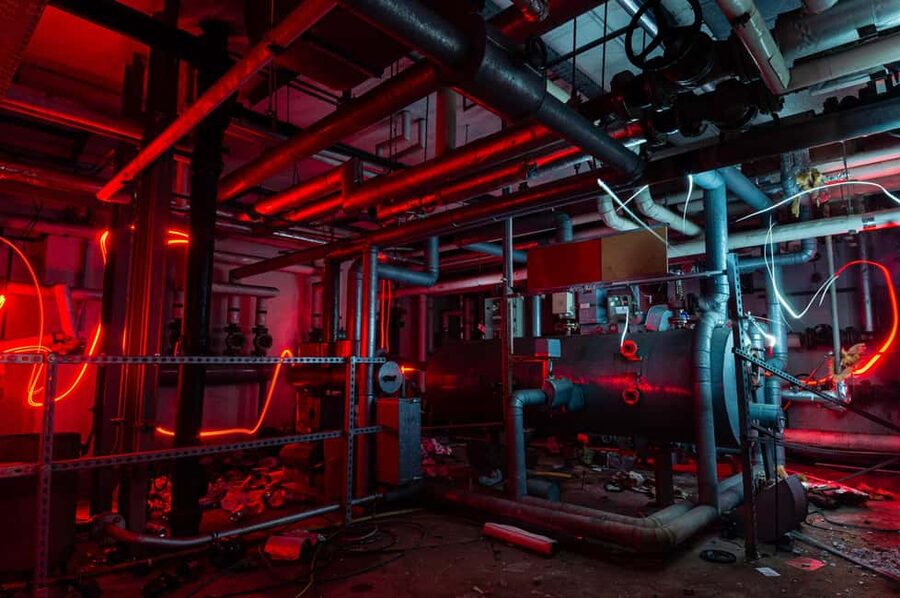
The tour also includes access to higher parts of the site, with views across the abandoned complex. Reaching a rooftop changes the way you read the buildings. From ground level, you notice decay room by room. From above, you can understand the size of the hospital area and how separate structures relate to one another.
These views are useful for photography, but they are also a good pause between the darker sections. After working through tunnels and damaged rooms, a rooftop gives you space to stop and take in the scale of the location.
The exact rooftop access can depend on current conditions at the site. Abandoned structures change, and sections may close if they become unsafe. That is one reason not to treat every advertised feature as guaranteed in precisely the same form on every departure.
Bring a tripod if photography is a priority. You can also take time to frame the contrast between decaying architecture, graffiti, and open views. The small group makes it easier to stop without turning the visit into a crowded photo queue.
What the three hours feel like
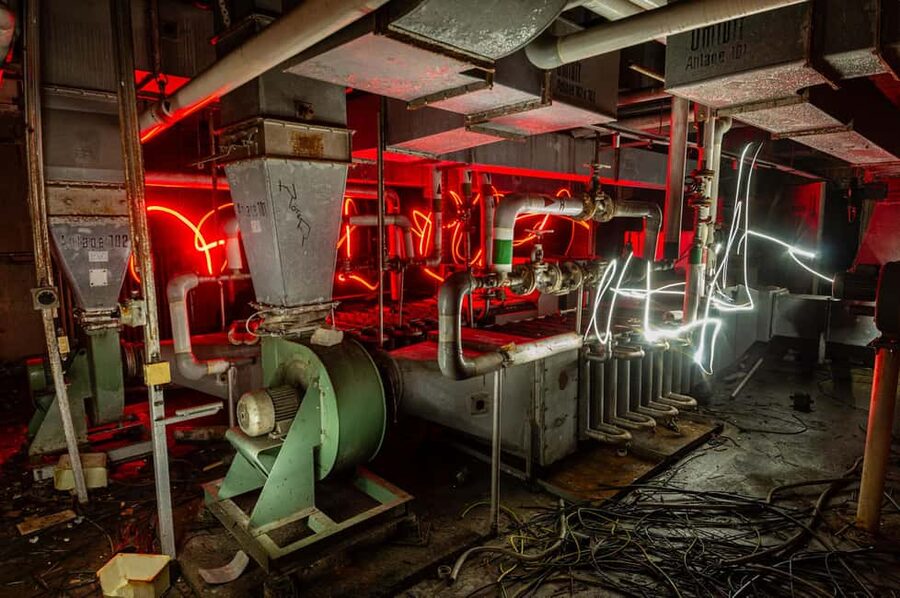
Three hours is a useful length for this setting. It gives you enough time to hear the background, inspect the buildings, visit darker underground areas, and take photographs without rushing through every room.
The tour is active rather than strenuous in the usual sightseeing sense. You are not covering a long city route, but you may be walking over uneven ground, climbing, crouching, and keeping your balance around debris. The experience asks more of you than a standard museum visit.
The guide’s pacing is important. A large site can become tiring if you spend too long in areas with little left to see. The best use of the three hours is a mix of explanation, exploration, quiet observation, and photography. Yoorii’s job is to steer you toward the stronger parts of the complex and away from repetitive empty areas.
You should also expect the route to change over time. One section, including the bunker, may not always be accessible. Fire damage, vandalism, demolition, or safety concerns can remove features from the route. That is not a minor point when you are paying $116 per person.
Is $116 a fair price?
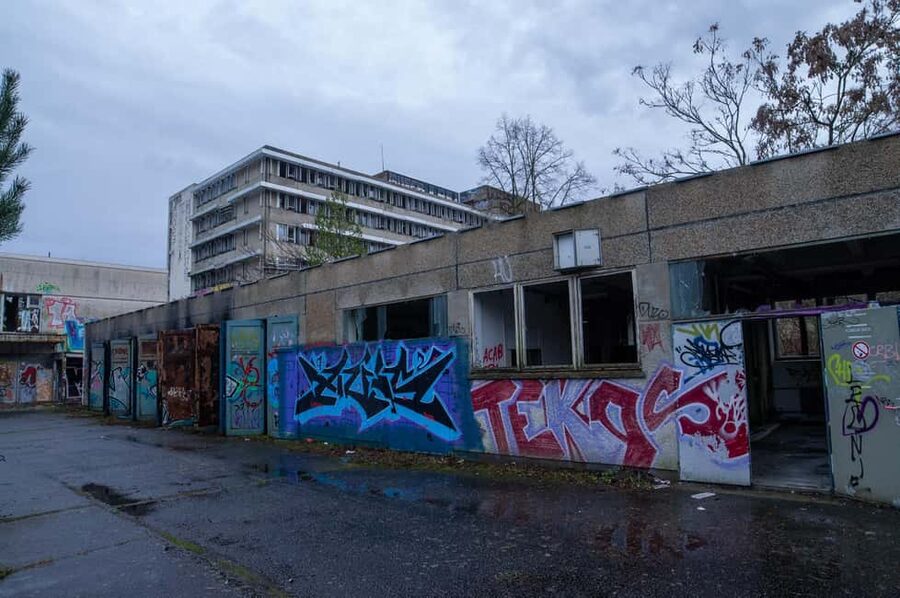
At $116, this is an expensive three-hour activity. You are paying for a specialist guide, a small group, access to a difficult site, and a form of historical experience that is hard to arrange independently. Torches are included, and the guide helps you avoid wasting time in repetitive or empty parts of the complex.
The price makes more sense if you care about urban exploration, Cold War history, or photography. A first-time visitor wandering alone could miss the best areas, misunderstand the site, or spend too much time in sections with little to offer. A guide also gives you a safer and more structured way to enter an abandoned place.
The value is weaker if you want a pristine historic attraction with many intact artifacts. The site has been damaged, and one part may be closed. Broken glass and burned areas can limit how much you can see. If much of the hospital has already been stripped or destroyed, you may feel that the admission cost is high for what remains.
I would think of this as a specialist tour, not a general Berlin sightseeing bargain. The smaller group and guide-led access are the main reasons to pay the premium. If those features do not matter to you, the price may be difficult to justify.
How to prepare for the abandoned buildings
Wear clothes that can get dirty. Comfortable trousers, a practical top, and sturdy shoes are a better choice than anything smart. The operator specifically advises against massive backpacks, since large bags can be awkward in narrow spaces and underground sections.
Put on a cap or other head covering. It offers some protection when moving through old buildings. You should also keep your hands free when possible, especially if you are using a torch or holding a camera.
Bring a tripod if you want serious photographs. You may find old documents, original flooring, graffiti, tunnels, and rooftop views, but the low light will challenge a phone camera. A tripod gives you more control without needing a flash for every image.
Do not bring alcohol or drugs. Bikes, baby strollers, and baby carriages are also not allowed. Children under 10 cannot join, and the physical setting is not appropriate for anyone who needs step-free access.
Who should book this tour?
I would recommend it to adults and older children who already like abandoned buildings, Cold War history, photography, or unusual city experiences. It also suits people who want a guided introduction to urbex culture without trespassing or trying to find a site alone.
You’ll get the most from it if you enjoy atmosphere as much as famous sights. The fun is in noticing small details: a fragment of flooring, a document left behind, a patch of graffiti in a tunnel, or the way the buildings look from above.
I would hesitate to recommend it to anyone seeking comfort, easy walking, or a fully preserved historical display. The rough conditions are not a side issue. They are central to the experience.
Should you book the Berlin Urbex tour?
Book it if you want a small, active visit to one of Berlin’s more unusual abandoned sites, and if you are willing to accept that parts may be damaged or closed. The best reasons to go are Yoorii’s guidance, the Stasi hospital setting, the tunnels, the rooftop views, and the chance to photograph a place that is difficult to understand without local direction.
Skip it if $116 feels high for a three-hour tour with an uncertain amount of surviving material. You should also skip it if broken glass, dust, climbing, or dark underground spaces sound unpleasant.
For the right person, this is a memorable change from Berlin’s standard museums and memorials. Just arrive prepared for a rough site rather than a polished attraction.
FAQ
How long does the Berlin Urbex Abandoned Places and History Tour last?
The tour lasts three hours.
Where is the meeting point?
Meet at the exit of S-Bahn Buch on the side facing the Netto supermarket. After coming downstairs, turn left.
What language is the tour in?
The live tour guide speaks English.
How many people can join the group?
The group is limited to six participants.
Are torches provided?
Yes. Torch rental is included in the tour price.
What should I wear and bring?
Wear comfortable clothes that can get dirty, suitable shoes, and a cap or other head covering. Do not bring a massive backpack. If you want to take photographs, bring a tripod.
Who cannot join the tour?
The tour is not suitable for children under 10, pregnant women, wheelchair users, people over 130 kilograms, people with high blood pressure, or people over 70. Baby strollers, bikes, alcohol, drugs, and baby carriages are not allowed.
Newest Berlin reviews
- Where It All Began: Berlin’s Queer & Trans History Tour★ 4.9 · 6 reviews
- Understanding Kreuzberg: The roots of local (sub)culture★ 4.9 · 11 reviews
- Berlin: guided canoe | kayaktour★ 4.1 · 7 reviews
- Private Potsdam City Tour in an authentic vintage van★ 5.0 · 14 reviews
- Warnemünde Shore Excursion: Private Sachsenhausen and Berlin Tour★ 5.0 · 12 reviews
- Ultimate E-Bike Tour of Berlin with Beer Garden Stop★ 5.0 · 4 reviews
- In the Forbidden City – Potsdam Walking Tour★ 5.0 · 17 reviews
- Private Walking Tour of Potsdam and Sanssouci★ 5.0 · 24 reviews
Historical Tours, compared.



Berlin Private Complete History All Day Walking Tour
Read our review →



Small group Potsdam: A Journey Through History and Palaces
Read our review →Browse the lists this tour appears in