Reviewed · GUIDED
BERLIN FULL in 3.5h (Guide + Headphones)
Berlin can feel like several cities in one. This walking tour links its medieval core, royal boulevard, Nazi-era buildings, Cold War border sites, and the Brandenburg Gate in about three and a quarter hours. Pablo’s clear, interactive style helps turn a long list of places into one connected story. I especially like the included headphones and the small details, such as who Charlie was at Checkpoint Charlie.
The price is a strong point at $23.76 per person, particularly if this is your first day in Berlin and you want a useful orientation. The main consideration is pace: with many stops and roughly 10 minutes at most of them, you will hear a lot but will not have time for full visits inside museums or monuments.
Key points to know before booking
- A sweeping central route: You cover Humboldt Forum, Alexanderplatz, Museum Island, Unter den Linden, Checkpoint Charlie, the Holocaust Memorial, and Brandenburg Gate.
- Pablo leads the tour: His presentation is described as clear, engaging, and pleasantly interactive, with history explained in an easygoing way.
- Headphones are included: You can hear the guide while moving through central Berlin, even in a group of up to 50 people.
- The route reaches difficult subjects: Expect direct discussion of Nazi Germany, Hitler’s bunker, the Holocaust, the Berlin Wall, and the book burning at Bebelplatz.
- The medieval quarter gets proper attention: Nikolaiviertel receives about 20 minutes, longer than most individual stops.
- It ends at Brandenburg Gate: The tour begins at Azem Bistro near Alexanderplatz and finishes at Pariser Platz.
Berlin’s whole story in one long walk
The clever idea here is the route itself. Berlin’s major sights are not treated as isolated photo stops. You move from the city’s medieval beginnings to Prussian power, then through the crimes of the Nazi period and the division of the Cold War, ending at the modern symbol of reunification.
That makes this a good first-day activity. You will not enter every major attraction, but you will learn where the pieces fit. Afterward, you can decide which places deserve a second visit, perhaps Museum Island, the Holocaust Memorial, or the Berlin Wall sites.
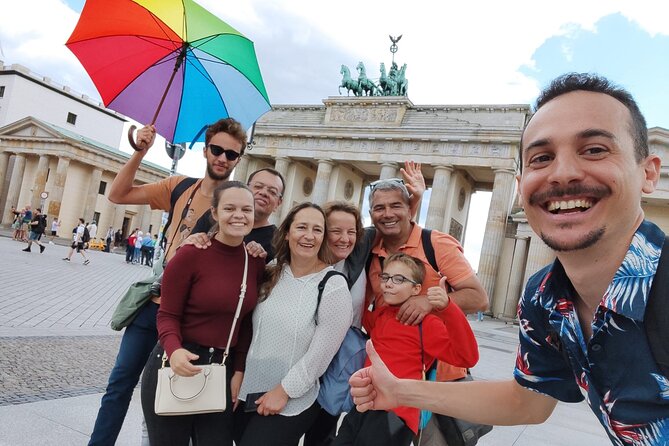
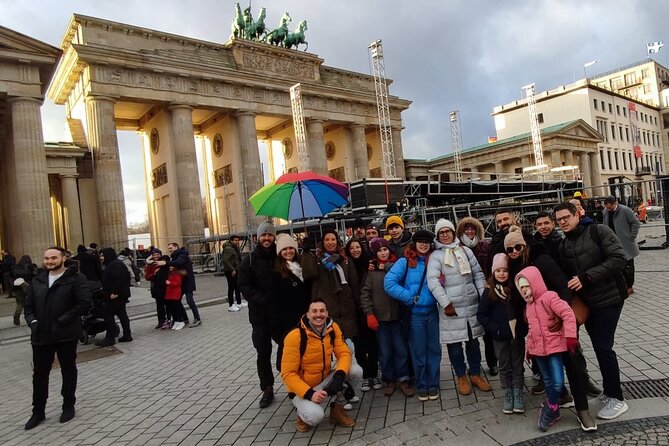
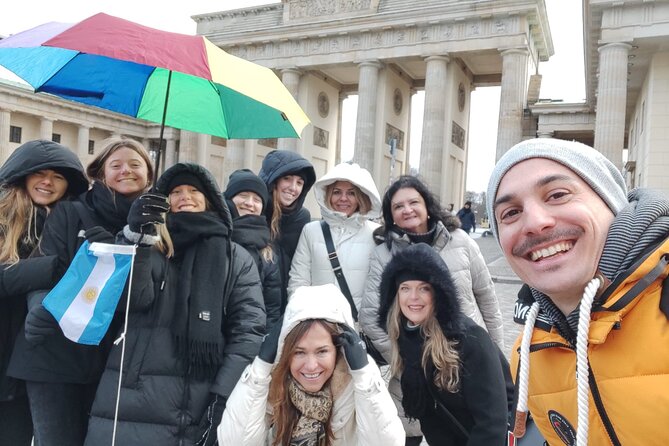
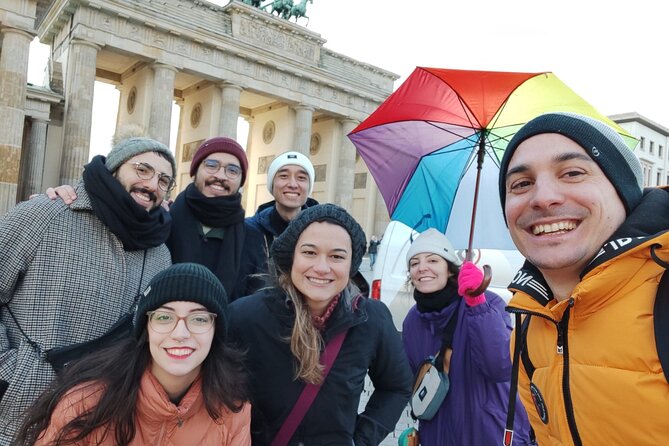
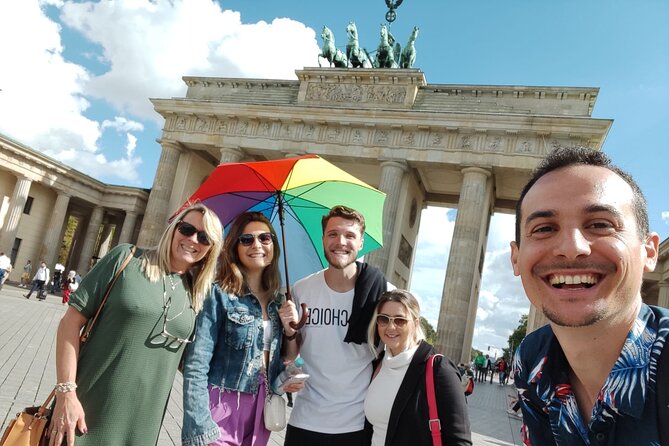
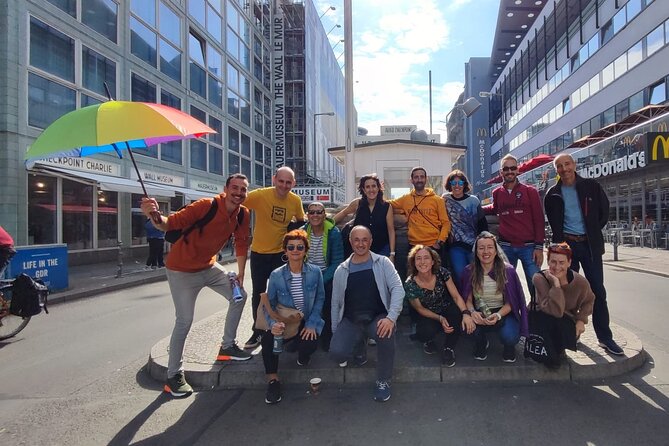
The tour begins at 10 a.m. at Azem Bistro, Rathausstraße 17. Look for the guide with a multicolored umbrella. That detail matters in a busy central area, especially with a group that may reach 50 people.
Pablo is the guide named for this experience. His approach is not a dry lecture. The presentation is clear and interactive, with historical facts delivered in a pleasant, good-humored way. Headphones are included, which is helpful when the group is spread along a pavement or standing near a busy square.
Other Berlin experiences to weigh up
- Berlin: Reichstag, Dome and Government District Guided Tour
★ 4.7 · 18,288 reviews - Berlin: Government District around the Reichstag Guided Tour
★ 4.7 · 8,447 reviews - Berlin: Hidden Backyards Guided Walking Tour
★ 4.8 · 5,360 reviews
Humboldt Forum and Alexanderplatz: Berlin’s changing center
The first stop is the Humboldt Forum, where the building itself introduces one of Berlin’s central themes: change. Its architecture combines old and new elements, and the tour explains how the site has shifted over time.
You are scheduled to spend about 10 minutes here. The description indicates a visit inside, but this is still a short stop, not a full museum session. Think of it as an architectural and historical introduction rather than a chance to explore all the displays.
From there, the route reaches Alexanderplatz. This large square is one of Berlin’s main reference points, surrounded by historic buildings and monuments near the Spree. It is a useful place to understand the city’s scale and modern identity, even if the square itself feels more open and urban than the older streets ahead.
Another 10-minute stop keeps the group moving. That pace works well for orientation, but you should not expect extended time for photographs or independent exploration at each location.
Museum Island and Unter den Linden: monuments along the Spree
Museum Island is one of Berlin’s most concentrated cultural areas. The island sits beside the Spree and includes the Berliner Dom, giving you a striking view of domes, museums, water, and broad public spaces.
The tour uses this stop to explain why the area matters, with about 10 minutes allocated. No museum admission is listed as part of the experience, so plan on seeing the setting and hearing the explanation rather than touring the collections. If you want to enter one of the museums, save it for another part of your schedule.
The walk continues along Unter den Linden, Berlin’s oldest promenade. It runs from Brandenburg Gate toward the Schlossbrücke and Berlin Cathedral, tying together royal residences, state buildings, and ceremonial Berlin.
Here you also hear about Neue Wache, a memorial to victims of war and dictatorship. This is one of the tour’s more reflective moments. The building’s purpose and the story of its Prussian artist give the stop more weight than a quick architectural photograph would suggest.
Because Unter den Linden connects several major sights, the guide’s commentary is especially useful. You are not just walking down a grand avenue. You are following the route through which Berlin presented its power and political ambitions.
Nikolaiviertel: Berlin’s medieval quarter
Nikolaiviertel is the oldest part of the city and one of the most distinctive stops on the route. Its narrow lanes and cobbled streets offer a sharp contrast to Alexanderplatz and Unter den Linden.
The tour allows about 20 minutes here, the longest stop in the first half. That gives you more time to notice the small businesses and German architectural details that preserve the area’s medieval character.
This is also where the tour’s title makes good on its promise to show Berlin’s early beginnings. Much of Berlin is associated with grand avenues, twentieth-century conflict, and modern nightlife. Nikolaiviertel reminds you that the city began as a medieval settlement beside the river.
I would pay attention here to the transition between old and new. Berlin’s historic center has been rebuilt and reshaped many times, so the quarter is best understood as a carefully preserved expression of the city’s early identity rather than a complete time capsule.
A different sort of day out in Berlin:
- Berlin: 1-Hour City Tour by Boat with Guaranteed Seating
★ 4.3 · 16,993 reviews - Berlin: Boat Tour Along the River Spree
★ 4.4 · 11,252 reviews - Discover Berlin Half-Day Walking Tour
★ 5.0 · 9,624 reviews - Berlin: Hop-on Hop-off Bus Tour with Live Commentary
★ 4.3 · 8,579 reviews
Bebelplatz and Checkpoint Charlie: power, censorship, and division
Bebelplatz is surrounded by Humboldt University, the old library, and the Berlin State Opera. It is one of the city’s oldest squares, but its importance comes from a darker event: the Nazi book burning held here.
The stop lasts around 10 minutes. The subject is brief but serious, and the guide connects the square’s past to the responsibility of remembering how public spaces can be used for political repression. This is one of the places where a good explanation adds far more than a photograph.
Next comes Checkpoint Charlie, the most famous former border crossing associated with the Berlin Wall. You learn who Charlie was, how the checkpoint got its name, and what happened at this crossing.
The tour gives this stop about 15 minutes. That is enough for the essential story and a look at the site, but the area is also one of Berlin’s most commercialized historical locations. Keep your expectations realistic. You are getting context and a fast introduction, not a long museum visit or a quiet memorial experience.
The value here lies in the explanation. Without a guide, Checkpoint Charlie can seem like a single guardhouse surrounded by souvenirs. With the history attached, it becomes part of the larger story of a divided city and the pressure that eventually led to the Wall’s fall.
Gendarmenmarkt and the Berlin Wall story
Gendarmenmarkt is one of central Berlin’s most handsome squares. The Konzerthaus sits between the Französischer Dom and Deutscher Dom, creating the balanced arrangement that makes this place so memorable.
You have about 10 minutes here. That is enough for the basic layout and a few photographs, though restoration or local conditions can affect what you see on the day. The square offers a calmer architectural pause between the heavier subjects of Bebelplatz and the Wall.
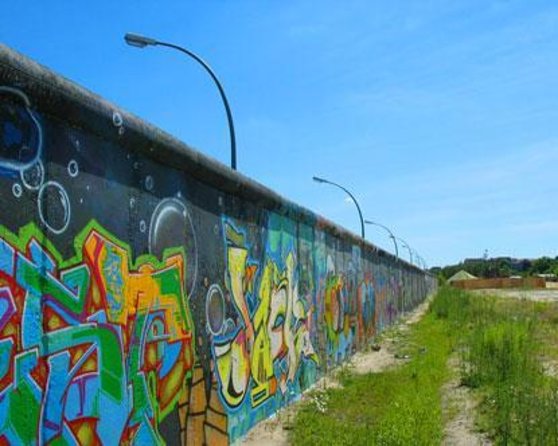
The itinerary also includes a Berlin Wall memorial stop. The commentary covers the Wall’s painful history, along with stories of escape, triumph, and the events of 1989. You also hear again about Checkpoint Charlie, so expect some overlap between these sections.
That repetition can be useful because the Wall is not one story. A crossing point, a memorial, and the political events of 1989 each show a different part of the division. Still, if you prefer a slow, detailed Wall visit, you will want to return independently after the tour.
Nazi-era Berlin: the Finance Ministry and Hitler’s bunker
The Bundesministerium der Finanzen is one of the buildings from the Nazi era that remains intact despite the war. The guide explains why it survived, making the building a useful reminder that Berlin’s past is sometimes visible in ordinary government architecture, not only in museums.
The stop is scheduled for about 10 minutes. Since the building is a working ministry, this is an exterior explanation rather than a general public tour of the interior.
The route then reaches the site of Hitler’s bunker. You hear about the place where Hitler is believed to have died, why there has been uncertainty around the details, and which explanation is most widely accepted.
Only about five minutes are allocated here. That is appropriate for a site with little to see above ground, but the subject is still important. The physical remains do not provide a dramatic monument. The meaning comes from the guide’s account and from understanding how the end of the Nazi regime unfolded beneath the ordinary streets of modern Berlin.
The tour also refers to the Luftwaffe and Hitler’s armed forces. This part is best for visitors who want a basic framework for Berlin during the Nazi period, not a specialist military history lesson.
The Holocaust Memorial: a quiet, personal stop
The Memorial to the Murdered Jews of Europe is likely to be the most emotionally demanding stop. Its field of concrete slabs invites a personal response, and the experience can feel different from one person to the next.
The tour allows about 10 minutes. That is enough for an introduction and a short walk, but you may want to return on your own if you wish to spend more time there. The memorial should not be treated as just another item on a sightseeing checklist.
The guide presents the site in a way that leaves room for personal reflection. That is important here. The stop is not about forcing one reaction. It is about placing the memorial within the history of the Holocaust and giving you time to consider what the space communicates.
Because the tour covers several difficult subjects in succession, the emotional rhythm can be demanding. You move from book burning to the Wall, Nazi government buildings, the bunker, and then the Holocaust Memorial. I would choose this tour when you are ready for serious history, not when you want a light introduction to Berlin.
Reichstag and Brandenburg Gate: finishing at a city symbol
The guide also explains the Reichstag, seat of the German Parliament, including its glass dome designed by Norman Foster. The listed route does not give a separate time allocation for this stop, so expect an exterior explanation rather than entry into the building.
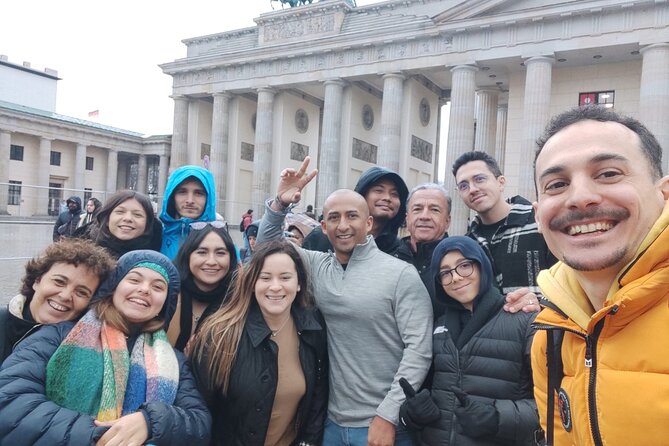
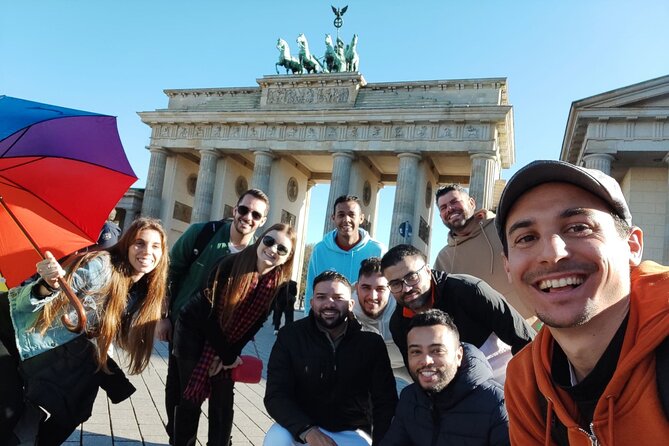
The tour ends at Pariser Platz beside Brandenburg Gate. This eighteenth-century gate has 12 Doric columns and is topped by a classical sculpture of a goddess. It once marked an entrance to Berlin. Today, it is a setting for demonstrations, public celebrations, sporting events, and photographs.
Ending here gives the route a clear final image. Berlin has been rebuilt after war, divided during the Cold War, and reunited as a modern capital. The Brandenburg Gate makes that change easy to see, because it has served as both a political symbol and a practical city gateway.
The ending point is Pariser Platz 1A, 10117 Berlin. That is useful for planning the rest of your day, since you finish in a central location rather than returning to the starting point.
What the $23.76 price really gets you
At $23.76 per person, the tour offers good value if you want a guide to connect a large number of central sights. You are paying mainly for interpretation, route planning, and the ability to ask questions during a long walk. The included headphones add practical value, particularly for a group that can reach 50 people.
You are not paying for museum admissions, meals, transport, or entry to the Reichstag dome. The itinerary lists free admission at the stops, so budget separately if you want to return to museums or spend time inside attractions.
The 3-hour-15-minute duration is long enough to provide real context but short enough to fit into a morning. The tradeoff is speed. Most stops last 10 minutes, with 15 minutes at Checkpoint Charlie and the Wall memorial, and 20 minutes in Nikolaiviertel.
Who should book this walking tour
I would choose this tour for a first visit, especially if you want Berlin’s major stories explained in one sweep. It suits history-focused visitors, couples, families with older children, and anyone who prefers a guide to a phone audio tour.
It also suits people who want a Spanish-led or Spanish-friendly guiding style, though the supplied information does not state the tour’s operating language. Pablo’s presentation is described as clear, engaging, and interactive, and his name is worth remembering when you meet the multicolored umbrella.
You should think twice if you want long interior visits, extensive free time, or a relaxed pace. The group may reach 50 people, and the route covers serious material with very little pause between major subjects.
Confirmation is provided when you book. The meeting point is near public transportation, and most people can participate. Free cancellation is available up to 24 hours before the 10 a.m. start, while cancellations or changes inside that window are not refunded. The experience depends on good weather and a minimum group size, so a cancellation for either reason results in another date or a full refund.
Should you book it?
Book this tour if you want a low-cost, high-context introduction to central Berlin. Its best features are the broad route, Pablo’s engaging delivery, the included headphones, and the useful links between medieval Berlin, Nazi Germany, the Wall, and reunification.
Skip it if your priority is entering museums or examining each site in detail. For most first-time visitors, though, this is a practical way to get your bearings and decide where to spend the rest of your Berlin stay.
FAQ
Where does the Berlin Full tour begin?
It begins at Azem Bistro, Rathausstraße 17, 10178 Berlin. Look for the guide carrying a multicolored umbrella.
What time does the tour start?
The tour starts at 10:00 a.m.
Where does the tour end?
It ends at Pariser Platz 1A, 10117 Berlin, beside Brandenburg Gate.
How long does the tour last?
The experience lasts approximately 3 hours and 15 minutes, described as a 3.5-hour tour.
Are headphones included?
Yes. Headphones are included so you can hear the guide’s explanations during the walk.
How many people can join the tour?
The maximum group size is 50 people.
Can I cancel for a full refund?
Yes. You must cancel at least 24 hours before the start time for a full refund. Cancellations or changes made less than 24 hours in advance are not refunded.
Newest Berlin reviews
- Where It All Began: Berlin’s Queer & Trans History Tour★ 4.9 · 6 reviews
- Understanding Kreuzberg: The roots of local (sub)culture★ 4.9 · 11 reviews
- Berlin: guided canoe | kayaktour★ 4.1 · 7 reviews
- Private Potsdam City Tour in an authentic vintage van★ 5.0 · 14 reviews
- Warnemünde Shore Excursion: Private Sachsenhausen and Berlin Tour★ 5.0 · 12 reviews
- Ultimate E-Bike Tour of Berlin with Beer Garden Stop★ 5.0 · 4 reviews
- In the Forbidden City – Potsdam Walking Tour★ 5.0 · 17 reviews
- Private Walking Tour of Potsdam and Sanssouci★ 5.0 · 24 reviews
Guided, compared.
Reichstag, Dome and Government District Guided Tour
Read our review →

Sights and Highlights Bike Tour with a Local Guide
Read our review →
Solar Powered Sunset Catamaran Cruise & Audio Guide
Read our review →