Reviewed · TOURS
Berlin during Nazism – Tour in Italian
Berlin’s Nazi past is easiest to understand when you connect events to real places. This Italian-language tour links the German Resistance Memorial, the T4 memorial, Anhalter Bahnhof, and Berlin’s Jewish Quarter in one three-hour route. The places are often more powerful than a museum display, especially the ruined station and the remains of the Old Jewish Cemetery.
I like two things here. First, the route includes both the machinery of Nazi persecution and the people who resisted it, from the July 20 plot to Otto Weidt’s efforts to protect Jewish workers. Second, the tour is conducted in Italian, with guides such as Lorenzo, Fabio, Vita, and Silvio praised for clear explanations and strong command of the subject. The main drawback is practical: you walk and use public transport, and transportation, food, and drinks are not included.
Key points at a glance
- A three-hour route through real Nazi-era sites: Visit memorials, ruins, Jewish institutions, and a former workshop rather than relying on a single central museum.
- The German Resistance Memorial comes early: Learn how opposition to Hitler was organized from the former headquarters of Operation Valkyrie.
- Anhalter Bahnhof adds a stark physical reminder: The surviving station ruins connect Berlin’s grand railway history with deportations from 1942 to 1945.
- The Jewish Quarter receives serious attention: The New Synagogue, Moses Mendelssohn’s former school, and the Old Jewish Cemetery show both Jewish life and its destruction.
- Italian-language guiding is the point: Guides including Lorenzo, Fabio, Vita, Paolo, and Silvio bring different strengths, with a focus on explanation and questions.
- Budget around $27.87 plus local transport: The price is fair for a small-group, three-hour history walk, but you should buy a Berlin AB day ticket separately.
Why this route helps you read Berlin
Berlin can be hard to understand at street level. The city contains grand avenues, modern buildings, empty spaces, restored memorials, and fragments of structures that no longer fit their surroundings. Without context, it is easy to pass a meaningful site and see only another piece of urban scenery.
This tour gives you a sequence. You begin with Hitler’s rise to power in 1933 and the political system that led Germany toward war. You then see resistance, racial persecution, the Nazi euthanasia program, deportation, Jewish life, and the destruction that followed.
That sequence matters. Nazi history was not only about battlefields or famous leaders. It also involved offices, railways, schools, factories, hospitals, and ordinary city streets. The route makes that point without keeping you inside a museum for three hours.
The group can include up to 20 people. That is still a group, but it is small enough for a guide to answer questions and adjust explanations. The Italian language is a major benefit if you want to discuss difficult subjects without translating historical terms in your head.
Other Berlin tours worth putting on the same trip:
- Berlin: Reichstag, Dome and Government District Guided Tour
★ 4.7 · 18,288 reviews - Berlin: 1-Hour City Tour by Boat with Guaranteed Seating
★ 4.3 · 16,993 reviews - Berlin: Boat Tour Along the River Spree
★ 4.4 · 11,252 reviews
Starting at Potsdamer Platz at 10 a.m.
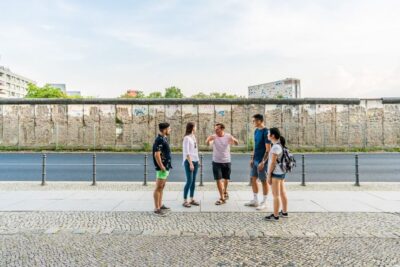
The meeting point is Potsdamer Platz 10, near the Potsdamer Platz S-Bahn and U-Bahn station. Look for the blue bicycle and the Vive Berlin Tours flag. This is a useful meeting signal in a busy modern part of the city, so arrive with enough time to find the exact spot.
The tour begins at 10 a.m. and ends at Hackescher Markt. Since you finish in a central area, you can continue sightseeing or find lunch nearby. The end point also makes this a handy morning activity during a longer Berlin day.
A mobile ticket is accepted, and confirmation is provided when you book. The tour operates in all weather, so wear suitable clothing. Berlin’s weather can change quickly, and the route includes outdoor stops where shelter may be limited.
The Resistance Memorial and the July 20 plot
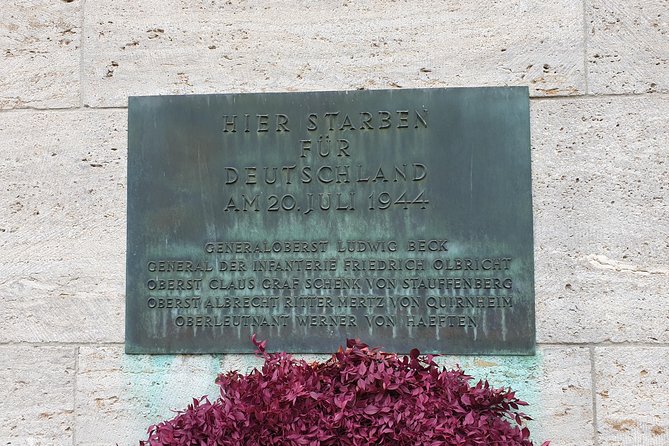
The German Resistance Memorial Center is one of the most important stops because it expands the story beyond Nazi power. The center is located at the former site from which Operation Valkyrie was directed, including the plot to overthrow Hitler in July 1944.
You will learn about individuals and groups that opposed National Socialism from 1933 to 1945. That range is important. Resistance did not take one form, and it did not begin only when Germany was losing the war. The memorial presents opposition as a series of choices made under a dictatorship.
I like this early stop because it gives the tour moral and political balance. You see the violence of the regime, but you also examine the risks faced by people who acted against it. The guide can help connect the physical building to the wider question of how resistance worked inside a totalitarian state.
The visit lasts about 25 minutes. That is enough for a focused explanation, though not enough for every detail in the memorial. If you want a full museum visit, plan separate time outside the tour.
The T4 memorial and the Nazi euthanasia program
The next stop is the memorial for the victims of the Nazi euthanasia program, often called T4 after the address Tiergartenstrasse 4. The program targeted people with mental and physical disabilities and those with chronic illnesses. About 300,000 people were killed.
This is a difficult subject, but it is essential to understanding how Nazi mass murder developed. The T4 program is often treated as a precursor to the Holocaust because it involved organized killing, administrative planning, medical personnel, and the use of gas.
The memorial is brief, about 15 minutes, but the topic deserves careful attention. Listen for the connection between language, bureaucracy, and violence. The people murdered were first classified as undesirable or burdensome. That progression shows how persecution can move from official words to state action.
This stop may feel quieter than the better-known Berlin memorials. That is part of its value. You are not simply checking off a famous sight. You are confronting a part of Nazi policy that many visitors know less well.
A different sort of day out in Berlin:
- Discover Berlin Half-Day Walking Tour
★ 5.0 · 9,624 reviews - Berlin: Hop-on Hop-off Bus Tour with Live Commentary
★ 4.3 · 8,579 reviews - Berlin: Government District around the Reichstag Guided Tour
★ 4.7 · 8,447 reviews - Berlin: Reichstag, Plenary Chamber, Cupola & Government Tour
★ 4.6 · 8,422 reviews
Anhalter Bahnhof: from grand station to ruins
Anhalter Bahnhof was once one of Europe’s largest railway stations. Today, only part of the damaged structure remains. The surviving ruins are striking because they sit within a city that has otherwise moved on around them.
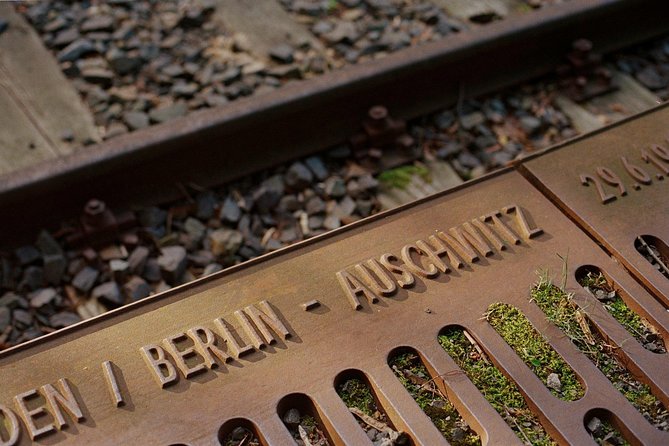
The guide explains the station’s wartime role. From 1942 to 1945, deportation trains left from the station, carrying people toward death camps. The station therefore connects Berlin’s transport system with the organized persecution of Jews and other victims.
You spend about 10 minutes here, so expect a concise stop rather than a long architectural visit. The ruin does much of the visual work. A grand transportation hub, once associated with travel and modern progress, became part of a system of forced removal and murder.
This is also one of the clearest examples of why a guided route helps. You might notice the shell of the station on your own, but you would not necessarily understand its wartime role or place in the larger story.
Scheunenviertel and the Jewish Quarter
The tour then moves into Scheunenviertel, a part of Mitte often called Berlin’s Jewish Quarter. About 45 minutes are devoted to this area, making it the longest single stop on the route.
Here you visit important Jewish institutions, including the New Synagogue and the school founded by Moses Mendelssohn, the Enlightenment philosopher and modernizer of Judaism. These places help you see Jewish Berlin as a living community with religious, educational, and intellectual institutions.
That context is crucial. The Jewish community was not merely a group later targeted by the Nazis. It was part of Berlin’s social and cultural life long before the dictatorship. The tour places persecution against that fuller picture.
The district is also a good place for questions. Ask your guide how Jewish life changed under Nazi rule, what happened to institutions during the war, and how Berlin has dealt with these sites since 1945. Guides such as Lorenzo, Fabio, Vita, and Silvio have been singled out for patience, preparation, and the ability to keep a serious subject clear without turning it into a lecture.
You should expect to walk through public streets rather than enter every building. The itinerary lists free admission for the stops, but the experience is primarily a guided outdoor route with selected memorial and museum locations.
Otto Weidt’s workshop and a story of rescue
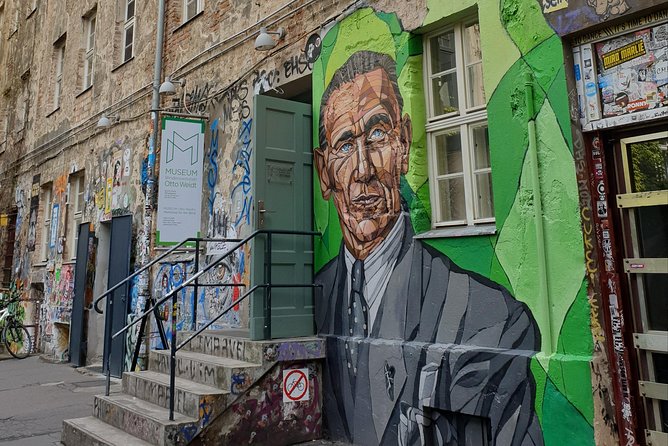
The Museum Blindenwerkstatt Otto Weidt brings the history down to an individual scale. Otto Weidt ran a workshop and hired Jewish workers, including blind and disabled employees. He tried to protect them from deportation to Nazi extermination camps.
The museum is located in the original workshop. That detail gives the stop unusual force. Instead of hearing only about a distant historical figure, you are shown the place where work, protection, fear, and deception unfolded.
Weidt is sometimes called the Schindler of Berlin. The comparison may help you place his story, but the guide should also keep the focus on the specific people and choices involved here. The important lesson is not that one person acted alone and solved the problem. It is that individual decisions could help people survive, even within a system built to remove their rights.
The visit lasts about 15 minutes. It is short, so listen closely and use the time to ask about Weidt’s workers and the workshop’s role. This stop provides a human counterpoint to the large institutions and policies discussed earlier.
The New Synagogue and Berlin’s Jewish past
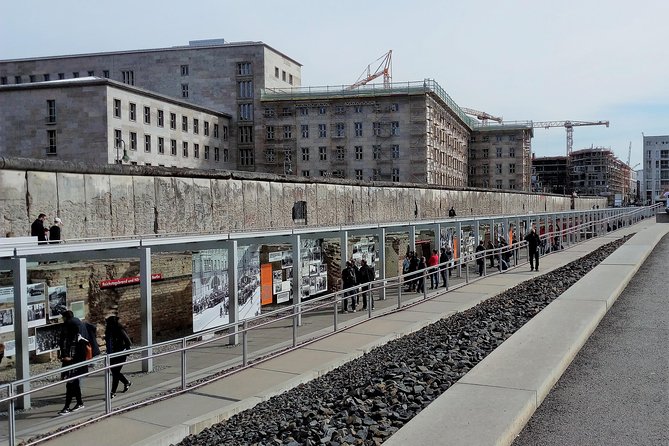
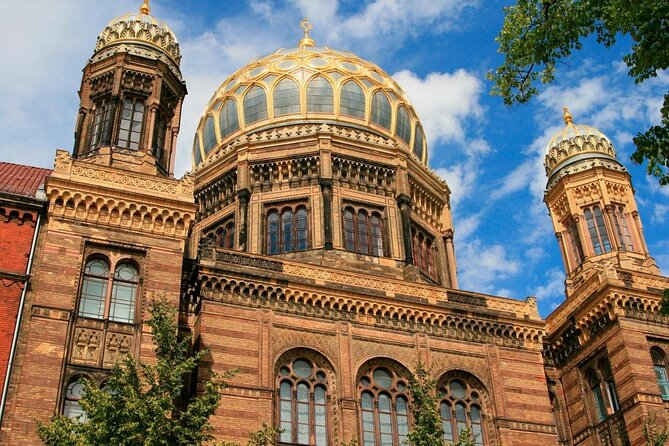
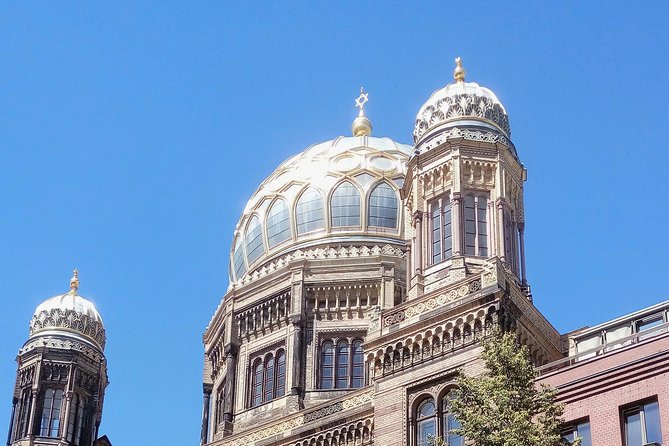
The New Synagogue, or Neue Synagoge, is one of Berlin’s major Jewish landmarks. Built in 1866, it once seated 3,200 people and was the largest Jewish place of worship in Germany.
Its scale tells you something about the confidence and importance of Berlin’s Jewish community before the Nazi period. The building was not a minor neighborhood prayer room. It was a major religious and civic institution.
The tour spends about 10 minutes here. That is enough to place the synagogue in the story and discuss its importance, but it is not a full museum visit. If you want a longer look at the building and the Centrum Judaicum, check how much time you have after the tour.
The synagogue also helps you understand the difference between survival and restoration. Berlin contains buildings that survived in part, buildings reconstructed after the war, and places known mainly through memorials. Your guide can explain how the city has changed its treatment of Jewish history since 1945.
The Old Jewish Cemetery on Hamburger Strasse
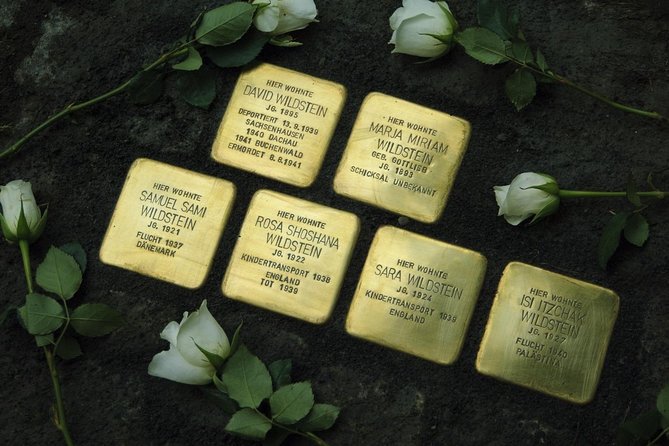
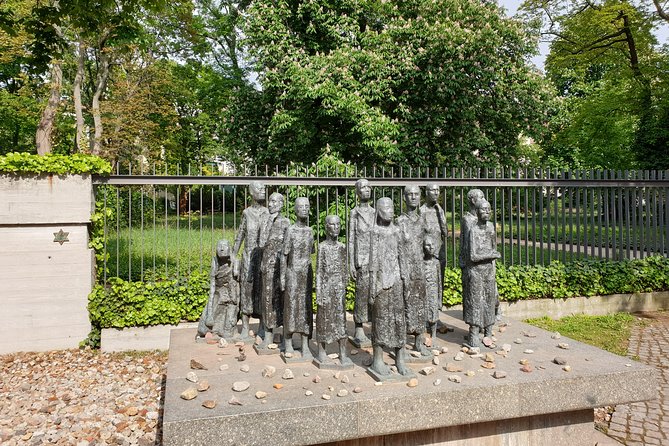
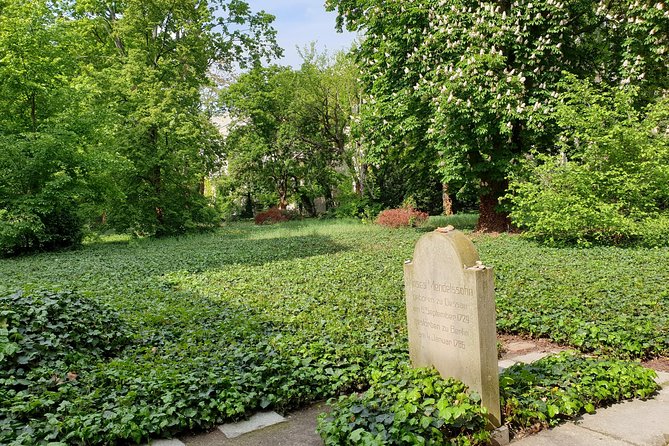
The final listed stop is the Old Jewish Cemetery on Hamburger Strasse. It was once the resting place of prominent members of Berlin’s Jewish community and is now the oldest recognizable cemetery in the inner city.
Very little of the original cemetery remains. The Gestapo destroyed it during the Nazi period, so the site is marked as much by absence as by surviving features.
This can be one of the most affecting stops because it shows how destruction reached beyond people and buildings. Cemeteries preserve names, family connections, and community memory. Destroying one removes physical evidence of a population that the regime wanted to erase.
The stop lasts about 10 minutes. It is quiet and compact, but the guide’s explanation is vital. Without it, you could easily miss what once occupied the space.
Italian guides and the feel of the group
The provider assigns guides rather than promising one named person for every departure. Names connected with this tour and related Berlin history walks include Lorenzo, Fabio, Vita, Silvio, Federica, Paolo, and Zuleika.
The strongest pattern in the available feedback is clear explanation, historical preparation, passion, and a willingness to answer questions. Lorenzo is repeatedly described as engaging and especially effective at holding attention for the full three hours. Fabio is noted for his preparation and helpful answers, while Vita is praised for working well with families and teenagers. Silvio is associated with an especially passionate private-tour style.
That does not mean every departure will feel identical. Guide personality matters. One guide may focus more on political history, another on personal stories or the city’s postwar changes. The small-group format gives you a better chance to ask for the emphasis you want.
The subject is serious, but the best guides avoid theatrical storytelling. You should expect a sober explanation rather than sensational treatment. That is the right approach for sites connected with mass murder and persecution.
Walking, public transport, and what to bring
Transportation between attractions is not included. You should buy a Berlin public transport day ticket for zones AB. The route crosses several parts of the city, so the ticket is not a minor extra. Add its cost when comparing the tour with a private car-based option.
The exact balance between walking and transit can vary, but comfortable shoes are sensible. The tour lasts around three hours, and several stops are outdoors. Bring weather-appropriate clothing, especially in rain or cold.
Food and drinks are also not included. Since the tour starts at 10 a.m. and finishes at Hackescher Markt, you can eat afterward. Do not count on a formal meal break during the route.
Most people can participate, and service animals are allowed. Still, anyone who finds extended walking or public transport difficult should consider the route carefully before booking.
Is $27.87 good value?
At about $27.87 per person, this is a reasonable price for a three-hour guided history route in Italian, especially if your group stays well below the maximum of 20 people. You are paying for a professional guide, local taxes, and a connected explanation of sites that would be difficult to interpret alone.
The value is strongest if you want historical structure. You could visit many of these locations independently, but you would need to research their connection, map the route, and switch between languages as you go. The tour saves that preparation time.
The price is less attractive if you want long visits inside museums or detailed architectural tours. Several stops last only 10 or 15 minutes, and the experience moves at a steady pace. Add the cost of an AB public transport day ticket, and remember that meals are separate.
The tour is often booked well ahead, around 56 days in advance on average. That suggests booking early if your Berlin dates are fixed, especially if you need an Italian-language departure.
Who should book this Berlin history tour?
I would recommend it to Italian-speaking visitors who want a serious introduction to Nazi Berlin and prefer real locations to a classroom-style presentation. It is also a good choice for families with older children and teenagers who can handle the subject. One guide has been praised for helping a family with children aged 10 and 17 understand Nazism in a way that books alone may not provide.
It suits history-minded visitors, but you do not need specialist knowledge. The route starts with basic political context and builds toward more difficult subjects. You can ask questions as the story develops.
I would be more cautious if you dislike group walking tours, need extensive indoor time, or want a private itinerary tailored to one narrow topic. The maximum group size is 20, and the tour covers a lot of ground in three hours.
The free-cancellation policy gives you flexibility: cancel at least 24 hours before the local start time for a full refund. Changes or cancellations inside that window are not accepted for a refund.
Final recommendation
Book this tour if you want to understand how Nazi rule shaped Berlin through places connected with resistance, state murder, deportation, Jewish life, and postwar memory. Its best feature is the route itself: no single stop tells the whole story, but together they form a clear chain.
Bring comfortable shoes, buy your AB transit ticket, and prepare for a serious morning. If Italian guiding matters to you, this is a strong-value way to make Berlin’s most difficult history more readable and more personal.
FAQ
Is the tour conducted in Italian?
Yes. Italian-language guiding is included, along with a professional guide and local taxes.
How long does the tour last?
The tour lasts approximately three hours and starts at 10 a.m.
Where does the tour start and finish?
It starts at Potsdamer Platz 10, near the Potsdamer Platz S-Bahn and U-Bahn station. It ends at Hackescher Markt.
Is public transportation included?
No. Transportation between attractions is not included. You should buy a Berlin public transport day ticket for zones AB.
What sites are included?
The route includes the German Resistance Memorial Center, the T4 memorial, Anhalter Bahnhof, Scheunenviertel, the Otto Weidt workshop museum, the New Synagogue, and the Old Jewish Cemetery.
Can I cancel for a full refund?
Yes, if you cancel at least 24 hours before the experience start time. Cancellations made less than 24 hours before the start are not refunded.
Newest Berlin reviews
- Where It All Began: Berlin’s Queer & Trans History Tour★ 4.9 · 6 reviews
- Understanding Kreuzberg: The roots of local (sub)culture★ 4.9 · 11 reviews
- Berlin: guided canoe | kayaktour★ 4.1 · 7 reviews
- Private Potsdam City Tour in an authentic vintage van★ 5.0 · 14 reviews
- Warnemünde Shore Excursion: Private Sachsenhausen and Berlin Tour★ 5.0 · 12 reviews
- Ultimate E-Bike Tour of Berlin with Beer Garden Stop★ 5.0 · 4 reviews
- In the Forbidden City – Potsdam Walking Tour★ 5.0 · 17 reviews
- Private Walking Tour of Potsdam and Sanssouci★ 5.0 · 24 reviews
Tours, compared.
Reichstag, Dome and Government District Guided Tour
Read our review →
1-Hour City Tour by Boat with Guaranteed Seating
Read our review →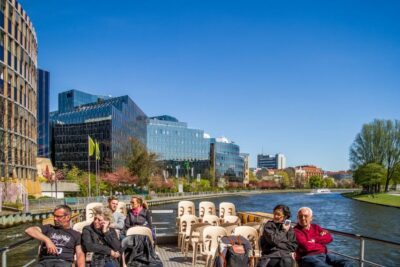
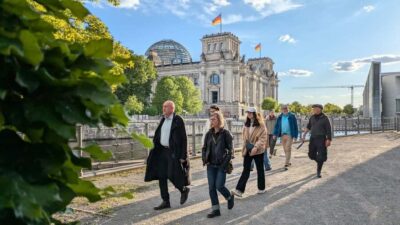
Reichstag, Plenary Chamber, Cupola & Government Tour
Read our review →