
Reviewed · ALTERNATIVE BERLIN TOURS
Alternative tour, History off the beaten path
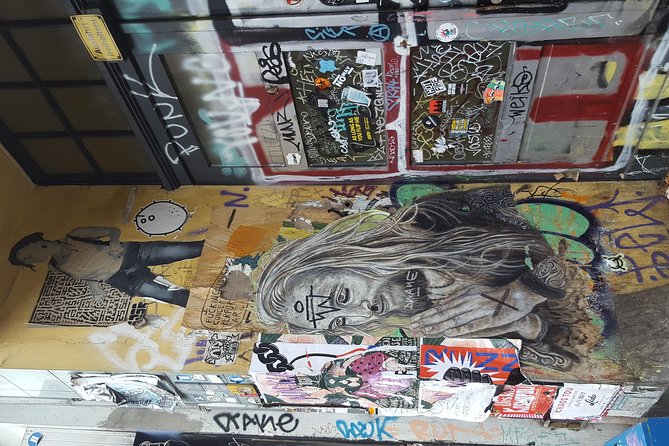
Berlin’s past is not confined to Checkpoint Charlie and the Brandenburg Gate. This three-hour walk with Annabelle takes you through less familiar corners of Friedrichshain and Kreuzberg, where the story of the divided city meets street life, former squats, unusual architecture, and traces of the old Wall.
I like the small group of no more than 10 people, which makes it easier to hear the guide and ask questions. I also like the way the tour links big events to ordinary streets, including former no-man’s-land areas and a green corridor that many visitors would miss. The main consideration is price: at $100.93 per person, this costs more than a standard city walk, and snacks or a drink at the end are extra.
Key points to know before booking
- A walking tour beyond the usual sights: The route focuses on unusual places in Friedrichshain and Kreuzberg rather than Berlin’s main postcard stops.
- Annabelle leads with personality: Her presentation combines historical facts, street anecdotes, and local community knowledge.
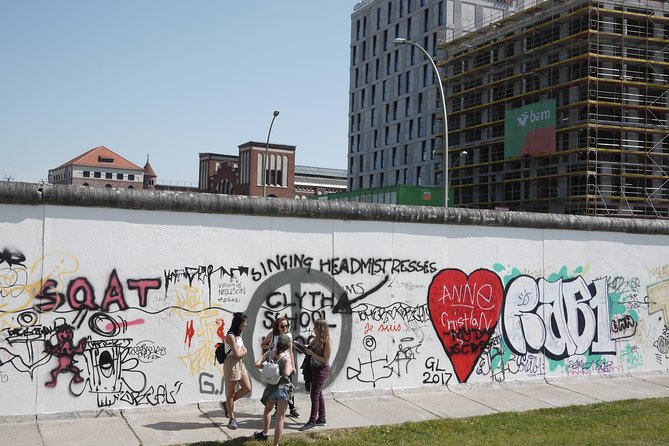
- The Berlin Wall appears in a less expected setting: You learn about the Wall away from the most crowded memorial areas.
- A compact group keeps the experience personal: The maximum group size is 10 people.
- YAAM is part of the route: The tour includes a short 10-minute passage through this well-known alternative cultural space.
- The walk ends socially: The official end point is Mariannenplatz, and the experience may finish with a drink or meal at your own cost.
Berlin’s past on ordinary streets
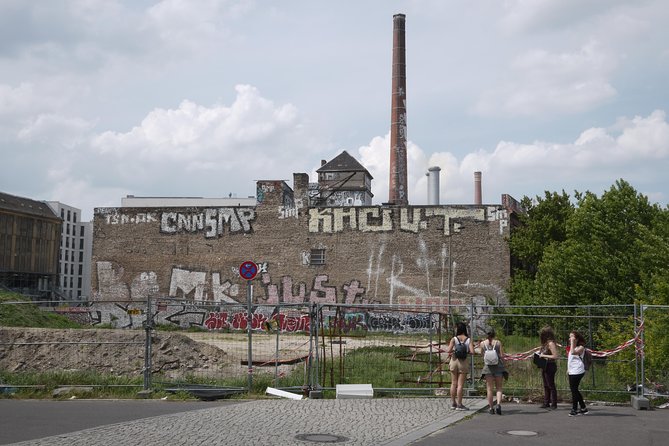
The strongest idea behind this tour is simple: Berlin’s history is often easiest to understand in places that do not look historic at first glance. A street corner, an empty strip of land, or a building linked to squatting can reveal how the city changed after the Wall fell.
You begin near Ostbahnhof, at Koppenstraße 3. This is a useful starting point for a walk about Berlin’s divided past because the area connects major transport routes with the former East Berlin side of the city. From there, the route heads toward Friedrichshain and Kreuzberg, two districts where political change, alternative culture, and postwar division overlap.
I would not book this expecting a checklist of famous monuments. You will not be taken from one grand attraction to the next. Instead, the appeal is the guide’s explanation of what happened in the spaces between the headline sights.
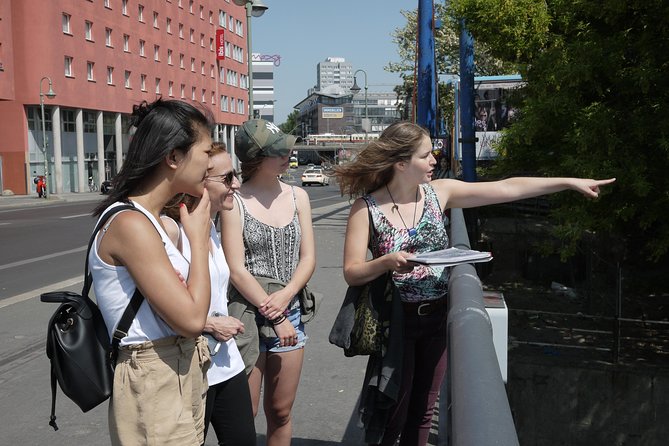
Annabelle is the guide named in the published tour details and feedback. Her style is described as energetic, personal, and strongly connected to Berlin. That matters here because this is not just a walk from point A to point B. Much of the value depends on how well the guide explains why a particular street, building, or open space matters.
More alternative tours in Berlin:
- Explore Berlin: See All The Iconic Sights & Some Hidden Gems
★ 5.0 · 4,429 reviews - Berlin: Alternative Berlin Walking Tour
★ 4.6 · 1,204 reviews - Berlin: Alternative Bike Tour of Kreuzberg & Friedrichshain
★ 4.7 · 548 reviews
Why Annabelle’s approach matters
A history tour can become a string of dates and political names. This one appears designed to keep the story close to daily life. You hear about the history of squats, the Wall’s former no-man’s-land, and the way unused spaces later became a green corridor.
I like that focus. Berlin’s alternative districts are not simply backdrops for photographs. They reflect housing struggles, political movements, reunification, and the city’s long habit of making use of spaces that official planners left behind.
Annabelle also adds anecdotes connected to specific streets and corners. That personal layer can help you remember the story after the tour ends. You are more likely to recall why a certain empty strip mattered than a list of dates recited beside a monument.
The published score is 5 from 7 ratings, with especially strong praise for Annabelle’s enthusiasm, friendliness, and command of the subject. That is a small sample, so I would not treat it as a guarantee. Still, the pattern is clear: the guide is a major part of the experience, not a minor detail.
The walk from Ostbahnhof into Friedrichshain
The meeting point is Ostbahnhof, served by S-Bahn lines S3, S5, S7, and S9. You can also reach the end area from Kottbusser Tor on the U8, though the tour begins at Ostbahnhof and finishes at Mariannenplatz.
Starting at a major station makes the tour fairly practical for a day of sightseeing. You do not need to arrange a private transfer, and the location is connected to Berlin’s public transport network. You should still arrive ready for a walking tour, since the experience is built around moving through the city rather than viewing it from a vehicle.
The exact walking route is not fully specified in the booking information. That is worth noting. You should expect a guided exploration of Friedrichshain and Kreuzberg, but you should not plan your day around a precise list of streets unless the operator provides an updated route.
This uncertainty is not necessarily a weakness. A route focused on alternative Berlin can change with local conditions, access, or events. But if you need a fixed program with every stop named in advance, this tour may feel less predictable than a conventional museum visit.
YAAM and Berlin’s alternative side
One named stop is YAAM, reached through a short 10-minute express passage. The stop is included in the experience, so you are not paying an entrance fee separately for that part of the tour.
YAAM is associated with music, art, food, and Berlin’s alternative scene. The supplied details do not promise a long visit or a specific program there, so think of it as a brief point on the route rather than a full cultural event. The value comes from seeing how a place like this fits into the city’s wider story.
This is one of the tour’s more unusual touches. Many Berlin walks treat the city’s alternative culture as decoration. Here, it is connected to the history of the neighborhoods you are walking through.
I would keep your expectations sensible. Ten minutes is enough for context and a quick look, but not enough for a full visit. If YAAM interests you, you may want to return independently after the tour.
More history tours in Berlin:
- Berlin: Natural History Museum Entrance Ticket
★ 4.6 · 3,382 reviews - Berlin: World Heritage Cruise to Potsdam
★ 4.5 · 1,435 reviews - Berlin Historical Highlights Walking Tour
★ 4.9 · 657 reviews - Berlin Private Complete History All Day Walking Tour
★ 5.0 · 474 reviews
The Berlin Wall away from the crowded memorials
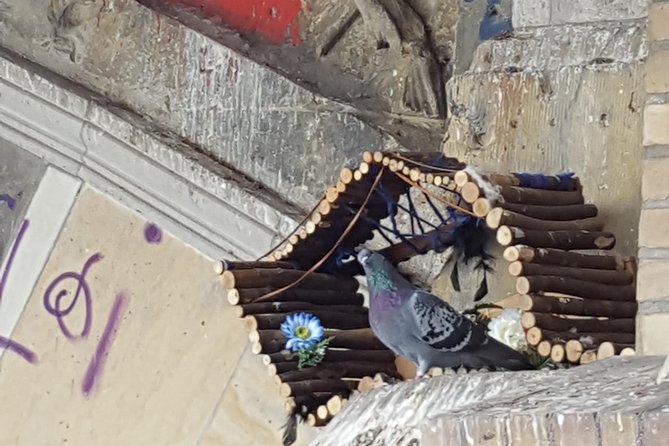
Several parts of the walk deal with the Berlin Wall, but not only in the familiar, heavily visited places. The route is designed to show the Wall’s history from less common angles, including the area that once formed no-man’s-land.
That setting can help you understand the Wall as a physical system, not just a painted section preserved for visitors. The empty strips, barriers, watch areas, and abrupt divisions affected how people lived and moved through Berlin. Even when the physical evidence has faded, the shape of the city can still point to what stood there.
The walk also brings you to a green corridor connected with former no-man’s-land. This is a useful reminder that reunification did not erase every trace of division. Some former border spaces became parks, paths, or unused areas, creating a different kind of urban memory.
I appreciate the way this approach gives you context without forcing the tour into a single Wall-focused narrative. The Wall is part of a larger story about neighborhoods, housing, public space, and the city’s new identity after 1989.
Squats, architecture, and the city after reunification
The tour also explains the historical roots of Berlin’s squats. That subject can be reduced to a cliché about artists and cheap buildings, but the reality is tied to housing, politics, vacant property, and the uncertain years after the Wall came down.
Hearing that story while standing in the neighborhoods where it unfolded gives the subject more weight. You can look at the buildings and streets as evidence of how residents claimed space and how the city changed over time.
Architecture is another part of the walk. The route combines historical explanation with architectural discovery, so you are not only hearing about political events. You are also paying attention to what the buildings and public spaces say about Berlin’s past.
The tour seems best suited to people who want connections rather than isolated facts. You might learn why a street has a particular character, how a district’s buildings relate to its political past, or why an ordinary-looking patch of land mattered during the divided era.
The final stretch toward Mariannenplatz
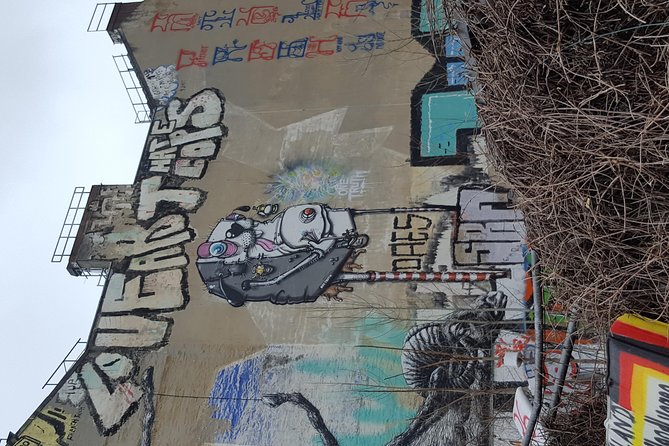
The official end point is Mariannenplatz in the Friedrichshain-Kreuzberg district. This gives the walk a clear finish in a neighborhood known for its alternative character and street life.
The tour’s published details also note that you should expect extra money for a drink at the end. Several accounts describe the walk finishing around a drink or meal, but that cost is not included in the $100.93 price.
I like this idea in principle. A casual drink gives you a chance to continue the conversation, ask about places you passed, and meet the other people in the group. It also fits the tone of a tour that emphasizes Berlin as a lived-in city rather than an open-air museum.
Do not treat the final drink as a guaranteed included event. Plan to pay separately, and consider it an optional social ending. If you need to leave immediately at the scheduled finish, you can do so at Mariannenplatz.
Is $100.93 a fair price?
At $100.93 per person, this is a premium walking tour. The price makes more sense if you value a small group, a named guide with a strong personal connection to Berlin, and a route that avoids the standard city highlights.
You are paying for about three hours of guiding rather than admission to a major attraction. The included YAAM passage does not add a large ticket value, and the tour does not include snacks or a final drink. Its worth depends on the quality of the interpretation and the access to lesser-known places.
For a first-time visitor who only wants Berlin’s famous sights, the price may be hard to justify. You could spend those three hours at major museums or well-known memorials and see more conventional attractions.
For a repeat visitor, history fan, or anyone curious about Berlin’s alternative districts, the calculation is better. You are getting a focused route through places you might not connect on your own. A small group of up to 10 also offers a more personal setting than a large city walk.
The strongest value comes from the guide. If Annabelle is available for your date, her energy and local focus appear to be central to what makes the tour work. If the tour is led by someone else, I would confirm that before booking if the guide is an important part of your decision.
Who should book this walk?
I would recommend this experience to you if you have already seen, or do not care much about, Berlin’s biggest attractions. It suits people who want history tied to real streets and who enjoy hearing about architecture, community movements, squats, and the aftereffects of the Wall.
It also works well as an early introduction to one side of Berlin. One published account describes taking the tour soon after arriving and finding it a useful way to understand the city. That makes sense: the route gives you ideas for further exploration in Friedrichshain and Kreuzberg.
The tour may also suit you if you like meeting people in a small group. The closing drink or meal is not included, but it offers a relaxed way to continue the afternoon if you have the time.
I would hesitate if you want a fully fixed itinerary, a low-cost overview, or a tour centered on famous monuments. The route is described in broad terms, and only YAAM is formally named as a stop. You should be comfortable with a more interpretive walk.
The tour is offered in English, uses a mobile ticket, and allows service animals. Most people can participate, and the group is capped at 10. Since it requires good weather, check the forecast before setting aside the afternoon.
Practical details that affect your day
The experience lasts about three hours. Wear shoes suited to walking, though the available information does not state a precise distance or terrain.
The start point is Ostbahnhof, Koppenstraße 3, 10243 Berlin. The end point is Mariannenplatz, 10997 Berlin-Kreuzberg. Since you finish in a different district from where you begin, think of the tour as a one-way neighborhood walk, not a loop back to the station.
Public transport is useful at both ends. Ostbahnhof is served by the S3, S5, S7, and S9. Kottbusser Tor, near the finishing area, is served by the U8.
You receive confirmation at booking, and the mobile ticket makes it easy to keep the details on your phone. Free cancellation is available up to 24 hours before the start time. Cancellations or changes inside that window are not refunded or accepted, and poor weather may lead to a different date or a full refund.
Should you book the Berlin alternative history tour?
Book it if you want Berlin explained through neighborhoods rather than monuments. The combination of Wall history, former no-man’s-land, squats, architecture, YAAM, and a personal guide gives the walk a clear identity.
The $100.93 price is not a bargain, and the short YAAM stop plus optional final drink do not change that. Still, the small group and Annabelle’s reported energy make the cost easier to defend for visitors who care about local stories and less familiar places.
Skip it if you need a cheap overview or a tightly scripted monument tour. Choose it if you want to see how Berlin’s divided past still shapes its streets, public spaces, and alternative culture.
FAQ
How long does the tour last?
The tour lasts approximately three hours.
Where does the tour begin?
It begins at Ostbahnhof, Koppenstraße 3, 10243 Berlin, Germany.
Where does the tour end?
The tour ends at Mariannenplatz, Mariannenplatz, 10997 Berlin-Kreuzberg, Berlin.
Is the tour offered in English?
Yes. The experience is offered in English.
How large is the group?
The tour has a maximum of 10 participants.
Is YAAM included?
Yes. The itinerary includes a 10-minute express passage to YAAM, with admission included.
Are food and drinks included?
No. Snacks are not included, and you should expect to pay extra for a drink at the end.
Can I cancel for a refund?
Yes. You can cancel at least 24 hours before the start time for a full refund. If poor weather causes the operator to cancel, you will be offered another date or a full refund.
Newest Berlin reviews
- Where It All Began: Berlin’s Queer & Trans History Tour★ 4.9 · 6 reviews
- Berlin: guided canoe | kayaktour★ 4.1 · 7 reviews
- Understanding Kreuzberg: The roots of local (sub)culture★ 4.9 · 11 reviews
- Private Potsdam City Tour in an authentic vintage van★ 5.0 · 14 reviews
- Warnemünde Shore Excursion: Private Sachsenhausen and Berlin Tour★ 5.0 · 12 reviews
- Ultimate E-Bike Tour of Berlin with Beer Garden Stop★ 5.0 · 4 reviews
- In the Forbidden City – Potsdam Walking Tour★ 5.0 · 17 reviews
- Private Walking Tour of Potsdam and Sanssouci★ 5.0 · 24 reviews
Alternative Berlin Tours, compared.
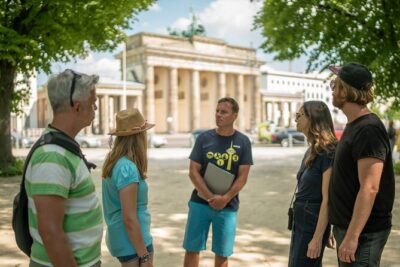
Explore Berlin: See All The Iconic Sights & Some Hidden Gems
Read our review →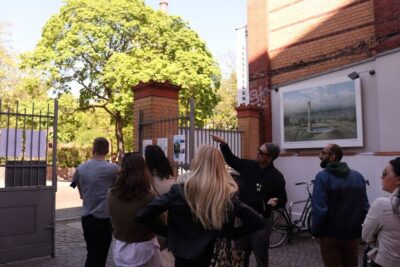
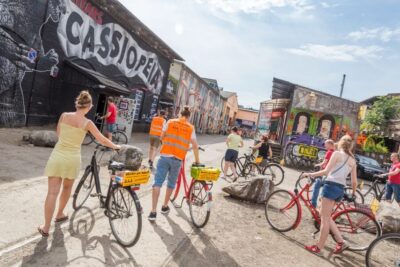
Alternative Bike Tour of Kreuzberg & Friedrichshain
Read our review →

Private Berlin: Iconic Sights and Hidden Gems Walking Tour
Read our review →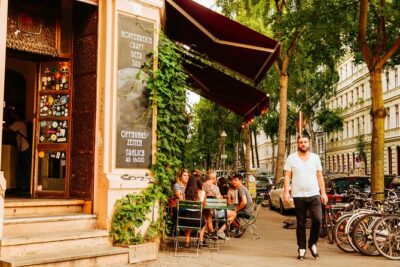
Kreuzberg Berlin: Off the Beaten Track PRIVATE Walking Tour
Read our review →
Experience the Alternative Kreuzberg on a Bike Tour
Read our review →
Alternative Berlin Bike Tour – Off the Beaten Tracks in Small Groups
Read our review →Browse the lists this tour appears in