
Reviewed · MUSEUM ISLAND TOURS
Berlin: “Pergamonmuseum. The Panorama” Exhibition Tickets
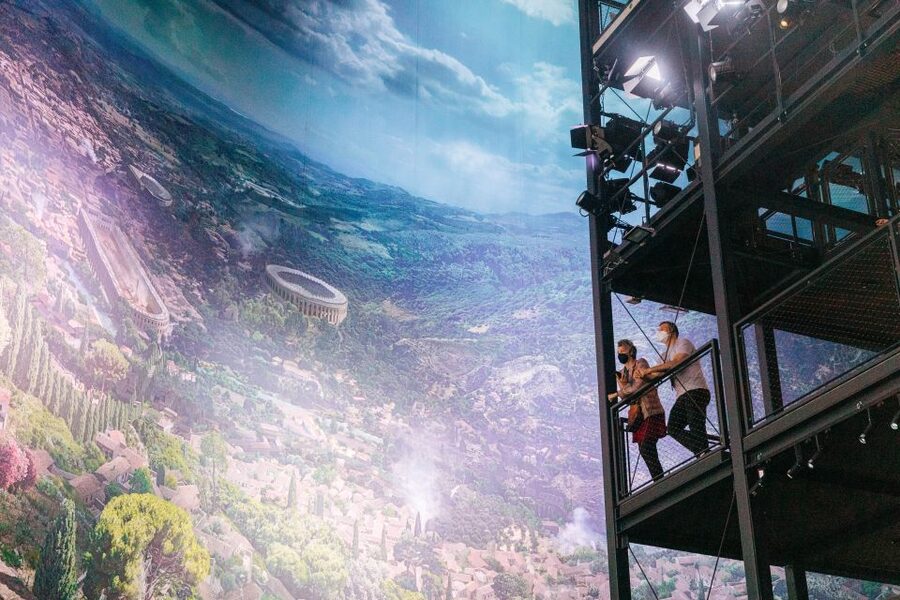
Pergamonmuseum. The Panorama brings the ancient city back to life through a 360° panorama set in AD 129, when Emperor Hadrian ruled the Roman Empire. You look down on temples, streets, people, and the Acropolis, then move close to original sculptures from the site. The day-to-night lighting and music are especially effective, and the changing view gives you a reason to pause rather than simply walk past another glass case.
I like the mix of real archaeological pieces and modern visual art, particularly the large section of the Telephos frieze and the re-created setting of the Pergamon Altar. I also like that you can stay in the auditorium, climb the steps gradually, and find different viewpoints. The main drawback is that the ticket is non-refundable, the entry window is short, and the building is only partly accessible for wheelchair users.
Key points to know before you go
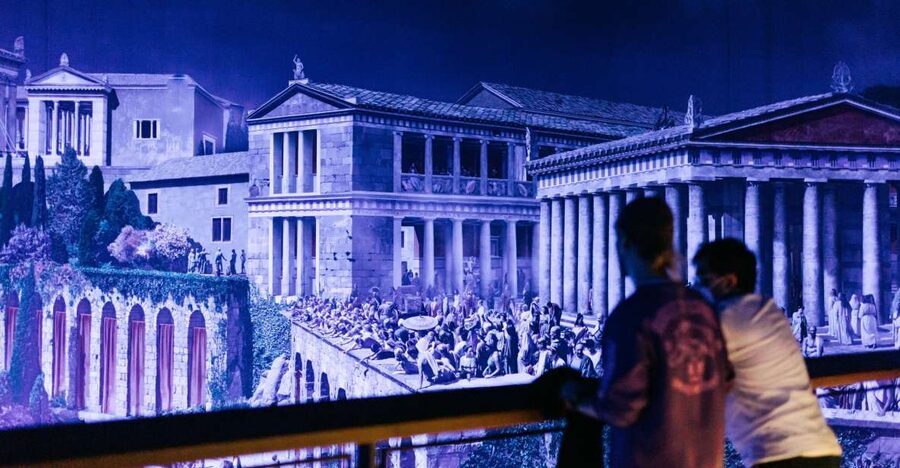
- The panorama shows Pergamon in AD 129: You see the city during the High Roman Empire under Hadrian, not a general picture of ancient Greece.
- Forty scenes were newly added: Yadegar Asisi reworked the panorama with fresh details and new activity throughout the city.
- Around 80 original works accompany it: Highlights include the Beautiful Head, the giant head of Herakles, royal portraits, and the Prometheus group.
- The light and sound change the mood: The sequence from daylight to night is one of the most memorable parts of the visit.
- The exhibition is not the Pergamonmuseum itself: Your ticket covers Pergamonmuseum. Das Panorama at Am Kupfergraben 2, not other Museum Island museums.
- The ticket costs $16 per person: It is a fair price if you care about ancient art and visual displays, but less compelling if you expect a long museum visit.
Why the AD 129 setting matters
The exhibition does not try to show Pergamon as a vague, timeless ruin. It chooses a specific moment: AD 129, during the reign of Hadrian from AD 117 to 138. That choice gives the panorama a clear purpose. You are looking at Pergamon as a functioning city during the High Roman Empire, with its monuments and neighborhoods in use.
Pergamon stood on the west coast of Asia Minor, in what is now Turkey. The panorama lets you see the city as a connected place rather than as isolated fragments. A statue in a case can be beautiful, but it does not always tell you where it once belonged. Here, the surrounding city gives those objects a setting.
You can look across the Acropolis and picture the Pergamon Altar in its original architectural context. This is especially useful because the actual ancient site is far away, and the Berlin exhibition is presenting works removed from their original surroundings. The display helps bridge that gap without pretending that a painting or model is the same as standing at the archaeological site.
More Museum Island tours in Berlin:
- Berlin: Museum Island Multiple Museum Entry Ticket
★ 4.4 · 2,007 reviews - DDR Museum Berlin Admission Ticket
★ 4.0 · 352 reviews - Berlin: “The Humboldt Forum for Newbies” Guided Tour
★ 4.7 · 42 reviews
Entering Pergamonmuseum. Das Panorama
The exhibition is in a temporary building called Pergamonmuseum. Das Panorama at Am Kupfergraben 2, 10117 Berlin. Be careful with the name. This is not the same as simply entering the Pergamonmuseum on Museum Island, and the ticket does not include the main Pergamonmuseum or other museums.
That distinction matters when you are planning a museum day. If you follow signs intended for the main Pergamonmuseum, you may lose time. Use the exact address and ask for Pergamonmuseum. Das Panorama if you are unsure.
Backpacks are not allowed. Plan to arrive without one or be ready to follow the exhibition’s storage and security instructions. One practical detail is worth noting: if you buy tickets in the museum shop, payment must be non-cash.
The activity is listed as valid for 15 minutes from first activation. Treat that as your entry window rather than as a complete measure of how long the exhibition can hold your attention. One useful approach is to enter promptly, then spend time inside looking from several levels and returning to details you missed at first.
The 360° auditorium and the changing light
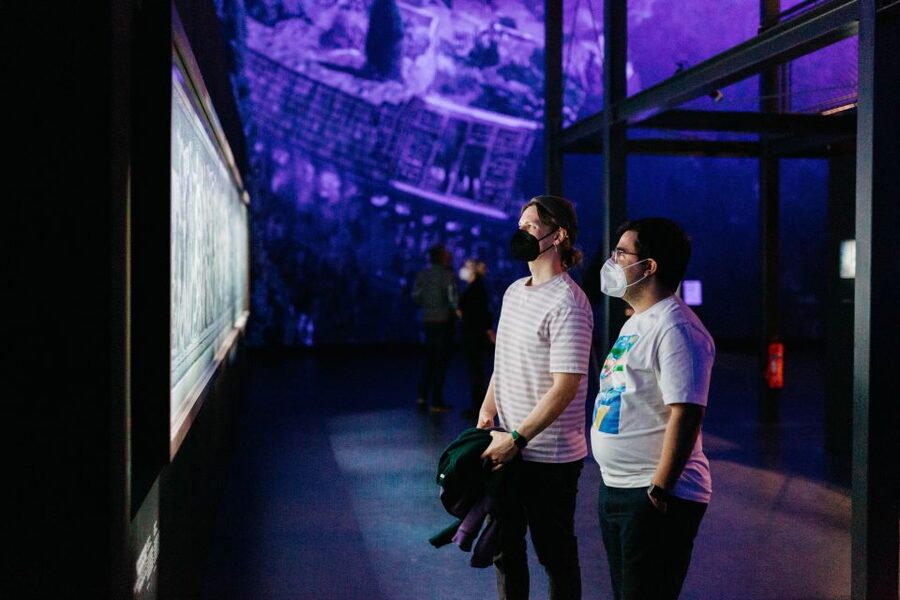
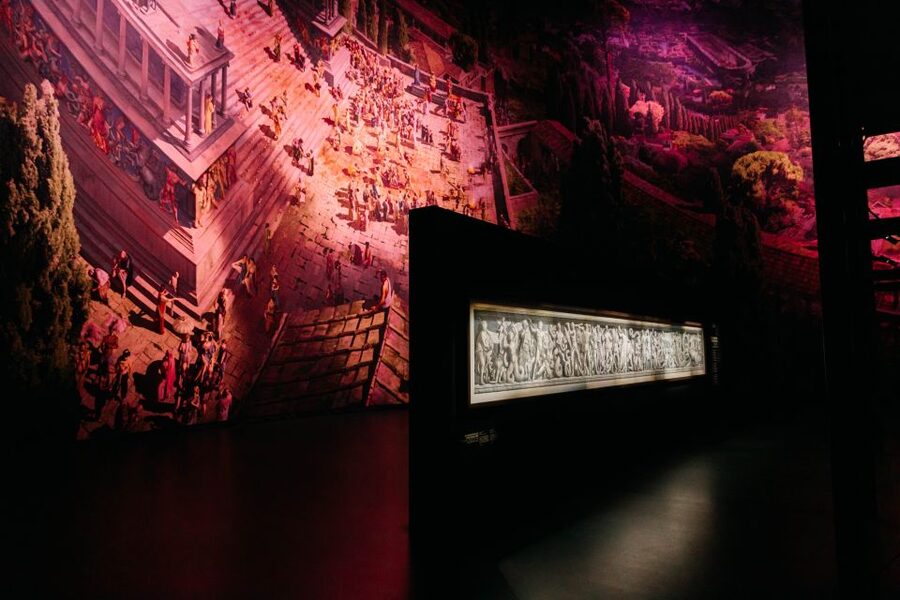
The central panorama is the main event. Rather than viewing a small model from above, you enter a large auditorium where the city surrounds you. The image is designed to be seen from different heights, so do not rush straight through.
The steps give you changing views across the city. From one point, you may focus on the Acropolis and its major buildings. From another, your eye catches smaller scenes woven into the wider picture. The exhibition includes 40 new scenes, which gives regular visitors something fresh to notice and helps the city feel active rather than frozen.
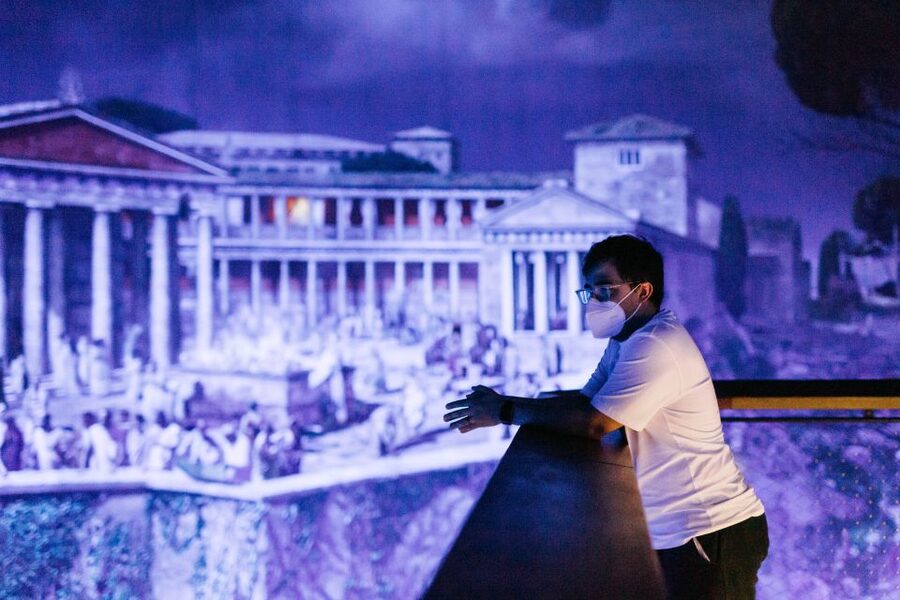
The lighting moves through different times of day, including the change from daylight to night. Music accompanies the sequence. This combination is highly effective because it changes how you read the same scene. Bright light helps you trace the buildings and figures. Darkness shifts your attention toward illuminated details and the overall shape of the city.
I suggest staying in the auditorium for at least half an hour if time allows, even though the ticket information gives a 15-minute validity period. Climb the steps slowly, then pause at a higher viewpoint. The first look can be visually overwhelming, and a second look helps you spot the smaller details.
There are also hidden details in the panorama. Guides in the room can point out some of them, so ask if you want help finding the less obvious scenes. An audio guide is available and can add useful explanation, especially if you want more than a visual show.
The ancient works placed beside the panorama
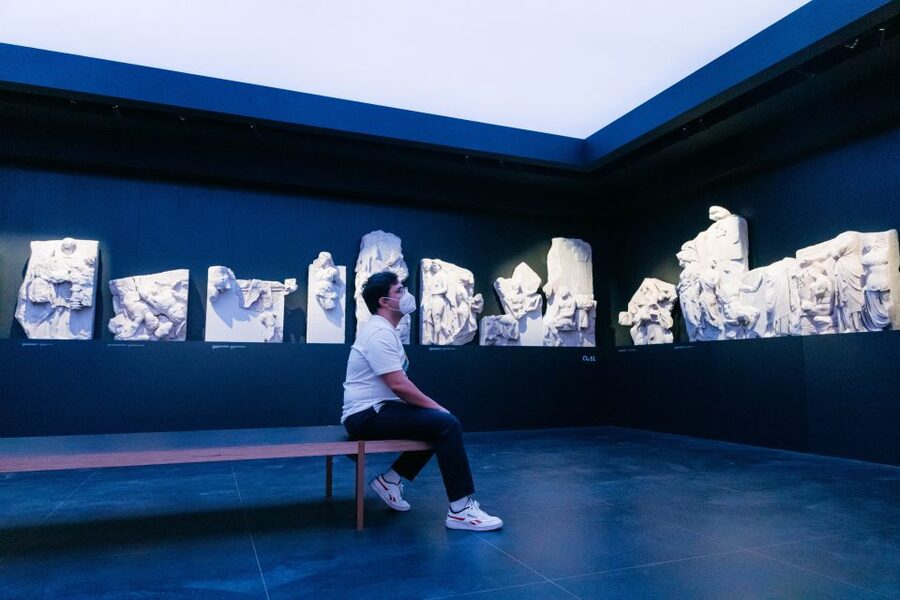
After the wide view of Pergamon, the exhibition brings you close to about 80 important works from the Antikensammlung, Berlin’s collection of ancient art. This change in scale works well. You move from the entire city to individual faces, bodies, carved surfaces, and fragments.
The most important piece for many visitors is the largest section of the Telephos frieze from the Pergamon Altar. Seeing it alongside the panorama helps explain how monumental sculpture related to the architecture around it. The display is not just a collection of famous objects. It shows how those objects could have functioned within the city.
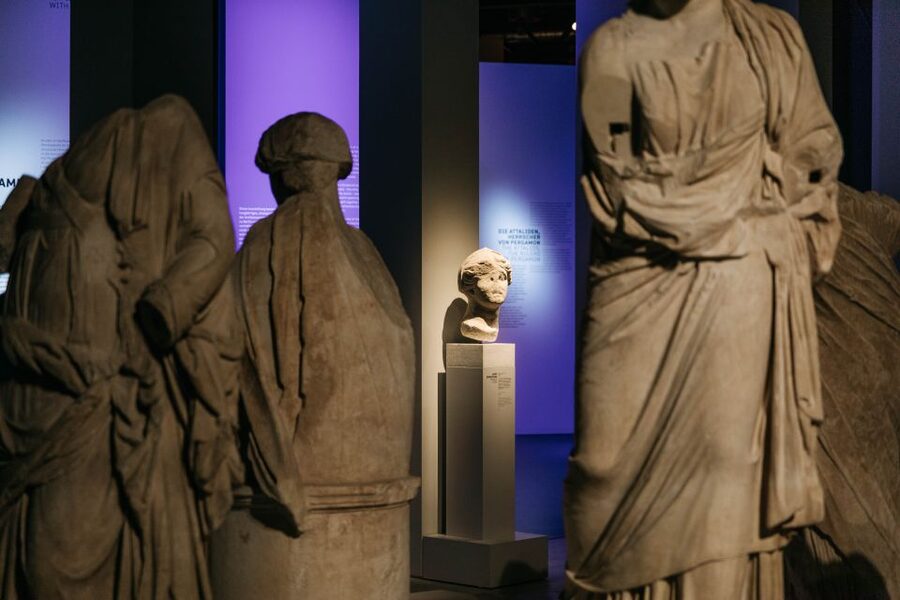
The exhibition also includes the Beautiful Head and the giant head of Herakles. These pieces offer a sharp contrast in size and character. The Beautiful Head rewards close looking at expression and form, while the Herakles fragment reminds you of the scale of ancient sculpture and monuments.
Look for the portrait sculptures of the kings, the Archaistic Dancer from the palace, the Prometheus group, and Athena with a cross-strapped shield. Each work gives you another way into Pergamon’s culture and public life.
The Archaistic Dancer is particularly useful for showing that ancient artists could deliberately imitate older styles. The royal portraits connect the city to its rulers, while Athena and the Prometheus group bring myth and religion into the picture. You do not need to know every name in advance. The arrangement gives you a framework for understanding why these works matter.
More museums and galleries in Berlin:
- Berlin: Natural History Museum Entrance Ticket
★ 4.6 · 3,382 reviews - Skip-the-Line: Berlin Wall Museum at Checkpoint Charlie
★ 4.1 · 2,041 reviews - Berlin: Interactive DeJa Vu Museum Entrance Ticket
★ 4.1 · 1,338 reviews - Berlin: East Side Gallery Spree Cruise in a Solar Catamaran
★ 4.0 · 1,039 reviews
Seeing the Pergamon Altar in its city setting
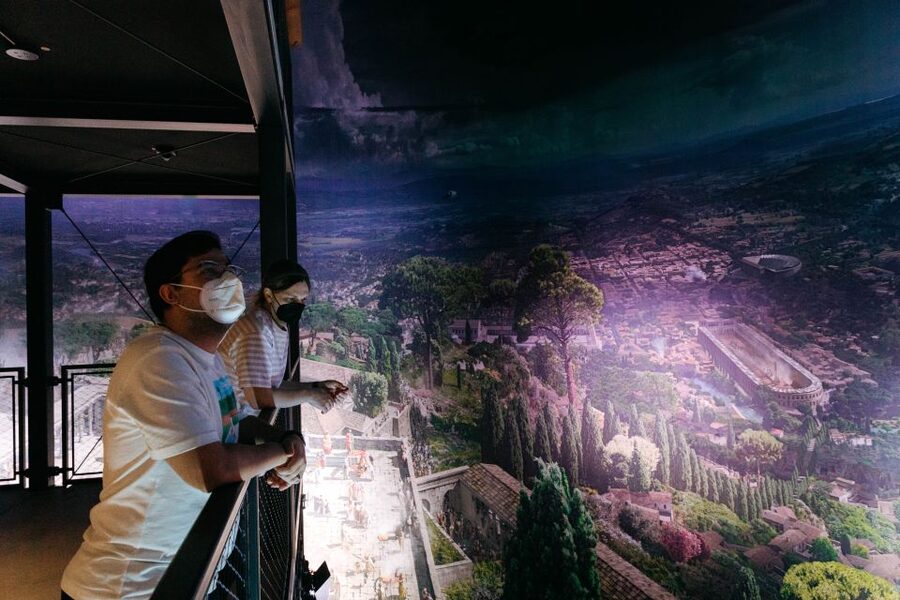
The Pergamon Altar is one of the exhibition’s strongest ideas. In many museums, a major monument becomes a set of reliefs and fragments displayed against a neutral wall. Here, the panorama places the altar back on the Acropolis, where its size, position, and relationship to the city become easier to imagine.
The setting does not replace the real monument or the archaeological site. It does something different. It gives you architectural context. You can think about the altar as part of a larger urban center, not merely as a famous object with a familiar name.
The exhibition describes this as a limited-time chance to experience the altar in its original architectural context. That makes the visit especially worthwhile for anyone interested in the Pergamon Altar, since the main Pergamonmuseum itself is not included in this ticket.
Why the light, music, and sound effects work
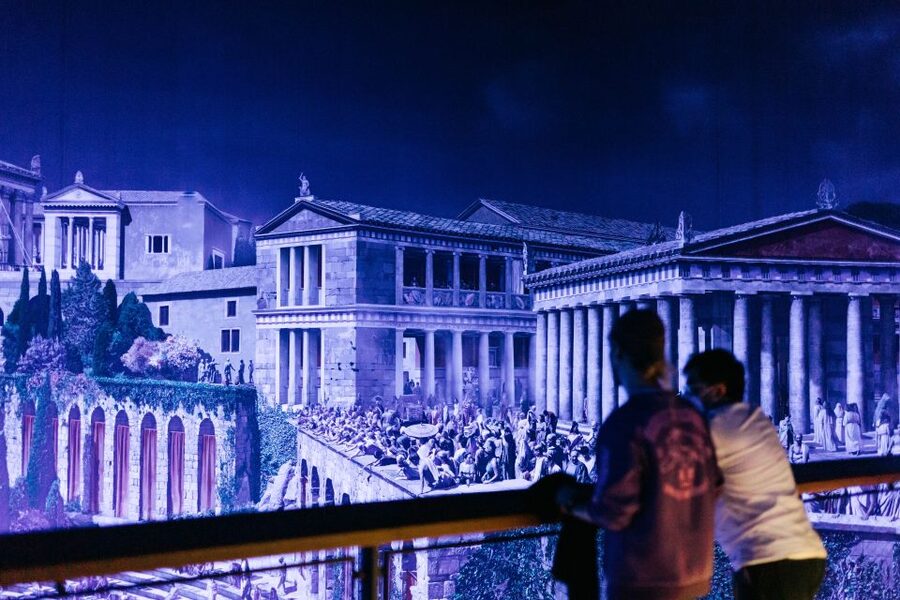
The technology is not used only for decoration. The light and music help control the pace of the visit. You are encouraged to look for a while, wait for the scene to change, and watch the city take on a different mood.
The night sequence is a highlight. As darkness comes over the panorama, selected areas become easier to notice, while the larger city fades into a quieter background. The music supports the transition without requiring you to read a long explanation.
That said, the theatrical approach will not suit everyone. If you prefer quiet galleries and original objects presented with minimal interpretation, parts of this exhibition may feel too produced. One visitor found the 360° view interesting but the overall display underwhelming. That is a fair warning: the panorama is a visual presentation first, with archaeology supporting it.
For me, the strongest visit combines both sides. Watch the panorama from several levels, enjoy the light and music, then spend time with the actual pieces. If you hurry through the objects, you lose much of the exhibition’s historical value. If you ignore the panorama, you miss the reason this temporary building exists.
Is $16 good value?
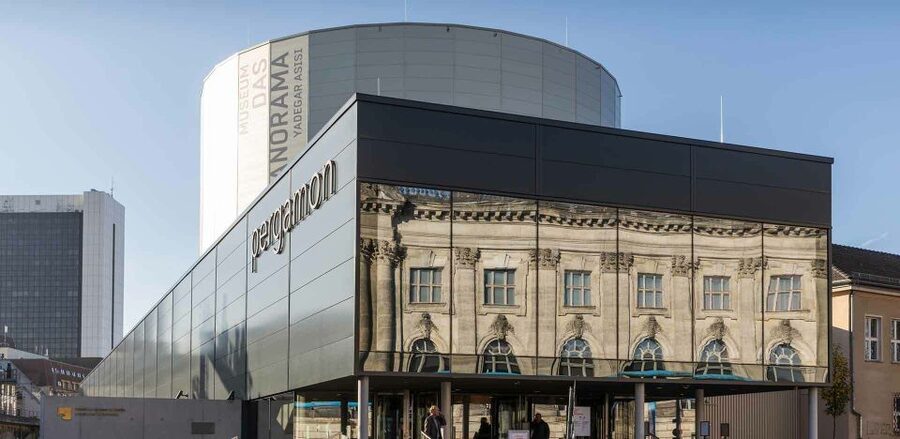
At $16 per person, this is not an all-day museum ticket. The price covers one exhibition only, and it does not include the Pergamonmuseum or other museums on Museum Island. You should compare it with what you want from your Berlin museum time.
The price feels reasonable if you are interested in ancient sculpture, archaeological reconstruction, or visual displays. You receive the 360° panorama, the original works, the lighting and sound sequence, and the chance to see the Pergamon Altar represented in its former setting.
The value is weaker if you want a broad survey of ancient history or several hours of traditional museum galleries. This exhibition focuses tightly on Pergamon. It offers atmosphere and context rather than a huge collection across many cultures.
Visitors under 18 can enter free, but everyone still needs a ticket. That makes it a useful family option, particularly because the combination of scale, music, changing light, and recognizable mythological figures can hold younger attention better than a long row of display cases.
Who will enjoy this exhibition most?
I would choose this for anyone already interested in the Pergamon Altar, ancient Greek and Roman art, or architectural reconstructions. It is also a good choice for families who want something more visual than a standard archaeological display.
You will get the most from it if you enjoy pausing and looking from more than one angle. The best part is not a quick walk around the room. It is the gradual shift between a distant view of the whole city and close attention to individual objects.
The optional audio guide is worth considering if you want extra explanation. It can help connect the sculptures, the city, and the historical period. You can also ask one of the guides in the room about hidden details in the panorama.
This may be less suitable if you need a fully step-free museum visit. The venue is described as wheelchair accessible in general, but it is only partially accessible, and wheelchair users are also listed as not suitable for the activity. Contact the venue before booking if access is important to you.
Timing, closures, and practical cautions
Check the date before paying. The Panorama is scheduled to close from September 1 through October 13 for renovation work. The ticket is non-refundable, so an error in dates can be costly.
Arrive at the correct building, Am Kupfergraben 2, rather than assuming your ticket opens the main Pergamonmuseum. Leave your backpack behind, and allow time to orient yourself before the 15-minute activation period begins.
Once inside, do not judge the exhibition during the first few minutes. The panorama takes time to read, and the light sequence works best when you stay through more than one change. If you are on a tight schedule, prioritize the main auditorium, the Telephos frieze, and the major sculptures.
Should you book Pergamonmuseum. The Panorama?
Book it if you want a focused, visually powerful look at Pergamon and appreciate the combination of original sculpture, reconstructed architecture, music, and changing light. At $16, it offers good value for ancient-art fans and families, especially with free entry for those under 18.
Skip it if you are expecting entry to the main Pergamonmuseum, a full day of galleries, or a completely traditional museum display. Check the renovation closure, plan around the short activation window, and consider the partial access issue before booking. For the right visitor, the panorama turns scattered ancient pieces into a city you can finally picture.
FAQ
Where is Pergamonmuseum. Das Panorama located?
It is at Am Kupfergraben 2, 10117 Berlin, Germany.
Does this ticket include the main Pergamonmuseum?
No. The ticket includes entry to the exhibition Pergamonmuseum. The Panorama only. Entry to the Pergamonmuseum and other museums on Museum Island is not included.
How much does the exhibition cost?
The listed price is $16 per person.
How long is the ticket valid?
The ticket is valid for 15 minutes from the time it is first activated.
Can visitors under 18 enter free?
Yes. Visitors under 18 can enter the exhibition free of charge, but every visitor still needs a ticket.
Is the activity refundable?
No. The activity is non-refundable.
Can I bring a backpack?
No. Backpacks are not allowed inside the exhibition.
Is the exhibition wheelchair accessible?
The venue is only partially accessible for wheelchairs, and the activity is listed as not suitable for wheelchair users. Check access arrangements before booking.
When is the Panorama closed for renovation?
The Panorama is scheduled to be closed from September 1 through October 13 because of renovation work.
Newest Berlin reviews
- Where It All Began: Berlin’s Queer & Trans History Tour★ 4.9 · 6 reviews
- Understanding Kreuzberg: The roots of local (sub)culture★ 4.9 · 11 reviews
- Berlin: guided canoe | kayaktour★ 4.1 · 7 reviews
- Private Potsdam City Tour in an authentic vintage van★ 5.0 · 14 reviews
- Warnemünde Shore Excursion: Private Sachsenhausen and Berlin Tour★ 5.0 · 12 reviews
- Ultimate E-Bike Tour of Berlin with Beer Garden Stop★ 5.0 · 4 reviews
- Private Walking Tour of Potsdam and Sanssouci★ 5.0 · 24 reviews
- Potsdam Highlights – Private sightseeing tour by minibus★ 5.0 · 3 reviews
Museum Island Tours, compared.



Decolonial Berlin Castle/ Humboldt Forum Guided Tour
Read our review →
Browse the lists this tour appears in