
Reviewed · SACHSENHAUSEN CONCENTRATION CAMP TOURS
Private Tour to Sachsenhausen Concentration Camp Memorial (With Licensed Guide)
Sachsenhausen is not a quick photo stop. It is a vast, serious memorial where a good guide helps you understand what happened beyond the surviving walls and foundations. Paul, Julian, Beth, Stephen, and Aaron have all led tours here, and the best guides bring both hard facts and a careful human touch.
I like the private format, which lets you ask questions, slow down, or pause when the subject becomes heavy. I also like that entry is included and that your guide handles the public transport route from Berlin, saving you the trouble of working out the trip north.
The main drawback is the cost: $274.55 per person is a lot for a six-hour outing, and train fare is extra. The memorial is also large, exposed, and emotionally demanding, so warm clothing, sturdy shoes, and enough mental energy matter.
Key points to know before you book
- Four hours at the memorial: You have time to see the main buildings, exhibits, prison, infirmary, and execution site.
- A private English-speaking guide: Only your group takes part, giving you room for questions and a more personal pace.
- A 30-kilometer trip north: Sachsenhausen sits outside Berlin in Oranienburg, so this is a half-day commitment rather than a central-city stop.
- Entry tickets are included: You only need to budget separately for the train fare.
- The site can be colder than Berlin: Wind, open ground, and long walking distances make a hat, gloves, and warm layers useful.
- A sensitive subject handled with care: Guides such as Paul, Julian, and Beth are praised for explaining difficult material to adults, teenagers, and children.
Why Sachsenhausen deserves a full half-day
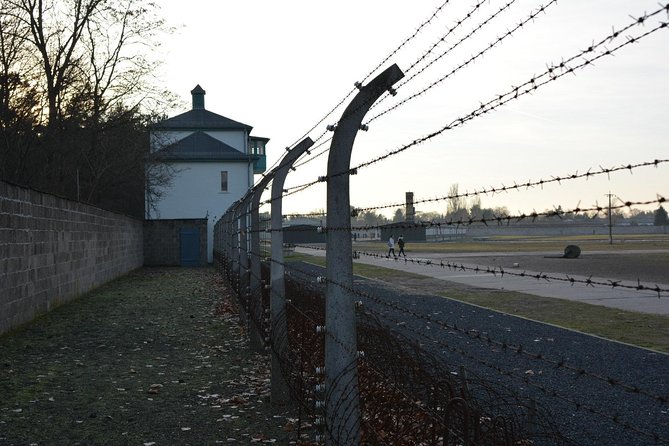
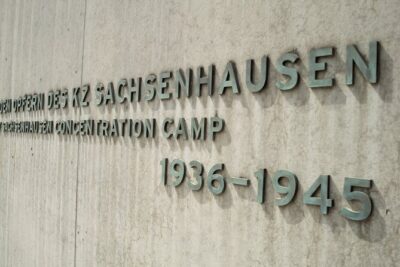
Sachsenhausen Concentration Camp Memorial lies about 30 kilometers north of Berlin, on the outskirts of Oranienburg. The distance matters. You are not squeezing this into an hour between museum visits. From the Birchys Berlin Tours meeting point at Ebertstraße 24, the round trip and memorial visit take about six hours.
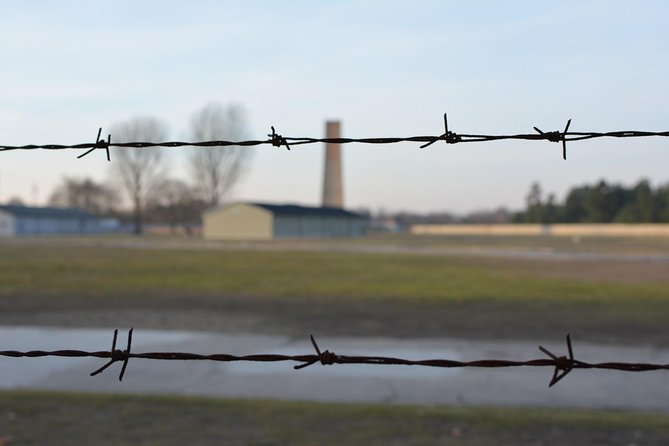
That time is well spent if you want context rather than a quick look at a bleak place. Sachsenhausen covers a broad area, and its surviving structures, reconstructed sections, foundations, and exhibitions are spread across the former camp grounds. Without guidance, it can be hard to understand what you are seeing or how the pieces fit together.
A private guide gives the site a clear order. You move from the entrance and roll-call area to the prison, medical buildings, barracks, kitchen exhibition, and Station Z. The guide can explain what each location was used for, how the camp was organized, and how Nazi persecution operated through a system of prisoners, guards, administration, and forced labor.
This is not entertainment, and it should not feel like it. The value comes from careful explanation and from having someone present who can answer questions without rushing you through a fixed group schedule.
More Sachsenhausen memorial visits from Berlin:
- Berlin: Sachsenhausen Concentration Camp Tour in English
★ 5.0 · 5,711 reviews - Berlin: Sachsenhausen Concentration Camp Memorial Tour
★ 4.7 · 3,716 reviews - Sachsenhausen Concentration Camp Bus Tour in English from Berlin
★ 5.0 · 1,962 reviews
The journey from Berlin to Oranienburg
The meeting point is Birchys Berlin Tours at Ebertstraße 24, 10117 Berlin. The tour then travels to Sachsenhausen by public transportation, with the train fare not included in the price.
That extra cost is a small but important detail. At $274.55 per person, you should add the transportation fare when working out the total. The guide takes care of the route, which is useful if you do not know Berlin’s rail system or do not want to spend part of your morning studying connections.
One guide, Aaron, has offered guests the choice between taking a bus or walking for about 20 minutes after leaving the train. That walk passes through an ordinary German neighborhood before reaching the memorial. It can give you a sense of the site’s location within modern Oranienburg, though anyone with limited walking ability may prefer the bus option if available for the group’s route.
The journey also gives you time to ask questions before entering the memorial. Paul, in particular, is praised for explaining the wider history of Berlin and the Second World War during the trip. That preparation helps you arrive with a basic framework instead of trying to absorb every fact at once.
Tower A and the roll-call area
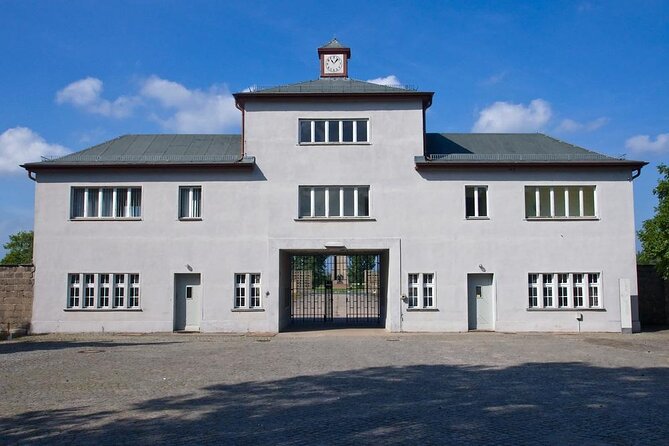
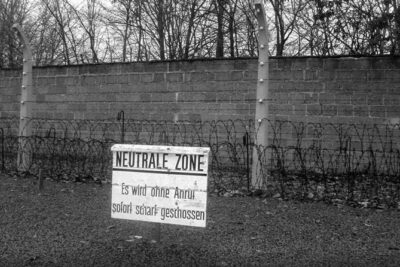
The tour begins at Tower A, the main entrance into the camp compound. This is a meaningful first stop because the entrance establishes the camp’s strict layout and controlled character.
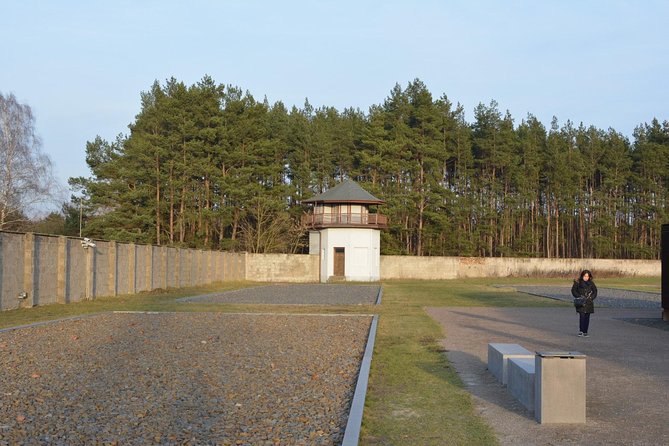
From there, you reach the roll-call area. This open space was central to the daily organization of prisoners. It also helps you grasp the scale of the camp, because the area is not a small museum room with a few objects behind glass. You are walking through a broad former camp site where prisoners were gathered and counted.
The private format works well here. You can ask how the camp was arranged, who controlled different sections, and how the buildings around the roll-call area functioned. A guide can also point out details that are easy to miss when you walk alone.
Do not expect every part of the camp to survive intact. Memorial sites often include preserved structures, foundations, markers, and reconstructed elements. Your guide’s explanations are especially important because they help you read the spaces rather than simply look at them.
The pathology building, infirmary, and mortuary cellar
The medical buildings bring the subject into sharper focus. The tour includes the pathology building, infirmary buildings, and mortuary cellar, locations that reveal the camp’s system of medical abuse, neglect, and death.
This part can be especially difficult. The buildings are not just historical architecture. They are connected to the treatment of prisoners and to the machinery of a camp where people were reduced to numbers and controlled through violence.
A careful guide will set the context before you enter or examine these spaces. Julian has been praised for presenting difficult material with sensitivity, including when explaining it to a 12-year-old child. That matters if you are visiting with teenagers or younger family members. You can ask for more detail, or ask the guide to slow the pace when needed.
Older visitors should also think about the physical demands. The tour involves several hours on site, walking between buildings and exhibits. Paul has adjusted the pace for older people and allowed time to rest, which is one of the practical benefits of a private group.
Other Berlin experiences to weigh up
- Berlin: Reichstag, Dome and Government District Guided Tour
★ 4.7 · 18,288 reviews - Berlin: Government District around the Reichstag Guided Tour
★ 4.7 · 8,447 reviews - Berlin: Hidden Backyards Guided Walking Tour
★ 4.8 · 5,360 reviews - Berlin: 1-Hour Boat Tour with Bilingual Live Guide
★ 4.7 · 3,629 reviews
Station Z and the former camp prison
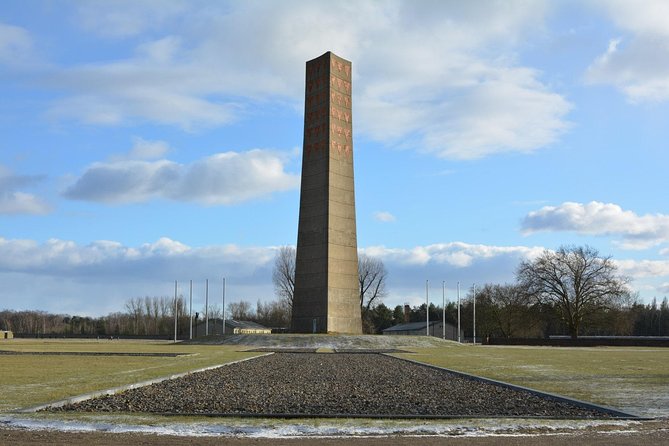
Station Z was the purpose-built execution facility. It is one of the most sobering parts of the memorial, and it needs no dramatic treatment from a guide. The facts are severe enough.
Your guide’s role here is to explain what the facility was, how it fitted into the camp system, and what the site tells you about the planned nature of Nazi murder. This is a place where questions often arise, and a private tour gives you the space to ask them without worrying about holding up a large group.
The former SS and Gestapo Prison offers a different view of camp control. It shows that imprisonment within the camp could take several forms, with political prisoners and others subjected to further punishment inside the wider compound.
Together, Station Z and the prison help you understand that Sachsenhausen was not simply a place where people were held. It was part of a system of intimidation, forced labor, punishment, experimentation, and murder. The guide connects the buildings so you see the system rather than a series of isolated stops.
The camp kitchen exhibition
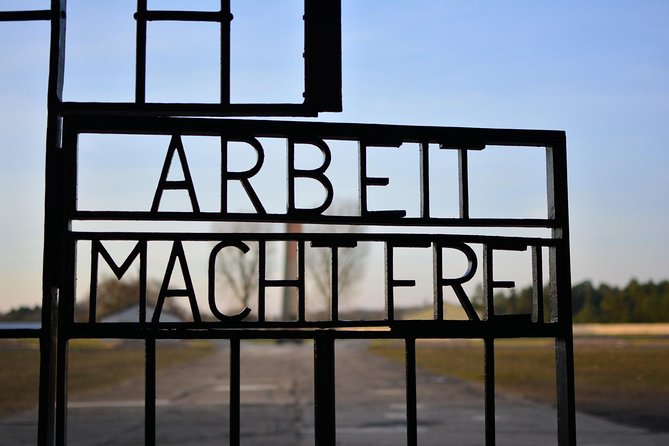
The exhibition in the former camp kitchen adds material and institutional context. A kitchen sounds ordinary until you consider its place in a concentration camp. The building helps explain how the camp was supplied and managed, while its exhibition material provides another way to learn about daily life and the camp administration.
This is one of the places where you may want extra time to read. One guest found that the four-hour visit was enough to cover the main locations but not enough to read every display in detail. That is a fair warning. Guided touring gives you structure, but it may limit the time available for every panel.
If you want to study each exhibition carefully, ask your guide early in the visit how to divide your time. The private format may allow some adjustment, but the overall tour still has a planned duration and a long route.
Barracks and the physical scale of the camp
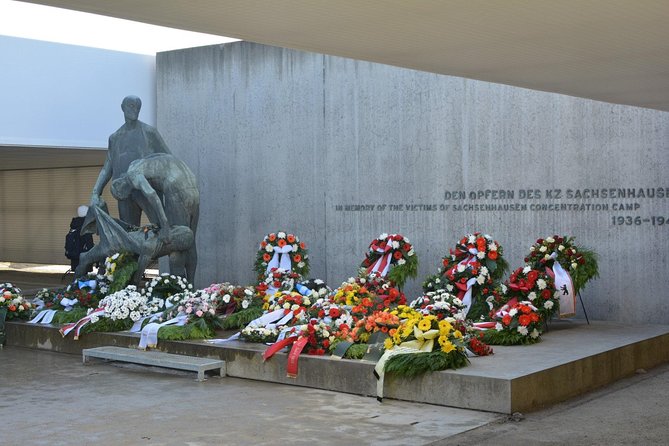
The former prisoner barrack block helps you picture the crowded conditions in which prisoners lived. Even when a structure has been preserved or presented as part of a memorial, the space cannot fully reproduce the experience of those confined there. The guide provides the missing context.
The barracks also make the site’s scale easier to understand. Sachsenhausen is spread out, and the distance between locations is part of the experience. You walk across open ground, move between buildings, and see how the camp’s organization separated prisoners from the people who ran it.
This is where practical clothing advice becomes important. The grounds can be windy and colder than central Berlin. Julian has advised visitors to bring hats and gloves, and that is sensible even when the city center feels mild. Wear comfortable shoes and dress for several hours outdoors.
Photography may be possible in parts of the site, but the atmosphere calls for restraint. A private guide can help you understand where a photograph may be appropriate and where quiet attention matters more.
What the private guide adds
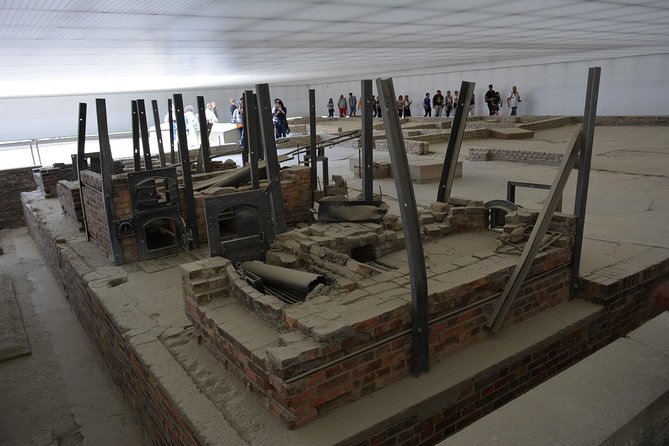
The strongest reason to pay for this tour is the guide, not simply transportation to the memorial. A self-guided visit can show you the buildings, but it cannot respond to your questions or adjust the amount of detail to suit your group.
Paul is repeatedly praised for his command of the camp’s history and the wider Second World War period. He has also helped a guest submit an inquiry about a great-uncle who was imprisoned and died at Sachsenhausen. That does not mean every guide can conduct personal archival research during the tour, but it shows how a private visit can become meaningful for families with a direct connection to the camp.
Julian is noted for being both clear and sensitive, especially with children. Beth brings an academic background in history and has explained not only the crimes committed at the camp but also the role of companies that benefited from forced labor. Stephen has worked well with a family that included a young child, and Aaron has offered practical choices on the walk from the station.
The guide assigned to your tour may differ, so you should not book on the assumption that you will receive one particular person. The important point is the style of service: an English-speaking licensed guide, a private group, and the chance to ask questions throughout the day.
Is the $274.55 price fair?
At $274.55 per person, this is not a budget excursion. The price makes the most sense for a small group that values personal guidance and does not want to manage the route alone.
Entry is included, which removes one extra charge, but train fare is not. You are paying for about six hours, an expert licensed guide, private attention, and help interpreting a large memorial. If you are splitting the cost among a family or a few friends, the value becomes easier to see than it might for one person traveling alone.
I would compare it with the cost of a standard group tour, but price alone should not decide this visit. Sachsenhausen is a difficult place to understand from signs alone. If your main goal is to see the grounds quickly, the private tour may feel expensive. If you want to ask detailed questions, visit because of a family connection, or bring children and teenagers who need the subject explained with care, the extra cost has a clearer purpose.
The tour receives a 4.9 rating from 58 reviews, with 98 percent of participants recommending it. Those figures do not erase the price, but they do show strong satisfaction with the guide-led format.
Who should take this tour?
This experience suits adults who want historical context and families with older children or teenagers. Beth and Julian have been praised for adapting difficult explanations to younger visitors, while Stephen has handled a tour with a young child.
It is also a strong choice if you have a family connection to Sachsenhausen. Bring any names or information you have, but keep your expectations realistic. The guide may be able to suggest an inquiry or point you toward the right process, as Paul did for one guest, but a half-day tour cannot guarantee archival results.
You should think carefully before booking if you dislike long walking tours, cold outdoor conditions, or emotionally difficult material. The memorial is accessible to people with limited mobility, service animals are allowed, and most people can participate, but accessibility does not remove the distance between buildings or the weight of the subject.
The tour is offered in English and is private, so only your group participates. That gives you more control over questions and pacing than a large public group, though the guide still needs to cover the principal buildings within the available time.
Booking, cancellation, and practical details
Confirmation is provided at booking. The activity begins and ends at Birchys Berlin Tours, Ebertstraße 24, 10117 Berlin, and it is near public transportation.
Free cancellation is available up to 24 hours before the scheduled start time for a full refund. Changes or cancellations made less than 24 hours before the start are not accepted for a refund, and the cut-off follows local time.
Plan for six hours from meeting point to return. Bring warm layers, gloves, and a hat if the forecast is cool. Allow yourself quiet time afterward if possible. A visit like this can leave you thoughtful and tired, and it is better not to race straight into a noisy evening activity.
Should you book this Sachsenhausen tour?
Book it if you want more than a quick visit and value a guide who can explain the camp’s buildings, history, and human consequences in clear English. The private format is especially useful for families, people with personal connections to Sachsenhausen, and anyone who expects to ask many questions.
Skip it if $274.55 per person feels too high, if you prefer to read every museum panel at your own pace, or if you want a shorter activity in central Berlin. For everyone else, the four hours at the memorial, included entry, organized public transport, and careful personal guidance make this a serious and worthwhile use of a Berlin day.
FAQ
How long does the private Sachsenhausen tour last?
The full activity lasts approximately six hours. About four hours are allocated to visiting Sachsenhausen Concentration Camp Memorial.
Is admission to Sachsenhausen included?
Yes. The entry or admission fee is included in the tour price.
Is train fare included?
No. Train fare is not included, so you should budget separately for public transportation from Berlin to Oranienburg and back.
Is this a private tour?
Yes. Only your group participates in the activity.
What language is the tour offered in?
The tour is offered in English with a licensed expert guide.
Can I cancel for a full refund?
Yes, if you cancel at least 24 hours before the experience start time. Cancellations or changes made less than 24 hours in advance are not accepted for a refund.
Newest Berlin reviews
- Where It All Began: Berlin’s Queer & Trans History Tour★ 4.9 · 6 reviews
- Berlin: guided canoe | kayaktour★ 4.1 · 7 reviews
- Understanding Kreuzberg: The roots of local (sub)culture★ 4.9 · 11 reviews
- Private Potsdam City Tour in an authentic vintage van★ 5.0 · 14 reviews
- Warnemünde Shore Excursion: Private Sachsenhausen and Berlin Tour★ 5.0 · 12 reviews
- Ultimate E-Bike Tour of Berlin with Beer Garden Stop★ 5.0 · 4 reviews
- In the Forbidden City – Potsdam Walking Tour★ 5.0 · 17 reviews
- Private Walking Tour of Potsdam and Sanssouci★ 5.0 · 24 reviews
Sachsenhausen Concentration Camp Tours, compared.
Sachsenhausen Concentration Camp Tour in English
Read our review →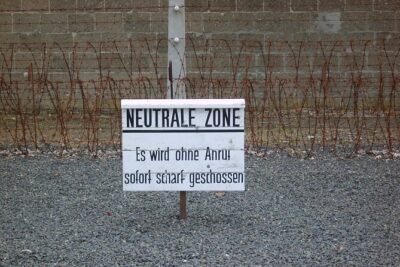
Sachsenhausen Concentration Camp Memorial Tour
Read our review →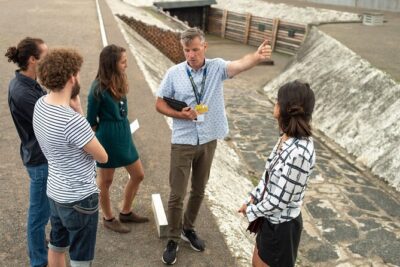
Sachsenhausen Concentration Camp Bus Tour in English from Berlin
Read our review →Sachsenhausen Concentration Camp Tour in English
Read our review →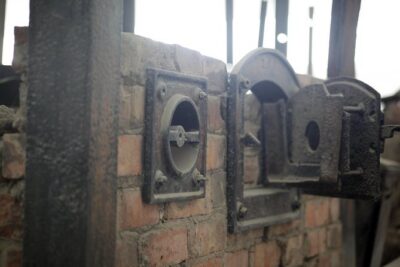
Sachsenhausen Concentration Camp Memorial Tour (Max. 15 Guests)
Read our review →
Sachsenhausen Concentration Camp and Potsdam Tour
Read our review →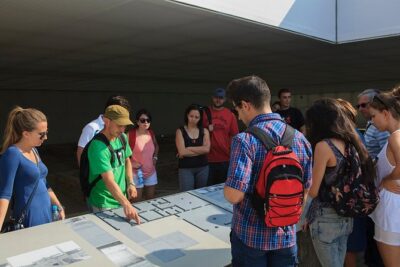
Visita en español al campo de concentración Sachsenhausen
Read our review →Browse the lists this tour appears in