
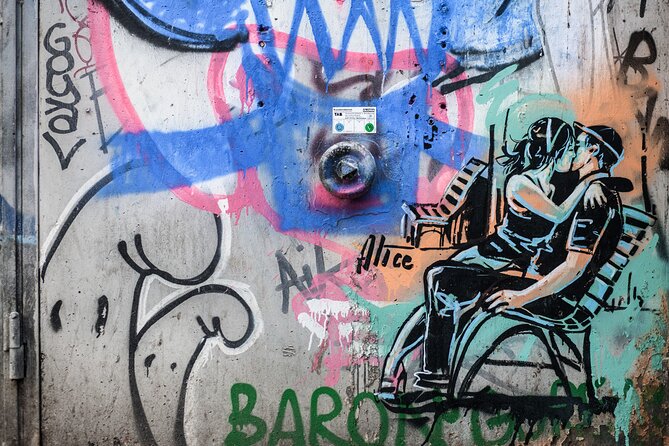
Reviewed · KREUZBERG TOURS
Private Photo Tour in Kreuzberg
Kreuzberg is best understood from the ground, one courtyard and political story at a time. This private photo walk links Kottbusser Tor, Oranienplatz, Oranienstraße, Rio-Reiser-Platz, Mariannenplatz, and Engelbecken, showing how Berlin’s buildings and public spaces changed through war, planning, protest, and everyday use. You get both city context and practical help with image design.
I like the small private format, which lets the route respond to your interests instead of forcing you through a large group schedule. I also like the use of historical photographs at several stops, especially at Kottbusser Tor and Engelbecken, where old views help you read what changed. The main consideration is pace: two and a half hours is enough for a thoughtful introduction, but not enough to explore every courtyard or photograph every street at leisure.
Key points at a glance
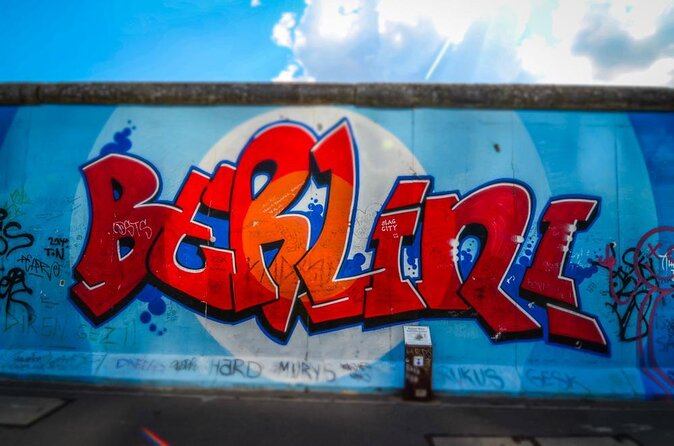
- Private group of up to five: You share the walk only with your own party, giving you more room to ask questions and adjust the photo focus.
- Kreuzberg beyond the postcard: The route covers housing towers, planned squares, inner courtyards, former squats, an arts center, and a restored water basin.
- A photographer leads the way: The guides are local photographers, so the walk combines visual advice with Berlin stories.
- Historical images add the missing layers: Old photographs at Kottbusser Tor and Engelbecken help you compare past and present directly.
- A route with social history: Rio-Reiser-Platz and Mariannenplatz bring in squatting, threatened demolitions, neighborhood action, and cultural change.
- Good value for a small party: At $206.10 for up to five people, the cost works out to about $41.22 each when the group is full.
Why this Kreuzberg photo walk feels different
Many city photo walks take you to the obvious views and leave you to make your own sense of them. This one takes a more useful approach. It asks you to look at the structure of Kreuzberg: why a road is shaped as it is, why a courtyard has a certain layout, why a square changed purpose, and how residents fought to protect parts of their neighborhood.
That matters for photography. A picture improves when you understand what you are seeing. A row of balconies becomes more than a pattern. A blank wall can point to a demolished building, a planning decision, or a neighborhood struggle. The guide’s job is not only to point out subjects, but to explain why they matter and help you find a more considered frame.
The experience has been offered since 2009, and its focus is clear: local city knowledge joined to image design. You are not simply walking behind a photographer while they take pictures. You are given a way to read the city visually.
The private format is the strongest practical feature. Your group can ask for more help with composition, focus on architectural details, or spend longer at a place that catches your eye. A previous participant worked with Sascha, who discussed wishes and expectations in advance and adjusted the route accordingly. That suggests a useful point to clarify when booking: tell the provider what you want to photograph before the day begins.
More photo shoots in Berlin:
- 5hours: Guide, Chauffeur & Photographer in Berlin private Tour
★ 5.0 · 66 reviews - BERLIN PHOTO TOUR with a professional Photographer from Berlin
★ 5.0 · 44 reviews - Berlin: Private Photo Session with Professional Photographer
★ 4.9 · 34 reviews
Starting at Kottbusser Tor and Adalbertstraße
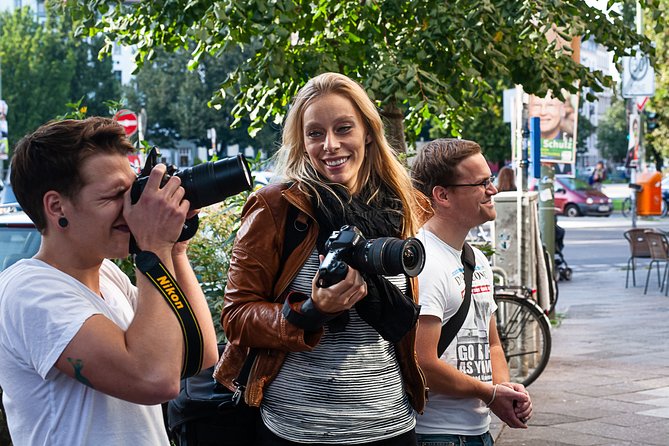
The walk begins at the FHXB Friedrichshain-Kreuzberg Museum at Adalbertstraße 95A, near the Kottbusser Tor area. The first stop is described as Adalbertstraße, with the opening discussion centered on Kottbusser Tor and its dramatic changes over roughly 150 years.
This is a strong beginning because Kottbusser Tor can look chaotic if you do not know how to read it. The guide explains the large residential towers, the building plan they belong to, and why the subway runs on a raised structure here. Historical photographs make the change easier to grasp than a spoken description alone.
For a photographer, this stop offers several kinds of material: broad urban views, strong lines from the transport structure, tall residential forms, and contrasts between old and newer parts of the district. You may find that the most useful lesson is not a technical camera trick, but learning to slow down and identify the visual order inside a place that first seems messy.
Allow a few minutes for meeting and getting organized before the walking time begins. The museum is the stated starting point, while Kottbusser Tor is the first focus of the route, so follow the provider’s meeting instructions carefully.
Oranienplatz and the work of Lenné
The next stop is Oranienplatz, about 15 minutes. The square was planned by Peter Joseph Lenné, the landscape designer also associated with Sanssouci and Pfaueninsel. Here, the guide explains how the square changed over time and how planning decisions shaped the city around it.
Oranienplatz is useful for anyone who enjoys photographing public space rather than isolated buildings. Look for the relationship between open ground, surrounding façades, routes through the square, and the way people use the area. The point is not just to capture a pleasing view. You are encouraged to consider how a designed space directs movement and creates angles.
The short stop also keeps the tour moving. You will not spend the whole afternoon on one square, which helps the route cover a wide slice of Kreuzberg. The tradeoff is that photographers who work slowly may wish for more time here. Since the group is private, you can ask the guide if Oranienplatz deserves extra attention for your particular interests.
One hour among Oranienstraße’s courtyards
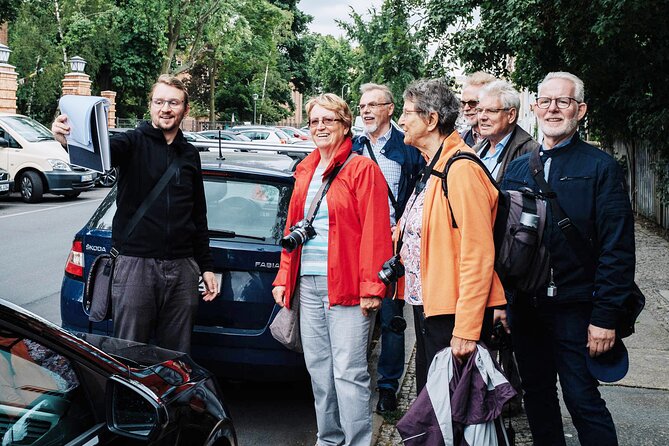
Oranienstraße receives the longest section of the walk, about one hour, and that tells you where the experience places its greatest emphasis. The focus is on inner courtyards: which ones are worth seeing, which are accessible, and what makes them architecturally interesting.
You should not assume that every courtyard is open to the public. The value here is that the guide knows which spaces can be entered and which are worth your time. Access can change, so the exact courtyards may depend on conditions on the day. Still, this part gives you a chance to see the quieter side of the neighborhood rather than only its main streets.
The guide explains when the courtyards were built and the architectural ideas behind them. That context helps you notice details that might otherwise pass quickly: the arrangement of buildings around a shared interior space, the way light reaches the center, and the contrast between the public street and the more private world behind it.
This is likely the most rewarding section for photographers interested in architecture and everyday Berlin. It also requires some flexibility. A courtyard may be occupied, inaccessible, or less photogenic than expected, and the tour cannot promise a private photo session in every location. The guide’s local judgment is important here.
The one-hour block also means you should wear comfortable shoes and avoid packing too much gear. The walk is not advertised as an equipment workshop, so bring the camera you can use easily. A phone is likely enough for casual shooting, while a more serious photographer can use the guide’s advice on framing and image design.
More Kreuzberg tours in Berlin:
- Kreuzberg: Culinary Food Tour
★ 4.5 · 770 reviews - Berlin: Kreuzberg Guided Walking Evening Tour
★ 4.7 · 555 reviews - Berlin: Alternative Bike Tour of Kreuzberg & Friedrichshain
★ 4.7 · 548 reviews - Berlin: 2.5-Hour Walking Tour through Kreuzberg 61
★ 4.9 · 525 reviews
Rio-Reiser-Platz and the fight against demolition
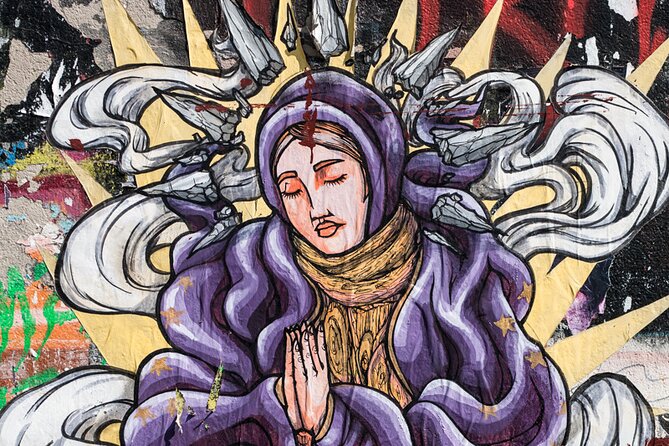
At Rio-Reiser-Platz, the tour turns toward protest and neighborhood politics. The guide explains which Heinrich gave the place its earlier name, how plans to demolish the surrounding houses were stopped, and what squatters had to do with the story.
This is one of the route’s most revealing stops because it shows that Kreuzberg’s appearance was not created only by planners and architects. Residents also shaped it through organized resistance. The buildings around the square carry that story, and the public space gives you a setting in which to discuss it without reducing the neighborhood to a collection of façades.
The stop lasts about 20 minutes, enough for a focused explanation and photographs. If you like pictures with a strong social or political background, this may be one of the best points on the route. If you prefer only technical instruction, the historical discussion may take more time than you expect.
The name Rio-Reiser-Platz also adds a cultural note to the walk. The route is not limited to architectural facts. It connects buildings, music, protest, public memory, and the way a neighborhood decides what it wants to preserve.
Mariannenplatz, Marianne, and Kunsthaus
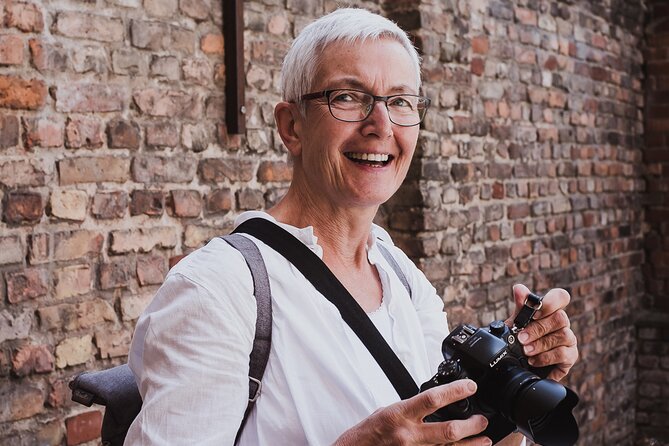
Mariannenplatz follows with another 20-minute stop. Here, you learn who Marianne was, what happened in the square during recent decades, and why the large Kunsthaus nearby matters.
The square gives the tour another change of scale. After the tighter spaces of Oranienstraße and the contested housing story of Rio-Reiser-Platz, Mariannenplatz offers a broader public setting. You can photograph the open space and surrounding buildings while considering how civic areas change meaning over time.
The Kunsthaus adds a cultural angle. The tour does not present Kreuzberg as a museum district polished for visitors. Instead, it points to the art institutions and community spaces that grew within the existing neighborhood. That makes the stop useful for photographers looking for subjects with a connection to local life, not just decorative detail.
Again, 20 minutes is a compact visit. You will get an introduction and time for selected images, not an extended art-center visit. If the Kunsthaus is a major reason you want to join, ask in advance how much of the stop is devoted to it.
Engelbecken and the final view of Kreuzberg
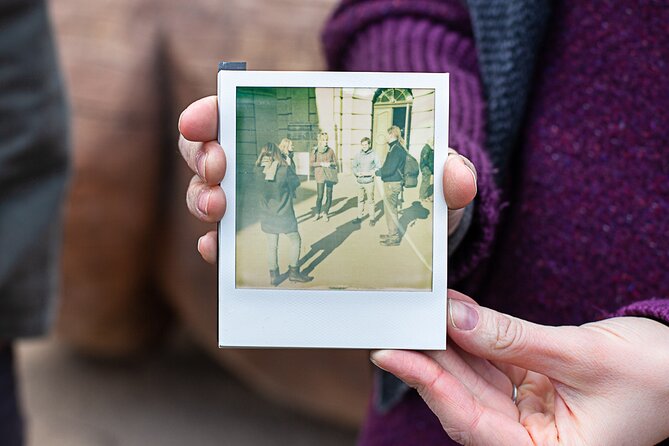
The walk finishes at Engelbecken, in the Mitte district but closely tied to Kreuzberg through its history and local connections. The guide brings in historical photographs and explains the unusual commitment of residents who helped shape what happened here.
Engelbecken is a fitting final stop because it gathers several themes from the walk: planning, change, neighborhood action, and the value of a place that might otherwise be overlooked. The water and surrounding structures offer a different kind of photographic subject from the housing blocks and courtyards earlier in the route.
The historical photographs are especially helpful here. Comparing an old image with the present view gives you a clear sense of what survived, what changed, and what local effort helped preserve or restore. It also gives the tour a thoughtful ending rather than simply stopping when the clock runs out.
The activity ends in a different location from its starting point. Since the route concludes at Engelbecken, plan your next trip from there rather than expecting to return to the museum. The walk is about two hours and 30 minutes, so allow a little extra time if you prefer to keep photographing after the official end.
What the $206.10 group price buys you
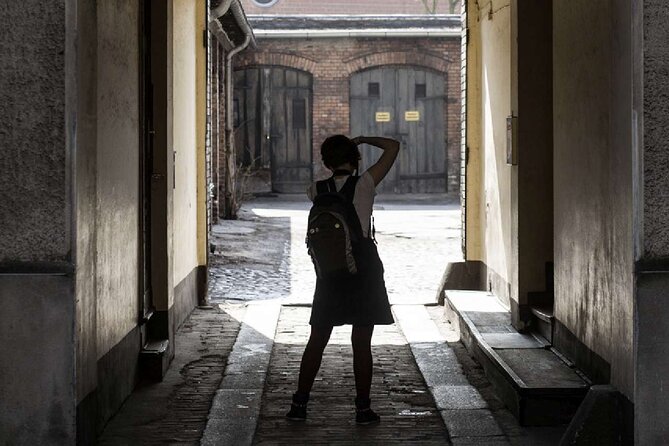
The price is $206.10 for a private group of up to five people. At full capacity, that is about $41.22 per person. For a solo participant or a couple, the per-person cost is much higher, but you are paying for exclusive use of the guide rather than a standard group tour.
That price makes the most sense for people who want personal attention. A family, group of friends, or photography club can share the cost and ask for a route that fits their interests. The value is less clear if you only want a general walk through Kreuzberg and do not plan to ask questions or work on your photography.
All listed stops have free admission, so the fee covers the guide’s time, local route planning, photography instruction, and access to the provider’s city knowledge. The group size is the key factor. Five people gives you a favorable cost per person and still keeps the walk personal.
The tour is often booked about 50 days ahead, which suggests you should not wait until the last minute if your Berlin dates are fixed. That does not guarantee every date sells out, but it is a sensible reason to reserve early.
Who will get the most from this walk
I would choose this experience if you want Berlin explained through buildings and neighborhood change rather than a list of famous sights. It suits photographers at many levels because the guide can discuss image design while also supplying the backstory that gives a subject meaning.
It is especially well matched to:
- A small group of friends who want a private route
- Visitors interested in architecture and urban planning
- Photographers who like courtyards, streets, public spaces, and documentary subjects
- First-time Berlin visitors seeking a stronger sense of Kreuzberg
- Repeat visitors who have already seen the major monuments
- Anyone curious about squatting, neighborhood activism, and cultural change
It may be less suitable if you want a fast checklist of landmarks, a formal camera class, or a tour with a fixed end at the starting point. It is also worth noting that the tour is a walking experience with several stops, so comfortable footwear matters.
The provider says most people can participate, service animals are allowed, and the meeting point is near public transportation. Guides are LGBTQI-friendly, and the company works climate-neutral. Those details will matter to some participants, though they do not replace checking your own mobility needs before booking.
Practical planning before you book
You receive confirmation when you book, and the experience uses a mobile ticket. The stated start point is the FHXB Friedrichshain-Kreuzberg Museum at Adalbertstraße 95A. Because the first discussion centers on Kottbusser Tor and the route ends elsewhere, arrive ready to walk rather than expecting a short, stationary photography session.
Tell the provider what you hope to photograph. One earlier booking with Sascha was adjusted after a detailed conversation about the participant’s wishes, and the route even changed away from Kreuzberg. That is an important clue about how to get the best result: be specific about architecture, street scenes, composition, historical context, or another subject you care about.
The normal cancellation rule allows a full refund up to 24 hours before the experience. That gives you some flexibility, but you still need to check the exact date and meeting instructions after booking.
Should you book the Private Photo Tour in Kreuzberg?
Book it if you want a personal, story-led walk and you value seeing how Berlin’s spaces came to look the way they do. The strongest parts are the private format, the long courtyard section on Oranienstraße, the historical photographs, and the links between architecture and neighborhood action.
Think twice if you want a cheap general sightseeing tour or a dedicated technical photography class. The route gives you image-making guidance, but its real strength is the combination of visual observation and local context.
For a full group of five, the price is fair for a private two-and-a-half-hour experience. For one person, it is a more serious purchase, but it can still make sense if you want the route shaped around your interests. Tell the guide what you want before you arrive, bring a camera you can handle comfortably, and leave room for the city’s less obvious stories to guide your pictures.
FAQ
Where does the photo tour begin?
It begins at the FHXB Friedrichshain-Kreuzberg Museum, Adalbertstraße 95A, 10999 Berlin, Germany.
Where does the activity end?
The activity ends at a different location from the meeting point. The final listed stop is Engelbecken.
How long does the tour last?
The tour lasts approximately two hours and 30 minutes.
How many people can join the private tour?
The private activity is for your group only, with up to five people.
What is the price?
The listed price is $206.10 per group of up to five people.
Which areas does the route cover?
The route includes Kottbusser Tor and Adalbertstraße, Oranienplatz, Oranienstraße, Rio-Reiser-Platz, Mariannenplatz, and Engelbecken.
Does the tour include photography instruction?
Yes. The walk combines city information with photography knowledge and image-design guidance from local photographers.
Is admission to the stops included?
The listed stops have free admission.
Is the tour suitable for most people?
The provider states that most people can participate. Service animals are allowed, and the meeting point is near public transportation.
Can I cancel for a refund?
You can cancel up to 24 hours before the experience for a full refund.
Newest Berlin reviews
- Where It All Began: Berlin’s Queer & Trans History Tour★ 4.9 · 6 reviews
- Understanding Kreuzberg: The roots of local (sub)culture★ 4.9 · 11 reviews
- Berlin: guided canoe | kayaktour★ 4.1 · 7 reviews
- Private Potsdam City Tour in an authentic vintage van★ 5.0 · 14 reviews
- Warnemünde Shore Excursion: Private Sachsenhausen and Berlin Tour★ 5.0 · 12 reviews
- Ultimate E-Bike Tour of Berlin with Beer Garden Stop★ 5.0 · 4 reviews
- In the Forbidden City – Potsdam Walking Tour★ 5.0 · 17 reviews
- Private Walking Tour of Potsdam and Sanssouci★ 5.0 · 24 reviews
Kreuzberg Tours, compared.
Alternative Bike Tour of Kreuzberg & Friedrichshain
Read our review →
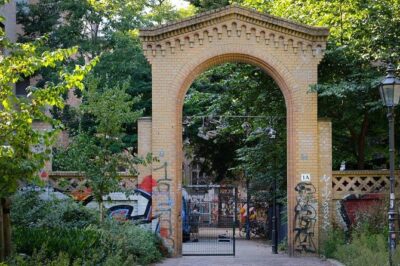
Berlin Off-the-Beaten-Path Walking Tour: Kreuzberg, Mitte and Friedrichshain
Read our review →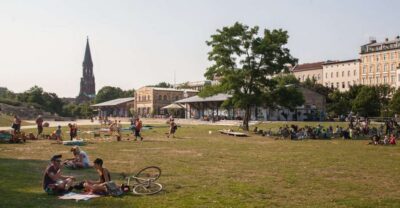
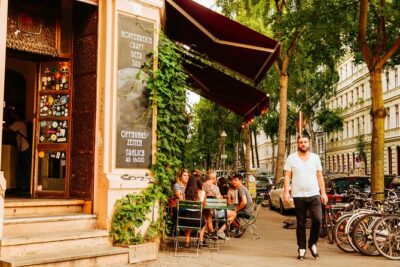
Kreuzberg Berlin: Off the Beaten Track PRIVATE Walking Tour
Read our review →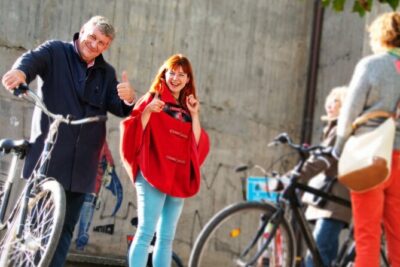
Experience the Alternative Kreuzberg on a Bike Tour
Read our review →Browse the lists this tour appears in