
Reviewed · HISTORICAL TOURS
Berlin Uncensored: A History of Sex & Freedom
Berlin’s story of sex and freedom is also a story of science, politics, persecution, nightlife, and survival. This walking tour connects those subjects through places such as Nollendorfplatz, Tiergarten, and Bülowstrasse, with Jeff, a sociologist and certified sex educator, guiding the discussion.
I like the small group of no more than 10, which gives you room to ask direct questions. I also like the mix of rare photographs, video, and augmented reality, since much of the original nightlife has vanished. The main drawback is that the tour covers a lot in three and a half hours, and some of the AR material may feel less useful than the live explanation.
Key points at a glance
- Magnus Hirschfeld’s lost institute: Learn how Berlin led early research into sexuality, contraception, gender identity, and sexual health before the Nazis destroyed the institute in 1933.
- A walk through queer Berlin: Visit places linked with lesbian clubs, Christopher Isherwood, drag culture, and the city’s famous pre-Nazi nightlife.
- History beyond the party scene: The tour also deals with Nazi persecution, the pink triangle, East and West Berlin, and the AIDS crisis.
- Jeff’s teaching style: Expect a respectful, trauma-informed approach, clear English, and plenty of time for questions.
- Modern nightlife tips: Finish with context on Berghain, KitKat, Insomnia, Lab.Oratory, and Folsom Europe.
- Useful format: The tour costs $82.90, starts at 2 p.m., lasts about 3 hours 30 minutes, and returns to its meeting point.
Why Berlin’s sexual history matters
This is not simply a tour of clubs and old brothels. Berlin’s sexual culture is tied to some of the city’s biggest political changes. Scientific research, artistic freedom, lesbian and gay communities, Nazi repression, postwar division, and modern nightlife all appear in the same story.
That makes the experience useful for you if you want more than a list of provocative anecdotes. Jeff explains how changing laws and political systems shaped ordinary lives, from public nudism at Berlin’s lakes to the persecution of people labeled sexually or socially unacceptable.
The subject is frank, but the approach is not cheap or sensational. The tour deals with sex, kink, gender identity, prostitution, pornography, and queer life in a historical and social setting. Jeff’s background as a sociologist and certified sex educator helps keep the conversation responsible. The strongest feedback about his guiding points to his clear English, open attitude, and ability to handle sensitive questions with care.
More history tours in Berlin:
- Berlin: Natural History Museum Entrance Ticket
★ 4.6 · 3,382 reviews - Berlin: World Heritage Cruise to Potsdam
★ 4.5 · 1,435 reviews - Berlin Historical Highlights Walking Tour
★ 4.9 · 657 reviews
Starting at Nollendorfplatz and Berlin’s FKK tradition
The walk begins at Alnatura Super Natur Markt on Else-Lasker-Schüler-Straße at 2 p.m. From there, you start near Nollendorfplatz and hear about FKK, or Freikörperkultur, Germany’s long-running tradition of social nudism.
This opening is a good reminder that Berlin’s sexual history is not limited to nightlife. FKK developed from body culture movements in the 19th century and continued into modern times. Berlin’s lakes and parks became places where nudity could be treated as natural, healthy, and social rather than automatically erotic.
You spend about 10 minutes on this first topic, so it works mainly as an introduction. It gives you a useful lens for the rest of the walk: Berlin’s idea of freedom has often involved the body, public space, and the right to live outside conventional rules.
Magnus-Apotheke and the legacy of Magnus Hirschfeld
The most important historical stop is the site connected with Magnus Hirschfeld’s Institute for Sexual Science. Hirschfeld was a pioneer in sexology, and Berlin was home to the first institute of its kind in the world.
Here, the tour moves into early research on desire, relationships, contraception, and gender identity. You hear about the development of the rubber condom, early work connected with Viagra precursors, and advances in sexual health. The discussion also covers some of the first gender affirmation surgeries, including those associated with Dora Richter, Lili Elbe, and Karl M. Baer.
The key point is how far ahead this work was. Berlin was not merely tolerating unusual ideas. It was producing research and offering medical care that challenged the social rules of the time.
The institute was destroyed by the Nazis in 1933. That loss was physical and intellectual. Books, records, and research were destroyed, cutting off work that might have changed medical and social understanding for decades. You spend about 20 minutes here, and that extra time is justified. This is the point where the tour shifts from entertaining urban history to a serious look at what political repression can erase.
The LGBTQ memorial and Nazi persecution
At the Monument to Homosexuals Persecuted Under National Socialist Regime, Jeff explains how the Nazi government attacked sexual freedom and diversity. Erotic clubs were closed, sex was censored, and people outside the regime’s approved social order were targeted.
The discussion includes Ernst Röhm and the Night of the Long Knives. Röhm was a senior Nazi figure known to be homosexual, yet his position did not protect him when political power turned against him. The story shows how Nazi persecution was driven by both ideology and political convenience.
You also learn about LGBTQIA+ people, sex workers, and others labeled degenerate. Many were arrested and sent to concentration camps, where some were forced to wear pink triangles. That symbol was later reclaimed by the LGBTQIA+ rights movement.
This stop lasts only about 10 minutes, but its emotional weight is considerable. You should expect a sober section of the walk. It is also one reason the tour works better with a trained guide than with a casual retelling of Berlin’s nightlife. The subject needs context and care.
A different sort of day out in Berlin:
- Berlin: Reichstag, Dome and Government District Guided Tour
★ 4.7 · 18,288 reviews - Berlin: 1-Hour City Tour by Boat with Guaranteed Seating
★ 4.3 · 16,993 reviews - Berlin: Boat Tour Along the River Spree
★ 4.4 · 11,252 reviews - Discover Berlin Half-Day Walking Tour
★ 5.0 · 9,624 reviews
Bülowstrasse, Kurfürstenstraße, and the prewar sex trade
The walk continues through areas associated with prostitution and Berlin’s pre-Nazi nightlife. At Kurfürstenstraße, you hear how open and varied the city’s sex scene could be before 1933.
Berlin had brothels, erotic clubs, fetish communities, and discreet places for people exploring desires that were not accepted elsewhere. The tour does not treat this past as one simple era of freedom. Some people had access to pleasure and self-expression, while others faced poverty, danger, discrimination, or legal control.
That balance matters. It is easy to turn 1920s Berlin into a party poster, especially because films and stage productions have made the period famous. Jeff gives you a less polished view, showing both the city’s openness and the limits of that openness.
The stop at Kurfürstenstraße takes about 15 minutes. You are mainly seeing present-day streets and hearing what happened there, rather than entering preserved historic interiors. If you need grand monuments or formal museum rooms, this may feel modest. If you enjoy reading a city through its ordinary streets, it is more rewarding.
Schwerinstraße and Berlin’s lesbian culture
One of the tour’s more distinctive sections focuses on Berlin’s lesbian communities in the early 20th century. At Schwerinstraße 9, you learn about places connected with women who built social lives outside accepted norms.
The Toppkeller was a meeting place for women in this subculture. Stories about Claire Waldoff, a cabaret singer known for her lesbian identity, help explain how nightlife, performance, and queer identity overlapped.
The Lavender Song adds another layer. Music gave people a way to express identity in public, sometimes through humor or coded language, when direct statements could be risky. The point is not only that lesbians were present in Berlin. It is that they created venues, friendships, styles, and cultural networks of their own.
Josephine Baker also enters the discussion. She was admired as a performer in Berlin, yet she faced racial discrimination as a Black woman. Her story keeps the tour from treating sexual freedom as a single experience shared equally by everyone.
The stop lasts about 10 minutes. It is brief, but it corrects the common habit of telling Berlin’s queer history mainly through gay men and famous male writers.
Christopher Isherwood and the world behind Cabaret
At the residential building connected with Christopher Isherwood, the tour turns to the English writer who lived in Berlin in the late 1920s and early 1930s. His experiences among gay men and nightlife communities later informed the works that inspired Cabaret.
Isherwood’s writing is useful because it gives you a personal view of the period. The city he described was a magnet for gay men from across Europe, and its bars, clubs, and private rooms offered forms of freedom that were hard to find elsewhere.
Still, you should remember that one writer’s view cannot represent everyone. Isherwood was an outsider with a particular social position and artistic purpose. Jeff uses his story as a window, not as the whole building.
This stop takes about 10 minutes. It is a quick street-side connection rather than a house tour. The value lies in linking a real address with the atmosphere behind one of Berlin’s best-known cultural stories.
Eldorado and the contradictions of 1920s Berlin
Near today’s Denns BioMarkt, you hear about Eldorado, one of the era’s most famous nightlife venues. It welcomed drag performers and people seeking a sexually open social world. Even high-ranking Nazi figures, including Ernst Röhm, were known to visit before the regime shut down places it later condemned as degenerate.
That contradiction is central to Berlin’s story. People who enjoyed the city’s freedoms could also support, join, or benefit from a political movement that destroyed those freedoms. The past does not divide neatly into liberated citizens on one side and oppressors on the other.
The tour includes a story about a journalist from Vogue who visited Eldorado and called a drag queen the most beautiful woman in Berlin. Details like this bring the club to life, but Jeff also explains why the venue mattered as a social space.
Eldorado was eventually closed by the Nazis. The stop lasts about 15 minutes and is one of the livelier parts of the walk, though the ending brings you back to the danger faced by Berlin’s queer communities.
East, West, and the Berlin Wall’s sexual divide
At the Internationale Stele GEGEN DAS VERGESSEN, the tour moves into the postwar period. Berlin was divided not only by a wall, but by competing ideas about private life, public behavior, and state control.
In West Berlin, the sexual revolution encouraged more open attitudes toward relationships, pornography, and alternative lifestyles. In East Berlin, freedom was restricted in many areas, yet public nudism became highly popular through FKK. That contrast is fascinating because it resists simple political labels. One side could offer more private choice while the other allowed a public body culture that might surprise you.
You also hear why the Wall was called the condom of the GDR, along with the story of a conservative politician who helped save thousands of lives during the AIDS crisis. These details show how sexual politics could affect public health, borders, and personal behavior.
This section lasts around 15 minutes. It is particularly valuable if you know Berlin mainly through the Cold War and want to see how division shaped everyday intimacy as well as government.
Returning to Nollendorfplatz and modern nightlife
The final section returns to Nollendorfplatz and brings the story into the present. Berlin is now known for nightlife that combines electronic music, sexual exploration, fetish culture, and strict personal boundaries.
You hear about Berghain and its no-photo rule, along with KitKat Club, Insomnia, and Lab.Oratory. The goal is not to promise entry or turn the walk into a club crawl. Instead, Jeff explains how these places fit into Berlin’s current sexual culture.
Folsom Europe also gets attention. It is described as the world’s largest fetish festival and brings thousands of people to Berlin. This helps connect the city’s older fetish traditions with the organized events of today.
The modern portion is useful if you want practical context before deciding how to spend an evening. The included insider tips may help you understand the difference between a regular dance club, a fetish event, and a sex-positive venue. You should still treat the advice as background rather than a guarantee of access or a substitute for checking current event details.
How the augmented reality works
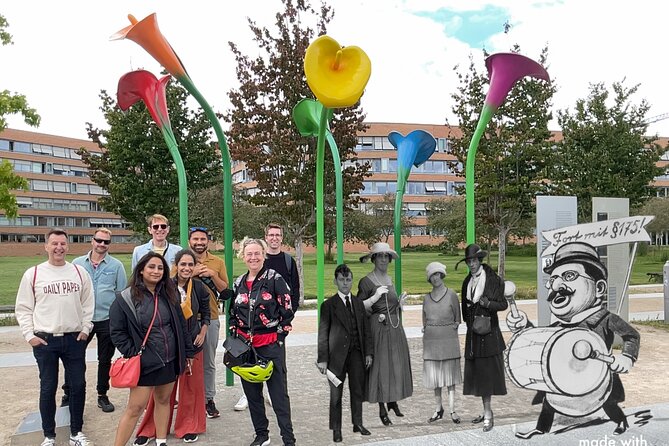
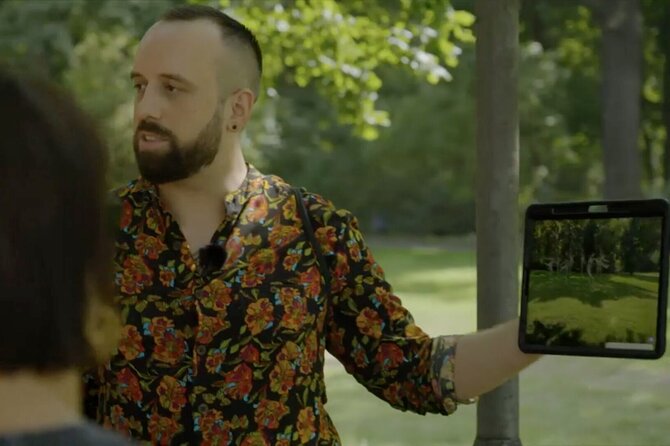
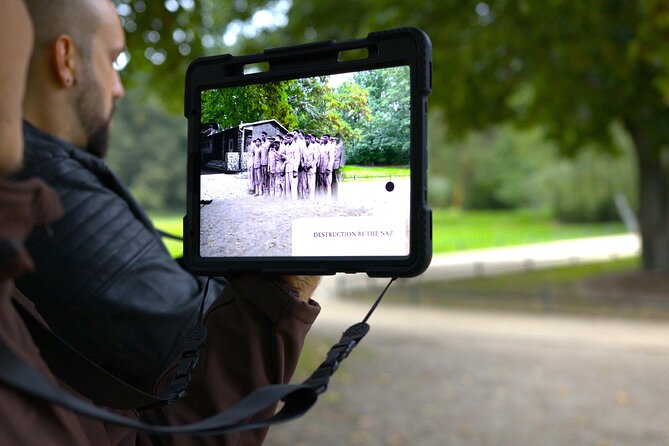
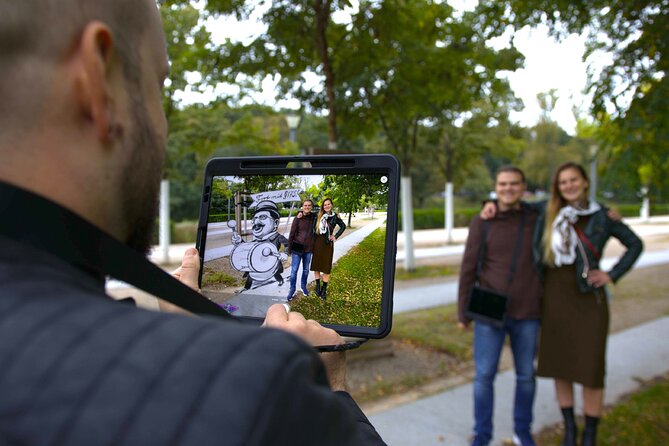
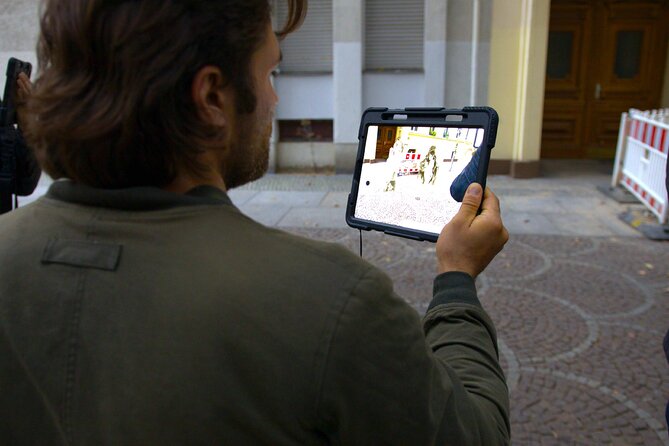
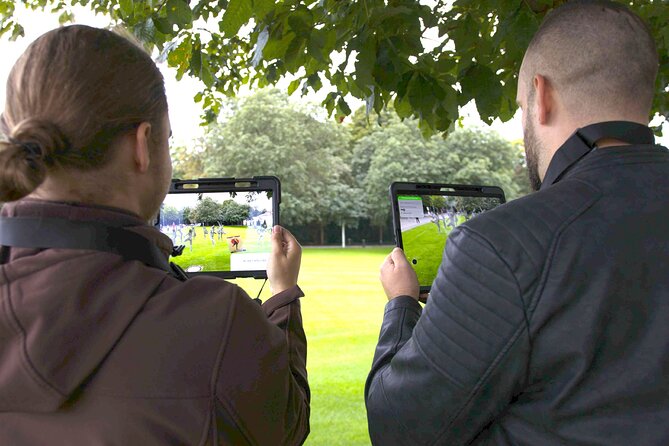
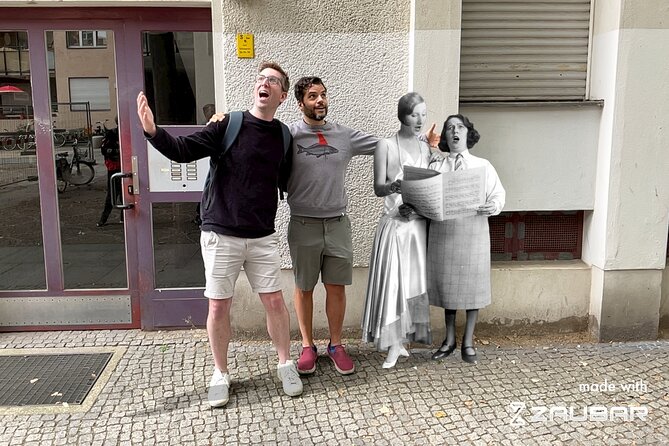
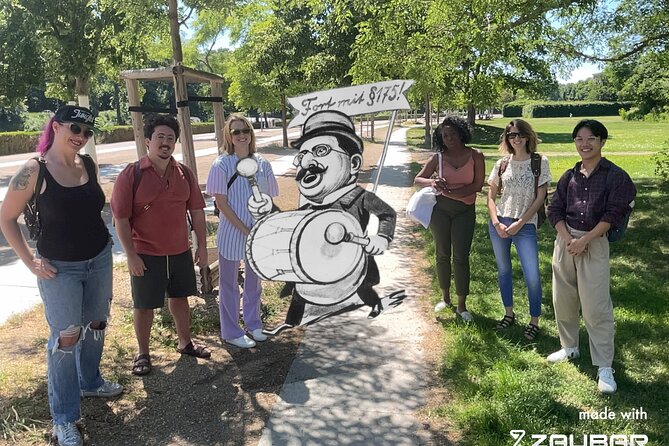
The tour includes more than 200 rare historical photographs, videos, archival materials, and augmented reality elements. You may see historical figures, venues, or visual material placed alongside the present-day street.
This is helpful because so many important buildings no longer exist. A photograph or video can make the lost Institute for Sexual Science or Eldorado easier to picture than a bare address can.
The technology is not perfect for every moment. Some visitors find parts of the virtual imagery unnecessary, especially when Jeff’s explanation already gives the subject enough shape. I would treat the AR as an extra tool rather than the reason to book. The strongest part of the experience is the connection between place, story, and discussion.
The personalized Mixies photographs add a playful souvenir. They may appeal to you if you enjoy sharing unusual travel images, though they are less important than the archival material.
Price, pace, and who will get the most from it
At $82.90 per person, this is not a bargain-priced city walk. I think the cost is easier to justify because the group is limited to 10, the guide has professional training, and the tour covers a subject that is difficult to explore through ordinary sightseeing.
You are paying for interpretation rather than entry tickets. All listed stops are viewed from public streets, so the value rests on Jeff’s research, storytelling, media, and ability to answer questions. If you prefer museums, buildings, and physical collections, the price may feel high. If you want a focused social history that is hard to find elsewhere, it is more reasonable.
The walk lasts about three hours and 30 minutes and ends back at the starting point. Wear comfortable shoes and allow for a steady afternoon on city streets. A café break may be included, but coffee or tea is not part of the price.
The minimum age is 18. The group size makes the tour suitable for solo visitors, couples, and small groups who want a conversation rather than a lecture. It also works for conference groups, since separate groups can be organized. Service animals are allowed, and the route is near public transportation.
The tour can be canceled in extreme weather, such as heavy rain or a storm. You receive a full refund if poor weather causes cancellation. You can also cancel for a full refund up to 24 hours before the 2 p.m. start time. The experience requires a minimum number of participants, so a low booking level can also lead to a change or refund.
Should you book Berlin Uncensored?
Book this tour if you want Berlin’s sexual culture placed within science, politics, queer history, and the Cold War. It is especially well suited to curious adults who appreciate frank discussion, archival material, and the chance to ask direct questions.
I would book it early, since it is commonly reserved well ahead of the date. Choose it for the guide and the subject, not simply for the promise of nightlife tips. The best parts are Magnus Hirschfeld’s lost institute, the lesbian and gay communities of the 1920s, Nazi persecution, and the East-West comparison.
Skip it if you want a conventional sightseeing walk, a museum visit, or a purely lighthearted afternoon. The material can be painful, the route is mostly outdoors, and the AR features will not replace real historic interiors. For the right audience, though, this is an unusually focused way to understand how Berlin’s ideas about sex and freedom have changed, survived, and sometimes disappeared.
FAQ
How long does Berlin Uncensored last?
The tour lasts approximately 3 hours and 30 minutes.
What time does the tour start?
The tour starts at 2 p.m.
Where does the tour begin?
The meeting point is Alnatura Super Natur Markt, Else-Lasker-Schüler-Straße 18, 10783 Berlin, Germany.
Where does the tour end?
The activity ends back at the meeting point.
What language is the tour offered in?
The tour is offered in English.
How large is the group?
The group has a maximum of 10 travelers.
Is there a minimum age?
Yes. The minimum age is 18.
Can I cancel for a refund?
You can cancel at least 24 hours before the start time for a full refund. Cancellations or changes made less than 24 hours before the start time are not refunded. If the tour is canceled because of extreme weather or because the minimum number of participants is not met, you will be offered another option or a full refund.
Newest Berlin reviews
- Where It All Began: Berlin’s Queer & Trans History Tour★ 4.9 · 6 reviews
- Understanding Kreuzberg: The roots of local (sub)culture★ 4.9 · 11 reviews
- Berlin: guided canoe | kayaktour★ 4.1 · 7 reviews
- Private Potsdam City Tour in an authentic vintage van★ 5.0 · 14 reviews
- Warnemünde Shore Excursion: Private Sachsenhausen and Berlin Tour★ 5.0 · 12 reviews
- Ultimate E-Bike Tour of Berlin with Beer Garden Stop★ 5.0 · 4 reviews
- In the Forbidden City – Potsdam Walking Tour★ 5.0 · 17 reviews
- Private Walking Tour of Potsdam and Sanssouci★ 5.0 · 24 reviews
Historical Tours, compared.
Berlin Private Complete History All Day Walking Tour
Read our review →
Small group Potsdam: A Journey Through History and Palaces
Read our review →Browse the lists this tour appears in