
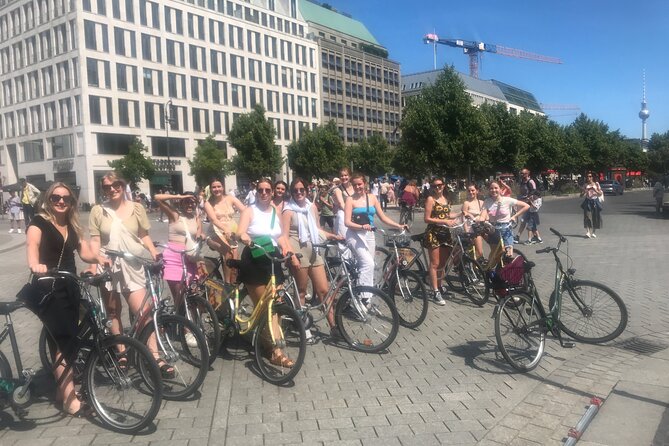
Reviewed · BERLIN BIKE TOURS
Small-Group Historical Bike Tour in Berlin
Berlin’s history is spread across a wide stretch of city, and a bike helps you connect the pieces quickly. In three to four hours, you ride from Alexanderplatz and the birthplace of Berlin to the Berlin Wall, Nazi-era sites, Cold War landmarks, and the grand buildings around Museum Island.
I like the small-group format, which gives guides such as Jerry, Pablo, and Demetrios room to answer questions and adjust the talk to your interests. I also like the flat, relaxed route, with frequent stops rather than one long ride. The main caution is the equipment: most bikes are usable, but one guide acknowledged that some have back-pedal brakes, and one poor experience involved old or poorly adjusted bikes and a delayed start.
Key points to know
- A four-hour history lesson on two wheels: The route links Berlin’s medieval center, Jewish quarter, Nazi sites, Cold War landmarks, and reunification symbols.
- You stop at major sights: Expect the Berlin Wall Memorial, Brandenburg Gate, Reichstag, Holocaust Memorial, Checkpoint Charlie, Bebelplatz, and Museum Island.
- The city is easy to cycle: Berlin is notably flat, and the pace includes regular stops for stories, photographs, and questions.
- Guiding is the strongest feature: Jerry, Pablo, and Demetrios are among the guides associated with the tour, though your guide is not guaranteed.
- Check the bike before leaving: Back-pedal brakes may feel unfamiliar, and one account describes a delayed departure caused by bike problems.
- Good value for a first look: At $54.42, you get a guide, bicycle, and a broad central Berlin route, but food, drinks, and hotel transfers cost extra.
Why a bike works so well in central Berlin
Berlin is too spread out to understand well from a single square or museum district. The main sights sit in different parts of Mitte, and a bike lets you cover them without spending much of your short visit underground or waiting for taxis.
This is not a racing tour. The schedule allows around 10 to 25 minutes at the important stops, with shorter pauses at places such as Checkpoint Charlie. You ride, stop, listen, take photographs, and continue. That rhythm suits Berlin, where the meaning of a place often comes from knowing what happened there rather than from looking at an ornate building.
The route also gives you a useful sequence. You begin with Berlin’s early civic center, move into Jewish history, then confront the Nazi period, the Cold War, and German reunification. By the end, the city’s past feels connected rather than scattered.
The tour begins at 11:00 a.m. on Panoramastraße beside the TV Tower at Alexanderplatz and returns to the same meeting point. Because the meeting area can be confusing, check which side of the TV Tower you need before you arrive. One practical note from past experience: some people have waited at the wrong side of the tower or had trouble spotting the guide.
More bike tours in Berlin:
- Berlin: Sights and Highlights Bike Tour with a Local Guide
★ 4.8 · 2,698 reviews - Berlin Highlights 3-Hour Bike Tour
★ 5.0 · 948 reviews - Berlin City Bike Tour with Beer Garden Stop
★ 5.0 · 917 reviews
Alexanderplatz and the beginnings of Berlin
The first stop is the Berliner Fernsehturm, the famous TV Tower at Alexanderplatz. You do not go up the tower as part of this activity, but you use the square as a starting point and hear how it developed.
Alexanderplatz is a useful place to begin because it shows the scale and character of former East Berlin. The square has been reshaped many times, and the tower remains one of the city’s most recognizable signs. The guide uses this opening to place you in Berlin’s wider story before the route turns toward the older center.
You then pass St. Nicholas Church, a landmark with more than 800 years of history. This is the point where the story reaches back to the birth of Berlin as a city. It may be a brief stop, but it gives welcome context before the tour moves into the twentieth century.
If you have just arrived in Berlin, this opening section helps you get your bearings fast. You see how the modern socialist-era center relates to the medieval core, something that can be hard to grasp on foot.
Oranienburgerstrasse and Berlin’s Jewish past
Oranienburgerstrasse brings the tour to the New Synagogue and Berlin’s Jewish history. The stop lasts about 15 minutes, enough for an explanation and photographs rather than a museum visit.
This part of the route matters because Berlin’s Jewish story is not confined to a single memorial. The street and the synagogue offer a physical setting for learning about Jewish life in Berlin, the destruction brought by Nazi rule, and the city’s continuing effort to remember what was lost.
The guide-led format is especially useful here. You can ask for clarification about the buildings and the surrounding quarter instead of simply passing by a striking façade. If your interests lean toward social history, this may be one of the most rewarding parts of the ride.
Do not expect entry to the synagogue or any other museum on this tour. The listed stops are outdoor visits, and admission tickets are not included because there is no scheduled paid entry.
The Berlin Wall Memorial on Bernauer Strasse
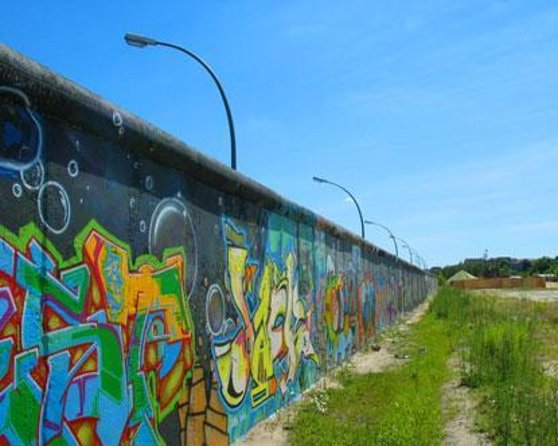
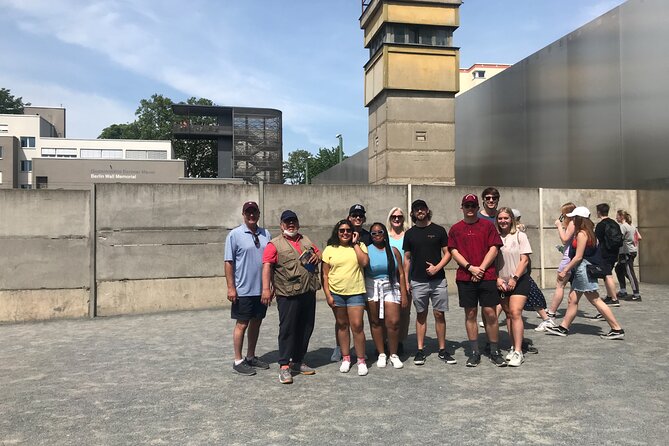
The Berlin Wall Memorial is one of the most important stops, with about 25 minutes set aside for it. It occupies the former border strip on Bernauer Strasse and stretches for about 1.4 kilometers.
This is not just a section of painted wall. The memorial preserves a piece of the Wall, the area behind the border fortifications, and traces showing how the barrier changed over time. That makes it easier to understand how the border worked as a physical system and how it divided everyday life.
Your guide explains the events connected with the site and the wider division of Germany. The stories are more useful here than a quick photograph because the remaining fragments can otherwise be difficult to interpret.
Twenty-five minutes is enough for a meaningful introduction, but not enough to cover every part of the memorial. If the Wall is a central reason for your visit, use the tour to learn the layout and return later for a longer visit. The same advice applies if you want to visit the associated museums, since this bike tour does not include museum admission.
A different sort of day out in Berlin:
- Berlin: Reichstag, Dome and Government District Guided Tour
★ 4.7 · 18,288 reviews - Berlin: 1-Hour City Tour by Boat with Guaranteed Seating
★ 4.3 · 16,993 reviews - Berlin: Boat Tour Along the River Spree
★ 4.4 · 11,252 reviews - Discover Berlin Half-Day Walking Tour
★ 5.0 · 9,624 reviews
Reichstag and Brandenburg Gate
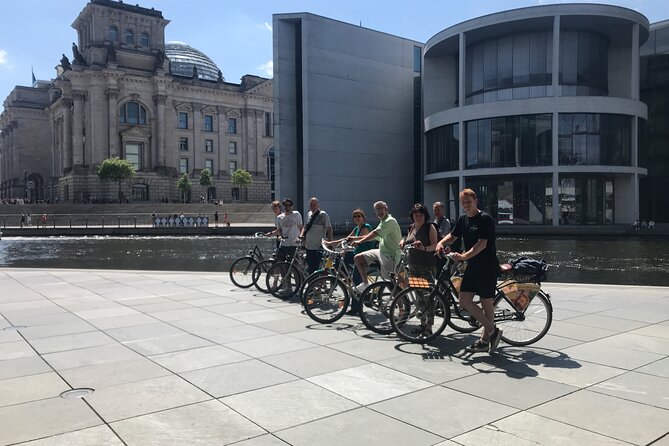
The Reichstag is a short stop of around 10 minutes. The building houses the German Parliament and carries a complicated political story, including its role during the Weimar Republic and the 1933 fire that helped the Nazis tighten their grip on power.
The guide explains the fire and the building’s place in German politics. You see the exterior, but you do not enter the Reichstag or its glass dome as part of this activity. If you hope to visit inside, arrange that separately.
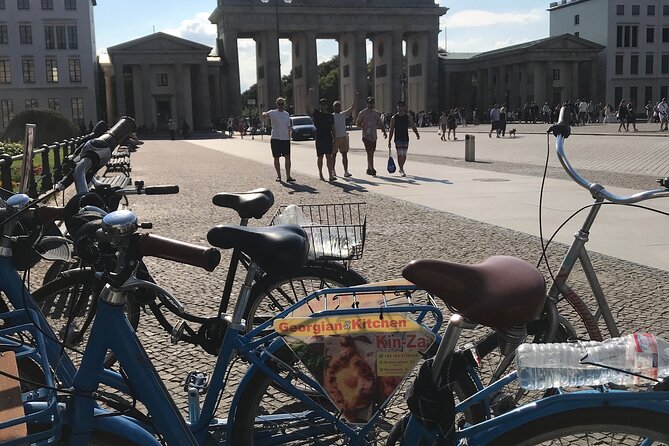
Nearby, you reach Brandenburg Gate, one of Berlin’s defining symbols. During the Cold War it sat in the restricted area between East and West Berlin. Built in the eighteenth century under Friedrich Wilhelm II, it later became a symbol first of division and then of reunification.
This is a good example of how the tour handles Berlin. The gate is visually impressive, but the guide adds the political context that gives it weight. You learn why a building that predates the twentieth century became so closely tied to the Wall and the end of the Cold War.
The Holocaust Memorial and the Topography of Terror
The Memorial to the Murdered Jews of Europe, usually called the Holocaust Memorial, receives about 15 minutes. You can walk among the concrete blocks and take photographs while the guide explains the purpose and meaning of the site.
The memorial is intentionally open to interpretation. A short stop helps you understand its role, but it cannot replace the longer visit available at the information center below the field of blocks. If you want more time to read and reflect, plan to return independently.
The Topography of Terror is a briefer stop, about 10 minutes. The site once held the headquarters of the Gestapo and other Nazi security organizations. Today, the outdoor remains and exhibition area help show how terror was organized from the center of Berlin.
These two stops work well together. The Holocaust Memorial is a large, abstract place of remembrance, while the Topography of Terror focuses more directly on the institutions behind Nazi persecution. The contrast gives the tour a useful balance between memorial design and historical evidence.
Checkpoint Charlie and the Cold War story
Checkpoint Charlie gets only about five minutes, so keep your expectations modest. You stop for a quick explanation and photographs at the former crossing point between East and West Berlin.
The landmark is heavily visited and can feel staged around the famous guardhouse. Still, its location helps explain how Berlin’s division operated and why the crossing became such a powerful Cold War symbol.
The short stop makes sense within a broad bike route. You see the site, learn its basic importance, and keep moving to places where the physical evidence and historical setting are stronger. If Checkpoint Charlie is high on your list, return later and combine it with a longer visit to the nearby museum, which is not part of this tour.
Gendarmenmarkt and the Book Burning Memorial
At Gendarmenmarkt, the group rides through the square, pauses for photographs, and hears about the surrounding architecture and history. The stop lasts around 10 minutes.
The square offers a change of mood after the memorials and former border sites. Its formal buildings show the grander side of central Berlin and help you see how the city was shaped not only by war and division but also by royal and civic ambitions.
The next stop is Bebelplatz and the Book Burning Memorial, with around 15 minutes for explanation and photographs. The memorial recalls the Nazi book burning of 1933. Its design is deliberately understated, so the guide’s explanation is important. Without context, you might easily cycle past it.
This is one of the route’s best examples of look closely, then ask questions. Berlin places many memorials in ordinary urban settings. A bike guide who points them out can reveal sites you might miss while walking between the major attractions.
Museum Island and the ride back
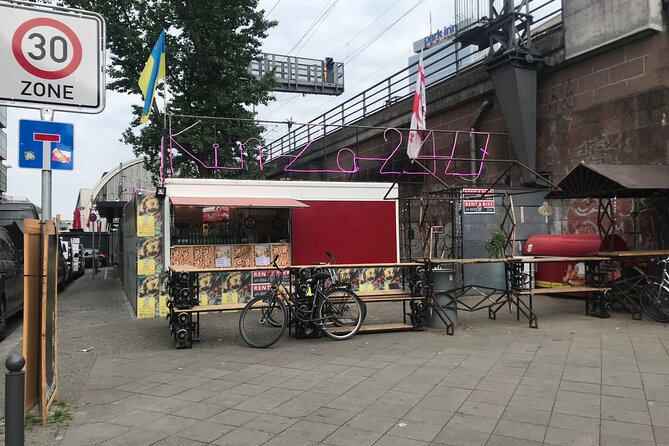
The final substantial stop is Museum Island. You ride through the island and see the museums from outside while learning about the area’s history.
No museum entry is included, so treat this as an orientation. You can note which buildings interest you and return later with a ticket. The ride also brings you back toward Alexanderplatz and the meeting point, where the activity ends.
The return section means you do not need to organize a separate ride back across town. At the same time, the long list of stops means some visits are necessarily brief. This tour is best seen as a guided overview, not a series of complete museum or memorial visits.
The guides and the style of storytelling
The tour is associated with several guides, including Jerry, Pablo, and Demetrios. Jerry is described as warm, patient, and eager to answer questions. Pablo is known for using old photographs and visual material during his explanations, while Demetrios has been praised for strong historical detail.
You cannot choose one of these guides unless the operator confirms it. The experience may vary with the person leading your group, but the repeated strength is the personal nature of the commentary. The tour is private to your booking group, and the small format makes it easier to ask about family connections, specific events, or places you want to understand better.
One particularly personal account involved a guide helping locate a memorial plaque connected with a rider’s grandfather. That kind of flexibility is possible when the guide is not managing a large coach group.
The tone is not academic or formal. Guides bring humor and personality, and the style can be enthusiastic. Most people will enjoy that approach, but if you want a tightly scripted lecture with exact detail at every stop, the experience may feel less polished. One assessment found the explanations entertaining but lighter than expected, so your satisfaction will depend partly on how much historical depth you already have.
Bikes, safety, and comfort
Berlin’s flat terrain makes this a manageable ride for most people. Several accounts describe the pace as easy, safe, and relaxed, with frequent stops. You do not need to be a strong cyclist to cover the route, but you should be comfortable riding in an urban setting.
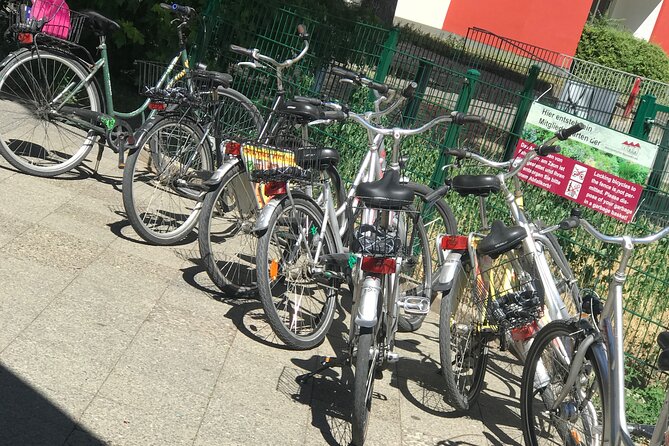
The bicycles are included, and most reports describe them as decent or good enough for the tour. One important detail is the braking system. Some bikes use back-pedal brakes, meaning you brake by pedaling backward rather than squeezing a standard hand lever. That can feel strange if you have never used it.
Check the bike before setting off. Test the brakes, saddle, and gears, and tell the guide at once if anything feels wrong. One difficult outing involved a 30-minute delay, bike concerns, and a family member falling after struggling with a cramped bicycle. That appears to be an exception rather than the usual pattern, but it is a fair reason to inspect your equipment.
Children must be accompanied by an adult, and the minimum age is two. The supplied information says most people can participate, service animals are allowed, and casual clothing is suitable. Bring clothing that works for the day’s weather, since you are outside for several hours.
What $54.42 gets you
At $54.42 per person, the price is fair for a three to four-hour private or small-group orientation of central Berlin. You receive a local professional guide and use of a bicycle, while the route covers a large number of major sights.
The value is strongest if this is your first visit. You see enough of the center to decide where you want to spend more time later, and you avoid the slow walking connections between distant sites.
The price does not include food, drinks, hotel pickup, or drop-off. The tour begins and ends at Panoramastraße 1, near Alexanderplatz, and public transportation is nearby. Plan to eat before or after the ride, or budget separately for a stop if your guide allows one. One past group paused for coffee when the weather turned cold, but that should not be treated as a guaranteed part of the schedule.
Free cancellation is available up to 24 hours before the 11:00 a.m. start time. A minimum number of participants is required, and if the operator cancels for that reason, you are offered another date or activity, or a full refund.
Who should book this Berlin bike tour?
Book it if you want a fast, personal introduction to Berlin’s major historical sites and you enjoy learning through stories rather than spending the whole day inside museums. It suits first-time visitors, couples, families with older children, and anyone who wants to cover a lot of central Berlin in one morning or afternoon.
It is also a good choice if you worry about the distance between sights. Berlin’s flat streets make the cycling easier than you may expect, and the regular stops keep the ride from becoming a workout.
Think twice if you need museum entry, a guaranteed particular guide, top-quality modern bikes, or a deep lecture at every stop. You should also arrive early enough to find the correct side of the TV Tower and check your brakes before leaving.
For most people, I would book this near the start of a Berlin stay. Use it to understand the city’s layout, mark the places you want to revisit, and let the guide connect the Wall, Nazi Germany, Jewish Berlin, and reunification into one clear story. At this price, that broad view is the tour’s real strength.
FAQ
Where does the bike tour begin?
It begins at Panoramastraße 1, 10178 Berlin, Germany, near the TV Tower at Alexanderplatz.
What time does the tour start?
The scheduled start time is 11:00 a.m.
How long does the tour last?
The tour lasts approximately three to four hours.
Does the tour return to the starting point?
Yes. The activity ends back at the meeting point.
Are bicycles included?
Yes. Use of a bicycle is included, along with a local professional guide.
Are food and drinks included?
No. Food and drinks are not included in the price.
Can children join the tour?
Yes. Children must be accompanied by an adult, and the minimum age is two.
More history tours in Berlin
- Berlin: Natural History Museum Entrance Ticket
★ 4.6 · 3,382 reviews - Berlin: World Heritage Cruise to Potsdam
★ 4.5 · 1,435 reviews - Berlin Historical Highlights Walking Tour
★ 4.9 · 657 reviews - Berlin Private Complete History All Day Walking Tour
★ 5.0 · 474 reviews
Newest Berlin reviews
- Where It All Began: Berlin’s Queer & Trans History Tour★ 4.9 · 6 reviews
- Understanding Kreuzberg: The roots of local (sub)culture★ 4.9 · 11 reviews
- Berlin: guided canoe | kayaktour★ 4.1 · 7 reviews
- Private Potsdam City Tour in an authentic vintage van★ 5.0 · 14 reviews
- Warnemünde Shore Excursion: Private Sachsenhausen and Berlin Tour★ 5.0 · 12 reviews
- Ultimate E-Bike Tour of Berlin with Beer Garden Stop★ 5.0 · 4 reviews
- In the Forbidden City – Potsdam Walking Tour★ 5.0 · 17 reviews
- Private Walking Tour of Potsdam and Sanssouci★ 5.0 · 24 reviews
Berlin Bike Tours, compared.
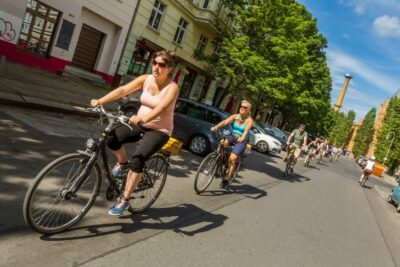
Sights and Highlights Bike Tour with a Local Guide
Read our review →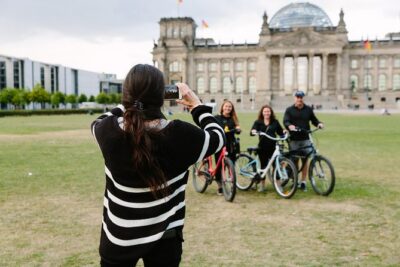
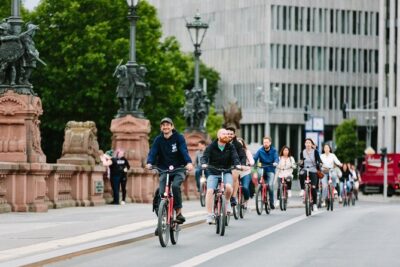
Berlin Highlights Sightseeing Bike Tour in Small Groups
Read our review →
Alternative Bike Tour of Kreuzberg & Friedrichshain
Read our review →
Guided Bike Tour of the Berlin Wall and Third Reich
Read our review →
Browse the lists this tour appears in