
Reviewed · BERLIN RICKSHAW TOURS
Promotion Berlin Rickshaw Shared Guide (Combo Vehicle Group)
Berlin’s major sights spread across a wide slice of the city centre, and this rickshaw tour gives you a practical way to connect them without wearing out your feet. You ride through squares, parks, and cycle routes while your guide handles the pedaling, navigation, and commentary. I especially like the easy access to photo stops and the chance to cover Berlin’s central sights in one outing.
Two things work particularly well here: the close-up views from the open rickshaw, and the help for visitors who cannot or do not want to cycle. Guides such as Levent have been praised for handling long rides in both hot and cold weather, answering questions, and finding good photo angles. The main consideration is the price: $235 for up to two people is a serious spend, so this works best when convenience and personal attention matter more than keeping costs low.
What makes this Berlin rickshaw tour useful
- A 210-minute route through Berlin-Mitte: Cover Alexanderplatz, Museum Island, Unter den Linden, Checkpoint Charlie, the Holocaust Memorial, Brandenburg Gate, and the Reichstag in one organized ride.
- A guide who pedals and explains: The guide is also your driver, so you can focus on the sights, ask questions, and take pictures.
- Good support for less-mobile visitors: You can ride instead of walking or cycling, and a walker can be taken along.
- A strong photo focus: The guide stops at major sights and can help you find useful angles for pictures.
- Weather help is available: Blankets may be provided in cold weather, while free water and soft drinks help on warmer days.
- Small-scale touring: The rickshaw booking is for one or two people, with the overall activity limited to six participants.
Why a rickshaw works well in central Berlin
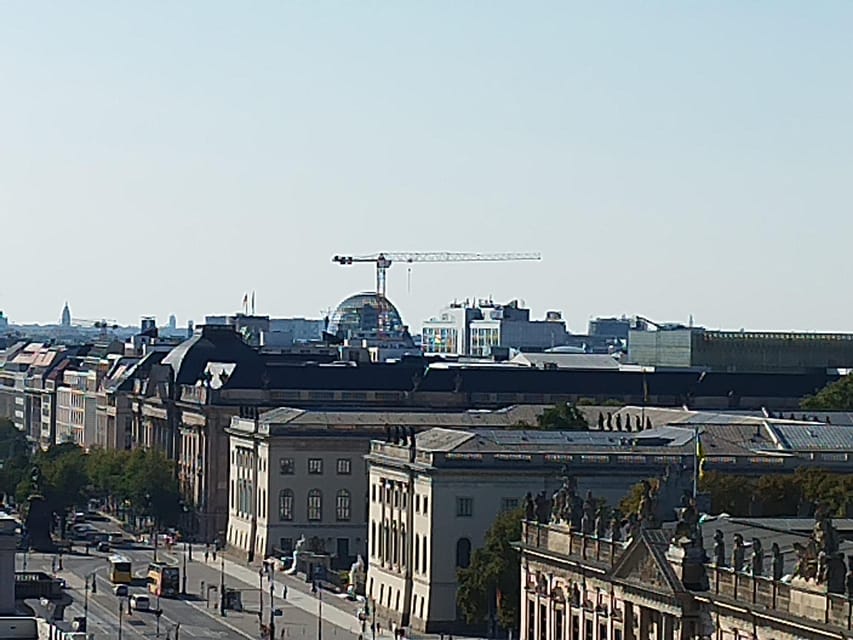
Berlin is not a compact old town where every major sight sits around one square. The route from Alexanderplatz to Brandenburg Gate takes you through several distinct parts of Mitte, and the distance between stops can make a walking tour tiring.
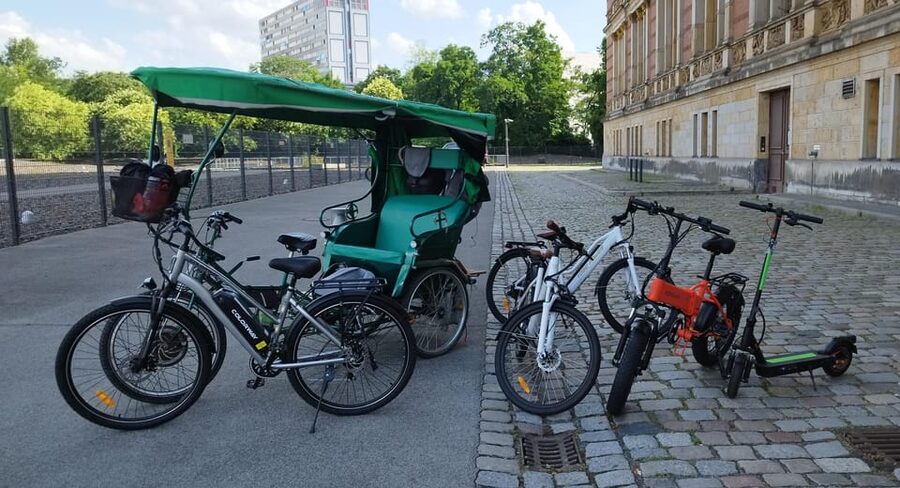
A rickshaw solves that problem without putting you inside a bus or car. You remain close to the street, parks, monuments, and passing city life. You also avoid the effort of cycling, which is helpful if you are less mobile, carrying a walker, traveling with an older relative, or simply saving your energy for museums and evening plans.
The open vehicle gives you a better view than a closed vehicle. You can look up at buildings, turn around for pictures, and hear the guide without the usual barrier of glass. The guide can also stop close to monuments and in places that are more useful for photographs than a standard vehicle stop.
This is not a silent ride. The city centre can be busy, and the vehicle moves at a slower pace than a taxi. That slower pace is part of the appeal, but you should expect the full 210 minutes to include riding, explanations, and photo stops rather than nonstop sightseeing.
More rickshaw tours in Berlin:
- Berlin: Private Guided E-Rickshaw Tour
★ 4.9 · 157 reviews - Individual City Tour – Rickshaw Sightseeing in Berlin
★ 5.0 · 120 reviews - Berlin Express: Private 1-Hour E-Rickshaw Ride
★ 5.0 · 116 reviews
Starting at Weinbergsweg near Rosenthaler Platz
The tour begins at Weinbergsweg 6, close to U-Bahn Rosenthaler Platz. This is a handy starting point in Mitte, with cafés, bars, shops, and public transport nearby.
The area around Weinbergsweg has a more relaxed feel than many of the grand ceremonial streets later on the route. Weinbergspark is close by, giving you a pleasant place to wait or take a short break before or after the ride. Since the tour returns to the same address, you do not need to arrange a second pickup point in another part of town.
It is worth arriving with the correct meeting point in mind: Weinbergsweg 6, near Rosenthaler Platz. The location is not one of the major monuments on the route, so use the street address rather than simply searching for the day’s first sight.
Alexanderplatz and the move into historic Mitte
Alexanderplatz is the first major stop. Today it is a large city square with shops, transport links, and the familiar Fernsehturm television tower nearby. It also gives the guide a useful place to explain how East Berlin developed around this broad public space.
You will have time for pictures and a guided look rather than simply passing through. The square is open and busy, so the rickshaw makes it easier to pause without planning your own route through several blocks.
From here, the ride moves toward Berlin’s older monumental centre. This change is one of the useful parts of the tour: you see modern East Berlin, grand Prussian-era buildings, and 20th-century sites of dictatorship and division within the same half-day outing.
Berlin Cathedral, Museum Island, and Unter den Linden
Berlin Cathedral is one of the route’s strongest photo stops. Its large dome and ornate exterior make it easy to recognize, and the rickshaw lets you approach the area without a long walk from a distant vehicle drop-off.
The tour also passes Museum Island, home to several of Berlin’s major museums. The ride does not include museum entry, so think of this as an outside orientation. Your guide can help you understand where the museums sit and which ones might deserve your time later.
Unter den Linden then provides a grand avenue linking Museum Island with the Brandenburg Gate area. This is a good stretch for hearing how Berlin’s political and cultural centre developed. You will see impressive buildings from close range, but keep in mind that traffic, construction, and crowds can affect the exact pace.
The value here is not just the number of sights. A guide helps connect them. Without context, Museum Island, the cathedral, and Unter den Linden can feel like separate postcard stops. Together, they form a clear introduction to central Berlin.
Other Berlin experiences to weigh up
- Berlin: Reichstag, Dome and Government District Guided Tour
★ 4.7 · 18,288 reviews - Berlin: Government District around the Reichstag Guided Tour
★ 4.7 · 8,447 reviews - Berlin: Hidden Backyards Guided Walking Tour
★ 4.8 · 5,360 reviews - Berlin: 1-Hour Boat Tour with Bilingual Live Guide
★ 4.7 · 3,629 reviews
Remembering Nazi persecution at Bebelplatz
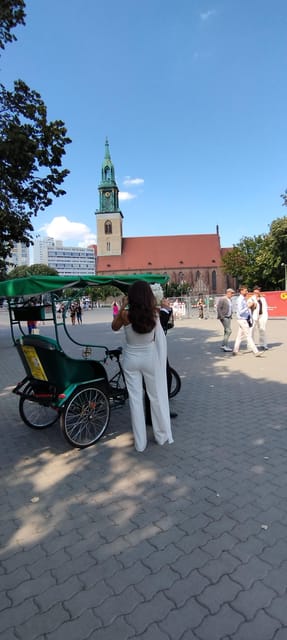
The Memorial to the May 10, 1933 Nazi Book Burning is located near Bebelplatz. The memorial is understated, and its meaning is easy to miss if you rush past it.
A photo stop and explanation give you time to notice the memorial and understand why this particular square matters. This is one of the route’s more serious moments, and it balances the grand architecture with a reminder of how public spaces were used during the Nazi period.
The guide’s commentary is especially important here. You are not simply taking a picture of a monument. You are getting a short explanation of the event and its place in Berlin’s wider story.
Checkpoint Charlie and the Berlin Wall story
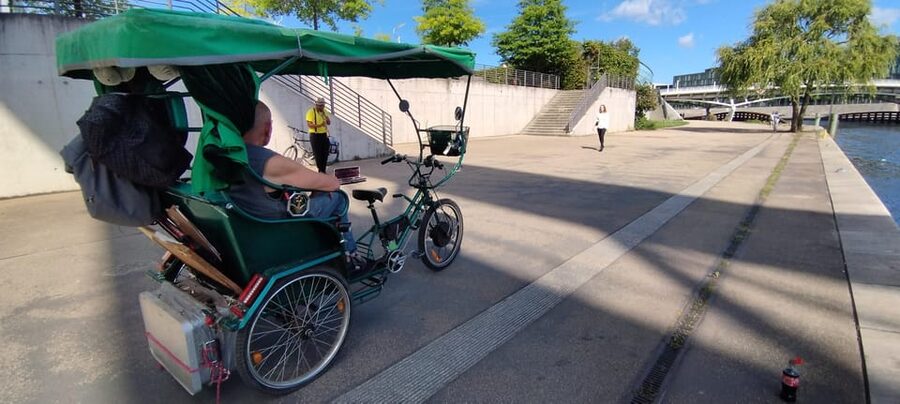
Checkpoint Charlie is one of Berlin’s best-known Cold War locations. The former crossing point became a symbol of the divided city, and it remains a popular stop for pictures.
This area can feel more commercial and staged than some other historic sites. That is not a reason to skip it, but you should set your expectations correctly. The value comes from the location and the guide’s explanation, not from expecting the checkpoint to look exactly as it did during the Cold War.
The route then includes the Berlin Wall area. One useful tip is to take time at the tourist centre there if you need warmth or a restroom, especially in cold weather. You may also want to walk around briefly rather than treating the stop as a quick photograph. The tour remains convenient, but this is a place where an extra few minutes on foot can add meaning.
Topography of Terror and Hitler’s bunker site
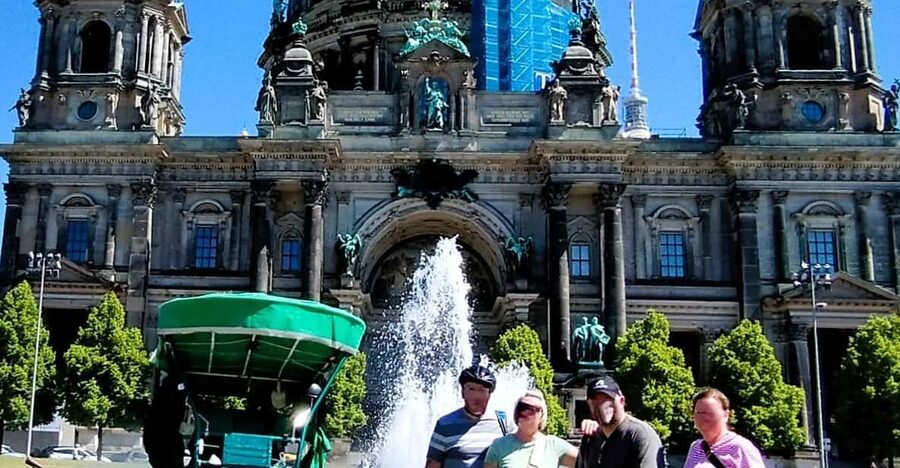
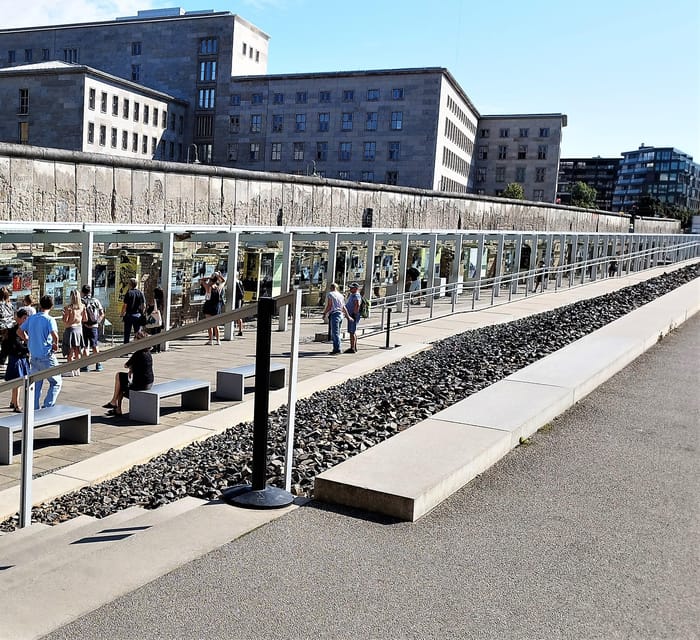
The Topography of Terror documents Nazi persecution and the institutions that carried it out. The tour stop is an exterior orientation rather than an admission visit, so you should plan separate museum time if you want to see the displays inside.
The site is close to other major historical locations, which makes the rickshaw route efficient. You can hear the guide explain the setting without having to navigate between scattered sites yourself.
Nearby, the tour identifies the location of Hitler’s bunker. The bunker itself is not presented as an intact monument or an attraction to enter. The significance is in understanding the location and the final stage of the Nazi regime, with the guide providing context while you remain above ground.
These stops are not light sightseeing, and that is appropriate. Berlin’s centre asks you to move quickly between beauty, power, violence, and memory. A good guide helps keep those changes clear without turning the ride into a list of dates.
Holocaust Memorial and Brandenburg Gate
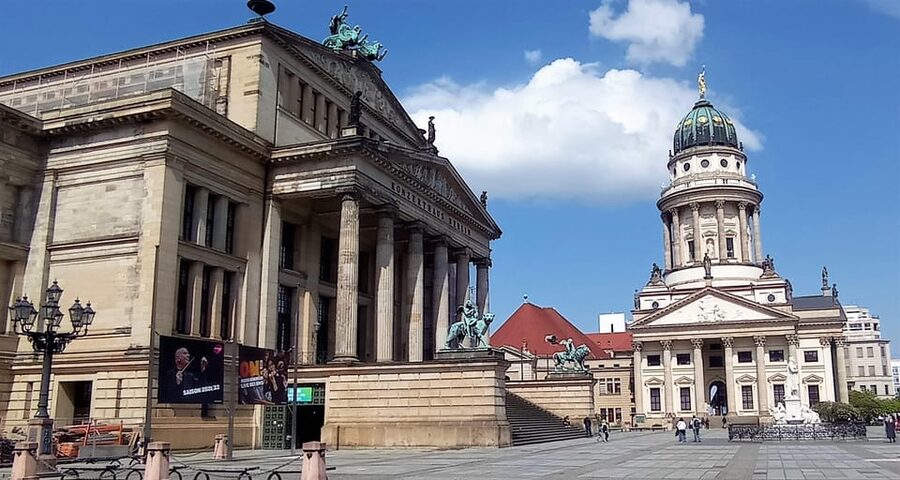
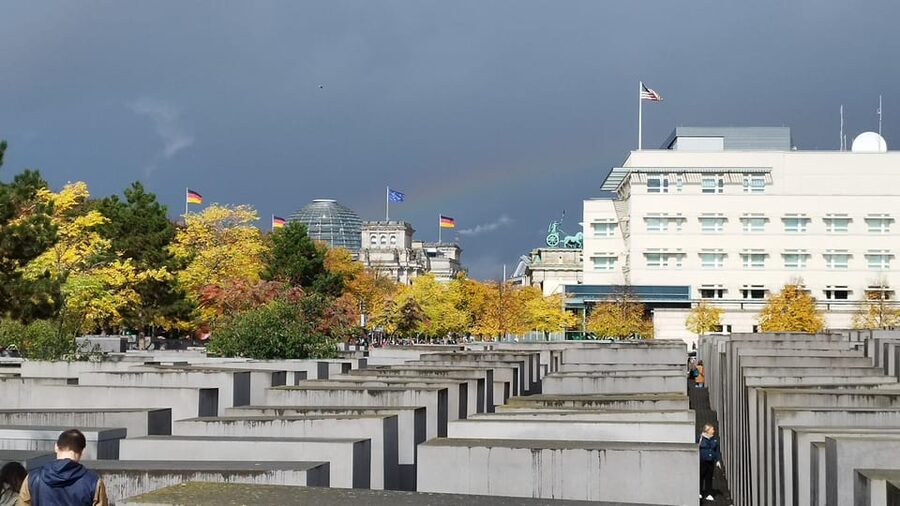
The Holocaust Memorial is another important stop. The field of concrete blocks creates a powerful physical experience, and the open rickshaw allows you to get close before deciding how much time you want to spend walking through it.
You should not rush this stop if the subject matters to you. The tour includes a guided visit and sightseeing, but the total route has many stops, so the available time may be more limited than on a dedicated memorial tour.
Brandenburg Gate follows as one of Berlin’s defining landmarks. Its columns and chariot are instantly recognizable, yet the gate means more than a handsome photo backdrop. It has been tied to royal Berlin, wartime destruction, division, and reunification.
This is likely one of the most photographed moments of the ride. The guide can help position you for pictures, and the rickshaw means you do not have to cover the full approach on foot before continuing to the next sight.
Reichstag and the return ride
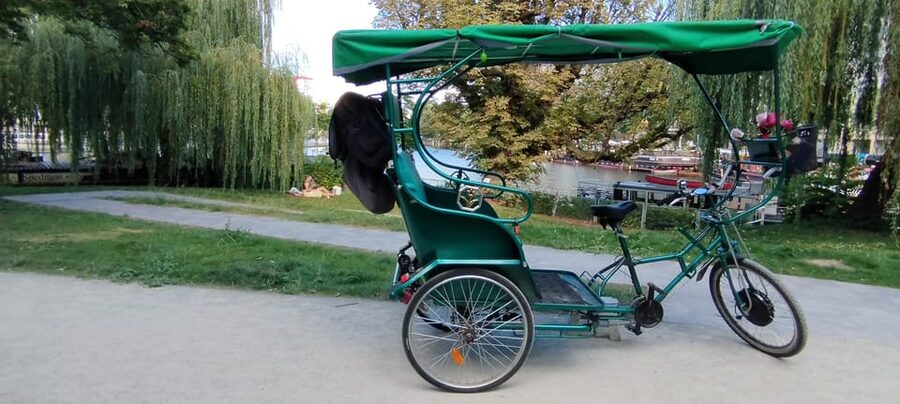
The Reichstag is the final major stop. Its historic façade and modern glass dome represent Berlin’s present-day government, while the building itself carries the marks of the city’s troubled past.
The tour provides guided sightseeing and photo time outside. Entry to the building is not included in the information provided, so do not expect this ride to replace a separate Reichstag visit. If you want to go inside, check the official visiting arrangements separately and plan it for another part of your schedule.
After the Reichstag, the rickshaw returns to Weinbergsweg 6. Ending where you began is useful because you can collect anything left nearby, return to Rosenthaler Platz, or continue exploring Mitte without arranging a new transfer.
What the guide adds to the ride
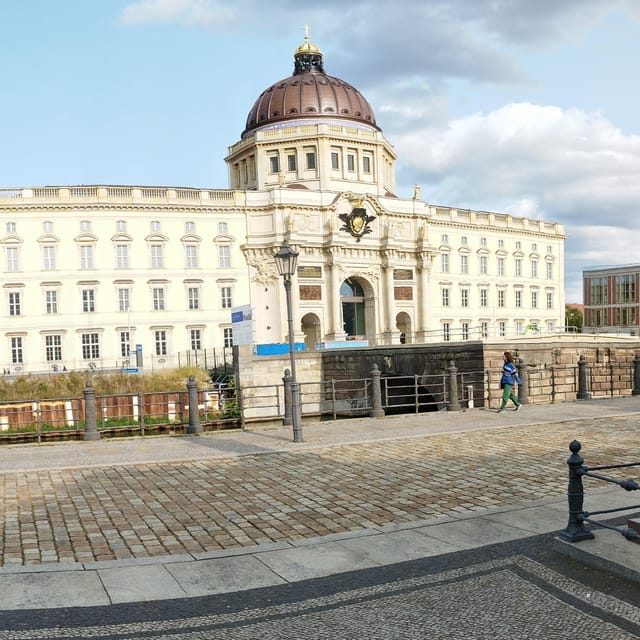
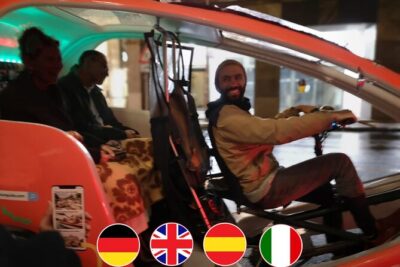
The guide is not just a person steering the vehicle. You receive live commentary in Dutch, English, German, or Turkish, and the guide handles both driving and the flow of the stops.
The most praised qualities have been clear explanations, friendly conversation, safe cycling, and strong answers to questions. Levent has been specifically noted for pedaling steadily for three hours in hot weather and for bringing blankets during cold conditions. That gives you a fair idea of the physical work involved and the practical care built into the outing.
The photography help is another useful touch. Guides are described as good at finding angles and taking pictures, which matters when you are traveling as a couple and do not want every photograph to be a selfie. You should still dress for the weather. A blanket helps in the cold, but it does not replace a warm coat.
Free water and soft drinks are included. You may also sit back with a beer or sparkling wine, according to the activity details. Drink responsibly, especially since the ride includes several stops and a long period in an open vehicle.
Price, group size, and comfort
The price is $235 per group of up to two people. That makes the cost easier to judge as a private couple’s experience rather than a standard per-person walking tour. Split between two people, it is $117.50 each, before considering any booking changes or extras.
That is not the cheapest way to see Berlin. You can explore many of these sights on foot or by public transport for far less. The reason to pay more is the combination of transport, guiding, photo help, and reduced walking in one package.
The activity is described as a small group limited to six participants, while the rickshaw booking itself is for one or two people. Confirm the exact vehicle arrangement when booking if you want the ride to feel fully private. The supplied details also describe a private rickshaw with a professional guide, so the practical experience may be centered on your pair even when the wider activity has a small-group limit.
At 210 minutes, the tour lasts about three and a half hours. That is long enough to cover the central route without making the outing an all-day commitment.
Who should book this experience
I would point this tour toward:
- Couples who want a personal way to see Berlin’s main sights
- Families who prefer not to walk long distances
- Older visitors or less-mobile visitors
- Anyone who cannot or does not want to cycle
- First-time visitors who want an orientation before choosing museums
- People who care about taking good photos
- Visitors with limited time who want several central sights in one ride
It is less suited to someone who wants a detailed museum visit, a fast-paced sightseeing schedule, or the lowest possible price. It is also not ideal if you dislike open-air transport or want complete control over how long you spend at each memorial.
The route covers a lot, but that means each stop has a limit. Use the ride to understand Berlin’s layout and choose your priorities. Then return to the Holocaust Memorial, Museum Island, Topography of Terror, or another site later if you want more time.
Practical tips before you go
Dress for the forecast. The rickshaw is open, and Berlin can feel cold even when the air temperature looks mild. Blankets may be available, but you should still bring a proper jacket in cooler weather.
Bring a phone or camera with enough battery for frequent stops. The guide can help with pictures, and the route offers many useful views. If you want to visit a museum or enter the Reichstag, arrange that separately.
Give yourself extra time at the Berlin Wall area if you want to use the restroom, warm up, or look around. One stop can easily become more useful when you do not treat it as a quick photo break.
Cancellation is free up to 24 hours before departure, and you can reserve now and pay later. Starting times vary, so check availability for your preferred day.
Should you book the Berlin rickshaw tour?
Book it if you want a comfortable, low-effort way to connect Berlin’s major central sights and value a guide who can explain the city while taking your photographs. The tour is especially helpful for less-mobile visitors and for couples who would rather pay for convenience than spend half a day planning transport and walking routes.
Skip it if your main goal is saving money or spending long periods inside museums. At $235 for two, the tour earns its price through comfort, coverage, guide service, and easy access rather than admission tickets.
For many first visits, this makes a good opening activity. You get your bearings, hear the basic story of Berlin’s monuments and 20th-century history, and learn which places deserve a longer return visit.
FAQ
Where does the Berlin rickshaw tour begin?
It begins at Weinbergsweg 6 near U-Bahn Rosenthaler Platz in Berlin’s Mitte district.
How long does the tour last?
The activity lasts 210 minutes, or about three and a half hours.
What languages are available?
Live guiding is available in Dutch, English, German, and Turkish.
How many people can join?
The activity is limited to six participants. The rickshaw booking is for one or two people.
Is the tour suitable for someone who does not want to cycle?
Yes. The guide pedals and drives the rickshaw, so you can see the sights without riding a bicycle.
Can a walker be taken in the rickshaw?
Yes. The activity information says that a walker can be taken along.
What is included in the price?
The price includes the rickshaw for up to two people, an experienced guide in your booking language, commentary, photo stops, and free water and soft drinks.
Newest Berlin reviews
- Where It All Began: Berlin’s Queer & Trans History Tour★ 4.9 · 6 reviews
- Understanding Kreuzberg: The roots of local (sub)culture★ 4.9 · 11 reviews
- Berlin: guided canoe | kayaktour★ 4.1 · 7 reviews
- Private Potsdam City Tour in an authentic vintage van★ 5.0 · 14 reviews
- Warnemünde Shore Excursion: Private Sachsenhausen and Berlin Tour★ 5.0 · 12 reviews
- Ultimate E-Bike Tour of Berlin with Beer Garden Stop★ 5.0 · 4 reviews
- Private Walking Tour of Potsdam and Sanssouci★ 5.0 · 24 reviews
- Potsdam Highlights – Private sightseeing tour by minibus★ 5.0 · 3 reviews
Berlin Rickshaw Tours, compared.
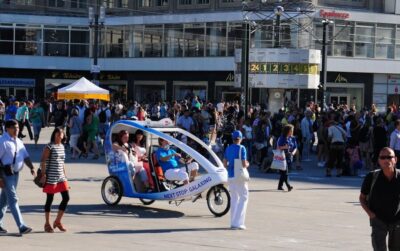
Individual City Tour – Rickshaw Sightseeing in Berlin
Read our review →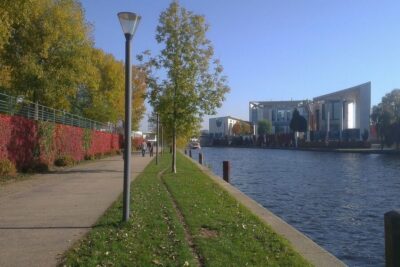

Rickshaw Tours Berlin – Groups of up to 16 people with several rickshaws
Read our review →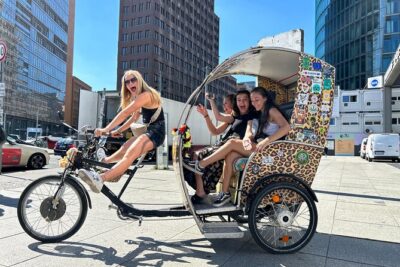
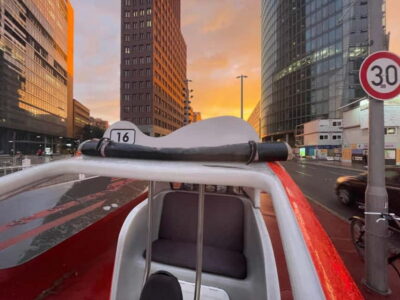
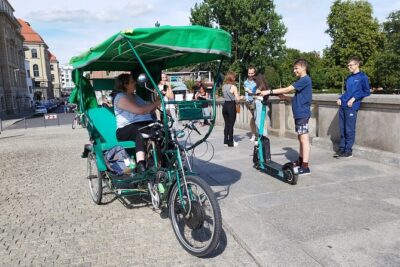
One Up to 3 Rickshaws(6 GUESTS)-Taylor Made Rickshaw Berlin Tour
Read our review →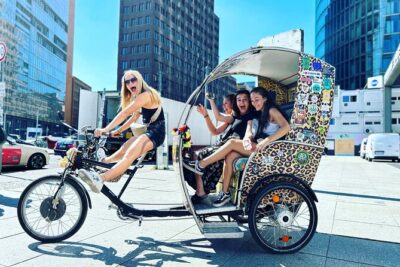
Berlin Rickshaw Tours Historical & Photo City Tour 120min – Sightseeing
Read our review →Browse the lists this tour appears in