
Reviewed · BERLIN RICKSHAW TOURS
One Up to 3 Rickshaws(6 GUESTS)-Taylor Made Rickshaw Berlin Tour
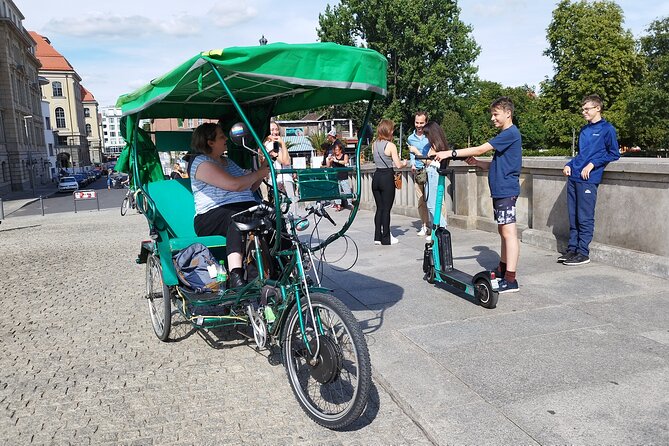
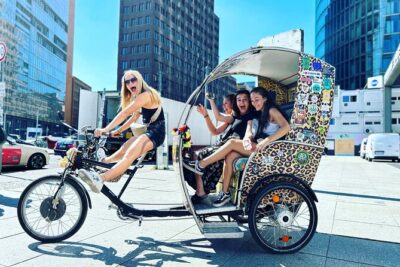
Berlin’s history is spread across a wide city, but this private rickshaw tour brings its biggest sights into one compact three-hour outing. You can roll from Alexanderplatz to Brandenburg Gate, pause for photos, and hear the stories between stops without wrestling with a map or a train schedule. I like the flexible route and the personal attention from guides such as Levent Aydin and Tille.
I also like that you can ride alone or share a rickshaw, with up to three rickshaws available for as many as six people. The main consideration is price: the listed cost is $420.08 per group of up to two, so this makes more sense for a private experience than for a budget sightseeing ride.
Key points at a glance
- A fast route through central Berlin: Cover Alexanderplatz, Museum Island, Bebelplatz, Gendarmenmarkt, Checkpoint Charlie, Potsdamer Platz, the Holocaust Memorial, Brandenburg Gate, and the Reichstag area in roughly three hours.
- Your route can change: You can decide which landmarks deserve more time and finish at a hotel, monument, restaurant, café, market, or boat-tour departure point.
- A useful choice for limited mobility: The rickshaw brings you close to major sights, and the guide can stop for photos without requiring you to walk between every location.
- A private experience: Only your group takes part, with pickup available and no strangers sharing your vehicle.
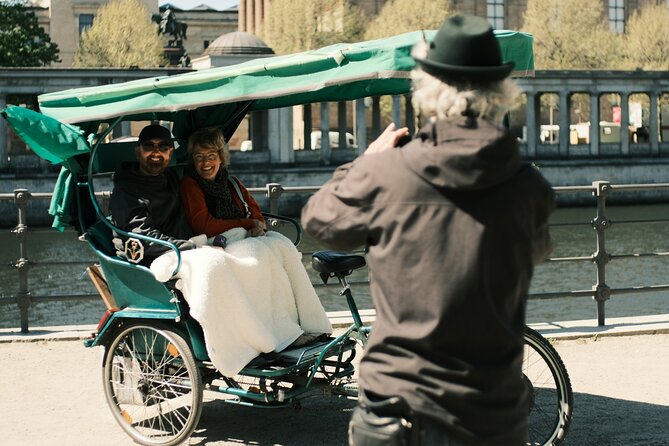
- More than transportation: The licensed guide provides historical context, WiFi is available onboard, and a blanket is supplied if you choose the rickshaw.
- A strong photography angle: The guide is described as an excellent photographer, useful if you want more than quick snapshots taken at arm’s length.
Why a rickshaw works well for Berlin
Berlin is not a city you can understand from one central square. Its main sights are separated by broad avenues, former border zones, large parks, and rebuilt districts. A rickshaw gives you a practical middle ground between walking and a standard vehicle tour.
You sit close to the street, so you can see buildings and memorials at a human pace. You also avoid the tiring gaps between sights. That matters here, since Alexanderplatz, Museum Island, Checkpoint Charlie, Potsdamer Platz, and the Brandenburg Gate form a long route when covered on foot.
The guide can also stop where a larger vehicle cannot. At several points, you can step out for a photograph or remain seated and still get close to the monument. A cosy blanket is available, a small but useful touch if the weather turns cool.
This is a private tour, so the guide can adjust the pace to your group. You might spend extra time at the Holocaust Memorial, move quickly through a sight you have already visited, or use the final part of the tour to reach a restaurant or boat departure point.
The trade-off is cost. At $420.08 for a group of up to two, this is not the cheapest way to see Berlin. The value comes from saving time, arranging a custom route, and having a private guide rather than from the vehicle alone. For a larger group using several rickshaws, the per-person cost may feel more reasonable, but confirm the exact group pricing when booking because the advertised price is stated for up to two people.
More rickshaw tours in Berlin:
- Berlin: Private Guided E-Rickshaw Tour
★ 4.9 · 157 reviews - Individual City Tour – Rickshaw Sightseeing in Berlin
★ 5.0 · 120 reviews - Berlin Express: Private 1-Hour E-Rickshaw Ride
★ 5.0 · 116 reviews
Alexanderplatz and the route to Museum Island
The tour starts near the Berliner Fernsehturm, Berlin’s famous television tower and the tallest structure in Germany. The tower rises above Alexanderplatz, making this an easy place to recognize and a useful starting point for a first look at the city.
You do not need to buy a ticket to the tower for this tour. The stop is about orientation and photos, not an ascent. If you have limited time in Berlin, starting here puts you immediately beside one of the city’s most recognizable landmarks.
From Alexanderplatz, the rickshaw passes the Rotes Rathaus, or Red Town Hall, along with Marien Church and Neptune Fountain. These sights help connect modern Alexanderplatz with older Berlin. The route then continues toward Museum Island.
Museum Island is one of the central stops, and rightly so. The complex is a UNESCO World Heritage Site with several major museums gathered along the River Spree. From the rickshaw, you can see the Berlin Cathedral, the reconstructed City Palace, the Old Museum, the Old National Gallery, the Pergamon Museum, and the Bode Museum.
The tour allows about ten minutes here, enough for a quick look and photographs. It is not enough for a museum visit, so treat this as an outside introduction. If you already know you want to enter one of the museums, plan a separate visit. The value here is seeing the arrangement of the buildings and hearing how Museum Island fits into Berlin’s cultural center.
The guide also brings you along Unter den Linden, Berlin’s grand historic boulevard. This stretch connects several important sites and gives you a sense of the city’s formal center without requiring a long walk.
Bebelplatz and Berlin’s difficult past
The next stop is Bebelplatz, part of the Forum Fridericianum. Around the square are the State Opera, Humboldt University, the State Library, and St. Hedwig’s Cathedral, described as Berlin’s first Catholic church.
Bebelplatz is especially important because of the Nazi book burning that took place here in 1933. A memorial beneath the square recalls the event, when thousands of books were burned. The memorial is easy to miss if you are simply passing through, which is one reason a guide adds value.
The planned stop is short, about five minutes. You can take in the square and the memorial, but you will not have much time for a long museum-style explanation. If this subject matters to you, tell the guide early so the route can allow more time here.
Gendarmenmarkt, one of the city’s great squares
Gendarmenmarkt follows Bebelplatz and receives about ten minutes. This is one of Berlin’s most impressive public spaces, framed by the former Royal Concert Hall, the German Cathedral, and the French Cathedral.
The symmetry makes it a good photography stop. It also offers a change of mood after Bebelplatz, moving from a memorial site to an elegant civic square. The guide can help you identify the buildings and explain their place in Berlin’s architectural story.
The itinerary treats this as an exterior visit, with no admission included. That is suitable for a city overview, but do not expect time for a concert or interior tour. If you are choosing between several stops for extra time, Gendarmenmarkt is a pleasant place to pause, while the nearby memorial sites may offer more historical depth.
A different sort of day out in Berlin:
- Berlin: Reichstag, Dome and Government District Guided Tour
★ 4.7 · 18,288 reviews - Berlin: 1-Hour City Tour by Boat with Guaranteed Seating
★ 4.3 · 16,993 reviews - Berlin: Boat Tour Along the River Spree
★ 4.4 · 11,252 reviews - Discover Berlin Half-Day Walking Tour
★ 5.0 · 9,624 reviews
Checkpoint Charlie and the former Berlin Wall
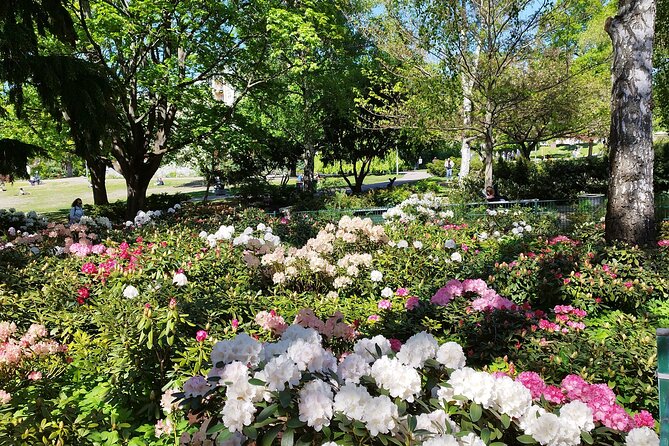
Checkpoint Charlie is one of Berlin’s best-known Cold War locations. It was a border crossing between East and West Berlin and became a symbol of the tension that brought the world close to a much wider conflict.
The stop lasts about five minutes. That is enough to see the crossing point and take a photograph, but not enough for a detailed study of the Berlin Wall or the Cold War. I would treat Checkpoint Charlie as a marker on the route rather than the main attraction.
The rickshaw then follows part of the former border strip to the Topography of Terror. Along the way, you can see original sections of the Berlin Wall. The Topography of Terror documentation center occupies the former site of the SS and Gestapo headquarters and focuses on National Socialism.
This is one of the more serious sections of the tour. The guide can point out how the former border and Nazi-era sites overlap in central Berlin, where several layers of twentieth-century history are close together. The stop is listed at about five minutes, so a full visit to the documentation center would require a separate return.
Nearby, you also see Martin-Gropius-Bau, known for major temporary exhibitions, and the former Prussian Parliament in front of it. The rickshaw makes it possible to connect these sites quickly, even if you only have a short stay in the city.
Potsdamer Platz and Berlin’s rebuilt center
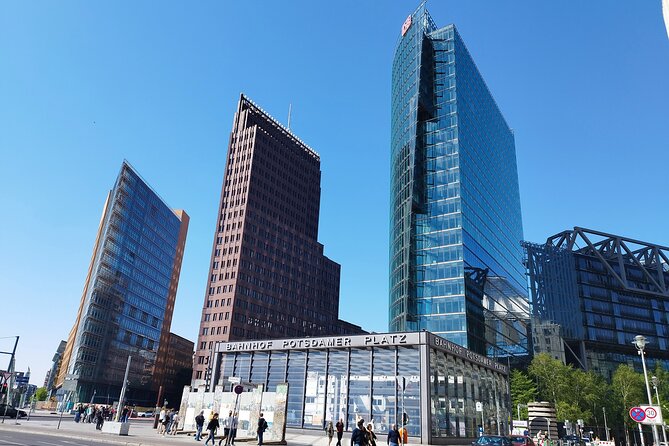
Potsdamer Platz shows a very different Berlin. Once divided by the Wall, the area became a large construction zone after reunification. Today it is marked by modern towers and the Sony Center.
The tour allows about ten minutes here. This is a good contrast to Museum Island and Gendarmenmarkt, where older architecture dominates. At Potsdamer Platz, the focus is the rebuilt city and the changing face of Berlin.
You will want to use the stop for photographs and a quick look around. If modern architecture is not a priority, this is one location you could shorten in favor of additional time at the Holocaust Memorial or Brandenburg Gate.
The Holocaust Memorial and Brandenburg Gate
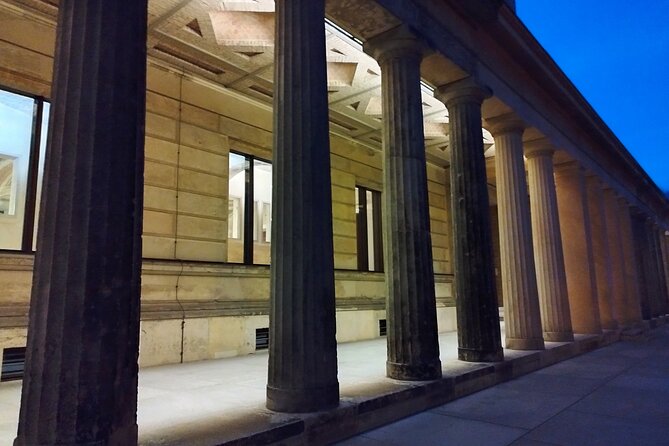
The Memorial to the Murdered Jews of Europe is one of the most recognizable memorials in Berlin. It consists of a large field of concrete blocks arranged across an open area, commemorating the murder of more than six million Jews under National Socialism.
The tour gives this stop about ten minutes. That allows time to walk among the blocks or take in the memorial from the edge. The underground information center is not included in the short stop, so plan another visit if you want a fuller account of individual lives and families.
The memorial works best when approached with patience and respect. The changing height and uneven ground create a different experience as you move through it. A rickshaw is useful here because it brings you close to the site, but you should decide in advance how much walking your group wants to do.
From there, the route continues to Brandenburg Gate, Berlin’s most famous landmark. The gate once marked the edge of the city and later became a powerful symbol of division and reunification. You receive around ten minutes here, enough for photographs and a short explanation.
Brandenburg Gate is often crowded, so the guide’s ability to stop close by is useful. Still, ten minutes will pass quickly. If you want an unhurried set of photographs, ask to make this one of the longer stops.
The Reichstag, Sinti and Roma Memorial, and government district
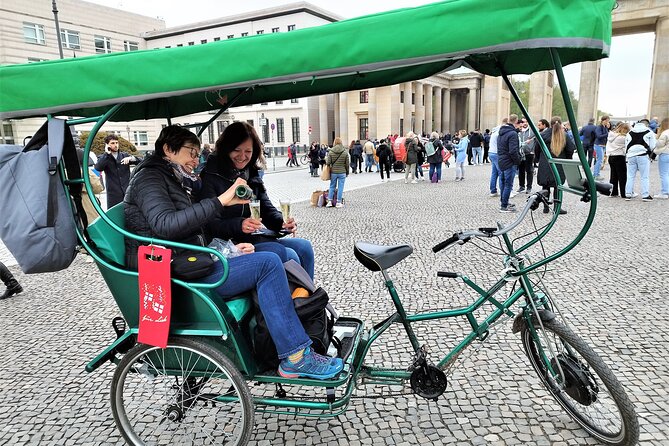
The route then moves into the government district, including the Reichstag and Bundestag, the German Chancellery, and the Memorial to the Murdered Sinti and Roma of Europe.
The Reichstag is Germany’s federal parliament building. Its glass dome is a major attraction, but this tour only views the building from outside. There is no dome admission included, and the schedule does not allow a full interior visit.
The nearby memorial to the Sinti and Roma murdered under National Socialism is another important site that can be overlooked when a visitor focuses only on the better-known landmarks. The guide can help place it within the wider memorial district.
This part of the route is especially useful if you want to understand how Berlin’s central government area sits beside sites connected with war, dictatorship, and division. The short stop means you should not expect a detailed visit to every memorial, but the rickshaw lets you see them efficiently.
The Führerbunker site and Berlin Cathedral
The tour also passes the former Führerbunker site, now marked by a parking area. There is no surviving public bunker interior to visit here. The importance of the stop lies in knowing what once stood beneath this otherwise ordinary part of the city.
That contrast can be unsettling and instructive. Berlin often places major historical events beside modern streets and everyday buildings. The guide can explain the location while you view the present-day setting.
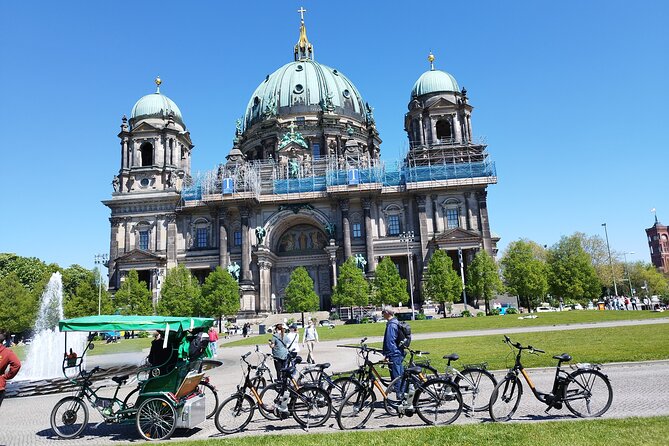
The final listed stop is Berliner Dom, or Berlin Cathedral. Located near Museum Island, it brings the route back to one of central Berlin’s grandest buildings. You can photograph the exterior and connect it with the museums and boulevard seen earlier in the tour.
Since the tour can finish at a location you choose, Berliner Dom may not be your actual endpoint. You can instead request a hotel, monument, restaurant, café, market, or one of the starting points for a boat tour, provided the distance and tour time are reasonable.
Guide style, group size, and practical comfort
The experience includes a professional, sympathetic licensed guide. Levent Aydin is one guide associated with the tour, and Tille is another. Both are described through the supplied material as friendly, informed, and able to make the day enjoyable.
A particularly useful feature is the guide’s photography skill. You can stop for memorable pictures, and the guide may be able to help with group shots rather than leaving you to balance a phone on a wall or ask a stranger.
The tour can use one rickshaw or up to three rickshaws for a group of as many as six people. You can ride alone or in pairs. Confirm the exact arrangement and price for your party, since the published price is for a group of up to two while the experience description allows a larger group.
Pickup is offered, and the start and finish are flexible. The guide can combine rickshaw travel with walking or cycling when suitable. WiFi is available onboard, and service animals are allowed. Most people can participate, including those who are less mobile, since the vehicle can stop close to monuments and reduce the amount of walking required.
The tour is offered in English. Confirmation is provided at booking, and free cancellation is available if you cancel at least 24 hours before the scheduled start. Changes or cancellations made later are not accepted for a refund.
Who should book this Berlin tour?
I would choose this tour if you have only a few hours in Berlin, want a private guide, or prefer not to spend the day walking between widely separated sights. It also suits families, couples, small groups, and anyone who wants a custom route rather than a fixed group schedule.
It is a strong choice for a first overview. You will see enough of central Berlin to decide which places deserve a longer return visit, especially Museum Island, the Topography of Terror, and the Holocaust Memorial.
I would think twice if your main goal is to enter museums, climb the TV Tower, tour the Reichstag dome, or spend a long time at each memorial. The stops are designed for orientation, explanation, and photos. The short schedule cannot replace full visits inside Berlin’s major attractions.
Should you book it?
Book this rickshaw tour if time, comfort, and a private route matter more to you than the lowest price. Its best qualities are the broad coverage, close access to landmarks, flexible ending point, and guide attention. Levent Aydin or Tille can help you connect Berlin’s Nazi, Cold War, royal, modern, and reunified eras in a single outing.
Skip it if you prefer to explore slowly on foot or plan to enter several museums. For everyone else, especially visitors with limited time or mobility, this is a practical way to get your bearings fast and leave Berlin with a clear list of places to revisit.
FAQ
How long is the rickshaw tour?
The tour lasts approximately three hours.
How many people can join?
The experience description allows up to three rickshaws and as many as six people. The listed price is stated for a group of up to two, so confirm the cost for larger parties before booking.
Is hotel pickup available?
Yes. Pickup is offered, and the guide can also finish at your hotel, a monument, restaurant, café, market, or a boat-tour starting point, depending on reasonable distance and tour time.
Which Berlin sights are included?
The route can include Alexanderplatz and the TV Tower, Rotes Rathaus, Museum Island, Bebelplatz, Gendarmenmarkt, Checkpoint Charlie, the Topography of Terror, Potsdamer Platz, the Holocaust Memorial, Brandenburg Gate, the Reichstag area, the Führerbunker site, and Berlin Cathedral.
Is the tour suitable for people with limited mobility?
Yes. The rickshaw can bring you close to monuments, and the guide can stop for photos. The information states that most people can participate and that the experience can suit less mobile guests.
What happens if I need to cancel?
You can receive a full refund if you cancel at least 24 hours before the local start time. Cancellations or changes made less than 24 hours before the start are not accepted for a refund.
Newest Berlin reviews
- Where It All Began: Berlin’s Queer & Trans History Tour★ 4.9 · 6 reviews
- Understanding Kreuzberg: The roots of local (sub)culture★ 4.9 · 11 reviews
- Berlin: guided canoe | kayaktour★ 4.1 · 7 reviews
- Private Potsdam City Tour in an authentic vintage van★ 5.0 · 14 reviews
- Warnemünde Shore Excursion: Private Sachsenhausen and Berlin Tour★ 5.0 · 12 reviews
- Ultimate E-Bike Tour of Berlin with Beer Garden Stop★ 5.0 · 4 reviews
- In the Forbidden City – Potsdam Walking Tour★ 5.0 · 17 reviews
- Private Walking Tour of Potsdam and Sanssouci★ 5.0 · 24 reviews
Berlin Rickshaw Tours, compared.
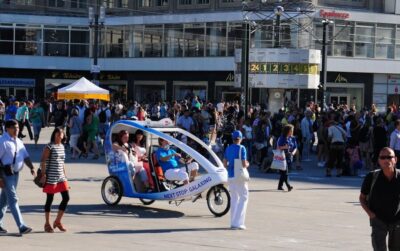
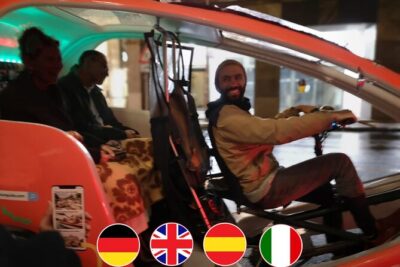
Individual City Tour – Rickshaw Sightseeing in Berlin
Read our review →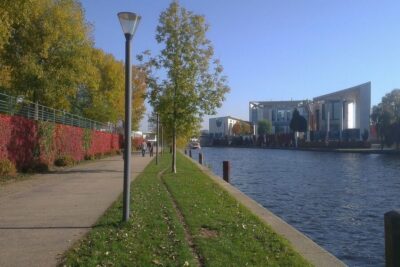

Rickshaw Tours Berlin – Groups of up to 16 people with several rickshaws
Read our review →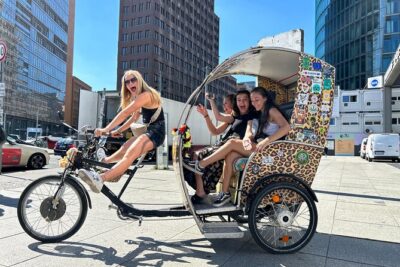
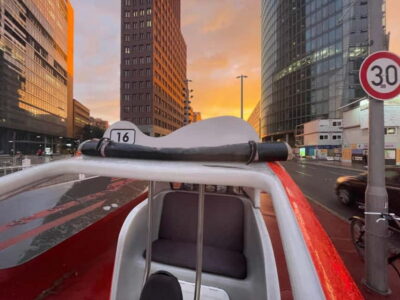
Berlin Rickshaw Tours Historical & Photo City Tour 120min – Sightseeing
Read our review →
Daily First Rickshaw promotion in Combi Vehicle public Group 90€
Read our review →Browse the lists this tour appears in