
Reviewed · BERLIN SIGHTSEEING TOURS
Discover Berlin Express Tour: 2hr Highlights
Berlin’s hardest history is packed into this two-hour walk, from the grand Brandenburg Gate to the stark remains of the Berlin Wall. You’ll see the Reichstag, Hitler’s bunker site, Holocaust memorials, and Checkpoint Charlie without spending half a day on the road.
I like the tight route and the English-speaking academic guide, which keeps the tour focused instead of wandering through every chapter of Berlin’s past. I also like the thoughtful balance between famous sights and quieter memorials, especially the Sinti and Roma Memorial and the Politicians’ Memorial.
The trade-off is simple: two hours goes fast. You won’t enter any buildings, and this express tour covers contemporary Berlin rather than the city’s full story. If you want museums or a slower look at each memorial, you’ll need more time afterward.
Key points at a glance
- Brandenburg Gate to Checkpoint Charlie: The route links several of central Berlin’s most important landmarks in one continuous walk.
- A serious look at 20th-century history: Expect discussion of Nazi persecution, World War II, the Holocaust, and the Cold War division of Berlin.
- Outdoor-only sightseeing: You do not enter the Reichstag, museums, memorial buildings, or any other structure.
- English-speaking academic guide: The tour is led in English, and Dylan is one guide specifically praised for clear explanations and thoughtful answers.
- Good value at $23: You pay a modest price for two hours of guided context in a part of Berlin where the past is easy to miss without explanation.
- Wheelchair-friendly format: The activity is listed as wheelchair friendly, though you should still prepare for a two-hour urban walk.
A fast route through Berlin’s 20th-century past
This is not a general introduction to every side of Berlin. It is a focused walk through the political center, with special attention to the events that shaped modern Germany.
You begin at Pariser Platz, walk past the Brandenburg Gate and Reichstag, then continue through memorials and former Nazi and Cold War sites. The tour ends at Checkpoint Charlie, so the route has a clear beginning and finish rather than circling back to the starting point.
I see the main value in the connections between the stops. A photograph of the Brandenburg Gate tells you very little on its own. A guide can place it beside the Reichstag, the Nazi government quarter, the postwar Soviet memorial, and the divided city that followed. In two hours, you get a useful framework for exploring Berlin on your own.
The pace should suit you if you want plenty of explanation but do not want an all-day walking tour. One verified booking described the balance between information and walking as just right, while another called it informative without being too long. That is a fair description of the format.
More sightseeing tours in Berlin:
- Berlin: 1-Hour City Tour by Boat with Guaranteed Seating
★ 4.3 · 16,993 reviews - Explore Berlin: See All The Iconic Sights & Some Hidden Gems
★ 5.0 · 4,429 reviews - Berlin: City Sightseeing Hop-On Hop-Off Bus Tour
★ 4.1 · 4,233 reviews
Pariser Platz and the Brandenburg Gate
Pariser Platz is a strong place to begin. The meeting point is in front of the Tourist Information Office, so you have a clear landmark rather than a vague street corner.
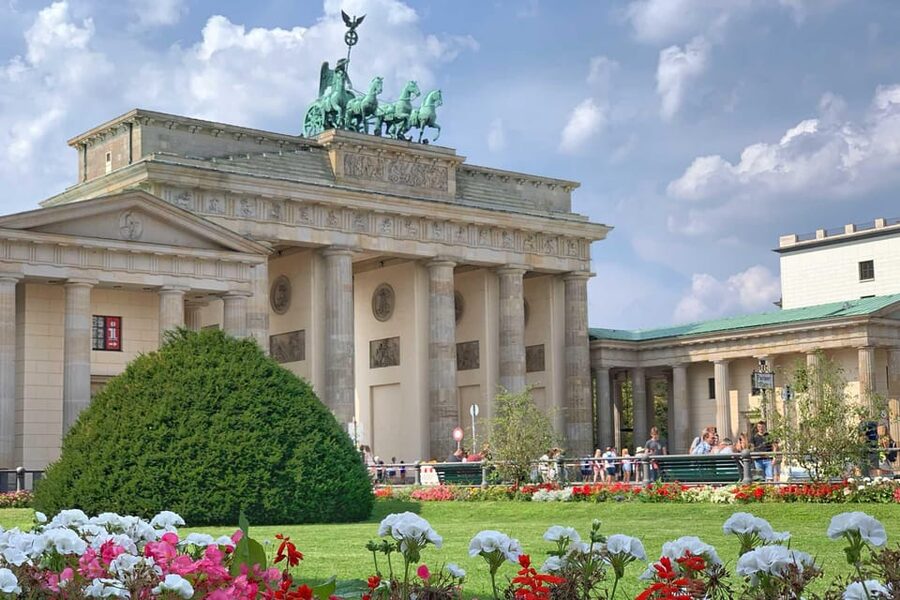
The square leads directly to the Brandenburg Gate, Berlin’s best-known monument. Its grand neoclassical design can make it seem like a symbol from a distant royal past, but the guide uses it to set up a more modern story about unity, division, and peace.
I like starting here because the gate is both an impressive photo stop and a useful point of orientation. You are not simply looking at columns and a chariot sculpture. You are beginning in the political heart of the city, where many layers of German history meet.
The formal tour time at Pariser Platz is about ten minutes, with additional guided explanation at the gate. Do not expect a long stop with time to study every architectural detail. The purpose is to understand why this place matters before moving on.
The Reichstag and the nearby Politicians’ Memorial
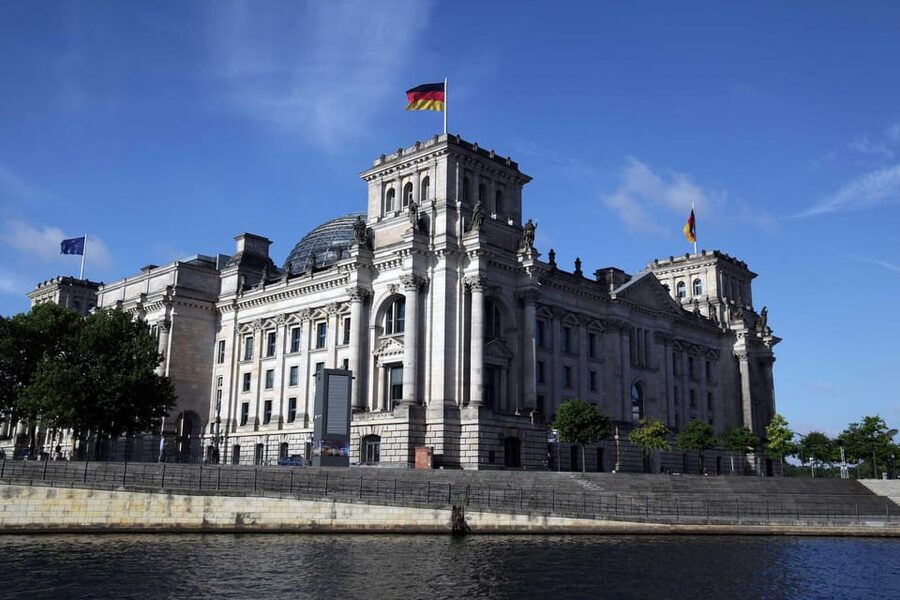
The next section brings you to the Reichstag, Germany’s parliamentary building. You will see the exterior and hear about its role from the Weimar Republic to the present German government.
The tour does not include entry to the Reichstag. That is important if you are hoping to see the interior or visit its dome. This experience is about the building’s place in Berlin’s political story, not an inside visit.
Nearby, the Politicians’ Memorial adds a more personal note. It commemorates political figures who faced persecution during difficult periods in German history. The stop helps shift the discussion from large institutions to individuals who paid a price for political action or belief.
I appreciate that this is not just a parade of famous buildings. A short stop at a memorial can make the political story less abstract. You are asked to consider what happened to people who opposed persecution and dictatorship, rather than treating history as a sequence of dates.
The Sinti and Roma Memorial
The Sinti and Roma Memorial is one of the more important stops on the route, and it is easy to overlook if you are walking alone.
It honors the thousands of Sinti and Roma people murdered during the Holocaust. The guide explains the persecution behind the memorial and why this part of the Nazi era deserves attention alongside the better-known sites.
This stop may be brief, but its value is not measured by its size. Berlin’s central sights can pull you toward grand architecture and famous names. The memorial brings the focus back to a community targeted by Nazi racial policy.
I would pay close attention here, especially if you already know the standard story of Berlin’s Holocaust memorials. The Sinti and Roma Memorial broadens that story and makes the tour less predictable than a simple Brandenburg Gate and Checkpoint Charlie walk.
A different sort of day out in Berlin:
- Berlin: Reichstag, Dome and Government District Guided Tour
★ 4.7 · 18,288 reviews - Berlin: Boat Tour Along the River Spree
★ 4.4 · 11,252 reviews - Discover Berlin Half-Day Walking Tour
★ 5.0 · 9,624 reviews - Berlin: Hop-on Hop-off Bus Tour with Live Commentary
★ 4.3 · 8,579 reviews
The Soviet War Memorial in the Tiergarten
The route then enters the Tiergarten for the Soviet War Memorial. The setting changes from formal squares and government buildings to a large park, giving the walk a little breathing room.
The memorial honors Soviet soldiers killed in the Battle of Berlin during World War II. Its scale reflects the military importance attached to the Soviet victory, and the guide explains the role of those soldiers in the final fighting of the war.
This is another place where context matters. A visitor might see a large military monument and move on without knowing why it is here. The guide connects it to the battle for Berlin and to the city’s postwar political division.
The stop also adds balance to the route. The tour does not focus only on Nazi crimes or Cold War tension. It also addresses the military defeat of Nazi Germany and the human cost of the final battle.
The Memorial to the Murdered Jews of Europe

The Memorial to the Murdered Jews of Europe is likely to be one of the most emotionally difficult stops. Its field of concrete slabs creates a changing sense of space as you walk among them.
The tour gives you time to consider the memorial and places it within the history of the Holocaust. You do not enter a building here, and there is no museum visit included, but the outdoor installation itself carries much of the experience.
I like that this stop is not treated as a quick photo opportunity. The memorial is designed to raise questions and discomfort, not to provide a neat answer. A guide can help you understand the intention without telling you exactly what you should feel.
Keep your pace respectful. This is a memorial site, not merely another landmark on a sightseeing route. The two-hour schedule means the stop cannot cover every detail of the Holocaust, but it gives you a meaningful starting point for a later museum visit.
Hitler’s bunker site and the Finance Ministry
The route continues to the site of Hitler’s bunker. There is no visible bunker interior to tour, and you should not expect a dramatic underground visit. The significance lies in standing above the location where Hitler spent his final days and where the Nazi regime collapsed.
The guide explains the final stage of the Third Reich and why the site remained controversial in postwar Berlin. The unremarkable appearance is part of the story. You are looking at an ordinary urban location connected to extraordinary events.
That contrast makes the stop useful. Berlin does not always mark its darkest sites with grand monuments. Sometimes the history sits beneath a normal street, with only a modest sign or explanation to point it out.
The walk also passes the Finance Ministry, a modern government building with its own connection to Germany’s past. The exterior provides another example of how present-day institutions occupy spaces shaped by earlier political systems.
You will not get a full architectural tour of the ministry. Instead, the guide uses it as a bridge between past and present, showing how the center of government has changed while the buildings and streets continue to carry earlier associations.
The Berlin Wall and Topography of Terror
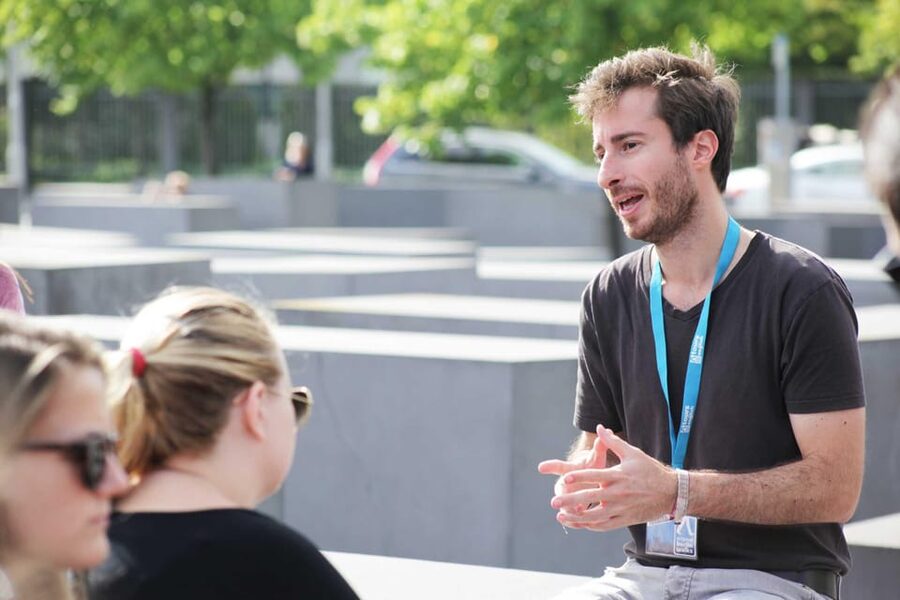
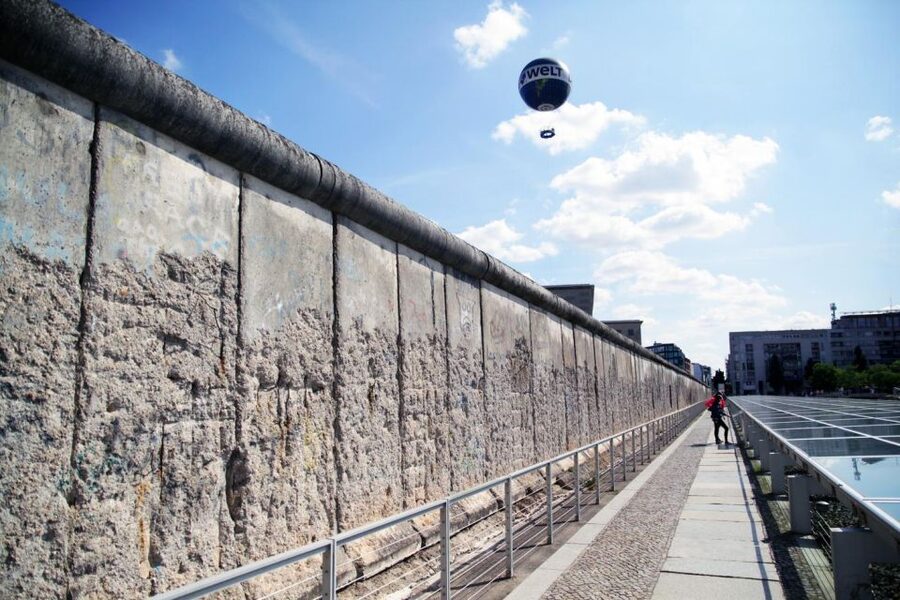
Near the Topography of Terror, you see remaining sections of the Berlin Wall and learn about the city’s Cold War division.
This part of the walk shifts from Nazi Germany to the postwar struggle between East and West. The Wall was not just a concrete barrier. It divided neighborhoods, families, political systems, and daily life for decades.
The Topography of Terror area is especially useful because it connects the Nazi past with the later history of division. The tour does not turn the two periods into one story, but it shows how central Berlin was reshaped after 1945.
You do not enter the Topography of Terror exhibition on this tour. If you want documents, photographs, and a longer treatment of the Nazi security system, plan a separate visit. Here, the value is the outdoor setting and the guide’s explanation as you pass the Wall remains.
I would treat this stop as a prompt for further exploring Berlin. The Wall is often photographed as a symbol, but the guide helps you think about its practical effect on the people who lived with it.
Checkpoint Charlie and the end of the walk
Checkpoint Charlie is the final stop, and it makes sense as the endpoint. This former border crossing became one of the most famous symbols of the Cold War, associated with military tension, espionage, and escape attempts.
The guide explains how the crossing worked and why it became so well known. The stop is about ten minutes, so you will get a concise account rather than a long examination of every Cold War incident.
Checkpoint Charlie today can feel more commercial and theatrical than the solemn memorials earlier in the tour. That contrast is worth knowing before you arrive. The site is important, but the surrounding area does not always convey the seriousness of the original border crossing.
I still like ending here. After two hours of memorials, government buildings, war history, and the Berlin Wall, Checkpoint Charlie gives you a final image of the divided city and its eventual pursuit of freedom.
The tour finishes at Checkpoint Charlie, which is practical if you want to continue sightseeing in central Berlin. You can also use the ending point to visit nearby historical attractions on your own, though entry to those sites is not part of this activity.
What $23 buys you
At $23 per person, this tour offers good value if you want a guided introduction rather than a private experience or a full museum program.
The price covers an experienced academic guide speaking English and two hours of walking through central Berlin. You are paying mainly for the route and the explanation. There are no included building admissions, transport costs, food, or special access.
I think the price works best for three types of people:
- First-time visitors who want to understand the city’s main historical district quickly.
- Short-stay visitors who cannot spare a three-and-a-half to four-hour walking tour.
- Independent sightseers who want a framework before returning to museums or memorials alone.
The value is less clear if you already know Berlin’s political history well or plan to spend several days with specialist guides. You may prefer a longer tour with more time at each site.
The shorter walk also overlaps with the route of the provider’s longer Discover Berlin tour. I would not book both unless you specifically want a quick overview followed by a slower repeat. For most people, choose one.
Pace, access, and what to bring
The tour lasts two hours and involves walking between several central locations. Comfortable shoes are essential, even though the route is shorter than a half-day city walk.
Wear clothing suited to the weather. Much of the experience takes place outdoors, and the tour continues through memorials, streets, and park areas rather than moving from one indoor site to another.
The activity is listed as wheelchair friendly. Since no detailed route information is provided, I would still contact the operator if you need specific information about surfaces, rest points, or the exact route. The tour does not include any building entry.
English is the only listed tour language. If you need another language, this particular departure may not suit you.
You can cancel up to 24 hours before the start for a full refund, and the reserve-now, pay-later option lets you hold a place without paying immediately. Those terms are useful if your Berlin plans are still shifting.
Guide quality and the right expectations
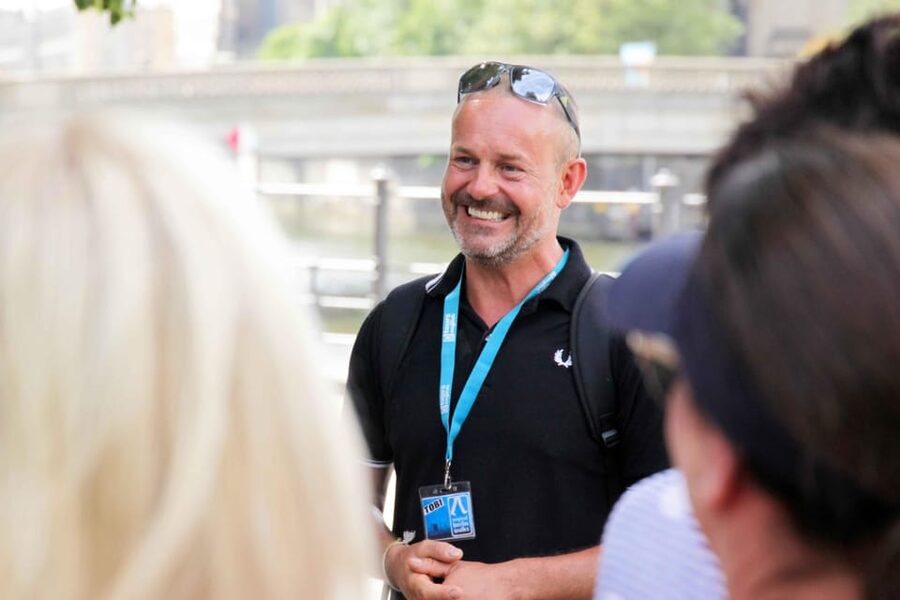
The guide is central to the experience. The tour promises an academic guide with fluent English, and Dylan is one named guide who received praise for clear information and careful answers to questions.
That detail matters because the route covers difficult subjects quickly. A strong guide keeps the walk from becoming a string of dates and names. You want someone who can explain why a memorial was built, how the Nazi and Cold War periods differ, and how the same central streets changed over time.
The available score is 4.9 from 27 reviews, with the strongest repeated points being the informative explanations and manageable walking time. One Italian booking specifically praised the guide’s way of explaining Berlin’s history, while another described the experience as informative without being too long.
I would still keep expectations realistic. A two-hour walk cannot offer a full class in German history, and the guide may need to move on before you have absorbed every detail. Bring questions, listen closely, and note the places you want to revisit.
Who should book this Berlin walk
Book it if you want a clear historical orientation on your first day in Berlin. The route covers the sights most people want to recognize, but it also includes less obvious memorials that add depth.
It is a good fit for couples, families with older children, solo visitors, and anyone with a short stay. The moderate length also works well before an afternoon museum visit.
You may want another option if you dislike walking, need extensive indoor time, or want a tour centered on art, food, royal Berlin, or neighborhood life. This experience is firmly about political and contemporary history.
It is also not the best choice if you want to enter the Reichstag, visit the Topography of Terror exhibition, or explore a Holocaust museum with time for detailed exhibits. Those require separate plans.
Should you book the Discover Berlin Express Tour?
I would book this tour if you want Berlin’s major 20th-century sites explained in a short, affordable walk. The route is well chosen, the subject matter is serious, and the $23 price is reasonable for an English-speaking academic guide.
Choose it over the longer Berlin tour if your schedule is tight. Choose only one of them if you want to avoid repeating much of the same route.
The main limitation is the lack of indoor visits and the quick pace at some memorials. Still, if you arrive with comfortable shoes and the right expectations, this is a strong way to get your bearings and decide which parts of Berlin deserve a closer look.
FAQ
How long does the Berlin Express Tour last?
The tour lasts two hours.
What is the price?
The listed price is $23 per person.
Where does the tour begin?
It begins at Pariser Platz, in front of the Tourist Information Office.
Where does the tour finish?
The tour finishes at Checkpoint Charlie.
Is the tour conducted in English?
Yes. The tour includes a live English-speaking guide.
Which major sights are included?
The route includes Pariser Platz, Brandenburg Gate, the Reichstag, Hitler’s bunker site, the Soviet War Memorial, the Memorial to the Murdered Jews of Europe, the Berlin Wall near the Topography of Terror, and Checkpoint Charlie.
Do you enter any buildings?
No. The tour takes place outdoors and does not include entry into buildings.
Is the tour wheelchair accessible?
The activity is listed as wheelchair friendly.
What should you bring?
Bring comfortable shoes and clothing suitable for the weather.
Can you cancel for a refund?
Yes. You can cancel up to 24 hours in advance for a full refund.
Newest Berlin reviews
- Where It All Began: Berlin’s Queer & Trans History Tour★ 4.9 · 6 reviews
- Berlin: guided canoe | kayaktour★ 4.1 · 7 reviews
- Understanding Kreuzberg: The roots of local (sub)culture★ 4.9 · 11 reviews
- Private Potsdam City Tour in an authentic vintage van★ 5.0 · 14 reviews
- Warnemünde Shore Excursion: Private Sachsenhausen and Berlin Tour★ 5.0 · 12 reviews
- Ultimate E-Bike Tour of Berlin with Beer Garden Stop★ 5.0 · 4 reviews
- In the Forbidden City – Potsdam Walking Tour★ 5.0 · 17 reviews
- Private Walking Tour of Potsdam and Sanssouci★ 5.0 · 24 reviews
Berlin Sightseeing Tours, compared.

1-Hour City Tour by Boat with Guaranteed Seating
Read our review →
Explore Berlin: See All The Iconic Sights & Some Hidden Gems
Read our review →
Hop-On Hop-Off Sightseeing Bus with Boat Options
Read our review →
Sights and Highlights Bike Tour with a Local Guide
Read our review →

Sightseeing Tour in Classic Volkswagen T1 Samba Bus
Read our review →
Browse the lists this tour appears in