
Reviewed · ALTERNATIVE BERLIN TOURS
Berlin: Street Art and Alternative Tour
Berlin’s street art makes the city’s Cold War story easier to see. On this three-hour walk, you move through Kreuzberg and the former border zone toward Friedrichshain and the East Side Gallery, where murals sit on the old Wall and politics still clings to the concrete. The art is the doorway into Berlin’s past, not just a colorful backdrop.
I like the way this tour links murals to the social changes after 1989, and I like that it focuses on Kreuzberg, a district you can easily skim past without context. Guides such as Antonella, Iacopo, Martin, and Marie are praised for clear history, current anecdotes, and an open attitude toward questions. The main drawback is practical: you need to buy a 24-hour AB public transport ticket, and the meeting point may change with the option you book.
Key points at a glance
- Kreuzberg with context: See alternative Berlin through its art, politics, architecture, and neighborhood changes.
- East Side Gallery included: Reach the famous open-air Wall gallery and connect its murals to the city’s divided past.
- French or Italian guidance: The tour is led in one of these two languages, with guides including Antonella, Iacopo, Martin, and Marie.
- Three hours on foot: Expect a walking-heavy outing, so comfortable shoes matter.
- Public transport is extra: You must have a 24-hour AB ticket to take the tour.
- Good value at $31: The price is reasonable if you want history and interpretation rather than a self-guided mural hunt.
Why Berlin’s street art needs a history lesson
Berlin’s alternative culture did not appear out of nowhere. The city’s division left empty buildings, broken connections, and a strange amount of room for new ideas. After the Wall fell in 1989, artists, political groups, squatters, musicians, and young residents helped shape a new Berlin in the spaces left behind.
This tour uses urban art to explain that process. You are not simply shown a wall and told who painted it. The aim is to connect public art with social claims, economic change, and the growth of gentrification. That makes the experience useful even if you do not know much about Berlin before arriving.
I like this approach because street art can be hard to read on your own. A mural may look bold or amusing, but its subject, location, and timing often matter just as much as its colors. A guide can point out why a piece appeared in a certain neighborhood, how the area changed around it, and why some art feels political rather than decorative.
The tour also helps explain why Berlin became a center for alternative culture during the 1990s. The fall of the Wall was not only a political event. It changed who could move around the city, where people could live, and how artists used public space. You get a short lesson in all three.
More street art tours in Berlin:
- Berlin: City Street Art Guided Walking Tour
★ 4.8 · 886 reviews - Berlin: 3-Hour Street Art Tour
★ 4.7 · 778 reviews - Berlin Street Art Walking Tour – Off The Grid
★ 5.0 · 270 reviews
Starting in Kreuzberg, where art meets daily life
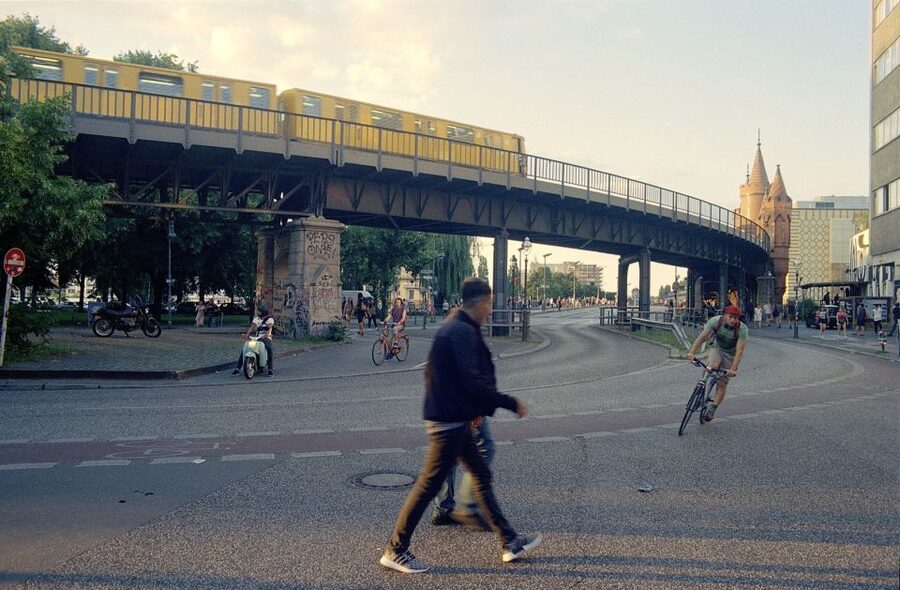
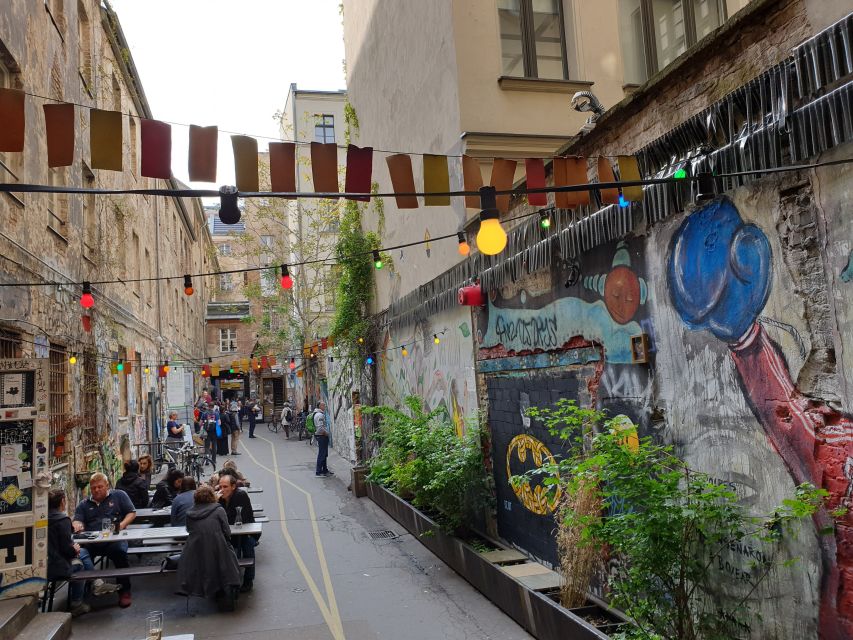
Kreuzberg is the heart of the experience. It is known for its alternative identity, but the tour treats it as a real neighborhood rather than a theme park for street art. You walk through streets where large works appear between buildings, while smaller pieces occupy corners, courtyards, and less obvious spots.
The district is important because it sits close to the old East and West Berlin divide. Its culture grew from a mix of migration, political activity, low-cost housing, art, and local resistance. The walls here can tell you about more than an artist’s style. They can also show how residents respond to landlords, city planning, social pressure, and changing prices.
Your guide’s job is especially important in Kreuzberg. Without explanation, you may notice only paint. With a good guide, you begin to see the neighborhood as a record of arguments and changes. French-speaking guide Marie, for example, is praised for answering questions and adding current anecdotes. Martin is also noted for explaining Berlin with warmth and clarity.
The area is not presented as frozen in its alternative past. That matters. The tour brings the story forward to the current period of gentrification, when the same qualities that attracted artists and independent businesses can also attract investment and higher rents. You get a more honest picture of Kreuzberg when both sides are included.
Moving from murals to social change
A strong feature of this walk is its attention to the period after the Wall fell. The tour follows the economic and social changes that shaped Berlin from 1989 onward, then links those changes to the city you see now.
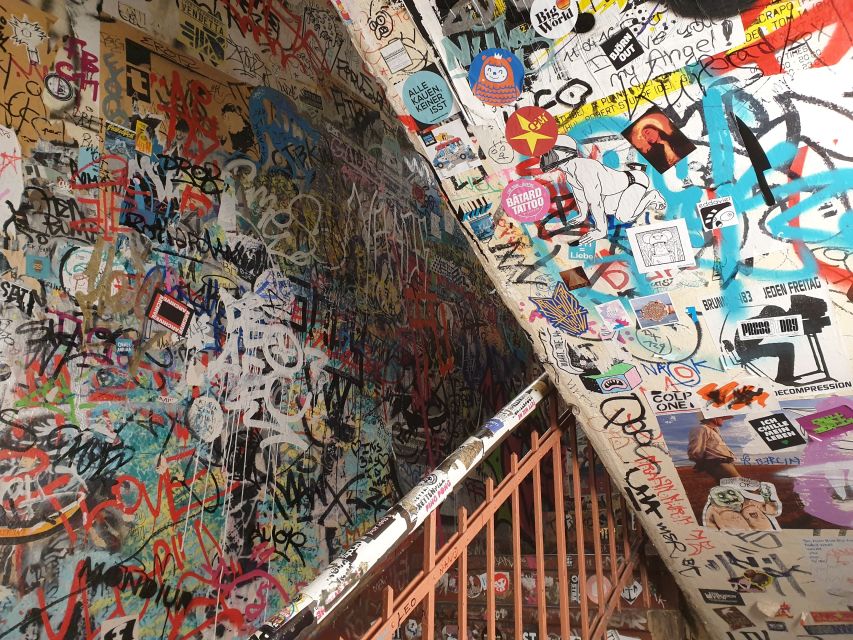
That period can be confusing. Berlin’s revival involved excitement, uncertainty, new creative energy, and sharp differences between neighborhoods. Street art became one way for people to make claims in public. Paint could celebrate freedom, protest authority, mark territory, or simply make a neglected place feel claimed.
The guide helps you connect those roles. This is where the tour becomes more than a photo stop. You are encouraged to ask what public art does, who gets to use a wall, and what happens when an alternative neighborhood becomes fashionable.
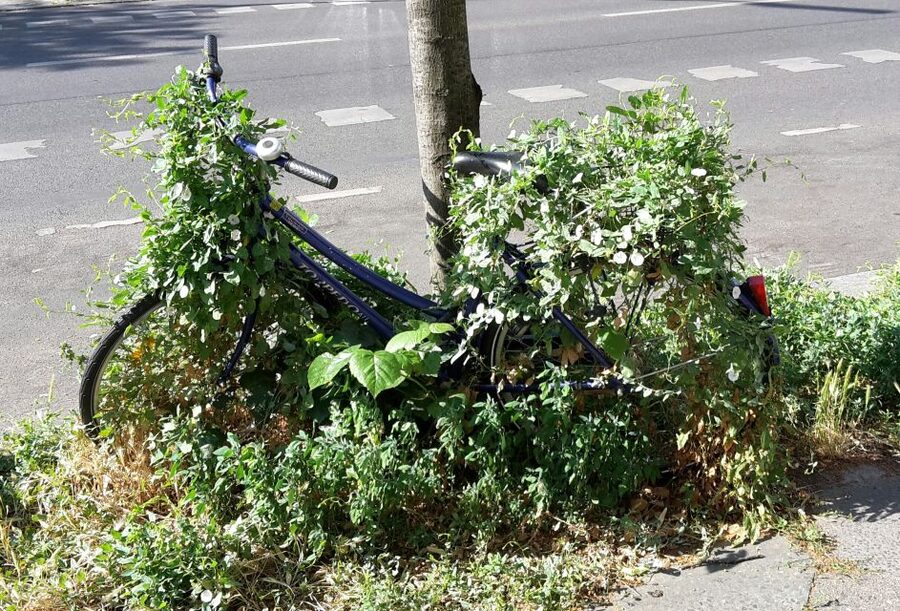
I would pay attention to the contrast between giant works and tiny pieces. The large murals are easy to find and photograph. Small works tucked into corners may be less famous, but they show how urban art operates at street level. They can feel personal, temporary, and tied to a particular block.
The tour does not promise that every artwork will be permanent. Berlin’s street art changes. Paint fades, buildings are renovated, and new works cover old ones. That impermanence is part of the point. The walk gives you a way to read the city as it is now, rather than treating it as a fixed outdoor museum.
Friedrichshain and the East Side Gallery
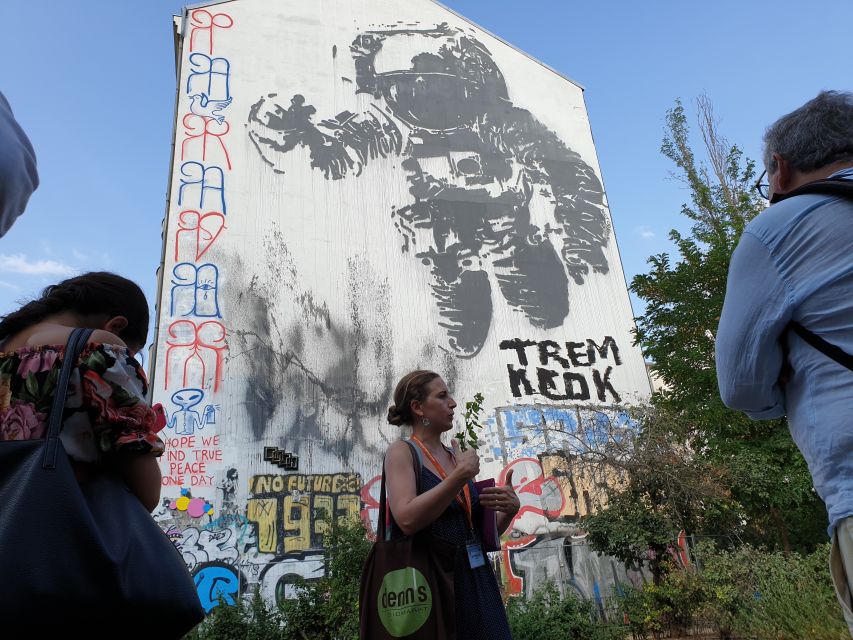
The experience includes Friedrichshain and the East Side Gallery, one of Berlin’s best-known reminders of division and reunification. The gallery uses a preserved section of the Berlin Wall as a long outdoor art display.
Here, the scale changes. Instead of finding pieces around ordinary streets and courtyards, you encounter a line of concrete that carries a clear political weight. The murals turn the former barrier into a place for artistic statements, memory, and public viewing.
The East Side Gallery is a popular stop, but this tour places it within a wider story. You are not only looking at famous painted sections of Wall. You are considering why artists were drawn to this site, how the Wall became a symbol after 1989, and how Berlin has continued to negotiate its divided past.
There is a useful tension here. The gallery is an art destination, yet it is also a remnant of a border that once cut through people’s lives. The guide’s historical framing helps keep both ideas in view. You can appreciate the murals without forgetting what the concrete once represented.
The East Side Gallery is also a good reason to choose this tour over a general street-art walk that stays in one district. You see the local texture of Kreuzberg, then connect it to a larger city story in Friedrichshain. The two areas show different sides of Berlin’s alternative culture.
More alternative tours in Berlin:
- Explore Berlin: See All The Iconic Sights & Some Hidden Gems
★ 5.0 · 4,429 reviews - Berlin: Alternative Berlin Walking Tour
★ 4.6 · 1,204 reviews - Berlin: Alternative Bike Tour of Kreuzberg & Friedrichshain
★ 4.7 · 548 reviews - Berlin: Alternative Berlin Bike Tour
★ 4.8 · 359 reviews
What the guide adds to the walk
The tour is offered in French or Italian, which is a major factor when you compare it with English-language alternatives. A complex subject becomes much easier to follow when the guide can explain political terms, neighborhood changes, and cultural references in a language you handle comfortably.
Several guides are associated with especially strong qualities. Antonella and Iacopo are praised for leading with passion and explaining the city’s history in an engaging way. Martin is described as making his love for Berlin accessible, while Marie is noted for her questions, present-day details, and enthusiasm for Kreuzberg.
You should not expect a formal lecture. The tone is more conversational, with room for questions and anecdotes. That suits the subject. Berlin’s alternative culture is full of contradictions, and a good conversation can deal with those better than a fixed script.
The language option also makes a difference for families and mixed-age groups. Younger members may notice the colors first, while adults may be more interested in the Wall, politics, architecture, or gentrification. A guide who explains clearly can keep those threads connected.
The experience has a high overall rating of 4.7 from 98 reviews, and the praise is notably consistent around guide quality, historical explanation, and the unusual focus on alternative Berlin. One review rates it four stars and calls it interesting and distinctive, which feels like a fair description of the tour’s appeal: it is specialized rather than a complete introduction to the city.
How much walking and transport to expect
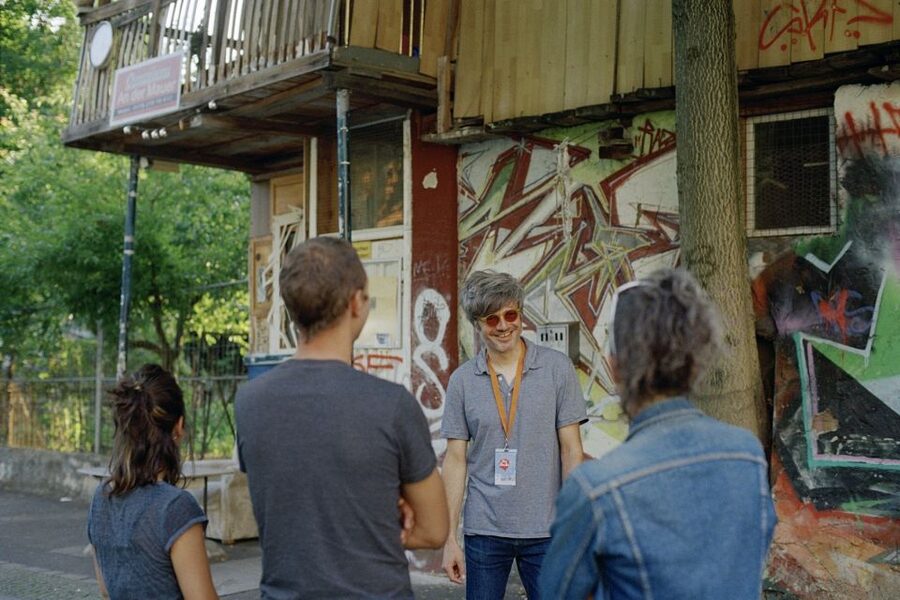
This is a three-hour walking tour. You should wear comfortable shoes, especially because the route covers urban districts rather than a single compact attraction.
A 24-hour AB public transport ticket is required and is not included in the $31 price. This is an important cost and planning detail. Berlin’s public transport system is part of getting around the city, but you should budget for the ticket separately instead of treating the tour price as the full expense.
The meeting point may vary according to the option you book. Check that detail closely before leaving your hotel. One useful practical question raised by the route is why the meeting point is not always at Kotbusser Tor when the tour begins there. If your confirmation gives a different location, follow the booked option rather than assuming the starting point.
Because the tour uses public transport as part of the experience, allow time to find the meeting point. Comfortable shoes, a valid ticket, and a little patience with city connections will make the outing easier.
Is $31 a fair price?
At $31 per person, this is a reasonable price for a three-hour small-group walking tour with a live French or Italian-speaking guide. You are paying for interpretation, not simply access to a public street.
The value is strongest if you want to understand what you are seeing. You could walk through Kreuzberg and visit the East Side Gallery without booking a tour, but the meaning of the art would often be left to guesswork. If you enjoy photography but also want the social and political story, the added explanation earns its keep.
The value is weaker if you only want a quick list of famous murals or a broad overview of Berlin’s major sights. This is not a general city tour. It does not focus on the Brandenburg Gate, Museum Island, or other classic attractions. It is a focused look at alternative culture, urban art, and the changes that followed reunification.
Remember to add the cost of the 24-hour AB public transport ticket. Even with that extra expense, the tour remains a fair choice for people who want a specialist experience in their preferred language.
Who should book this Berlin walk?
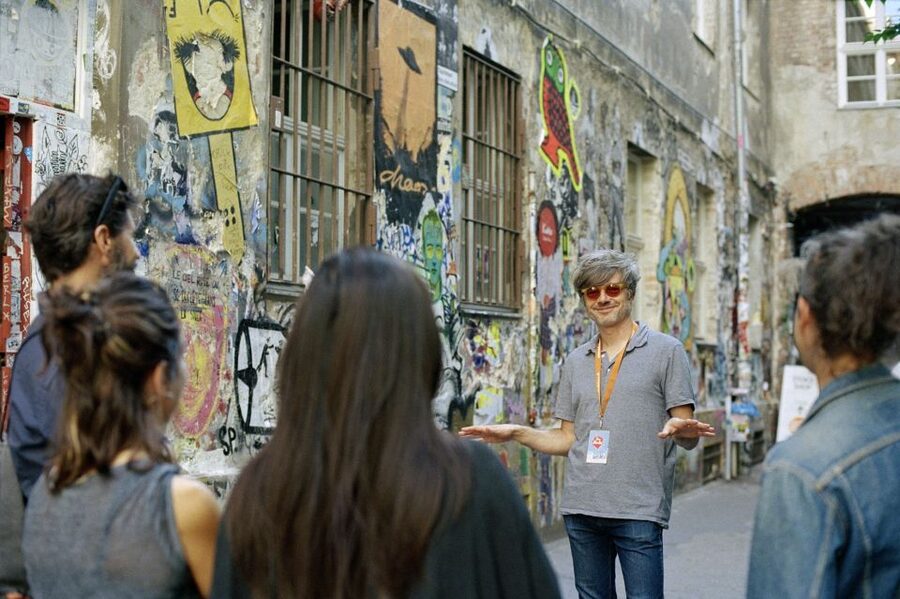
I would recommend it to you if you have already seen some of central Berlin and now want to understand the city’s less formal side. It is also a smart first-day option for visitors who want history explained through neighborhoods rather than through museums alone.
The tour suits:
- People interested in street art, murals, and public space
- Visitors curious about Cold War Berlin and the years after 1989
- French- and Italian-speaking visitors who prefer a tour in their own language
- Anyone who wants to explore Kreuzberg with more context
- Repeat visitors looking beyond the standard sights
- People comfortable with three hours of walking and public transport
It may not suit you if mobility limitations make a long urban walk difficult, since no accessibility details are provided. It may also disappoint if your main goal is a fast photo tour with little discussion.
Families can enjoy the visual side, but the political and economic themes are aimed more at older children and adults. The art gives the tour an easy entry point, while the history adds substance for people who want more than colorful walls.
Booking details worth checking
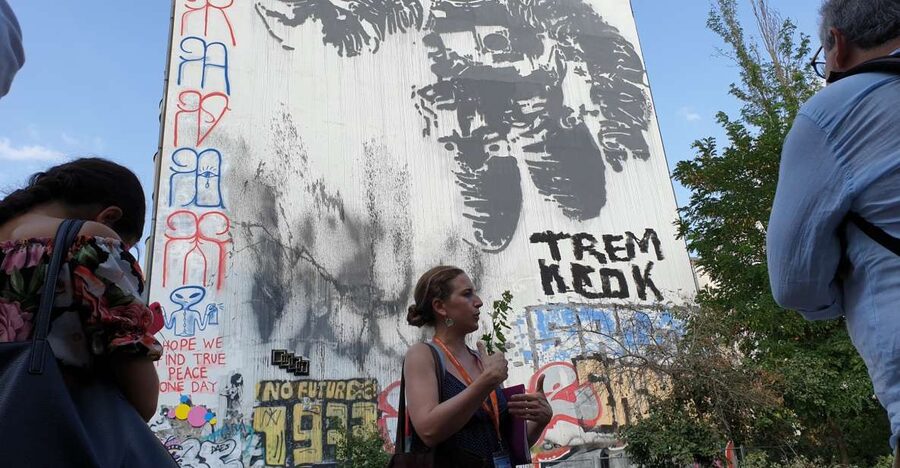
The experience includes a small-group walking tour and a French- or Italian-speaking guide. The guide language is not a minor detail, so choose the correct option when booking.
The price is $31 per person, and the duration is three hours. The 24-hour AB public transport ticket is extra. Comfortable shoes are recommended, and you should check the exact meeting point because it may vary by option.
You can cancel up to 24 hours in advance for a full refund. The reserve-now, pay-later option also gives you some flexibility if your Berlin plans are still shifting.
Should you book the Street Art and Alternative Tour?
Book it if you want Berlin’s murals to make sense. The strongest part of the experience is the connection between art, the former Wall, Kreuzberg’s alternative culture, and the city’s current changes.
I especially like the mix of neighborhood walking and the East Side Gallery. You get small, local pieces as well as the major Wall paintings, and the route gives both a street-level view and a citywide story. Guides such as Antonella, Iacopo, Martin, and Marie have the warm, conversational style this subject needs.
Skip it if you want only Berlin’s traditional landmarks, or if you prefer to wander without a set route. For everyone else, $31 is a fair price for three hours of useful context in French or Italian, provided you are ready to walk and pay separately for public transport.
FAQ
How long does the tour last?
The walking tour lasts three hours.
What languages are available?
The live tour guide speaks either French or Italian, depending on the option booked.
Does the tour visit Kreuzberg?
Yes. Walking through Kreuzberg is one of the main parts of the experience.
Is the East Side Gallery included?
Yes. Visiting the East Side Gallery is one of the listed highlights.
Is public transport included in the price?
No. You need to purchase a 24-hour AB public transport ticket separately.
What should I bring?
Bring comfortable shoes for the three-hour walking tour.
Where does the tour meet?
The meeting point may vary depending on the option you book. Check your selected option for the exact location.
Can I cancel for a full refund?
Yes. You can cancel up to 24 hours in advance for a full refund.
Newest Berlin reviews
- Where It All Began: Berlin’s Queer & Trans History Tour★ 4.9 · 6 reviews
- Understanding Kreuzberg: The roots of local (sub)culture★ 4.9 · 11 reviews
- Berlin: guided canoe | kayaktour★ 4.1 · 7 reviews
- Private Potsdam City Tour in an authentic vintage van★ 5.0 · 14 reviews
- Warnemünde Shore Excursion: Private Sachsenhausen and Berlin Tour★ 5.0 · 12 reviews
- Ultimate E-Bike Tour of Berlin with Beer Garden Stop★ 5.0 · 4 reviews
- In the Forbidden City – Potsdam Walking Tour★ 5.0 · 17 reviews
- Private Walking Tour of Potsdam and Sanssouci★ 5.0 · 24 reviews
Alternative Berlin Tours, compared.
Explore Berlin: See All The Iconic Sights & Some Hidden Gems
Read our review →
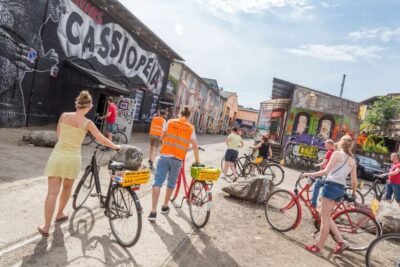
Alternative Bike Tour of Kreuzberg & Friedrichshain
Read our review →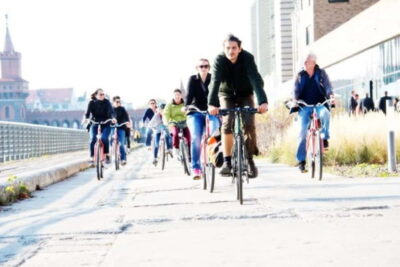
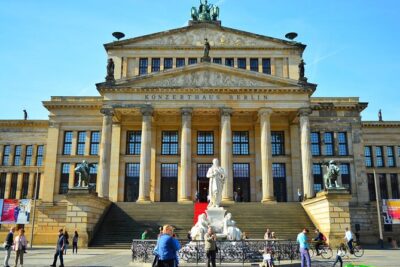
Private Berlin: Iconic Sights and Hidden Gems Walking Tour
Read our review →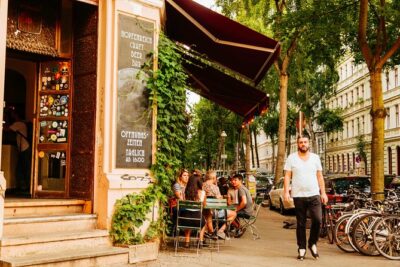
Kreuzberg Berlin: Off the Beaten Track PRIVATE Walking Tour
Read our review →
Experience the Alternative Kreuzberg on a Bike Tour
Read our review →
Alternative Berlin Bike Tour – Off the Beaten Tracks in Small Groups
Read our review →Browse the lists this tour appears in