
Reviewed · 1-DAY TOURS
Berlin Complete in one day
Berlin’s past is packed into this six-hour city tour, from the Brandenburg Gate and Reichstag to Hitler’s bunker site, the Holocaust Memorial, Checkpoint Charlie, Jewish Quarter, and East Side Gallery. It gives you a quick but serious introduction to a city that rarely explains itself at street level.
I like two things in particular: the route links the major Nazi, Jewish, Cold War, and reunification sites, and the guides bring the story to life with clear explanations and personal enthusiasm. Alberto, David, Felipe, and Ezequiel are among the named guides praised for making difficult subjects approachable. The main drawback is pace. You cover a lot of ground, and a group of up to 30 can make this feel more like a moving history lesson than a relaxed stroll.
Key points at a glance
- Berlin’s major chapters in one route: Follow the city from Prussian grandeur to Nazi terror, divided Berlin, and reunification.
- A strong first-day choice: The tour gives you a useful map of central Berlin before you return to explore selected sites on your own.
- History comes first: Expect explanation at Hitler’s bunker site, the Holocaust Memorial, Bebelplatz, Checkpoint Charlie, and the Berlin Wall.
- Public transport matters: An AB transport card is recommended because the route covers more ground than a simple central walking loop.
- No entry tickets are included or generally needed: The listed stops are viewed from outside or in public spaces, so the price pays mainly for the guide and route.
- A practical finish: You end near Berlin Zoo Station, a useful transport point on the western side of the city.
A fast route through Berlin’s difficult past
This is not a tour built around one palace, museum, or grand viewpoint. It is a connected lesson in how Berlin changed, and how its past still shapes the streets you see today.
You begin at Pariser Platz, the formal square beside the Brandenburg Gate. From there, the route moves through government buildings, memorials, former border points, Jewish sites, and surviving sections of the Berlin Wall. That range is the real value. In one day, you see how power, war, persecution, division, and reunification left their marks on the city.
The route is especially useful if Berlin is new to you. I would treat it as a foundation rather than a complete visit to every sight. You will see many important places, but most stops last only 10 to 20 minutes. That is enough for an explanation and a look around, not enough for a museum visit or a long personal pause.
The tour begins at 9:00 a.m. in front of the Academy of Arts on Pariser Platz. It finishes near Berlin Zoo Station, officially Berlin Zoologischer Garten, at Hardenbergplatz. That east-to-west spread makes the recommended AB transport card sensible. Confirm the local transit details before setting out, since the exact balance between walking and public transport is not spelled out.
More day trips from Berlin:
- From Berlin: Sachsenhausen Concentration Camp Day Trip
★ 4.7 · 52 reviews - Private Tour: Potsdam Day Trip from Berlin
★ 4.5 · 43 reviews - Private Day Trip to Potsdam from Berlin by Train
★ 4.5 · 27 reviews
Brandenburg Gate and the seat of modern Germany
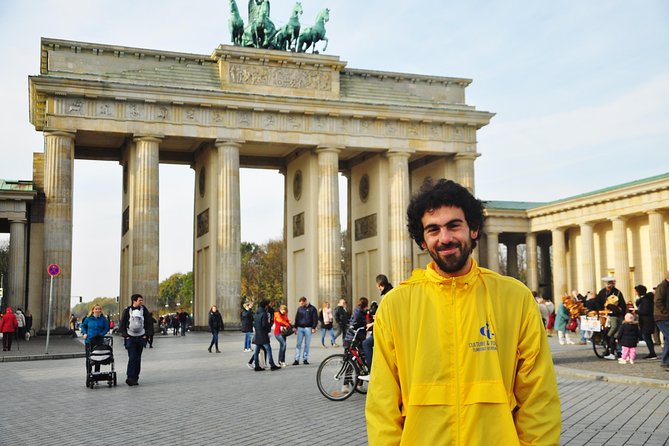
The Brandenburg Gate is the natural opening scene. Once a royal city gate, it now represents Berlin and German reunification around the world. Pariser Platz gives you a clean view of the gate and puts you near several important government buildings.
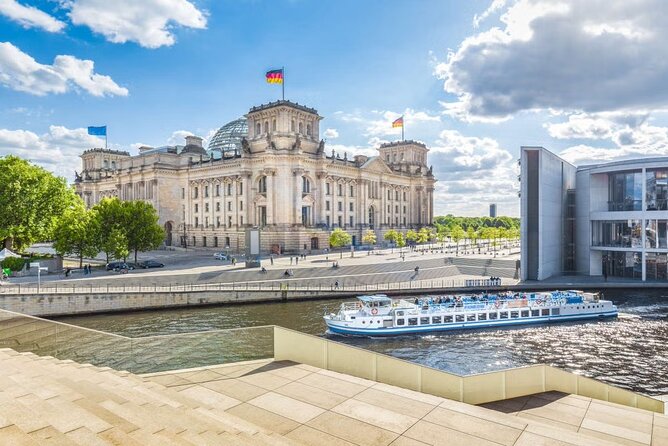
The Reichstag Building is next, with about 15 minutes listed for the stop. You should expect to hear about Germany’s parliament and the building’s place in the city rather than go inside. No admission ticket is included, and the stop is brief, so do not plan on visiting the dome during the tour.
This opening section works well because Berlin’s symbols are close together. You get the grand public face of the capital, then begin to see how the same area was shaped by dictatorship and war. The Old Ministry of Propaganda is included in the wider route, adding a useful reminder that Nazi power depended not only on soldiers and police, but also on control of information.
Hitler’s bunker site and the Holocaust Memorial
The Hitler’s bunker site is one of the tour’s more sobering moments. There is no dramatic structure to enter or photograph. The importance lies in understanding what happened at this otherwise ordinary-looking location and why the site is handled with restraint.
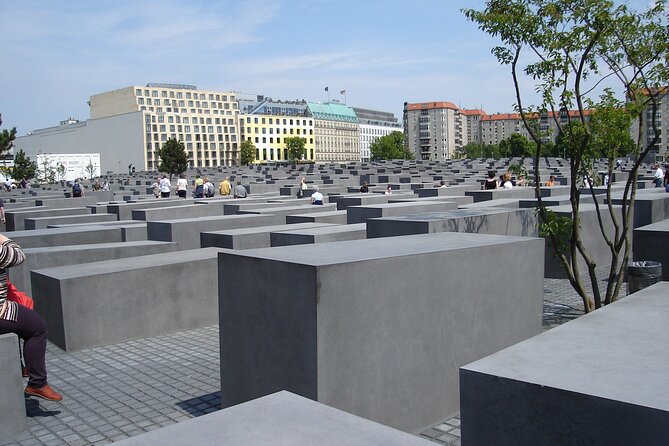
The Holocaust Memorial, officially the Memorial to the Murdered Jews of Europe, follows as one of the central stops. About 15 minutes is allocated here. The field of concrete slabs is designed to create a feeling of uncertainty and disorientation as you walk through it, but your time with the guide will be limited.
I appreciate that the route places this memorial alongside the bunker site. Together, they prevent Berlin’s wartime past from becoming a collection of disconnected facts. You see both the center of Nazi power and a public act of remembrance for the people murdered by that regime.
Still, you may want to return to the Holocaust Memorial later. Fifteen minutes gives you the basic setting, but not much quiet time. The underground Information Centre is a separate experience and should not be assumed to be part of this tour.
Bebelplatz and the story of censorship
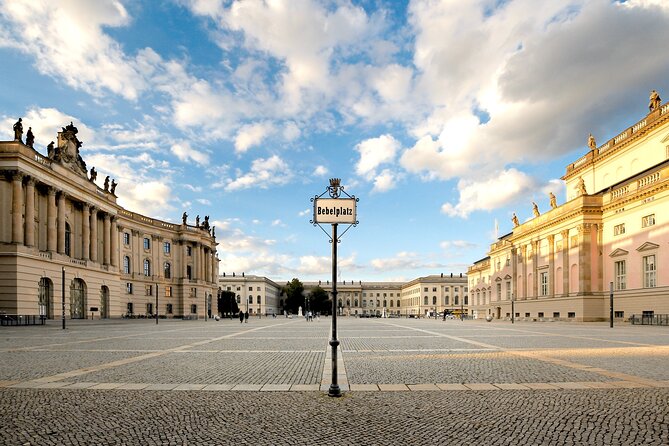
Bebelplatz is listed as a 15-minute stop and marks the location of the Nazi book burning. It is a small urban square, but the subject is large: the destruction of books and the public attack on free thought.
This is one of the places where a good guide makes a real difference. Without context, you could pass through the square and see little beyond attractive historic buildings. With an explanation, the location becomes a warning about how public culture can be controlled.
The tour’s strength is its willingness to pause at sites that are not simply pretty or famous. Bebelplatz is not just another square on a sightseeing route. It gives the day a clear connection between government power, propaganda, censorship, and persecution.
A different sort of day out in Berlin:
- Berlin: Reichstag, Dome and Government District Guided Tour
★ 4.7 · 18,288 reviews - Berlin: 1-Hour City Tour by Boat with Guaranteed Seating
★ 4.3 · 16,993 reviews - Berlin: Boat Tour Along the River Spree
★ 4.4 · 11,252 reviews - Discover Berlin Half-Day Walking Tour
★ 5.0 · 9,624 reviews
Checkpoint Charlie and the divided city
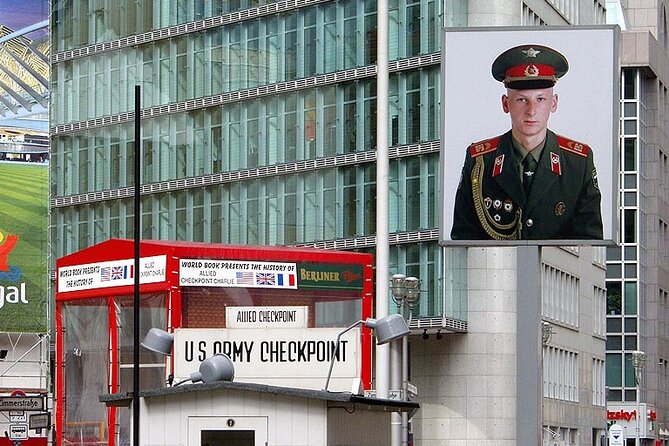
Checkpoint Charlie receives about 10 minutes. The former border-control point is now one of Berlin’s best-known Cold War locations, but it can also feel heavily packaged for tourism. Keep your expectations realistic. The value here comes from the explanation of the Berlin Wall, escape attempts, and the political division that split the city.
A short visit is probably enough for the modern checkpoint display and the surrounding streets. You will not have time for a long museum visit. The guide’s role is to make the location meaningful, not to provide every detail of Berlin’s Cold War story.
This stop also shows why the tour works better as a connected route than as a simple list of sights. After learning about Nazi rule, you move into the postwar division of Berlin. The city’s political story changes, but the streets remain linked to what came before.
Museum Island, Alexanderplatz, and the Jewish Quarter
The route continues through Gendarmenmarkt and toward Museum Island. Gendarmenmarkt is one of Berlin’s most elegant public spaces, framed by the French Cathedral, German Cathedral, and Concert Hall. The tour does not include museum entry, so you should see this as an orientation stop rather than a cultural visit indoors.
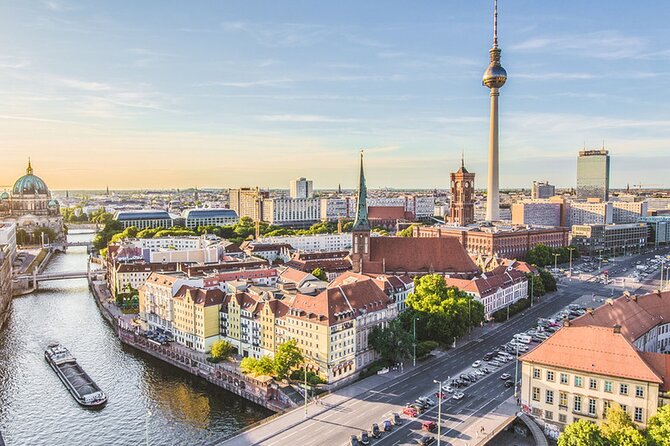
From Museum Island, you can admire the Television Tower on Alexanderplatz. The tower is one of Berlin’s clearest visual markers, and Alexanderplatz helps you understand the former East Berlin side of the city. The guide can connect the architecture and public spaces to the city’s divided past, though the supplied timing does not assign a separate length to every point along this part of the route.
The Jewish Quarter adds another important layer. The first Hebrew cemetery and the New Synagogue introduce the long history of Jewish life in Berlin, including the destruction and survival that shaped the community. The New Synagogue remains an important center of Jewish life in Germany, but this tour is not presented as an interior synagogue visit.
This part of the route rewards careful listening. Berlin’s Jewish story is not limited to one memorial or one tragic period. The cemetery and synagogue help you see Jewish life as part of the city’s older history, not only as a subject connected to the Holocaust.
The Berlin Wall and East Side Gallery
The Berlin Wall Memorial is listed for about 20 minutes, making it one of the longer stops. That extra time matters. A remaining wall section is easier to understand when you can connect it to the former border, the divided neighborhoods, and the people who lived beside it.
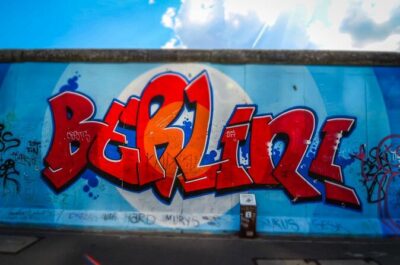
The final major stop is the East Side Gallery, with about 15 minutes listed. This preserved stretch of the Berlin Wall is covered with murals and is often described as the world’s largest outdoor art gallery. It gives the day a lighter visual finish, but the wall itself remains a serious historical object beneath the artwork.
The description allows for a visit to this emblematic art site if time permits. That wording is worth noting. If earlier explanations run long, the East Side Gallery portion may be brief. You should not count on having time to walk the whole stretch or study every mural.
Even a short stop can be useful because the gallery links political history with public art. The wall once divided Berlin. After its fall, sections became a place for artists to comment on freedom, peace, and the changes sweeping through Europe.
What the guide adds to the day
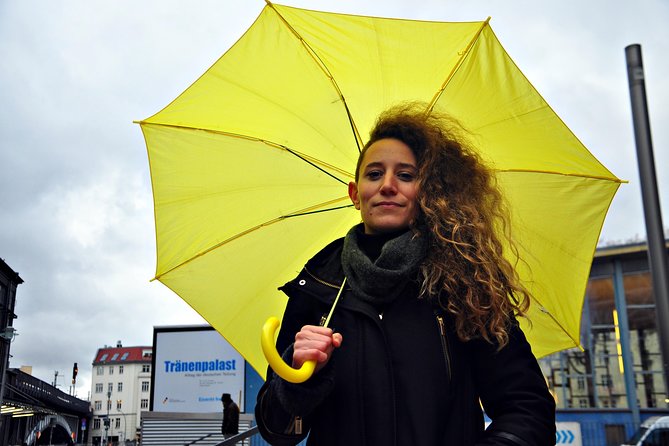
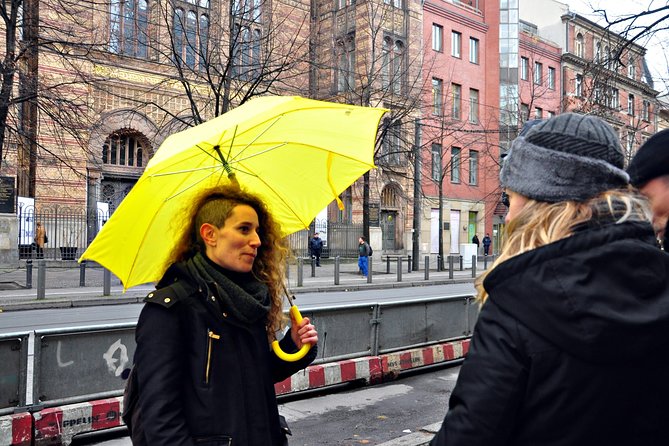
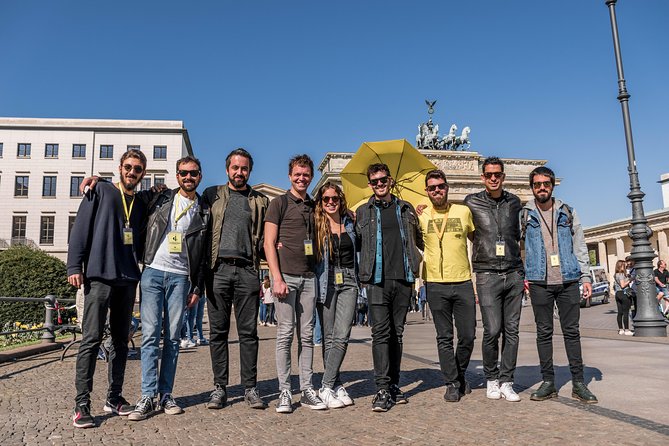
The tour’s most praised feature is the quality of the guiding. Alberto is repeatedly described as warm, versatile, attentive, and able to mix historical detail with true stories and current observations. David is praised for detailed explanations that stay entertaining even when the subject becomes heavy. Felipe is described as a historian at heart with unusual connections to Berlin, while Ezequiel is noted for clear and interesting delivery.
You should not assume which guide you will receive unless the booking specifically confirms it. The useful point is that the experience depends heavily on the person leading it. The route contains many locations where a weak explanation would leave you looking at an ordinary street corner. A strong guide can show why that corner matters.
The reported style is conversational rather than purely academic. Guides answer questions, offer city recommendations, and keep the tour moving. That makes the experience a good fit if you want facts with a human voice instead of a silent sightseeing circuit.
Price, pace, and group size
At $46.34 per person, the price is reasonable if you value a structured introduction to Berlin and do not want to build the route yourself. You are paying for a professional local guide, historical interpretation, and help connecting sights spread across the city.
The value is weaker if you mainly want entrance to museums or a slow photo walk. Food and drinks are not included, and the tour does not promise admission to the Reichstag, synagogue, museums, or memorial information centers. Plan to buy your own refreshments and schedule indoor visits separately.
The group can reach 30 people. That is not an intimate private tour, and you may sometimes be listening from the edge of the group. On the other hand, a group of this size helps keep the price down and makes the tour accessible to solo visitors and couples who want company.
The stated duration is about six hours, but several comments describe a shorter four-hour experience. Treat the timing as flexible. The route, questions, transport connections, weather, and group pace can all affect the finish. Comfortable shoes are essential, and you should dress for rain, wind, or cold because the tour operates in all weather.
Who should book this Berlin tour?
I would choose this for a first day in Berlin, especially if you want the city’s main historical themes explained before visiting museums on your own. It suits adults, older children who can manage a long history-focused outing, and anyone who prefers a guide to a map and audio app.
It is also a good choice if you are in Berlin for a short stay. You will not see every important site in depth, but you will get a broad framework and a list of places worth revisiting.
I would hesitate if you dislike walking, public transport, serious historical subjects, or a tight schedule. The tour covers trauma as well as beauty, and the subject matter can feel dense. It is not designed as a relaxed coffee-and-photo excursion.
The mobile ticket is convenient, and confirmation arrives at booking. Free cancellation is available up to 24 hours before the start time, while later cancellations and changes are not accepted. The experience also requires a minimum number of participants, so a cancellation by the provider can result in another date or a full refund.
Should you book Berlin Complete in one day?
Book it if you want a well-priced, guide-led introduction to Berlin that connects the Brandenburg Gate, Nazi sites, Jewish heritage, Cold War landmarks, and the Berlin Wall in one organized day.
Do not book it expecting long visits inside museums or memorial buildings. The best way to use this tour is as your city framework. Listen closely, note the places that catch your interest, then return later for more time at the Holocaust Memorial, Museum Island, the Jewish Quarter, or the East Side Gallery. That approach makes the fast pace work in your favor.
FAQ
Where does the tour begin?
The tour begins at 9:00 a.m. at Pariser Platz, 10117 Berlin, in front of the Academy of Arts.
Where does the tour end?
It ends near Berlin Zoologischer Garten Station at Hardenbergplatz 13, 10623 Berlin.
How long does the experience last?
The stated duration is approximately six hours. Some descriptions of the experience refer to a shorter four-hour format, so the exact finish may vary.
Is public transportation used?
Public transportation may be needed because the route covers several parts of Berlin. An AB transport card is recommended to make getting around easier.
Are admission tickets included?
The listed stops have free admission, and the tour includes a local professional guide. Entry to museums, the Reichstag interior, or other paid attractions is not specified as included.
Does the tour operate in bad weather?
Yes. It operates in all weather conditions, so dress appropriately for the forecast.
How many people can join the tour?
The group may include up to 30 participants.
What is the cancellation policy?
You can cancel up to 24 hours before the start time for a full refund. Cancellations or changes made less than 24 hours before the experience are not accepted.
Newest Berlin reviews
- Where It All Began: Berlin’s Queer & Trans History Tour★ 4.9 · 6 reviews
- Understanding Kreuzberg: The roots of local (sub)culture★ 4.9 · 11 reviews
- Berlin: guided canoe | kayaktour★ 4.1 · 7 reviews
- Private Potsdam City Tour in an authentic vintage van★ 5.0 · 14 reviews
- Warnemünde Shore Excursion: Private Sachsenhausen and Berlin Tour★ 5.0 · 12 reviews
- Ultimate E-Bike Tour of Berlin with Beer Garden Stop★ 5.0 · 4 reviews
- In the Forbidden City – Potsdam Walking Tour★ 5.0 · 17 reviews
- Private Walking Tour of Potsdam and Sanssouci★ 5.0 · 24 reviews
1-Day Tours, compared.
Private Day Trip to Potsdam from Berlin by Train
Read our review →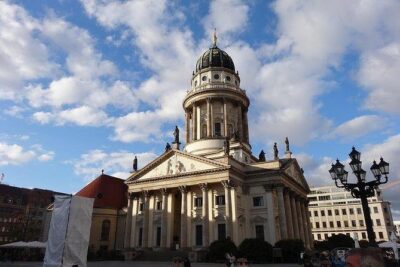
Berlin in one day – day tour with an expert guide
Read our review →
Potsdam Day Trip from Berlin with a Local: Private & Personalized
Read our review →
Day trip through multicultural city landscapes & photo highlights
Read our review →Browse the lists this tour appears in