
Reviewed · CITY TOURS
All of Berlin (city panorama)
Berlin’s central story unfolds quickly on this four-hour walking tour, from the TV Tower at Alexanderplatz to Brandenburg Gate. You move through medieval Berlin, Prussian royal avenues, Nazi-era memorials, the Berlin Wall era, and the modern city in one long sweep. It is a smart way to get your bearings before exploring on your own.
I like the route’s range: you see major landmarks without spending hours planning, and the guide gives each place historical context instead of treating it as a photo stop. I also like the walk through places buses cannot reach, especially Nikolaiviertel, Bebelplatz, and the Holocaust Memorial.
The main catch is simple: this is a long walk with many stops, not a relaxed sightseeing ride. The tour is conducted only in Spanish, and the published details describe both a finish at Brandenburg Gate and an end back at the meeting point, so confirm the exact finish arrangement before setting off.
Key points to know before booking
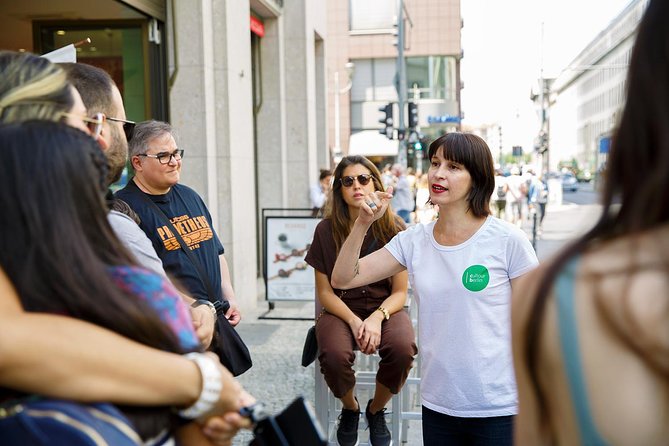
- Four hours on foot: The route covers a large portion of central Berlin, with stops ranging from five to 25 minutes.
- Spanish-speaking guide: Commentary is in Spanish only. Guide Juan is specifically praised for giving substantial historical information.
- A strong first-day route: Alexanderplatz, Museum Island, Unter den Linden, Checkpoint Charlie, Potsdamer Platz, and Brandenburg Gate make this a useful orientation tour.
- Small but not private: The group can reach 25 people, large enough to affect how easily you hear and move around.
- No attraction admissions included: The listed stops are mainly outdoor views and explanations. The tour does not include private transport.
- Plan for walking: It is not recommended if you have difficulty walking long distances.
Why this route works for a first look at Berlin
Berlin can feel scattered at first. Its major sights sit across former East and West Berlin, with layers of Prussian rule, the Nazi period, Cold War division, reunification, and modern redevelopment spread across the city center.
This tour gives you a useful map in your head. You begin at Alexanderplatz, pass through the historic center and Unter den Linden, then continue toward Checkpoint Charlie, Potsdamer Platz, the Holocaust Memorial, and Brandenburg Gate. The sequence makes sense geographically and historically, even if the pace is brisk.
At $25.58 per person, the value comes mainly from the route and the guide’s explanations. You are not paying for entry to a museum or a private vehicle. You are paying to avoid the work of connecting the city’s key places yourself and to hear the story as you walk.
That makes the tour most useful on your first day in Berlin, especially if you have limited time. It can also help you decide which places deserve a longer return visit.
Other Berlin experiences to weigh up
- Berlin: 1-Hour City Tour by Boat with Guaranteed Seating
★ 4.3 · 16,993 reviews - Berlin: City Sightseeing Hop-On Hop-Off Bus Tour
★ 4.1 · 4,233 reviews - Potsdam: City and Castles Tour
★ 4.7 · 3,721 reviews
Starting at Alexanderplatz and the TV Tower
The meeting point is beside the entrance to the Berlin TV Tower at Panoramastraße 1A. The start time is 10:00 a.m., so arrive with enough time to find the tower entrance and your guide.
Alexanderplatz is an ideal opening point because it reveals so much about Berlin’s changing identity. The square is linked with the former East Berlin and is still one of the city’s best-known public spaces. The guide explains the square, its monuments, and the role it played in the city.
The first explanation lasts about 20 minutes, followed by a short stop at Neptunbrunnen, the Neptune Fountain. You get a quick look at the fountain’s place in the square and its symbolic meaning. The five-minute stop is brief, so expect interpretation rather than a detailed examination.
Next comes Rotes Rathaus, the red city hall. This stop is also about five minutes and explains the building’s role in Berlin’s government. The building is seen from outside, and admission is not included.
The route then passes the entrance to the complex of buildings and museums associated with Berlin’s UNESCO World Heritage area. The information provided does not list a separate stop time here, so treat this as part of the walking connection rather than a museum visit.
Nikolaiviertel and Berlin’s oldest center
Nikolaiviertel offers a useful change of mood after the open spaces of Alexanderplatz. The tour presents it as the most original part of Berlin and connects the area with more than 800 years of the city’s foundation.
The stop lasts about 15 minutes. The guide also explains the meaning of St. George in the square, giving you a detail to watch for rather than simply pointing out old-looking buildings.
This part is valuable because Berlin is often described through its twentieth-century conflicts. Nikolaiviertel brings the story further back, toward the city’s medieval beginnings. You also walk through an area that is easier to appreciate on foot than from a vehicle.
Do not expect a long visit inside a historic building here. The point is the district, its setting, and the story attached to it.
Berlin Cathedral, Lustgarten, and Museum Island
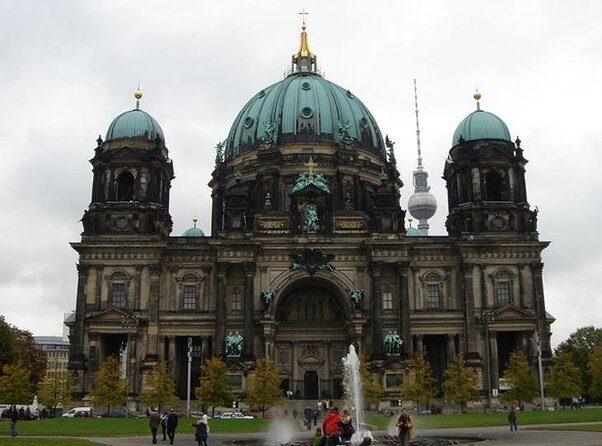
Berliner Dom comes next, with about 10 minutes to admire its dome and decoration and hear how the church came to be built. The stop is focused on the exterior and historical background. Admission to enter the cathedral is not included.
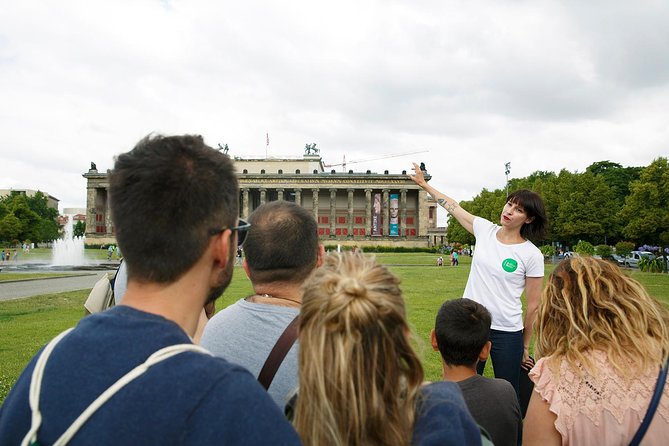
Nearby Lustgarten receives another short explanation. The guide covers the name, the purpose of the space, and why this spot matters in central Berlin. The stop itself lasts about five minutes, but the location gives you a strong view of the cathedral and surrounding civic and cultural buildings.
This is one of the most useful stretches of the walk for understanding Berlin’s formal center. You see how religious, royal, and museum buildings gather around public space. If you want to tour Berlin Cathedral or the museums, plan a separate visit because this activity does not provide that time.
The guide’s job here is to connect the buildings. That matters in Berlin, where a quick photograph can otherwise leave you with impressive architecture but little sense of why it is there.
A different sort of day out in Berlin:
- Berlin: Reichstag, Dome and Government District Guided Tour
★ 4.7 · 18,288 reviews - Berlin: Boat Tour Along the River Spree
★ 4.4 · 11,252 reviews - Discover Berlin Half-Day Walking Tour
★ 5.0 · 9,624 reviews - Berlin: Hop-on Hop-off Bus Tour with Live Commentary
★ 4.3 · 8,579 reviews
Unter den Linden and the Royal Library area
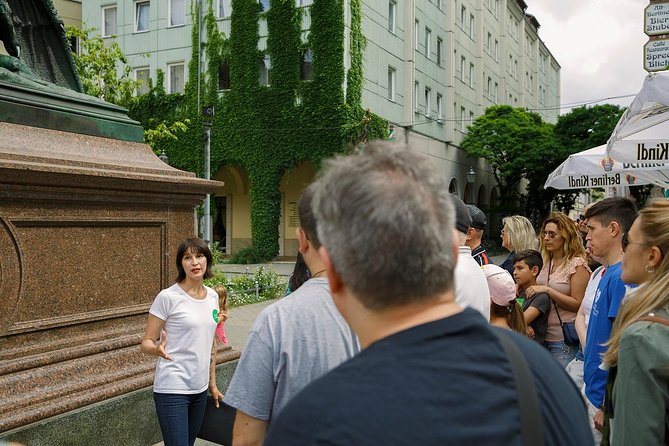
From Lustgarten, the route follows Unter den Linden, one of Berlin’s best-known streets. Its original role as a royal route from the palace toward the Tiergarten helps explain its scale and position.
The walk along this avenue is not just a transfer between stops. It shows you how Berlin’s royal and state center was organized, and why the street remains one of the city’s main visitor routes.
At Staatsoper Unter den Linden, you stop for about five minutes. The guide discusses the opera house’s place in the avenue and its connection with Berlin’s cultural life. Nearby are the Royal Library and other important buildings, which help create the grand setting of this part of town.
Short stops are the pattern here. You will hear the main points, see the exteriors, and keep moving. That is useful for a first orientation, but it may feel too quick if architecture is your main interest.
Bebelplatz and Neue Wache
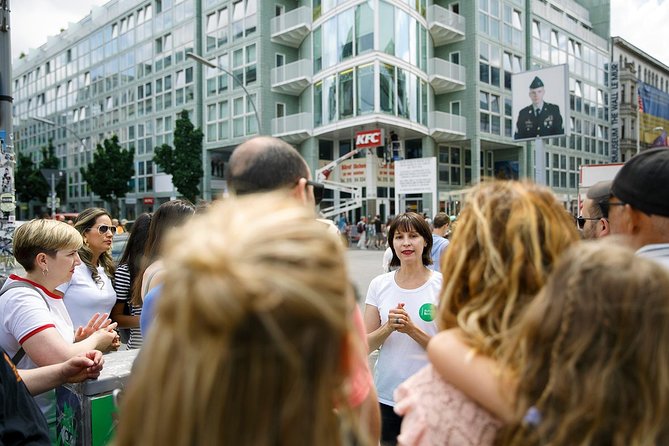
Bebelplatz brings the tour into some of Berlin’s most difficult twentieth-century history. The stop lasts about 10 minutes and explains why the square became important during the Nazi period, including the role of Joseph Goebbels, Hitler’s minister of propaganda.
The square is also home to a memorial, and the guide explains its meaning. This is a place where the historical context matters more than a long list of architectural facts. Listen closely, because the explanation helps connect the open square with the events that occurred there.
At Neue Wache, the tour pauses for another 10 minutes. The memorial has been adapted to different periods of German history, and the guide introduces the work of Käthe Kollwitz inside.
This is one of the tour’s more reflective moments. It is not presented as a cheerful sightseeing stop, and it should not be. The value lies in seeing how Berlin uses public spaces to confront war, political violence, and loss.
Gendarmenmarkt and Berlin’s elegant public square
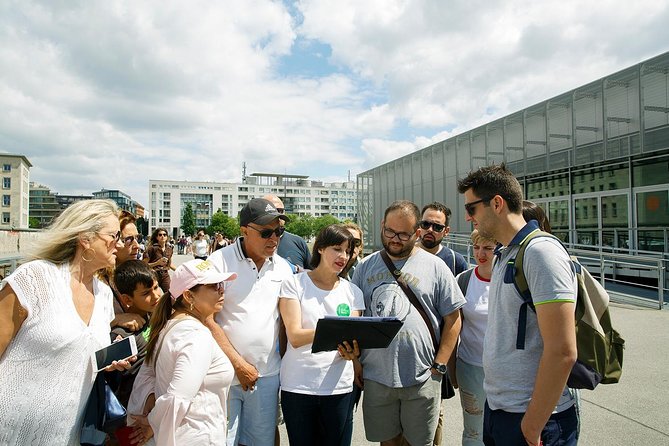
Gendarmenmarkt receives about 15 minutes and is presented as Berlin’s most beautiful public square. The ensemble includes the concert house and two church buildings with towers, arranged around a formal open space.
The stop gives you time to take in the layout and hear how the buildings relate to one another. It is one of the tour’s more visually satisfying pauses, especially after the serious memorials at Bebelplatz and Neue Wache.
Again, this is an exterior visit. The price does not include entry to the concert hall or churches. If you want interior visits, use the tour as a preview and return later.
Checkpoint Charlie and the Cold War city
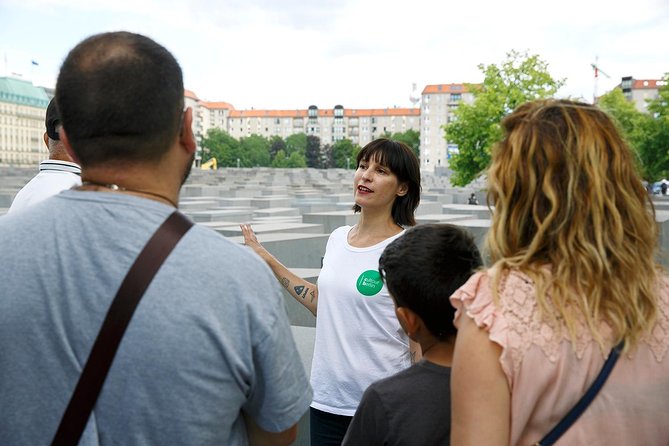
Checkpoint Charlie is the longest stop, at about 25 minutes. That extra time makes sense because the guide covers more than the famous checkpoint sign. You learn about the former border crossing, the Cold War, and the division of Berlin.
The tour examines the wider area and its historical setting. This matters because the present-day checkpoint can look like a quick photo opportunity unless someone explains what the crossing represented and how it fitted into the divided city.
For many visitors, this is the point where Berlin’s twentieth-century story becomes easier to picture. You have already heard about the Nazi era, and now you move into the postwar division between East and West.
The stop is outdoors and does not include private transportation. Since the route continues on foot, wear shoes you can manage for several hours.
Potsdamer Platz and the modern city
Potsdamer Platz offers a sharp contrast with Checkpoint Charlie. The stop lasts about five minutes and covers the square’s development from its early history to its current modern form.
This is a useful reminder that Berlin is not only a city of old monuments and memorials. Large parts of the center were transformed after reunification, and Potsdamer Platz represents the modern side of that change.
The stop is short, so you will not get an extended architectural tour. Still, the contrast works well within the larger route. You move from a former border crossing to one of the city’s most modern central areas, then toward the memorials and symbols around Brandenburg Gate.
The Holocaust Memorial and Brandenburg Gate
The Holocaust Memorial, officially the Memorial to the Murdered Jews of Europe, receives about 15 minutes. The guide explains the importance of the memorial beside Brandenburg Gate and discusses the meaning intended by its designer.
You have time to walk through the memorial’s field of concrete blocks and consider the space. The tour does not turn this into a long standalone visit, but the stop is substantial enough to provide context.
This is another place where the guide’s commentary matters. Without an explanation, the memorial can be reduced to an unusual arrangement of blocks. With context, you can think about its purpose and the way it asks you to experience the space.
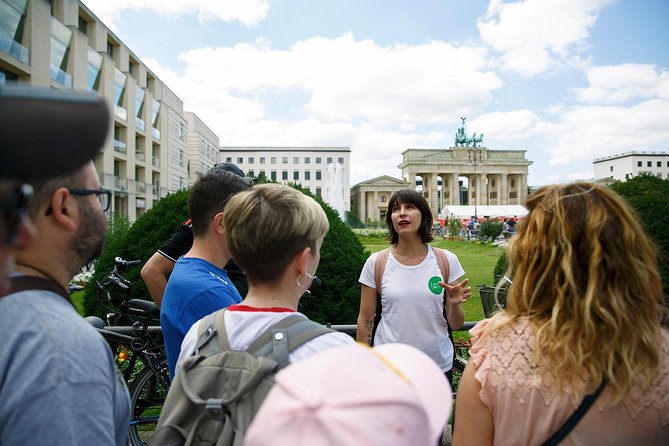
The itinerary finishes at Brandenburg Gate after about 20 minutes of explanation. From here, you can see the Tiergarten, Pariser Platz, and the Adlon Hotel. The guide covers the gate’s history and its role as one of Berlin’s defining symbols.
Brandenburg Gate is a fitting endpoint because it ties together the city’s royal past, twentieth-century division, and reunification. It also gives you a clear starting point for further independent sightseeing.
The published information also says the activity ends back at the meeting point, while the route description finishes at Brandenburg Gate. Confirm that detail before booking, especially if you have a timed reservation or transport connection afterward.
What the Spanish commentary adds
This experience is operated by a Spanish-speaking guide and is conducted only in Spanish. That is not a minor detail. You should book it only if you are comfortable following several hours of historical explanation in Spanish.
The tour depends on commentary. The stops are mostly outdoor landmarks, and many are brief. A guide who explains the context turns the route into a coherent history lesson. Guide Juan is specifically praised for providing a large amount of historical information, so Spanish-speaking visitors looking for substance should find that a strong reason to consider this tour.
The group can include up to 25 people. That is small enough to remain manageable, but it is not an intimate private walk. Stay near the guide at busy crossings and crowded public squares so you can hear the explanation.
Time, walking, and practical value
The official duration is approximately four hours. That includes 14 numbered stops, several shorter viewing points, and the walks between them. The route is active and should not be treated as a gentle ride through town.
No private transportation is included. That keeps the price low and lets you reach pedestrian areas and public squares more directly, but it also means you need to be ready to walk for most of the morning.
The tour is near public transportation, and service animals are allowed. Most people can participate, but it is not recommended for anyone unable to walk long distances comfortably.
Confirmation arrives at booking, and free cancellation is available up to 24 hours before the start time. The experience is booked, on average, 29 days ahead, which suggests planning early if the 10:00 a.m. Spanish-language departure fits your schedule.
Who should book it
Book this tour if you want a fast, organized introduction to central Berlin and you speak Spanish. It suits a first visit, a short stay, or a morning when you want to understand the city before choosing which museums and memorials to revisit.
You should also book it if you prefer historical explanation to shopping time or unstructured wandering. The route covers a lot, and guide Juan’s detailed approach is a good match for anyone who wants more than names and dates.
Skip it if you need a vehicle, want extended time inside attractions, or prefer a slow walk with only a few stops. The group may reach 25 people, the walk is long, and the commentary is Spanish only.
At $25.58, I see this as good value for a first orientation, especially because it links so many major places in one morning. Just remember that entrance tickets, private transport, and a leisurely pace are not part of the deal.
FAQ
How long does the Berlin city panorama tour last?
The tour lasts approximately four hours.
What time does the tour start?
The tour starts at 10:00 a.m.
Where does the tour begin?
It begins at the Berlin TV Tower, Panoramastraße 1A, 10178 Berlin, Germany.
What language is the tour conducted in?
The tour is conducted only in Spanish by a Spanish-speaking local guide.
What places are visited?
The route includes Alexanderplatz, Neptunbrunnen, Rotes Rathaus, Nikolaiviertel, Berlin Cathedral, Lustgarten, Unter den Linden, Staatsoper Unter den Linden, Bebelplatz, Neue Wache, Gendarmenmarkt, Checkpoint Charlie, Potsdamer Platz, the Holocaust Memorial, and Brandenburg Gate.
Is transportation included?
No. Private transportation is not included, and the experience is primarily a walking tour.
How many people can join the tour?
The group can include a maximum of 25 people.
Can I cancel for a full refund?
Yes. You can cancel up to 24 hours before the experience starts for a full refund. Cancellations or changes made less than 24 hours before the start time are not accepted for a refund.
Should you book this Berlin walking tour?
Book it if you want to cover Berlin’s central landmarks quickly, hear the story in Spanish, and spend four hours walking between the city’s most important squares, memorials, and historic streets.
The strongest features are the well-connected route, the amount of historical context, and the chance to see places that a bus cannot reach. The trade-offs are the long distance, short stops, outdoor focus, and Spanish-only commentary.
For a first morning in Berlin, this is a practical and well-priced introduction. Use it to get oriented, then return at your own pace to the cathedral, museums, memorials, or Cold War sites that catch your attention.
Newest Berlin reviews
- Where It All Began: Berlin’s Queer & Trans History Tour★ 4.9 · 6 reviews
- Understanding Kreuzberg: The roots of local (sub)culture★ 4.9 · 11 reviews
- Berlin: guided canoe | kayaktour★ 4.1 · 7 reviews
- Private Potsdam City Tour in an authentic vintage van★ 5.0 · 14 reviews
- Warnemünde Shore Excursion: Private Sachsenhausen and Berlin Tour★ 5.0 · 12 reviews
- Ultimate E-Bike Tour of Berlin with Beer Garden Stop★ 5.0 · 4 reviews
- In the Forbidden City – Potsdam Walking Tour★ 5.0 · 17 reviews
- Private Walking Tour of Potsdam and Sanssouci★ 5.0 · 24 reviews
City Tours, compared.

1-Hour City Tour by Boat with Guaranteed Seating
Read our review →

Berlin City Hop-on Hop-off Tour with Optional Cruise
Read our review →

Browse the lists this tour appears in