
Reviewed · BERLIN
Berlin: The Feuerle Collection Meditation Experience
The Feuerle Collection offers one of Berlin’s more unusual museum visits: an hour without phones, conversation, or a conventional tour. You move through the Sound Room and underground Lake Room, then pause among Khmer sculptures, Imperial Chinese furniture, and contemporary art. The silence is the main event.
I like the sharp contrast between ancient objects and modern works by artists such as Anish Kapoor and Cristina Iglesias. I also like the freedom of the format: you can meditate on the supplied mat, use a blanket, or simply walk quietly and look. The main drawback is clear: there is no guide, so this suits you only if you are happy to experience art without explanations.
- Khmer sculpture from the 7th to 13th centuries gives the visit an ancient spiritual focus.
- Imperial and Scholar Chinese furniture adds finely made historic objects to the collection.
- The Sound Room and underground Lake Room turn the route itself into part of the experience.
- A one-hour mobile detox offers a rare break from notifications and city noise.
- Meditation is optional, so you can sit, walk, or simply observe in silence.
- A yoga mat and blanket are included, making the quiet format easier to settle into.
A Museum Visit Built Around Silence
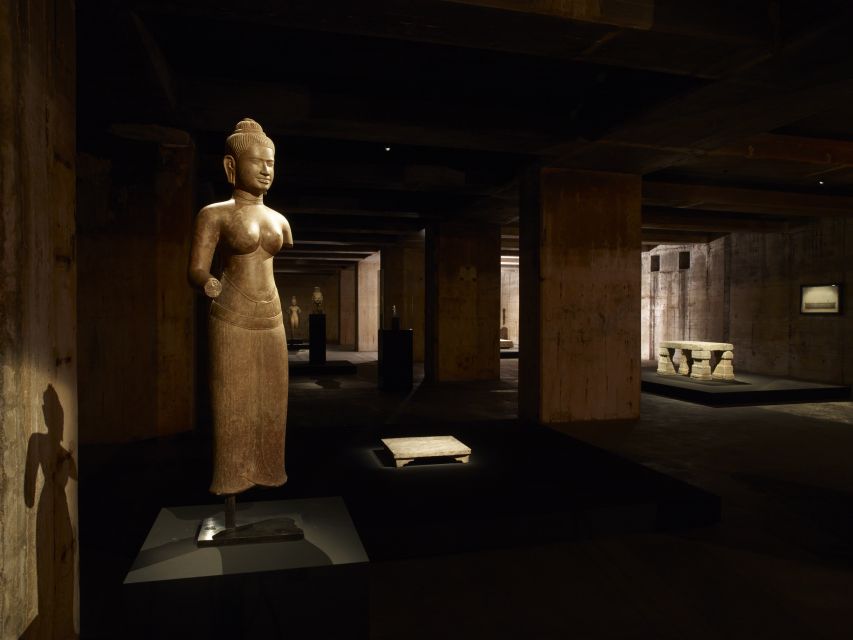
Most museum visits ask you to read, listen, and keep moving. This one asks you to stop. The Feuerle Collection is open for an hour of quiet contemplation, not for a standard guided tour with dates, names, and long explanations.
That makes the experience feel closer to a private pause than a normal cultural stop. You leave your phone out of the picture and give the artworks your full attention. For many people, that simple rule is the point. Berlin can be loud, busy, and visually packed. Here, you get a controlled space in which your mind has less to process.
I like that the format does not force you to meditate. If sitting cross-legged for an hour sounds uncomfortable, you can walk around quietly and look at the works. If you prefer stillness, a mat and blanket are provided.
The strongest praise for this experience centers on its calm, unusual character. One visitor described it as an exceptional and relaxing experience in a small group. Another called it a chance to disconnect. Those comments capture the practical appeal better than any formal museum description: you are buying time away from your phone and from the usual pressure to consume culture quickly.
Passing Through the Sound Room
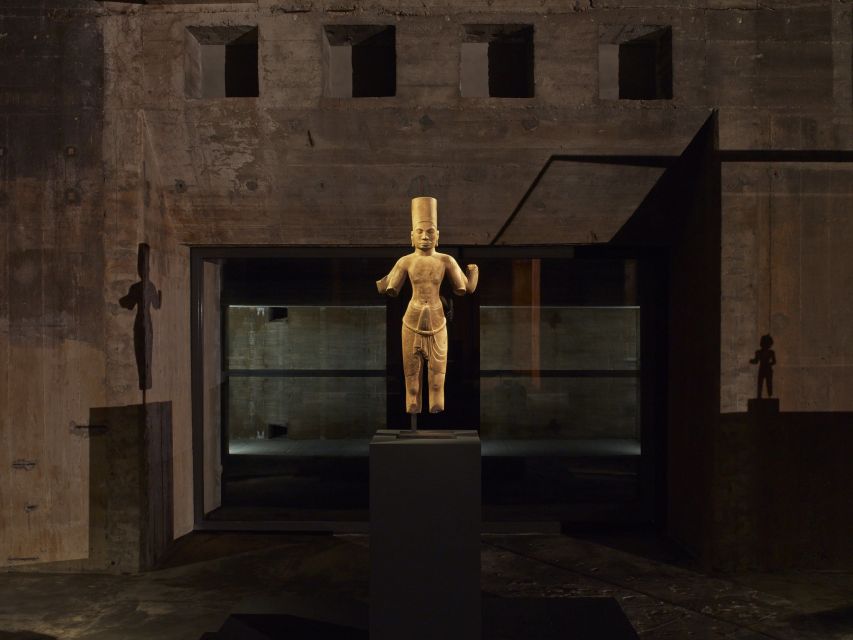
The visit includes passage through the Sound Room before you reach the Lake Room. The exact artistic effect depends on how you respond to the space, but the route is designed as more than a simple corridor between galleries.
You should treat this part as a transition. Instead of rushing toward the main collection, slow down and let the change in atmosphere register. The Sound Room helps prepare you for the quiet attention expected during the rest of the hour.
This is also where the experience differs from a regular exhibition ticket. You are not just entering a room full of objects. The movement from one space to another is part of the work, and the collection uses sound, darkness or enclosure, and silence to shape how you encounter the art.
Because there is no guide, you will need to accept that some effects are left open to your own response. You may find the Sound Room atmospheric and useful as a mental reset. You may also prefer the objects themselves and feel that the transition takes time away from looking. That is a matter of taste, but it is worth knowing before you book.
Other Berlin tours worth putting on the same trip:
- Berlin: Reichstag, Dome and Government District Guided Tour
★ 4.7 · 18,288 reviews - Berlin: 1-Hour City Tour by Boat with Guaranteed Seating
★ 4.3 · 16,993 reviews - Berlin: Boat Tour Along the River Spree
★ 4.4 · 11,252 reviews
The Underground Lake Room
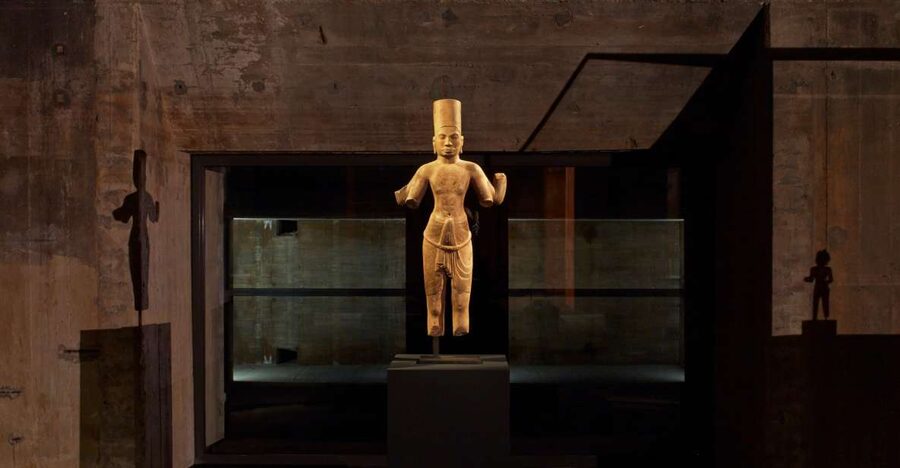
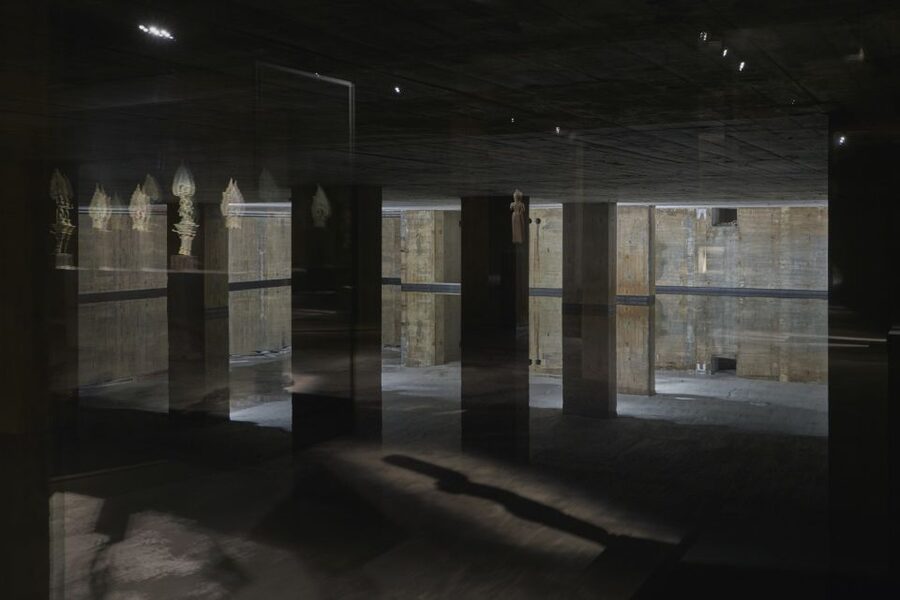
The underground Lake Room is one of the visit’s most distinctive settings. You walk into this lower space and continue among the collection’s works, with the room itself adding weight to the experience.
The name suggests a place designed to slow you down and turn your attention inward. You should not expect a conventional gallery with a clear sequence of display cases and wall text. The Lake Room is part of the mood, and the lack of a spoken tour lets the space work on you at its own pace.
This setting may appeal most if you enjoy art that depends on atmosphere as much as explanation. The collection brings together objects from very different periods, and the underground room gives that mixture a quiet, almost ritual quality.
The drawback is the same one found throughout the visit: you receive little context on site. If you want to know exactly why each object is important, or how the pieces relate to one another, you will need to do that research before or after your visit. If you prefer to react first and analyze later, the Lake Room gives you room to do so.
Khmer Sculptures From the 7th to 13th Centuries
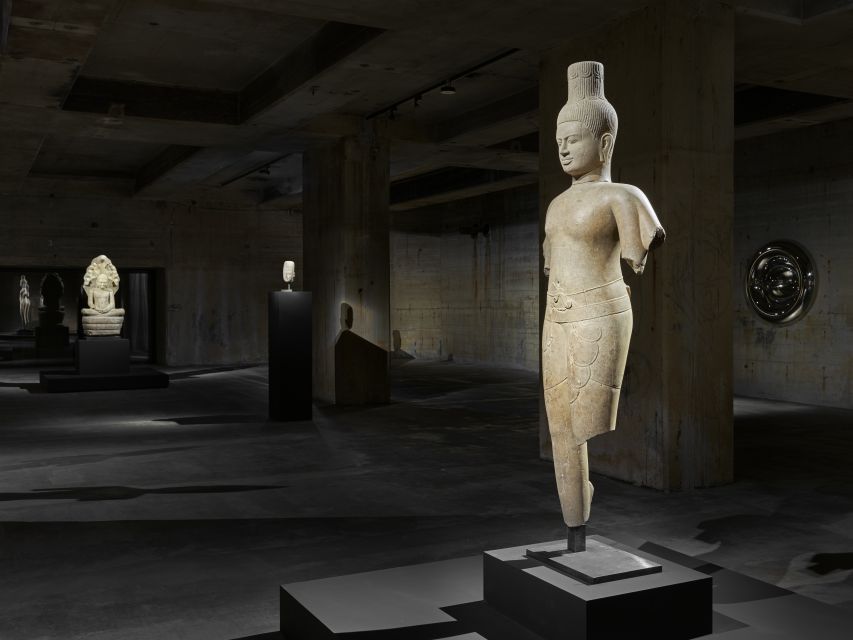
The early Khmer sculptures provide the collection’s oldest artistic layer. Dating from the 7th to 13th centuries, these works bring a long historical span into a visit that lasts only one hour.
You may find that the quiet format changes how you look at sculpture. Instead of taking a quick photograph and moving on, you can watch the form, posture, surface, and expression for several minutes. That is a small but meaningful shift. Ancient sculpture often rewards patience, and the meditation setting encourages it.
Since the visit is not guided, do not expect a lecture on Khmer kingdoms, religious traditions, or the original use of each piece. The collection gives you the objects and the silence. That can feel liberating, but it can also leave gaps if you are new to Khmer art.
I would read a little about the period before arriving if the sculptures are your main reason for booking. Even a basic sense of their age and cultural setting can make the quiet viewing more rewarding. Still, you do not need specialist knowledge to appreciate the physical presence of the works.
Imperial and Scholar Chinese Furniture
The Chinese furniture spans a broad period, from the 2nd century B.C. to the 17th century A.D. That range gives you another way to think about time during the visit. You move from very early objects to later pieces, then into modern and contemporary art.
Furniture can be easy to overlook in a museum. We use chairs, tables, cabinets, and other household objects every day, so they may seem less dramatic than sculpture. In a silent setting, though, details such as proportion, construction, material, and restraint can become more visible.
The collection includes Imperial and Scholar Chinese furniture. These categories suggest different connections to court life, scholarship, status, and daily use, but you should not expect those distinctions to be explained by a guide during the hour. You are given the chance to look closely rather than being led through a lesson.
I like this part of the collection because it prevents the visit from becoming only a meditation session with art in the background. The furniture asks you to consider how practical objects can carry cultural meaning. You can sit with one piece in your attention, then notice how different it feels beside a contemporary artwork.
A different sort of day out in Berlin:
- Discover Berlin Half-Day Walking Tour
★ 5.0 · 9,624 reviews - Berlin: Hop-on Hop-off Bus Tour with Live Commentary
★ 4.3 · 8,579 reviews - Berlin: Government District around the Reichstag Guided Tour
★ 4.7 · 8,447 reviews - Berlin: Reichstag, Plenary Chamber, Cupola & Government Tour
★ 4.6 · 8,422 reviews
Contemporary Works in an Ancient Setting
The collection also includes contemporary works by Anish Kapoor, Cristina Iglesias, Adam Fuss, Zeng Fanzhi, James Lee Byars, and Nobuyoshi Araki. Their presence creates the collection’s central contrast: old and new objects share the same quiet route.
This is not a chronological museum experience. You are not simply walking from the 7th century to the 17th century and then to today. Instead, the works are placed in an unexpected conversation. Ancient Khmer sculpture may change how you see a modern piece, while a contemporary work may make you look back at historic furniture with fresh attention.
The named artists also give the visit a wider range of media and moods. Anish Kapoor and Cristina Iglesias are known for work that can alter your sense of space. Adam Fuss, Zeng Fanzhi, James Lee Byars, and Nobuyoshi Araki add further variety in subject and approach. The collection’s appeal is partly in seeing these different artistic voices brought together rather than separated into neat rooms.
You should know that the experience is not designed to explain every connection. There is no guide leading you from one artist to the next. The benefit is freedom. The cost is that you must make your own links.
One supplied comment refers to Chinese art and erotic art as part of the appeal. If that subject may concern you, keep it in mind when deciding if the visit is right for your group. The experience is intended for people aged 16 and older, and children under 16 are not admitted.
Meditation Is Optional, Attention Is Not
The wording around meditation can sound strict, but the practical rule is simple: meditation is not mandatory. You may sit on the supplied yoga mat, cover yourself with the blanket, and meditate, or you may walk around quietly and look at the art.
What is expected is quiet. This is not the place for an active discussion, a group photo session, or a running commentary about each object. You should arrive ready to give the room and the art your attention.
I appreciate the choice. A formal meditation class would ask you to follow instructions, perhaps with breathing exercises or a teacher. This experience does not promise that. It gives you a silent setting and leaves the use of that setting to you.
If you already meditate, the format may feel natural. If you do not, you can simply sit for a few minutes and see how it goes. You can also stand or walk quietly if sitting becomes uncomfortable. The one-hour limit helps keep the commitment manageable.
The mobile detox may be the most useful part for some people. You are not paying only to see objects. You are also setting aside a fixed period in which messages, social media, and camera habits do not compete for your attention.
What the One-Hour Format Really Offers
At $25 per person, this is not the cheapest way to spend an hour in Berlin. It is fairly priced if you want the collection itself plus a structured break from your phone and from the city’s pace. It is less appealing if you mainly want a guided art lesson or a long museum visit.
The duration matters. One hour is enough for a focused pause, but not enough to study every object in depth. You may need to choose where to place your attention. Spend too long in one room and you may feel rushed later, or let the hour pass in meditation and you may see less of the collection.
The strong 4.9 rating from 16 bookings reflects how well the concept works for people who want something different. The comments describe it as interesting, cool, relaxing, and hard to put into words. That range is useful. The experience is not praised only as an art exhibition or only as meditation. Its appeal comes from the combination.
You should judge the price by your purpose. For a quiet reset in the middle of a busy Berlin schedule, $25 can be good value. For a visitor who wants detailed historical context, the same price may feel high because no guided tour is included.
The booking terms also help reduce the risk. You can cancel up to 24 hours in advance for a full refund, and a reserve-now, pay-later option is available. Wheelchair access is provided. Starting times vary, so you need to check availability for the date you want.
Who Will Enjoy This Most
I would recommend this experience to you if you like art that leaves room for personal response. It is especially suitable if you want a quiet hour, enjoy unusual combinations of old and new work, or need a break from constant phone use.
It also suits repeat visitors to Berlin who have already seen the major museums and want a less conventional cultural stop. The collection’s unusual structure gives you something different from a standard gallery route.
You may not enjoy it if you need a guide to explain what you are seeing. It is also a poor fit if you want to talk with friends during the visit, take lots of photographs, or bring children under 16.
The experience works best when you treat the silence as part of the admission, not as an inconvenience. If you arrive expecting a normal museum tour, the lack of commentary may disappoint you. If you arrive ready to slow down, the same lack of commentary can feel like freedom.
Should You Book The Feuerle Collection Meditation Experience?
Book it if you want a thoughtful hour among Khmer sculpture, historic Chinese furniture, and contemporary art, with your phone put away and no pressure to follow a lecture. The Sound Room, underground Lake Room, mat, and blanket give the visit a clear shape without dictating exactly how you use it.
Skip it if your main goal is art history, guided interpretation, or a family outing with younger children. For everyone else, $25 buys a focused and unusual pause in Berlin, not just a museum ticket. The best reason to go is simple: you can look quietly, think slowly, and decide for yourself what the objects mean.
FAQ
How long does the Feuerle Collection meditation experience last?
The open meditation experience lasts one hour. Starting times vary, so you need to check availability for your chosen date.
Is this a guided tour?
No. The collection is open for meditation and quiet viewing only. A guided tour is not included.
Do I have to meditate?
No. Meditation is optional. You may sit quietly, walk around the collection, or simply look at the artworks in silence.
What is included in the experience?
A yoga mat and blanket are included. The visit also includes access to the exhibition areas, including the Sound Room and underground Lake Room.
What art can I see?
The collection includes Khmer sculptures dating from the 7th to 13th centuries, Imperial and Scholar Chinese furniture dating from the 2nd century B.C. to the 17th century A.D., and contemporary works by Anish Kapoor, Cristina Iglesias, Adam Fuss, Zeng Fanzhi, James Lee Byars, and Nobuyoshi Araki.
Is the experience suitable for children and wheelchair users?
The experience is wheelchair accessible. It is not suitable for children under 16.
Newest Berlin reviews
- Where It All Began: Berlin’s Queer & Trans History Tour★ 4.9 · 6 reviews
- Understanding Kreuzberg: The roots of local (sub)culture★ 4.9 · 11 reviews
- Berlin: guided canoe | kayaktour★ 4.1 · 7 reviews
- Private Potsdam City Tour in an authentic vintage van★ 5.0 · 14 reviews
- Warnemünde Shore Excursion: Private Sachsenhausen and Berlin Tour★ 5.0 · 12 reviews
- Ultimate E-Bike Tour of Berlin with Beer Garden Stop★ 5.0 · 4 reviews
- In the Forbidden City – Potsdam Walking Tour★ 5.0 · 17 reviews
- Private Walking Tour of Potsdam and Sanssouci★ 5.0 · 24 reviews