
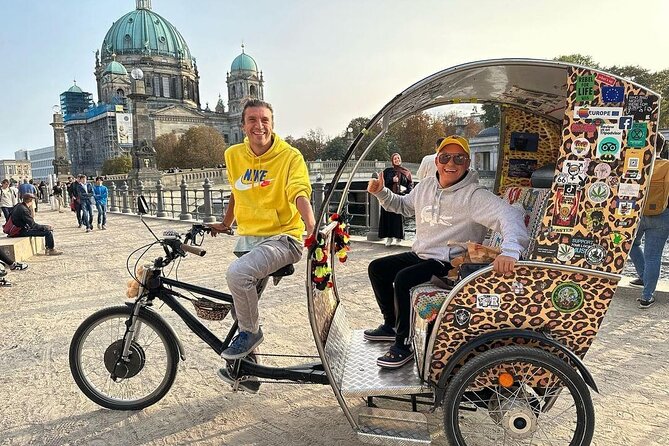
Reviewed · BERLIN RICKSHAW TOURS
Rickshaw Tours Berlin – Groups of up to 16 people with several rickshaws
Berlin is spread out, and a rickshaw gives you a lively way to cover its big sights without wearing out your feet. You move through the center in the open air, with room for photos and a guide who can point out details you would miss from a tour bus. Guides named Leo and Hugo receive especially warm praise for their stories, humor, music, and flexibility.
I like the way the ride combines major sights with green Tiergarten paths, and I like that your guide can often adjust the route to your interests. It is also a useful choice if you have limited mobility, sore feet, or only a short time in Berlin. The serious drawback is reliability: several bookings reportedly ended in a no-show or late cancellation, so you should confirm the meeting details and avoid making this your only plan on a tightly scheduled day.
Key points to know before booking
- See central Berlin without a long walk: The route links the Brandenburg Gate, Reichstag, Potsdamer Platz, Checkpoint Charlie, Gendarmenmarkt, Museum Island, and Alexanderplatz.
- Private group format: Your party travels together, with several rickshaws used for groups of up to 16 people.
- Guides can make or break the ride: Leo and Hugo are praised for engaging stories, while one account describes loud music and limited explanation.
- A strong option for tired legs: The rickshaw can help visitors with injuries, mobility issues, or limited time.
- Pickup is limited but useful: Pickup is included within 2 kilometers of the Brandenburg Gate. Longer transfers cost €10 per kilometer.
- Reliability needs attention: The service has a mixed record of cancellations and no-shows, especially during cold weather or equipment problems.
What this Berlin rickshaw tour is really like
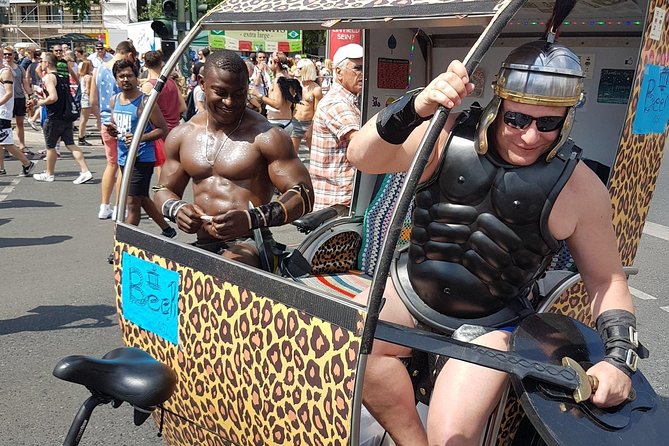
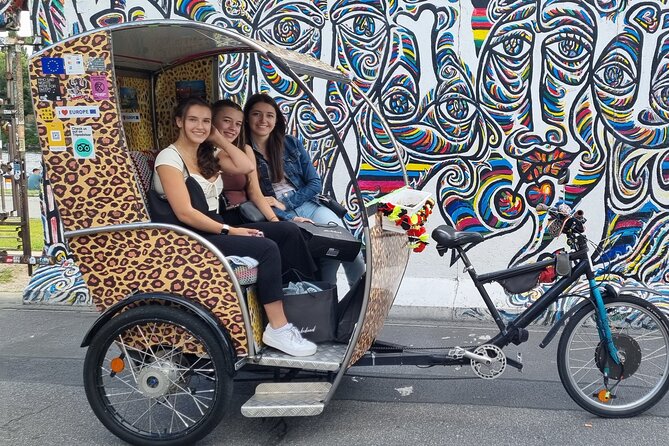
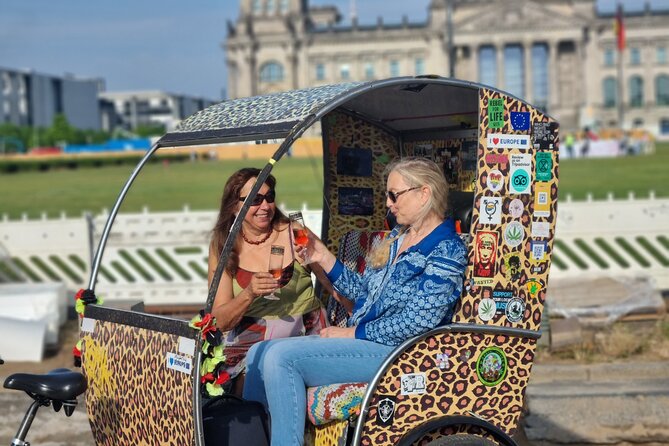
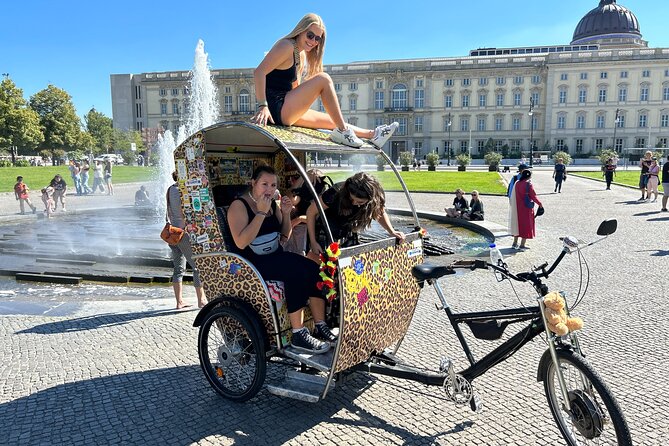
This is not a conventional hop-on, hop-off sightseeing ride. You sit in a small open vehicle while your guide pedals or operates the rickshaw through central Berlin. The ride is private to your group, and the route can last from about one to four hours, depending on what you book.
The pace is the main attraction. You see much more ground than on foot, yet you remain close enough to notice buildings, memorials, street life, and changes in Berlin’s architecture. You can also stop for photographs. Several accounts describe guides taking pictures for their passengers, which is a useful touch when everyone wants to appear in the frame.
The tour is especially practical for a first look at Berlin. It brings together the former royal center, the government quarter, Cold War sites, Nazi-era memorials, and the lively eastern center. You will not receive a full museum visit at each stop, and the listed stop times are short. Think of the ride as a guided introduction, not a substitute for exploring the Reichstag dome, the Berlin Wall Memorial, or Museum Island indoors.
More rickshaw tours in Berlin:
- Berlin: Private Guided E-Rickshaw Tour
★ 4.9 · 157 reviews - Individual City Tour – Rickshaw Sightseeing in Berlin
★ 5.0 · 120 reviews - Berlin Express: Private 1-Hour E-Rickshaw Ride
★ 5.0 · 116 reviews
Starting at the Brandenburg Gate and Reichstag
The meeting point is the Brandenburg Gate, one of Berlin’s essential landmarks. Built between 1788 and 1791 from sandstone, it was designed by Carl Gotthard Langhans and inspired by the gateway buildings of the Athenian Acropolis. Originally, it gave Unter den Linden a grand architectural ending.
The gate is an excellent place to begin because it connects several layers of Berlin history. It belonged to the Prussian capital, became a symbol during the division of the city, and now appears on nearly every first visit to Berlin. Your rickshaw can get you close to the action without requiring an early trek across the center.
The Reichstag comes next. The building is tied to major turning points in German history, including Philipp Scheidemann’s 1918 proclamation of the republic, the 1933 fire, and the Soviet flag raised there in 1945. The tour allows only about five minutes at this stop, and entry is not included, so you should not expect to visit the famous glass dome during the ride.
That short stop is still useful for orientation. You can see the building, hear the basic story, and return later if you have a reservation for the dome. The rickshaw format works well here because the guide can explain the site while you remain outside rather than spending time in an entrance queue.
The Chancellery and Soviet War Memorial
The German Chancellery offers a sharp change in tone. Its broad glass surfaces, concrete pillars, open arches, and glazed courtyards give the government complex a modern, transparent appearance. The building’s design is easier to appreciate from outside, where its scale and unusual geometry are visible.
The stop lasts about five minutes and does not include entry. That is enough for a quick look and a few photographs, but not a detailed architectural visit. I would treat this as a passing point on the route rather than a main reason to book the tour.
The Soviet War Memorial in Tiergarten is more solemn. Two T-34 tanks flank a bronze Red Army soldier, while pillars carry the names of Soviet soldiers who died in the Battle of Berlin. Around 2,500 soldiers are buried toward the rear of the memorial.
The stop is short, listed at three minutes, but the setting carries real weight. A good guide can explain how the memorial fits into the final days of the Second World War and Berlin’s later division. Admission is free.
Riding through Tiergarten to Potsdamer Platz

Tiergarten gives the ride a welcome change of pace. This large central park began as a royal hunting ground and later became a public park. Landscape designer Peter Joseph Lenné reshaped it in the nineteenth century in the style of an English public park.
You pass trees, open lawns, monuments, bridges, and paths rather than only city streets. The English Garden, its pond, and the park’s broad green spaces show why this part of the route is more than a shortcut. The rickshaw can travel through areas where a large coach cannot, and the open vehicle lets you take in the park at street level.
Potsdamer Platz then brings you back into modern Berlin. The area was rebuilt as a planned district with high-rise buildings, shops, cinemas, cafés, and the large shopping arcade known as Daimler City. It is a useful example of the city’s post-reunification rebuilding.
The listed stop is only two minutes, so you will mainly see the district and hear a quick explanation. If modern architecture and urban redevelopment interest you, you may want to return on foot. The rickshaw provides a good first look, but not enough time to explore the shops or buildings.
A different sort of day out in Berlin:
- Berlin: Reichstag, Dome and Government District Guided Tour
★ 4.7 · 18,288 reviews - Berlin: 1-Hour City Tour by Boat with Guaranteed Seating
★ 4.3 · 16,993 reviews - Berlin: Boat Tour Along the River Spree
★ 4.4 · 11,252 reviews - Discover Berlin Half-Day Walking Tour
★ 5.0 · 9,624 reviews
Nazi history at the Topography of Terror and Gropius Bau
The Topography of Terror is one of the most important stops on the route. The site once held the main institutions that planned and directed much of the Nazi terror system, including the Secret State Police, the SS leadership, and the Reich Security Main Office.
The outdoor area and documentation center require more than the listed five-minute stop if you want to read the exhibits. Still, seeing the location gives context to Berlin’s many memorials and helps connect the city’s buildings with the decisions made inside them. Admission is free.
Nearby, the Gropius Bau focuses on cultural history, contemporary art, and photography. The tour allows about two minutes, and admission is not included. This is another place to mark for a later visit rather than expect a proper gallery tour.
I value this section because it prevents the ride from becoming a parade of pretty buildings. Berlin’s central streets carry difficult stories, and the best guides explain them plainly without turning the subject into a spectacle.
The Berlin Wall Memorial and Checkpoint Charlie
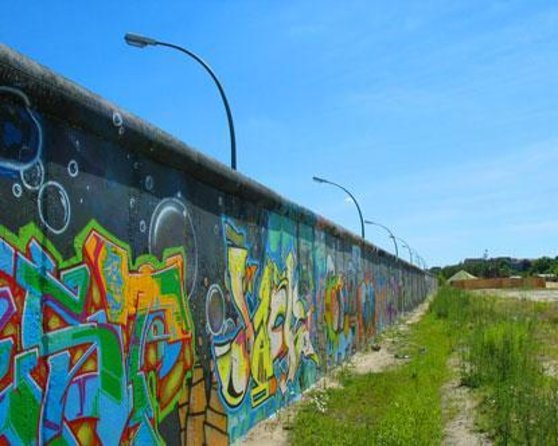
The Berlin Wall Memorial on Bernauer Straße is one of the strongest historical stops. This street once marked the boundary between West Berlin’s Wedding district and East Berlin’s Mitte district. During the early years of the Wall, people tried to escape from nearby buildings, with some climbing or jumping from windows toward the western side.
The memorial includes surviving sections and a site that helps you understand how the Wall divided homes, streets, and families. The stop listed here is only one minute, and admission is not included, so plan a separate visit if the Wall is a major interest.
Checkpoint Charlie is more compact and more theatrical. It was the best-known crossing point between East and West Berlin for foreign visitors and certain officials. The guardhouse area is free to see, but the surrounding streets are now busy with shops and photo opportunities.
I would not treat Checkpoint Charlie alone as a full account of the Cold War. Its value comes from the guide’s explanation of who could cross, how the checkpoints worked, and how this location fits with the Berlin Wall Memorial. The two stops together create a much clearer picture.
Friedrichstrasse, Gendarmenmarkt, and Bebelplatz
Friedrichstrasse runs north to south through the city and became a major shopping street after reunification. The ride offers a quick look at this central commercial corridor, with about two minutes listed for the stop.
Gendarmenmarkt is more architectural. The square was laid out in the late seventeenth century and later took its name from the regiment whose guardhouse and stables occupied the area. French Protestant immigrants helped shape this part of Berlin, and the square remains one of the city center’s most handsome urban spaces.
The German Cathedral contains a permanent exhibition on the development of liberal parliamentary democracy in Germany. Entry is not included, and the tour allows only about two minutes. Across the square, the Konzerthaus is a major work by Karl Friedrich Schinkel, built on the site of an earlier theater.
Bebelplatz carries a darker memory. On May 10, 1933, Nazi students and officials burned more than 20,000 books there, targeting works they labeled as opposed to German ideas. A memorial beneath the square recalls the event.
This sequence is valuable because the buildings are close together but tell very different stories: immigration, theater, democracy, and repression. The stops are brief, so listen carefully and note which places you want to revisit.
Museum Island, Berlin Cathedral, and Alexanderplatz
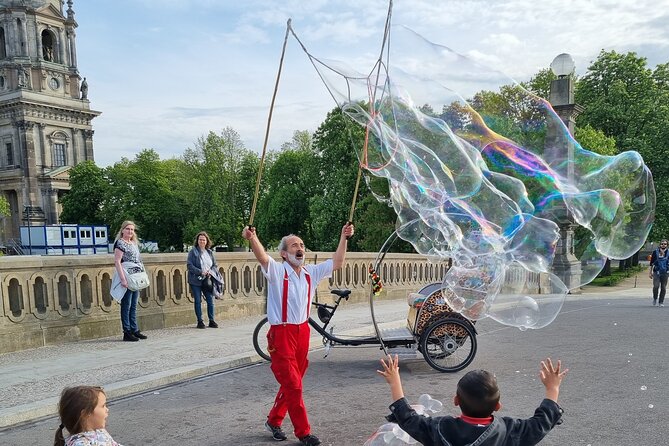
Museum Island occupies the area between the Spree and the Kupfergraben. Its museums hold archaeological collections and nineteenth-century art, and the ensemble began with the completion of the Altes Museum in 1830.
The rickshaw gives you a useful outside view of the island, but museum admission is not included. Five minutes is enough to understand the setting, not enough to see the collections. If you want to visit, plan a separate block of time and check entry arrangements in advance.
Berlin Cathedral dominates the nearby view with its large dome. Inside, the church is heavily decorated, and climbing to the dome provides views over the Spree, Lustgarten, and Museum Island. The tour stop is only about one minute, with admission extra, so this is another landmark to photograph now and visit later.
Lustgarten sits between the cathedral, Altes Museum, and the former city palace site. Its lawns, double rows of linden trees, fountain, and huge granite bowl make it a pleasant pause in the center. Alexanderplatz finishes the route with a different mood. The television tower, world clock, Friendship Fountain, shops, and constant movement make it one of eastern Berlin’s main gathering places.
Guides, music, and the quality of the commentary
The guide matters more here than the vehicle. Leo is repeatedly praised for humor, historical stories, good English, music, photography, and practical recommendations for food and drinks. Hugo is also singled out for explaining Berlin’s past, asking what the group wants to see, and taking photos along the way. Ufuk Ayik is noted for being accommodating in difficult weather.
That does not mean every ride will feel the same. One account describes music playing so loudly that it was hard to hear the guide. Another says the guide was friendly but offered too little historical explanation. If the commentary matters to you, ask at the start for the music to be lowered and tell the guide which subjects interest you most.
The best version of this tour is personal and flexible. You can ask for more Cold War history, more architecture, or more local recommendations. The weaker version is simply a ride past famous buildings. Your questions and the individual guide both shape the result.
Comfort, group size, weather, and price
The listed price is $53.10 per person. For a private ride with a guide, transport, photography, and a route across much of central Berlin, that can be fair value, particularly for a family or small group that wants to save energy. It is less attractive if you want long visits inside museums or detailed instruction at every stop.
Groups can include up to 16 people using several rickshaws. A party of four, for example, may be split between two vehicles. That keeps the group moving, but it also means you may hear slightly different commentary from each guide.
WiFi, private transportation, music on request, a photographer, and a tour guide are included. Alcoholic drinks are not. Service animals are allowed, and most people can participate, but the ride remains an outdoor activity. Bad weather can cancel it, with a new date or full refund offered.
Pickup is included within 2 kilometers of the Brandenburg Gate. Beyond that area, the charge is €10 per kilometer. The tour starts and ends at the Brandenburg Gate unless an included pickup has been arranged.
The main practical warning is reliability. Several bookings have reportedly been affected by no-shows, unanswered calls, lost equipment, illness, or cold-weather battery problems. Some people received refunds, but a refund does not replace a lost day in Berlin. Confirm the pickup and meeting point, keep your phone available, and do not schedule a flight, train, or rare timed entry directly after the ride.
Who should book this ride?
I would consider it for a first day in Berlin, a multigenerational group, or anyone with sore feet, an injury, or limited walking ability. It also suits visitors who want a broad overview before choosing which museums and memorials deserve more time.
It is a good match for families if you get a guide who keeps the stories lively. The ride has also worked well for people recovering from a marathon, a bike accident, or other mobility problems. You remain seated while covering a large area.
I would hesitate if your priority is a guaranteed departure, long museum visits, or a detailed academic history lesson. A walking tour or scheduled museum program may offer more dependable timing and deeper explanation.
Should you book Rickshaw Tours Berlin?
Book it if you value coverage, fresh air, photography, and a private format more than long stops. The route gives you a useful map of Berlin’s central sights, and a strong guide such as Leo or Hugo can turn a basic sightseeing ride into a memorable introduction.
Before paying, weigh the operator’s mixed reliability record. Confirm the time, meeting point, pickup distance, weather plan, and phone contact. If your Berlin schedule is tight, have a backup plan. With those precautions, this is a fun and practical way to see the city quickly. Without them, the risk of a no-show is too serious to ignore.
FAQ
Where does the tour start?
The standard meeting point is the Brandenburg Gate at 10117 Berlin, Germany.
Where does the tour end?
The activity ends back at the meeting point.
Is hotel pickup available?
Yes. Pickup is included within a 2-kilometer radius of the Brandenburg Gate.
What does pickup cost beyond 2 kilometers?
Pickup beyond 2 kilometers costs €10 per kilometer.
How long does the tour last?
The duration is approximately one to four hours.
How many people can join?
Groups of up to 16 people can participate, using several rickshaws.
Is the tour private?
Yes. Only your group participates in the private activity.
Is the Brandenburg Gate included in the route?
Yes. The Brandenburg Gate is the starting point and one of the main sights covered.
Are entrance tickets included?
No. Admission is not included for sites such as the Reichstag, Gropius Bau, Berlin Wall Memorial, German Cathedral, Konzerthaus, Museum Island, and Berlin Cathedral. Some outdoor sites are free.
What happens if bad weather cancels the tour?
You will be offered a different date or a full refund. Free cancellation is also available up to 24 hours before the scheduled start time.
Newest Berlin reviews
- Where It All Began: Berlin’s Queer & Trans History Tour★ 4.9 · 6 reviews
- Understanding Kreuzberg: The roots of local (sub)culture★ 4.9 · 11 reviews
- Berlin: guided canoe | kayaktour★ 4.1 · 7 reviews
- Private Potsdam City Tour in an authentic vintage van★ 5.0 · 14 reviews
- Warnemünde Shore Excursion: Private Sachsenhausen and Berlin Tour★ 5.0 · 12 reviews
- Ultimate E-Bike Tour of Berlin with Beer Garden Stop★ 5.0 · 4 reviews
- In the Forbidden City – Potsdam Walking Tour★ 5.0 · 17 reviews
- Private Walking Tour of Potsdam and Sanssouci★ 5.0 · 24 reviews
Berlin Rickshaw Tours, compared.
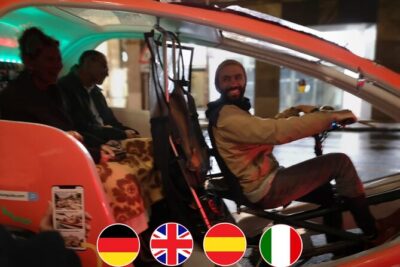
Individual City Tour – Rickshaw Sightseeing in Berlin
Read our review →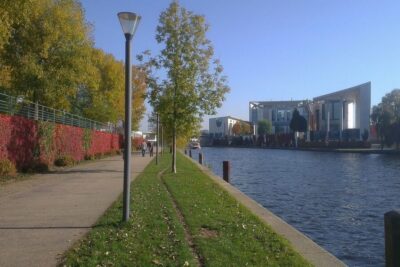
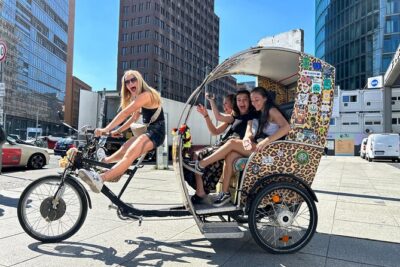
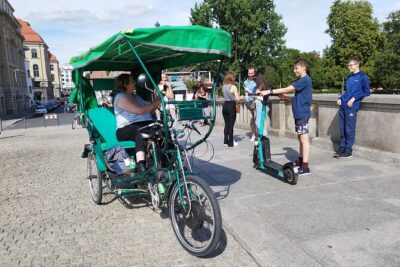
One Up to 3 Rickshaws(6 GUESTS)-Taylor Made Rickshaw Berlin Tour
Read our review →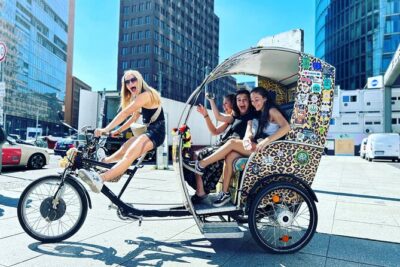
Berlin Rickshaw Tours Historical & Photo City Tour 120min – Sightseeing
Read our review →
Daily First Rickshaw promotion in Combi Vehicle public Group 90€
Read our review →Browse the lists this tour appears in