
Reviewed · BERLIN FOOD TOURS
Berlin Center Food Tour with 8+ Authentic Local Tastings
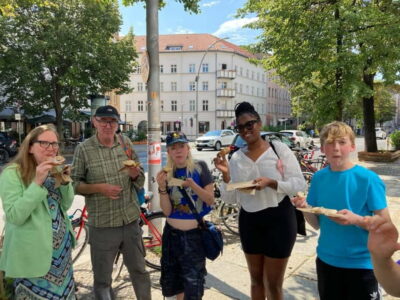
Berlin’s story is easiest to grasp with food in your hand. This three-hour walk connects kebab, Currywurst, Berliner doughnuts, and Turkish sweets with street art, Soviet-era avenues, old courtyards, and the remains of the Berlin Wall.
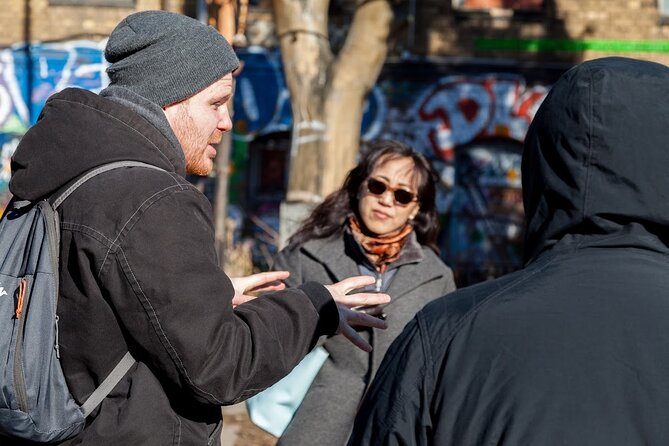
I like the mix of food and history, and I like the small group cap of 12, which gives guides such as Daniel, Francesco, Fotini, and Vincent room to answer questions. The route also offers useful restaurant tips for the rest of your stay.
The main catch is value. At $118.51 per person, you are paying for the guide, stories, drinks, and route as much as the food. A few food stops may feel average, and the exact menu can change.
Key points at a glance
- Eight or more tastings: Expect Berlin staples and regional treats, including kebab, Currywurst, Käsespätzle, pastries, a Berliner doughnut, and a signature dish.
- A food tour with a historical spine: The walk links Berlin’s divided past, immigrant communities, art, architecture, and changing food culture.
- East Berlin focus: You pass Raw Market, Soviet-era boulevards, street murals, art spaces, and the East Side Gallery.
- Small group format: The maximum is 12 people, a useful size for conversation and questions.
- Drinks are included: The package lists a glass of German Riesling and a local draft beer, with nonalcoholic alternatives noted in the practical details.
- Come ready to eat: The portions can add up to something close to a full meal, so plan this as a main food event rather than a light snack walk.
Why Berlin food makes a good history lesson
Berlin has never had one fixed food identity. Its cooking reflects Prussian traditions, postwar division, Turkish immigration, modern street food, and the city’s current international character.
That mix gives this tour a useful purpose. You are not simply moving from one restaurant to another. You are shown how everyday food connects to Berlin’s political and social changes.
The route begins with Berlin’s transformed center and moves toward East Berlin locations shaped by the Cold War and reunification. Along the way, the guide explains where dishes came from and why they matter locally. That context is especially helpful if you are new to the city and want more than a standard list of landmarks.
I also like the timing for a first or second day in Berlin. You get a basic map of several central areas, learn which foods deserve another try, and can ask for restaurant suggestions while you still have time to use them.
More food tours in Berlin:
- Big Bus Berlin Hop-On Hop-Off Sightseeing Tour & Currywurst
★ 4.0 · 856 reviews - Kreuzberg: Culinary Food Tour
★ 4.5 · 770 reviews - Berlin: Mitte Culinary Food Tour
★ 4.5 · 447 reviews
Courtyards, doughnuts, and Berlin’s quieter corners
One early section takes you through old courtyards and narrow passageways covered with street art. These spaces offer a different view of central Berlin than the grand museums and major avenues.
The route includes 19th-century alleyways, cinemas, cafés, and tucked-away courtyards. Some of the appeal comes from the contrast: old buildings and historical traces sit beside colorful murals and newer creative spaces.
A pastry stop brings in the first sweet bite, a Berliner doughnut. The name can be confusing because in Berlin, Berliner refers to the filled doughnut that many English speakers might call a jelly doughnut. It is a small but worthwhile piece of local food culture.
This part of the walk is also a good reminder that Berlin’s best details are not always on the main road. You might pass through places you would overlook on your own, though the route is not designed as a full architecture tour. The food remains the anchor.
Raw Market and the city’s sharp change
Raw Market helps explain how Berlin shifted from an industrial and divided city into the arts-focused capital you see today. The site provides a setting for discussing the period from 1865 to 1989, including the city’s industrial growth and the changes brought by war, division, and reunification.
The setting is useful because the tour does not treat Berlin’s past as a string of dates. You see how old working spaces can take on new uses, with art, food, music, and public gathering places filling former industrial areas.
Street art is part of the visual rhythm here. Murals and painted walls give the route a modern edge, while the guide supplies the background that makes them easier to understand.
Do not expect a museum-style presentation at every stop. This is a moving conversation with food breaks. If you prefer long periods inside formal exhibits, you may find the historical treatment too brief. If you like learning while walking, the format works well.
Kebab, pastries, and the food of a changing city
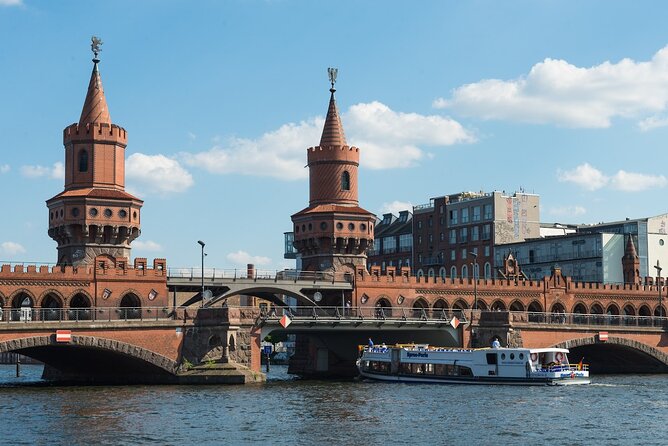
One of the early savory stops is a famous Berlin kebab shop. The dish is important because Berlin’s food culture cannot be explained through old German recipes alone.
Kebab became a defining Berlin street food through the city’s Turkish community. Here, food gives you a direct way to talk about migration, business, adaptation, and the way a dish changes to suit its new home.
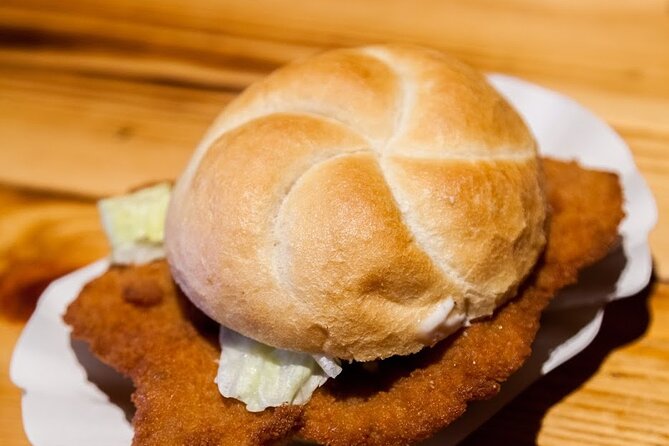
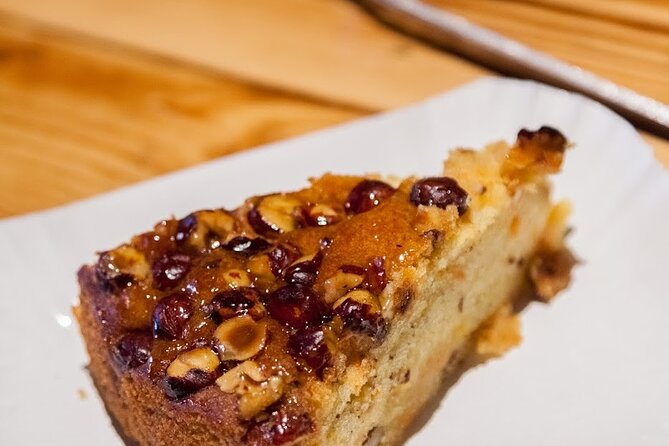
The bakery stop adds a softer contrast. You can sample traditional baked treats, cakes, and pastries, giving the tour a broader range than a route built only around fast food.
The food selection is designed to include both familiar and less expected items. That variety is one of the tour’s strongest points, but the exact balance may shift. Some versions of the experience include more generous portions, while other accounts describe fewer food types served in larger amounts.
If you prefer many small tastes, ask the guide how the day’s menu is arranged at the start. The supplied information notes that the menu can change because of availability, weather, or other conditions.
A different sort of day out in Berlin:
- Berlin: Reichstag, Dome and Government District Guided Tour
★ 4.7 · 18,288 reviews - Berlin: 1-Hour City Tour by Boat with Guaranteed Seating
★ 4.3 · 16,993 reviews - Berlin: Boat Tour Along the River Spree
★ 4.4 · 11,252 reviews - Discover Berlin Half-Day Walking Tour
★ 5.0 · 9,624 reviews
Flammenkuchen and beer garden comfort food
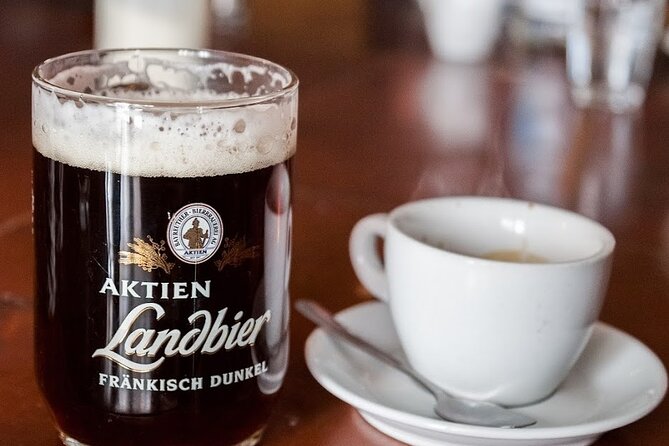
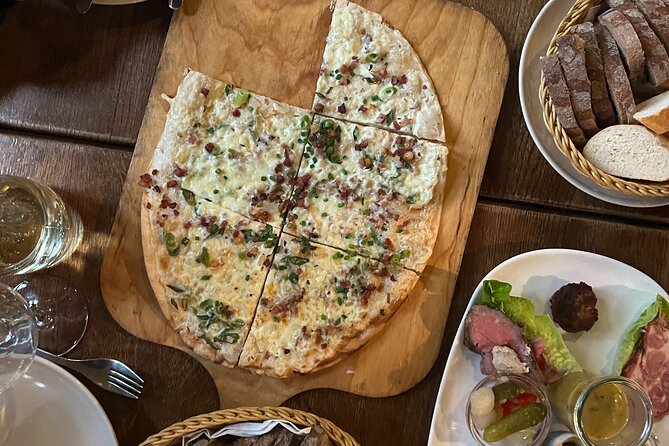
A local restaurant stop features Flammenkuchen, a thin flatbread-style German tart. It is often associated with the German and French border region, and it gives you a taste of a dish that feels rustic, social, and easy to share.
The package also lists traditional beer garden food and Käsespätzle. Käsespätzle is a comforting dish of soft egg noodles with cheese, often served as a hearty meal rather than a tiny nibble.
This is where the tour may begin to feel like lunch. Several tastings are substantial, and some people find there is plenty of food by the end. You should not schedule an ambitious restaurant dinner immediately afterward unless you have a very large appetite.
Drink pairings are part of the value. The experience includes a glass of German Riesling and a fresh local draft beer, while the practical information also notes that nonalcoholic choices can be available. One tasting account counted two beer servings among the eight items, so your final total may depend on the day’s format and substitutions.
If you do not drink beer, tell the guide early. The available information indicates that soda or coffee may be offered instead, but drink arrangements can vary by stop.
Currywurst and Berlin street food
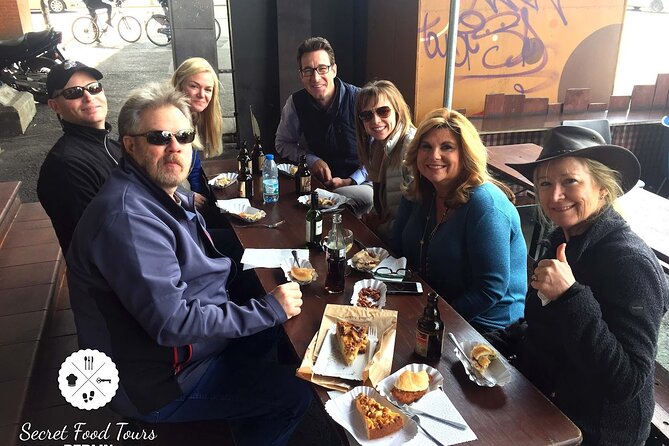
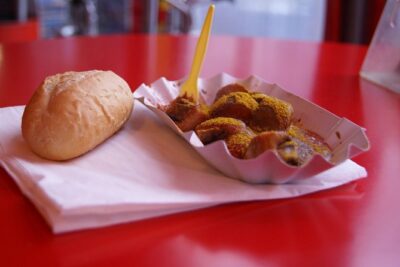
No Berlin food walk would feel complete without Currywurst. The dish combines sausage with curry-spiced tomato sauce and is one of the city’s most recognizable quick meals.
The value here is not just the taste. Currywurst belongs to Berlin’s postwar street-food identity and reflects the city’s preference for food that is quick, filling, and informal.
The tour presents the dish alongside older baked foods and immigrant-influenced cooking. That comparison helps you see Berlin cuisine as a collection of layers rather than one traditional menu.
The quality of individual dishes can be a matter of personal taste. Most of the route’s praise centers on the food variety and the guide, but not every stop will impress every palate. If food quality matters more to you than the historical walk, $118.51 may feel high for the amount purchased along the way.
Turkish sweets and the East Side Gallery finish
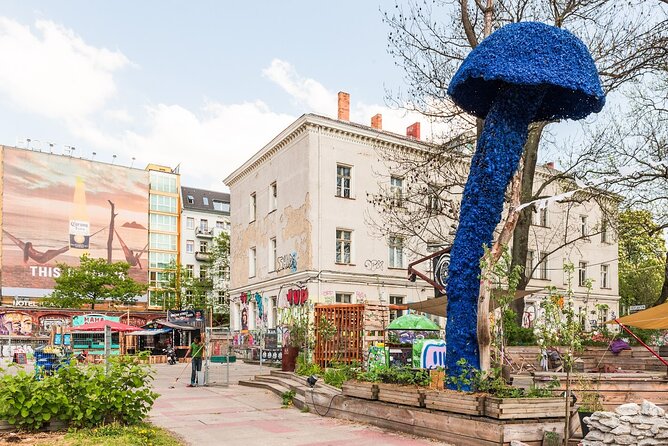
The Turkish sweet adds one last reminder that Berlin’s food story reaches well beyond German sausage and pastries. It also gives the tour a natural way to discuss the city’s immigrant communities and the everyday links between Berlin and Turkey.
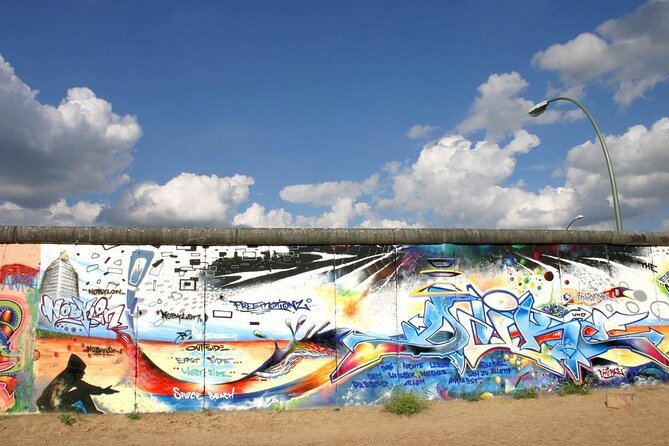
The final area is the East Side Gallery, the famous remaining stretch of the Berlin Wall covered with large murals. Finishing here gives the tour a strong visual conclusion. The food and the history come together in a place that represents division, political change, and Berlin’s present-day creative identity.
The final special food treat may change. The supplied details specifically warn that locations and menu items are subject to availability, and one account noted that a dish was unavailable at the last stop without a replacement. Keep that in mind if you are counting on one exact item.
Still, the ending works well because you finish near a major Berlin sight rather than at an isolated restaurant. The stated end point is Hackescher Markt, although the route description also references the East Side Gallery. Confirm the precise meeting and finishing instructions before setting out, since the supplied location details list Burgstraße 19 as the start while the narrative mentions Warschauer U-Bahn Station.
The guides make or break the afternoon
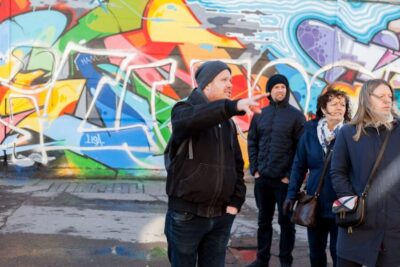
The strongest part of this experience is the guide. Names attached to highly praised tours include Daniel, Francesco, Fotini, Vincent, Dania, Danielle, Donia, and others. Their styles differ, but the useful pattern is clear: the guide needs to connect food, architecture, and difficult historical subjects without turning the walk into a lecture.
Francesco is noted for being warm, entertaining, and respectful at serious historical sites. Fotini is described as especially good at explaining how past events shaped Berlin’s culture and cuisine. Vincent brings architectural knowledge and links the city’s buildings to the food stops.
That personal approach matters in a group tour. A good guide can explain why one dish matters, suggest places to eat later, and adjust the pace when the group has questions.
The cap of 12 people helps. It is small enough for a more personal feel, though not private. If your group wants a fully customized route, this is not the right format.
Walking, weather, and practical comfort
The tour lasts about three hours and involves a fair amount of walking. Wear comfortable shoes, since you will move between food stops, courtyards, art areas, historic sites, and the East Side Gallery.
One account found the walking pace fairly easy, with stops close enough together to keep the outing comfortable. Another enjoyed the experience despite rain. Still, Berlin weather can change quickly, and much of the route takes place outdoors, so bring suitable clothing.
The tour operates in English and is near public transportation. Hotel pickup and drop-off are not included, so you need to reach the meeting point yourself and arrange your own return.
Most people can take part, but food allergies and dietary needs require advance notice. Contact the provider before the tour so the stops can prepare as well as possible. Since the menu can change, do not assume every dietary request can be handled on the day without warning.
Confirmation is sent within 48 hours, subject to availability. Free cancellation is available up to 24 hours before the start time. After that point, refunds and changes are not accepted.
Is $118.51 a fair price?
At $118.51, this is not a cheap way to grab lunch. You can buy Currywurst, pastries, and beer for much less on your own.
The better comparison is with a guided walking tour plus a substantial meal. You are paying for the route, the explanations, the organization, the included drinks, and the chance to try several local specialties without planning the stops yourself.
The value is strongest if you are new to Berlin, want food and history together, and appreciate a guide who can point out places you would miss. It is weaker if you have already taken a detailed Berlin walking tour, know the city’s main foods, or mainly want a large number of small tastings.
The 4.9 rating from 1,227 ratings and 98 percent recommendation figure show that the format works very well for most people. Still, the lower ratings raise a fair concern: portions and food quality may not feel equally strong at every stop, and some people would prefer more variety with smaller servings.
Who should book this Berlin food walk?
I would choose this tour for a first visit, especially near the beginning of your stay. You will learn the city’s food basics, get a useful introduction to East Berlin, and collect restaurant ideas for later.
It also suits families with older children and teens. The food breaks keep the historical material lively, and the portions can be enough for people with smaller appetites to sample rather than commit to full plates.
Food-focused visitors should book only if they also want history, street art, and walking. If your priority is fine dining or highly specialized German cooking, this is too broad.
Final decision
Book this experience if you want Berlin explained through everyday food, immigrant influence, street art, and Cold War history. Its best features are the small group, the strong guides, the mix of savory and sweet tastings, and the route through places that are easy to miss.
Skip it if $118.51 feels too high for a shared food walk, or if you want complete control over every dish. For the best experience, book early in your stay, arrive hungry, wear good shoes, tell the provider about dietary needs, and confirm the meeting details before you go.
FAQ
How long does the Berlin food tour last?
The experience lasts about three hours.
How many people are in the group?
The tour has a maximum of 12 participants.
What food is included?
The listed tastings include Berlin kebab, a traditional baked pastry, Currywurst, beer garden food, Käsespätzle, a Berliner doughnut, a signature secret dish, and a Turkish sweet. The exact menu may change.
Are drinks included?
Yes. The included drinks are listed as a glass of German Riesling and a local draft beer. Nonalcoholic options may be available.
Where does the tour start and finish?
The listed start point is Burgstraße 19 in Berlin, while the route description also mentions meeting at Warschauer U-Bahn Station. The stated end point is Hackescher Markt. Confirm the final meeting instructions before the tour.
Is hotel pickup included?
No. Hotel pickup and drop-off are not included.
Can I cancel for a full refund?
Yes, if you cancel at least 24 hours before the experience starts. Cancellations or changes made less than 24 hours in advance are not accepted for a refund.
Newest Berlin reviews
- Where It All Began: Berlin’s Queer & Trans History Tour★ 4.9 · 6 reviews
- Understanding Kreuzberg: The roots of local (sub)culture★ 4.9 · 11 reviews
- Berlin: guided canoe | kayaktour★ 4.1 · 7 reviews
- Private Potsdam City Tour in an authentic vintage van★ 5.0 · 14 reviews
- Warnemünde Shore Excursion: Private Sachsenhausen and Berlin Tour★ 5.0 · 12 reviews
- Ultimate E-Bike Tour of Berlin with Beer Garden Stop★ 5.0 · 4 reviews
- In the Forbidden City – Potsdam Walking Tour★ 5.0 · 17 reviews
- Private Walking Tour of Potsdam and Sanssouci★ 5.0 · 24 reviews
Berlin Food Tours, compared.
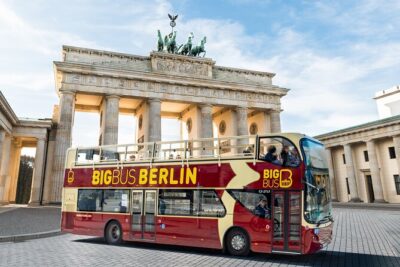
Big Bus Berlin Hop-On Hop-Off Sightseeing Tour & Currywurst
Read our review →

Classic Bites and Culinary Trends Neighborhood Food Tour in Berlin
Read our review →
Berlin Private Walking Food Tour With Locals: the 10 Tastings
Read our review →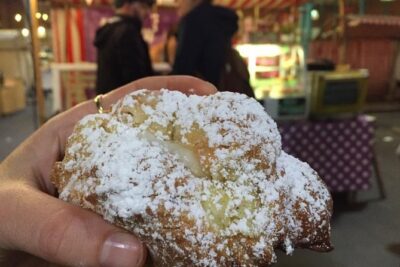
Browse the lists this tour appears in